The Sleepy Town Of Portobelo, Panama

We left Escudo de Veraguas and made an overnight, eighteen hour run to the small town of Portobelo. Scott took watch for the first few hours, and recorded the trip log reflecting 5000 nautical miles since we have owned the boat… a nice milestone!

I came on watch for the overnight hours, and then turned things over to Scott at dawn. As early morning rain fell, he noticed a rainbow that started on our port side, and came back down on the starboard. We were inside of it…pretty neat!

As usual, my attempt at sleep added up to about an hour. I gave up, and came back to the pilothouse in time to see the many boats on the horizon, anchored and waiting to transit the Panama Canal.

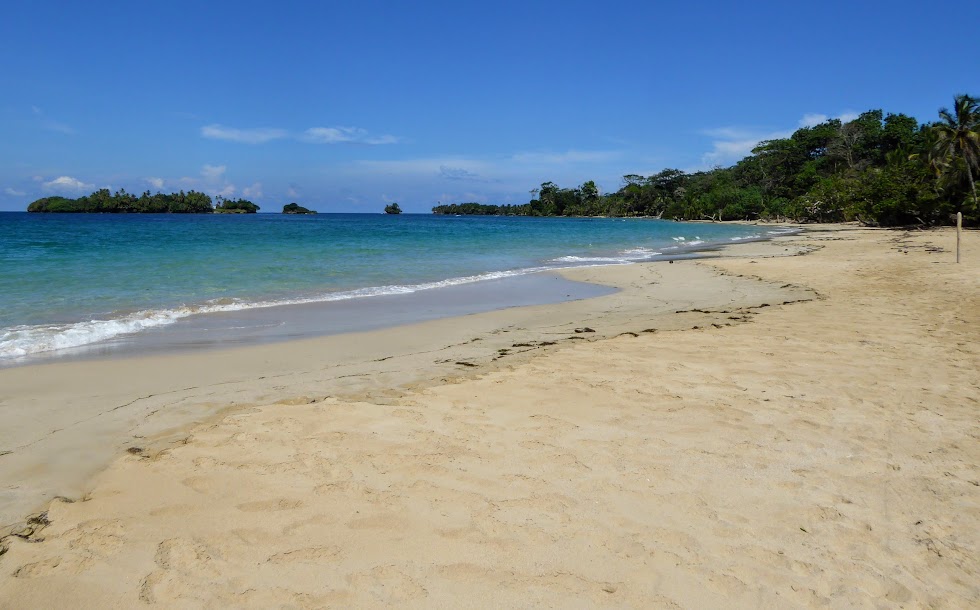
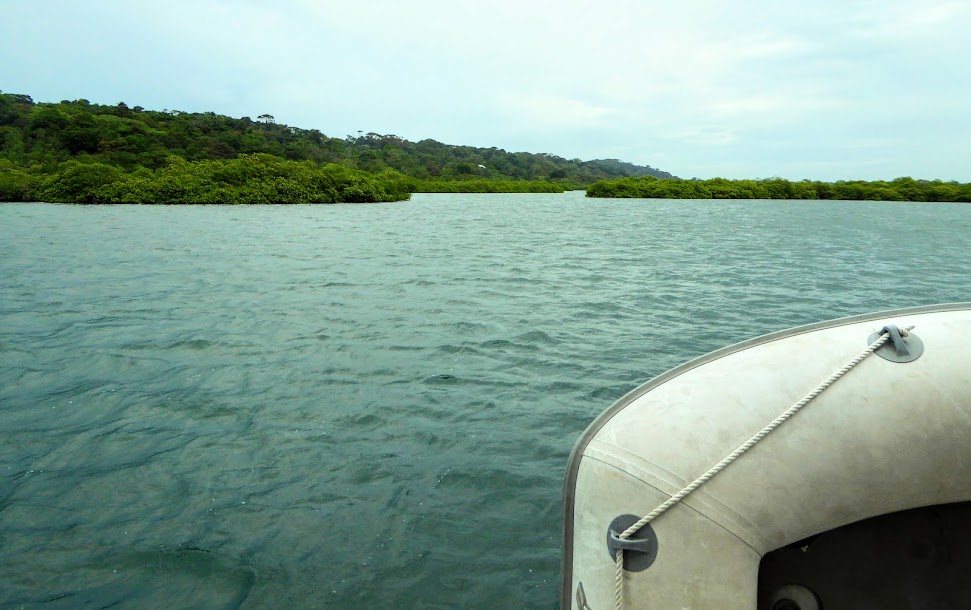
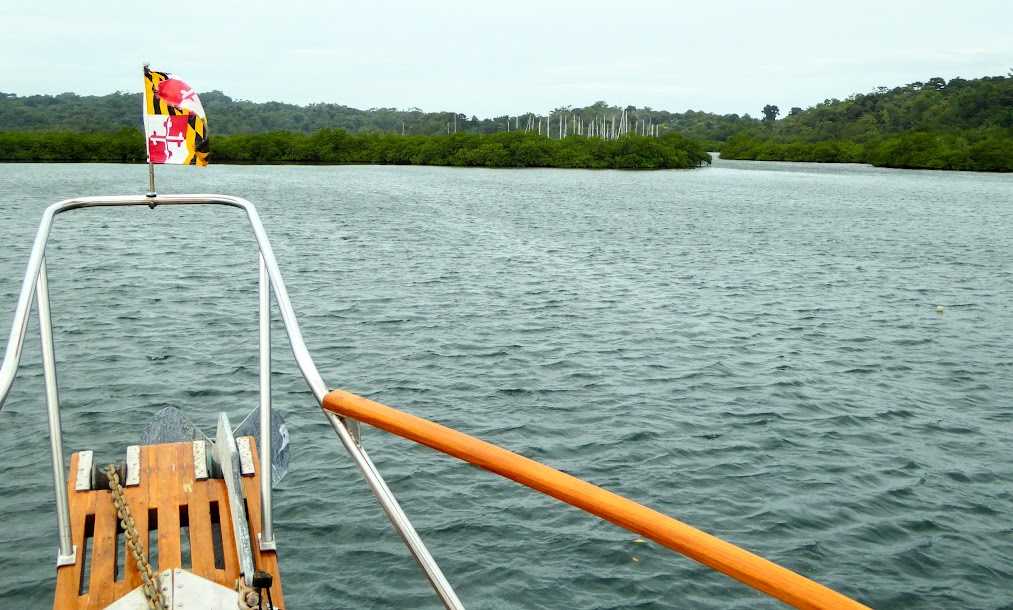
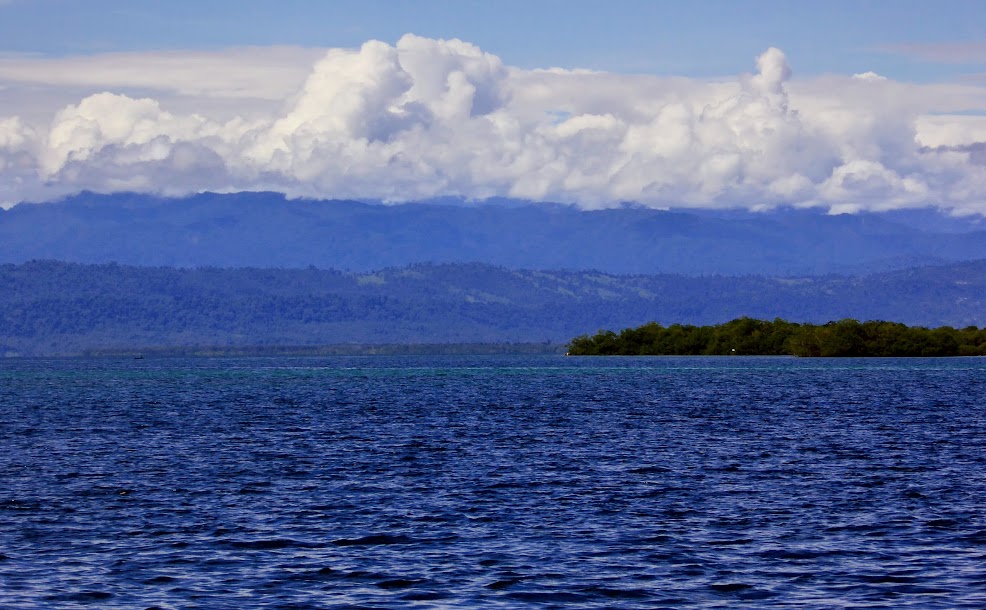
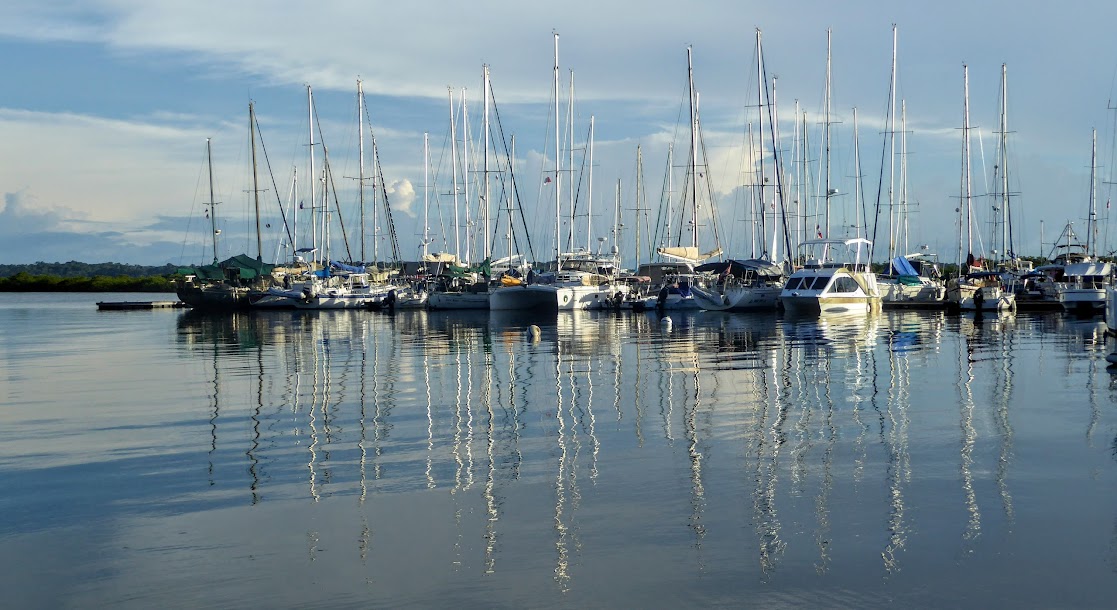
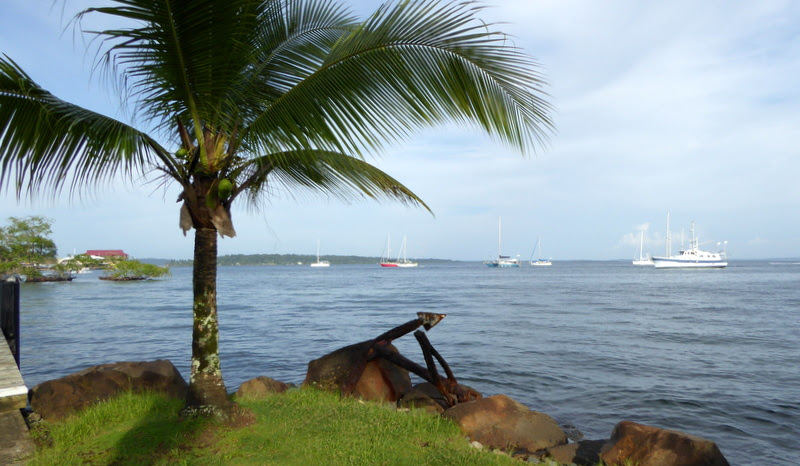
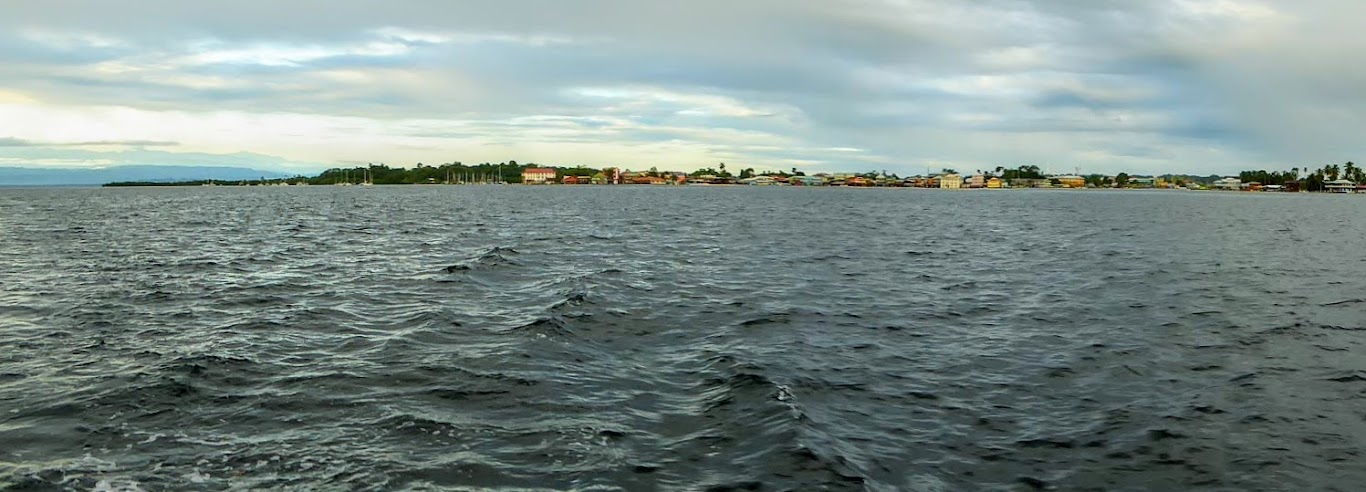
Soon after, we turned and made our way into Portobelo’s harbor. Legend has it that in 1502, Christopher Columbus originally named the port, “Puerto Bello,” which means “Beautiful Port,” and it definitely is that. The green, scenic hills contained many more open pastures than we saw in the Bocas area.

Portobelo was one of the world’s first important, strategic ports of the Caribbbean, and in the 1700’s, it was Spain’s major port in the Americas. Having a natural port made the town useful in transporting riches over to Europe, that were seized in the conquest of South America. Portobelo’s deep harbor was also a center for exporting silver, before the mid-eighteenth century.

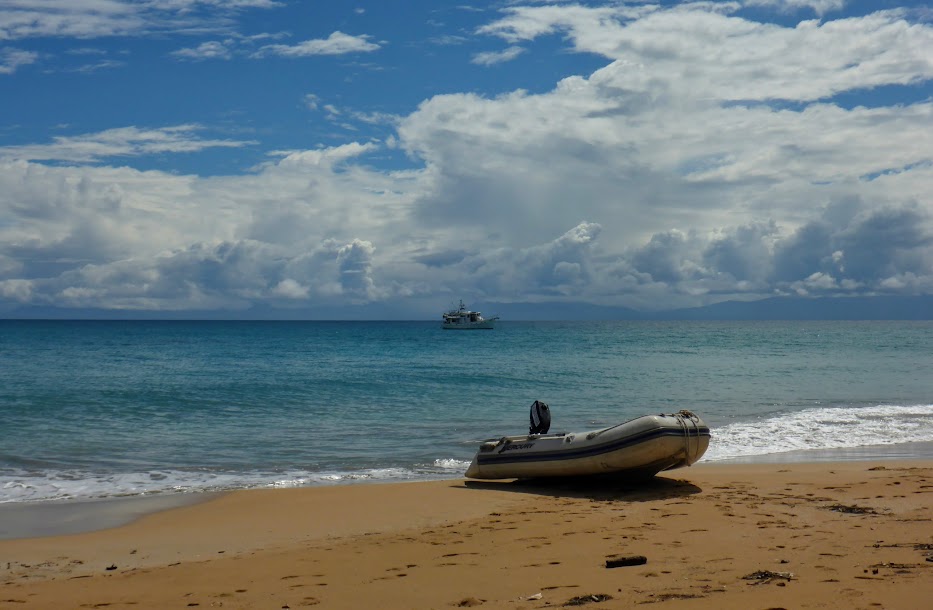
We anchored in a quiet spot, near one of several forts that surround the harbor (more on them later). It was again nice to be anchored without noisy pangas running by us at all hours.

After setting anchor, we spent the rest of the day relaxing on board. We made our way into town the next morning, past a “victim” of Hurricane Otto. The storm sent eleven foot swells into the harbor as it passed by. In another area, we noticed a catamaran being raised up off of the bottom.

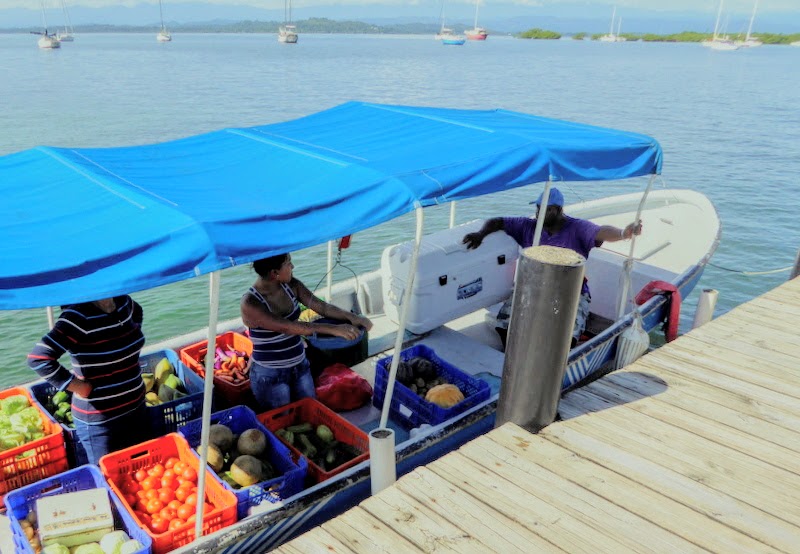
Portobelo is a quiet town, with three or four small grocery stores, two bakeries and some small eateries. We also noticed several street food vendors and a “veg” truck.

Scott was amused by the many “chicken” buses that travel the area. They offer affordable service to many small towns on the way to Colon, and also travel to Panama City. The buses are quite a sight, full of color and “bling,” and also seem to be personalized, with air-brush drawings of loved ones and such.

As we’ve seen in many of the towns in Central America, the buildings are full of color, and brightly painted murals adorn the buildings.

We made our way to Iglesia de San Felipe, the Roman Catholic church in town. It is more commonly known as Black Christ Church, housing a statue that has come to be worshiped by many Panamanians and others around the world.


The statue, normally located near the alter, is brought out to the center of the church once a year, for the annual Festival of the Black Christ.

Tens of thousands gather in Portobelo for the event, walking from Panama City (53 miles), and crawling the last mile on their hands and knees! The Black Christ has been designated as the Patron Saint of Criminals, and many come to the church each year during the festival to ask forgiveness for their crimes.

There is much more interesting information about how it is believed the statue came to Portobelo, how it is displayed and cared for and details about the Festival  of the Black Christ here.

We’d read about Captain Jack’s Canopy Bar, and have been told by many that he and his staff go out of their way to help cruisers, so it seemed like a good place to have lunch. After circumnavigating the globe, Captain Jack (originally from New Jersey) settled here and opened the bar. He lives aboard his boat in the harbor, and make regular visits to the San Blas Islands from Portobelo.

After a short walk up a residential street, we found Captain Jack’s at the top of the hill.

We climbed the stairs, and Jeff, the manager greeted us with cold towels; perfect timing, as I was soaked in sweat from the mid-day heat in town.

The upper level bar/restaurant provided a nice view back toward town and the harbor, and the kitchen turned out some terrific red curry! We lingered, enjoying the shaded tables and the breeze, talking to Jeff and gathering local information.

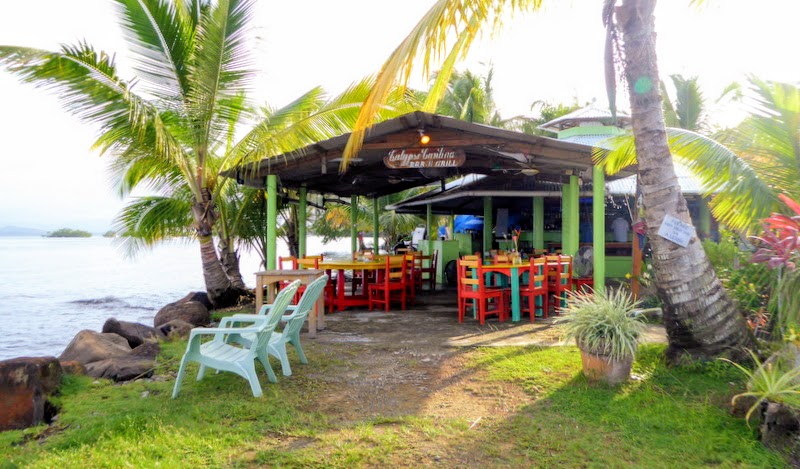
We’d left our dinghy tied in front of a small waterfront restaurant, and decided to have a beer there before heading back to the boat. Some German cruisers opened the business, and allow boaters to tie up dinghies at no charge. This can be hard to find, as many piers in these towns are either private, reserved for water taxi pangas or come with a local resident asking for a dollar or two.

We shared a table with some “locals,” one of which took an interest in Scott’s straw hat.

After walking the town, having lunch, and an afternoon beer it was time to head back to Sea Life, where we enjoyed happy hour with Howard, in the shade of the cockpit.

Here are more photos of Portobelo.

“Shells Sink, Dreams Float. Life’s Good On Our Boat!”


Escudo de Veraguas

We raised anchor at dawn, saying a final farewell to Bocas Town, as it faded out of sight.

Our next stop would be Escudo de Veraguas, a remote island located ten miles off of mainland Panama. Until 1995 the island remained largely uninhabited; but in recent years, fishermen from nearby coastal towns began using the island as a base for fishing parties, and later settled permanently.

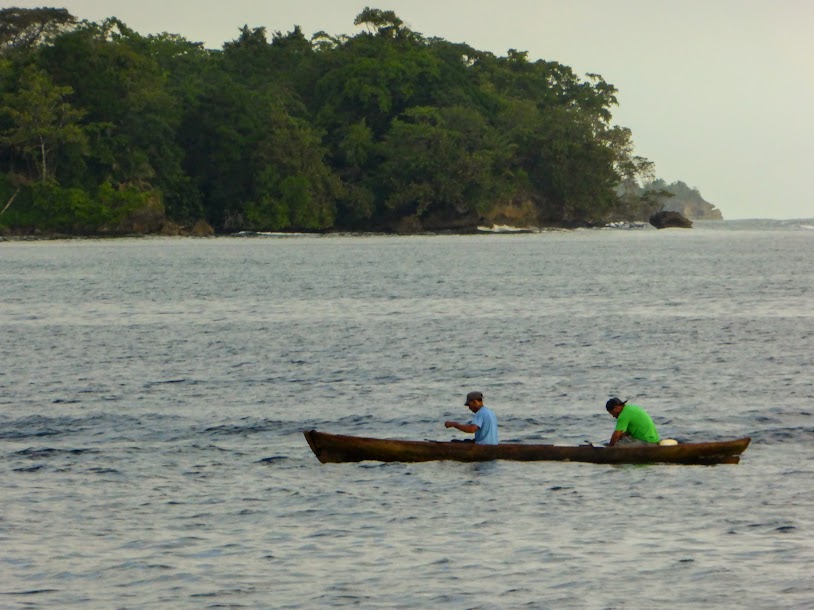
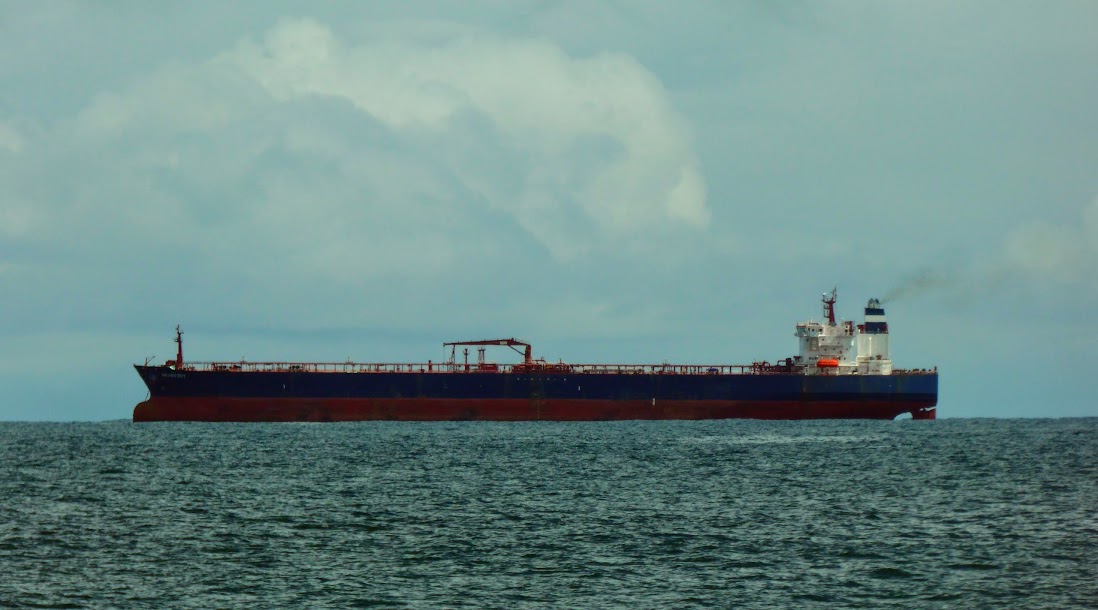
It was a short, eight hour, uneventful run. We passed local fisherman along the way, and the first large, commercial tanker since traveling off the U.S. coast.

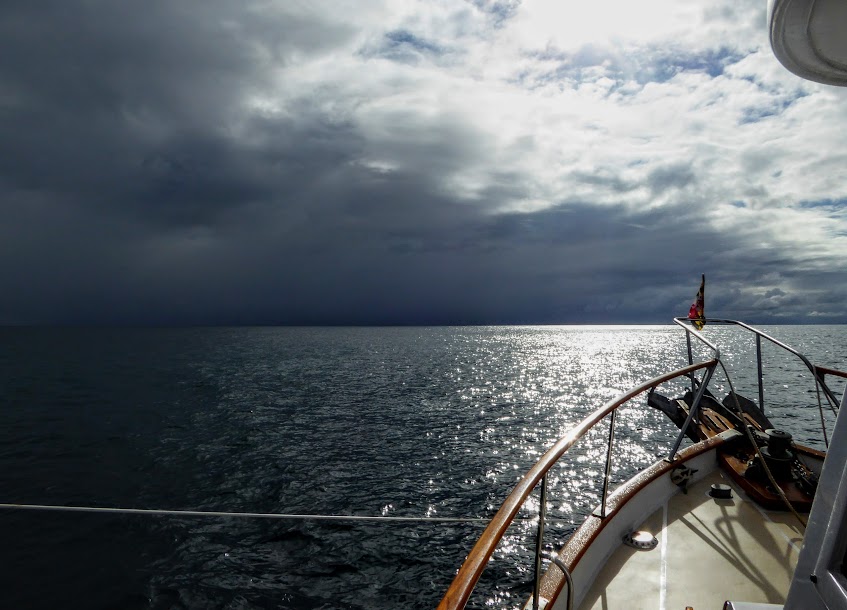
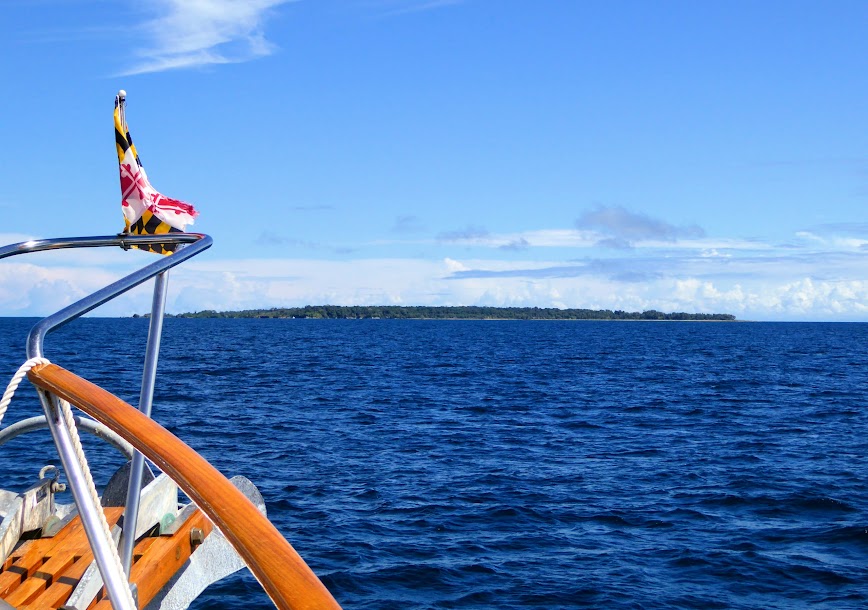
The skies threatened to rain most of the way, but as Escudo de Veraguas came into view, bright sun broke through to welcome us.

We approached the island’s west side, but with winds predicted to blow from the northwest, Scott chose to move around to the south side, providing us more protection at anchor.

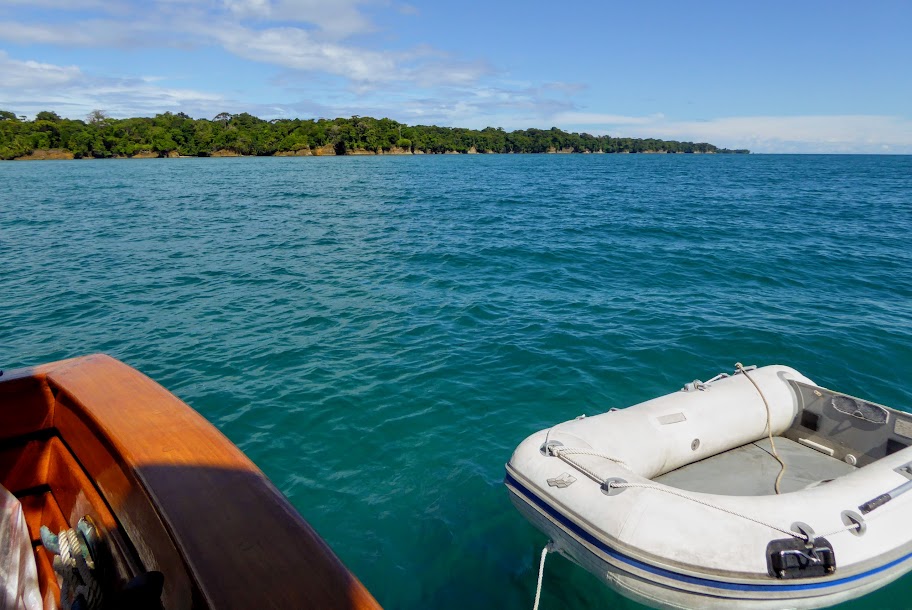
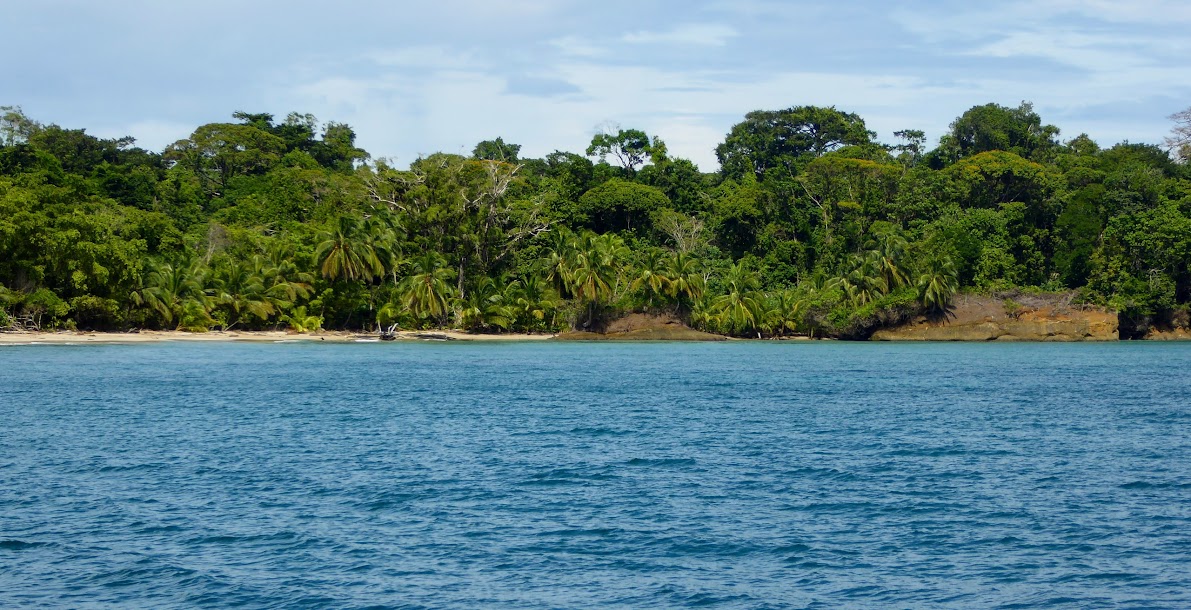
As we rounded the corner, sandy beaches gave way to beautifully interesting rocky coastline. We had the place all to ourselves and enjoyed mountain views of the mainland in the distance, and gorgeous Escudo de Veraguas off of our starboard side.

Scott took the dinghy out to investigate. He soon returned, and insisted that I drop everything and come out with him. Stop cleaning, and preparing dinner….no problem!

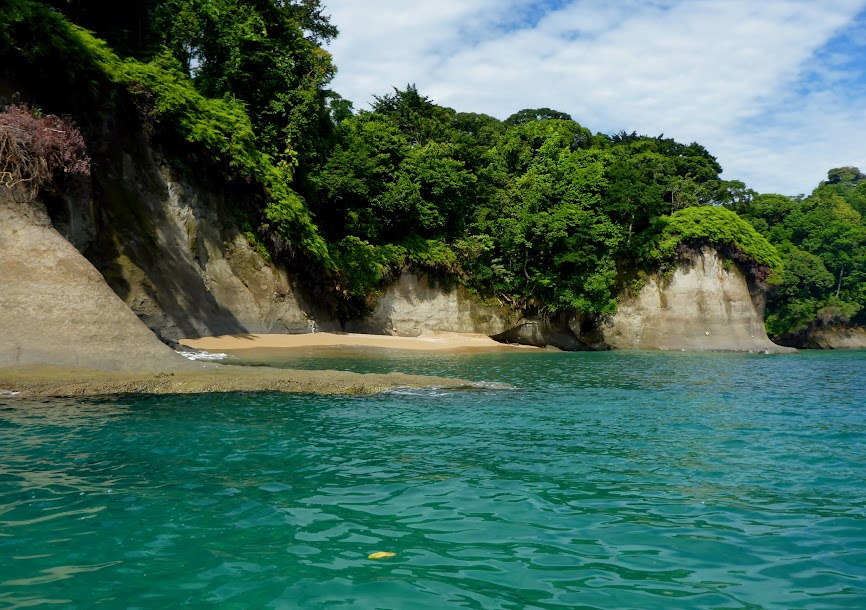
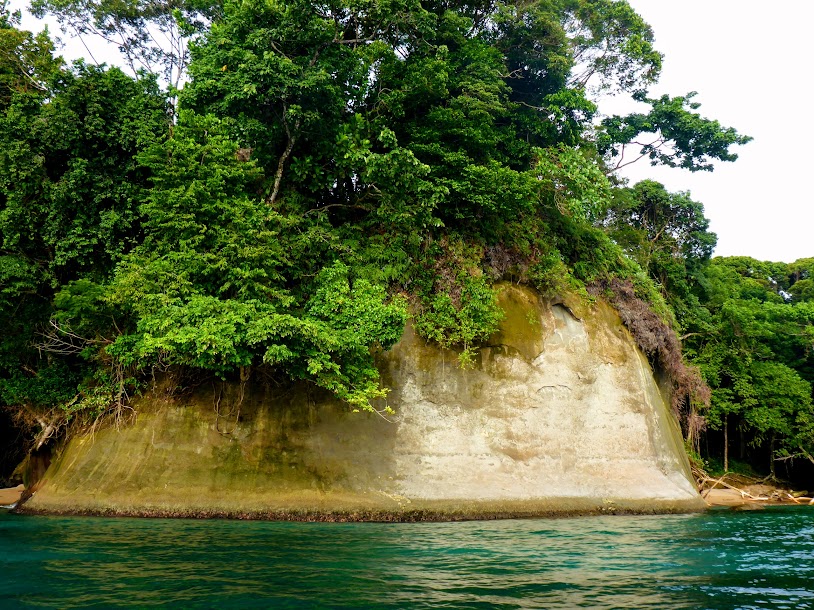
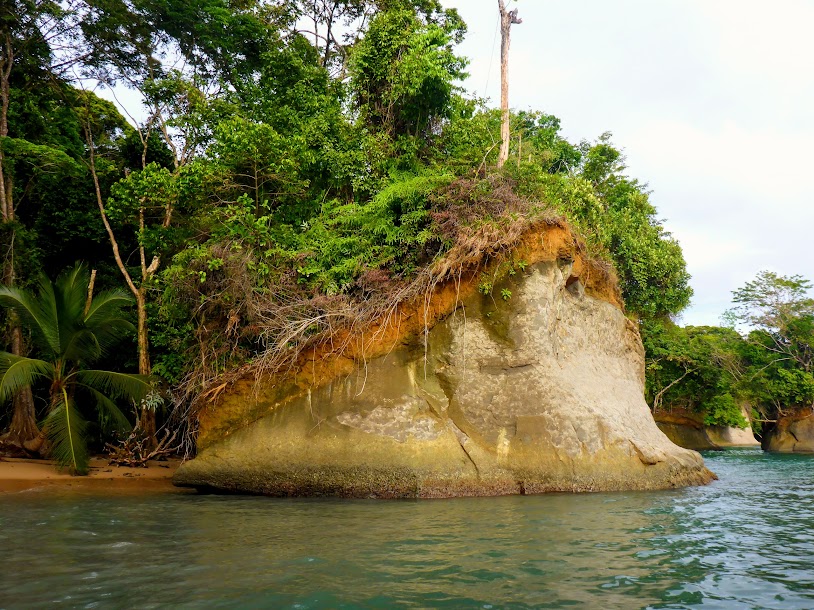
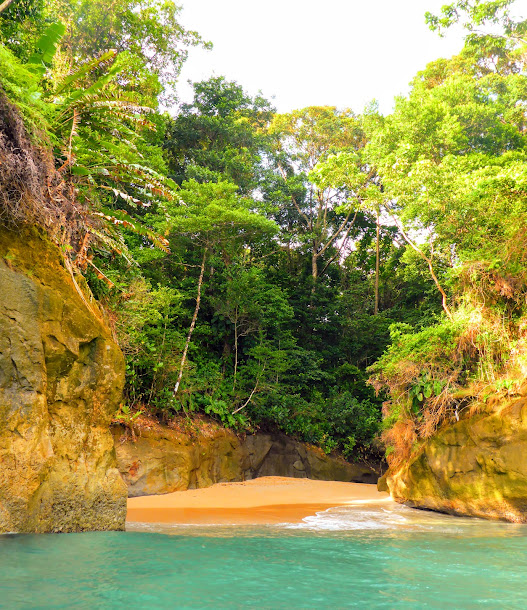
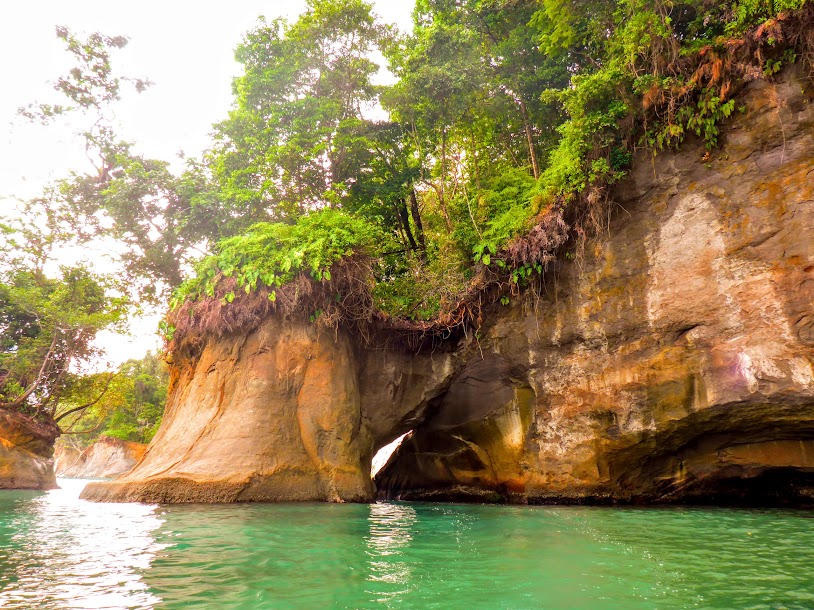
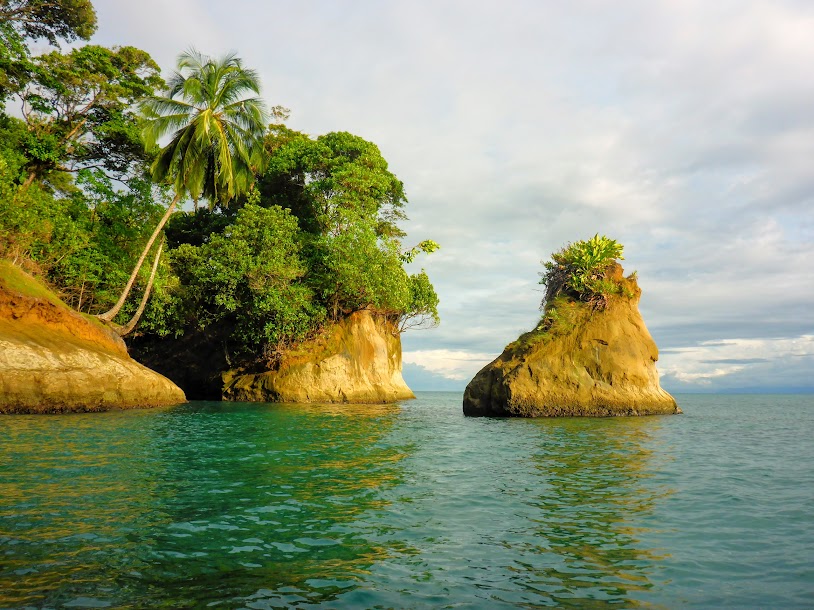
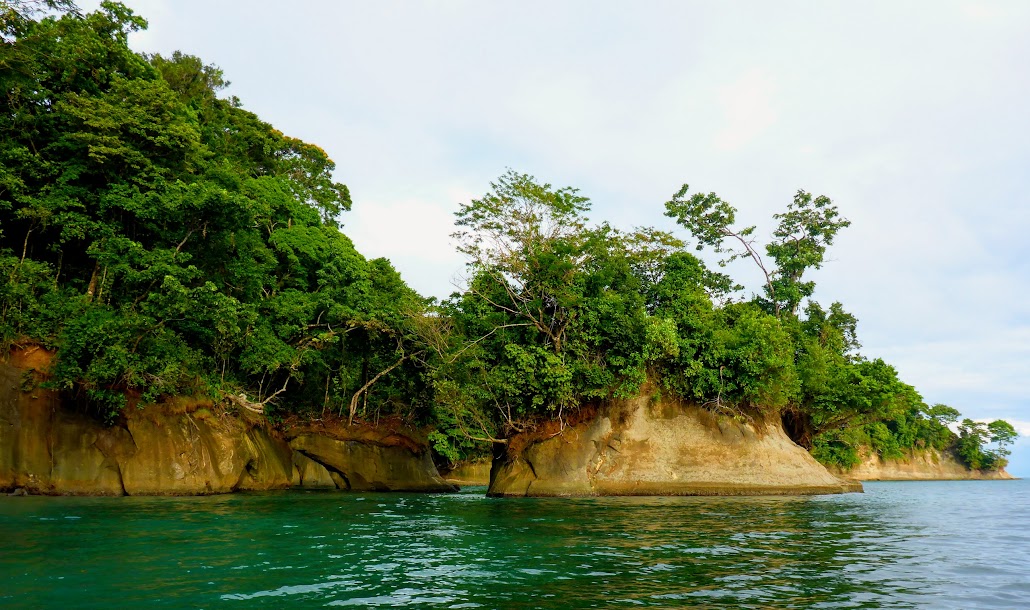
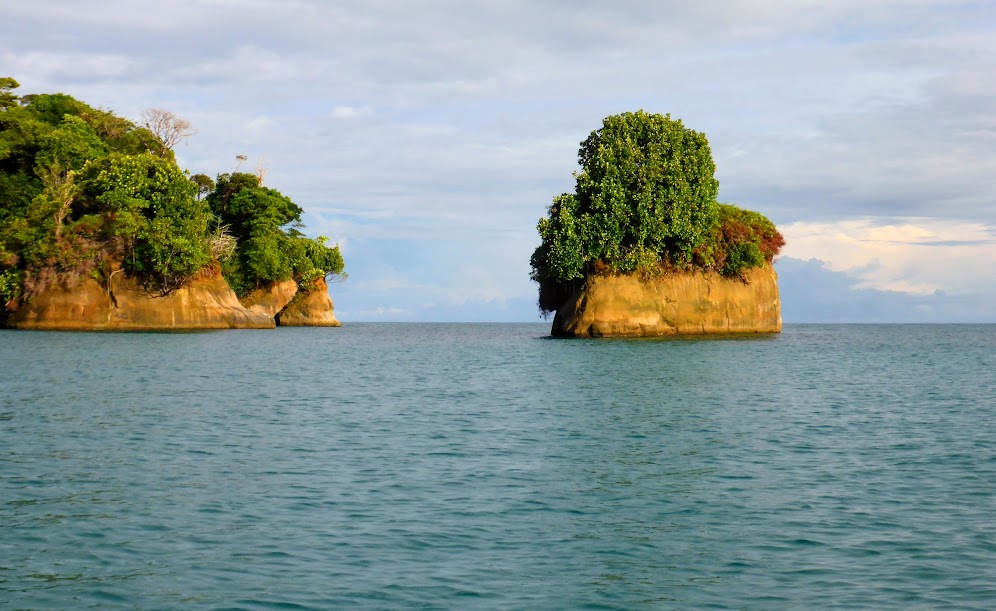
The coastline here is like something Walt Disney dreamed up. Rocky shores and islands, both smooth and jagged, topped with trees of all textures, types and sizes, that melt into clear green-blue water.


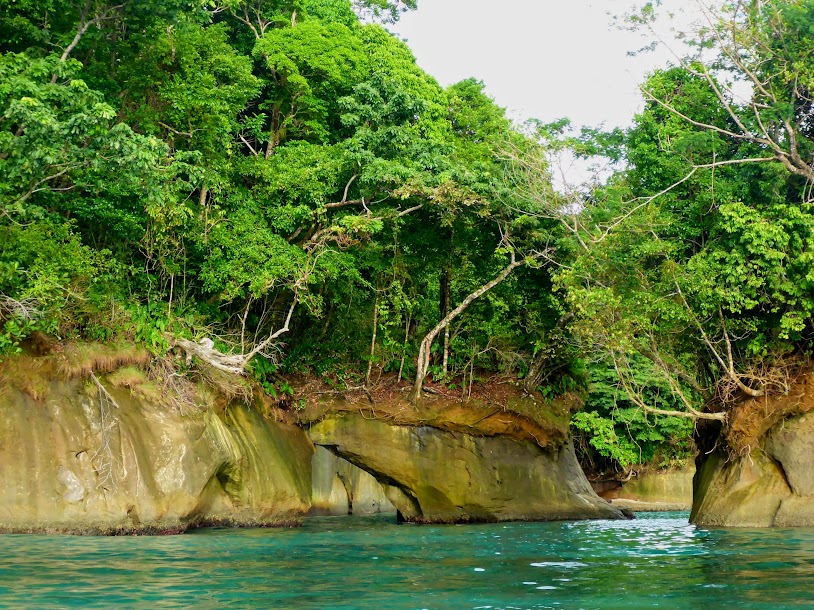
Lush, green foliage covers the tops of some formations, like a thick head of hair.

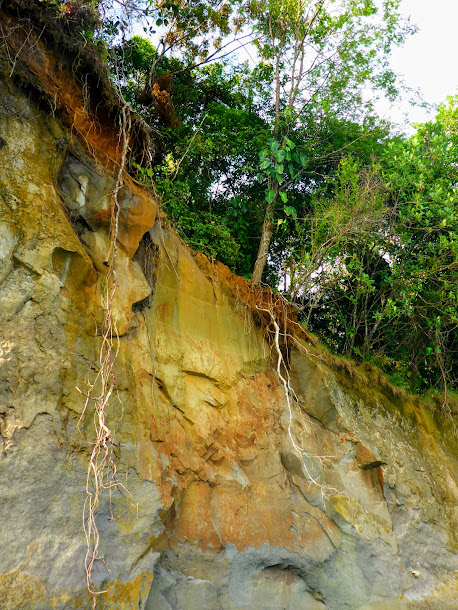
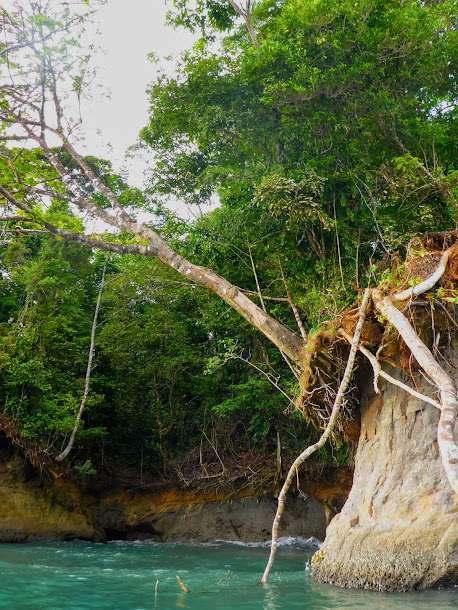
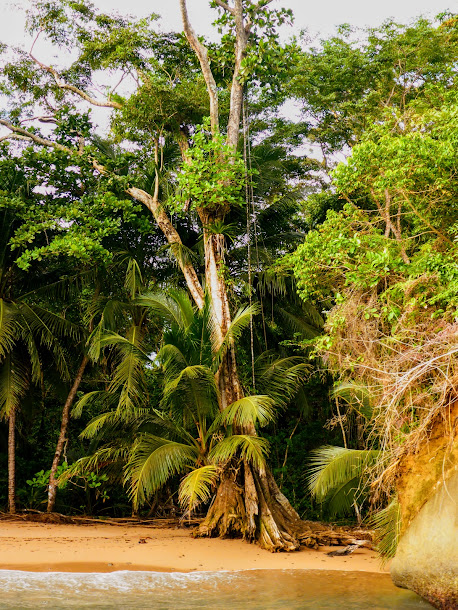
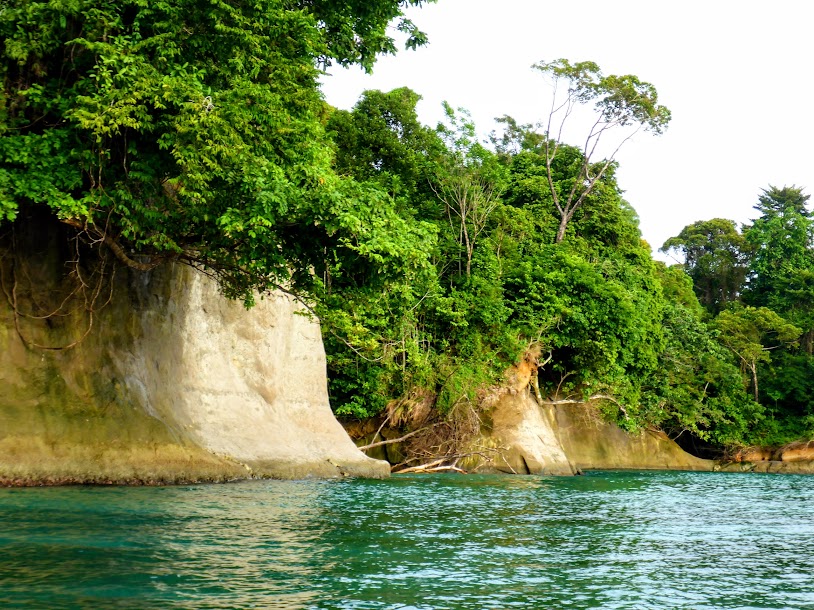
In other areas, trees dangle on, or off of, the edge, their roots trailing down below. We’re not sure how these things manage to survive and grow!

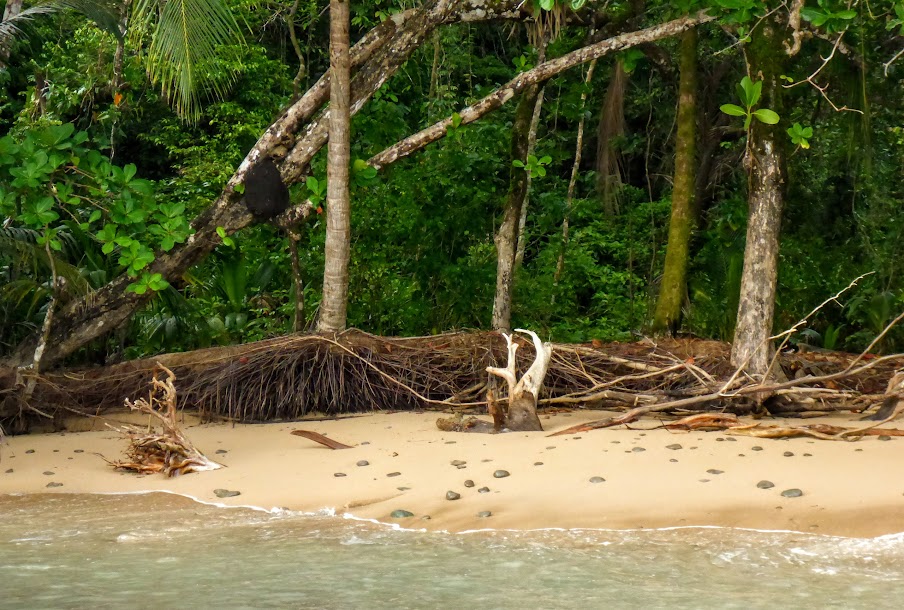
Along sandy beach areas, trees seemed rooted in air.

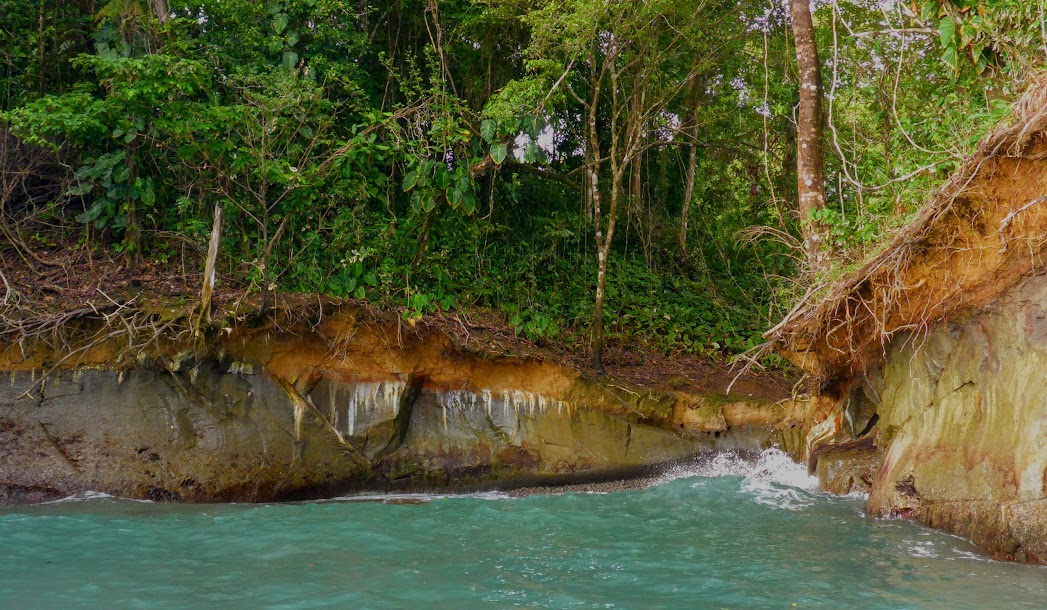
There is a clear line between soil and rock.

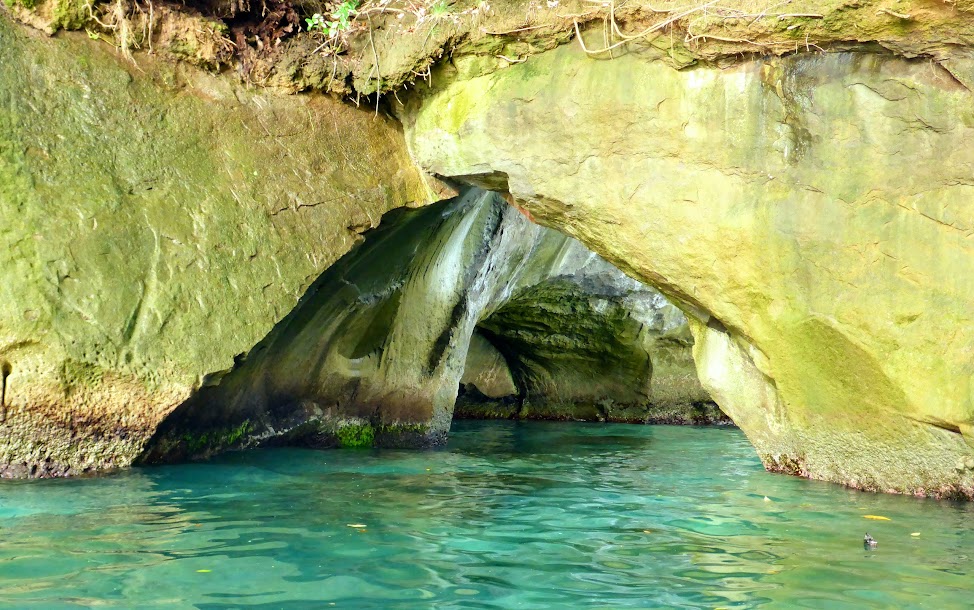
We wove in and out of nooks with small beaches, under rock arches, and past narrow caves.

The area reminded us of calendar photos we’ve seen of Indonesia’s rock islands, in the western Pacific Ocean; it was truly other-worldly.

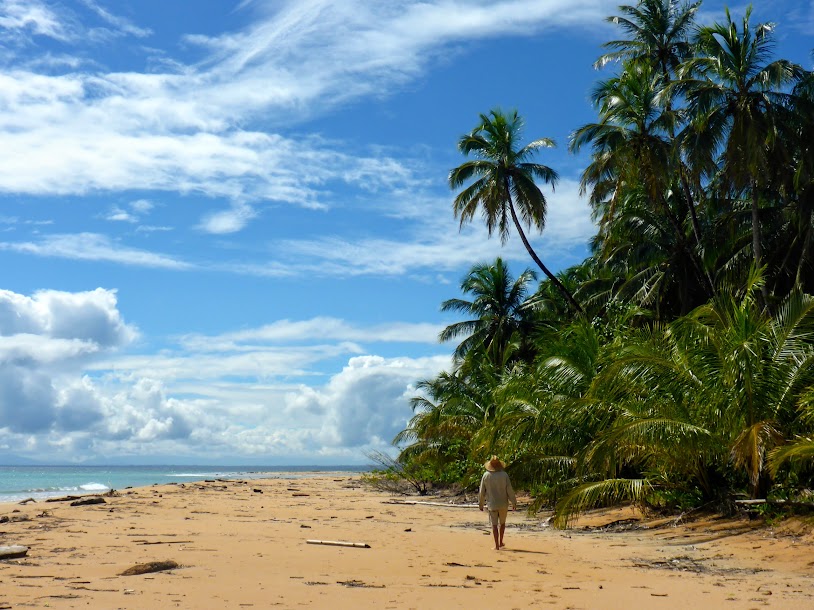
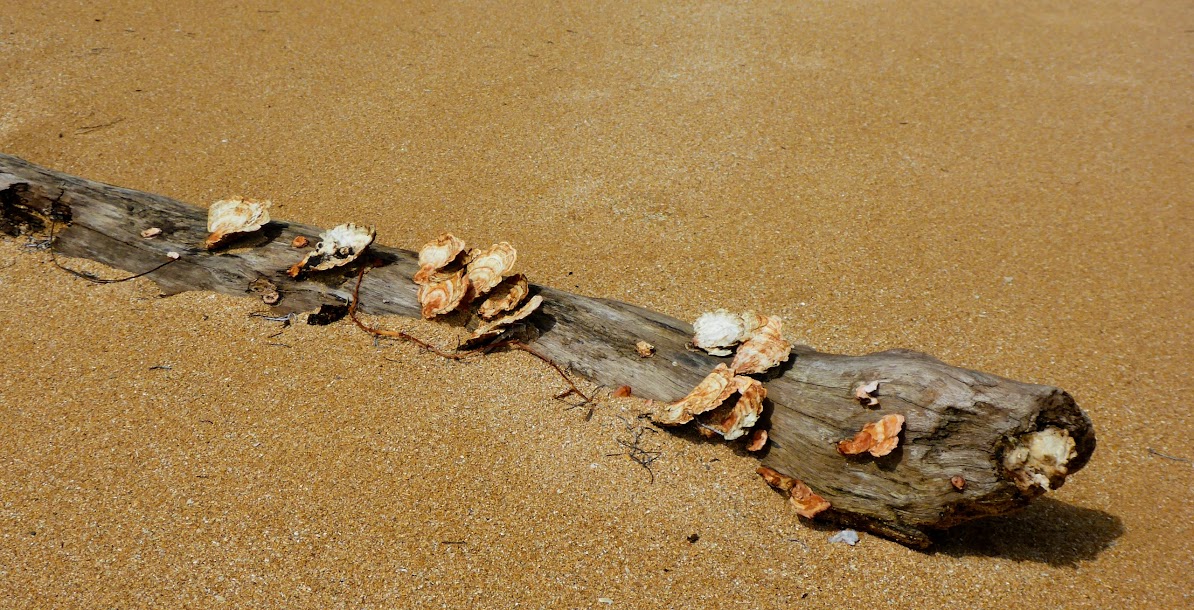
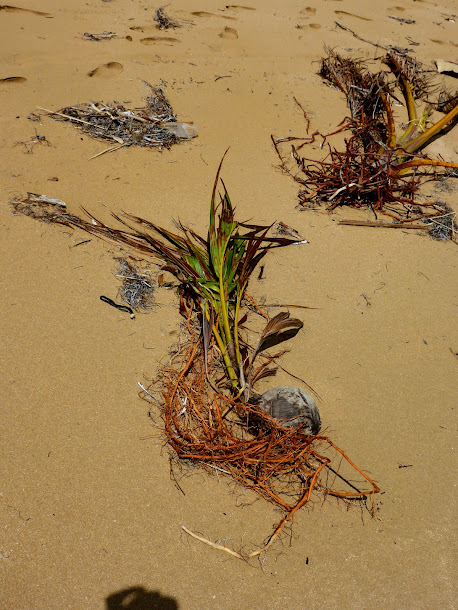
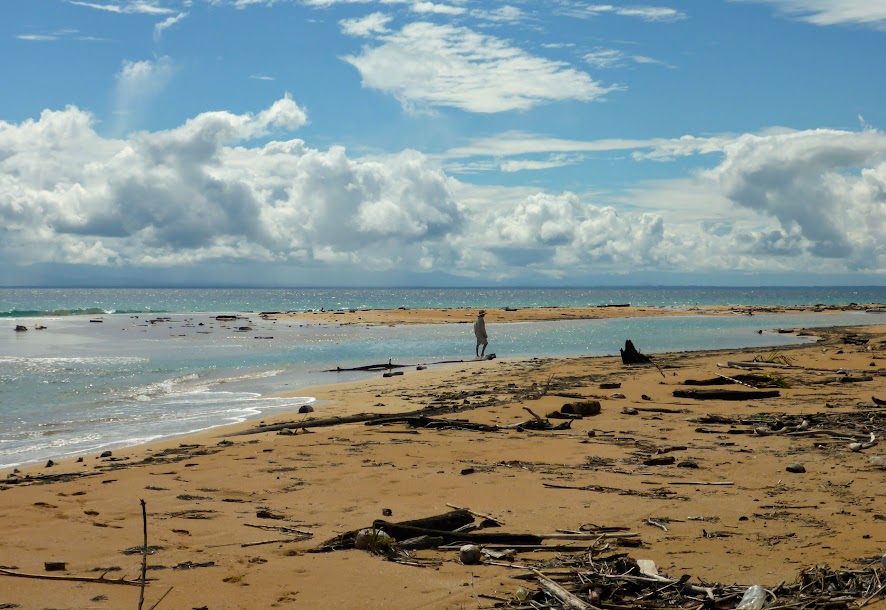
We enjoyed time on the long, sandy beach off of our bow. It was covered in lots of interesting, “natural” trash; logs, rocks, shells and many loosely rooted coconut palms.

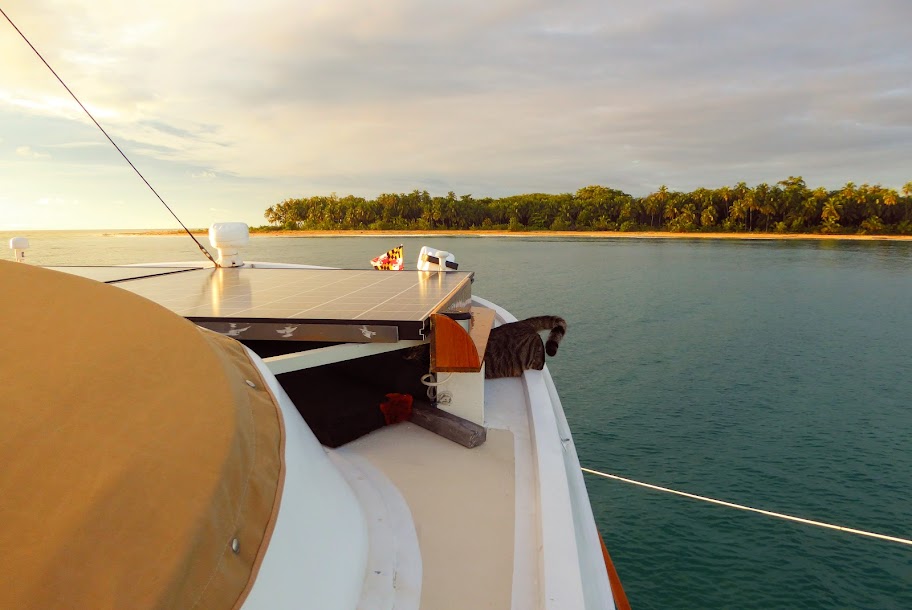
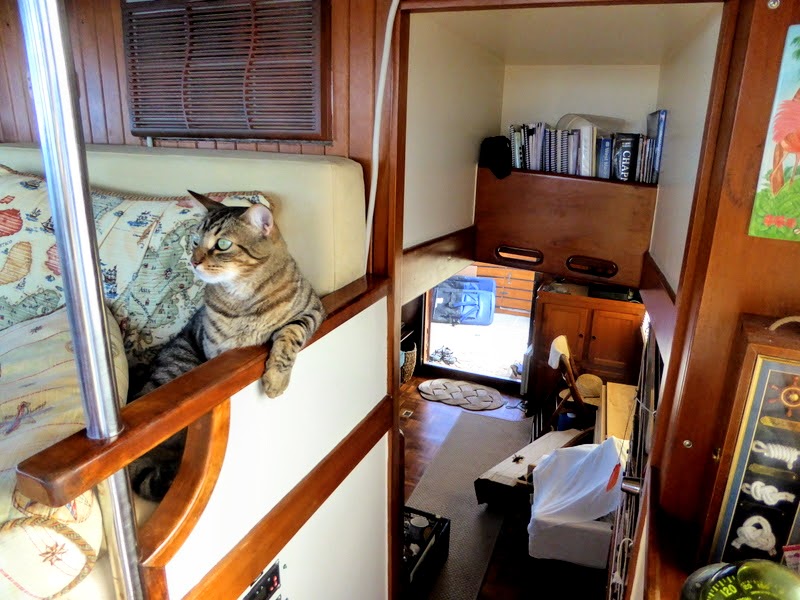
Howard loved the quiet anchorage, free from noisy pangas. He enjoyed happy hour up on the flybridge with us, and considers it his domain.

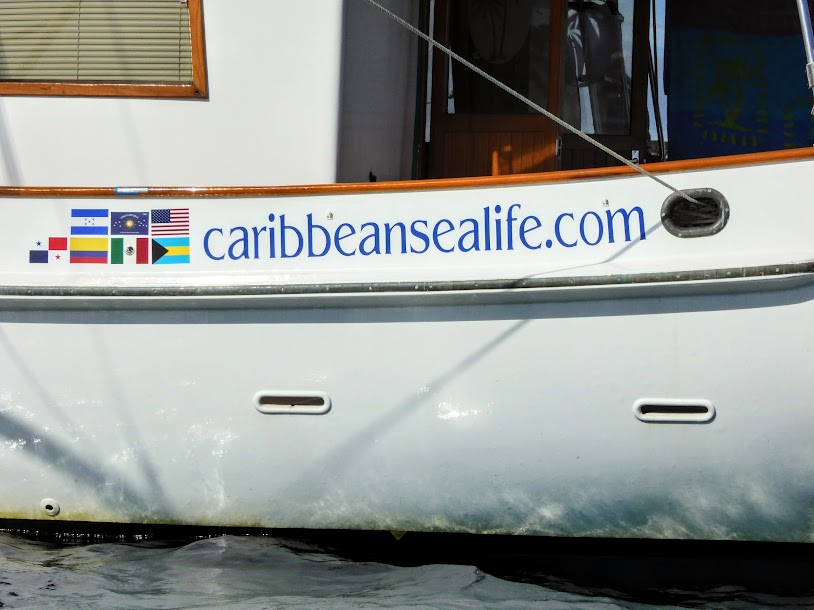
Sea Life is sporting a new look these days:

The idea came from a van we saw parked in Bocas Town, with stickers from countries it had visited. Scott got to work ordering stickers, and we also took the opportunity to plug the blog as we travel.

We hated to leave Escudo, but while winds and swells were down, it was time to keep moving. Here are many, many more photos of this beautiful island.

“Shells Sink, Dreams Float. Life’s Good On Our Boat!”


A Thanksgiving Celebration At Red Frog Marina

With Otto making landfall on the Nicaraguan coast, the offshore waters were far from ideal for travel. It was Thanksgiving, and the cruisers at Red Frog Marina were gathering for a potluck, so we decided to join in.

We arrived at the main pier bright and early, and plugged in. It was a hot, humid sunny day..perfect timing for air conditioning!  I spent the morning baking homemade rolls and chocolate peanut butter cupcakes,  while Scott took Howard out to explore the pier.

At 3pm we headed up to the courtyard area in front of the marina office, to meet the others. The counter in the laundry area was packed with food, and a table in the office provided a place for the many desserts. There were thirty or so of us, with half the group from countries outside the U.S. We enjoyed each others company, and stuffed ourselves full.

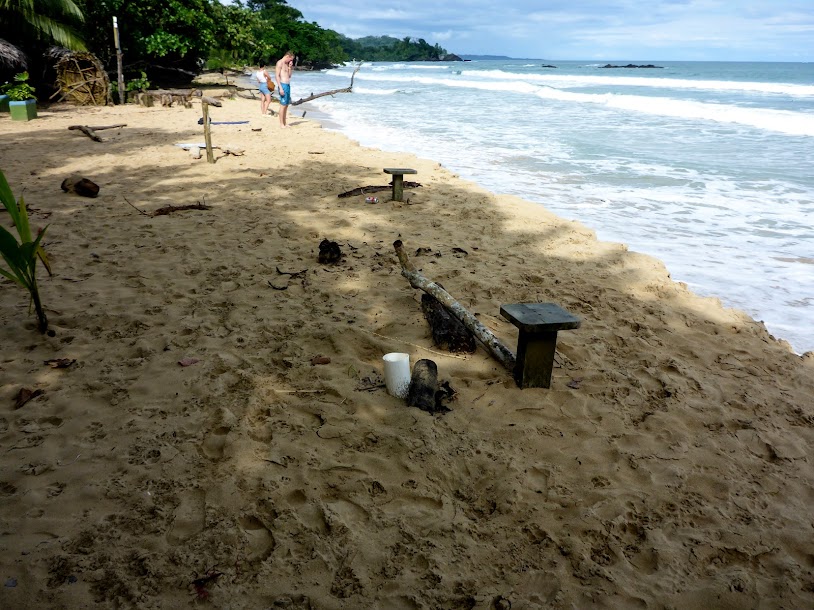
We’d heard that  the surge from Otto had greatly reduced the size of Red Frog beach, so Scott decided to take advantage of easy land access from the pier, and go see for himself. When he arrived, the views were much different than just a few days before.

We’ve learned that the beach here disappears every December and January, due to large surf caused by north winds (as you may imagine, it’s a popular area for surfing during this time), and comes back in the spring. Otto’s surge caused the the beach to shrink earlier than normal.

As long as he was out and about, Scott traipsed through some of the jungle trails again, noticing effects from the surge in some of the lower trails there as well. He also spotted some more dart frogs.

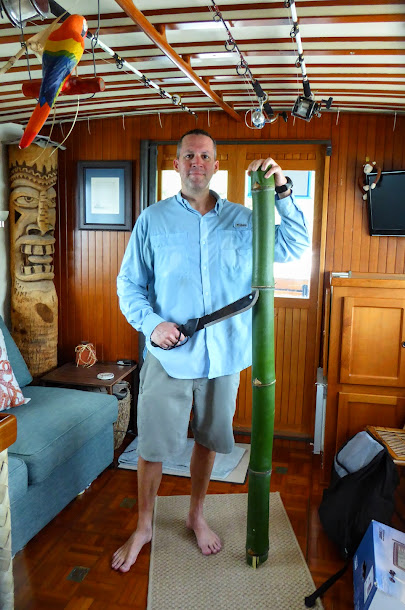
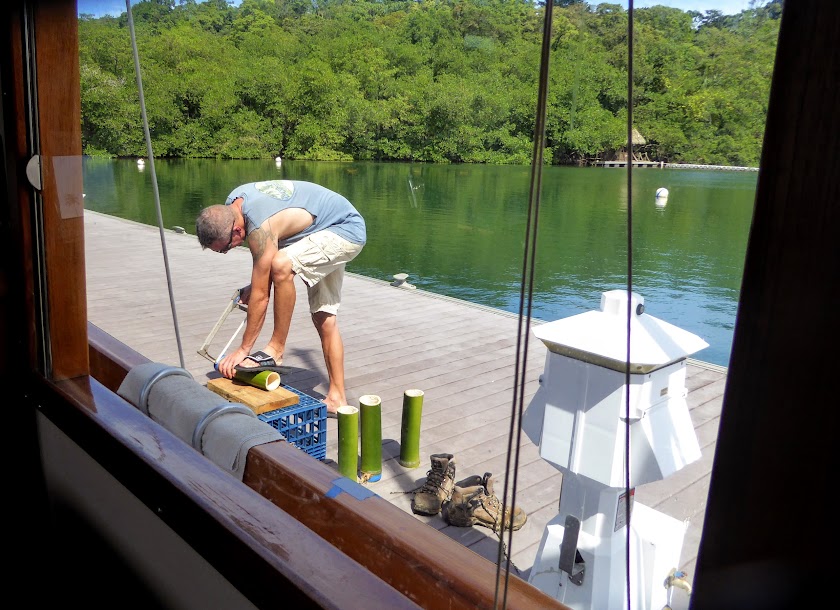
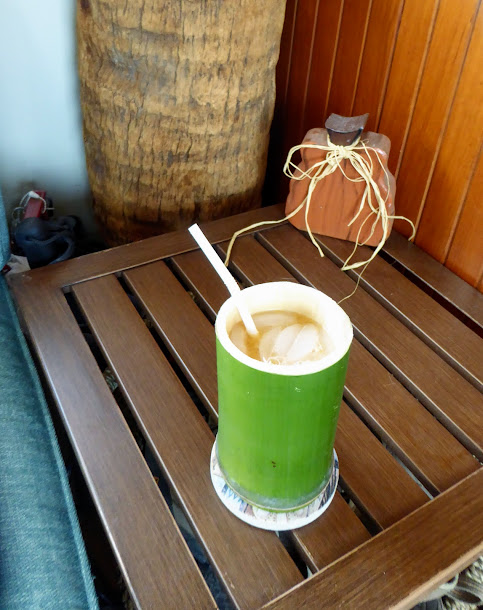
Scott returned from his journey with a souvenir and an idea.

He got right to work with a saw, and in no time, we had cups! (Please forgive my husband’s horrible shirt)

Although Otto delayed our departure plan, we are thankful to have spent the holiday with friends, and to have had just a bit more time at Red Frog.

Here are a few more photos.

“Shells Sink, Dreams Float. Life’s Good On Our Boat!”


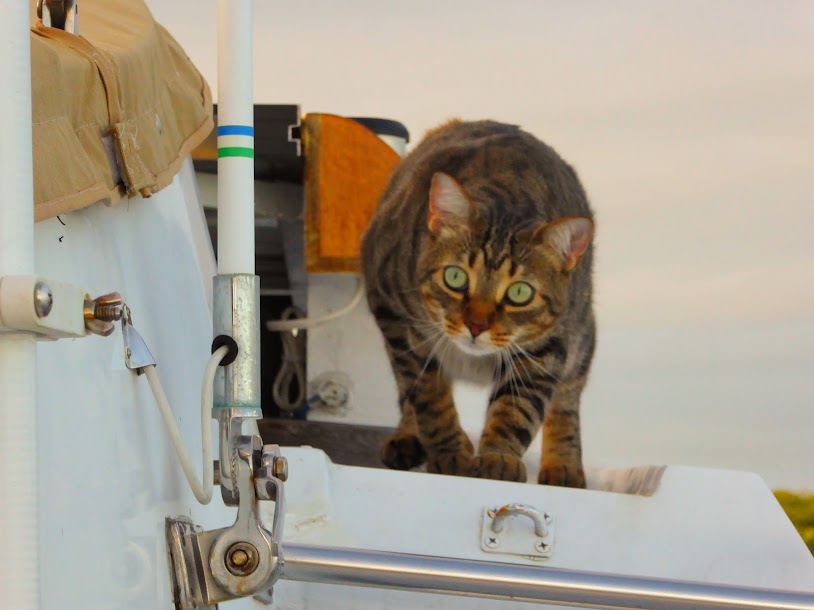
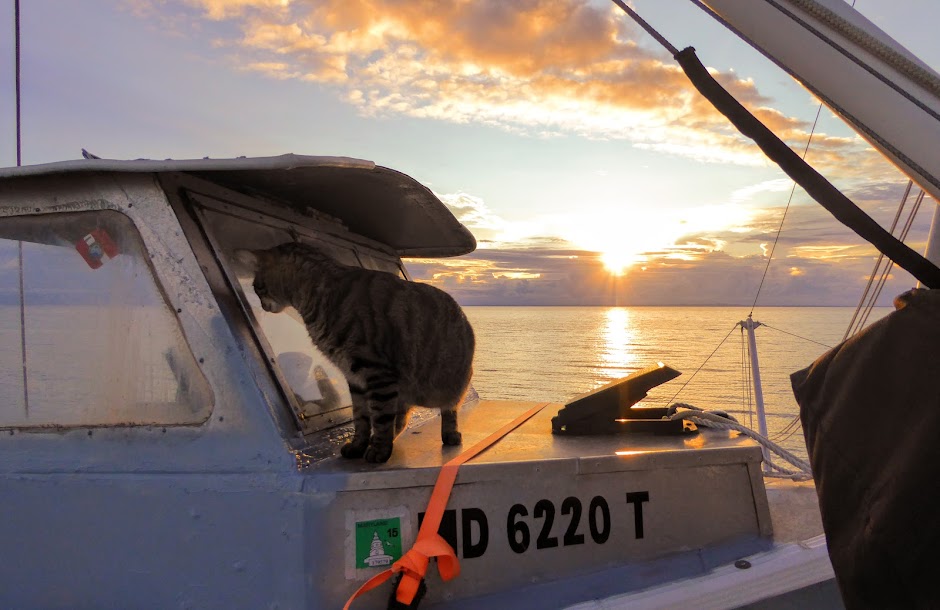
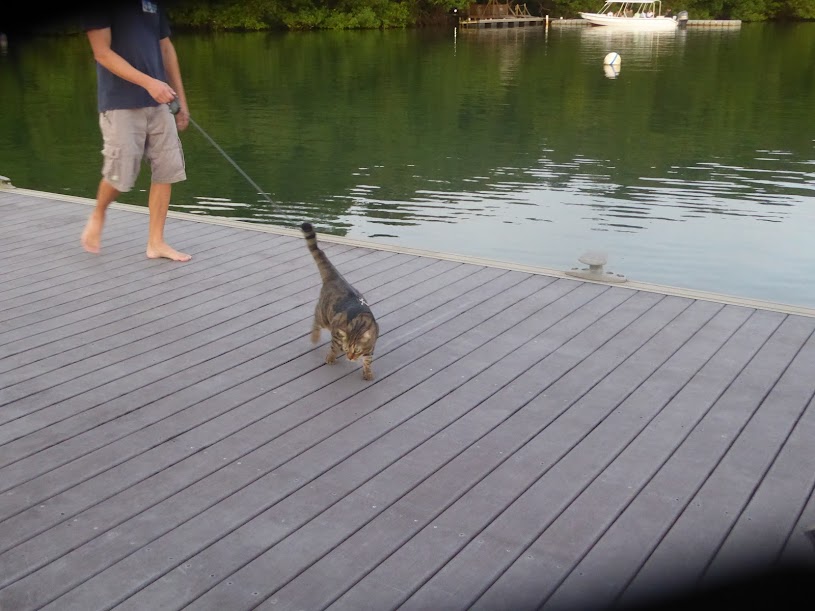
Happy Birthday Howard!!

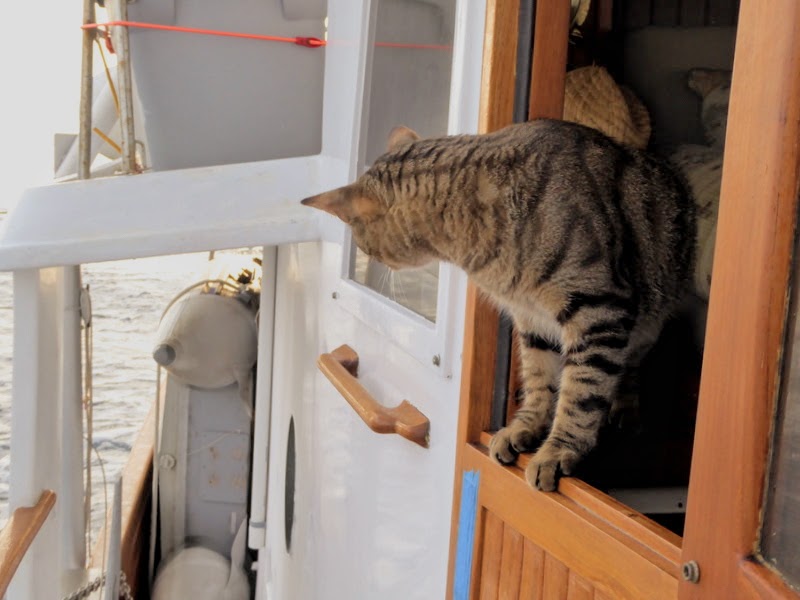
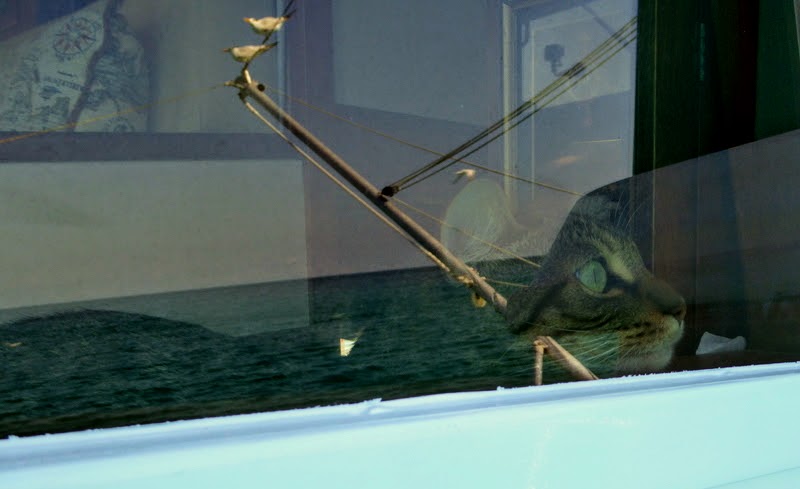
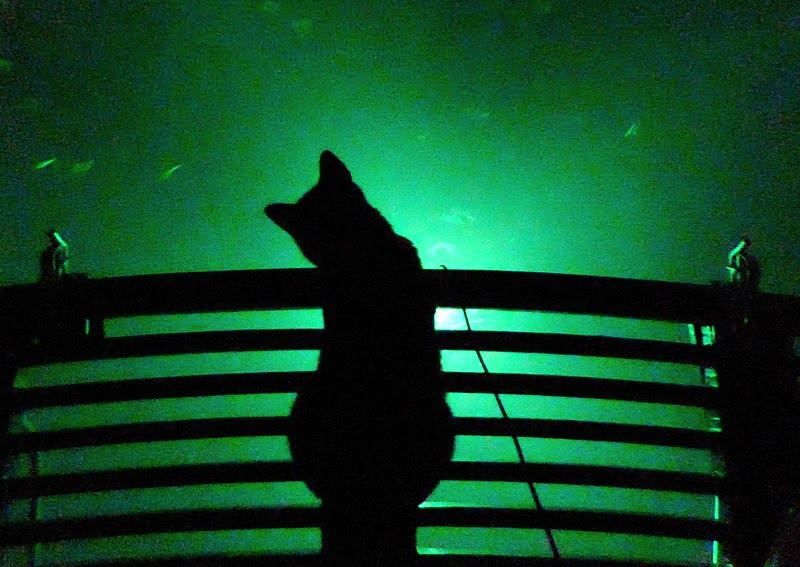
Howard turns four this month. At 16 pounds, we sometimes forget he’s still so young, until we see him do things like this:

And this:


Howard eased into life aboard at Henderson’s Wharf Marina, in Baltimore, becoming quite comfortable with boat life.

He took several “dips” in the Baltimore harbor, but has yet to swim in the Caribbean, although I’m sure that’s coming.

Howard is very good at letting you know when it’s time to eat, and knows just what to do to get under Scott’s skin.

He’s not thrilled with traveling, but tolerates it pretty well.

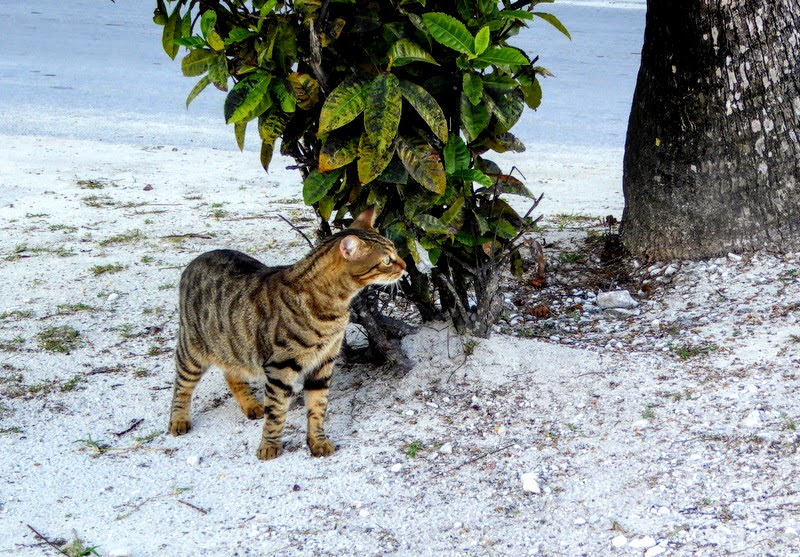
Throughout our journey, many different animals have caught Howard’s attention.

He  likes to supervise boat projects, and enjoys intense play sessions, followed by an epic nap.

Howard has provided us with endless entertainment, good company and much “sass” on our journey, and always catches the attention of locals and other cruisers as we travel.

We didn’t plan on having a cat aboard during this adventure, but cannot imagine the past year without Howard. Happy birthday to our boat cat!

“Shells Sink, Dreams Float. Life’s Good On Our Boat!”
 

Hurricane Otto Comes Calling

The tropical low that we’ve been watching for the last ten days has finally strengthened into a tropical storm, and  is expected to become Hurricane Otto in the next day or so. For reference, Bocas del Toro is located to the right of “San Jose,” in the little bay (cut-out) on the north coast of Panama.

Current Storm Status

Later this week, high pressure is expected to steer the storm west, making landfall north of us, most likely along the Nicaragua/Costa Rica border.

It’s rare to have a named storm this late into November, even in the warm, Caribbean waters this far south. Some tidbits from the Weather Channel:

Prior to January 2016’s strange Hurricane Alex, only 18 storms of at least tropical storm strength had formed on or after November 21 dating to 1950.

Only nine tropical cyclones became hurricanes in the Atlantic Basin after November 21 from 1950 through 2015. The last to do so was Epsilon, in December 2005. 

Only one of those nine hurricanes occurred in the southwest Caribbean Sea, Hurricane Martha in 1969.

The good news is, that as of now we are not in the storm’s direct path, and will instead be getting the “fringe” effects of strong winds and rain. Having owned waterfront property for many years on the Chesapeake Bay, we unfortunately have first-hand knowledge of tropical storm and hurricane winds. The best scenario is to be where we are now, in or off the bottom left quadrant of a storm, where the winds are weakest.

With the increased wind directions more firm, we’ve decided to leave the anchorage near town, as it is very exposed to the west, one of the predicted wind directions. While we are confident that our anchor, the Hulk, will keep us firmly set, the chance of other boats dragging into us is one we don’t wish to take.

Last month, from our slip in Bocas Marina, Scott saw boats drag through the anchorage and into the mangroves during a routine thunderstorm. Our many near miss experiences in the anchorage at Isla Mujeres were enough, thank you.

While should not see big wind and water here in Bocas, the waves off shore are becoming huge, at 12 feet or more. Once the storm passes and makes landfall, it will take days for the seas out there to calm, so we are in another holding pattern.

Our plan is to leave here, and make our way to the San Blas Islands, an archipelago made up of approximately 365 islands and cays, of which only 49 are inhabited. They lie off the north coast  of Panama, east of the Panama Canal (much more on this later).

We’d hoped to be halfway there by now, stopping to anchor at several locations along the way, and arriving in the San Blas before swells from the Caribbean’s Christmas winds increase.

Last week, forecasters weren’t sure if this thing would develop, and if so, where it would go, so we waited; not wanting to be stuck in an unprotected anchorage for days, with strong winds coming at us. This week, and for the near future, we cannot move because of large swells offshore. Yay for us.

We are tucked in behind the mangroves, just off of Red Frog marina. For now, the winds come and go, and so does the rain, but we expect things to pick up over the next few days. On the bright side, it’s peaceful here. There is less chop when the winds blow, and our friends are in view just off the bow.

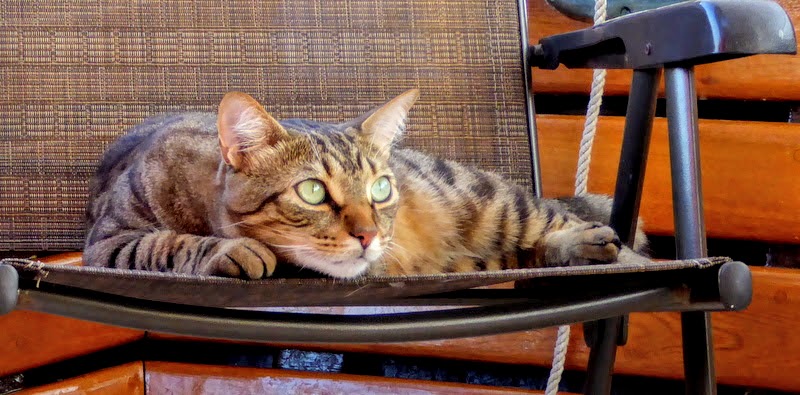
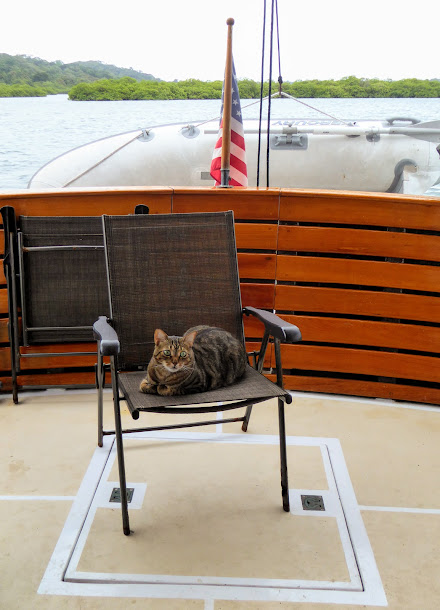
Howard is enjoying the quieter location, with far few pangas buzzing by, and spends time out on the cockpit. He usually waits for Scott to set up a chair to sit in, and then happily takes it for himself.

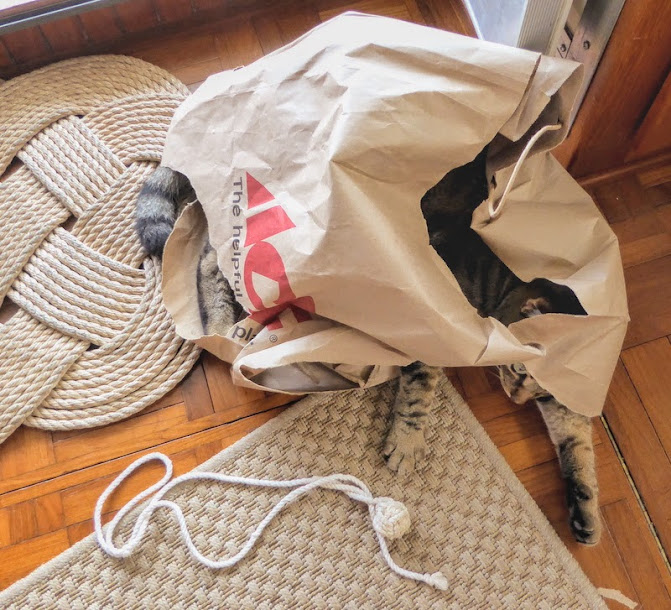
The fresh air inspires energetic play sessions with his favorite bags, which is exhausting.

So once again, we’re playing the weather window game, to which there are no rules or time limits. While we wait, there is plenty of rum on board, and movies on the hard drive.

“Shells Sink, Dreams Float. Life’s Good On Our Boat!”


Back At Anchor

Leaving Red Frog Marina, we headed back to anchor off of Bocas Town for a few days. I wanted to make a final trip to town, some  fresh produce before we continued on, and was also interested in renting a golf cart to see more of Isla Colon. After that, the plan was to anchor at several places in the area, and then head east along the coast of Panama.

Once again, Mother Nature had other plans. A tropical low was trying to form, just north of Panama, and the timing would conflict with anchoring in areas along the coast, as they don’t allow for good protection in certain wind directions.

The wind forecast was all over the place, predicting very strong stuff one day, and backing down on it the next. There was also a threat of squalls every day, but we are confident in the hulk, and decided to take it day by day, relocating if needed.

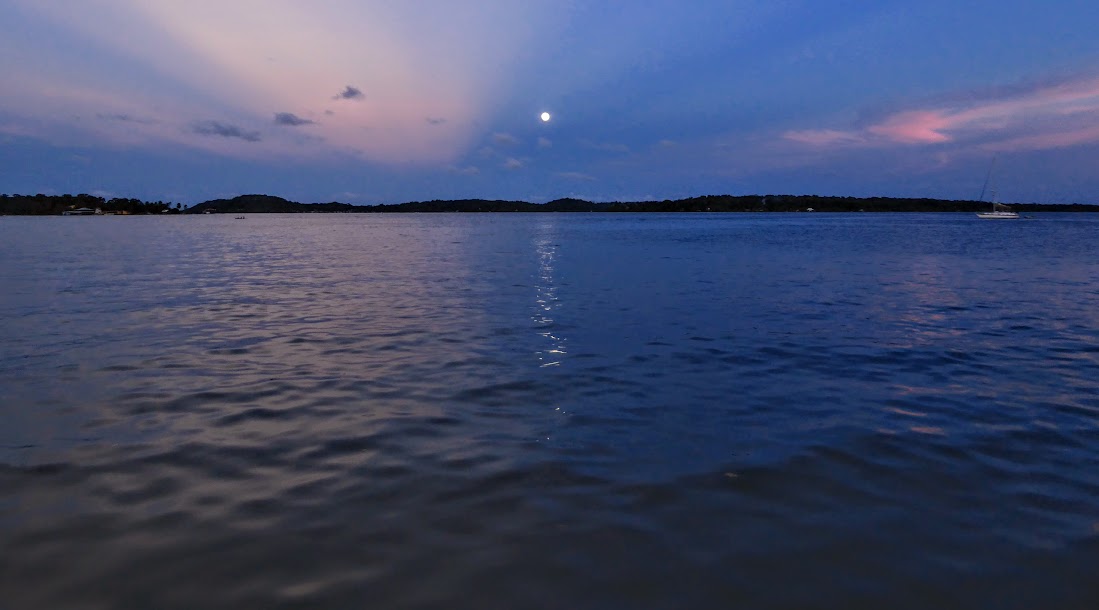
We decided to focus on the positives…the weather was breezy, more cloudy and cooler. All good things for being at anchor, and unplugged from air conditioning! We were also just a stone’s throw from a free dinghy dock, so shopping and other things in town were easy and convenient. Anchored off of town gave us unobstructed views of Costa Rica’s mountains on the horizon, and we were timed perfectly to enjoy the supermoon!

We decided to use our extra time, and have a golf cart day. There are all-terrain vehicles for rent in town, but I wasn’t interested in driving one myself, and Scott couldn’t guarantee not scaring me to death if we rode together. Helmets are required to ride the ATVs, and I’d be sitting right on top of the motor. Both of those thing spelled hot for me, so a golf cart it was.

The man behind the counter told us that we were restricted as to where on the island we could go, as the carts aren’t built to handle the condition of the roads in some areas. So of course, at the first opportunity, Scott turned to the right when he should have stayed left.

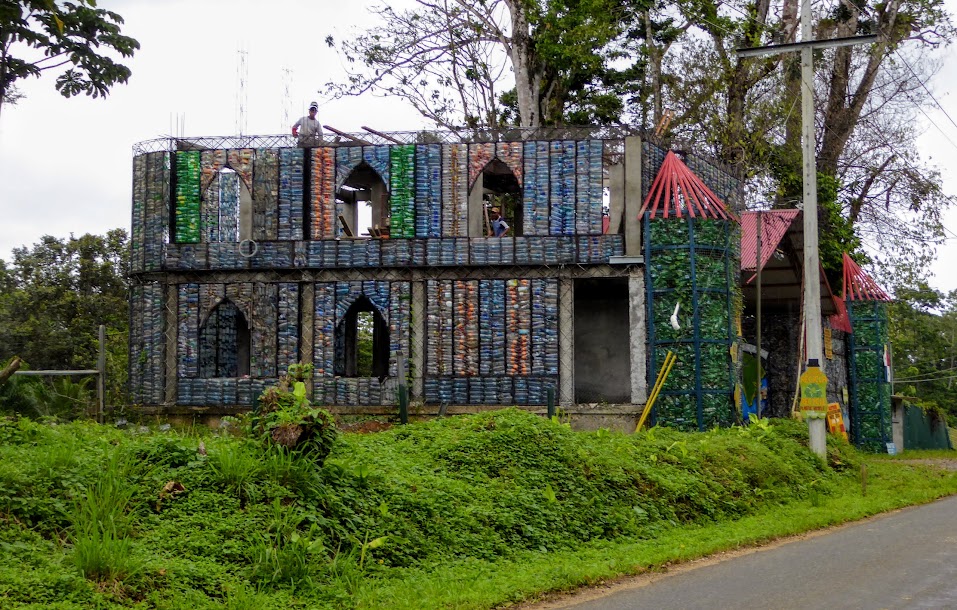
Once on the forbidden path, we passed many signs for Plastic Bottle Village, and it finally came into view.  A community of buildings and houses is in development, with used plastic bottles as core material before they are covered in concrete. The castle-like, quirky entrance was definitely eye catching.

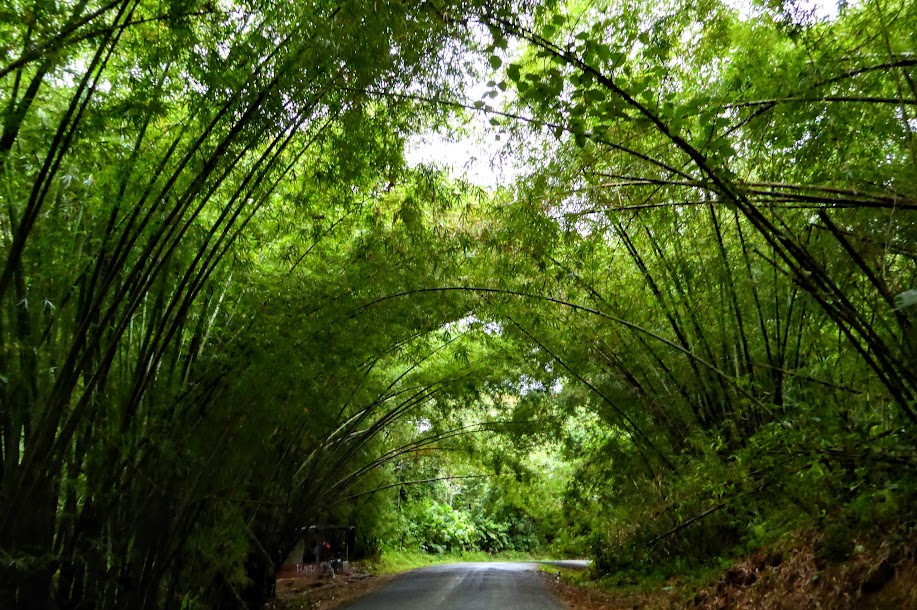
As the roads became more hilly, muddy and bumpy, we passed under a huge canopy of bamboo, thickly anchored in the ground. It was like driving in a fairy tale, and Scott wished he’d had access to bamboo this thick when building a tiki bar each year, for our  summer parties on land.

Not wanting to challenge the poor cart any further, Scott admitted defeat, and we turned around. It was lunch time, and we stopped at Scully’s for a cold drink and some food. Owned by American expats, Scully’s sits on the waterfront, with several inviting seating options.

Sadly, our little cart was not the best built model. It had been stalling on us all morning, when we slowed or came to idle, and the steering was similar to that of an amusement park bumper car. I spent most of the drive holding my breath as we’d make an unexpected, hard swerve toward the edge of the road, with Scott yelling, “I can’t help it, this thing is garbage!”

When we got into the cart to leave Scully’s, it wouldn’t start. Scott tried and tried, and waited and tried, and waited and tried some more, then made a call. A mechanic brought us a replacement cart, and we left him to deal with the dead one.

While this cart definitely ran better, the steering was worse! Scott was too worried that he’d run over some poor person walking alongside the road, so we called it a day, and headed back to the rental shop. Since we’d only had the cart for just under half a day, they refunded us some money, which was fair.

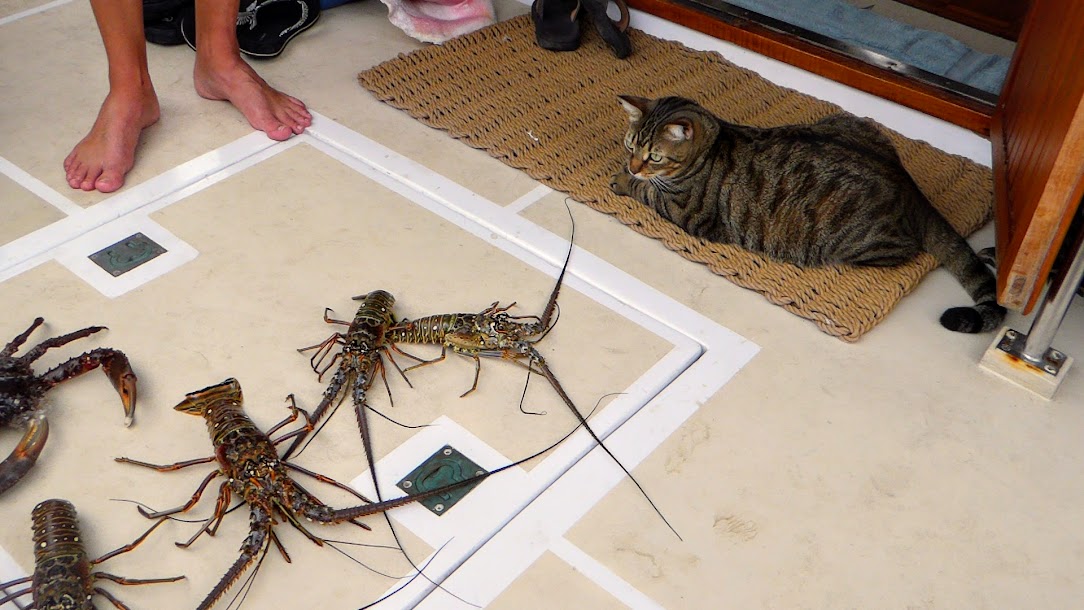
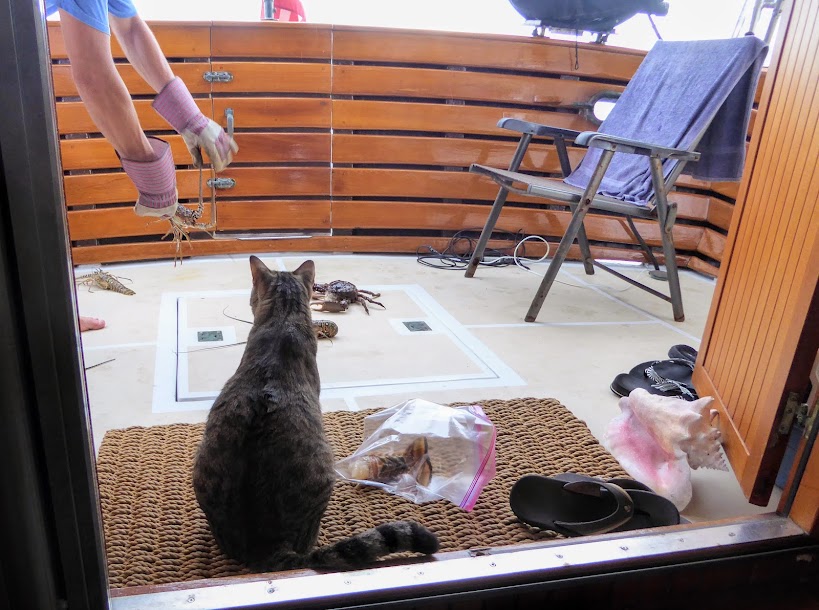
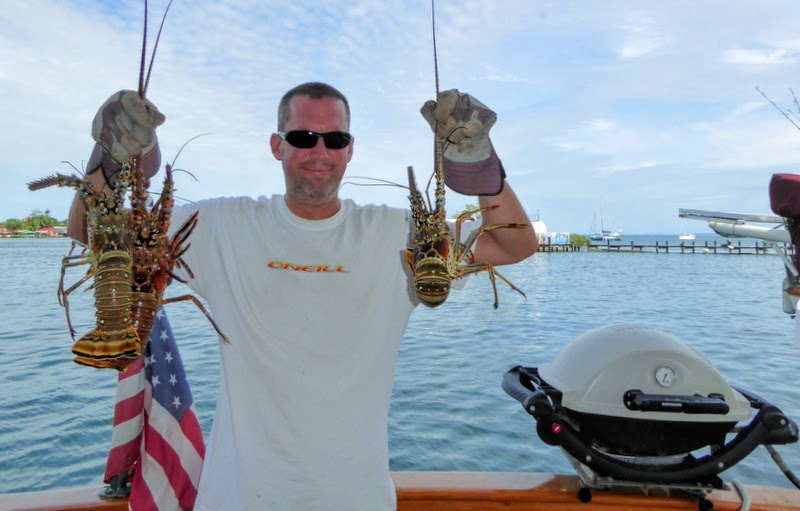
Bocas had proved to be spear fish-challenged for Scott. There just weren’t many areas to find fish and lobster. However, Scott is nothing if not diligent, and finally came up lucky, bringing home four lobsters, and a black crab.

Howard was fascinated with Scott’s catch, and watched intently as Scott prepared them. Contrary to what you may think, he wasn’t interested in engaging with, or eating the crustaceans. With more than enough lobster,  and because boiling water would heat up the boat, we decided to release the crab.

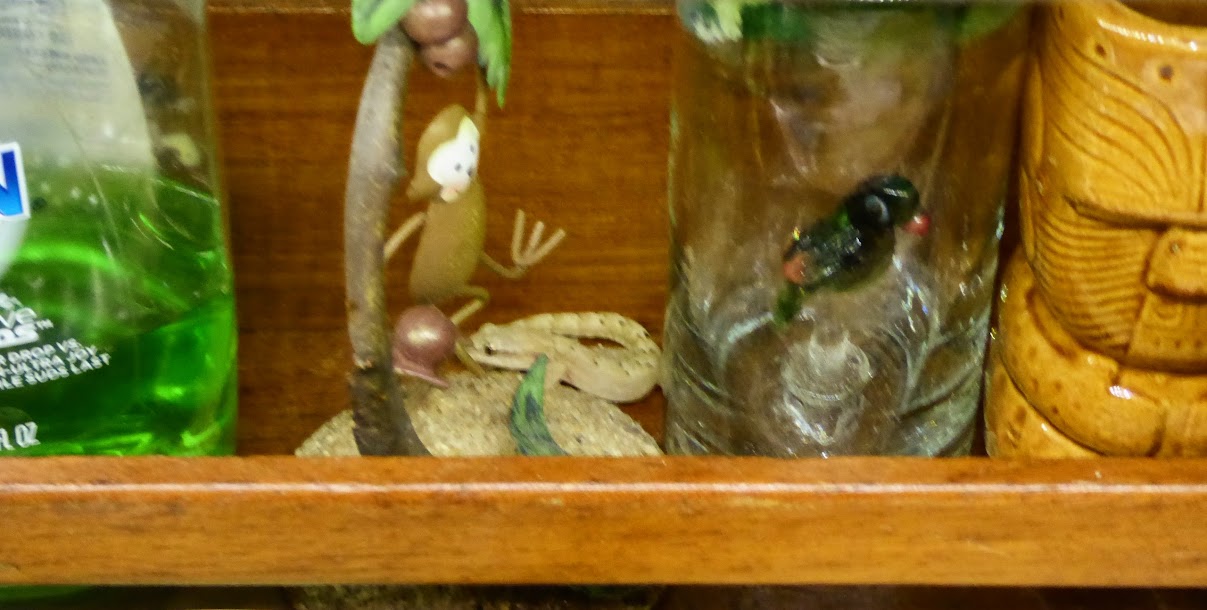
We picked up many little geckos on our decks while at Red Frog, and one has recently made it’s way inside.  Scott noticed it in the galley, near the sink, coiled up like a snake. Since then, we’ve spotted the little guy in other areas of the boat as well.

Howard has failed to notice our latest stowaway, and that thing better hope I don’t wake during the night to find it crawling across me.

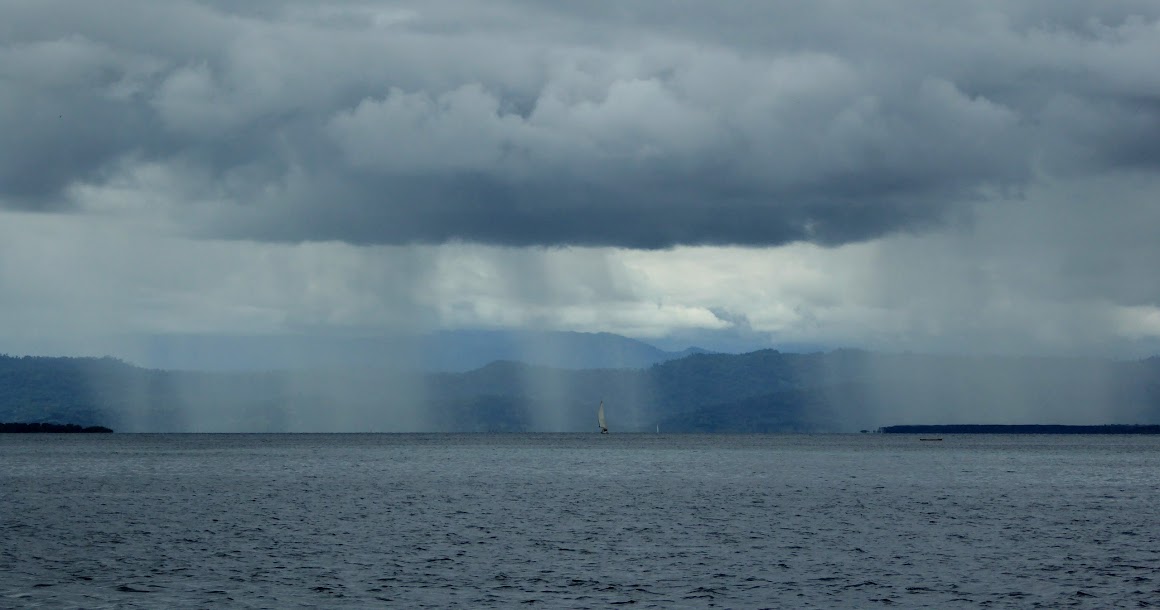
Heavy rain was often visible on the horizon, and the skies became dark each day, but we managed to dodge severe weather.

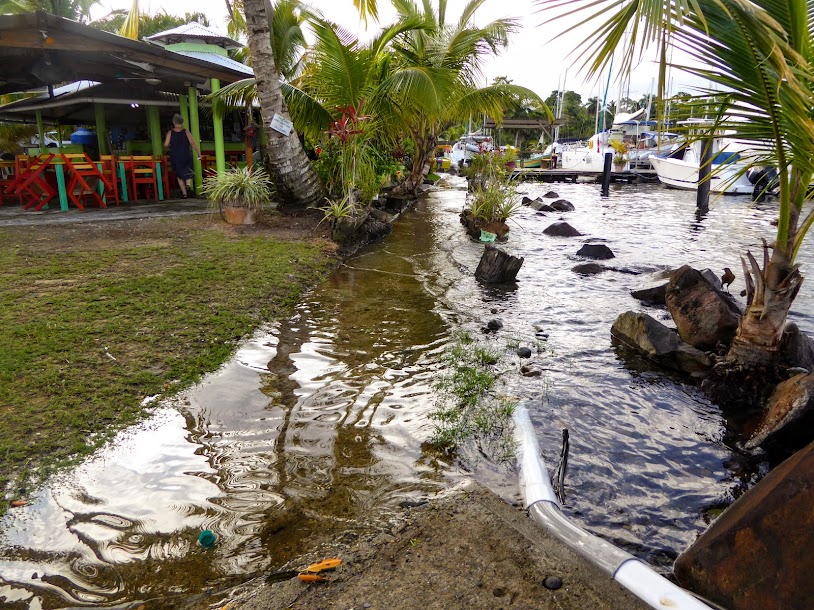
We enjoyed a few more trips into town (Scott actually requested that we revisit sushi!), and I was able to get in another barbecue night at Boca Marina’s cantina. The supermoon caused higher than normal tides, and when we arrived, it was either slosh through the water, or walk across the soggy, muddy grass.

Sadly, their delicious pizza that I came for wasn’t offered on our last visit, so I settled for a less yummy burger.

Weather threat aside, we are enjoyed being back at anchor, and hoped to be on the move again soon. Here are more photos.

“Shells Sink, Dreams Float. Life’s Good On Our Boat!”


Our Last Days At Red Frog Marina

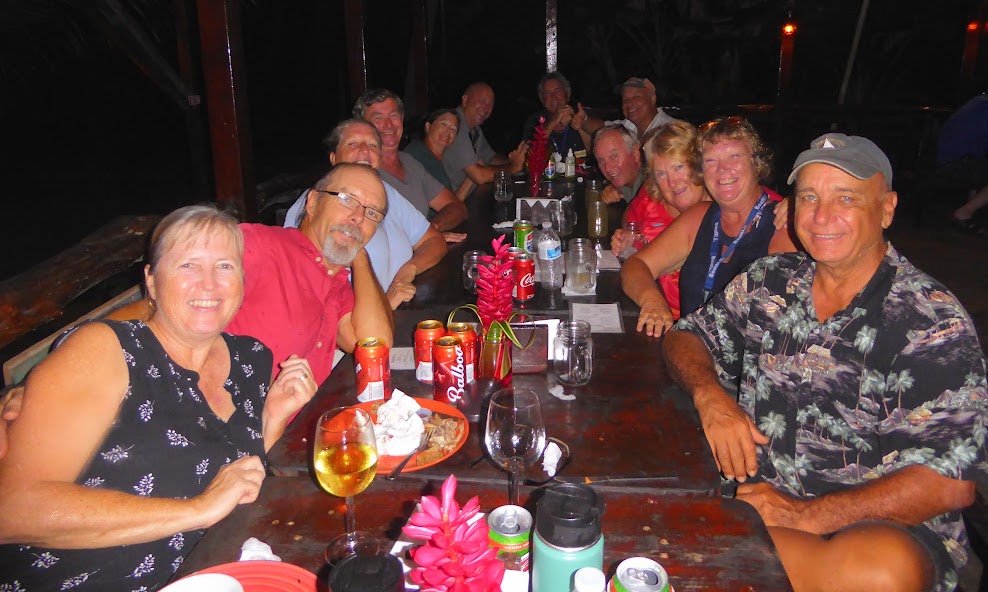
With our month-long stay at Red Frog Marina coming to an end, we enjoyed some outings with the other cruisers. One evening, a group made the fifteen minute walk to the beach, for dinner at the Palmar Beach Lodge, which sits adjacent to the Red Frog property. The fourteen of us crowded around a long table, and enjoyed dinner.

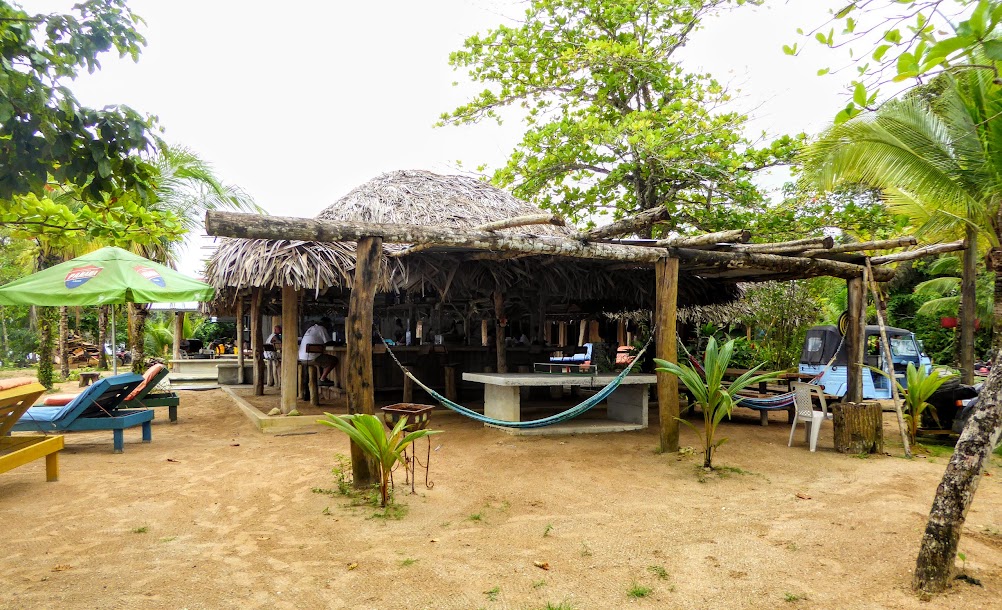
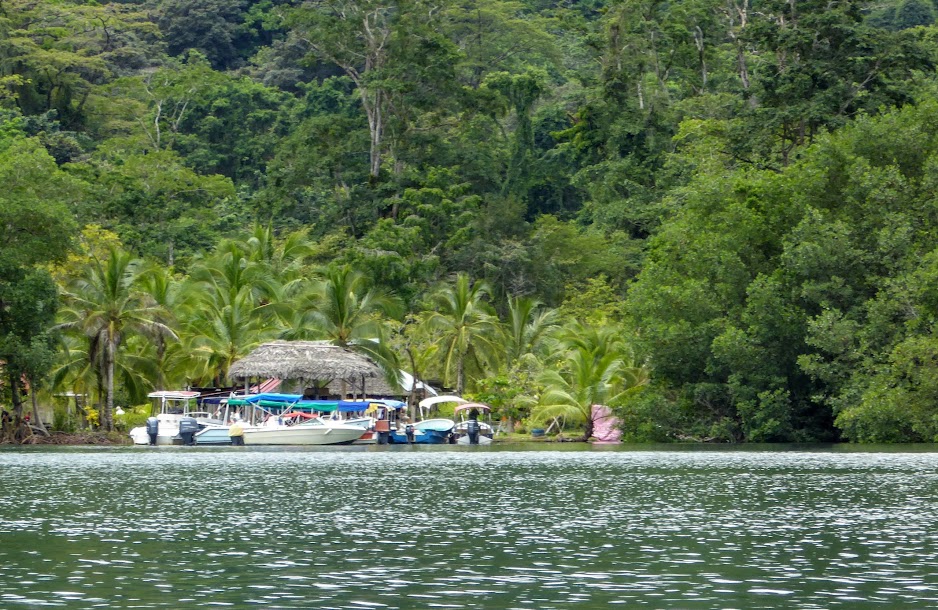
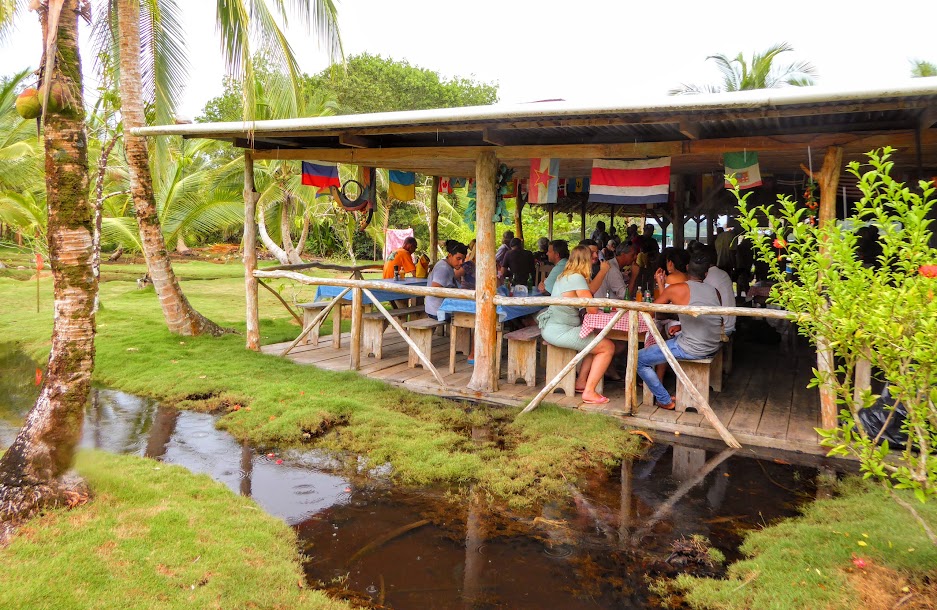
On Sundays, cruisers, expats and locals head for Rona Azul, a tiny palapa restaurant run by Joseph. He settled here from Germany decades ago, and opened what has become a weekly waterfront destination, tucked away at the back of a cove….off of a cove….off of another cove. Each Sunday, the pier is packed with pangas and small boats, and people spend the afternoon, eating, drinking and dancing.

Scott and I took the Aluminum Princess to Rona Azul one Sunday, and returned a few weeks later on a panga with other cruisers from Red Frog. It was the yearly Oktoberfest celebration, and Joseph’s last day as owner. He has decided to sell Rona Azul, and new owners Mark and Syndey will close it while they make changes.

Our panga ride was a soggy one, as rain fell during most of the 45 minute trip. We all crouched behind our open umbrellas, using them as shields against the rain coming at us. We’ve learned not to wear raincoats here if we can help it. With the heat and humidity, it’s like being encased in colored saran wrap.

We arrived at Ron Azul to a larger than normal crowd, which was no surprise. With the palapa full of people, we headed for a seat at tables set up in the grass outside. There were tarps overhead, shielding us from the rain, which soon let up, leaving thick, soupy humidity, but we persevered .

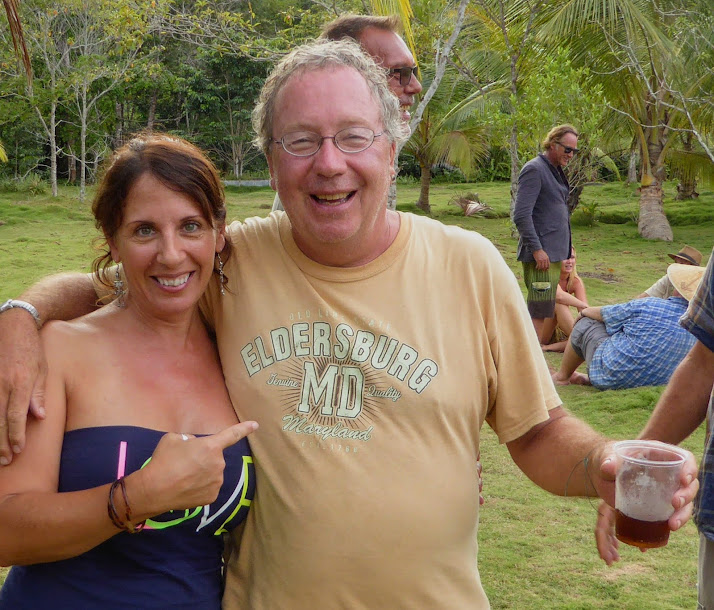
As we were enjoying beer, pretzels and other Oktoberfest offerings, I noticed a man wearing a shirt from my small hometown of Eldersburg, Md., which is outside of Baltimore. Unbelievable! I stared for a bit, to make sure that I was reading the shirt correctly, and sure enough, it definitely said Eldersburg, Md. I ventured over to say hello, and learned that his sister lives there…ridiculously small world!

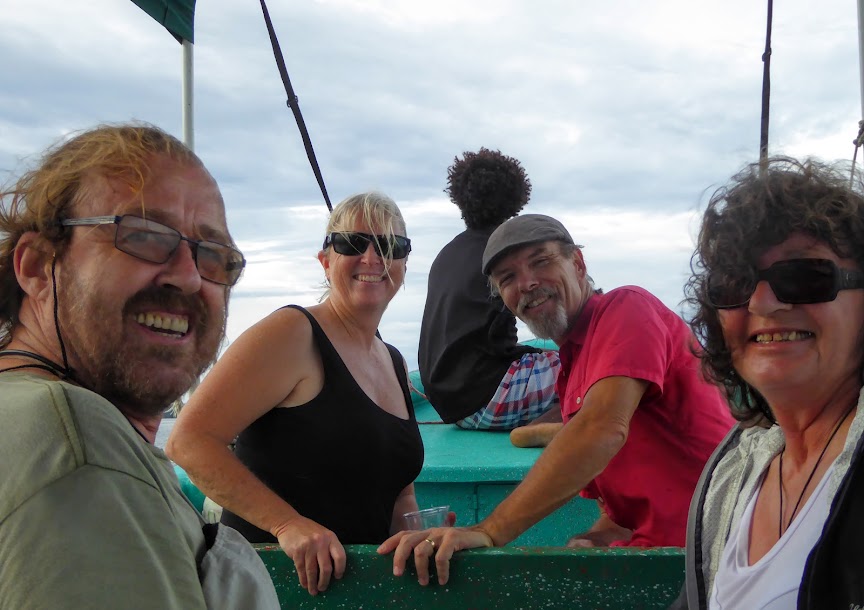
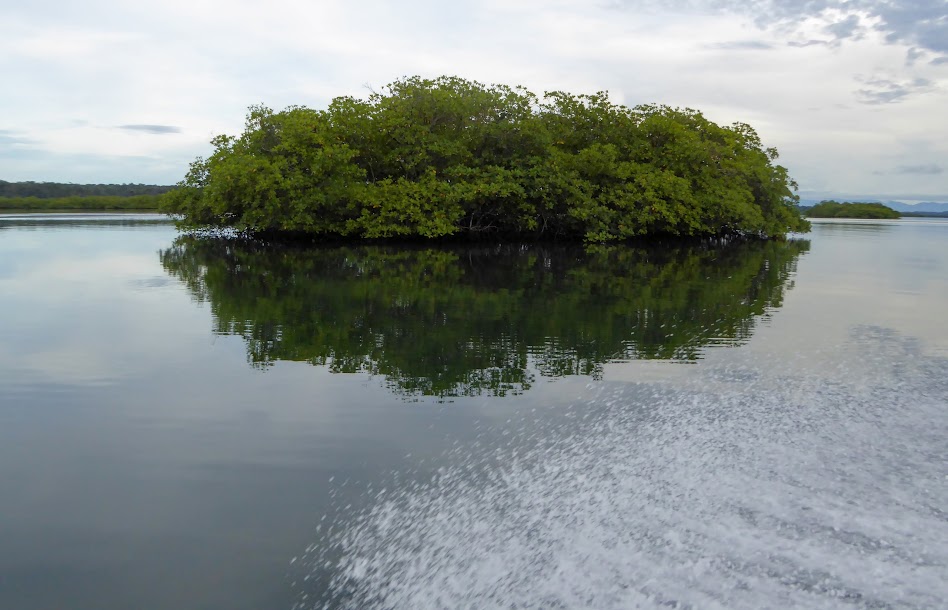
After several hours of fun, we climbed back into the panga, and enjoyed a dry, scenic journey back to Red Frog.

Our friend Sam, who we met through a mutual cruising friend, lives very close to Red Frog. Several years ago, he purchased property here, and is living on his sailboat while building a house. Scott and I took the Aluminum Princess over, to check on the progress.

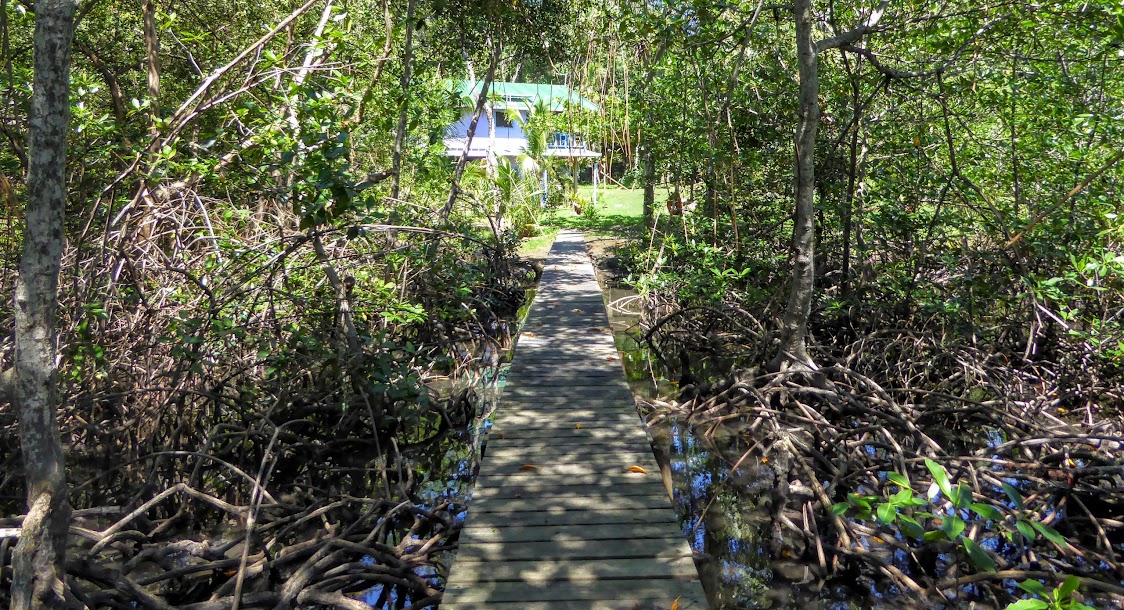
As you walk through the mangrove-lined pier (I was sure to load up on bug spray when we arrived), the property opens up to a large, open area, lined with all kinds of fruit trees: mango, lime, rose apple, avocado and orange lime. Sam is also preparing an area where he will grow hydroponic vegetables.

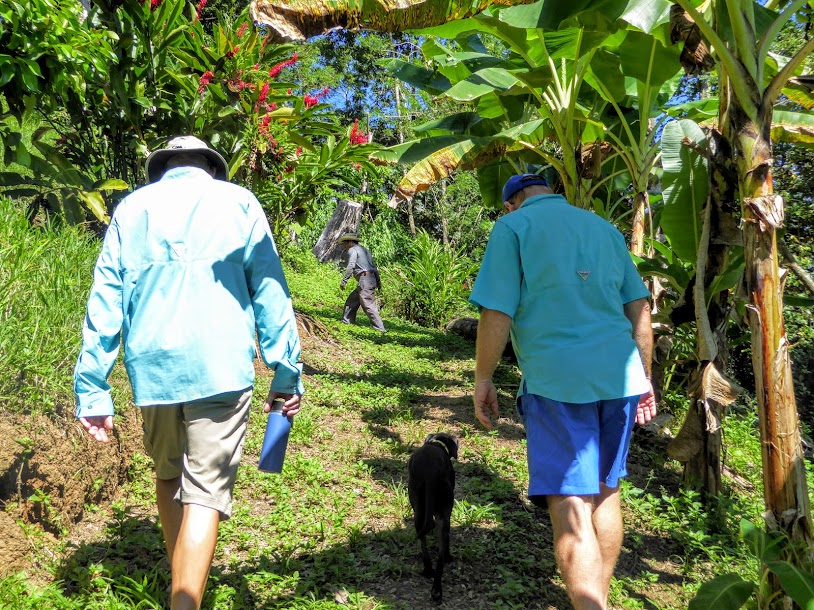
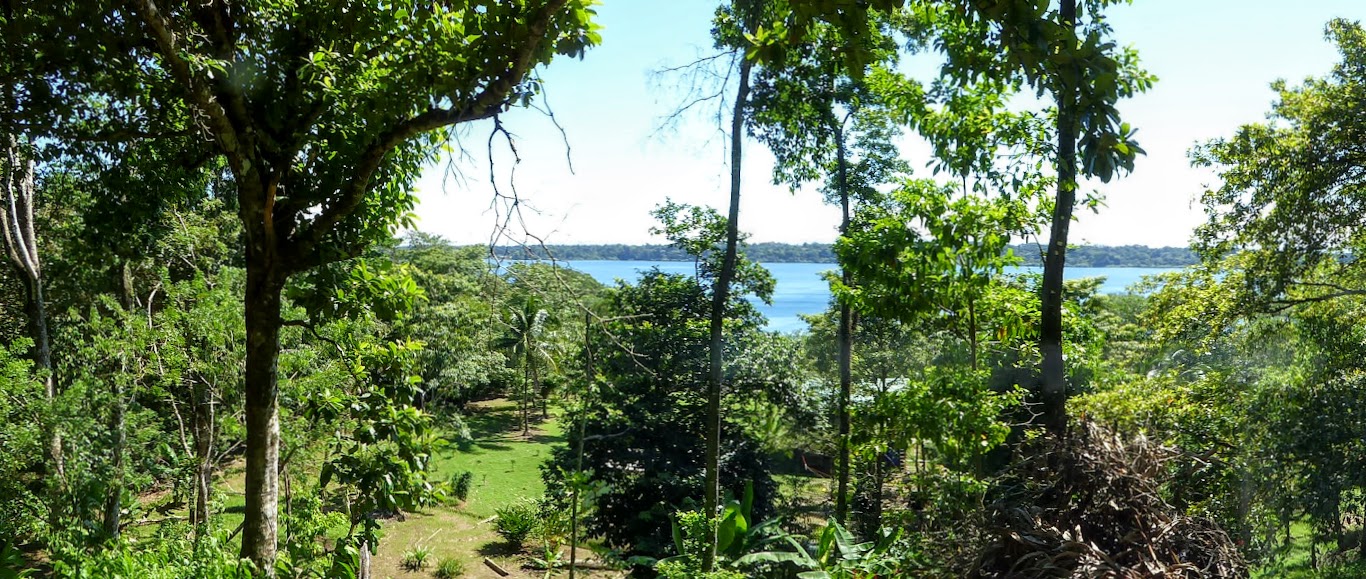
The house is at the top of the property, so we made the walk up the hill, with Ruby the dog in tow. I stopped to capture the view looking down over the lower part of the property and out across the water.

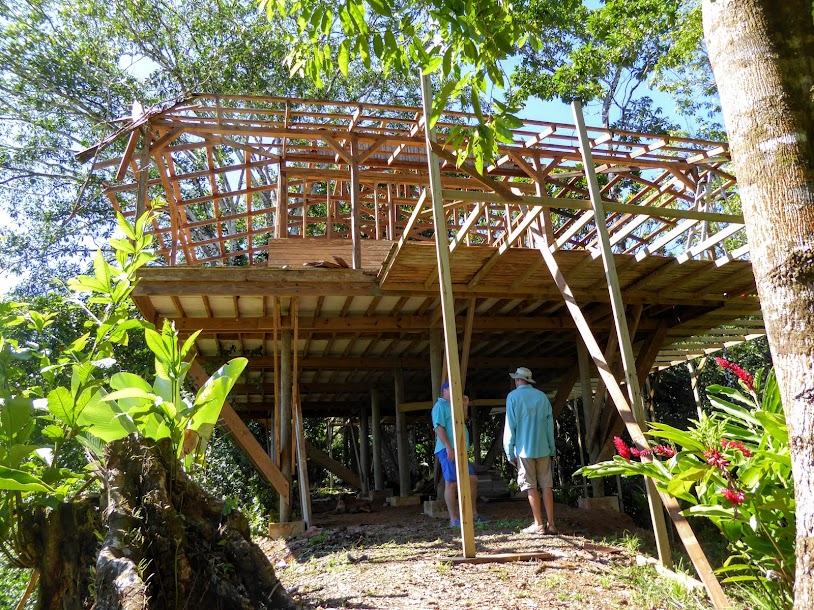
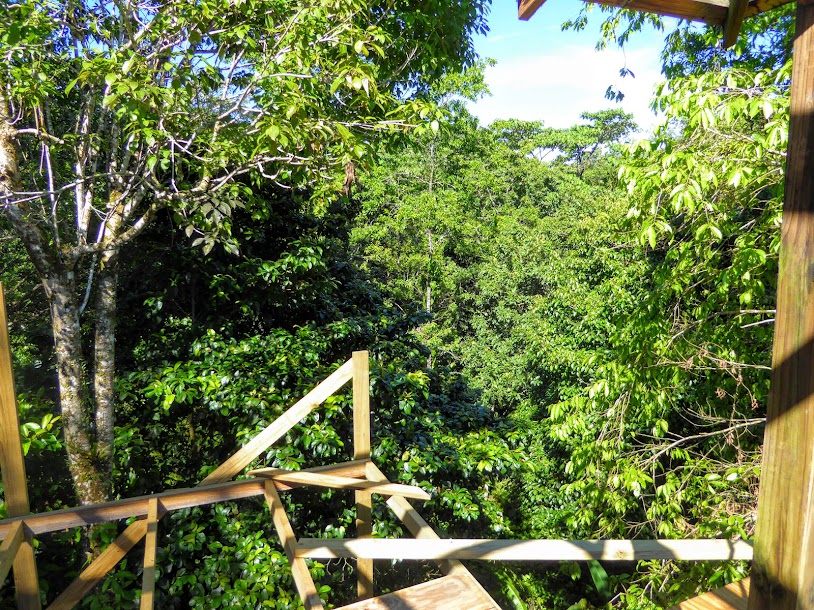
At the top of the hill, Sam’s house is still in the framing stage, but the views are going to be amazing. The elevated structure sits among the trees, with a breathtaking, panoramic water view from the front, and the feel of a treehouse behind it.

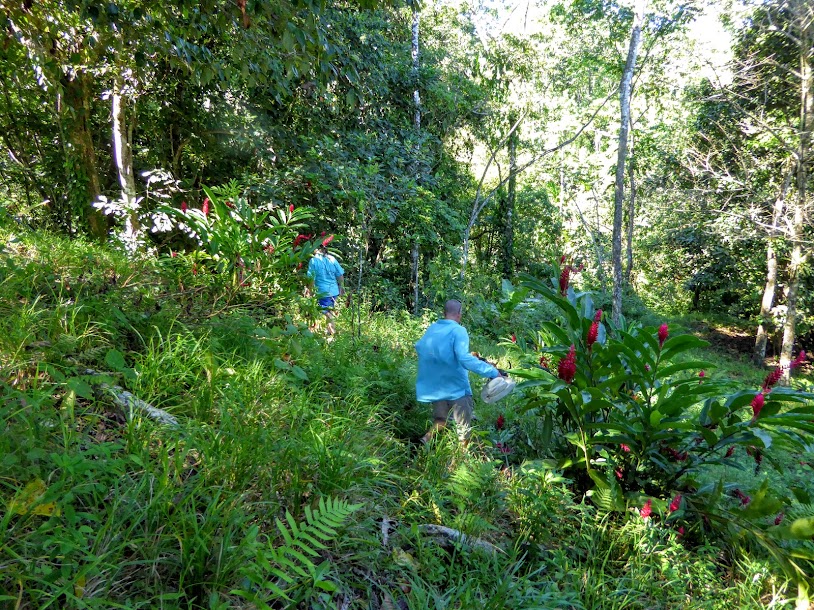
Behind the house, Sam took us on quite a hike through the brush, down the hill, to a stream at the base of the property. It ends at a shaded, fresh-water wading area, perfect for cooling off.

Back at the marina, a familiar face arrived at the dock.

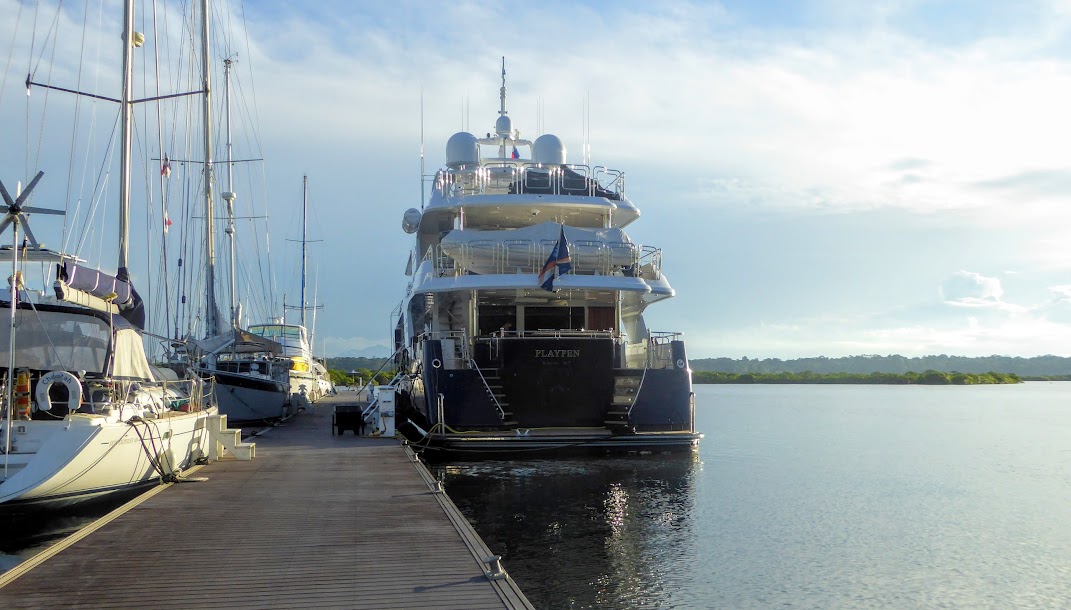
Playpen was at the end of our dock last October, in Fort Lauderdale. In November, she showed up in the Bahamas with charter guests, as we were anchored near Staniel Cay, and in December, we noticed her tied to a pier at the marina next to ours in Key West. Bocas del Toro? She must be stalking us. After a complete six month refit, she looks great. I especially like the new, blue look (she was all white last year).

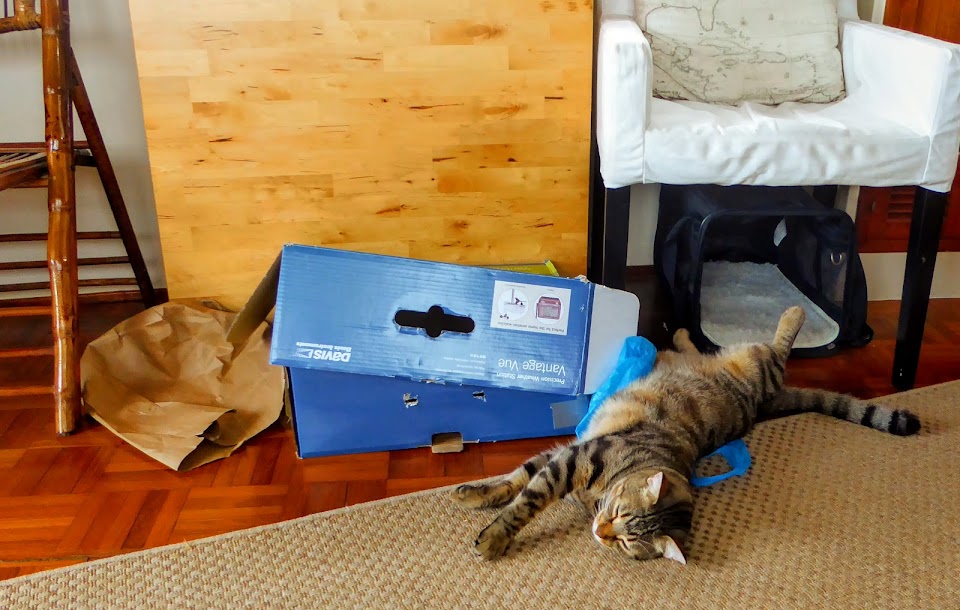
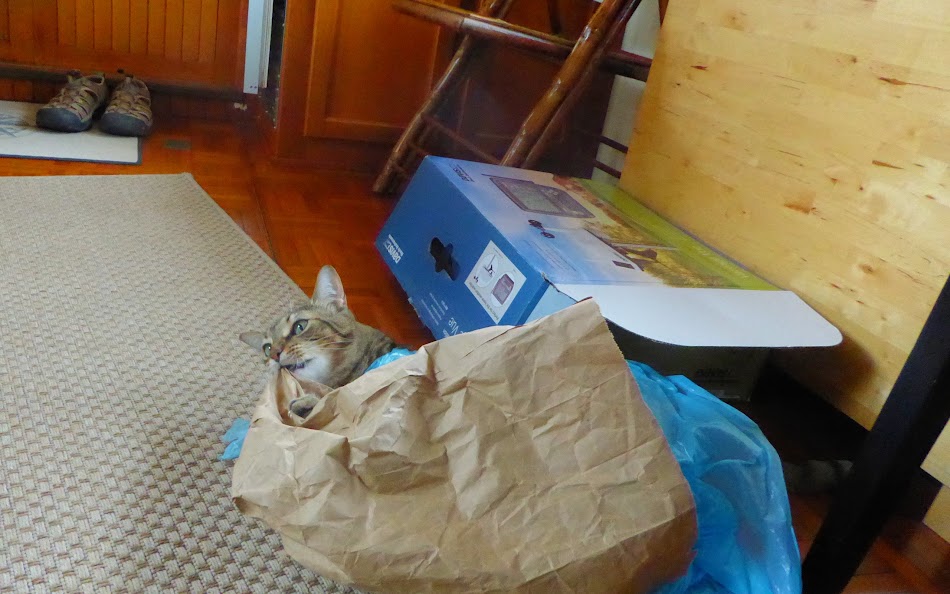
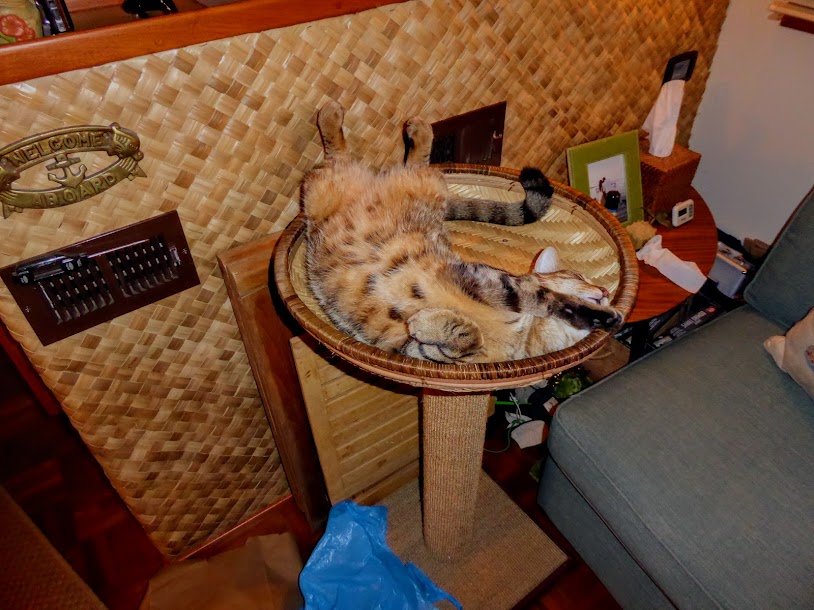
For those of you who’ve been inquiring about Howard, he’s still enjoying (tolerating) boat life. Surprisingly, he hasn’t bothered us too much to get outside here at the marina. He seems content to amuse himself with simple, unexpected toys found on board: a boat line (that he tangles himself in, with no help from us), any type, or size, of bag and the empty box that our new weather station came in (his latest fighting arena and nap spot).

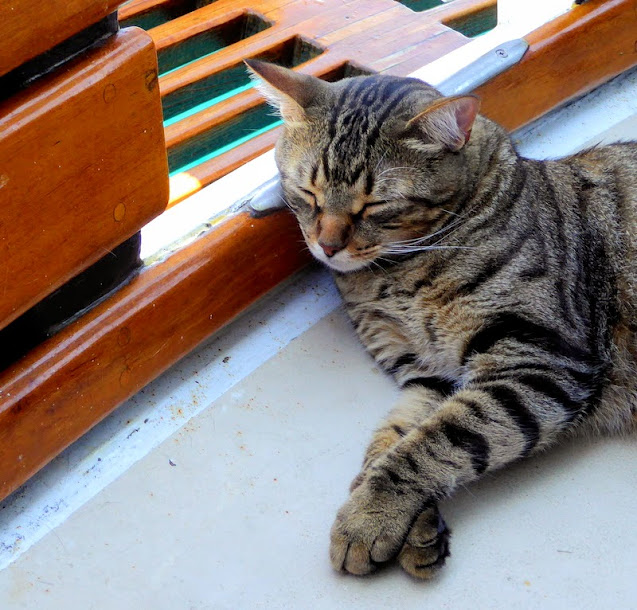
Of course, all this play is exhausting, so a nap soon follows.

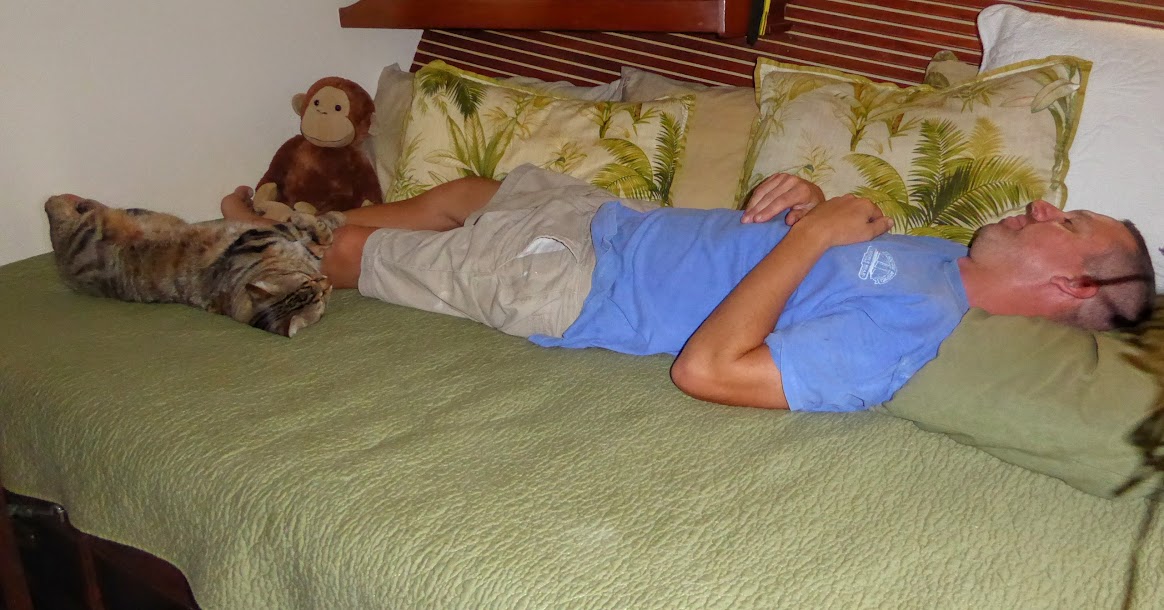
One day, I caught he and Scott having a “bro” nap in the master stateroom.

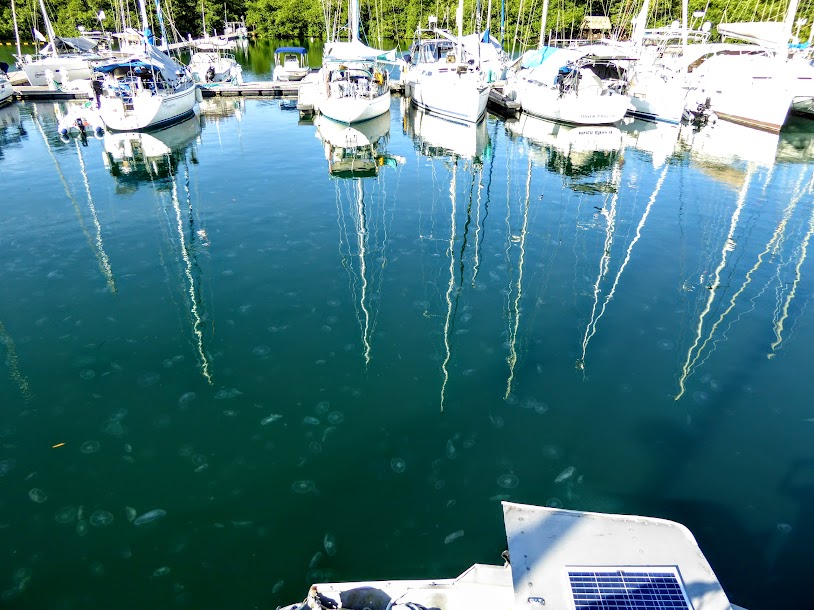
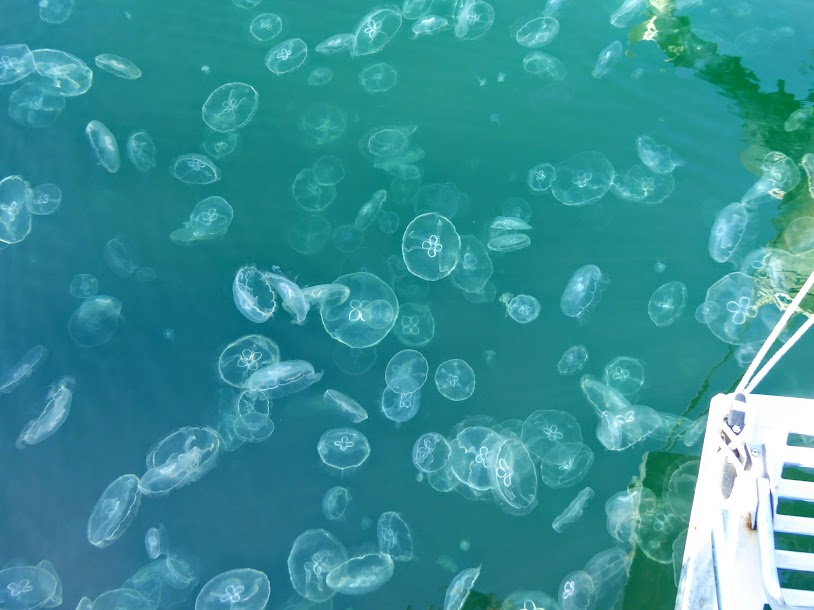
While the beautiful property at Red Frog never gets old, we have little interest in getting in the water here. For some reason, jellyfish congregate around the marina in huge numbers; it’s the stuff a Hitchcock movie is made of.

Jellies aside, we have loved our time here, and are going to miss the quiet beauty all around us.

Here are more photos of our last days at Red Frog marina.

“Shells Sink, Dreams Float. Life’s Good On Our Boat!”
Scenes From Bocas Marina

Our current home here in Bocas del Toro is in a slip at Bocas Marina. Thanks to the Island Plantation website, for providing a great overview. Our marina is just across the water from Bocas Town, but unfortunately there is no road through the clump of trees that stands between us and the rest of the island.

Image result for aerial view of isla colon, panama

So, like most everyone else in the area, we rely on water taxis to get to town. The marina offers a free ride four times a day, which is great, and it’s only five minutes from pier to pier.

It’s relatively quiet here, as many cruisers leave their boats and travel home for hurricane season. The long-term liveaboards here have been very friendly and helpful, with suggestions on where to eat and how to find this and that (hardware, propane, etc.).

Many things are brought to Bocas del Toro, and the marina, from David (pronounced Da-veed). Someone makes the nine hour round trip 2-3 times a week, bringing back whatever is needed or wanted (oil for diesel motors, potting soil, mint…yes, it isn’t sold here on the island; basil, but no mint). It’s not a short hop, but much closer than the 20 hour round trip drive to Panama City. Scott decided to send our alternator out to David for repair, as we had no luck with it in Cancun.

The Calypso Cantina bar here serves breakfast, lunch and dinner. It’s a low-key place, that sits on the end of the peninsula, near the pier that leads out to the fuel dock.

Most days, it’s pretty darned quiet at the cantina, but on Friday, they fire up the big grill for barbecue night. Steaks, burgers and pizza are some of the featured items on the menu, and it’s standing room only for grilled food and live music.

Scott and I are addicted to the pizza, with it’s homemade herb crust, roasted veggies, and fresh mozzarella and basil..delish! Each Friday, a different selection of desserts are offered. Last week, I had a hazelnut torte that was the best sweet treat I’d had since the Sugarbakers cake I had shipped to Key West in December (yes, I had it shipped there. I’m telling you, the stuff is awesome).

Every Saturday morning, the “veg” boat arrives. It’s a convenient way for us to load up on some produce, without having to haul it back from town.

The boat is supposed to come at 9am, but island time is never firm, so Scott and I usually grab a seat near the water, and enjoy the view while we wait.

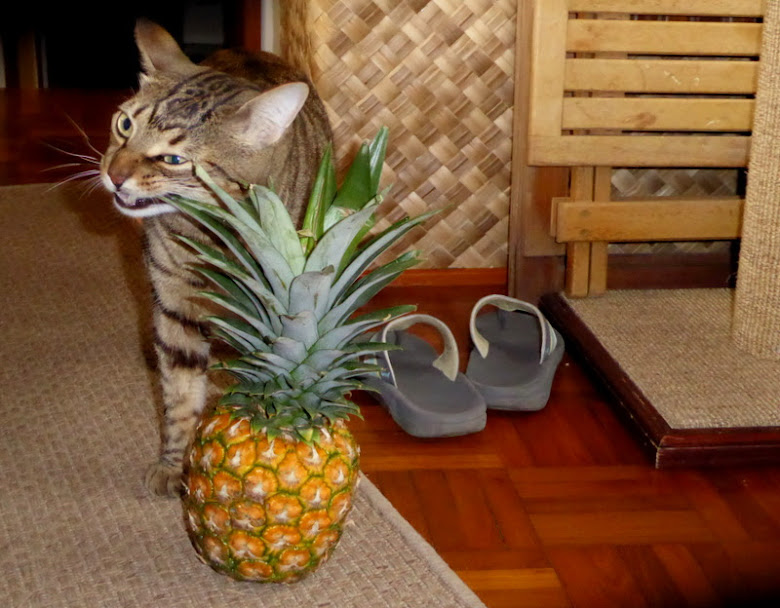
Howard loves veg boat day too, when he gets to enjoy a good chew on a pineapple top.

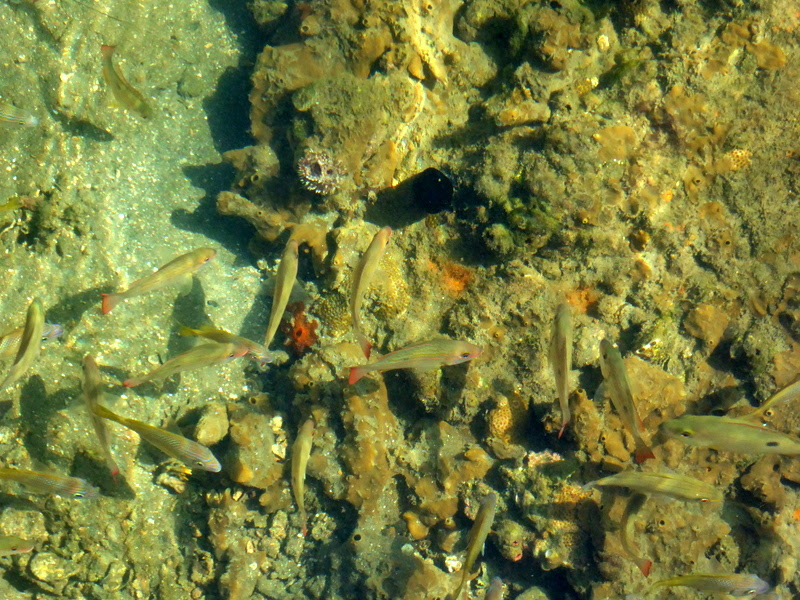
The water here isn’t very clear at first glance, having more of a murky, green hue to it, but the visibility looking down from the docks is surprising. I’m always amazed at what I can easily see in the shallow waters near the fuel dock.

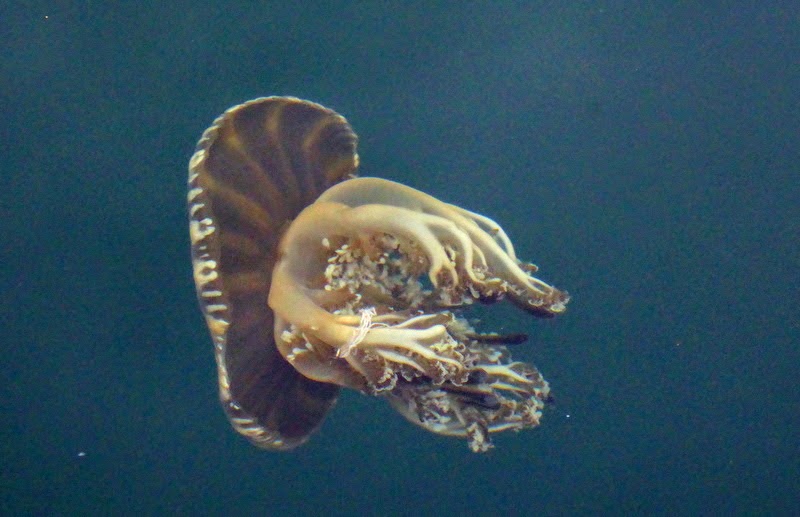
Icky things bob around in the deeper water.

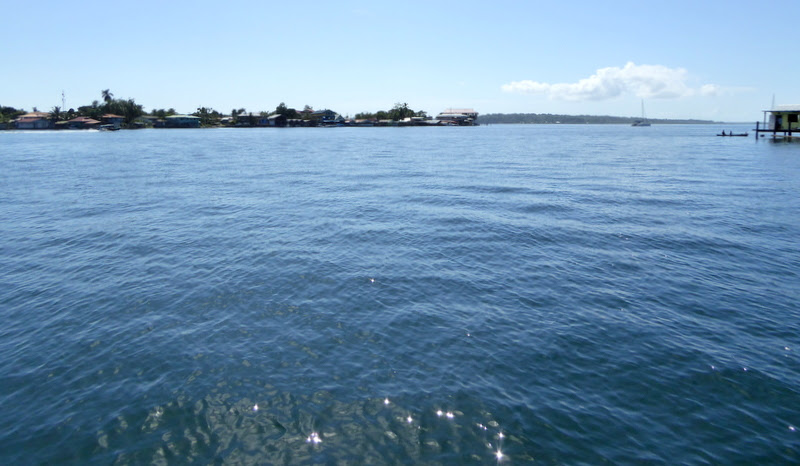
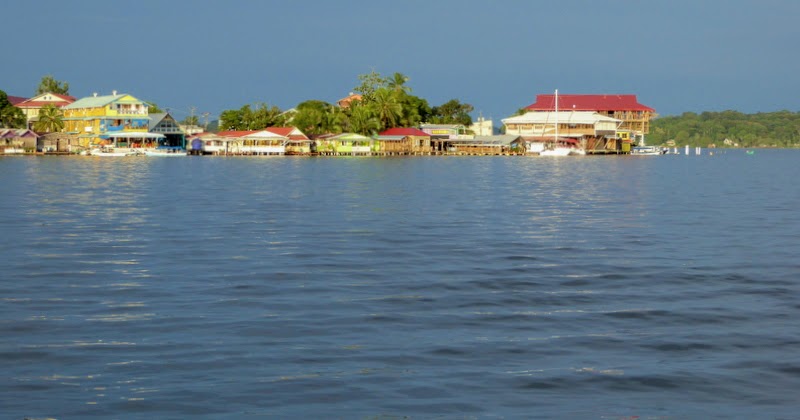
We pulled into our slip here, so the cockpit offers a view out toward town.

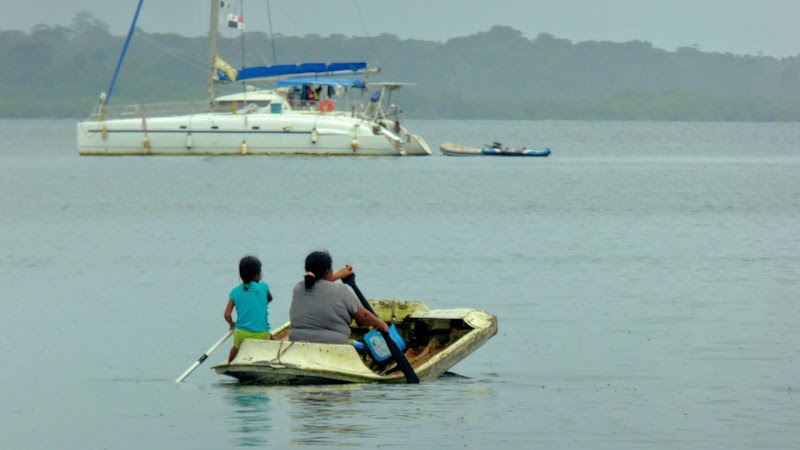
Many different forms of boats go by, with people using all types of paddles. The ladies below are paddling an inflatable, rigid bottom dinghy..minus the inflatable part (they’re sitting at what would be the bow).

This group has lost motor power, so have gone to rowing…with whatever is handy (notice the man in front, using a 2×4). The young boy seems to have the job of figure head.

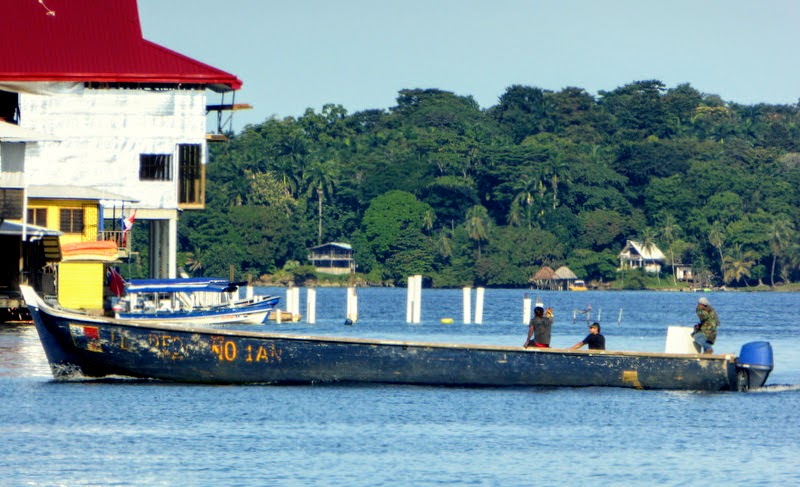
Scott is in love with the many long, long, long pangas that travel back and forth.

We’ve done a lot of cleaning and maintenance projects while attached to the pier. I have cleaned and washed every inch inside, including walls, ceilings and blinds. The contents of every cabinet, drawer and closet has been emptied out and cleaned, allowing a check for leaks, mold or bugs; so far so good!

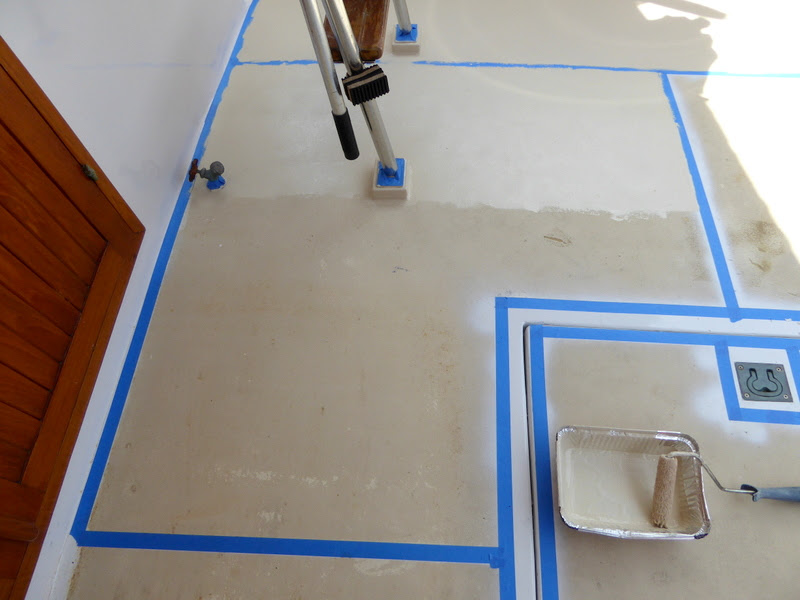
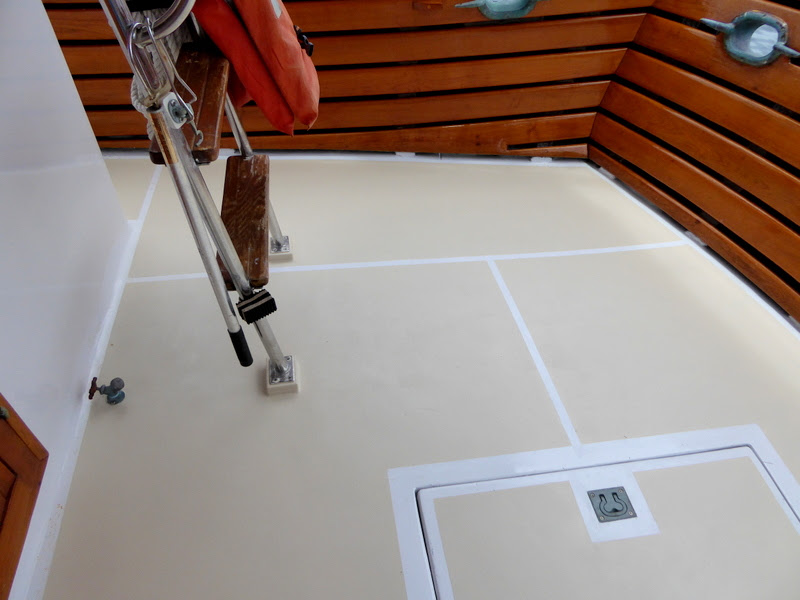
A fresh coat of deck paint was applied, especially exciting for me. The before and after was so satisfying!

We enjoyed some lobster for dinner, purchased from a local man who rowed up to our cockpit in his canoe (Scott hasn’t had a chance to scout the area for fish and lobster options yet). $20.00 for four, not a bad deal.

Getting on and off Sea Life has been challenging, as our finger pier resembles something out of a fun house. Notice the almost 45 degree slant.

Thankfully, the pier was recently repaired. It’s not completely level, but a huge improvement and much appreciated. It had been a hard go for me, with my height-challenged legs.

Scott lowered the Aluminum Princess down into the water, in preparation for her many explorations while here in Bocas. She sits in an open slip, right across from ours.

The three of us are settled in, and enjoying our stay!

Here are more photos of scenes from Bocas Marina.

“Shells Sink, Dreams Float. Life’s Good On Our Boat!”


Clearing Into Panama…Break Out Your Wallet!

After tying into our slip the marina staff promptly called the various officials to come clear us in, and we were told that it would be at least an hour before they arrived. However, just thirty minutes later, they were knocking on our door(Luckily, we managed to put fresh, dry clothes on. Tying up in the heat has us soaked through)!

Four officials boarded the boat, and representatives from the port captain’s office, immigration, customs and agriculture took a seat in our saloon. The port captain spoke the best (really, the only) English, and was primarily there to inform us as to what the rest needed.

He began by saying that they were offering us the “service” of coming out to our boat. Hmmm, “service.” The only two who actually needed to come on board were the customs and agriculture officials. We were still expected to visit the port captain and immigration offices to register the boat, so they saved us no time by coming aboard. It smelled of a way to get some extra cash (ie, a tip), but this didn’t surprise us and we weren’t up for arguing.

As soon as they were settled, Howard came to greet them. He jumped onto the table and right into the face of the woman from immigration, who was obviously not a cat person (why do animals always seem to sniff these people out??). She recoiled and froze, as if someone had thrown a rattlesnake in front of her. The men from customs and immigration, however, were fascinated with Howard, and tried to coax him closer for some petting. Of course, he wasn’t interested in them, only in agitating the immigration woman, who was already not a friendly person.

The port captain didn’t do anything while aboard but translate, which was definitely useful. For this, he handed us a receipt for $20.00; “overtime” service for coming to the boat. It was 11:30 am on a Monday, in who’s world is that overtime??

Madam Friendly stamped our passports, with a written expiration date of 48 hours. We were expected to see her at the immigration office within that time, to pay $105.00 each for 90 days in the country. So what exactly was the $25.00 service fee for??

She conveniently didn’t have a receipt on hand, for the $25.00 “fee.” The port captain relayed that we’d get the receipt at her office. This excuse seemed sketchy, but since we still had to deal with her, we held our tongues.

The agricultural official was hardly interested in the food we had onboard, unlike the close scrutiny we’d had in Mexico. He barely glanced in the refrigerator, waved off looking in the freezer (Scott’s biggest worry area), and briefly looked into one galley cabinet, before declaring us good.

This man was also responsible for clearing Howard. He watched Howard’s agitating antics toward Madam Friendly, and deemed him healthy and fine (maybe as an “atta boy!”). We were handed a receipt of his “services,” in the amount $35.00.

The customs agent was the most thorough, walking through the entire boat with Scott. He opened all drawers and closets, and inquired about liquor. Scott replied that we had “a few bottles” on board, and quickly shifted the man’s attention elsewhere. Unlike Mexico, where there was a thorough investigation of our engine room and motor, this man didn’t go below, or check any compartments under the floor. When through, he handed us a receipt for his $20.00 service.

So now we, Howard and the boat’s contents were cleared in, that just left the boat itself. We were now allowed to raise the Panamanian flag.

The next day, we headed to the port captain’s office in town, to register Sea Life. We dealt with a different port captain, who had us fill out the same form Scott had completed the day before..arrgh! The man was very friendly and helpful, as the two worked together to complete the form. The captain assisted Scott with filling in the Spanish blanks, and Scott helped him with the details of our boat information.

The subject of how to categorize our boat took some time, which seemed strange. As we travel farther south, most everyone assumes that we are on a sailboat. Sea Life is a powerboat, but  compared to those found in the U.S., she leans more toward a sailboat in speed and seaworthiness. However, the port captain didn’t know any of this, and seemed confused by us being on a powerboat, especially one that had come from so far away.

Scott  handed him our boat card, with a photo of Sea Life, thinking it would help. After much hemming and hawing, and discussion with others in the office, we were classified as a sailboat on some of the paper work, and a yacht on other areas. When all was said and done, we handed over $185.00 , and Sea Life was registered for one year.

Next, we made our way to the airport, in the pouring rain, to see Madame Friendly. The port captain had called ahead for us, to make sure that she’d be there, and not away for lunch. We were told that she was waiting, but when we arrived, soaked from our ten minute walk in the rain, she was leaving her office. Pointing to her watch, we were told to be back at 2:00; it was just after 1:30.

Instead of walking back to town to kill time, in the rain, we decided to settle in and wait for her return. At 2:15, we wondered how much longer she’d be, and discussed leaving. She finally showed just before 2:30, and we waited another 15 minutes before she called Scott into her office.

After filling out more paperwork, Scott  handed over $210.00, which cleared us for 90 days. However, I will be traveling home to Baltimore for a visit (I am thrilled to spend time with family and friends. I’m a people person, and miss my people!), which puts a wrench in the works…so she says.

She claimed that once I leave Panama, the $105.00 fee will have to be paid again on my return, even though I’ll be traveling within our 90 days. This rule really smelled bad to us, and I hope that when I actually fly back, that it isn’t the case. Everyone we’ve talked to about our experiences with Madame Friendly confirms my nickname for her…and then some.

After a full day of offices and officials, and a running total of $495.00, we were officially temporary Panamanian citizens. Our travels in Panama will include the San Blas Islands, where we understand that there will be more fees to pay. Welcome to Panama, please open your wallet!

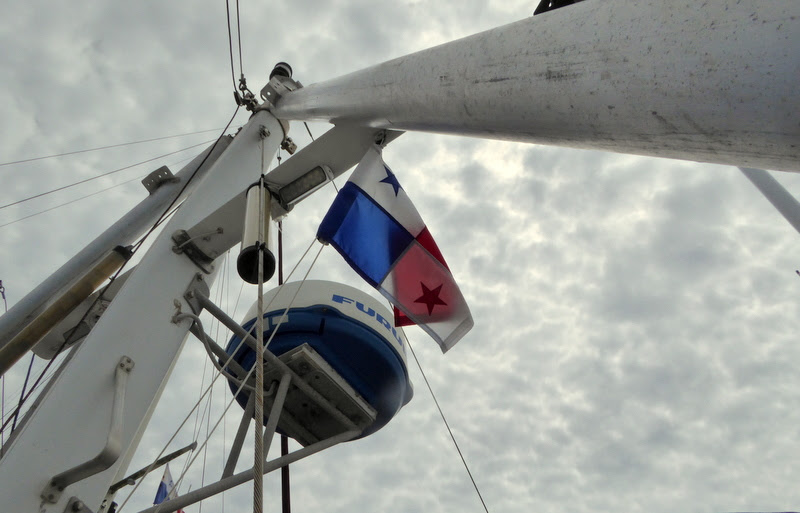
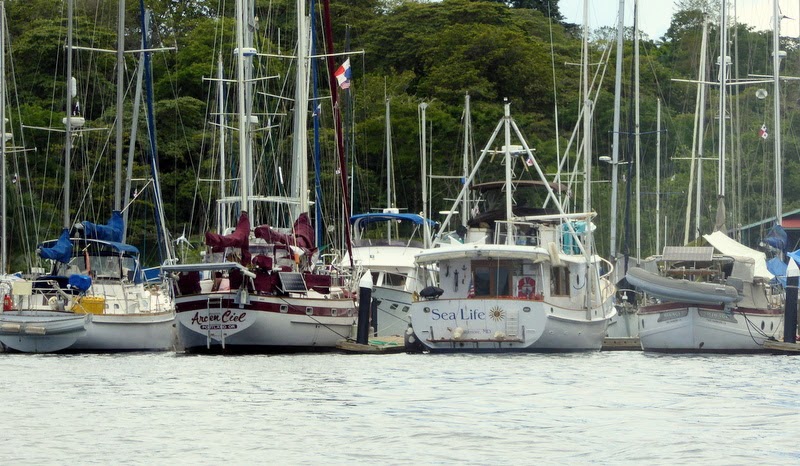
We’ve settled in at Bocas Marina, with the Panamanian courtesy flag flying in our rigging,  dwarfed by the gaggle of sail boat masts around us. We’re short, fat, different and proud!

“Shells Sink, Dreams Float. Life’s Good On Our Boat!”
Our Final Push To Panama

Our passage to Panama was, in a word, terrific! We raised anchor at 7am, and followed both the way points and our track coming into the Albuquerques, traveling right through the reef, stress-free this time.

(If you were following our track on the Delorme link, the Albuquerque Cays are not visible on Google Earth, so it appeared that we were just dead in the water for five days or so. Our zig-zag track leading to it was our path through the coral.)

Scott estimated that the trip would take 28-30 hours, based on us traveling at an average speed of 6 knots. We actually averaged closer to 7 knots, and spent much of the trip at 7.1 and 7.2, with the current in our favor for a change. Considering that our paravanes cost us a half knot of speed when they’re in the water, traveling 7+ knots was fantastic!

The winds were at 13-15 knots as we left, and they dropped to nothing by the late afternoon; the seas followed suit. For much of the late afternoon and evening, our wind gauge read 0, a beautiful sight. Our trip went so smoothly that I was able to catch a nap in our bed, versus the couch. Howard got restful sleep, and was alert and mobile later, begging us for food.

Scott put his lines in the water, with fingers crossed that we’d catch something to fill the freezer with. Almost immediately, one of the lines began to whiz. It was a sizeable sailfish, that we weren’t interested in eating or taking the time to catch. However, that fish had our lure, so Scott began to reel him in. Unfortunately, the line snapped and the sailfish swam of….with our lure. Skunked again.

Just after dawn the next morning, the coastline of Panama came into view.

As the sun rose and we came closer to the coastline, the air smelled clean and fresh coming off of the mountains, similar to the awesome pine smell that greeted us in Guanaja.

As we approached the Bay of Almirante, several small hotels appeared along the shoreline. A large barge replacing navigational buoys passed by us, and those things are much bigger out of the water. We took turns venturing out onto the bow, admiring the coastline, breathing in the terrific smelling air and enjoying the sunshine.

We couldn’t stop looking at the mountains, with their peaks disappearing in the clouds. Later, Scott realized that the lower hills are in Panama, and the higher ones we were seeing are actually in Costa Rica, as the country’s border is very close.

Once inside the bay, the water turned glassy calm.

The color here was more green and didn’t appear to be too clear, until we saw two dolphins headed our way. As they approached the boat and dove down, we could clearly see them at least 20 feet down. We expected them to hang around our bow for a bit, but they went right by us, and I thought they’d gone. I turned to see them doing Sea World-type flips some distance behind us, and wished I hadn’t left my camera inside.

Soon Isla Colon, and Bocas Town, came into sight. Our marina is off of the west end of Boca Town, so we had to make our way around to the other side of the island.

By this time, Howard was more than ready to be there.

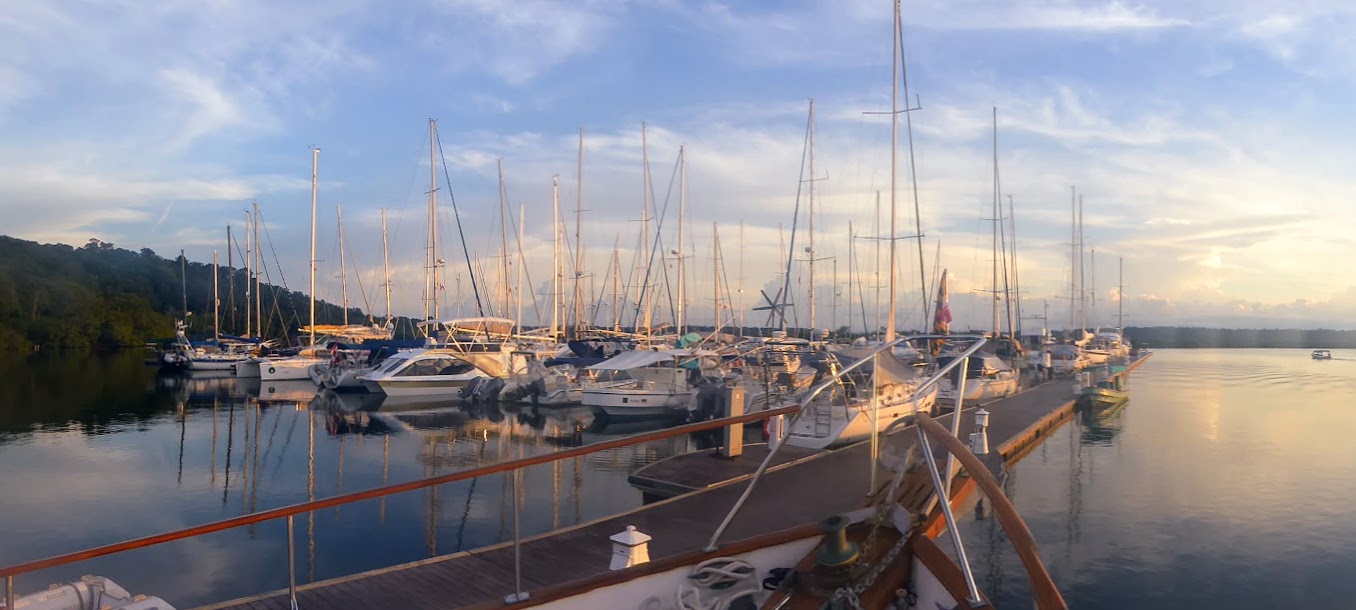
An hour or so later we made our final turn, taking us past more of Bocas Town, and heading toward Bocas Marina.

Panama was our destination for hurricane season this year, and the goal for end of year one. The original plan was to be here in Bocas del Toro by late June, and make our way toward the Eastern Caribbean in late October.

After being delayed so long in getting here, and not wanting to rush through the country. we’ve decided to linger here until spring. We’ll stay in Bocas del Toro until mid-November, and then move on to explore more of the eastern coast, and the San Blas Islands (sorry, so canal crossing for us). Here are more photos of our final leg to Panama.

“Shells Sink, Dreams Float. Life’s Good On Our Boat!”