Dink-zilla

We purchased our inflatable dinghy and motor fifteen years ago. They have served us well, but the motor has given Scott ongoing carburetor issues the entire time. Having grown weary of constant fiddling and repairs, Scott decided to break down and buy a new dinghy motor while we were in Grenada.

We brought out brand new motor home, but Scott didn’t want to get rid of the old one….grrrr. His “plan” was to sell it, but I reminded him how much he hates selling things, how little he’d get for the well used, much jerry-rigged motor, and and how mad he would be by the end of the process. I told him to just get rid of the poor thing, but it continued to sit up on the flybridge.

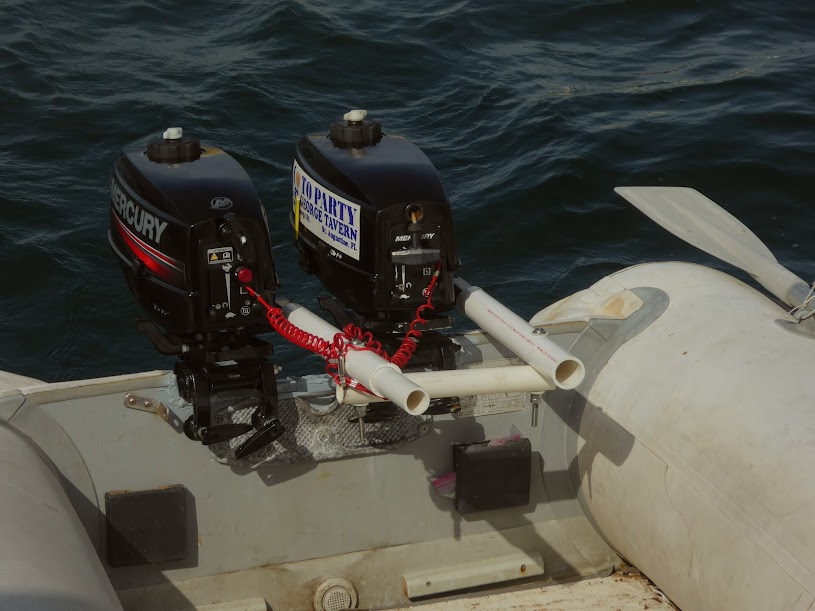
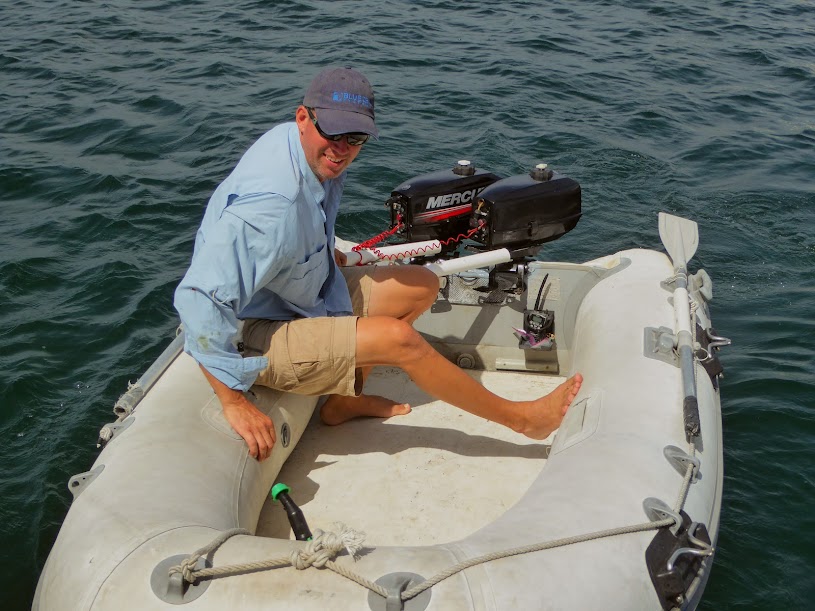
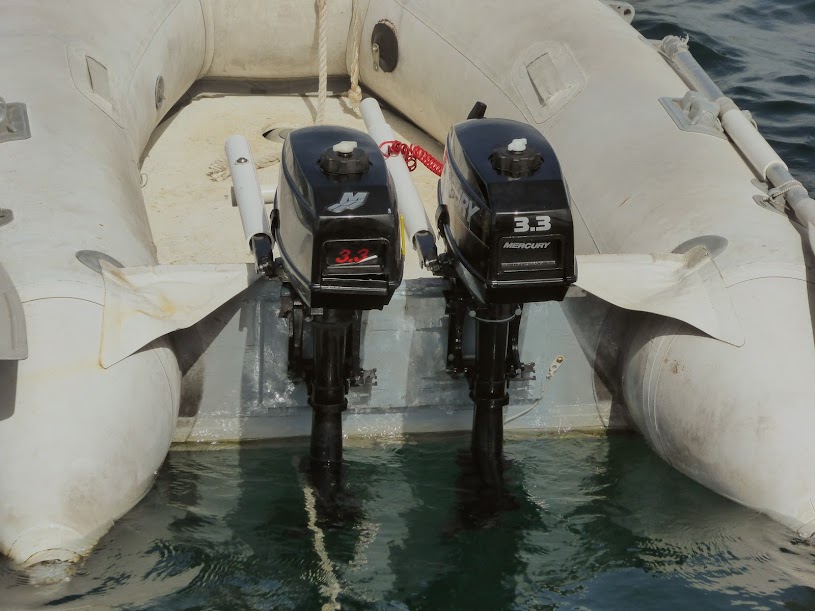
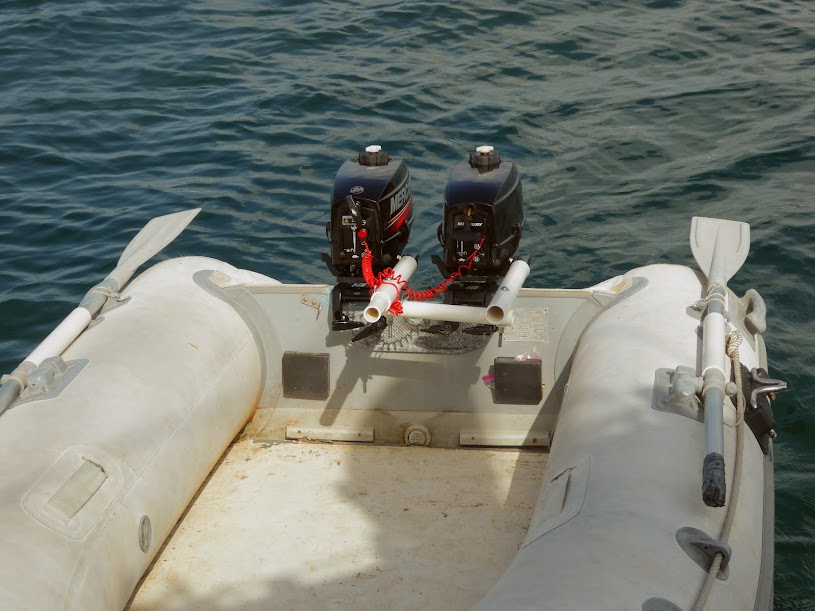
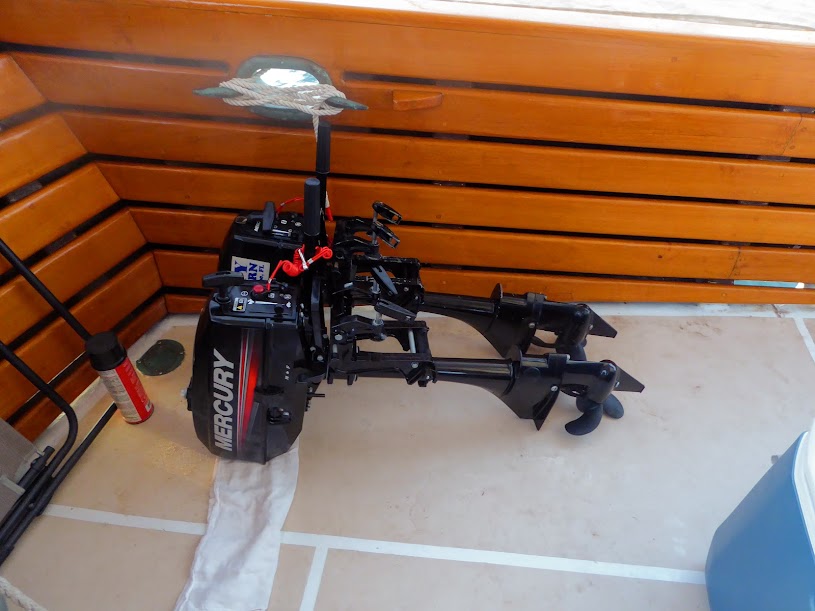
That is, until one day when Scott was enjoying some afternoon cocktails, with too much idle time. While up on the flybridge, he looked at that old motor, and the wheels in his head began to turn. If one 3.3 was good, TWO 3.3s were better…and faster. It was time to get to work.

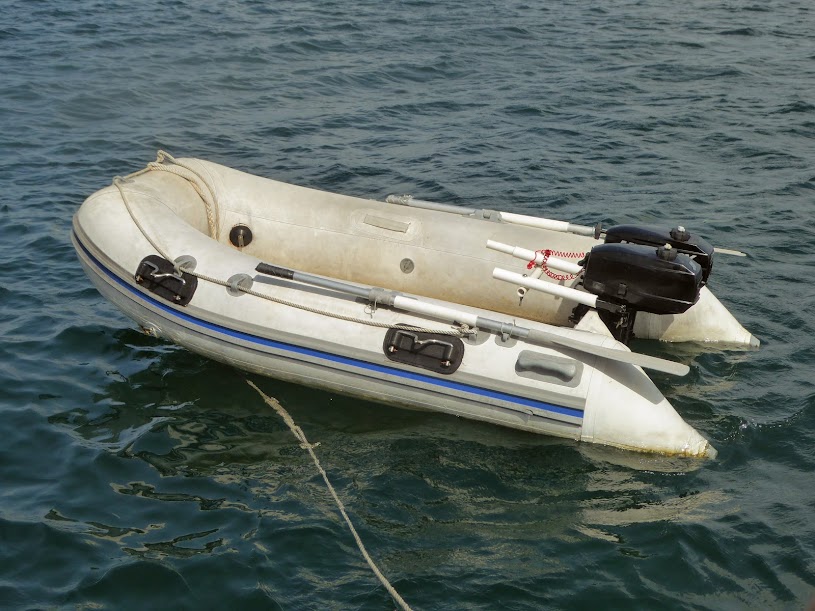
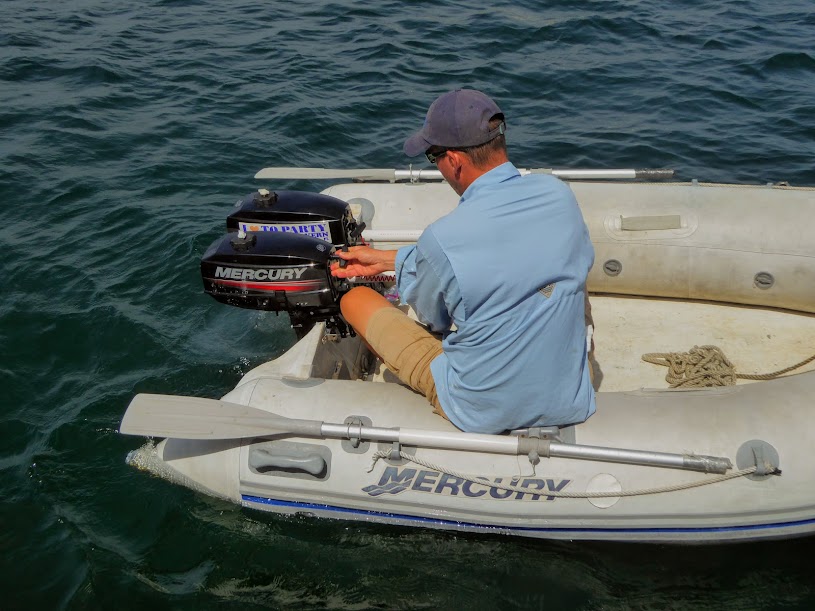
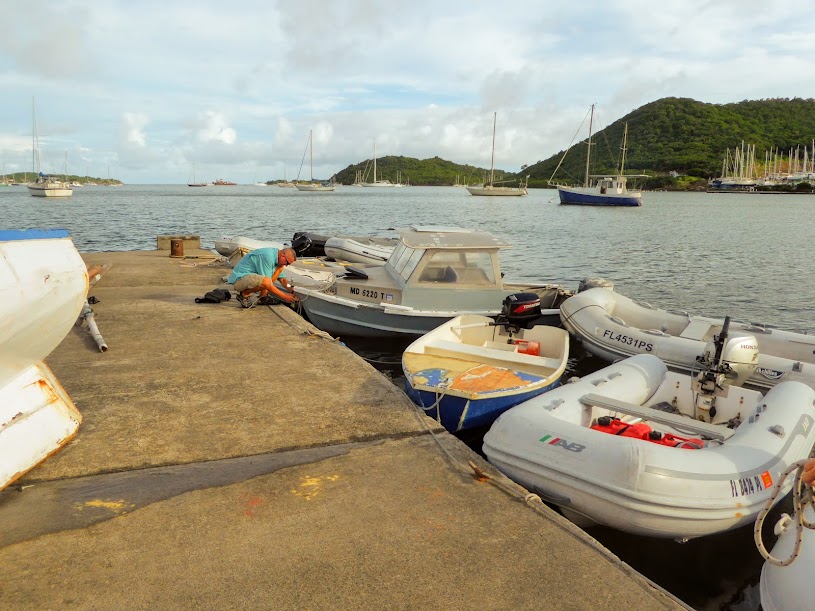
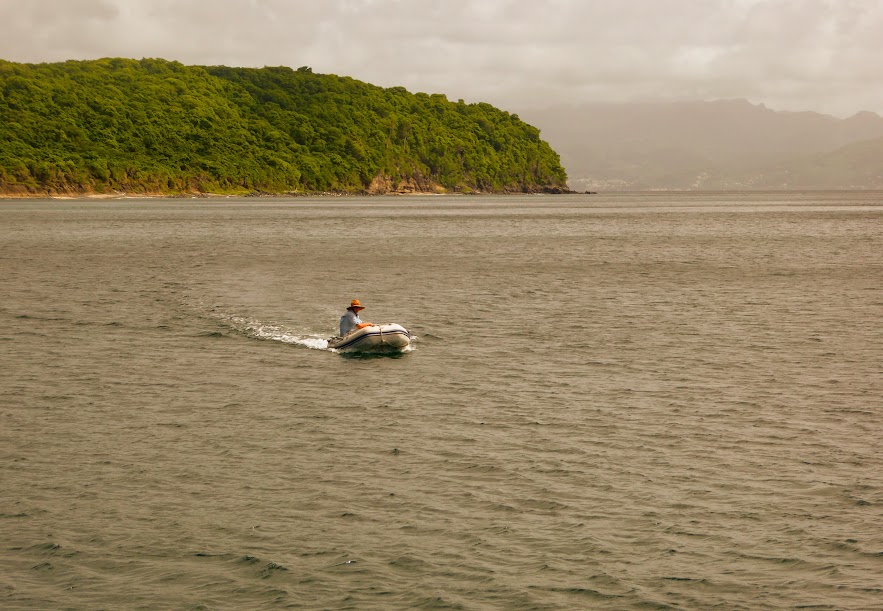
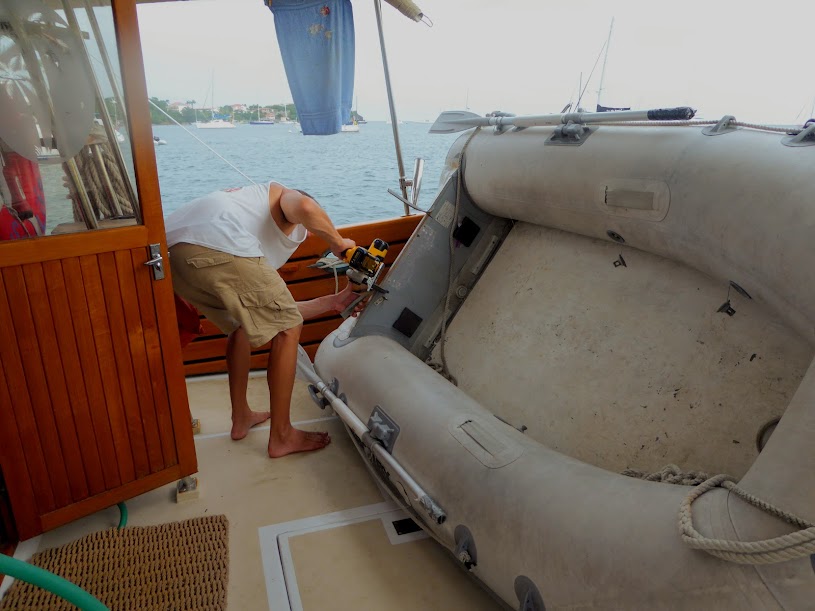
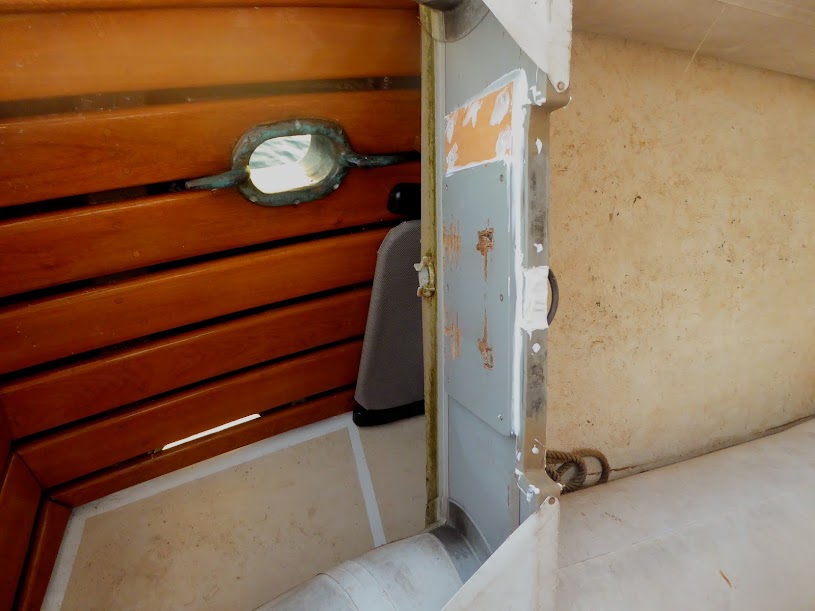
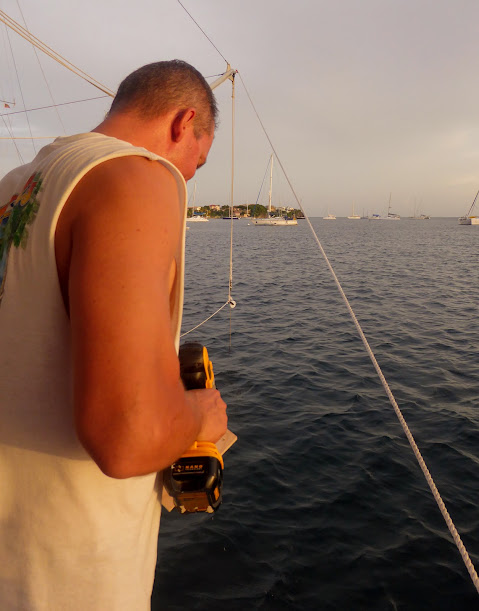
To support the weight of both motors, Scott screwed a piece of wood onto the transom of the dinghy, giving the mounting surface more room and more stability.

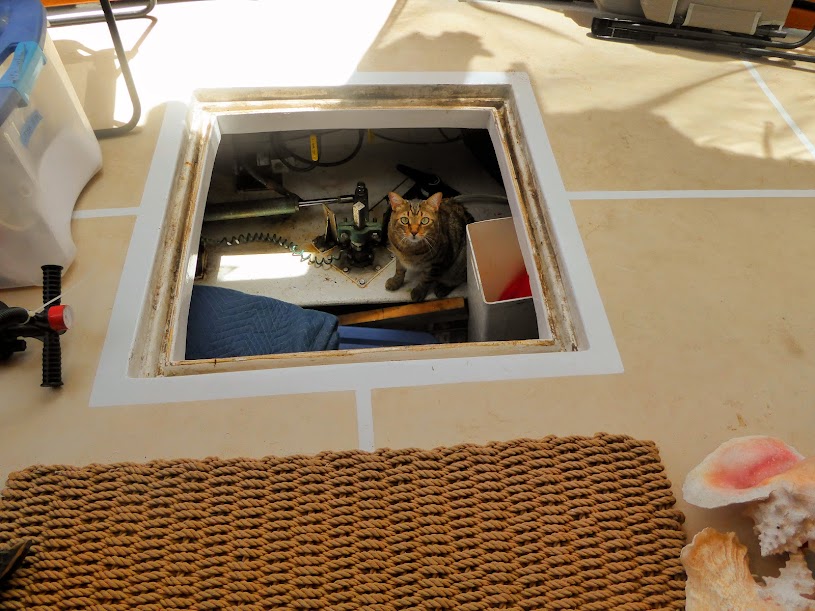
While Scott did this, Howard made sure all was well in the lazarette.

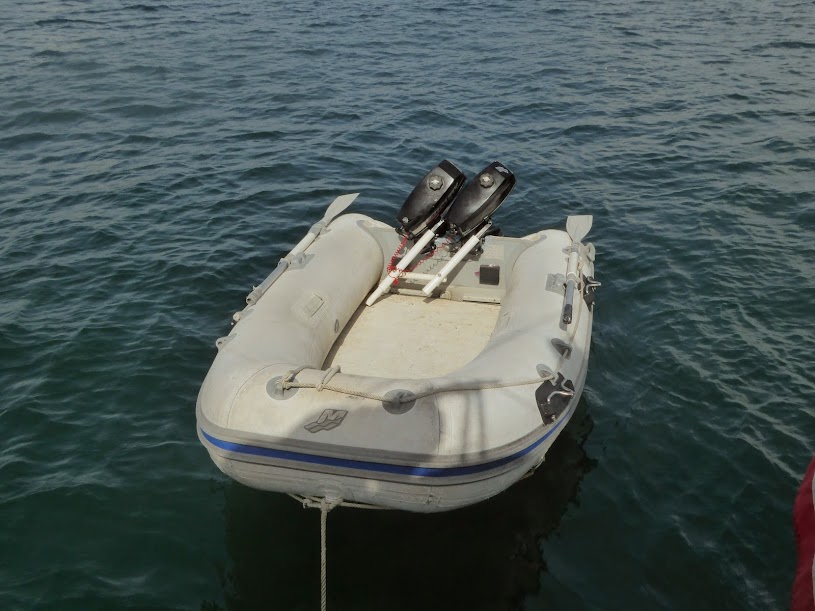
Once the motors were in place, Scott used pvc pipe, to allow him to steer both motors as one.

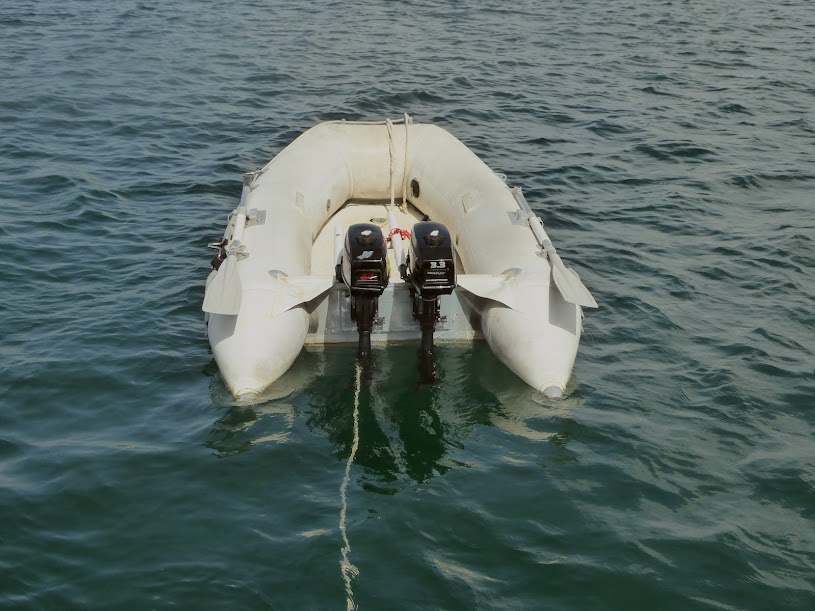
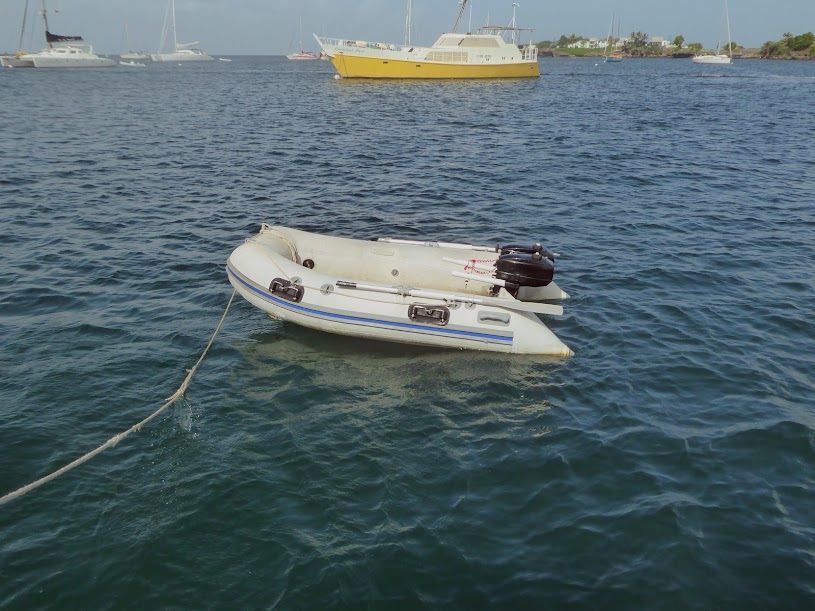
With that, the job complete, and “Dink-zilla” was born.

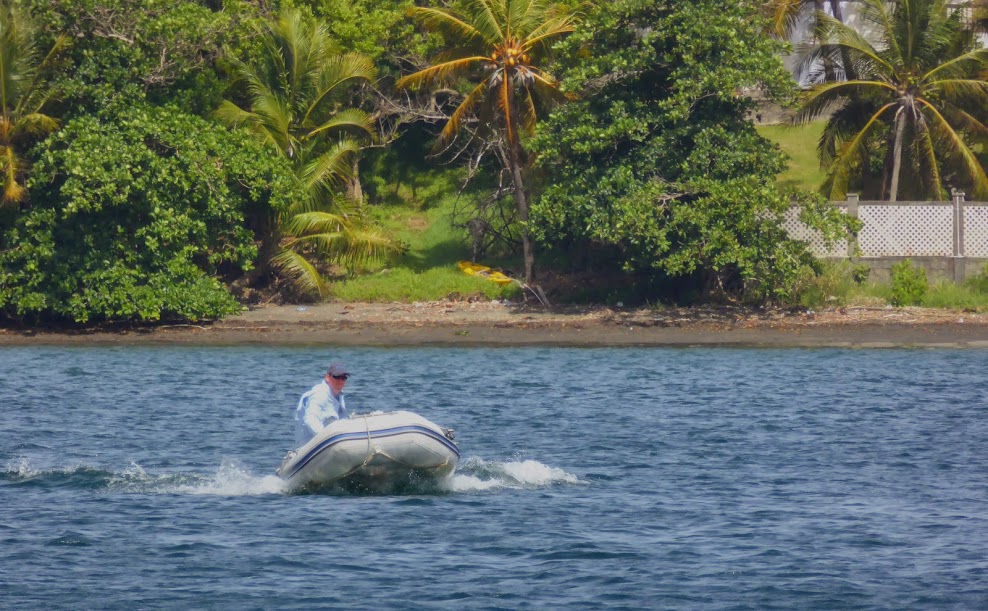
Now it was time for a test drive. As usual in this situation, I was summoned to take photo and video documentation of the testing. Both motors started up, and Scott stopped to enjoy the sheer sound of the two powerful 3.3s at work. Then away he went.

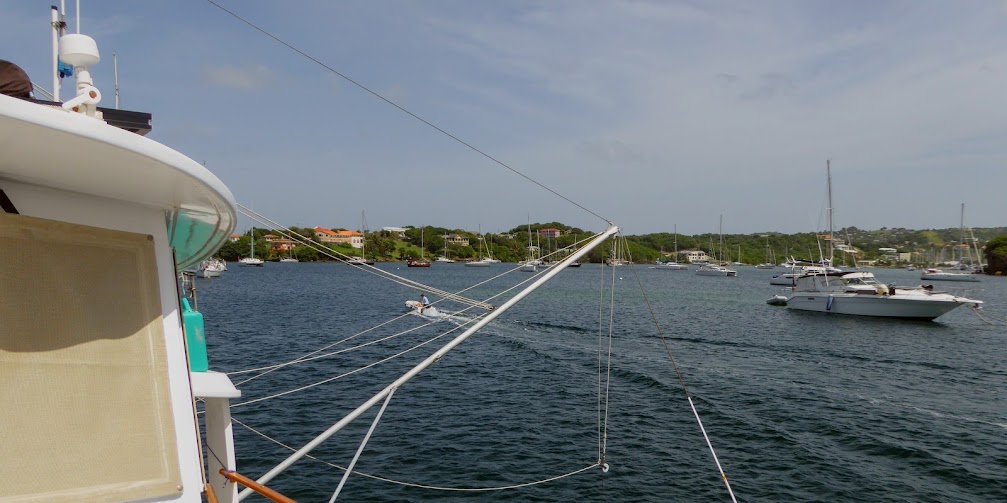
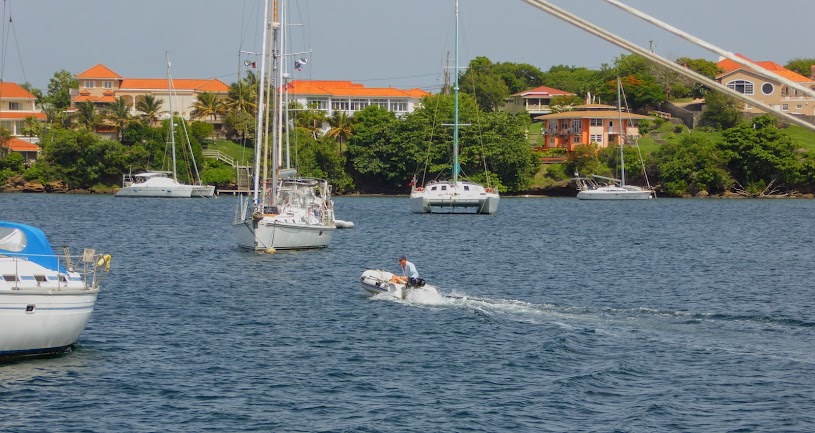
With speed still well below most other dinghy motors, but at mach five for ours, Scott happily raced through the Prickly Bay anchorage:

Once testing was complete, it was time to sit back and admire his work.


We still use one motor most often. But occasionally, when Scott wants to make time getting somewhere, or we have a heavy load on board, number two comes out, and we’re off and running.

Why put two 3.3 motors on a dinghy? Scott will tell you, “Because I can.” I’d tell you, “Because we can’t have enough “redneck” on board Sea Life.

Here are a few more Dink-zilla photos.

“Shells Sink, Dreams Float. Life’s Good On Our Boat!”

Cruising Life On Grenada

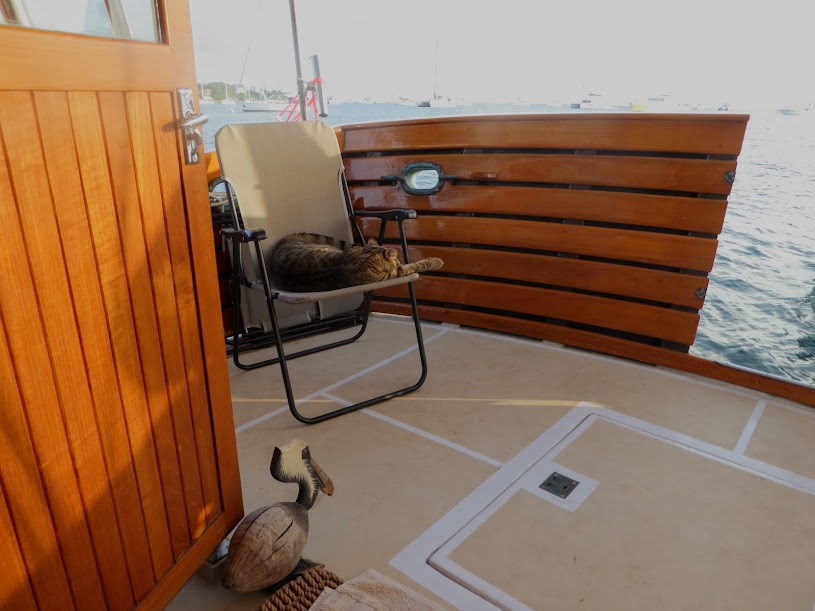
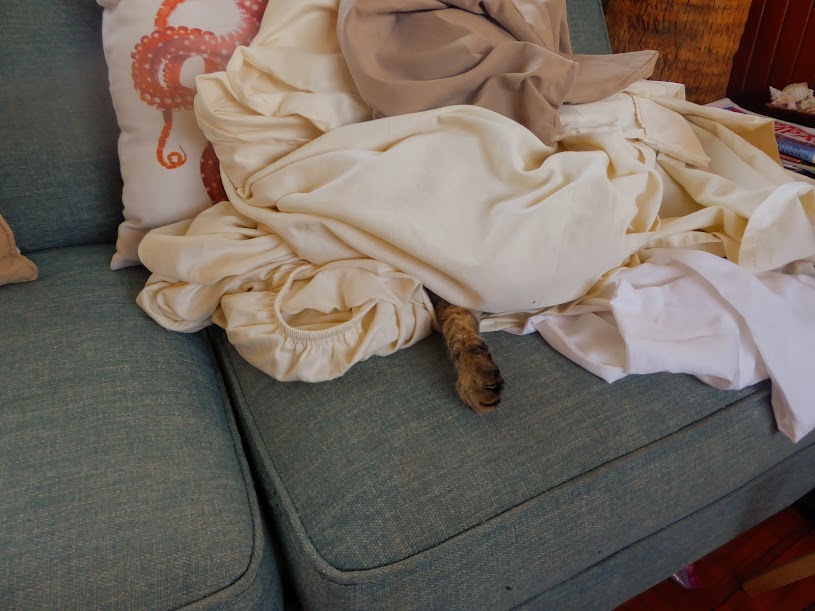
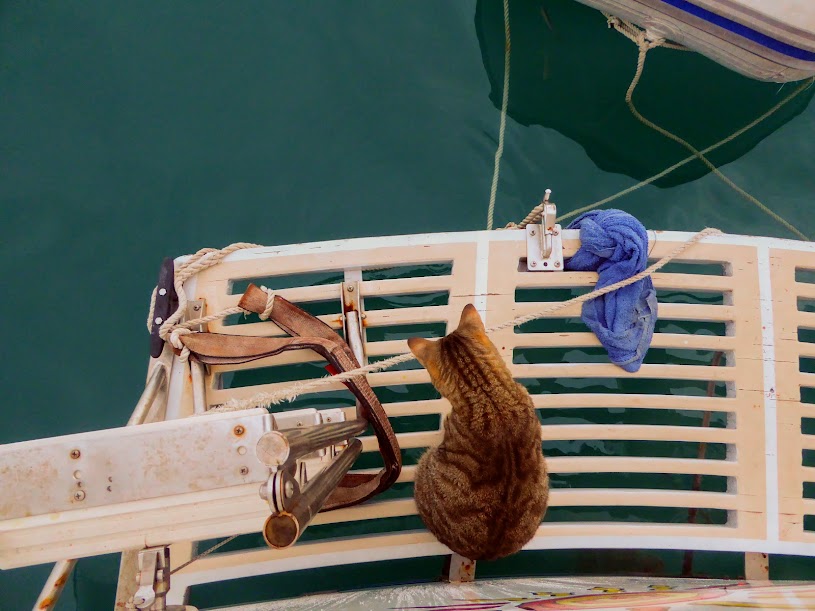
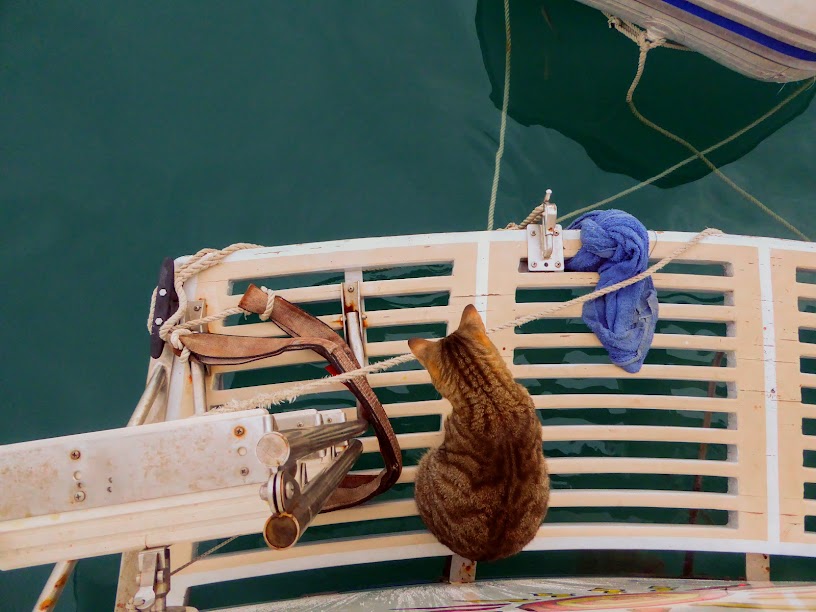
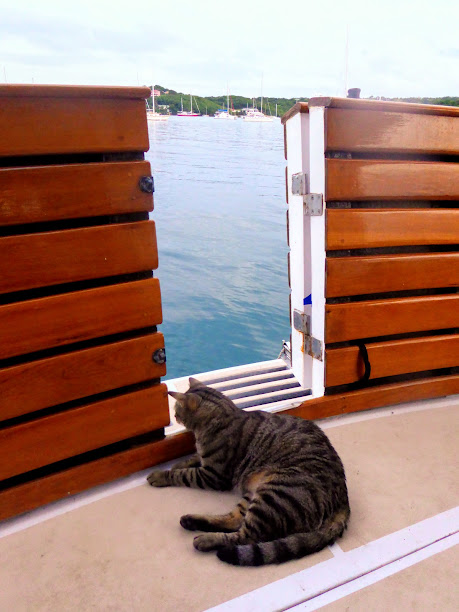
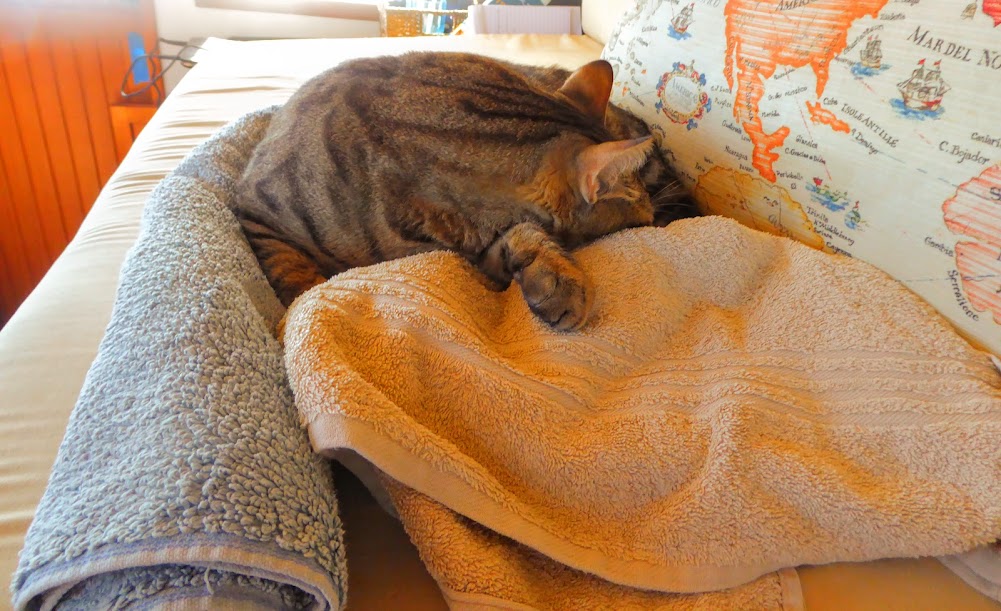
Spending four months of hurricane season in Grenada allowed us a chance to really get a feel for the island, and all it had to offer. Howard settled right in, seeming to know that we were going to linger for awhile. He enjoyed cockpit naps and “laundry” naps, kept an eye  out for fish and happily dried the ice machine when it was through running.

Every inch of the anchorages in Grenada’s southern bays were full of cruisers. Most were here for hurricane season, but there were also many who stay year round. The boat yards were equally as crowded, as some owners hauled out to have work done, and others traveled home.

With so many cruisers on the island, there were endless options to fill time. At any given day, you could opt for yoga, tai chi, dominoes or poker. We were moored in Prickly Bay, and the marina there hosted free movie nights, Friday evening steel drum and dance bands and their famous Bingo night.

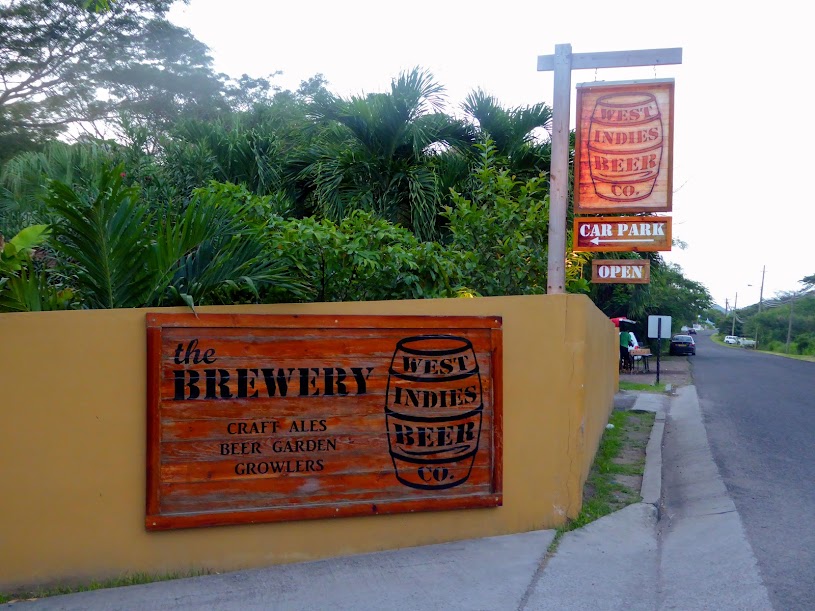
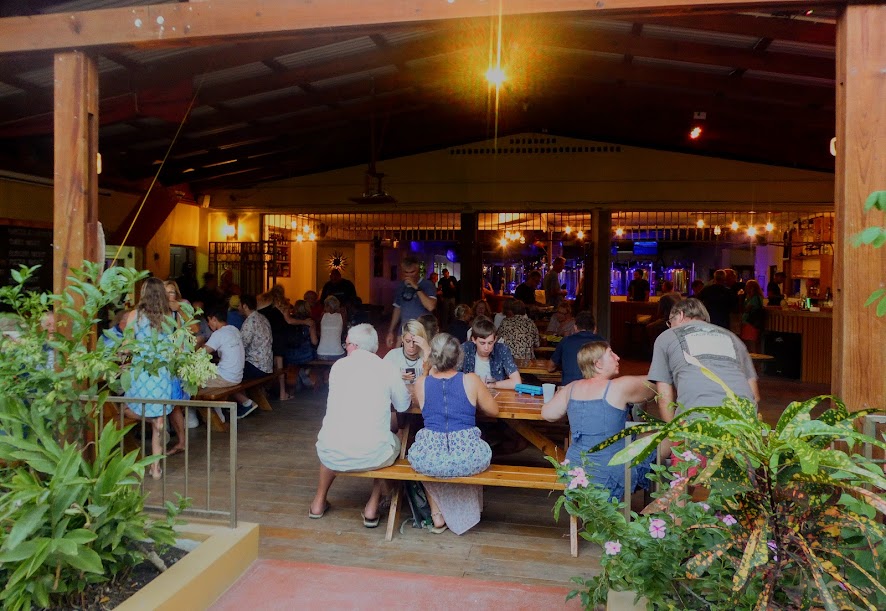
Just a short walk from Prickly Bay, the West Indies Beer Company hosted a weekly open jam night, that was always well attended. The music was always great…singing, not always as good, but a fun evening out just the same.

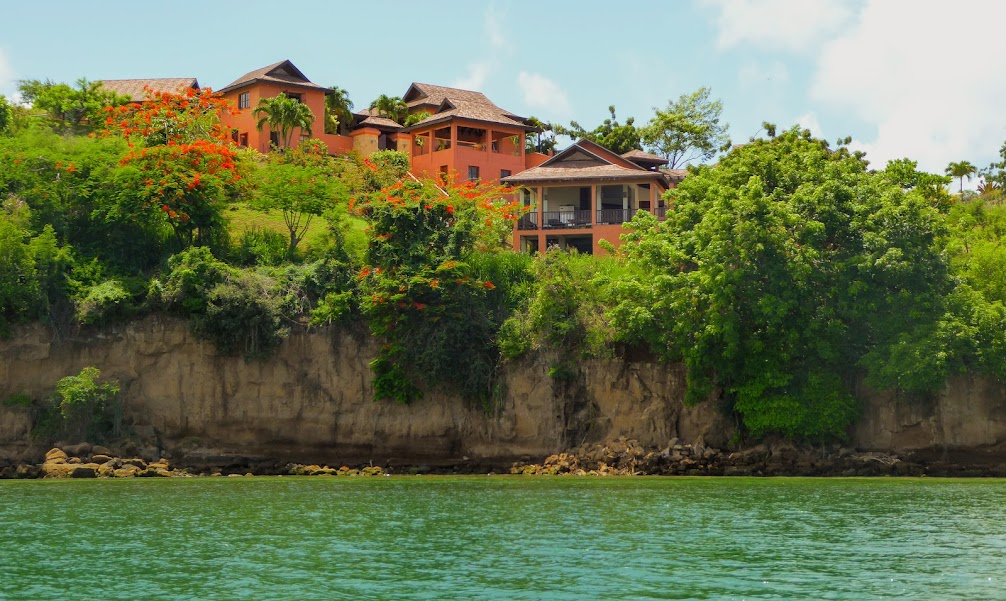
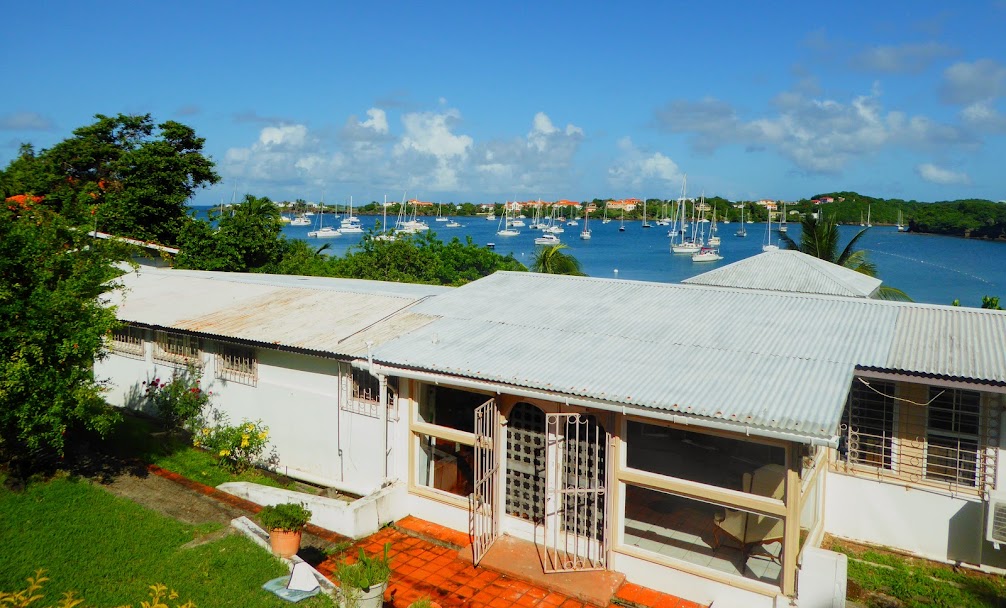
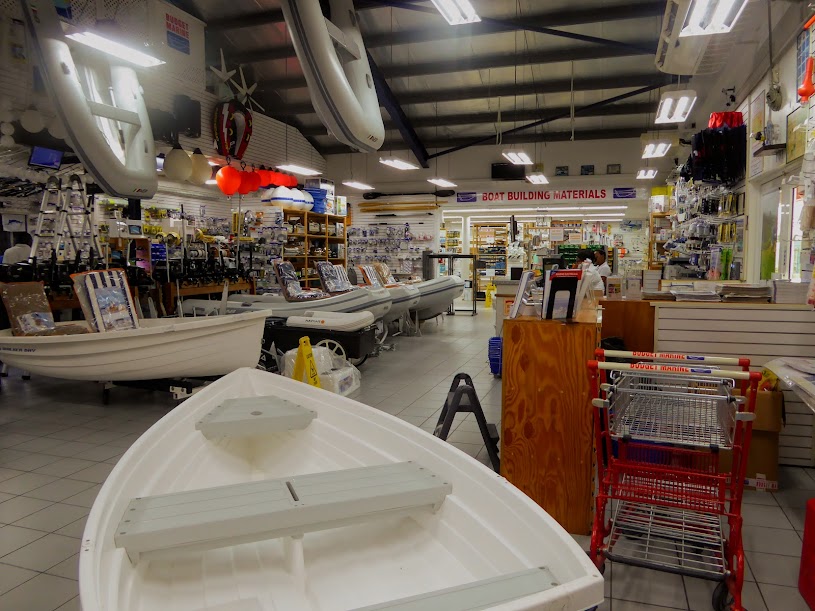
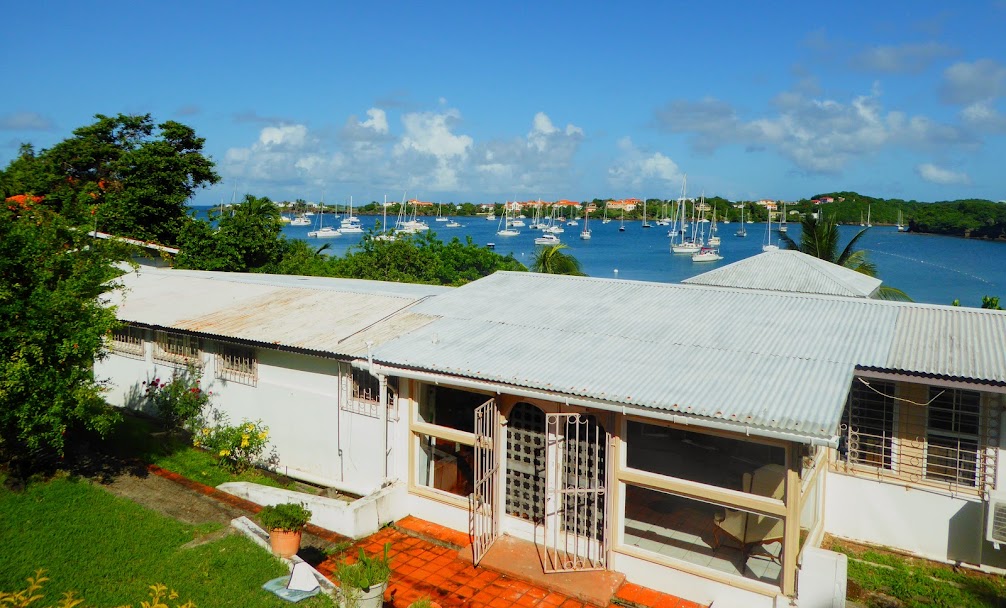
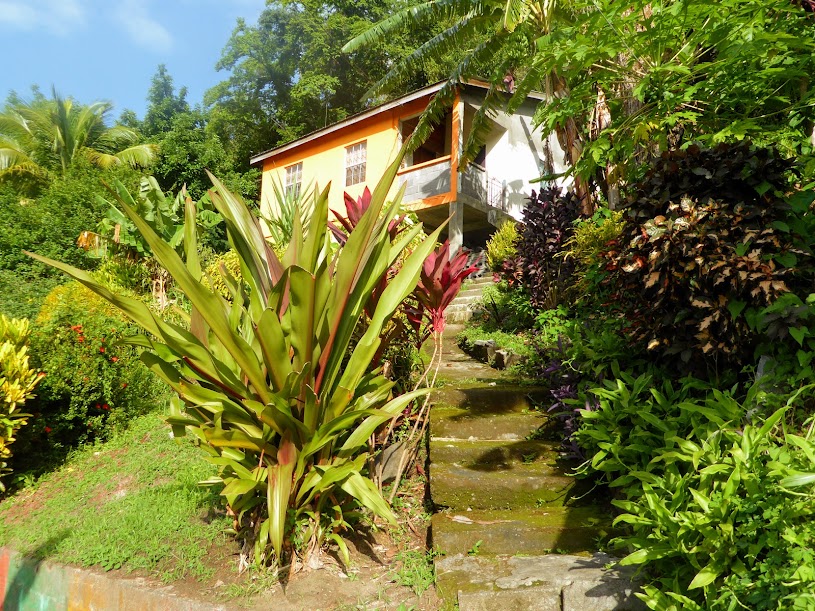
Houses of all shapes, colors and styles lined the hills around us, and Budget Marine (the Eastern Caribbean’s answer to West Marine) was just a shorty dinghy ride away. Scott was eager to peruse the shelves, but came away with sticker shock; the EC is much pricier than the western side!

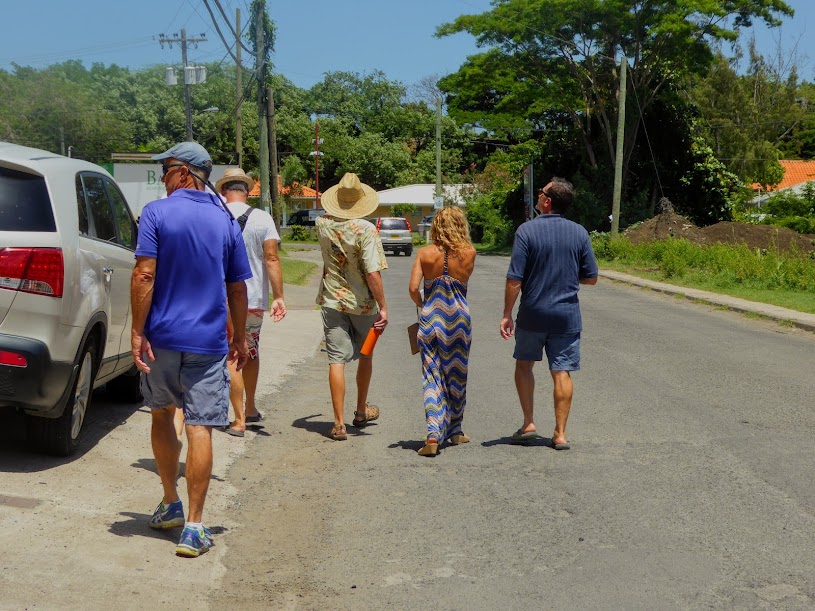
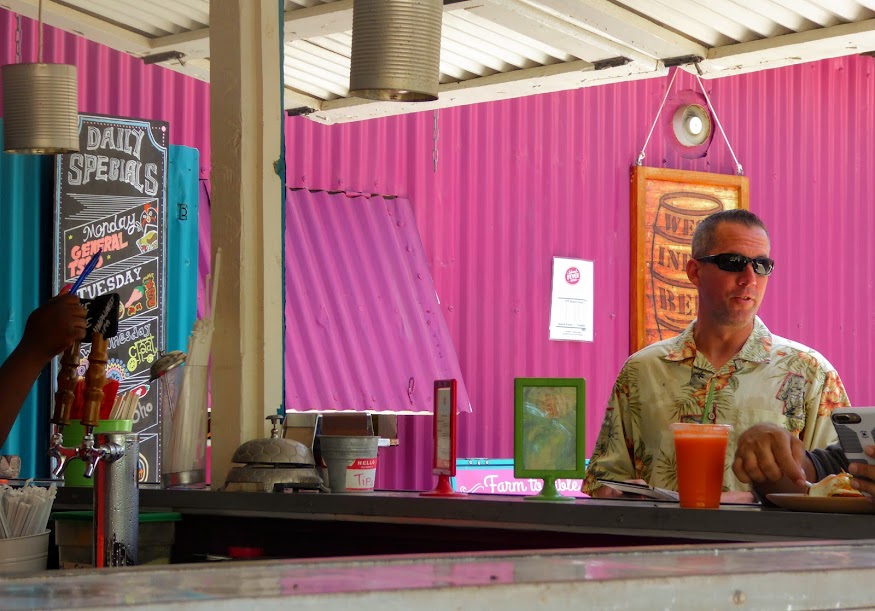
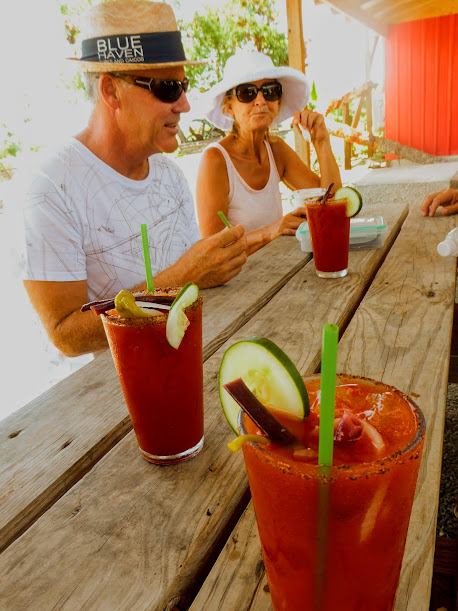
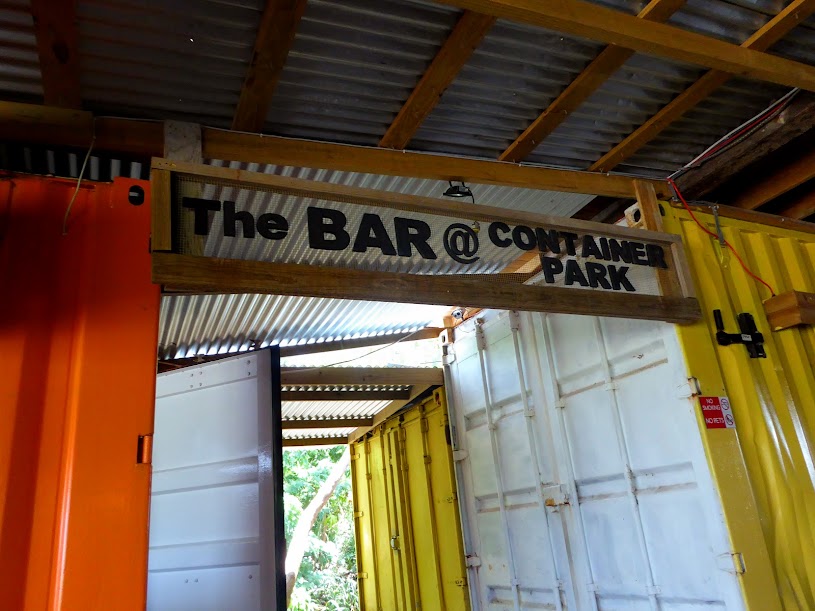
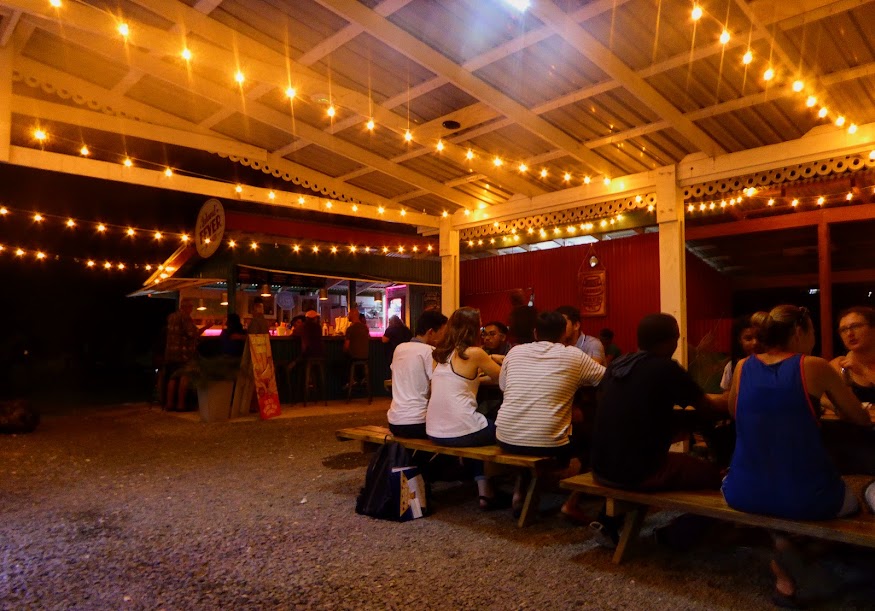
From Budget Marine’s dinghy dock, it was an easy walk to the Container Park, a food truck complex of sorts, with containers housing various food choices instead of trucks. The group of hodgepodge containers offered paninis, coffee drinks, ice cream, burgers, Thai and Mexican food and many other options. We enjoyed brunch and bloody marys with friends, and visited during evening hours as well.

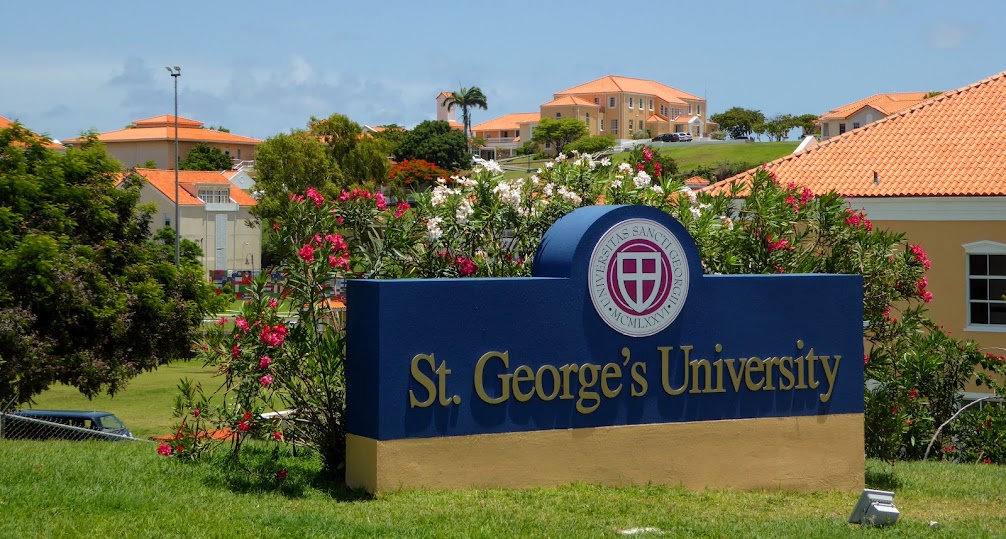
St. Georges University is located just down the road, and as a result, many small bars, restaurants and food stands line the street leading to the Container Park.

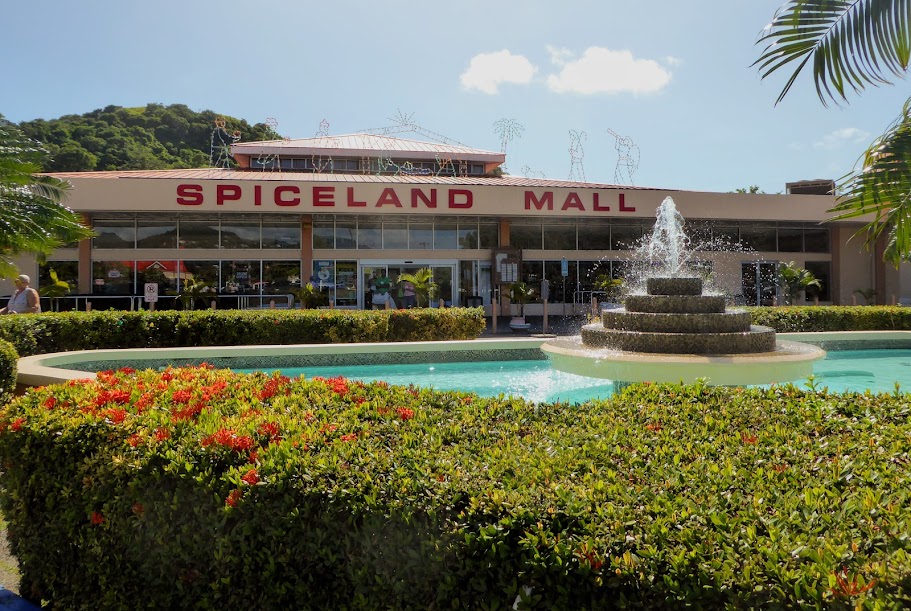
There were many shopping options for us on Grenada. Not far away was an Ace Hardware, and also CK’s, a bulk grocery store. Further down the road was Spiceland Mall, which housed a home goods-type store, a large IGA grocery store, as well as other shops and a small eatery.

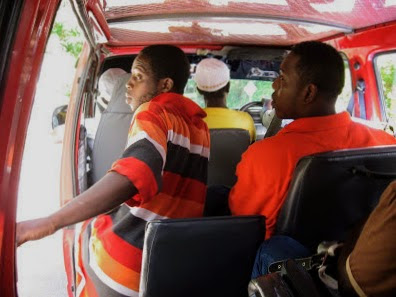
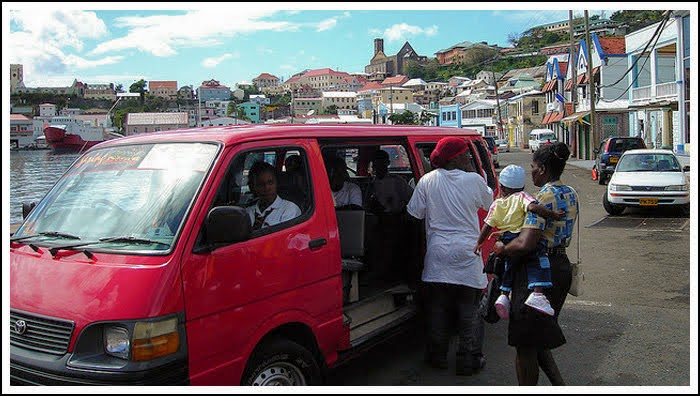
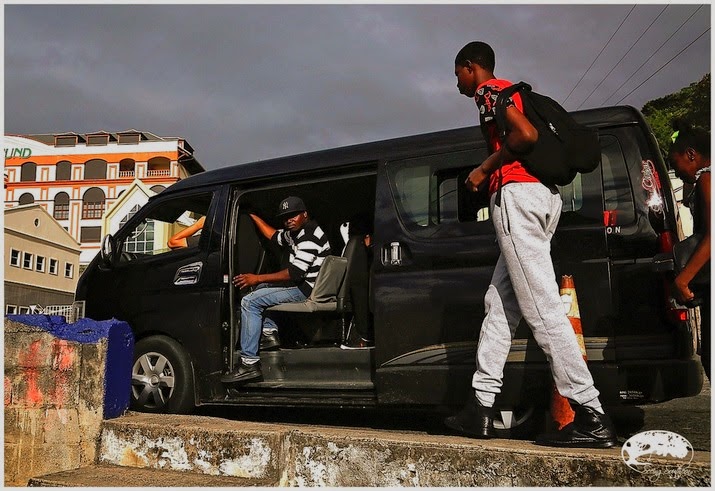
Which leads me to how we get to said stores…the local buses. On Grenada, as on many Caribbean islands, public buses are actually mini vans, and 90 cents USD, will get you a ride anywhere on the island. In addition to the driver, each bus has a “conductor.” This person sits behind the passenger, near the sliding side door, and it’s his job to fill the bus and collect money, while the driver drives.

Buses in Grenada are privately owned, and have interesting names that are proudly displayed across the windshield: Humble Thy Self, Scare Dem, Nothing Yet, etc. The more fares they can squeeze in, the more money they’ll make, so conductors constantly scan the roadsides for possible passengers (There are bus stops throughout the island, but unlike the U.S., passengers can get on and off at will). With keen eagle eyes,  they’ll noticing you long before you even come near a bus stop, or start to look for a bus; don’t’ worry about catching a bus on Grenada, it’ll “catch” you.

With half their body hanging out the open side door, conductors will whistle, or call out “Bus, Bus, Bus!!” to get your attention. At times, we were only going a short distance, and chose to walk instead of ride, having to politely wave off the many honks and shouts to get on board. On a particularly cloudy day, after waived off our I-don’t-know-how-many-ith bus, the driver responded: Sure?…..it’s gonna rae-een!

In order to pick up as many passengers as possible, buses often deviate from their set route. A bus will often detour up into to hillside neighborhood, or back up a side street to pick up a fare; sudden, sharp braking is regular, and so is backing up….on main roads. While the buses race to try and get as many fares on board as possible, it does not diminish their politeness. They will patiently wait for a passenger, no matter the age, to to get on the bus, even backing up to shorten the walk. Local children ride the buses to and from school, and conductors will see them safely to the far side of the street when getting off.

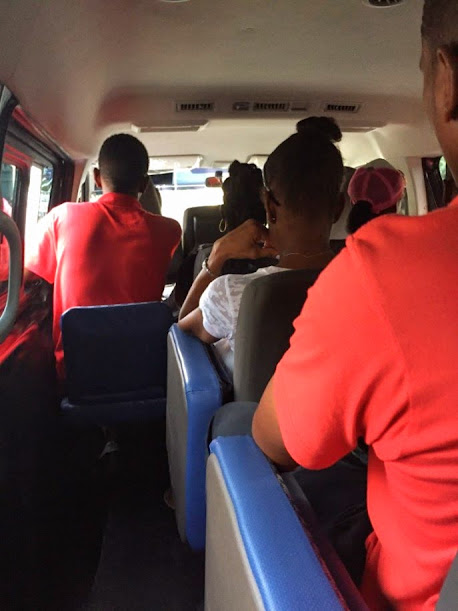
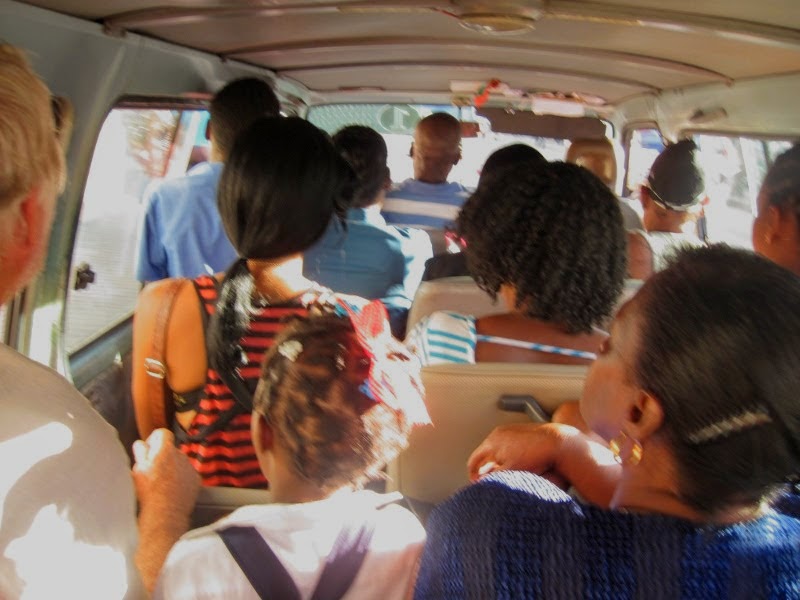
A bus inGrenada is a 14 passenger mini van, with an additional row of fold-down, jump seats. They make full use of every inch of interior space, stuffing us in like sardines. People are expected to sit on the gap between the permanent seat and the jump seat (not comfy), and also on a fold-down seat between the driver and passenger. We’ve also seen people sit next to the sliding door, facing backwards, on a hump that extends out from under the passenger seat.

And air conditioning?? The driver most often runs it for himself, while the rest of us gasp for any breeze that comes in through the open windows (I borrowed these bus photos online, as I was always too hot, crammed in or holding on for dear life to think about my camera). Reggae or dance music is played at vibrating decibels, perhaps to try and distract you from the heat.

Whatever you’re carrying with you cannot take up valuable seat space. Shopping bags are jammed in front of you on the floor, stacked up to your nose if necessary. This proposed quite a problem for Scott, as the distance to the back of the seat in front of him was so short, he had to ride with his knees to his chest.

A knock on the tin roof or side wall of the bus signals that you want to get off. This request is relayed by the conductor, because there’s no way for the driver to hear your knock over the volume of the rolling dance party. Once your signal  is received, the bus may jerk to a stop, let you off further down the road…or at the next bus stop. The sardine can-packed bus will, more often than not, have to unload like clowns at the circus to let you off, before reloading and continuing on.

As I have mentioned before, local Grenadians were the most incredibly friendly and welcoming people we’ve interacted with on our entire adventure to date. They appreciated the cruisers’ presence on the island, and the business opportunities that it afforded…in a positive way. Instead of trying to take advantage of the boaters, they truly wanted us to enjoy their island, including and mingling with the cruisers at bars, restaurants, events and gatherings.

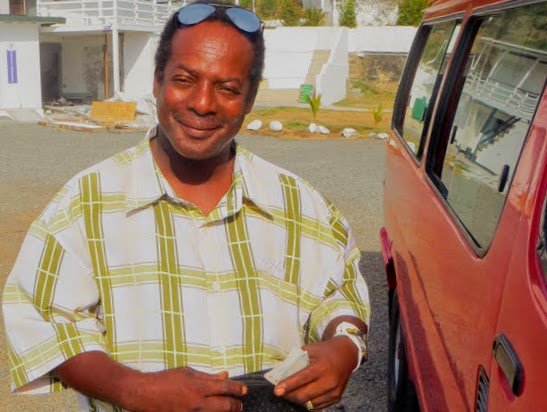
This is especially true for a group of  bus drivers who play a huge part in providing cruisers with transportation for specific needs and special events. Like the buses, these drivers all use colorful nicknames, such as Shademan and Christ Child. Five days a week, these men offer shopping buses, making pickups at the various marinas, and then stopping at Ace Hardware, CK’s Discount Store, an ATM machine and the IGA.

Shademan is amazing with the cruisers. He’s on the net every morning, announcing what trips or services are offered for that day, and the rest of the week. We rode with him to see the pan orchestra practice, and costume making, and he also ferried us back and forth to the various parades during carnival.

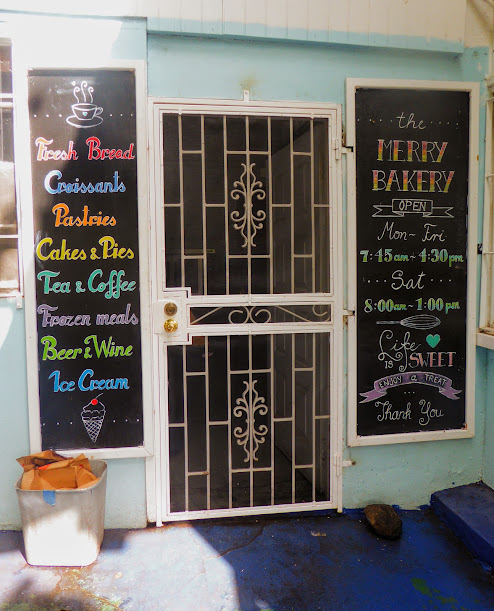
Shademan also offers a Saturday shopping bus that goes into St. Georges, for the weekly market. We hopped on one Saturday, interested to see the market, and a bit of downtown. Our first stop was the Merry Baker, located on the grounds of the Port Louis Marina. We were either too early, or too late, as the shelves were nearly empty. However, being one of the first ones out of the van, I managed to get the last loaf of ciabatta bread…score one for me!

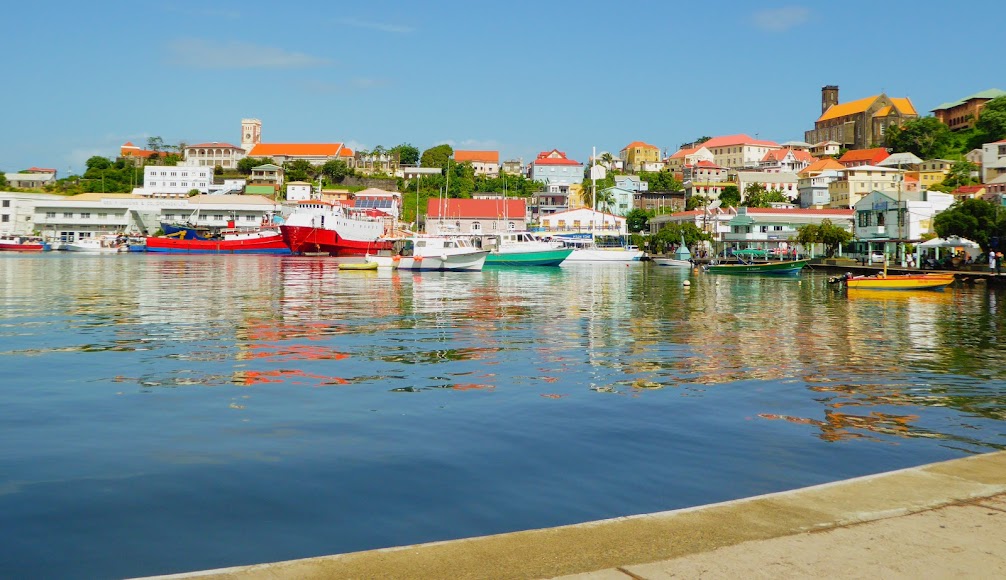
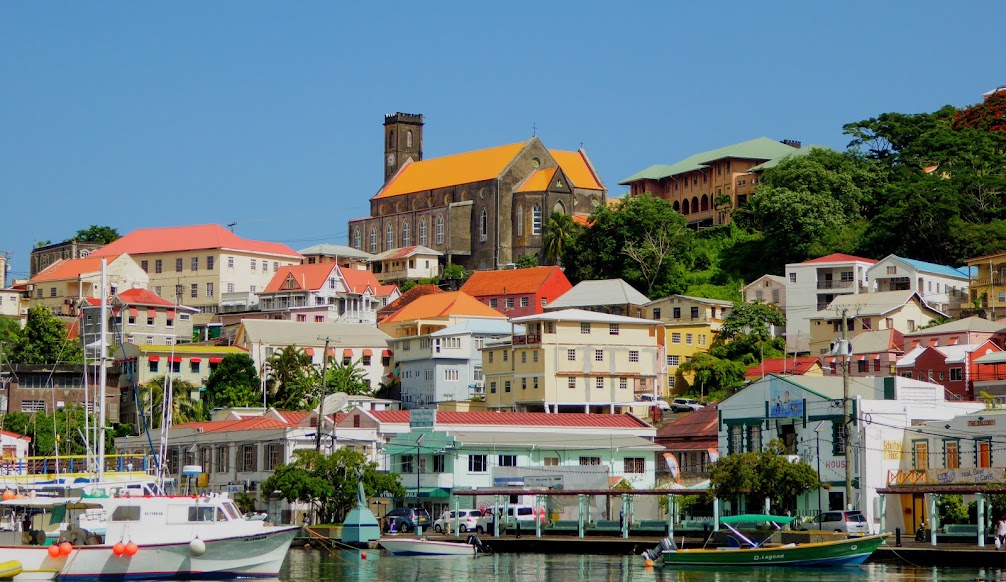
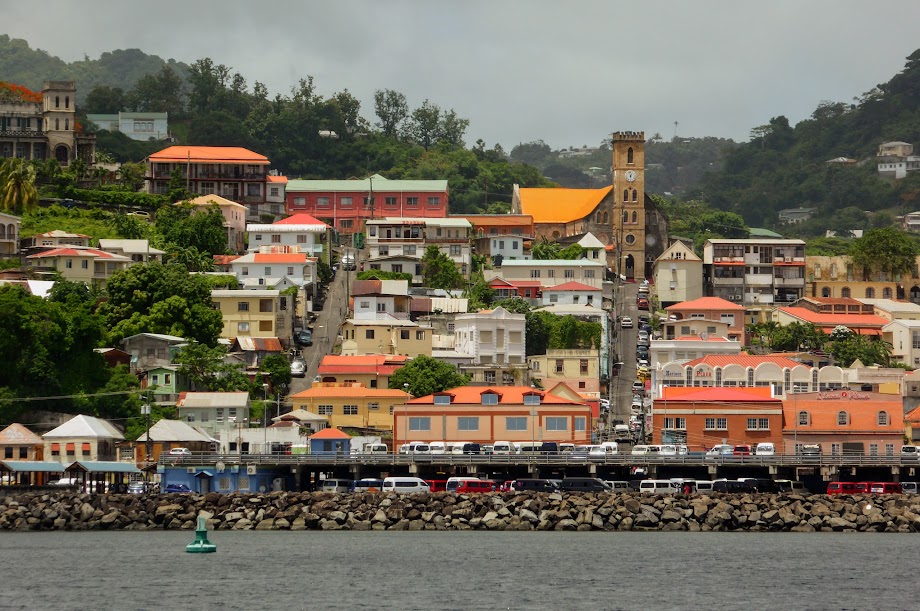
It was a clear, blue-sky morning, and the buildings across the bay were bright and colorful, as we made our way around the carenage.

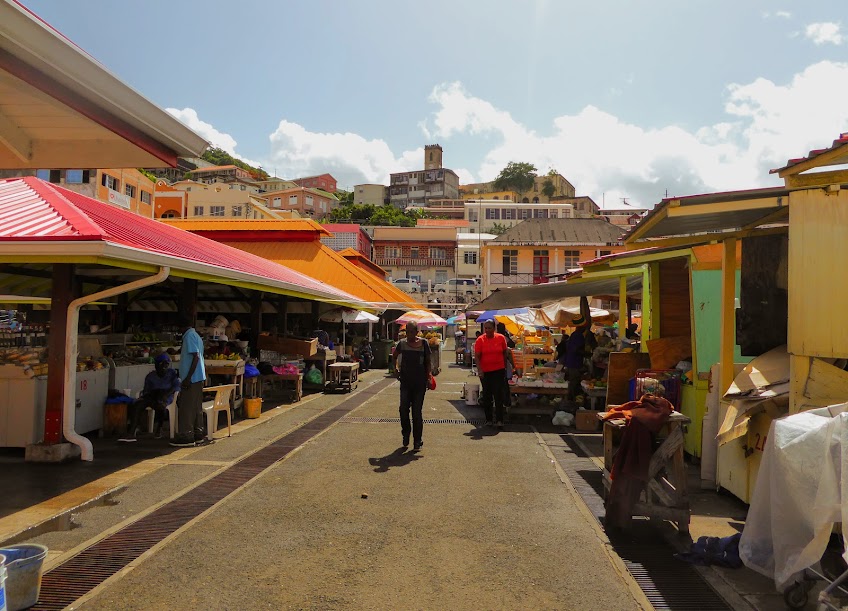
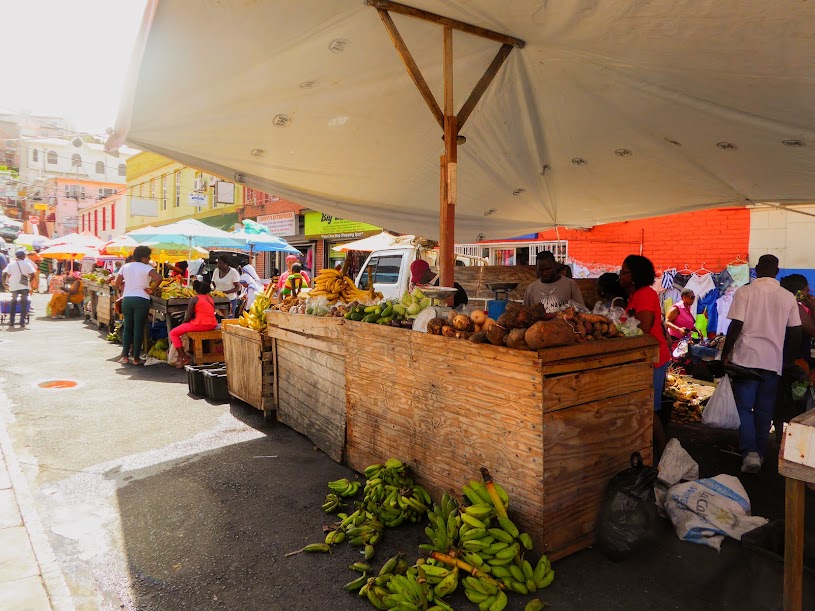
We arrived downtown, where Shademan dropped us off for 90 minutes of shopping. The open market and many street stalls covered several blocks.

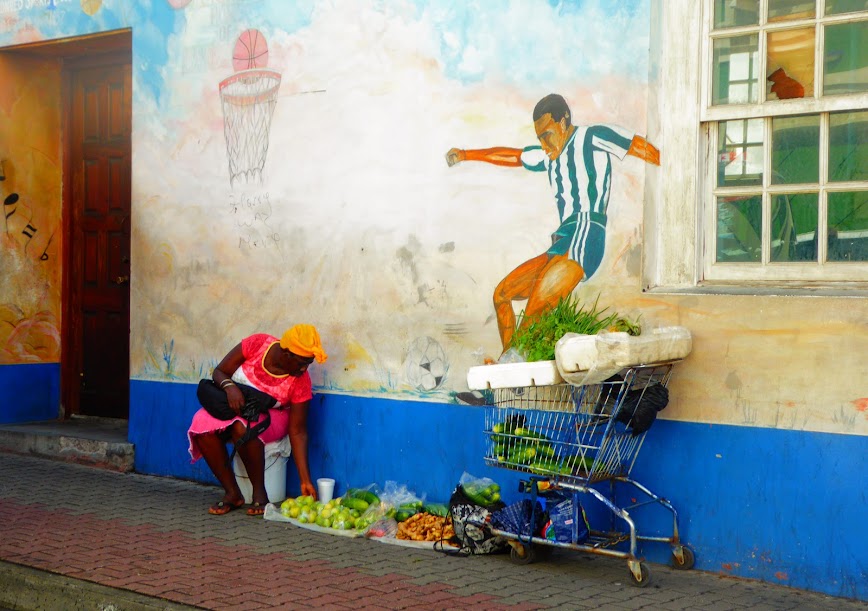
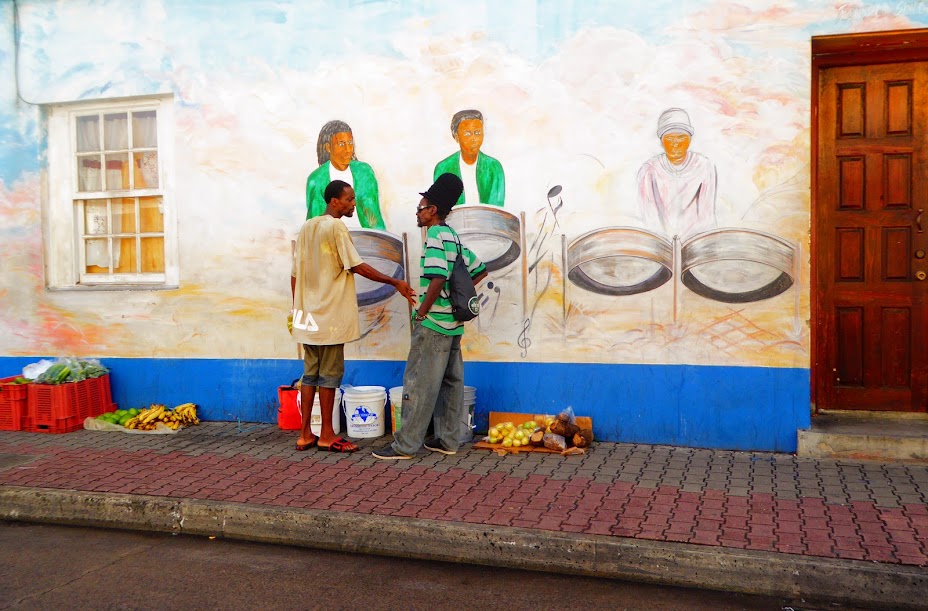
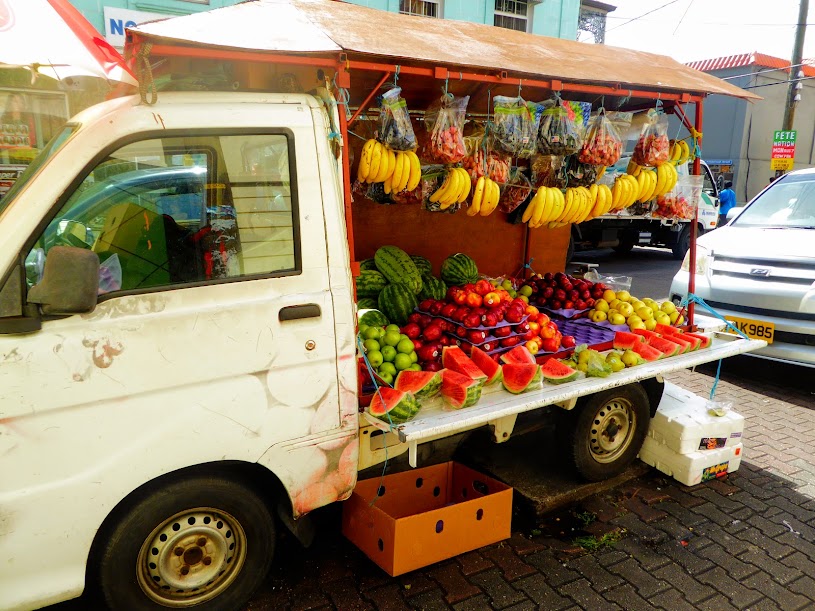
In addition to stalls, many people had set up shop on the sidewalks, or along the side of the road, selling produce and other goods.

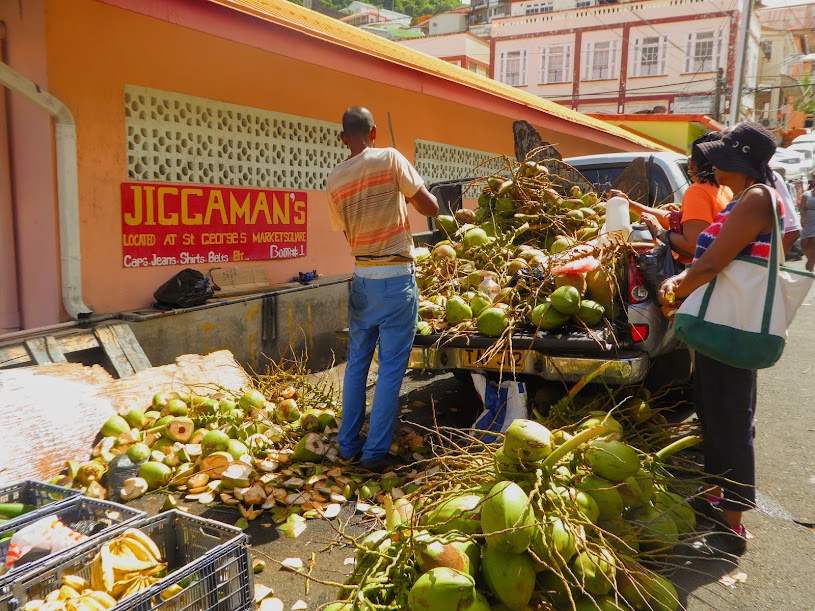
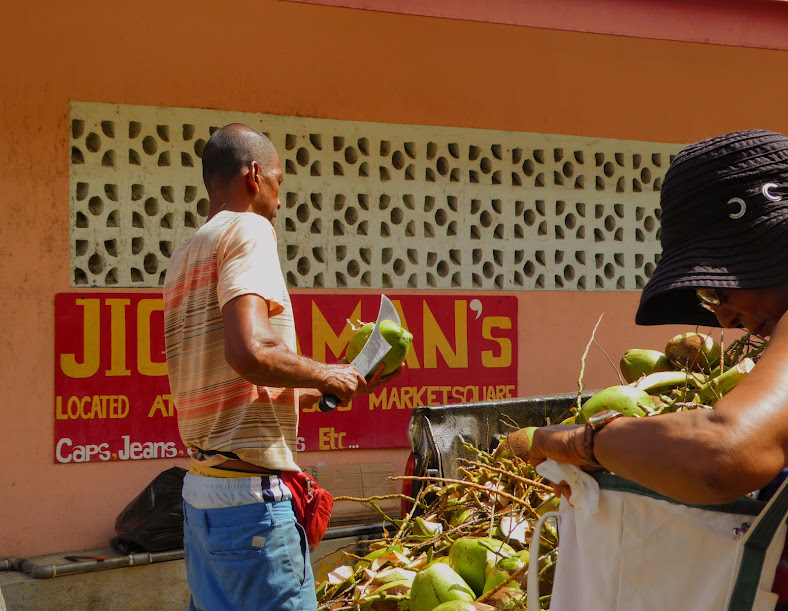
We came across a man selling fresh coconut water, who was very popular…and handy with a  machete! Waiting patiently, behind piles of coconuts, people brought along their own bottles and jugs for filling.

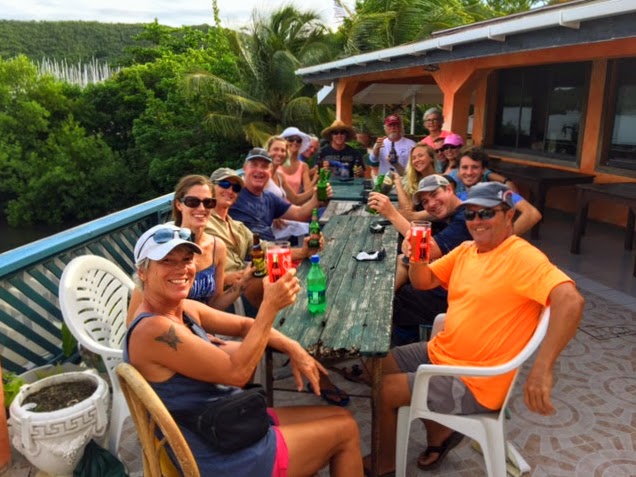
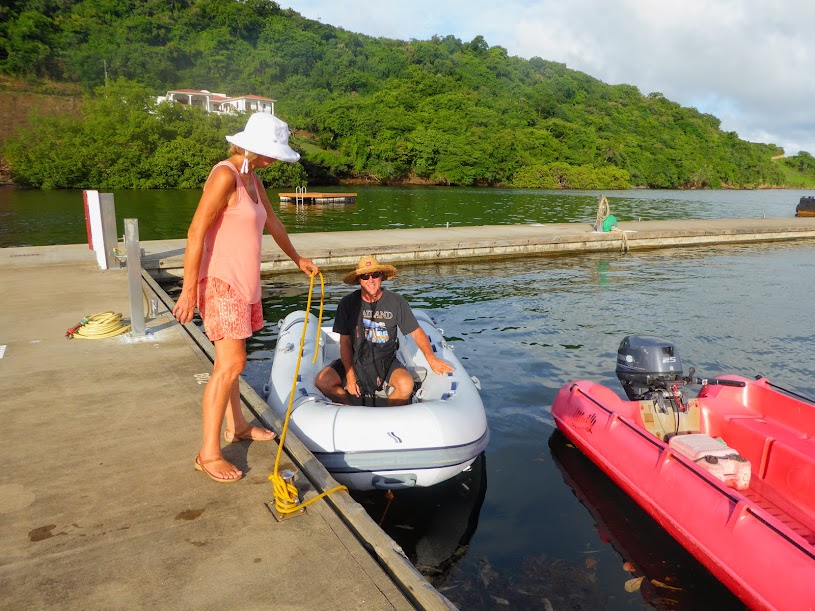
In addition to the many planned events and gatherings, we made our own fun. A group of us who were moored in Prickly Bay decided to do a dinghy bar crawl, visiting places in the nearby bays around the corner.

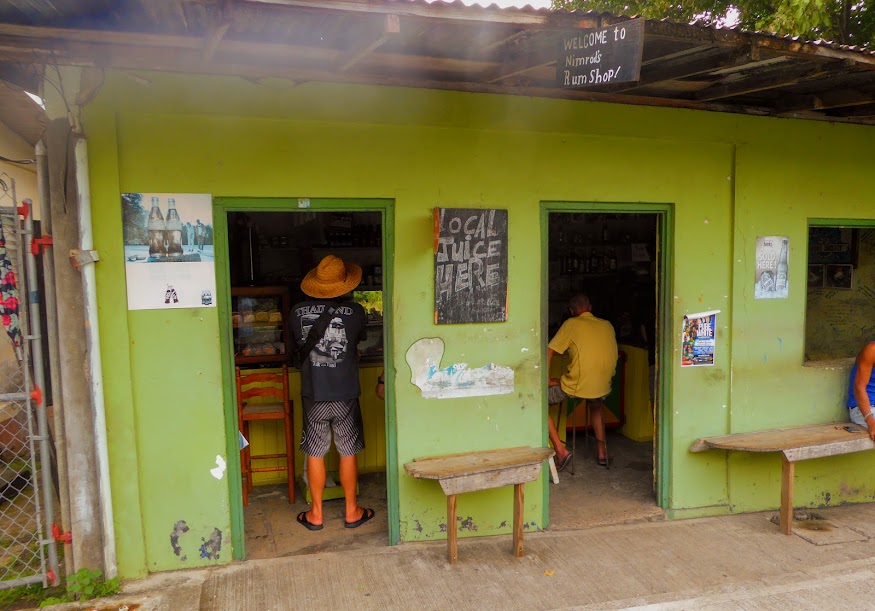
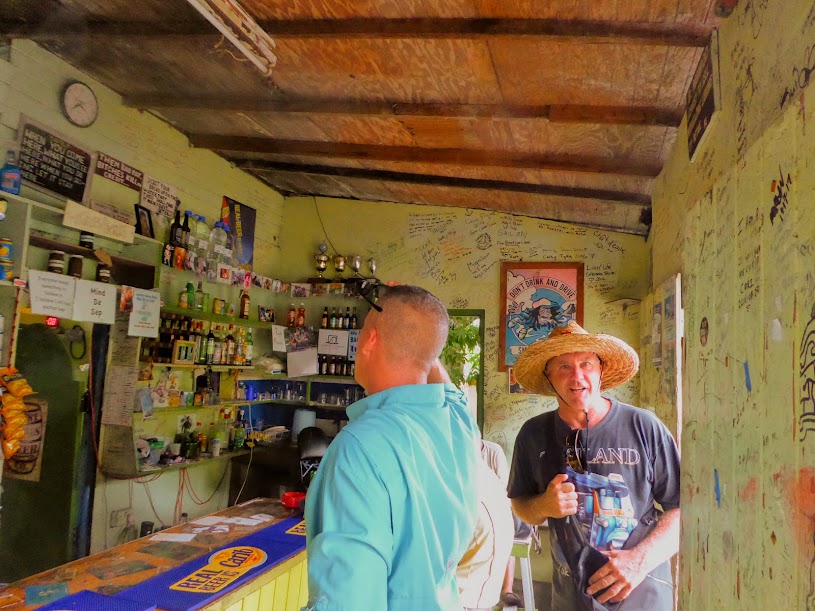
Nimrods rum shop was especially fun. In addition to rum and beer, this tiny bar also sold fresh bread, boxed milk and some local vegetables…a one stop shop!

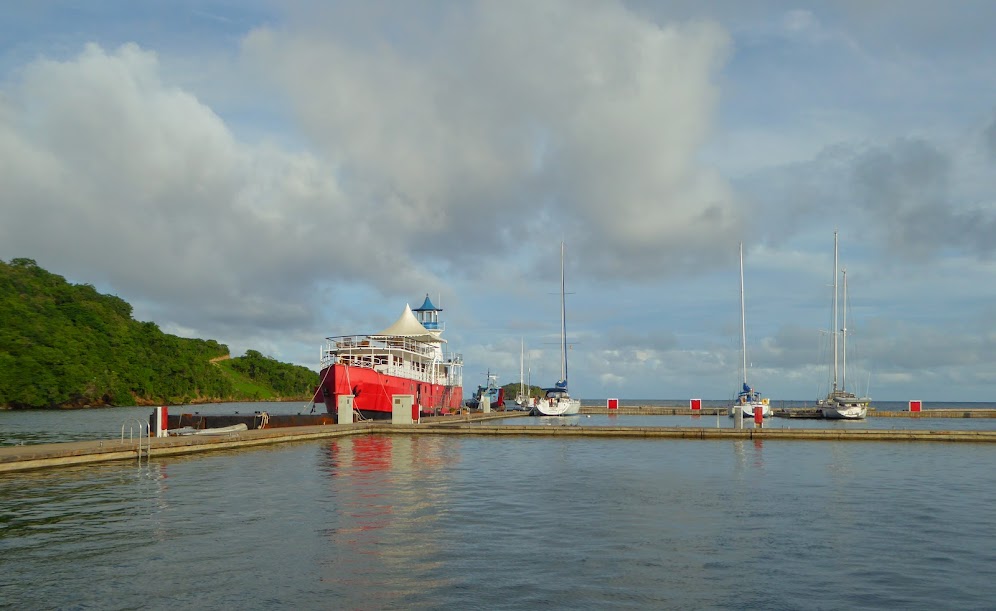
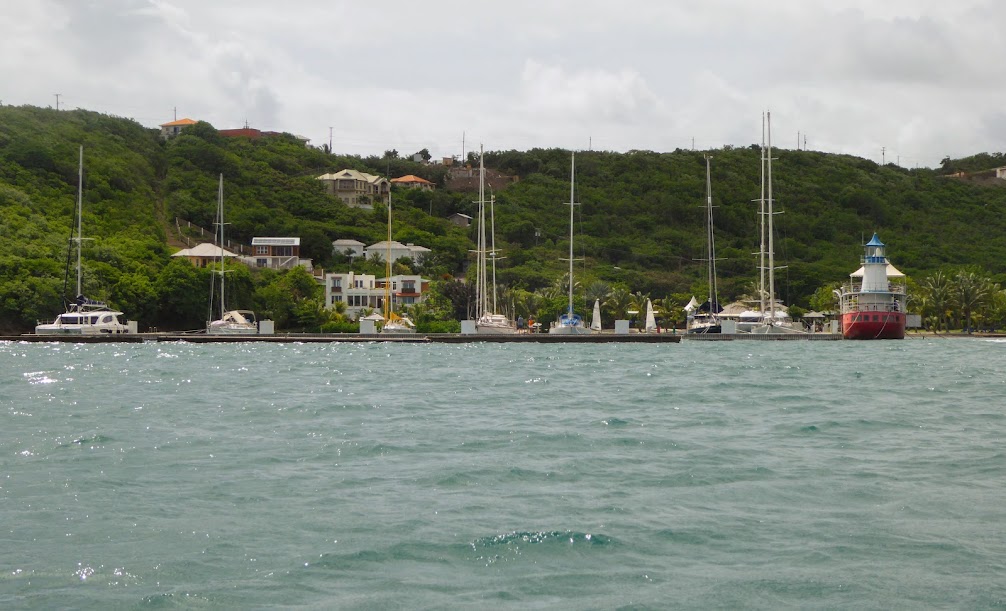
We ended our crawl at Le Phare Bleu, sponsor of the dinghy concert we attended. The really cool-looking Lightship Bar was closed, so we opted for drinks in restaurant.

After a fun day with friends, Scott and I headed back to Prickly Bay, wanting to get around the corner and out of open water, while there was still some light left.

We sadly said goodbye to our Aussie friends, Mark and Deb, who left us just after Carnival. They had their catamaran, Kefi, hauled out for two months, and were headed home to Australia for a visit. Upon their return, they would head for the Western Caribbean, and the Panama Canal, while we planned to head north.

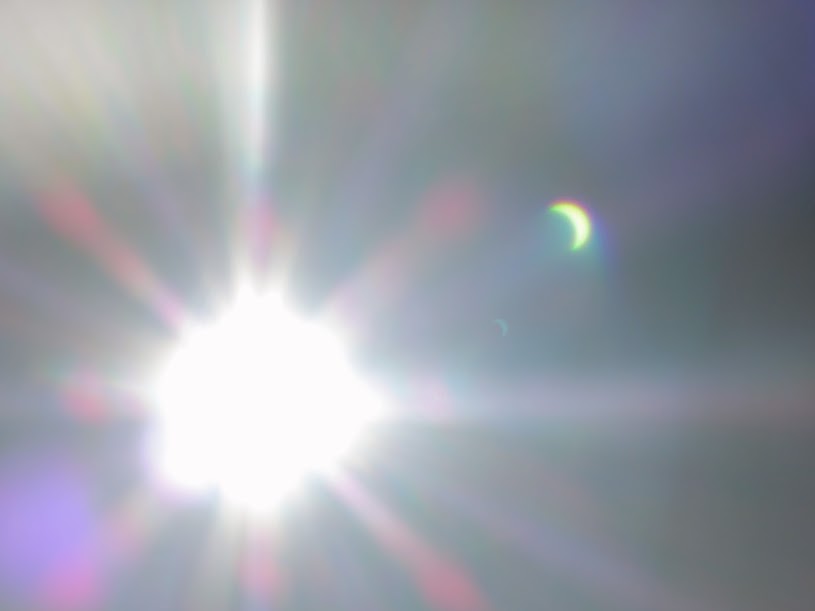
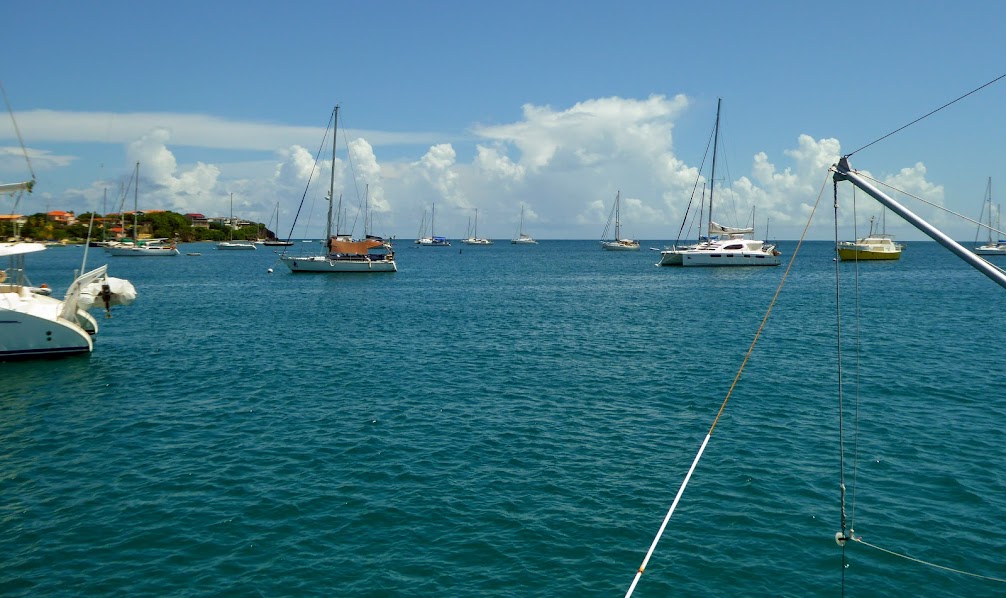
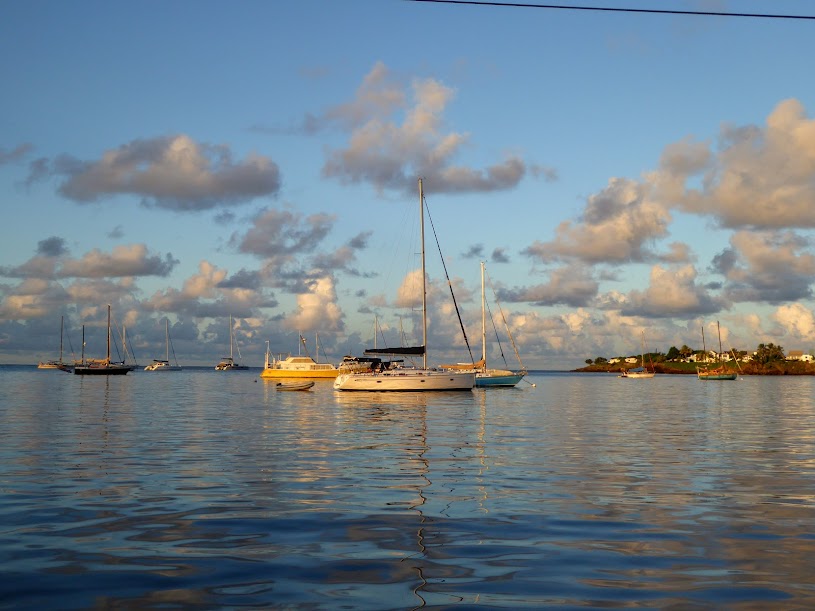
From our mooring in Prickly Bay, we  had decent views of the solar eclipse in August, and even though the anchorage was crowded, sunrises and clear, white, puffy cloud days were still scenic.

So that’s a peek into cruiser life on Grenada. Here are more photos.

“Shells Sink, Dreams Float. Life’s Good On Our Boat!”

Hurricane Irma….We’re All Clear!

Many people have reached out to us over the last week, inquiring whether we’re safe, and out of Irma’s path…we are well clear of her!

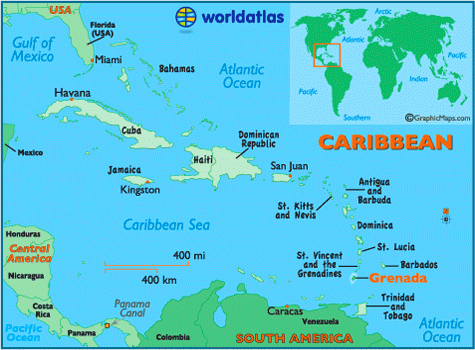
I have mentioned in several previous posts that we’d planned to head for the Eastern Caribbean, and make our way to Grenada for hurricane season. We arrived in Puerto Rico in late April, made our way south from St. Thomas in June and arrived in Grenada in early July. Sea Life is currently tied to a mooring ball in Prickly Bay, on the island’s south coast (just below the airplane at photo below).

Thankfully, we were well south of Irma’s path, and only had to deal with several days of large swell in the bay.

It seems there has been confusion as to whether or not we were in Puerto Rico, due to my latest post. Others just seemed to be asking in general, not knowing exactly where we are.

If you’ve met my husband, you’d know that there is no….way, in this lifetime or any other, that he’d have us in the upper Eastern Caribbean during this time of year. Not only would he be unable to sleep at night, I don’t think he’d be able to breath.

Scott has the utmost respect for weather. He cut his teeth on the waves, tides, currents, storms and surge, living on Shallow Creek, just off the Chesapeake Bay. Many weather classes were followed by a graduate degree in Western Caribbean cruising, earned over the last two years (holy cow…two years!).  The take-away??…Mother Nature rules, and we don’t mess with that.

We’re not sure why cruisers choose to be in these places at this risky time of year. I guess they get complacent, after years with no major storm hit. As we prepared to leave St. Thomas and head farther south, Scott met a couple who stay at anchor off of the island year round, claiming it has several good hurricane holes. Scott’s take? A hurricane hole is a hurricane hole….until is isn’t; Irma, case in point. Here’s a link that lists the extent of destruction to the islands affected by this massive storm.

There were days of warnings for this huge, catastrophic storm, with little to no doubt of it’s path and impact on the upper islands. Several boats arrived here in Grenada over the last week from places north,  and we were shocked not to see many, many more.

Aside from Trinidad and Tobago, Grenada is at the bottom of the Eastern Caribbean chain, and relatively safe from a major storm hit…relatively.

Our insurance covers us here, but I can tell you that if something even close to Irma’s strength heads our way, Scott will run us south, to escape the possibility of endangering Sea Life and her crew.

We are definitely missing Panama, where we spent last hurricane season. Being much farther south, and out of hurricane paths, we hardly checked weather. This year, although we are pretty well south, there is still a very real concern for storms, and we’ve had to keep on our toes.

Ok…all that said, here’s how to ALWAYS know where our CURRENT location is. I’ve mentioned this many times before, usually as we’re heading off on a passage, but it holds true all the time, whether we’re underway or at anchor:

First, go to the Where Are We Now Page of the blog. Click on “Where Are We Now,” at the bottom of the text, and you are taken to the site for our Delorme In Reach Satellite Tracker (now a part of Garmin).

I apologize for the spider web of lines and dots. Scott is a little Delorme-happy, taking the tracker along on hikes, bus rides and tours, as well as various water excursions. You can zoom out, giving yourself a broader view of Grenada. Once you’re far enough out to locate the words “Lanse aux Epines”, at the bottom of the island, begin to zoom in. The blue dot above the pi, in Epines is where Sea Life is moored. Continue to zoom in, and you’ll see our location in Prickly Bay.

Clicking on each dot opens a small window. Click on “more” in that window, and you’ll get info. like date, speed, elevation, etc.  Continue to zoom way out, and you’ll see our path over the last two years (again..two years!).

I hope this helps you keep track of our every move, so to speak. We are thankful for all of your messages and emails, and are grateful to have so many out there concerned for our safety; Sea Life is secure!

“Shells Sink, Dreams Float. Life’s Good On Our Boat!”

Hashing In Grenada

The day after we arrived in Grenada’s Prickly Bay, our neighbor, David came over to welcome his fellow power boater. Having been in Grenada for over a year, on his power catamaran, Windchime II, he was a wealth of cruiser knowledge for us: how and where to catch the bus, what stores were in town, where to get good food and drink deals…and that we had to “hash.”

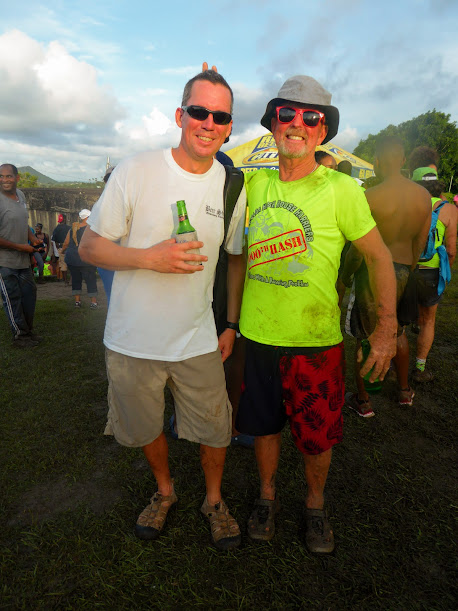
Apparently, hashing is an incredibly popular weekly hike on the island (followed by drinking), attended by locals, cruisers, expats and visitors. We’d been told about this popular event by cruising friends who’d spent time on Grenada, so it was already on Scott’s radar. David gave us details about catching a bus to the hash, and advised Scott to take a pair of gloves to wear, as the trail would be muddy.

I dug around online, and discovered that hashing started in Malaysia, in Kuala Lumpur. Apparently, in 1938, three British expats were members of a prestigious social club, and wanted something physical to do that wouldn’t get in the way of their beer drinking (brilliant!). The club’s dining room was referred to as the “Hash House,” due to its terrible British food, so that name seemed as good as any.

The men started a “fun run,” based on the hounds and hares concept, and hashing was born. Trails through the beautiful Malaysian countryside were marked in flour, leading back to a drinking establishment, where “merriment and irreverent camaraderie ensued.”

Today, there are hash “kennels” in 110 countries and territories around the world, with Britain, the U.S. and Canada having over 100 kennels each (who knew?). An international hash is held every two years, in different locations around the world, and is attended by over 4,000 hashers.

Grenada’s kennel, the Hash House Harriers (“drinkers with a running problem”) was started in 1985, and is one of the largest kennels in the world, with 150-300 people of all fitness levels participating each week, which again include local Grenadians, cruisers, expats and visitors to the island.

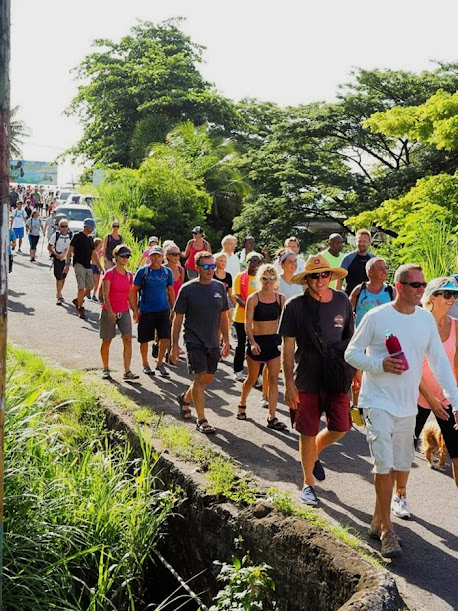
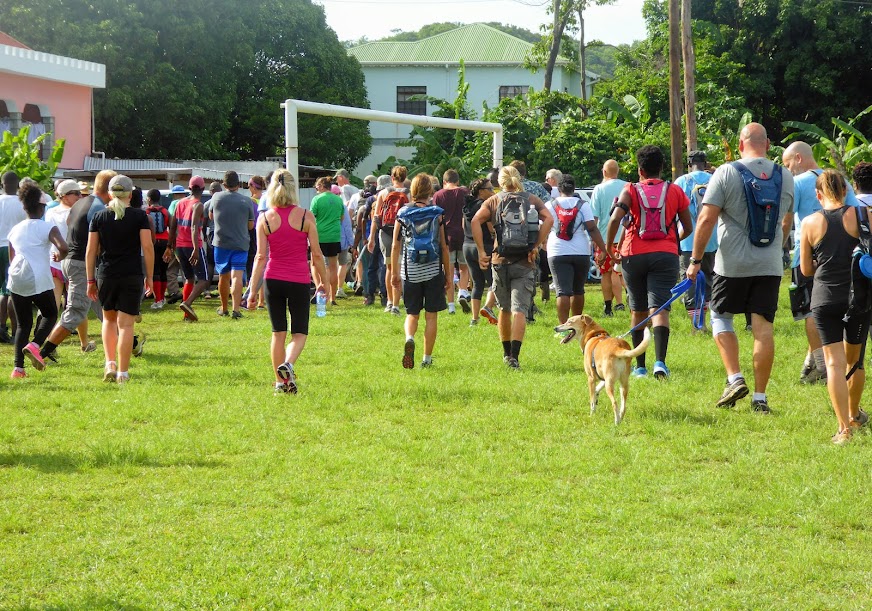
The group of assorted runners and walkers assemble at a previously designated rum shop, a sports field or pasture, at different locations on the island each week. After an initial briefing by the leader (known as The Hash Master or Hash Mistress), hashers set off toward the trail, shouting ON ON.

Here’s “What to Expect,” as found on the Hash Harriers site:

  • Competitiveness is frowned upon in a hash. FRB’s (Front Running B?..s) are looked down on. Hashers who cut corners, SCB’s (Short Cutting B?..s), are regarded with equal disdain.
  • Run or walk at your own pace, at your own risk and with the knowledge of your own limitations. If you are unhappy about the trail ahead of you, turn back and follow the trail back to the rum shop.
  • No embarrassment is caused by cutting short your hash for any reason – it just means that you get to the beer ahead of the rest of the pack.

Hashers follow a trail of flour or shredded paper, taking the “pack” through some of the most beautiful parts of Grenada. They return to the start location a few hours later, to consume large quantities of beer, and “undo all the good that this running and walking has done to them.”

Many hashers have nicknames. It is said that your parents had no idea what they were doing when they named you, and a that a hash will fix that. A hash name is a fond nickname bestowed upon a hasher after a certain number of runs, on special occasions or when the hasher has done something so absurdly stupid that the kennel couldn’t wait to name them.

It is considered bad form to call a hasher by a name other than their nickname while at the hash. “Of course, if your parents gave you a really embarrassing name like Archibold or Cuthbert, you might keep that as your hash name.” Nicknames in the Grenada group include Rigor Mortis, Fungus Among Us, Rancid, Frog Legs and Yours for a Carib. One man was named Bo Peep, for consistently losing hashers on the trail, another received the name Grab the Pussie, after rescuing a cat from a tree and the Hash House Harrier’s most senior hasher, “Spring Chick,” is 84!

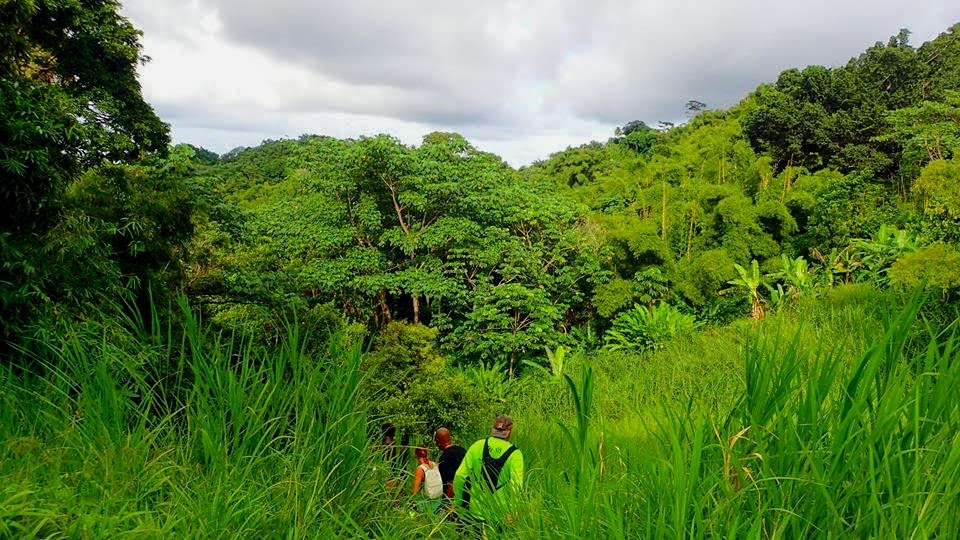
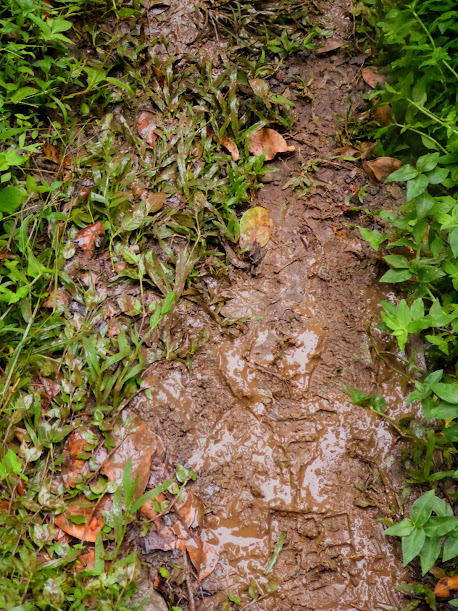
Grenada was pretty darned warm in July, and the thought of hot, humid, muddy jungle hiking did not intrigue me, despite the post drinking, so I sent Scott off to hash on his own. Hours later, he arrived back at the boat, covered in mud, and crawled into the cockpit. Even though he’d scoffed at the idea, Scott had taken the gloves that David suggested. It was a good thing too, as he needed them to grab at trees, for help in pulling  his legs out of the more than ankle-deep mud along the trail.

Unaffected by a weekly mud bath, Scott set out every Saturday for a day of hiking and drinking with his fellow hashers.

Each week Scott came back exhausted, covered in mud and sweat, claiming that at times he thought his heart would explode on the trail, but always with many amusing stories. He told me that several people would go to the hashes and skip the hiking, instead hanging out at the rum shop until the group returned. This idea appealed to me, and would allow me to see and document the odd event called hashing.

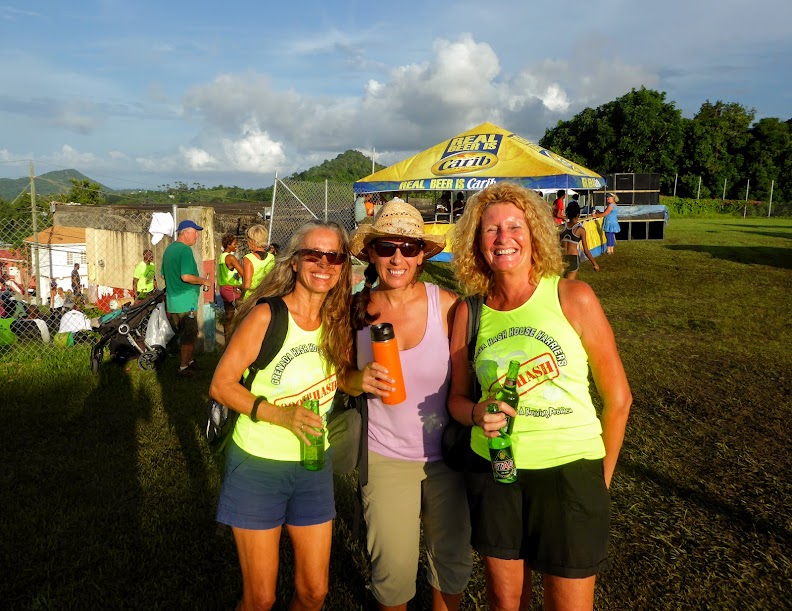
Instead of a rum shop, the hash I decided to attend has its start and end at a sports field…hmmm. There was a tent set up to serve as a bar for the day, but the beer wasn’t iced before the hash….and, there wasn’t a bathroom….HMMM. As this wasn’t my first “island” event, I’d come prepared with bathroom supplies, and decided to walk a bit of the trail for photos, while the beer was icing.

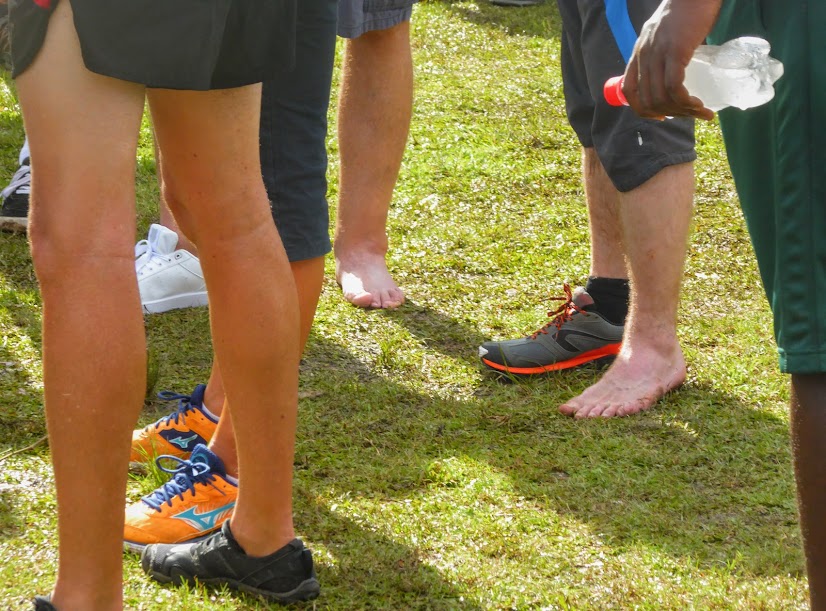
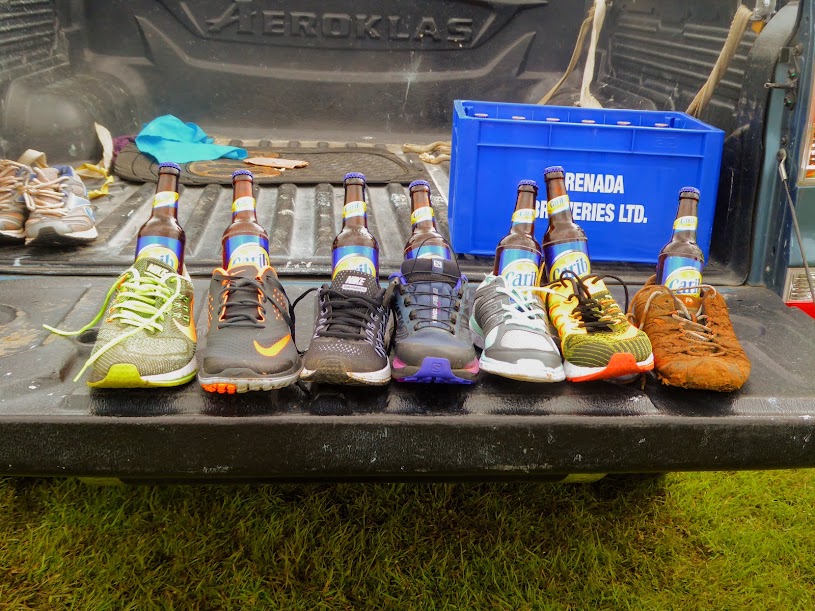
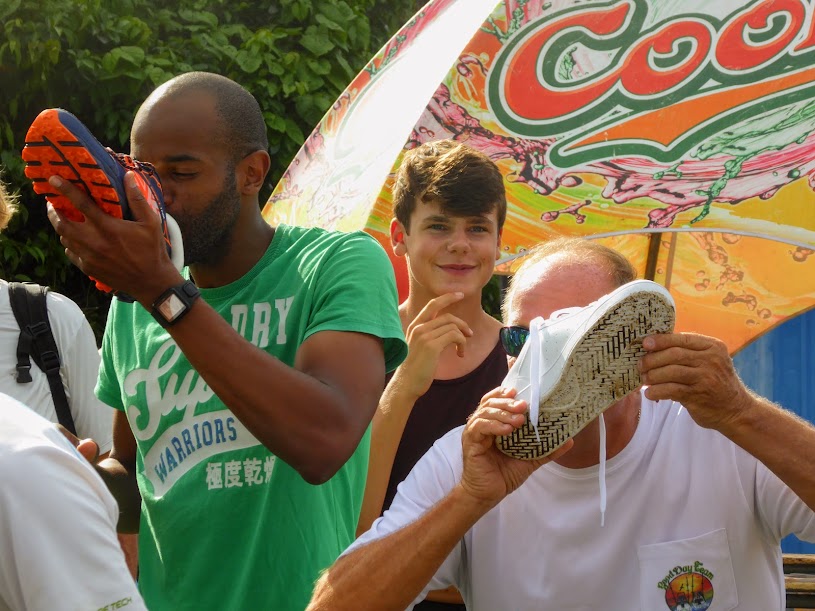
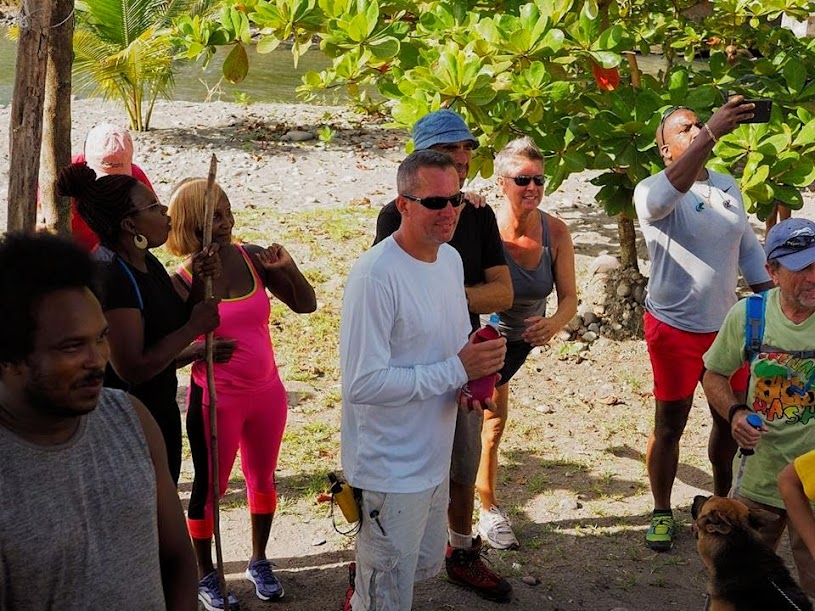
First up, some pre-hash hazing… Those who show up in new or clean shoes are targeted, asked to remove their left shoe and hand it over. As a result, the crowd was speckled with single bare feet.

A beer bottle was placed in each shoe, and the offenders then had to pour the beer into said shoe and drink up. Yep, drink a beer…from your shoe….and then hike with a wet foot…welcome to hashing.

Once the shoe ritual is over, the “Hash Master” signals for the hash to begin, and it’s off to the trail.

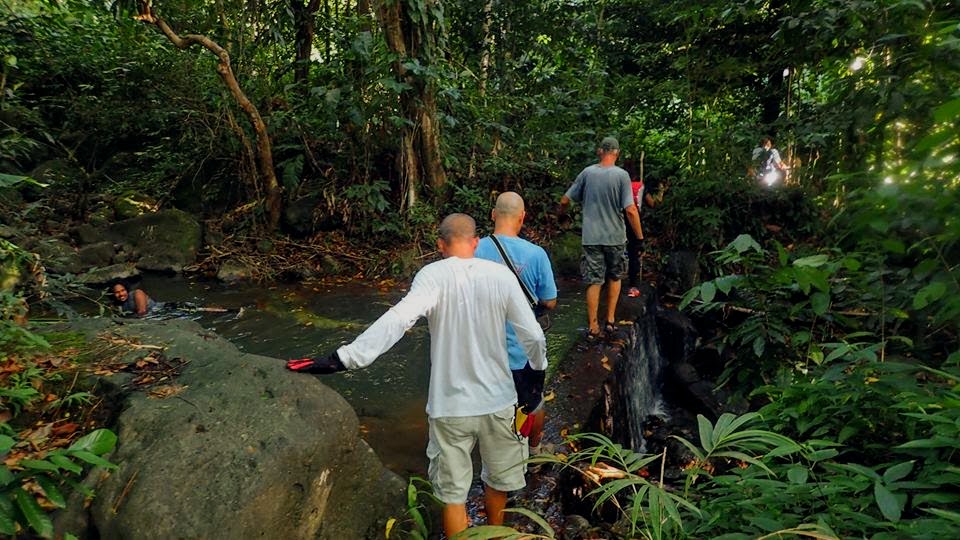
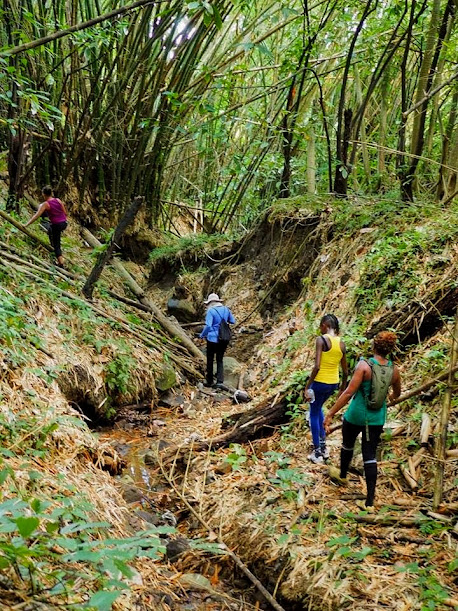
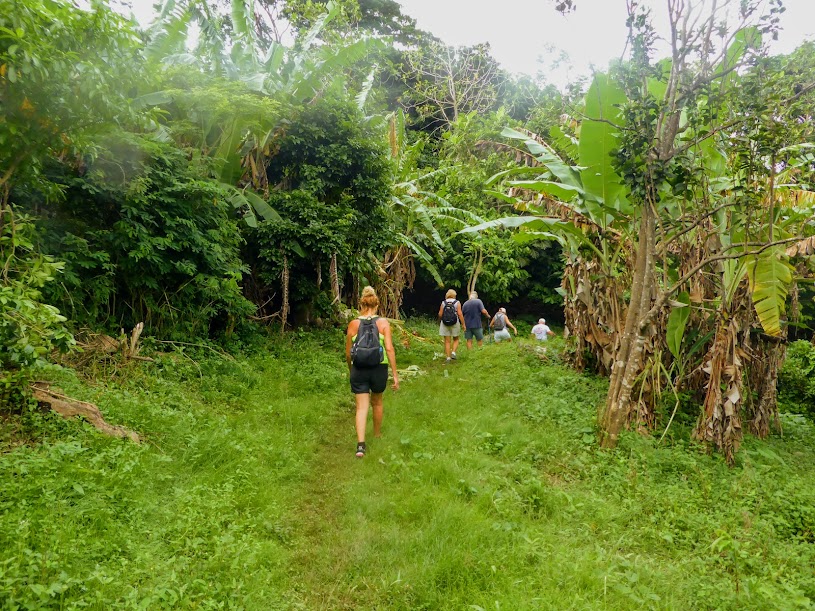
The hashers start out together, and eventually break off to follow a runner or a walker trail. Marked with blobs of shredded paper, the trails make their way through scenic areas of Grenada, often passing by local houses and animals. False trails are laid as well, just to make it interesting.

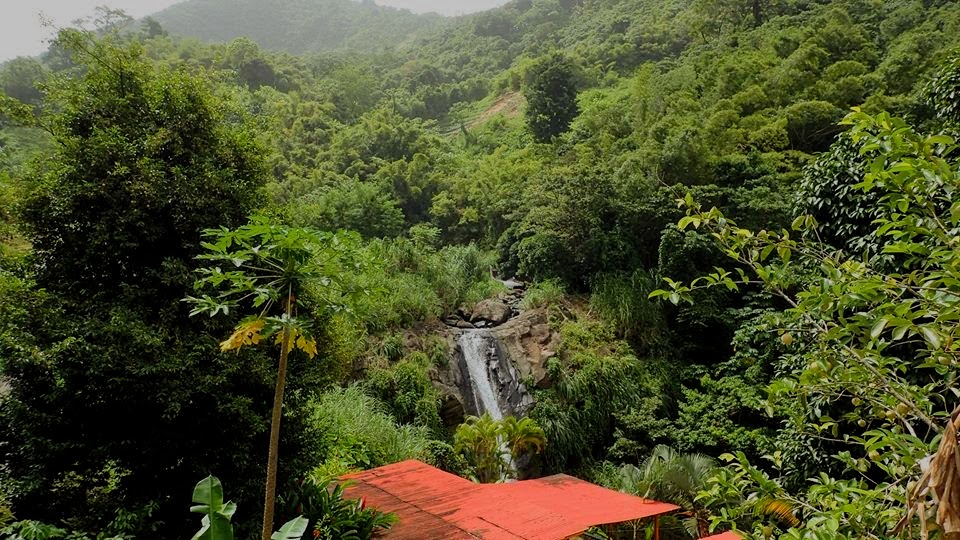
Since I only walked part of the trail, and then headed back for the cold beer, Scott provided me with some photos from the group’s Facebook page, which give you an idea of the beautiful scenery along the hash trails.

Oh, and let’s not forget the mud…

So much mud that hashers resort to just sitting down and sliding, jumping or falling through it…

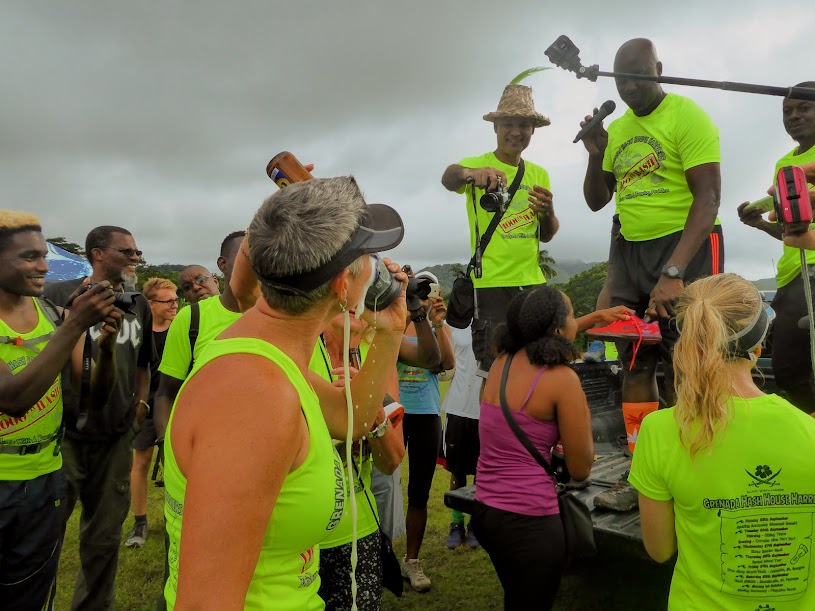
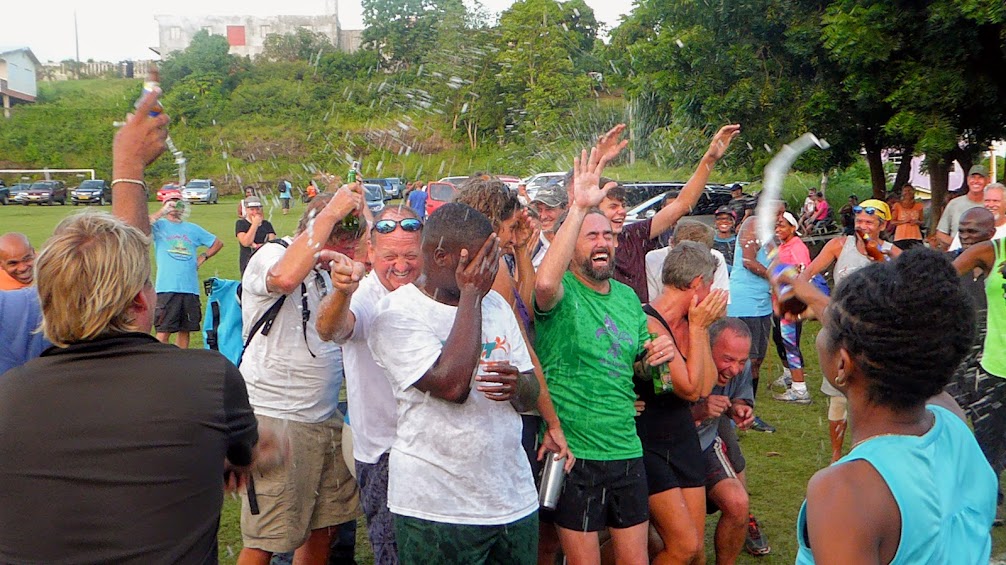
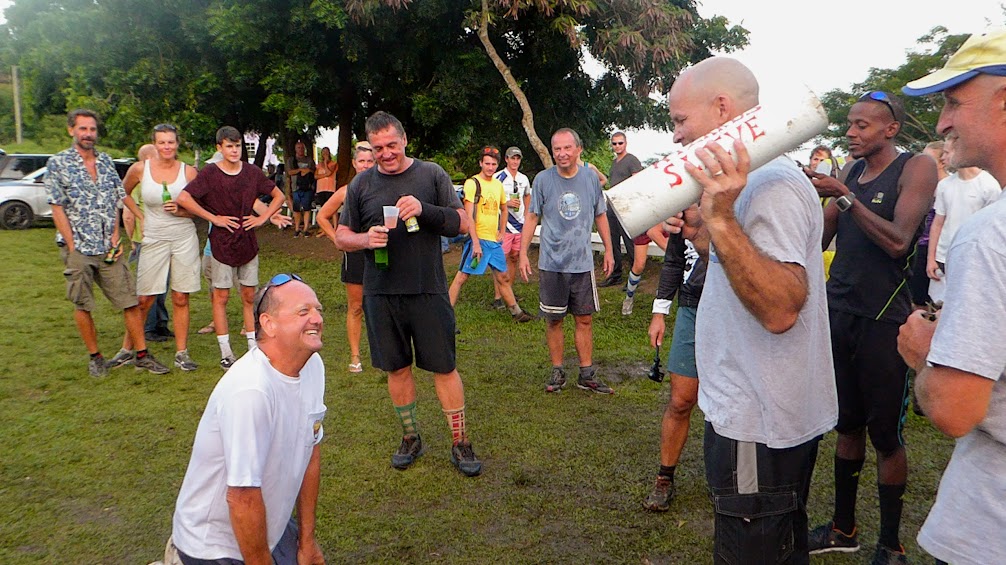
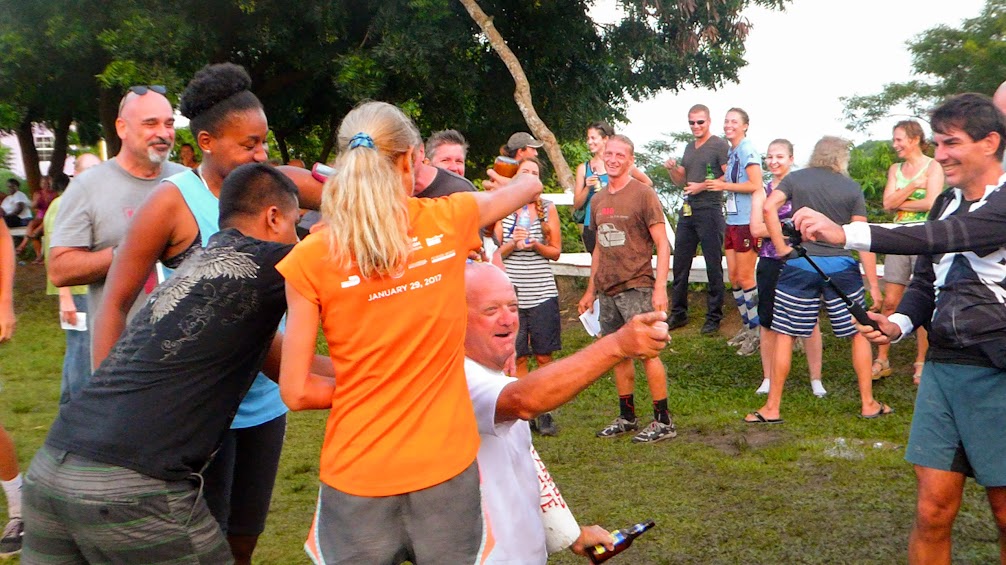
Once everyone has hashed their way through the mud and bush, and arrive back at the meeting site, the after-hash ceremonies begin. First up, a ceremony to initiate the virgins, or first-time hashers. Newbies are asked to stand together, given a welcome and then completely doused in beer by the group.

Over eager hashers, who may prematurely start the dousing, are made to stand with the virgins, sharing their beer bath. Our friend Jolene was an over eager hasher, as you can see here, she’s not too happy about getting caught, and the coming bath.

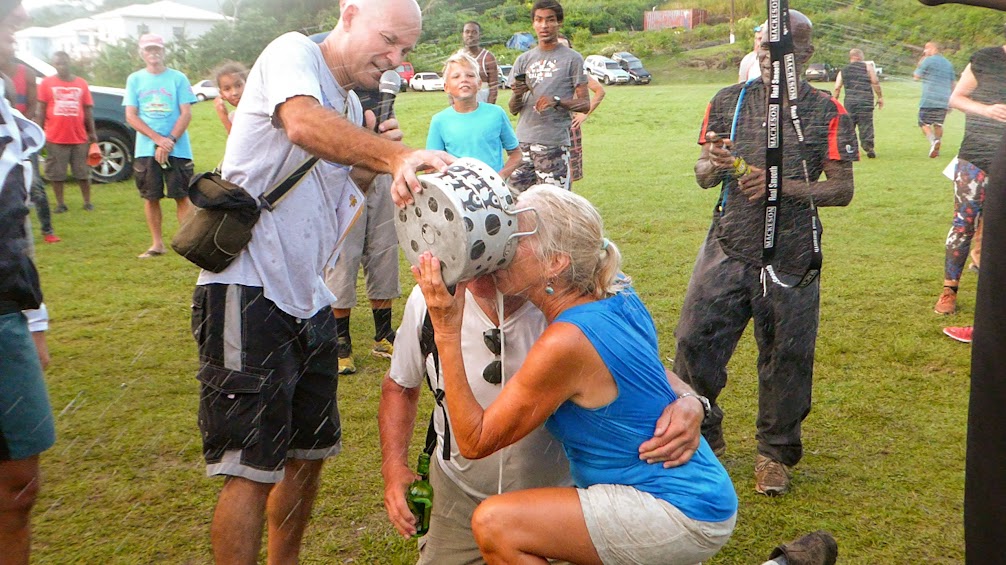
Next victims…hashers who have done something specific to catch the Hash Master’s eye. Such as these two poor souls, who showed up almost an hour after the hash had begun.

They were made to drink from the “Dotty Potty,” (named after a former Hash Mistress, who was particularly fond of doling out punishment) while, of course…..being sprayed with beer.

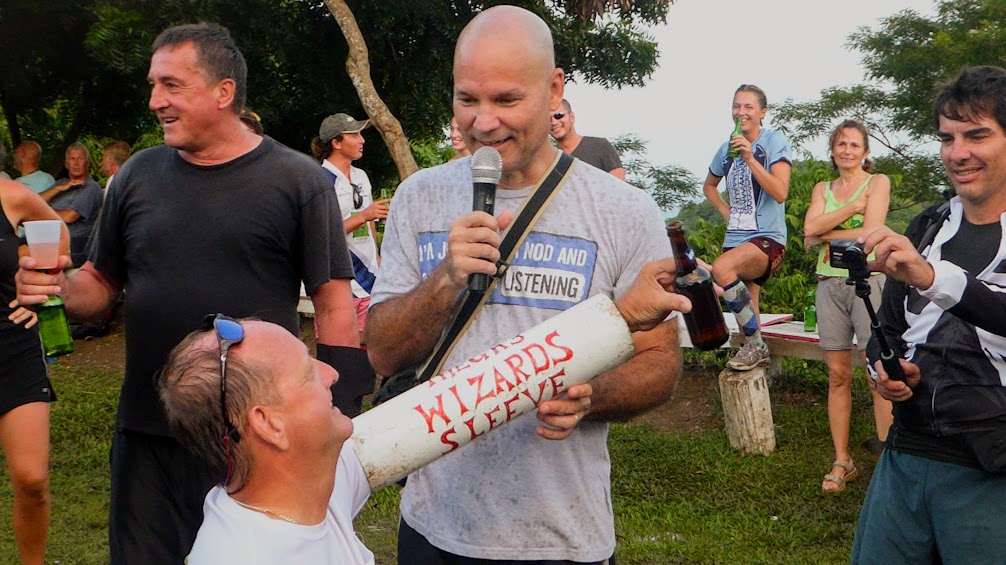
And unfortunately, it was this man’s birthday, so he was made to drink a beer while wearing the “Wizard Sleeve.”

And you guessed it, he was also…sprayed with beer.

This poor man received the trifecta of punishment, after being brought to the hash by a “friend.” He had to chug a beer for his new shoes (thanks for the heads up, friend), received a beer bath as a virgin hasher and then had to both drink a beer and have another beer bath for his birthday. Said friend was put on warning.

After virgins and other “offenders” have been properly “punished” and soaked, it was time for food. Barbecue chicken and oil down are hash food staples.

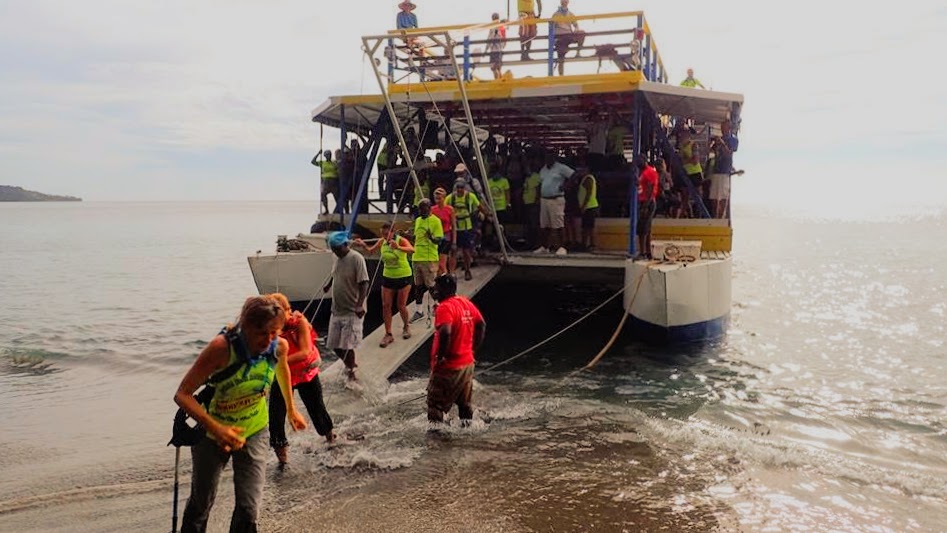
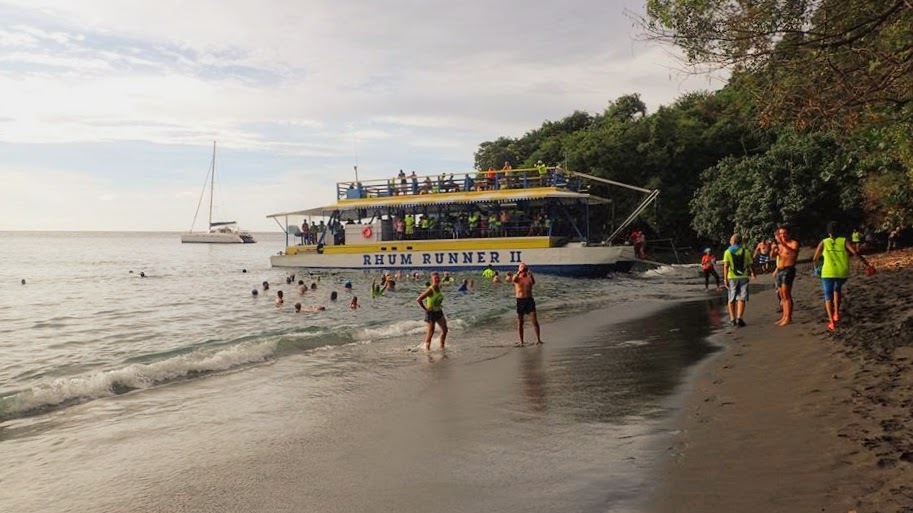
While we were on the island, the Grenada Hash Harriers had its 1,000th hash, and celebrated with week-long activities leading up to the big event: waterfall hashes, a rum shop hash, a karaoke contest, an island tour and a party boat leading to a coastline hash.

Scott attended the day-long, waterfall hash, followed immediately by the boat ride to the coastline hash the next morning. After his day-long trek, Scott decided to just go for the boat ride and the beach, while the others hashed. Afterward, the group spent time on the beach, and enjoyed watching the usual post-hash hazing.

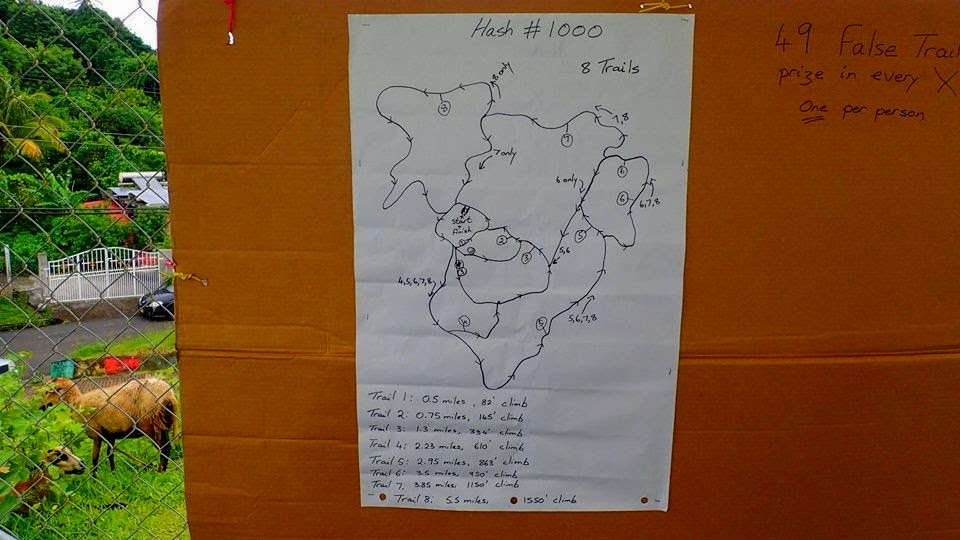
When the big day arrived, I decided to attend. There were eight trails set, for all levels of hikers, as the kennel expected many would be traveling to Grenada for the 1,000th hash.

My friend Di walked the “baby” trail with me. We considered upgrading to trail two or three, but decided against it once we saw people already sliding down a mud hill at the turn off.

We arrived back at the meeting place quickly. It was again in a sporting field, but this time the beer was cold upon arrival, and there was a bathroom; only one however, for hundreds of people. It was quickly clogged, shocker…so it was back to the bushes for me.

Scott eventually arrived, after completing trail five’s much longer route, and then it was time to enjoy drinks and friends.

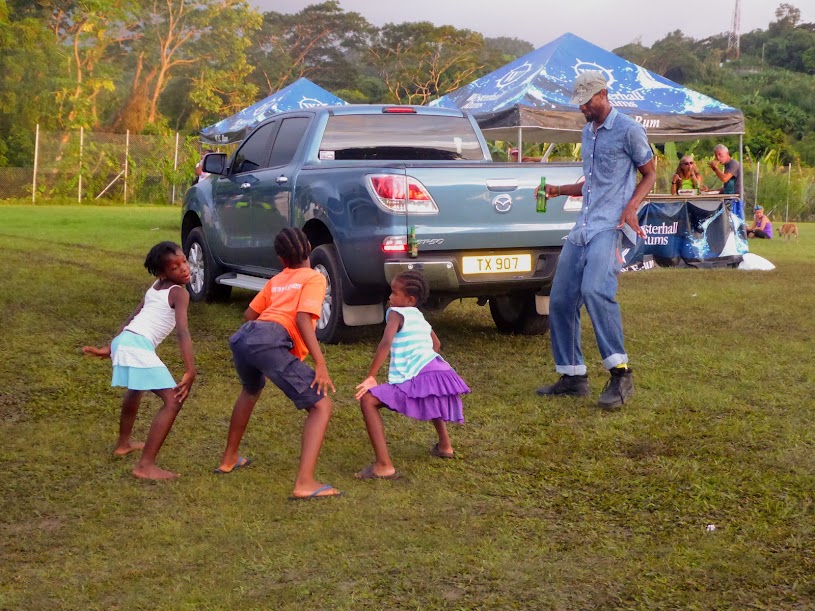
We were also entertained by these girls, who put on a dance show, with cues from a father with moves as well.

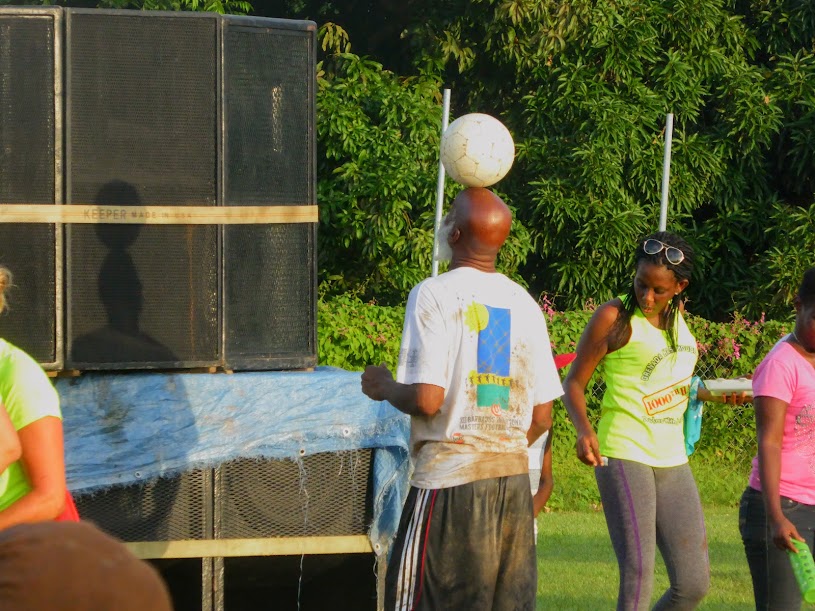
And this insane man walks every hash, while bouncing a soccer ball on his head.

With so many additional people, communication was confused about the check in and check out process, which tries to assure that everyone gets back safely. As a result, more than a few hashers seemed to still be out on the trail, as dusk was approaching. When they did not return, several people went back out, after dark, to re-hike the longer trails in search of the stragglers.

Luckily, many of those originally thought lost had in fact just failed to check in upon finishing. However, those who searched the trails found more lost hashers than originally thought missing. Instead of 11 people, those searching found 22 lost hashers on the dark trails. Luckily, all were led safely back to the meeting point.

So that’s hashing in a nutshell. Scott had a ball each Saturday, stomping through the mud, water and bush. He made many new friends, taking away great memories of Grenada.

Here are many more photos of hashing, the trails and the beautiful scenery along the way.

“Shells Sink, Dreams Float. Life’s Good On Our Boat!”

Our Grenada Island Tour With Cutty

Scott and I try to see and learn as much about our surroundings as possible in each location we visit. On Grenada, cruisers raved about seeing the island with Cutty’s Tours. We were told that Cutty, a local Grenadian, is full of knowledge about the island’s history, culture, animals and plants, so when there was an opening in one of his tours, we jumped at it. Settle in…we saw a lot and learned much.

First, a quick bit of island history…

Christopher Columbus sighted Grenada in 1498, during his third voyage
to the Americas. However, it wasn’t until 1609, that English tobacco planters attempted to settle the island; within a year, most were killed by the Carib Indians. Forty years later, the French purchased the island from the Carib, for a few hatchets, some glass beads and two bottles of brandy (not a bad deal!).

As you might imagine, not all of the Carib were pleased with the deal, and skirmishes continued until the French chased the last of the Indians to the northern end of the island. Rather than submit to the colonists, the remaining Carib, men, women and children, jumped to their deaths from the island’s cliffs.

Like many Caribbean islands, control of Grenada shifted back and forth between France and Britain, until France seceded the island to the British under the Treaty of Paris, in 1783.

Grenada received its independence on  February 7th, 1974. By 1979, the state of the island’s politics had become a concern to American officials, when the leftist Maurice Bishop seized power and began to develop close relations with Cuba. In 1983, another Marxist, Bernard Coard, had Bishop assassinated and took control of the government. Protesters clashed with the new government, violence escalated and in little more than a week, Grenada’s government was overthrown.

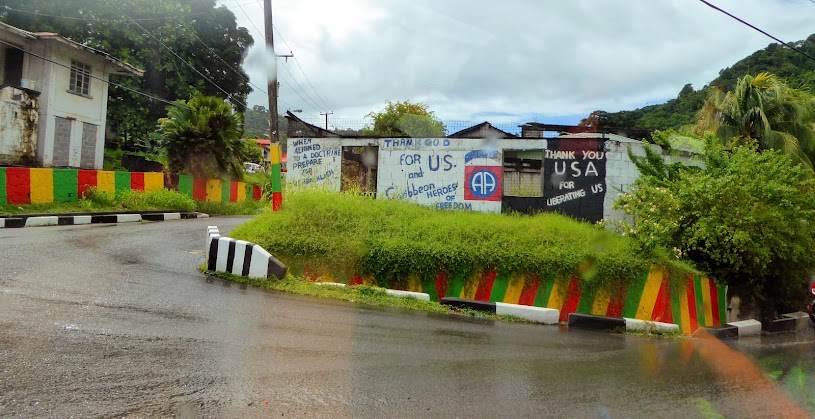
There were nearly 1,000 Americans in Grenada at the time, many of them students at the island’s medical school. Citing concerns for danger to these citizens, and fears of a repeat of the Iran Hostage Crisis, President Ronald Reagan ordered nearly 2,000 U.S. troops to Grenada. They soon found themselves facing opposition from Grenadian armed forces, and groups of Cuban military engineers, who were on there to repair and expand the island’s airport.

The fact that U.S. forces had to rely on minimal intelligence about the situation, and about the island, didn’t help matters (maps used by many of them were, in fact, old tourist maps of the island!) As a result, Reagan ordered in more troops, and by the time the fighting was done (in a matter of weeks), nearly 6,000 U.S. troops were in Grenada. Nearly 20 of these troops were killed and over a hundred wounded; over 60 Grenadian and Cuban troops were killed.

The invasion resulted in the appointment of an interim government, followed by democratic elections in 1984 (The country has remained a democratic nation since that time). Grenadians appreciated the fact that there had been relatively few civilian casualties, as well as the return to democratic elections. The date of the invasion is now a national holiday on the island, called Thanksgiving Day, which commemorates the freeing, after the invasion, of several political prisoners, who were later elected into office.
On to the island sights, sounds and smells…

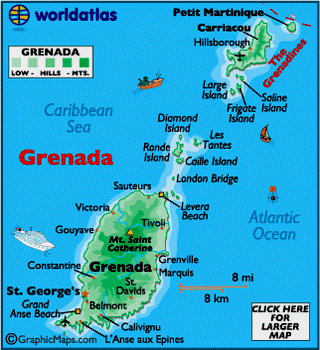
The volcanic, mountainous island of Grenada, with its many rivers and waterfalls, was formed as an underwater volcano approximately 2 million years ago. Six smaller islands at the southern end of the Grenadines island chain belong to the island as well. Here’s a good image of the island, that I found online:
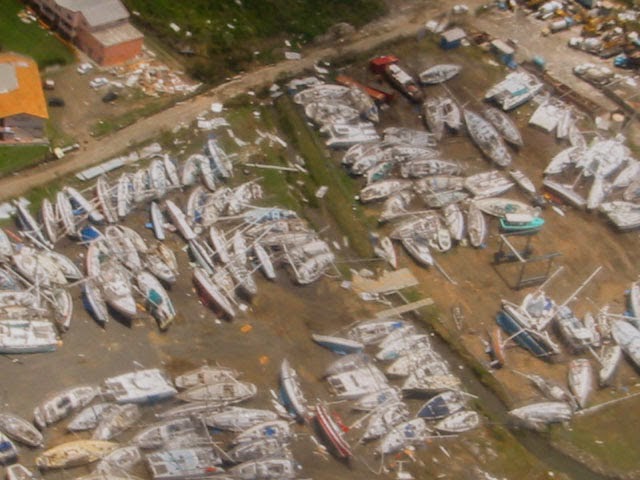
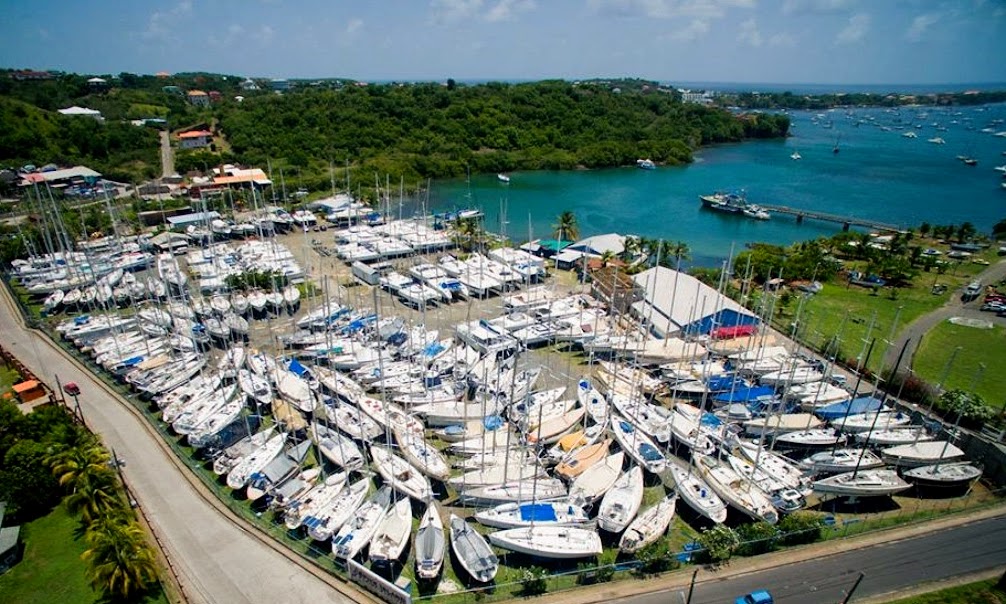
Being on the southern edge of the hurricane belt, Grenada has suffered only three hurricanes in fifty years: Janet in 1958,  Ivan in 2004 and Emily in 2005. Here are some  images of Spice Island Marine, located near us in Prickly Bay, before and after hurricane Ivan.
Known as the “Spice Island,” Grenada is a leading producer of many spices: cinnamon, clove, ginger, mace, allspice, orange/citrus peels, and especially nutmeg. They are all important exports for the island, and provide twenty percent of the world’s supply. In addition, Grenada is the world’s second largest producer of nutmeg exporters, after Indonesia.

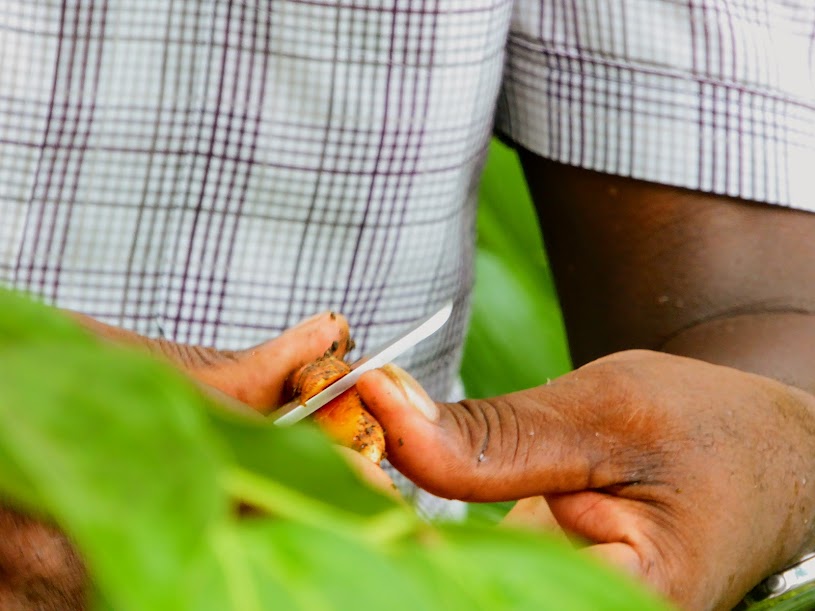
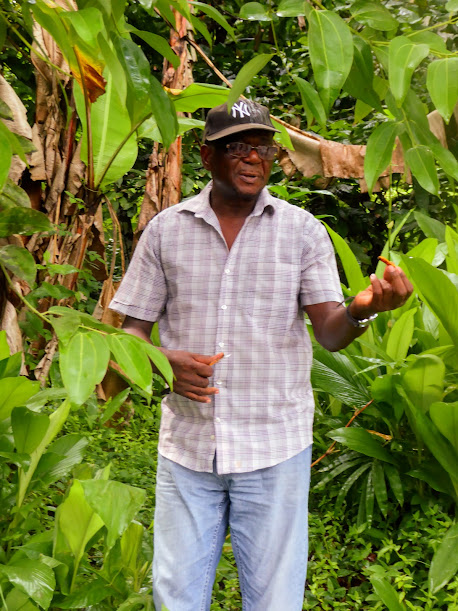
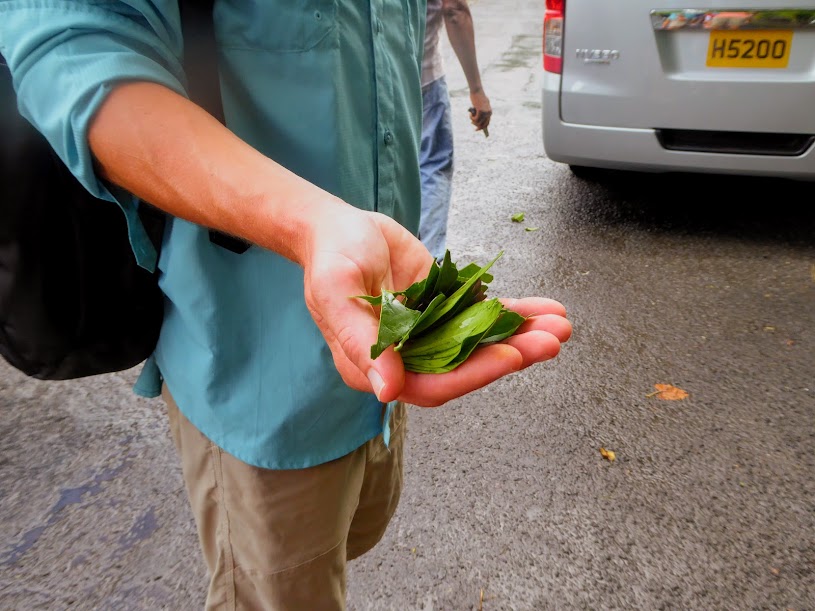
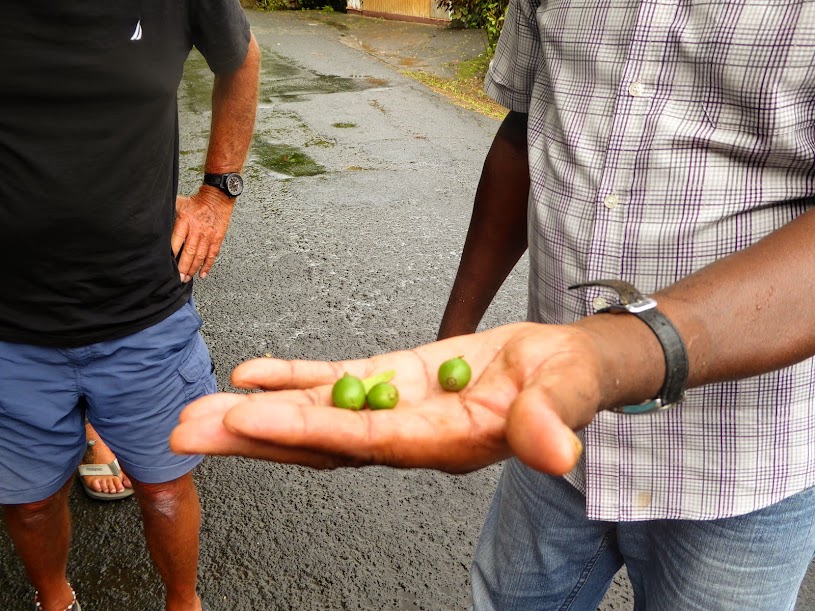
We began our tour with a view down to the harbour at St. Georges, and it wasn’t long before Cutty pulled the van over, to root in the roadside plants and trees. We all waited near the van, as Cutty showed us juvenile coffee beans, cinnamon bark, turmeric, bay leaves and grapefruit.

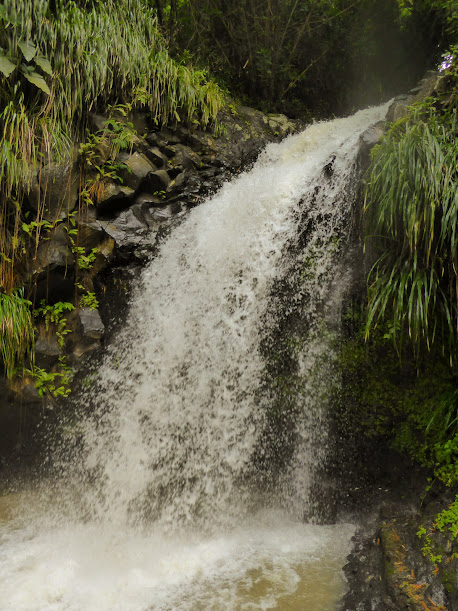
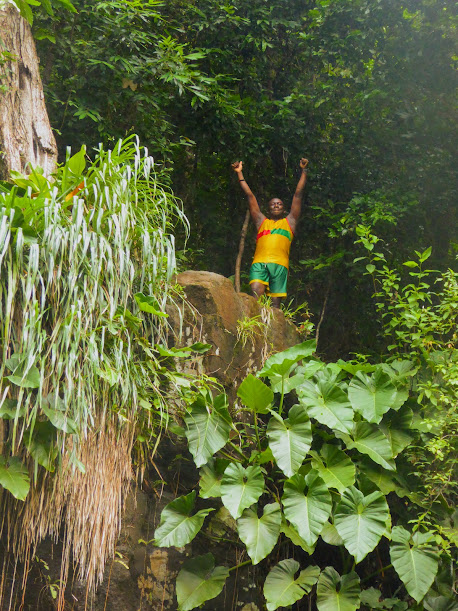
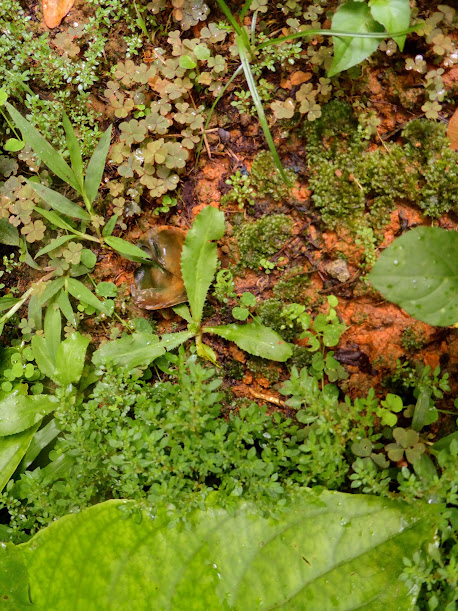
Our first stop was Annandale Falls, one of Grenada’s many waterfalls. Located just steps from the main road, we made our way to the viewing deck, passing wild cilantro along the way (three long leaves, at center of photo). Some of the locals put on quite a show, jumping into the water below the falls, from the rocks above.
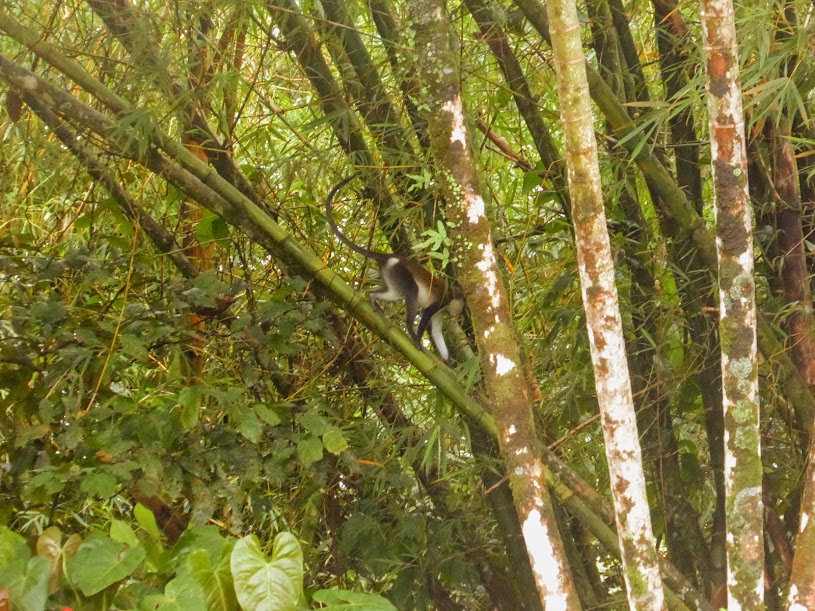
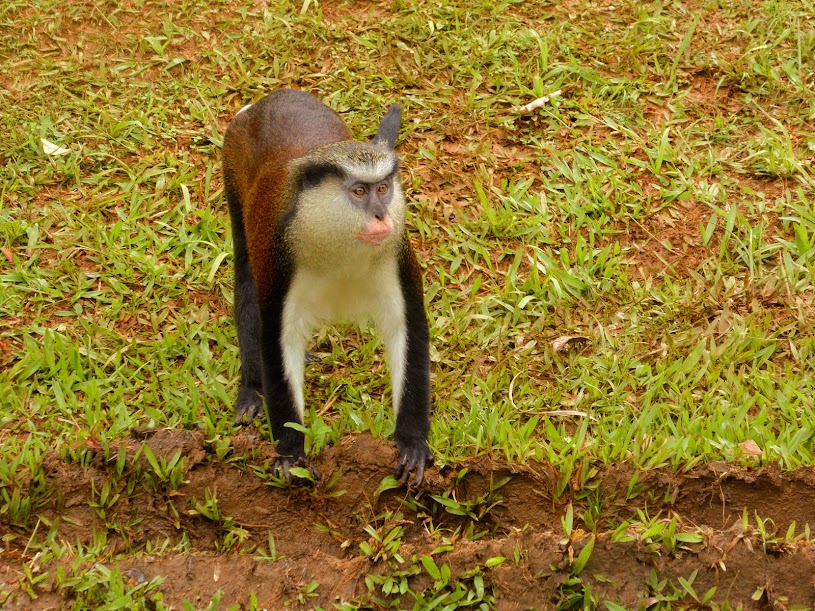
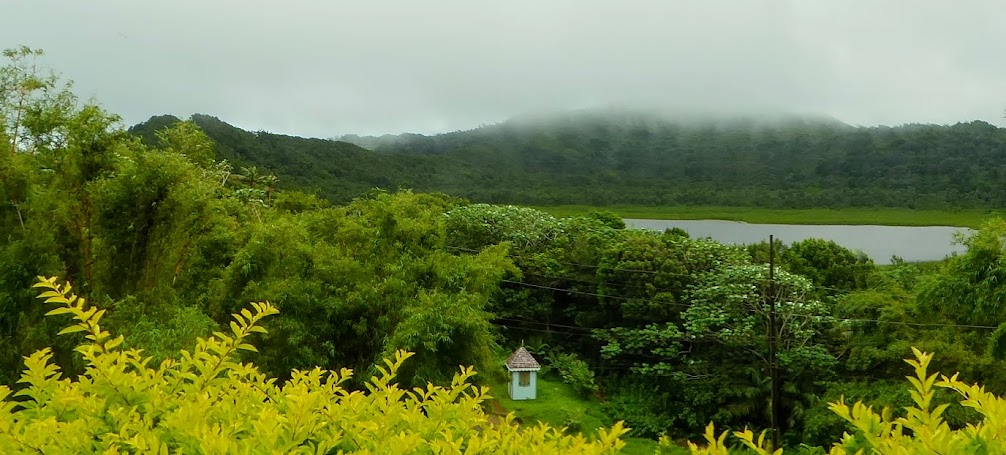
Next, we made our way into the rain forest, and Grand Etang National Park. This area of the island receives a whopping 160 inches of rain a year, in contrast to 45 inches in the lower elevations. In addition to views of a volcanic crater lake (a naturally water-filled crater, of one of Grenada’s extinct volcanoes), we were here in hopes of seeing the Mona monkeys who live in the area.
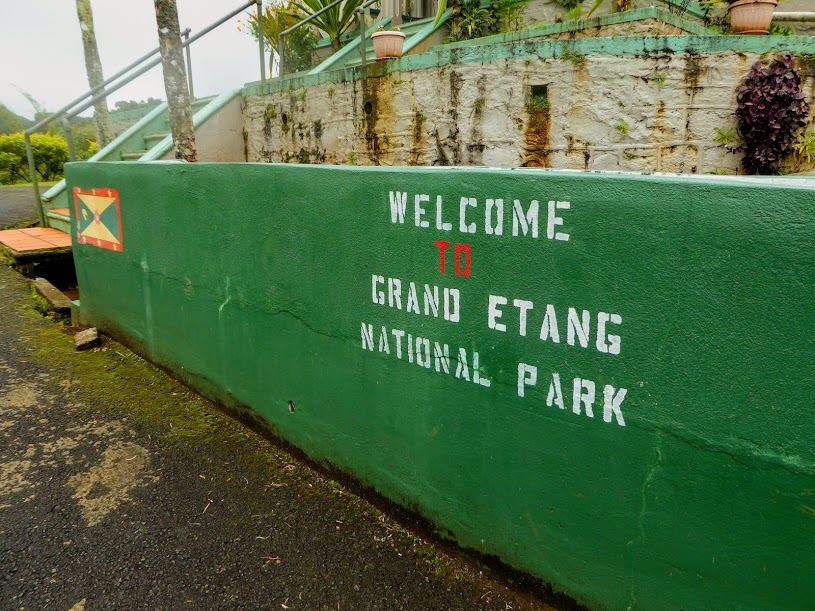
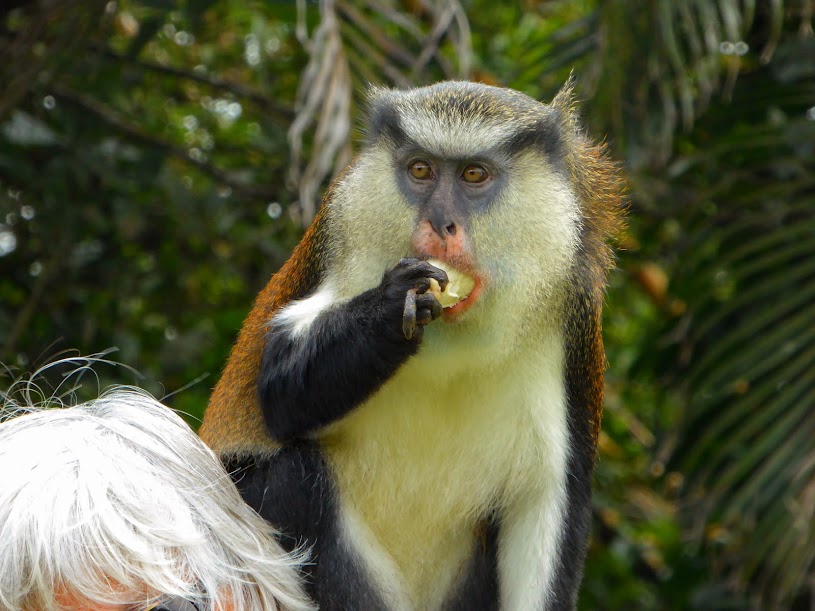
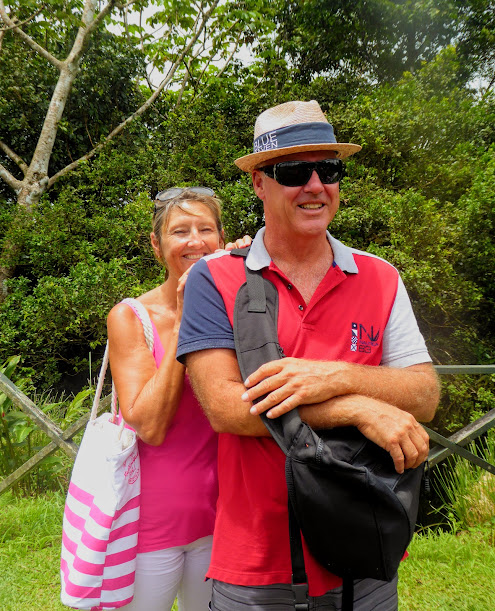
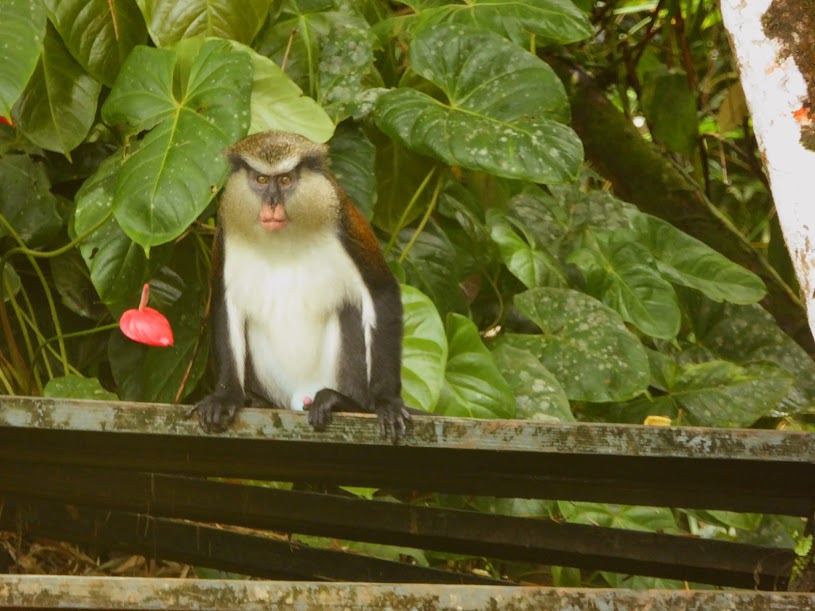
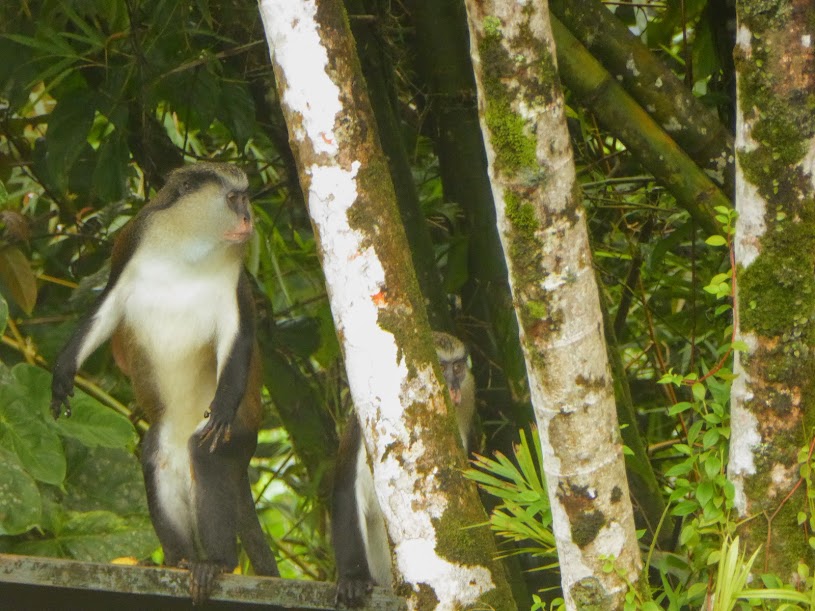
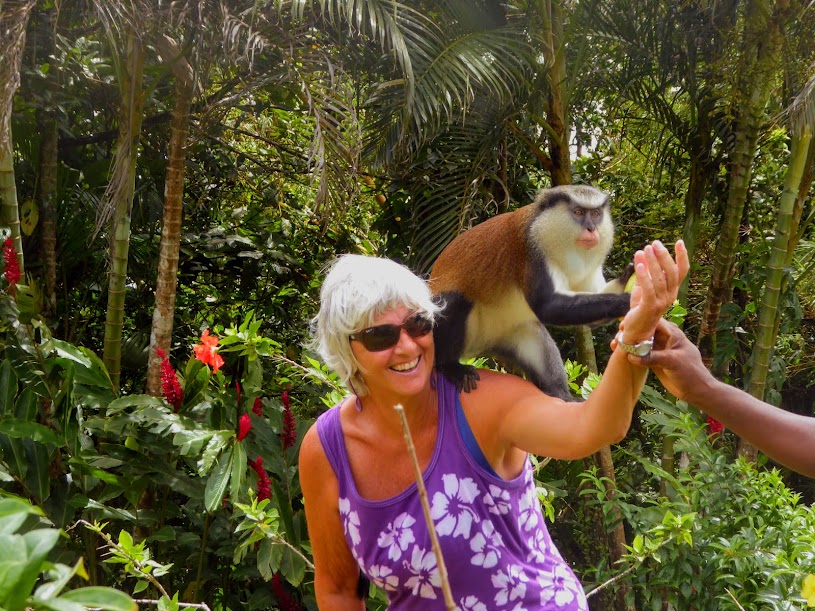
Our Aussie friends, Mark and Deb were also on the tour with us, and we all patiently waited while Cutty called out to the monkeys. It wasn’t long before they came into view, and he soon coaxed them out from the edge of the treeline.
The Mona monkeys are thought to have first come to Grenada in the 18th Century, on ships coming from Ghana, and are now mostly seen in the island’s interior.  Like hamsters and chipmunks, the Mona store food in their cheeks. They are vegetarians, eating mainly fruit, but will sometimes opt for a tasty looking insect or a lush leaf.,…which there are no shortage of in Grenada.
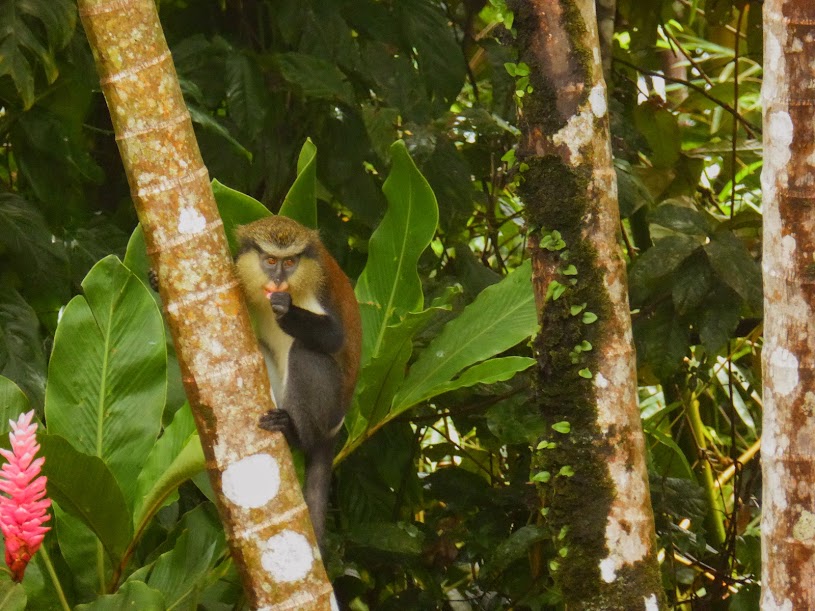
Scott, Howard and I had plenty of up-close-and-personal time with the monkeys in Roatan, but “monkey business” never gets old.
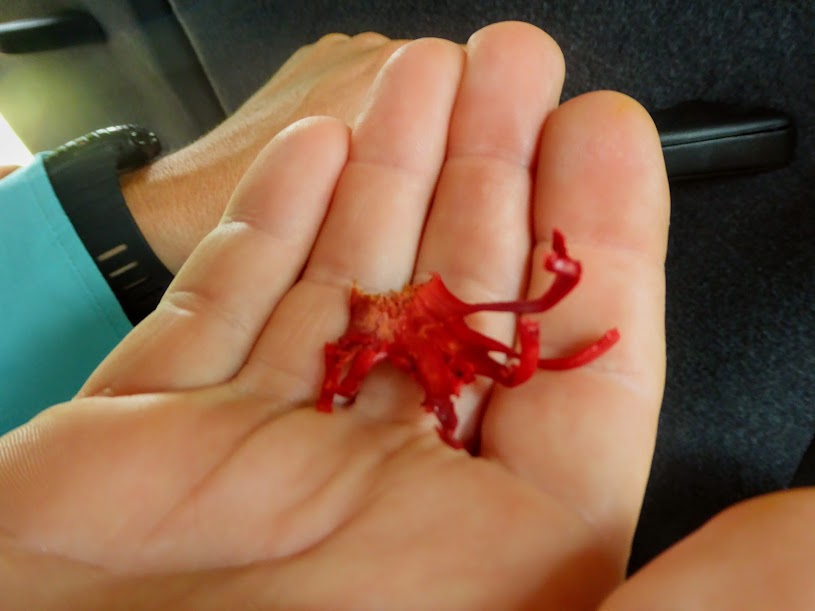
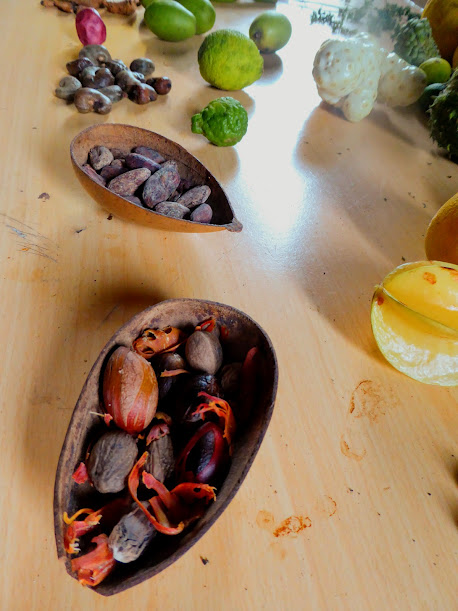
Back on the road, Cutty again pulled over, rummaged in a nearby tree and emerged with nutmeg. Opening the outer shell revealed the nutmeg seed within. It’s red, lacy outer covering is dried to produce the spice mace.
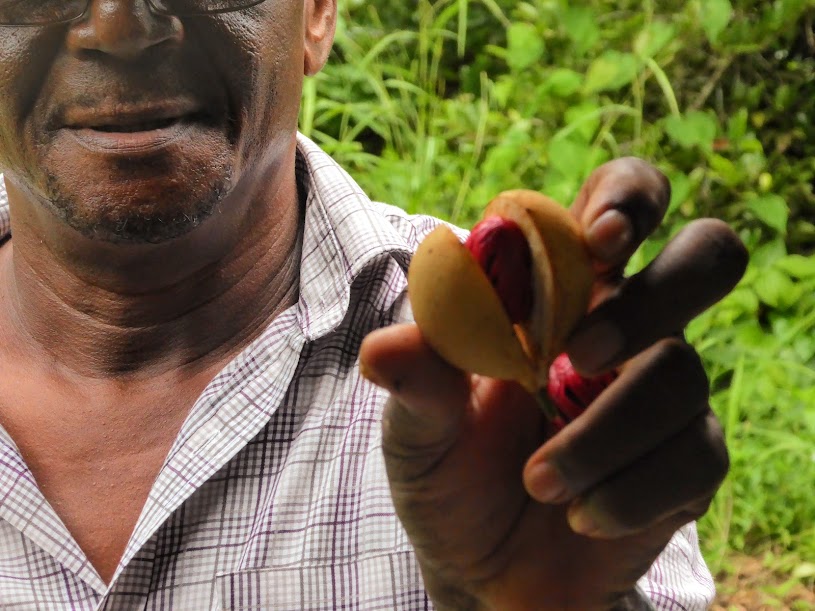
Next, we stopped at the home of Denis Noel, and his home on the 300 acre Balthazar Estate.
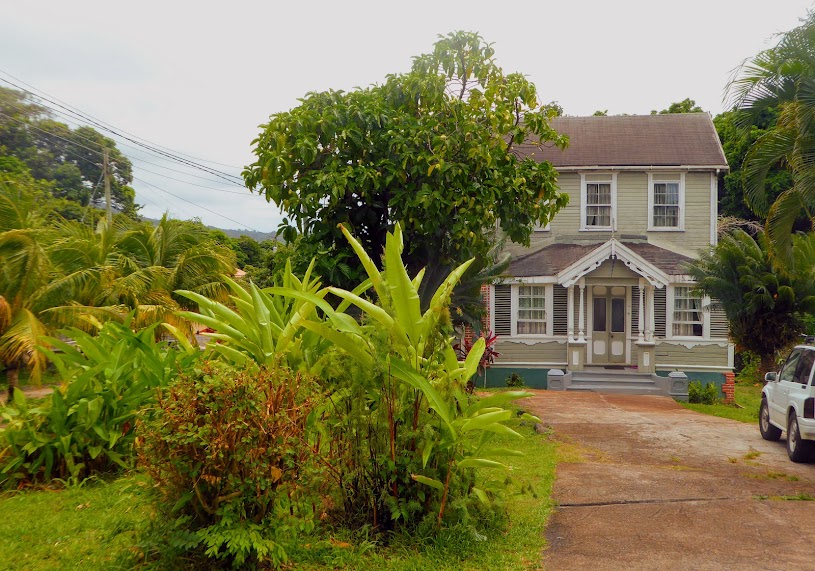
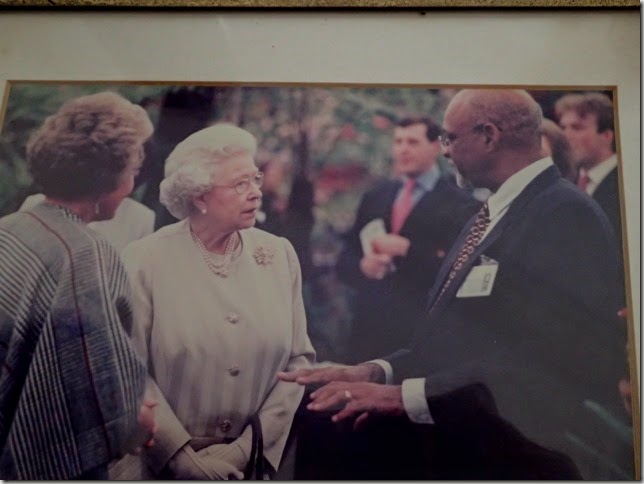
We visited briefly, and discovered that he’d led quite an interesting life. Inside, the walls were lined with photos of Noel with foreign dignitaries from all over the world, during his time as Grenada’s Minister of Foreign Affairs.

After leaving politics, Noel diversified operations of the family estate. He packaged and marketed herbal tea from lemongrass, and was the first Grenadian to cultivate the noni plant and market noni juice. The noni fruit smells terrible, but has countless medicinal benefits.
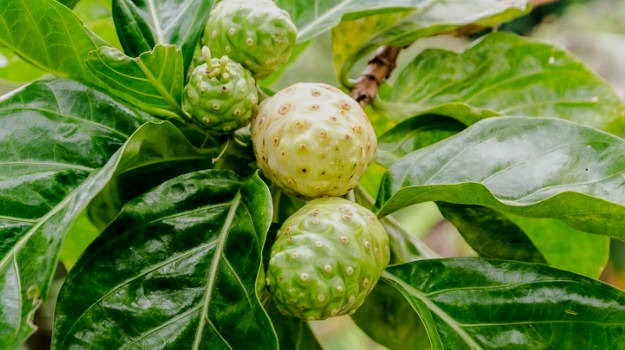
You can read more about this incredibly healthy, but stinky fruit here.

In the year 2000, he released Nut-Med, a pain-relief spray, combining nutmeg with conventional analgesics. It became internationally famous, and was registered with the Food and Drug Administration (FDA) of the United States.

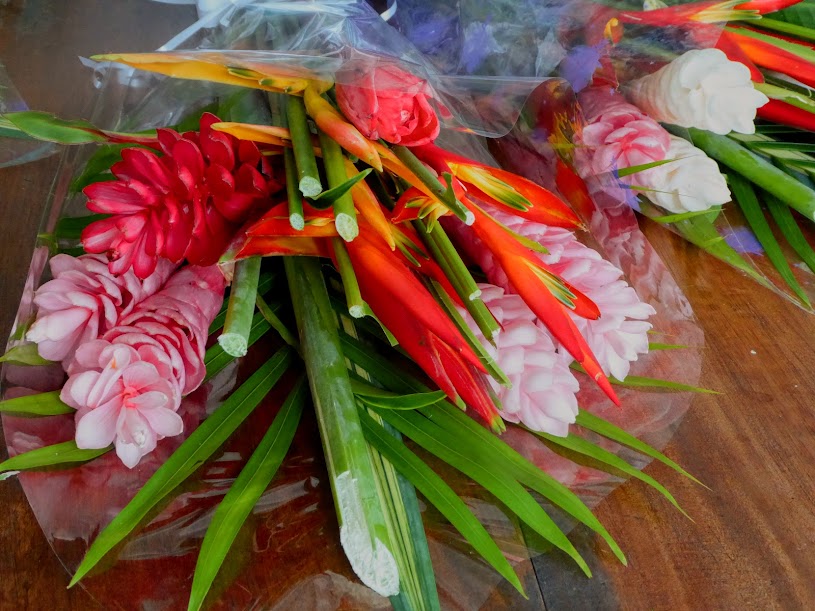
As a young man, Noel was a member of the Grenadian Ministry of Agriculture, and flowers from the Balthazar Estate earned six gold medal awards over a ten year period, at the prestigious Chelsea Flower Show in England. The estate is currently Grenada’s largest producer of cut flowers, and the table inside the house was full of beautiful wrapped bouquets.

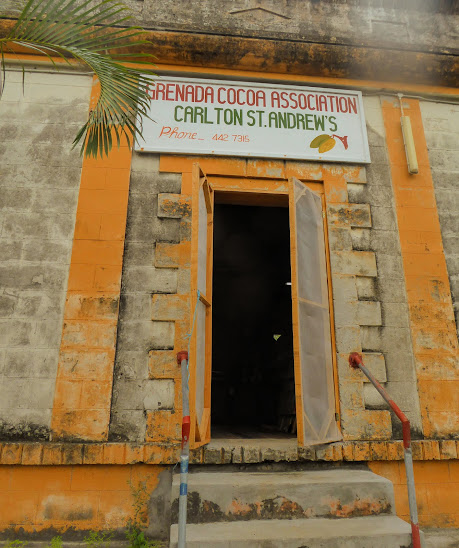
As we walked back to Cutty’s van, there was a whiff of chocolate in the air. I followed my nose to a nearby building, and discovered the Grenada Cocoa Association.
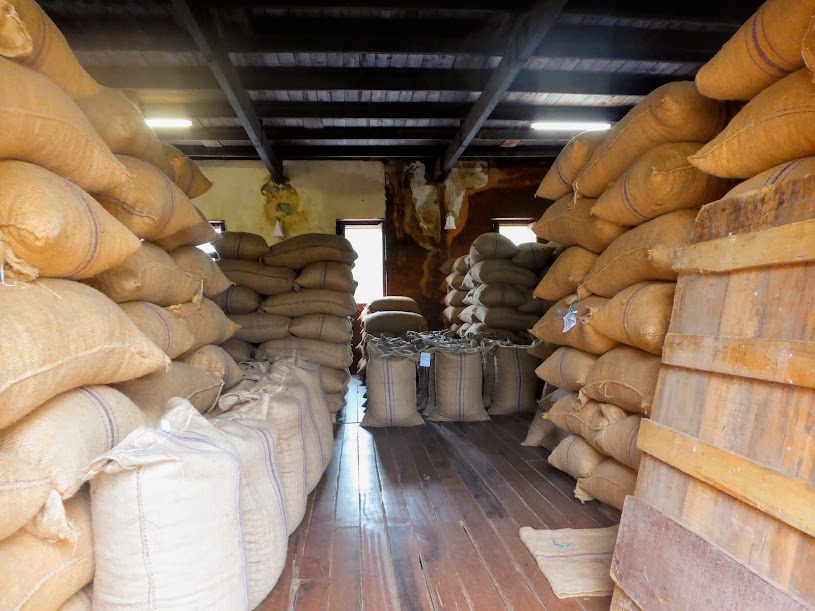
Inside the open doors, bags filled with cocoa beans were piled high. It was a delicious smell, but as I snapped these photos, we were not so politely told to leave. No bother, I’d gotten a snoot-full of chocolate smell, and was happy to evacuate the building.
Keeping with the chocolate theme, our next stop was the Grenada Chocolate Factory.

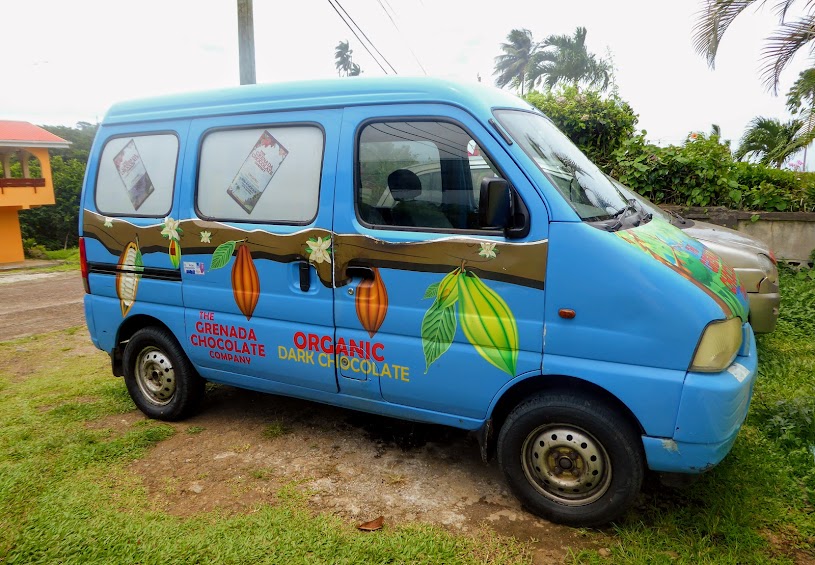
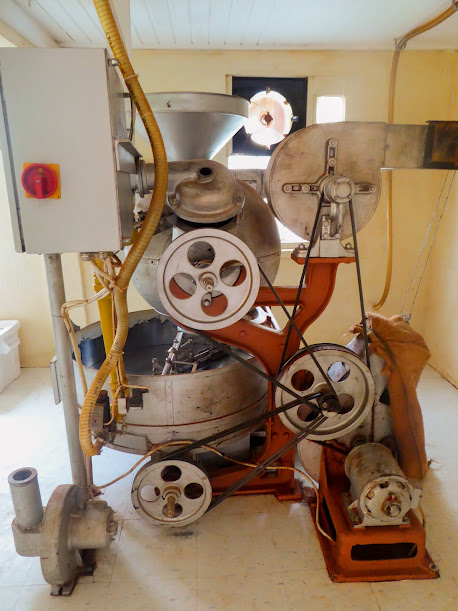
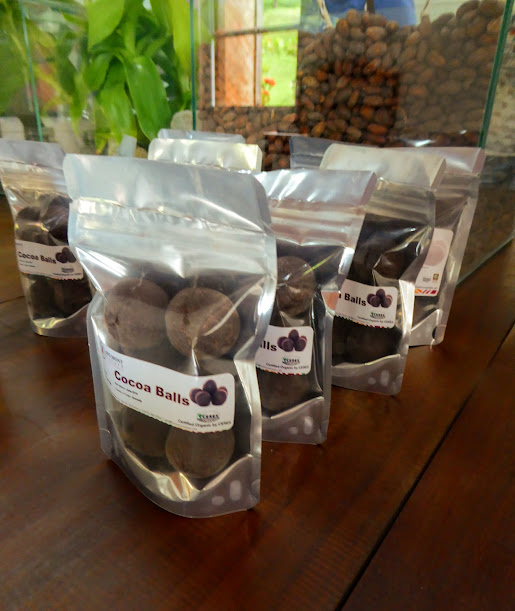
The company was founded in 1999, by two men who had the idea of creating an Organic Cocoa Farmers’ and Chocolate-Makers’ Cooperative. The chocolate is produced in a tiny Caribbean house, and is made from organic beans grown by local island farmers who are all shareholders in the company, and who earn well over twice the going rate for their beans. The local, fresh beans are used, rather than those that have been shipped half way around the world, and might be months or even years old.

Because small batch chocolate-making is extremely rare, the company had to create many of their own processing methods, designing special small scale machines and refurbishing antique equipment to meet the requirements of their unique situation. Most of the machines were designed in the early 1900’s, in a time when quality had precedence over quantity in the world of chocolate-making. Many of the machines were also reconfigured to be powered by solar energy.
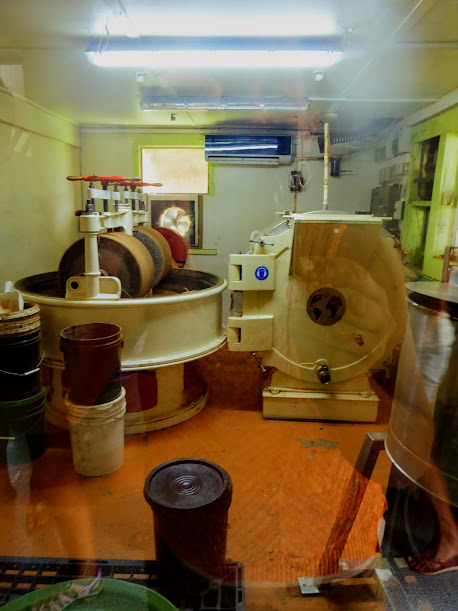
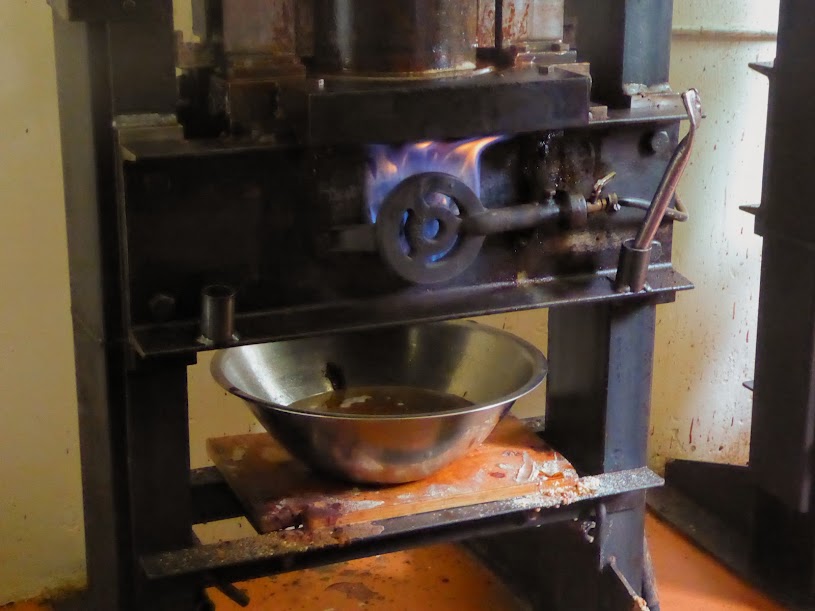
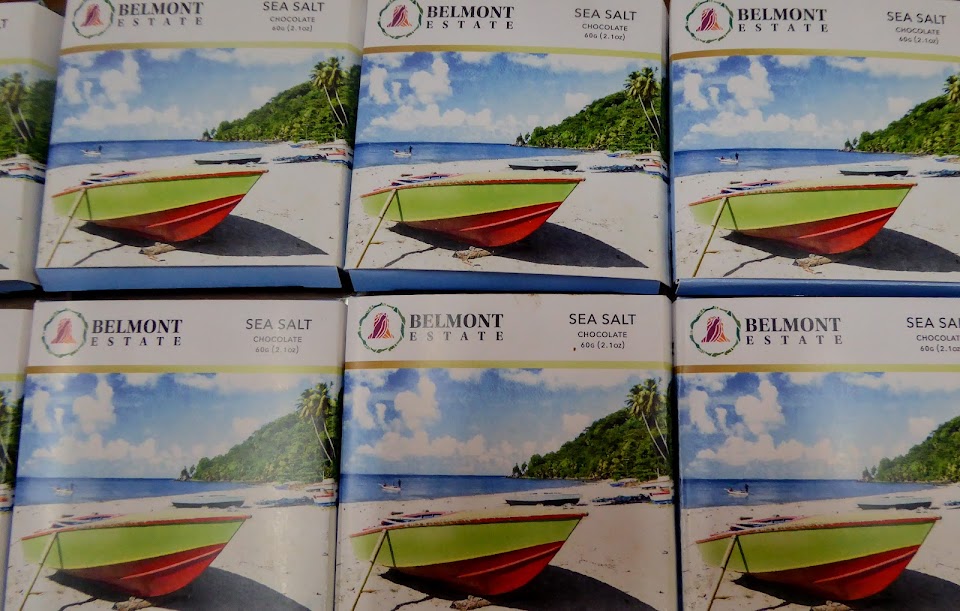
Having stocked up on chocolate bars, we continued on to Belmont Estate. The first Grenadians of East Indian descent to own an estate on the island purchased the property in 1944 (Only Europeans owned agricultural estates at that time), and it is still in the family as a fully operational, agricultural property.

The property houses a restaurant, several gift shops, a small museum and a farm with many different animals and plants. In addition, Belmont has their own chocolate production on site.
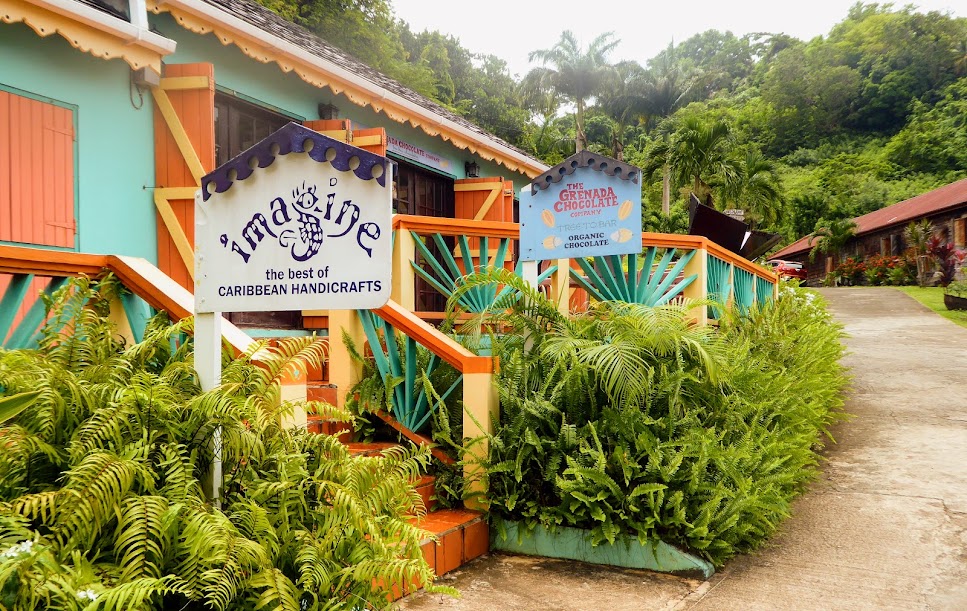
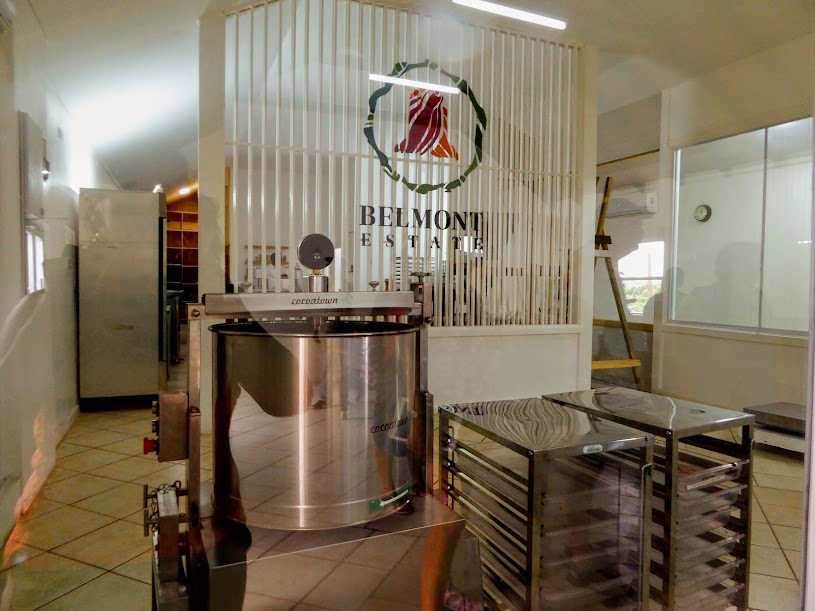
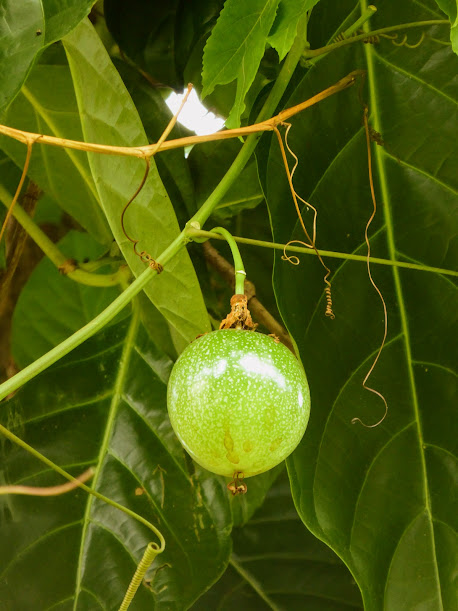
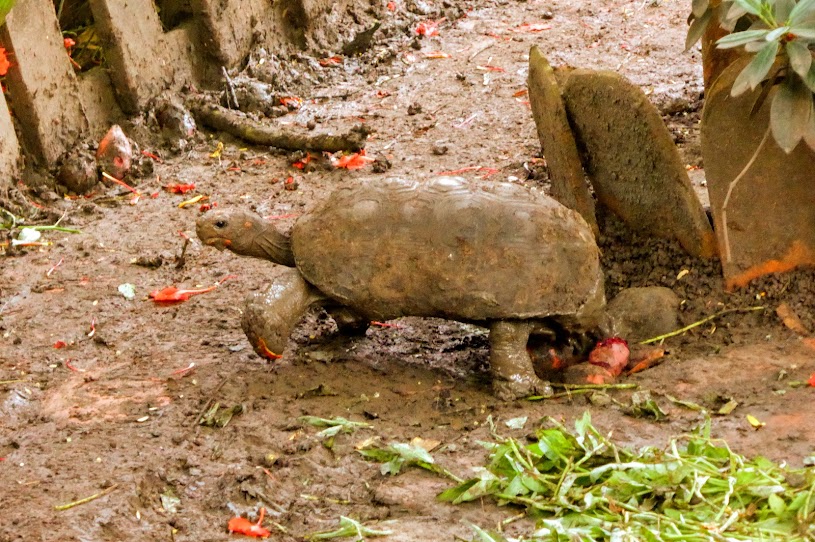
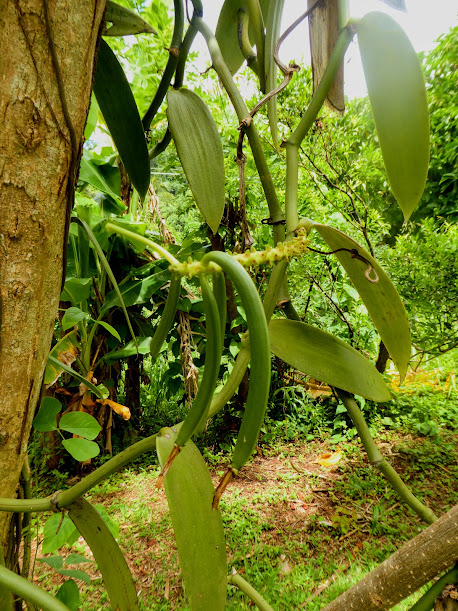
We wandered the grounds, passing vanilla beans, noni fruit, guava, passion fruit (which we learned is an invasive vine), and several mud-caked turtles, some who seemed to be quite nimble walkers.
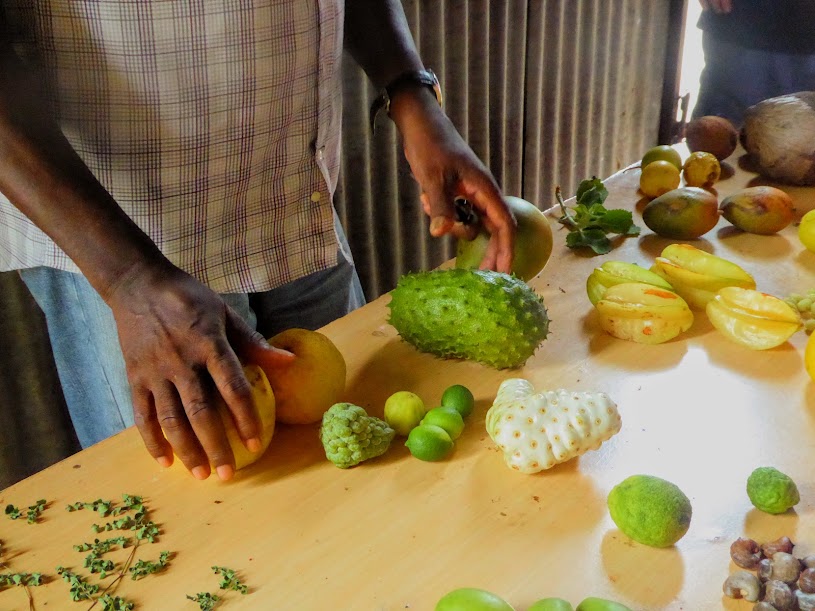
On our way out we stopped into the museum, where Cutty talked about the island’s various fruits, nuts and spices on display.

Traveling along Grenada’s lush and scenic roads, Cutty pointed out large barrels outside some of the island’s homes. He told us that they are used to ship items to friends and family in Grenada, from other countries. From November 1st, until December 31st, the barrels ship duty-free from the U.S. and Canada, as long as they contain clothes, food and toys…ho, ho, ho!

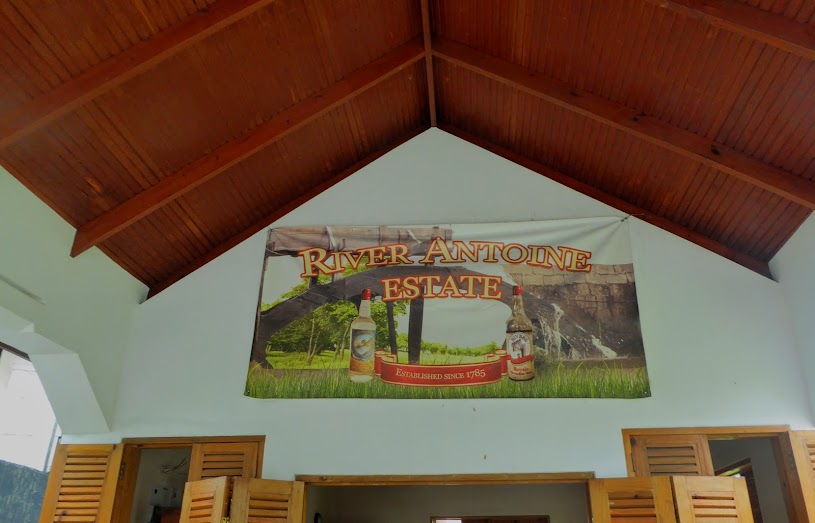
Our lunch spot was a scenic restaurant at the River Antoine Estate, producers of Rivers Rum. We enjoyed a buffet of local foods, and views of the estate’s lush, tropical grounds, on the edge of the Caribbean Sea.

With full bellies and renewed energy, it was time for rum! “Rivers Rum,” as it’s referred to on the island, is still made almost exactly as it was back in the 1700’s, in the same place and on much of the same equipment.
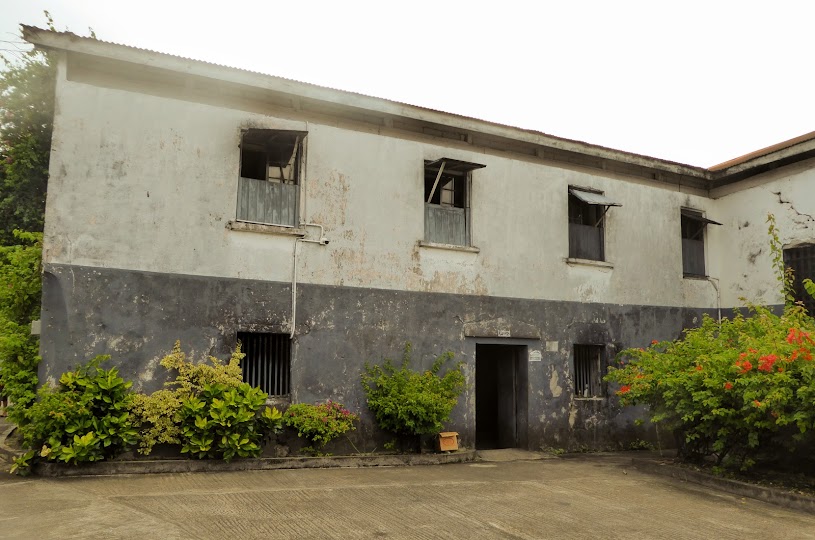
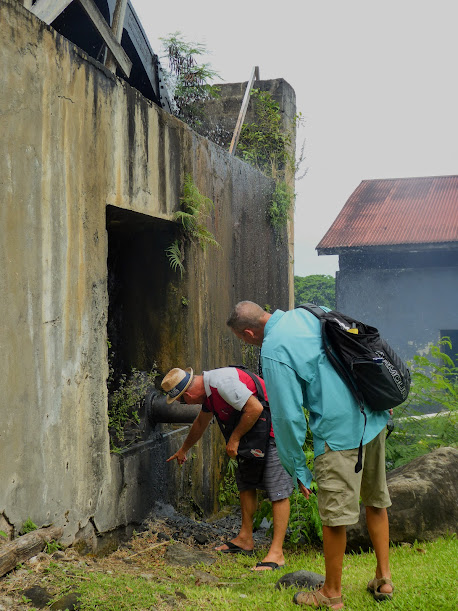
Central to the entire process of manufacturing at Rivers Rum is a water wheel, dating back to the 1800s. Fed by a nearby river, the wheel has been crushing cane for hundred’s of years, making River Antoine the oldest functioning water-driven distillery in the Caribbean. Being mechanically inclined, both Mark and Scott were fascinated by the huge, antique wheel and it’s workings.
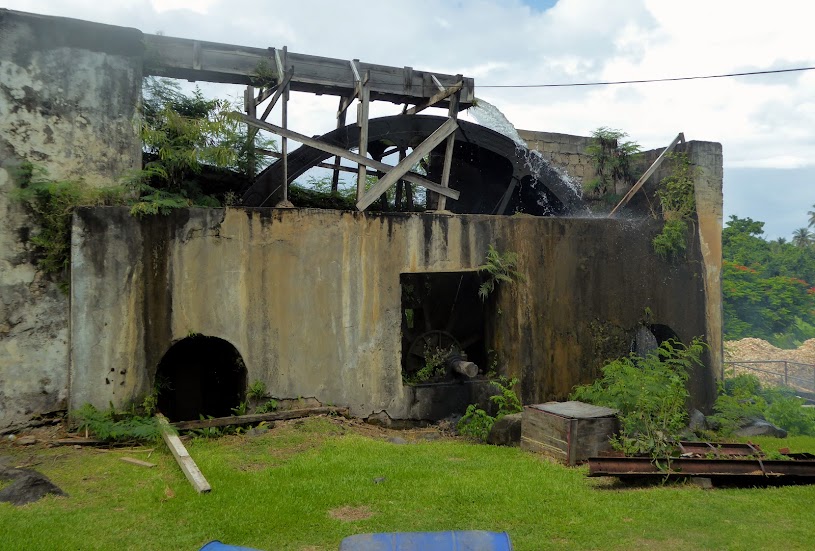
No machines or pumps are used here. Piles of sugar cane are hand-fed up a wooden chute, and crushed by the water wheel-powered grinder.
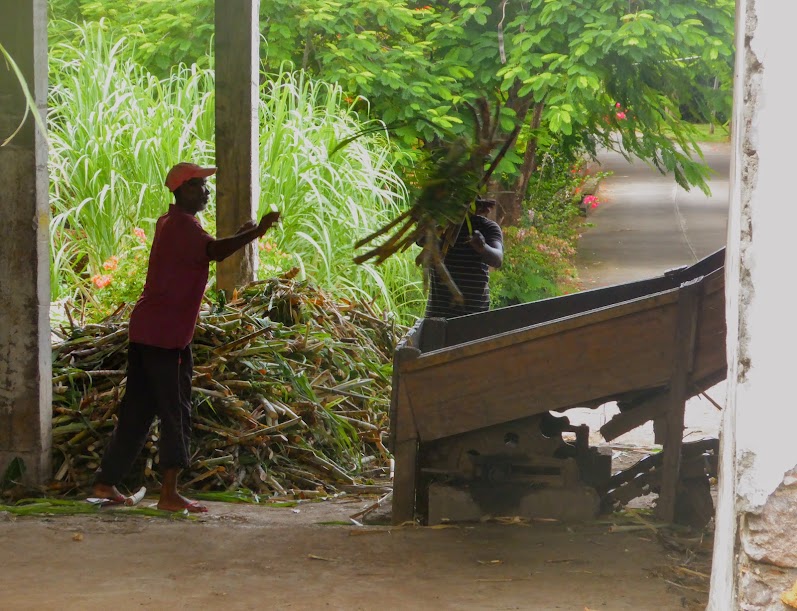
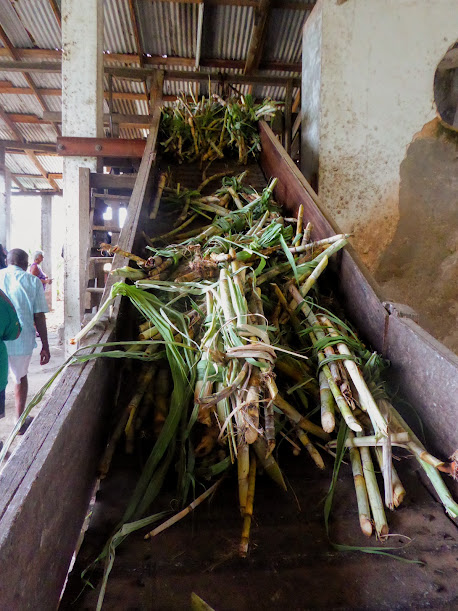
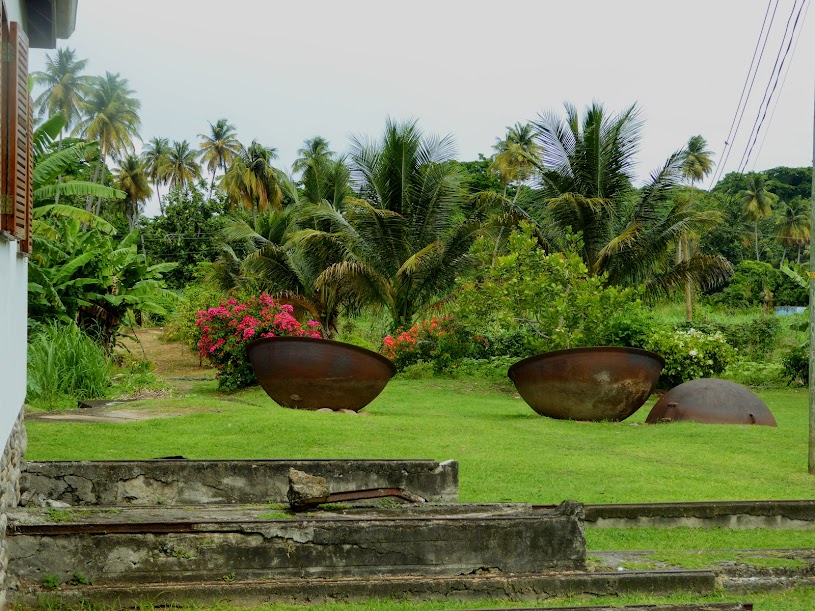
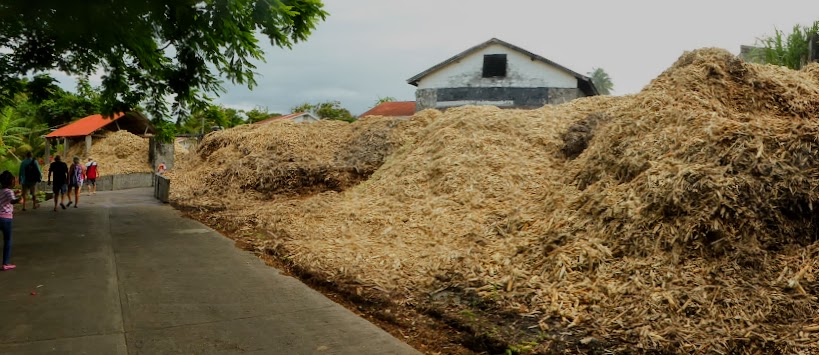
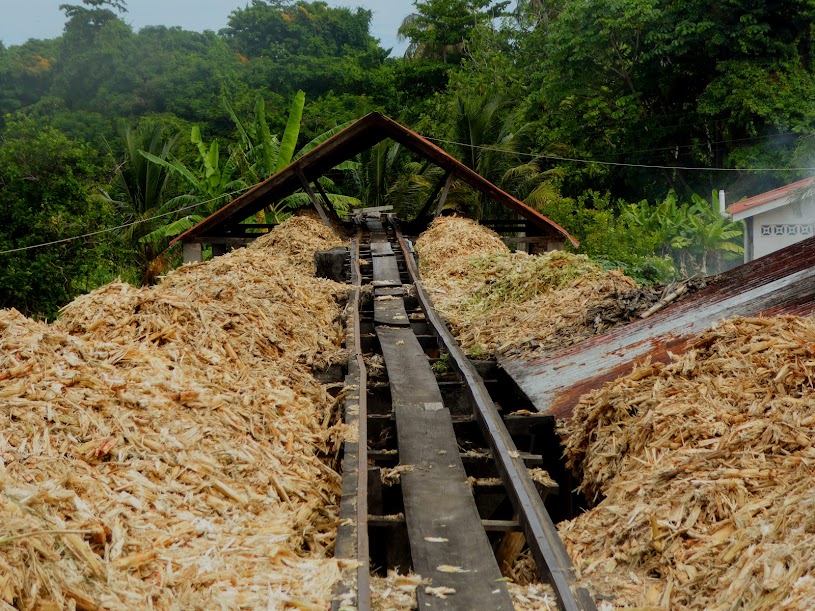
The fresh-squeezed juice flows down a wooden sliding gate to the boiling house, where it is filtered (by hand) to remove bits of cane, stirred (by hand) and brought to a boil in cast-iron pots over a fire that is stoked by dried cane stalks and wood, which explains the massive piles of stalks around the crushing area.
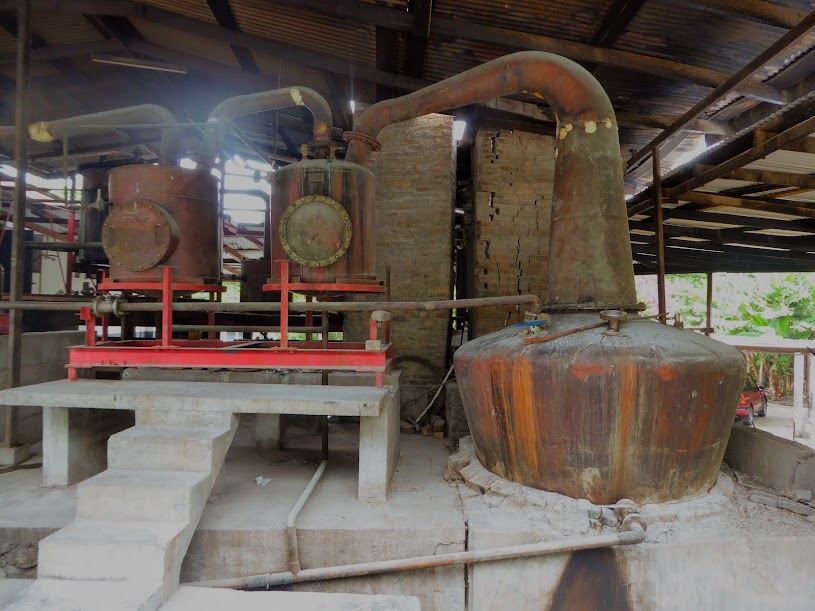
The juice is then ladled from pot to pot (by hand), which thickens the sweet liquid. Tempering lime is added to help separate unwanted impurities and aid fermentation.
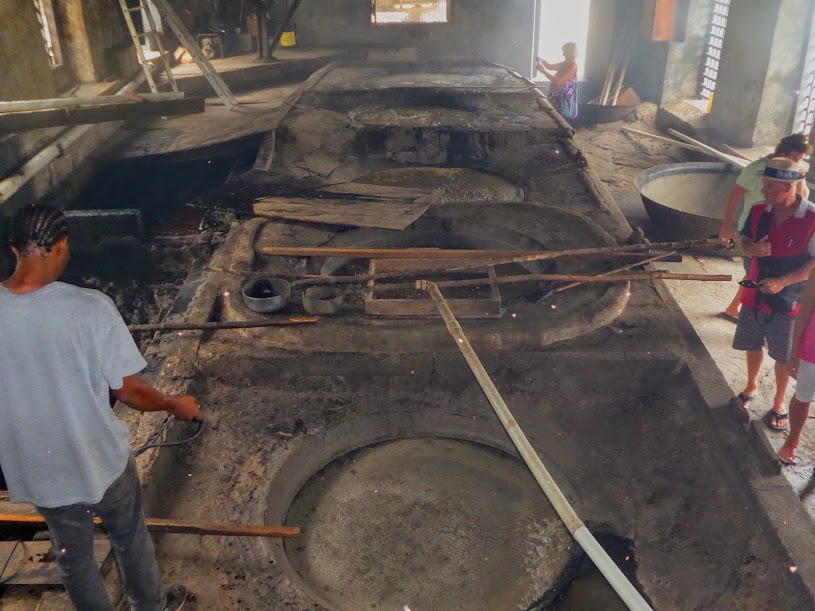
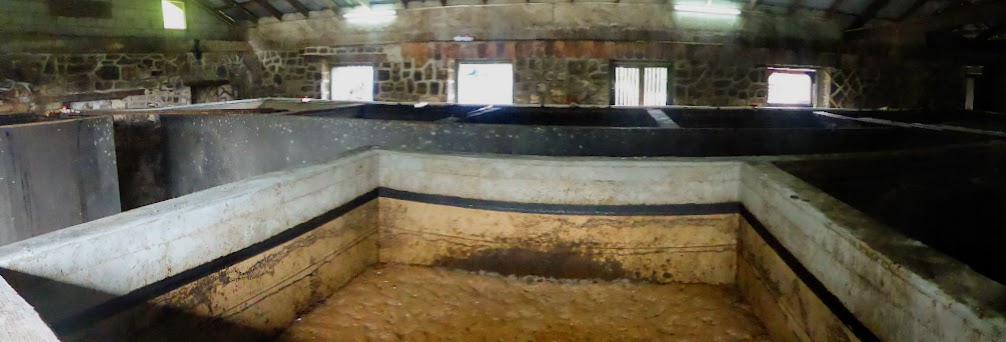
After boiling for a few hours, the thickened liquid is ladled (by hand) into another gate/chute that directs it to cement fermentation tanks. Without the addition of yeast, the boiled cane juice takes about eight days to ferment. Once all of the sugar has been converted to alcohol, it is drained from the concrete tanks into a pot still below. In the final step, it’s pumped (by hand) into bottles held near a pipe.
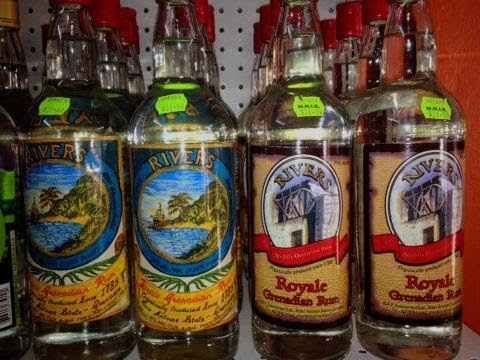
Daily production only yields about 35 gallons, which is far less than the demand. The resulting raw rum to be bottled as Rivers Royale is 75% alcohol by volume, and this overproof rum is the strongest we’ve found in our Caribbean travels (on the right, below). It’s alcohol content is too high for visitors to carry home by plane, as it’s considered a combustible liquid! As a result, Rivers began producing a “tourist-friendly” rum, coming in under the wire, at 69% (on the left).
 

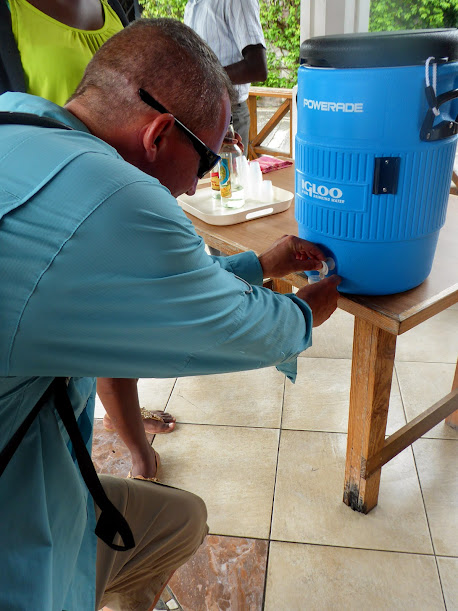
The tour ended at an open pavilion, offering samples of the clear rum that was most likely distilled just the day before, if not that morning. We were welcome to “drink all you like,” and soon discovered why. The clear “fire-water” offered to us in tiny cups smelled like lighter fluid, and didn’t get past my lips.
Scott, on the other hand, finished his fire sample handily, explaining to the group how to properly taste the stuff: first take a breath, drink the rum and then exhale (apparently, drinking moonshine has its advantages). He then happily went back for seconds…I’m fairly certain he was the only one.
We were nearing the end of our tour, and our heads were spinning with all that we’d seen and heard. In addition to the many fruits, spices and trees mentioned, Cutty also pointed out clove, almonds, tamarind, avocados, lemongrass, cherries, cocoa pods, jasmine, ylang-ylang and several types of apples and mangoes (the island has 200 species of mango).

Here are more interesting tidbits that we learned from Cutty:

The Caribbean Argo Company imports wheat from Canada and the U.S. They produce flour and ship it throughout Caribbean.

During the U.S. invasion of Grenada, in 1983, the U.S. accidentally bombed a mental hospital…oops! President Regan approved funds to build a new one.

Michael Jackson’s infamous doctor, Conrad Murry, was born on Grenada.

Children on Grenada are required to go to school from 6-14 years of age.

Many countries have funded projects in Grenada:

Canada provided money for a medical center; China built many homes, and also paid for a new cricket stadium. At the stadium’s opening, the anthem of Taiwan was accidentally played, and the band leader was fired; Venezuela gave Grenada $16.5 million in grant funding for projects, such as prefab housing, and the redevelopment of the St. George’s Market; Japan has given the island money, in exchange for voting in favor of whaling at United Nations meetings.

The soursup fruit contains calcium, iron, magnesium, potassium and phosphorus, and is also a source of vitamins C and A.

Soursup grows naturally in Grenada,  and the U.S. is paying the island to grow it for use in cancer research.

We came away from our day-long tour with a true appreciation for Grenada’s beauty, and all that the island provides her people. Here are more photos of our island tour with Cutty.

“Shells Sink, Dreams Float. Life’s Good On Our Boat!”


A Dinghy Concert

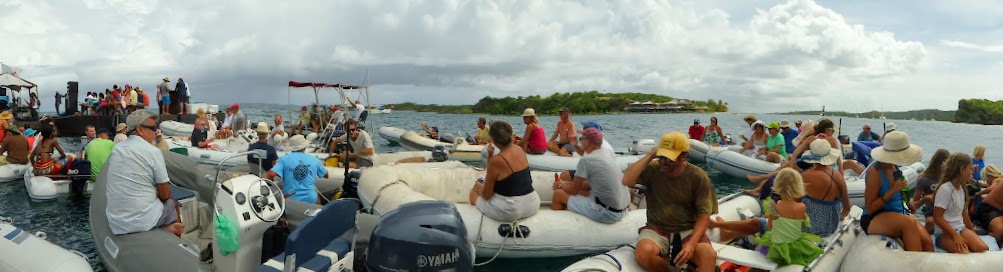
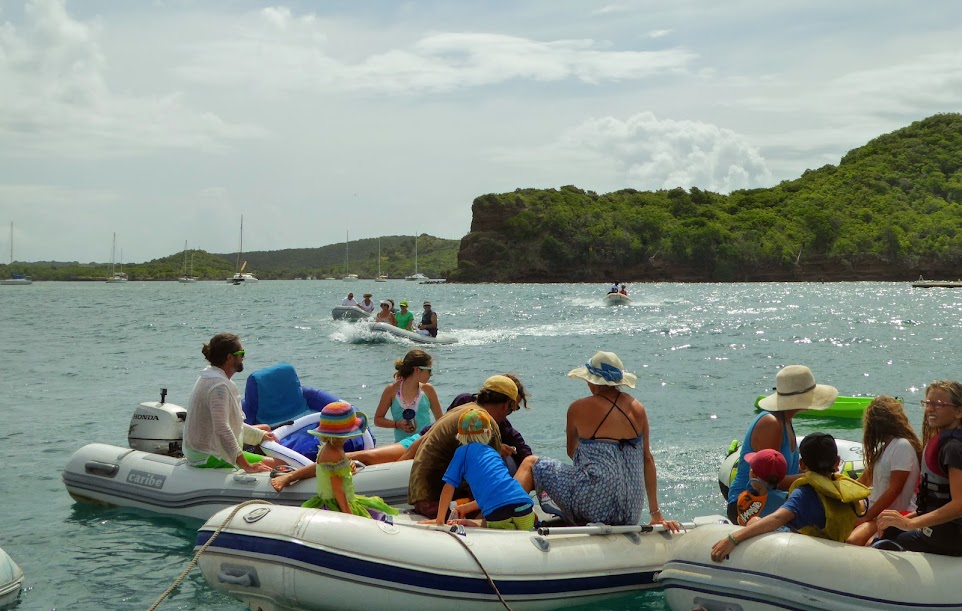
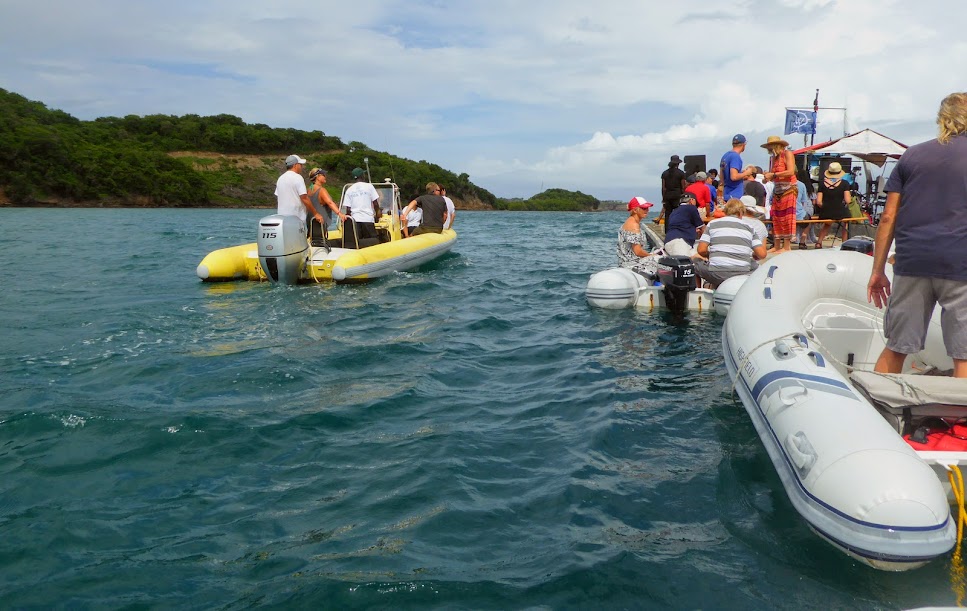
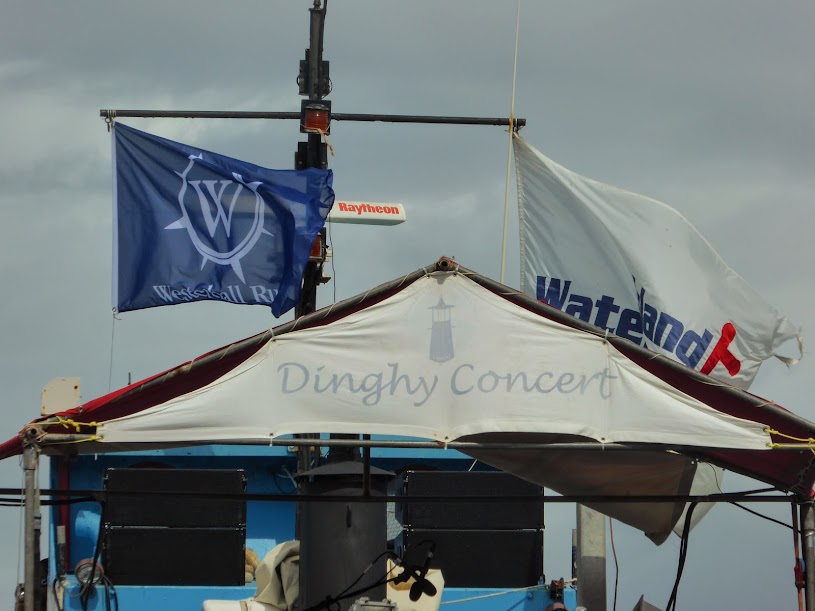
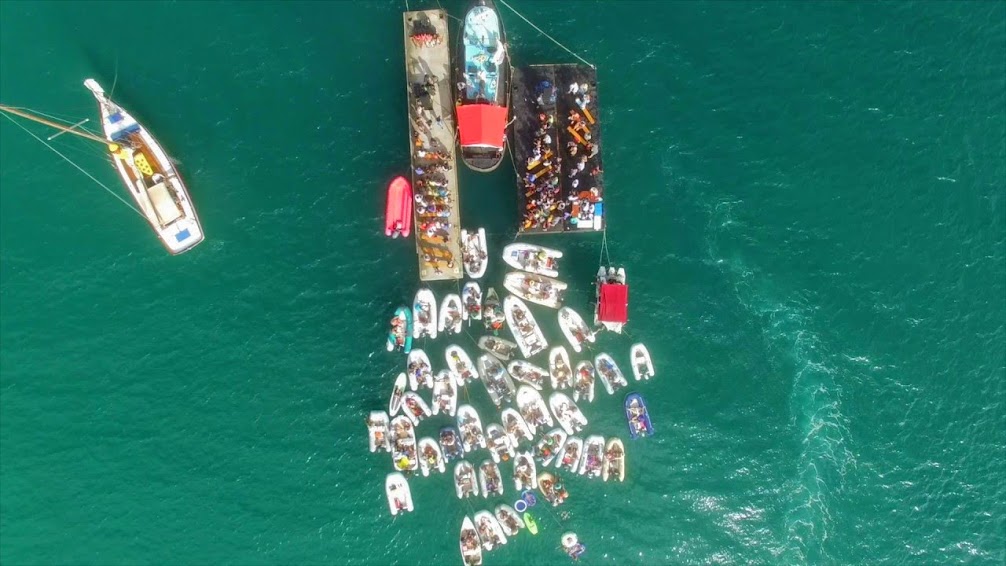
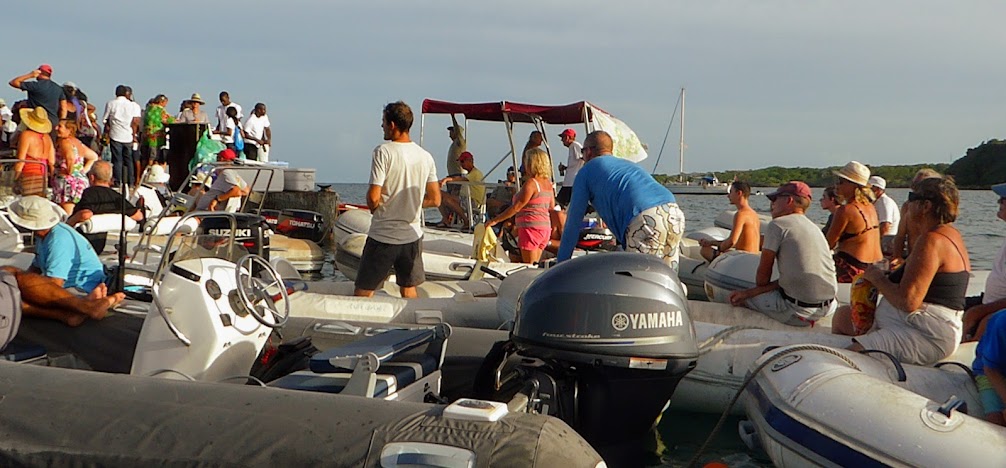
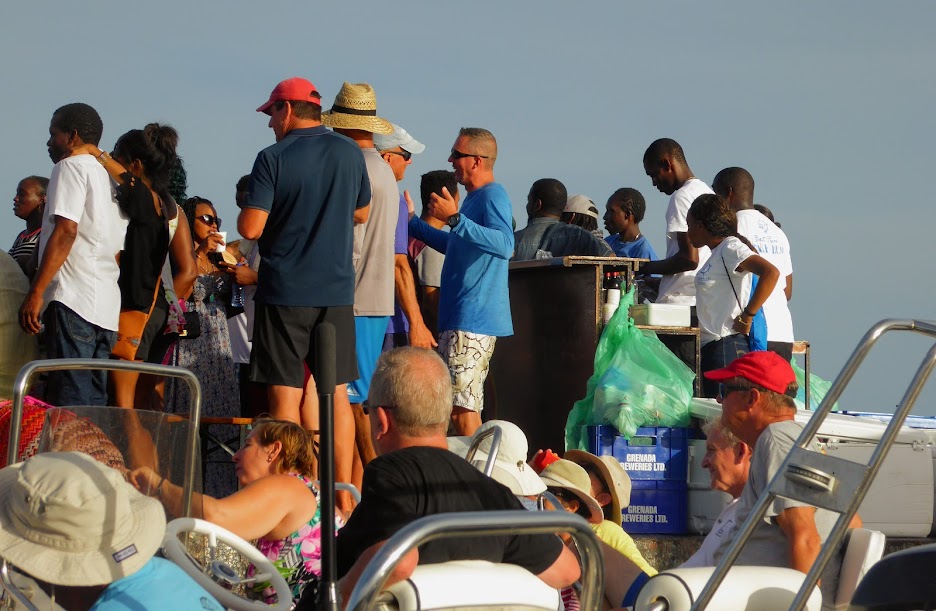
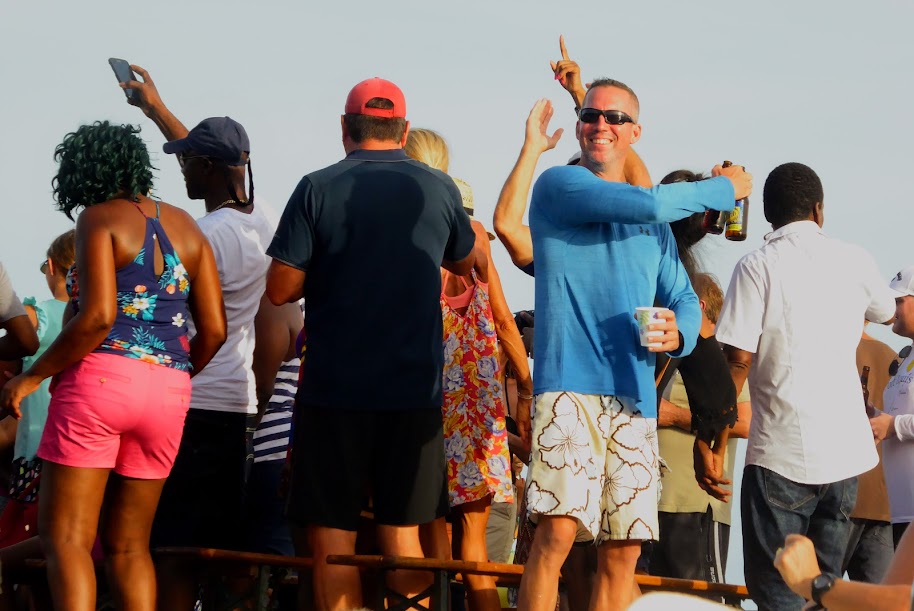
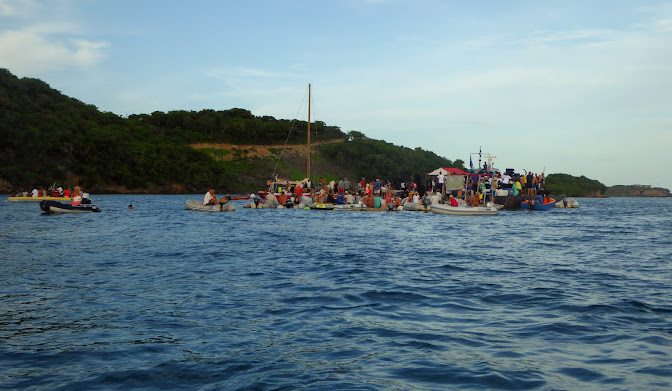
Not long after we settled into Prickly Bay, there was talk on the net of an upcoming dinghy concert. Apparently, Le Phare Bleu Hotel & The Lighthouse Bar sponsor a “dinghy concert” several times a year. A floating barge houses the stage, with two more flanked on either side, for seating and a bar. Cruisers and locals come by dinghy, tying to the barges, and each other, for an afternoon of music.

A dinghy concert you say??…awesome!! However, the concert was several bays over, and involved going out in open waters to round the bend. Our 3.5 horsepower dinghy motor would make for a slow, slogging go, and despite being inflatable-friendly, we feared the Aluminum Princess would not be well received in a large group of rubber dinghies; they just don’t understand her.

Luckily, our friends Mark and Deb, who we’d recently met in Martinique, offered to ferry us over on their dinghy; it was larger, with a more powerful motor. We gladly accepted, and the four of us were off on our way.

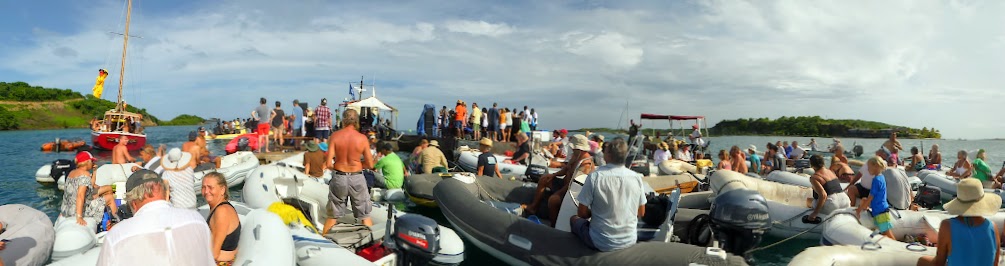
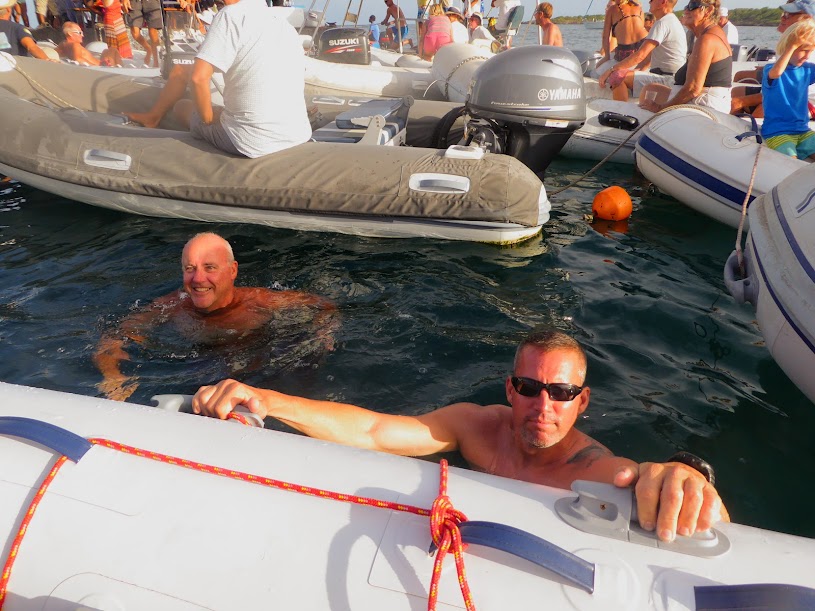
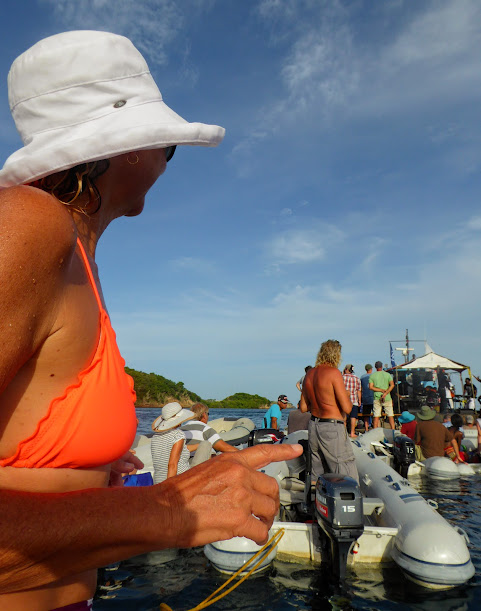
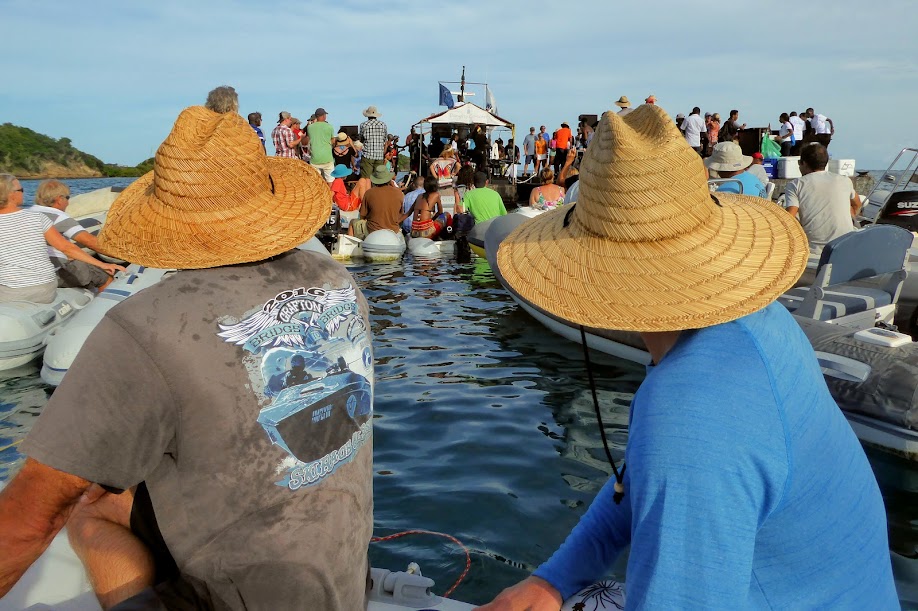
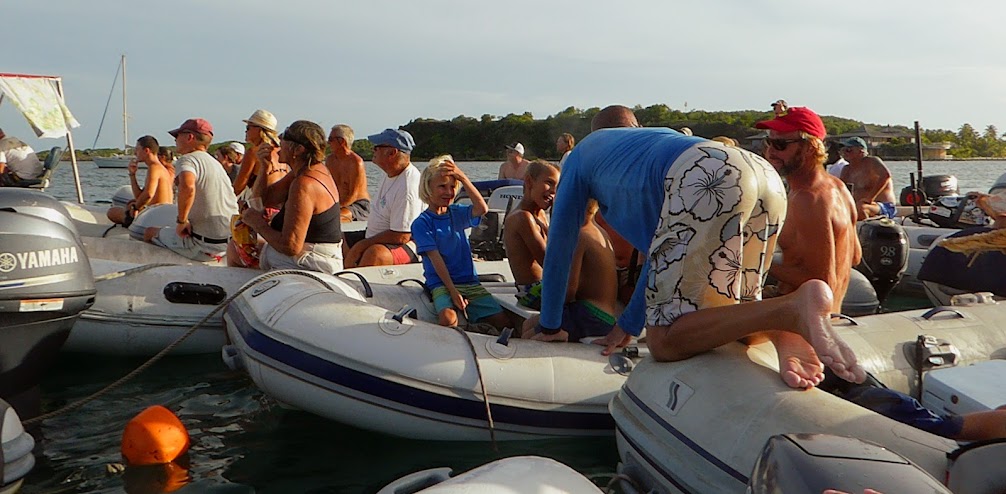
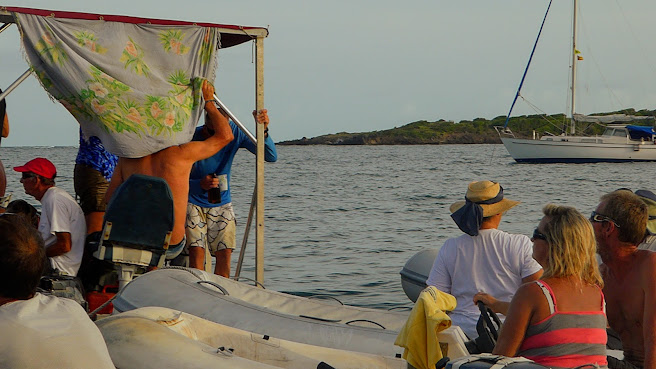
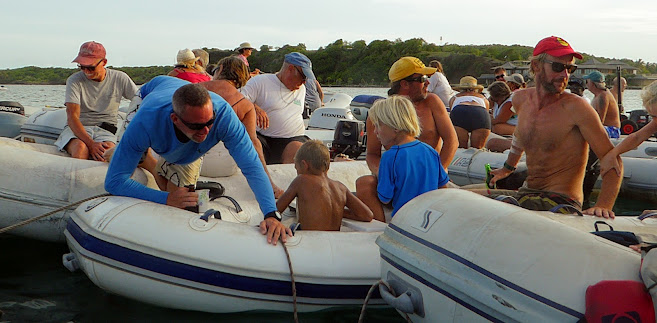
It was a lumpy ride, but we made good time and soon arrived at the bay near Le Phare Bleu. Many cruisers had arrived ahead of us,  and we tied on to the growing amoeba of dinghies.

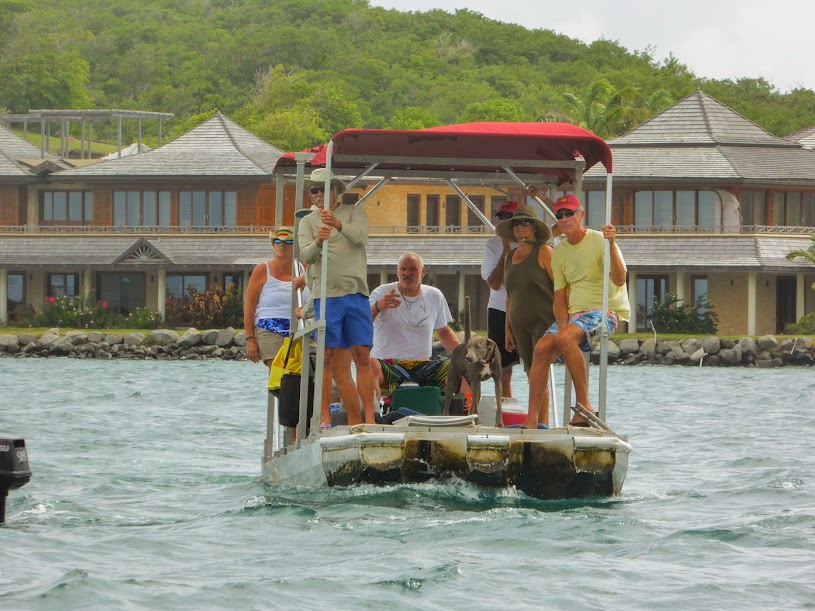
As dinghies of all sizes continued to arrived, the group grew in size. We spotted our friend, “Tall Mark,” (red baseball hat) coming in on a homemade pontoon boat!

Water taxis shuttled those without dinghies, as well as many locals, from Le Phare Bleu over to the barges.

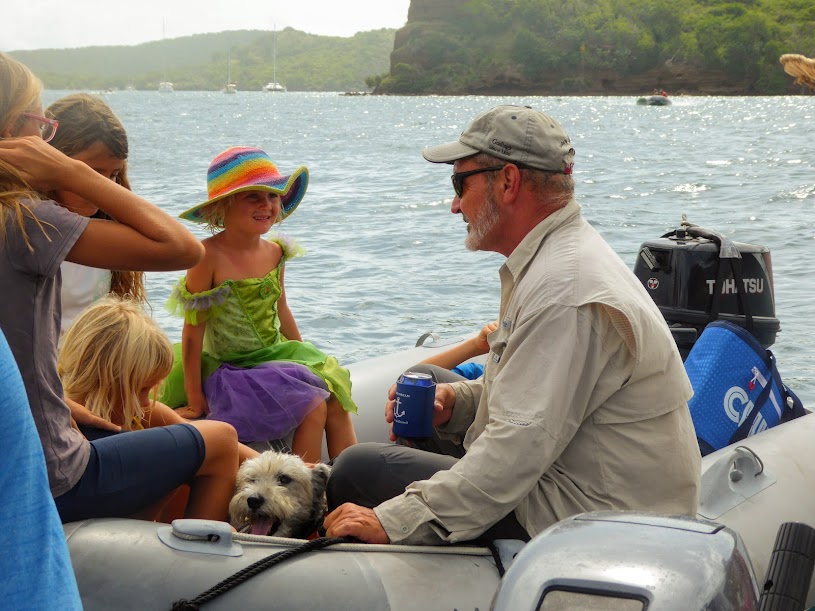
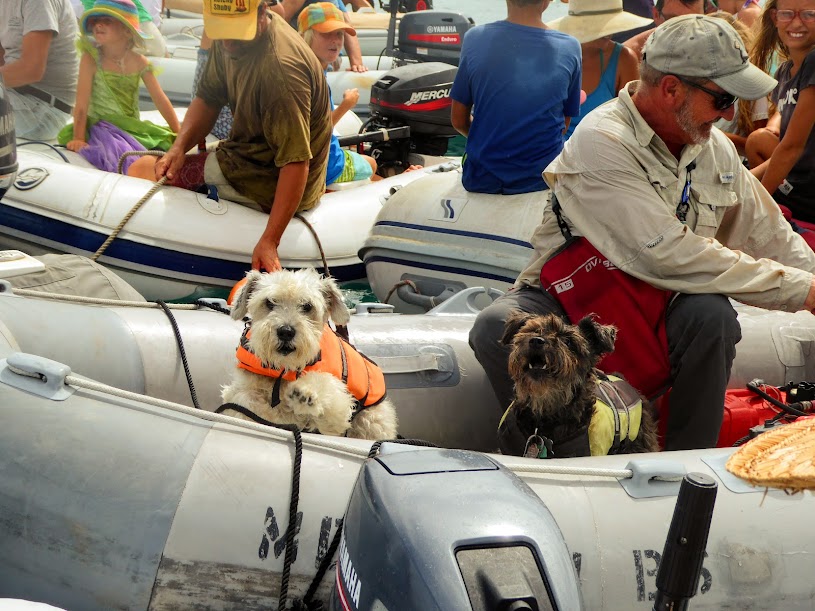
The ever-growing group included families with children, as well as pets.

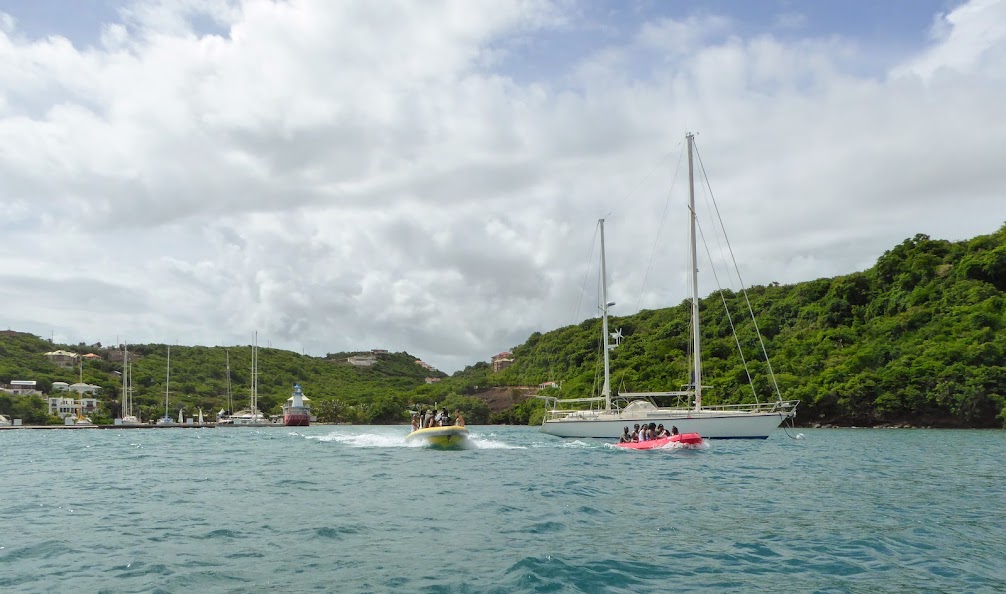
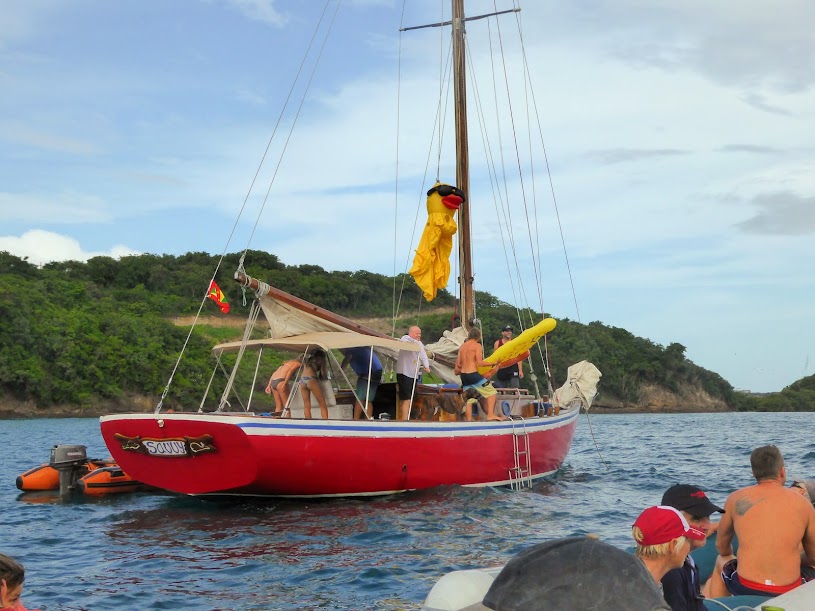
A sailboat arrived and anchored just off the barges, ready for the day, with several inflatables of their own.

We settled in, and waited for the live music to start.

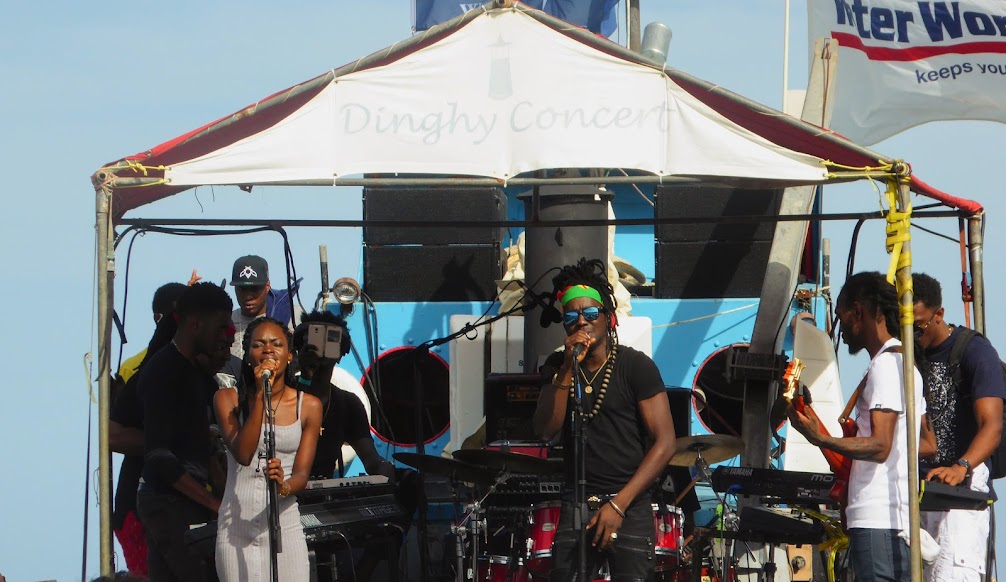
The band soon took the stage and began to play for the floating crowd.

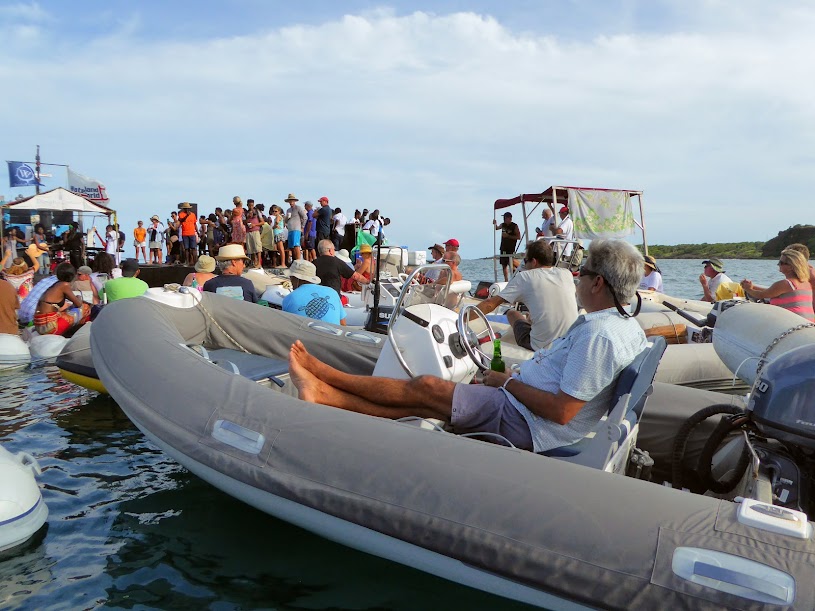
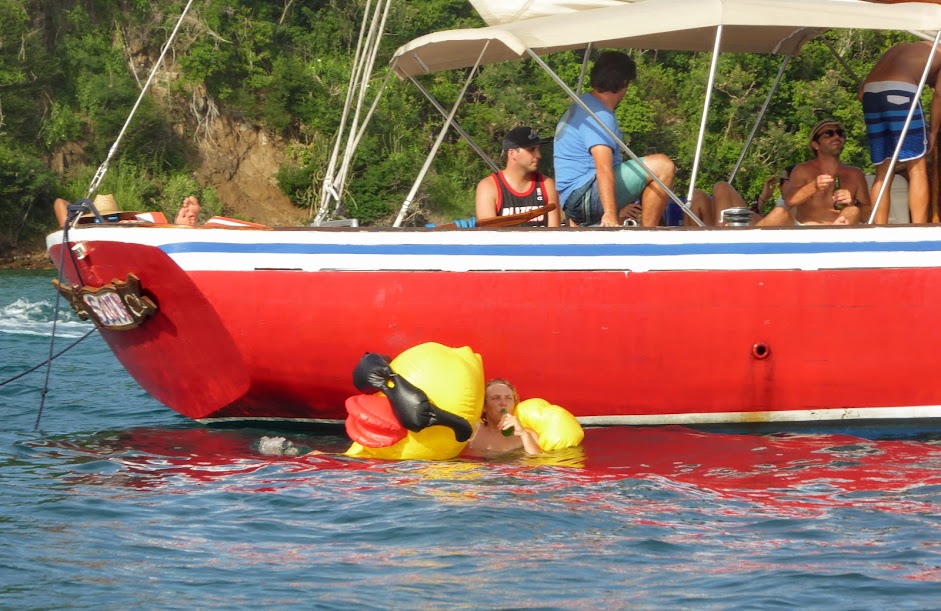
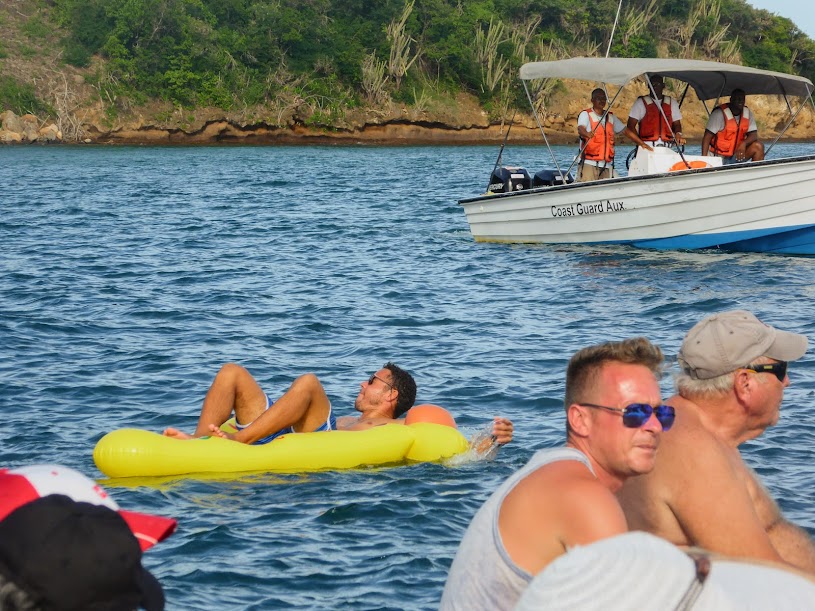
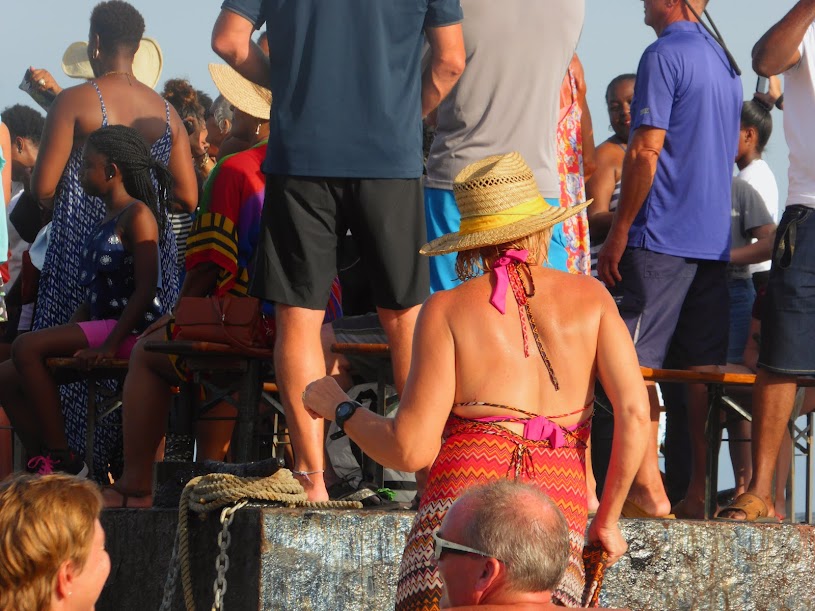
As the music played people lounged in their dinghies and on floats,  sought “relief” in the water and enjoyed the day.

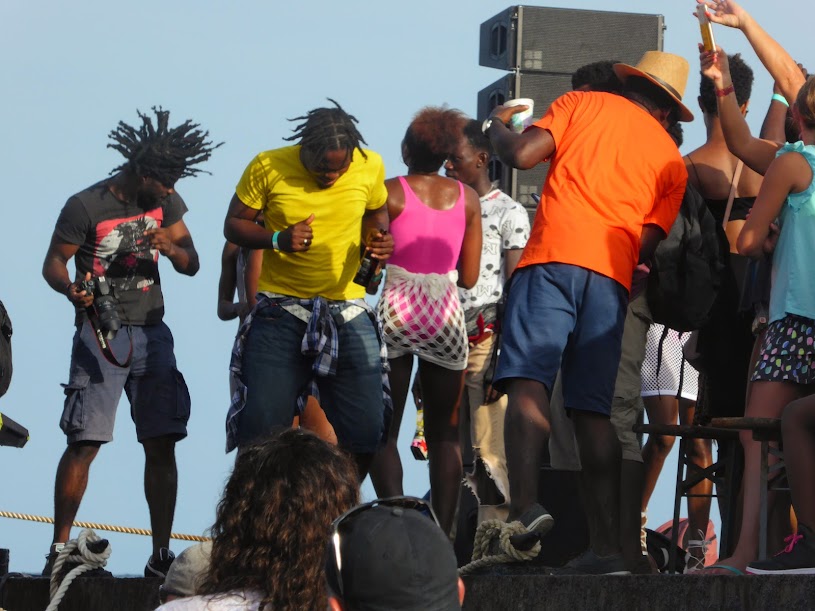
Cruisers swayed in their dinghies, and locals danced on the barges.

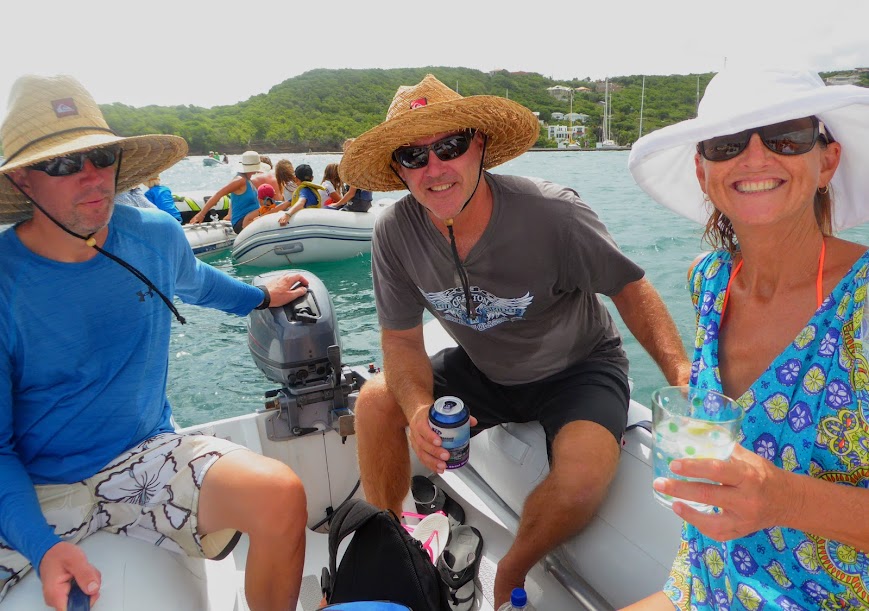
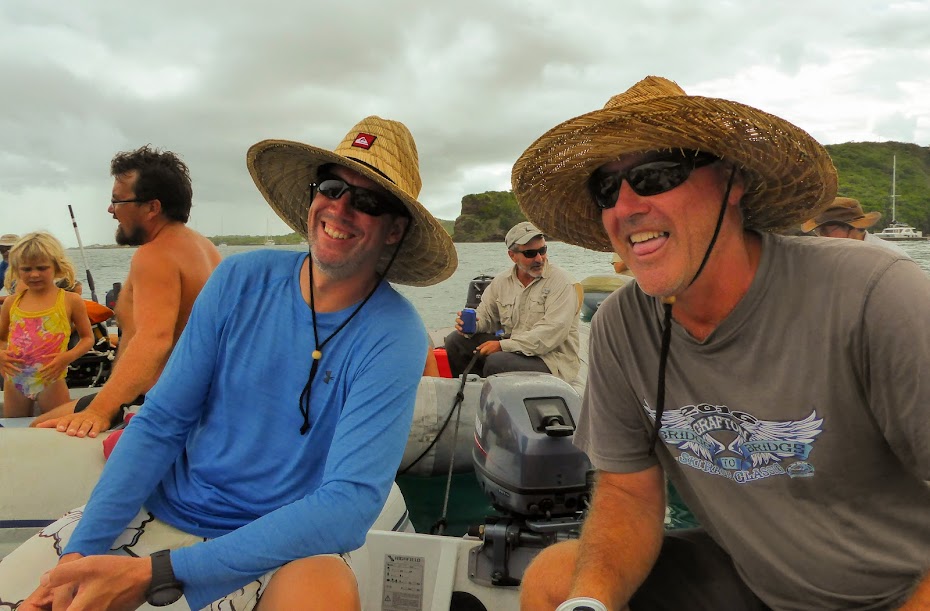
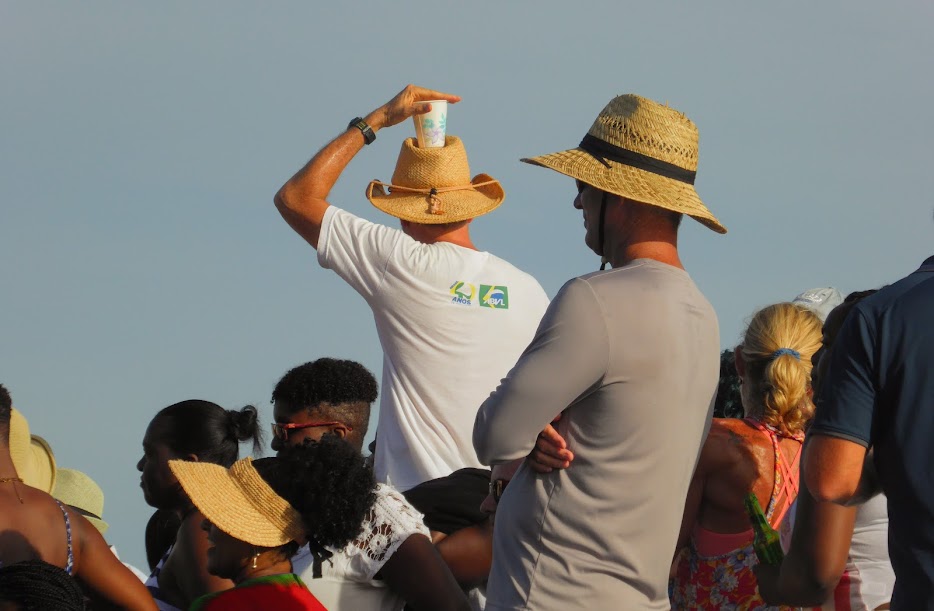
The hat twins took it all in..

Here’s a short video of the dinghy concert crowd, and the music:


A man in the dinghy next to us flew his drone off and on during the afternoon. I later found this overhead photo he took. We are at the lower left of the group, in between the small, dark blue dinghy and the larger fiberglass dinghy.

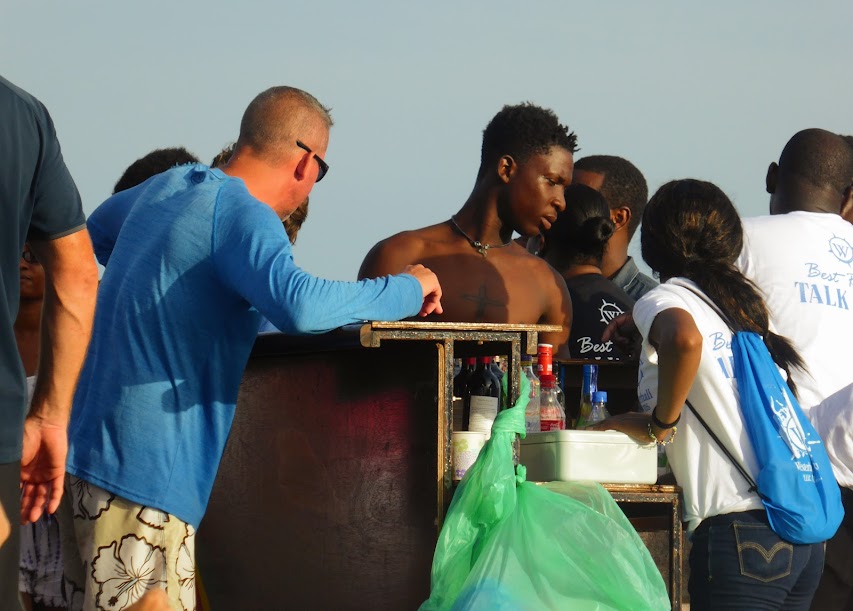
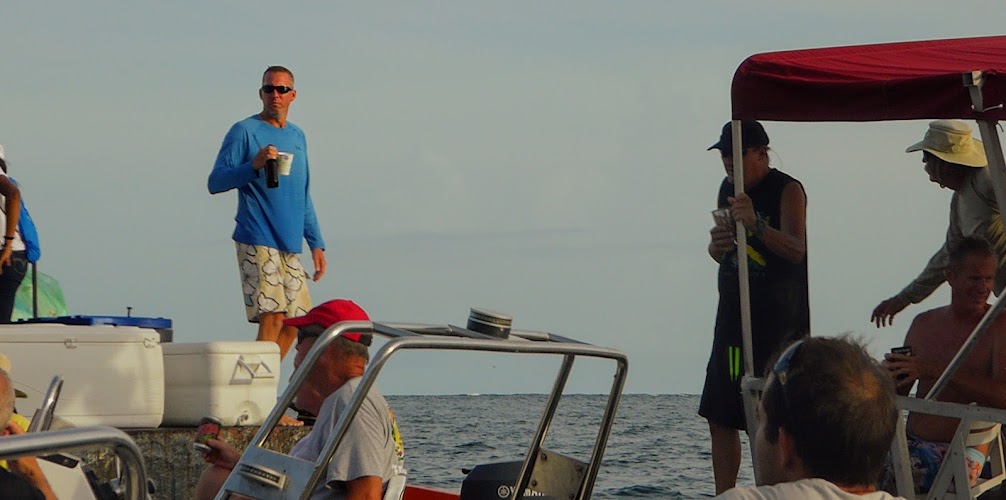
As time passed, we ran out of drinks…quite a conundrum. Scott took it upon himself to make his way to the bar. He crawled over the mass of inflatables, asking to “play through” as he went.

As he made his way across the amoeba, Tall Mark signaled him to use the pontoon for his final leg. Once aboard, Scott pulled it over to the barge, and climbed up…success! Our Prickly Bay neighbor, David, was there to greet him.

At the bar, Scott procured said drinks, and then surveyed his route back.

With two beers, and a cup of over-proof rum in hand, Scott made his way through the pontoon, across the dinghies and back to us, not letting anyone hold his precious cargo along the way.

While these photos capture the basic gist of Scott’s quest, here’s a video of the real-time journey, which I found hysterical:

Before long, dusk was approaching. The band stopped playing, allowing those on dinghies to travel safely back to their boats before dark. We untied ourselves from the shrinking amoeba, and headed for home.

With the wind behind us, we had a quick and comfortable ride back to Prickly Bay. Mark and Deb dropped us at Sea Life, before heading back to Kefi.

Our day of music, floating and fun was a good time for all. Whoever thought up the dinghy concert idea was a genius! Here are more photos of our fun afternoon.

“Shells Sink, Dreams Float. Life’s Good On Our Boat!”
Hey Don, Thanks For Going Easy On Us!

With Tropical Storm Don predicted to make a direct hit on Grenada, we prepared for 60 knot winds (always prepare for the worst). Scott secured loose things on the flybridge, stripped the canvas off of our bimini (canvas that shades the flybridge driving station), took the window covers off, removed our flags and stowed our extra solar panels (more on those later).

He tied an additional line to the mooring ball; readied our anchors in case we needed to drop them; put our large fenders in the cockpit, making them available in case another boat broke from it’s mooring and drug toward us; brought in our flopper-stoppers (large plates that hang from the paravanes, and reduce rolling at anchor…greatly reduce); and raised the paravanes, to reduced risk of another boat hitting them, making us more maneuverable through the anchorage should we need to move in a hurry.

While we were preparing the boat, the island of Grenada was preparing as well. One of the local radio stations broadcasted storm preparation information, and we heard the local Red Cross and Coast Guard making contact with each other over the vhf radio.

Businesses were required to close at 3pm, and we were very surprised to hear that public water and sewer were to be turned off at 7pm! Here’s a posting from the National Water and Sewerage Authority, with some interesting information:

ADVISORY – NAWASA TO SWITCH OFF ALL WATER SYSTEMS ON TUESDAY JULY 18TH, 2017

The National Water and Sewerage Authority (NAWASA) wishes to advise the general public that following a meeting of its Disaster Preparedness Committee, the following decisions were made:

– ALL WATER SYSTEMS will be switched off later this evening. A timeline will be provided once an update on Tropical Storm DON is received from NaDMA.

– Once our systems are switched off, consumers island wide will have their service interrupted WITHOUT A DEFINED RESTORATION TIME.

– An analysis of ALL water systems will be conducted by our engineering team on Wednesday July 19th and restoration will commence thereafter.

The Authority implores on the general public the need to:

• Collect and store water in clean, non-corrosive and mostly tightly covered containers both in and out of your refrigerator. To increase shelf life of water, group bottles in dark plastic trash bags to keep light out.

• Store enough water for each member of your family and pet. week.Have at least a minimum of three days supply, of thirty-five gallons per person, per day for domestic use. OUR MAIN ADVISORY – Water collection and storage to last minimum of three days and a maximum of 1 week.

• Store water in bath tubs, drums, pails and buckets for flushing of toilet, washing and general cleaning.

• Shut off water tanks and individual property connections. Your water can be shut off at either the outlet valve or the water meter. Everyone in your home should know where these are located.

NAWASA apologises for the inconveniences likely to be caused by this decision, but advises that this precautionary measure is necessary to safe guard our infrastructure and is in the best interest of the consumers we serve.


When our preparations were complete, we spent the rest of the day checking various online sites for updates on Don, and just waited, along with everyone else in the bay. Scott had a pre-Don cocktail, and Howard kept watch for fish.

Watching for fish can be tiring. Sometimes  you have to lay down on the job.

We were getting reports that Don was speeding up, but the eye was collapsing, and that wind speed predictions had dropped a bit; all good news.

As the day wore on, the winds died completely, and by early evening the bay was lake-like.  We watched the barometer drop on our weather station, and considered this the calm before the storm. The bay was noticeably less crowded, as many chose to hunker down in marinas or other island locations.

By sunset, Don was predicted to only cause us an hour’s worth of havoc, and at a much lower intensity. We began to get a decent swell coming into the bay, and readied for our 60 minutes of storm drama.

Instead, Don fell apart as it passed twenty miles south of us. We watched the radar updates online, and by 10 or 11pm, the storm, now reduced to a tropical wave, had officially passed us by without incident.There had been no wind to speak of, and we only received a quarter inch of rain.

The incoming swell lingered on though, and we continued to roll around for hours. Rolling back and forth (actually, Sea Life tends to lumber back and forth, as opposed to rolling) wasn’t as irritating as the noise from one of our paravane cables rubbing along a mast wire; the metal scraping sound was maddening. Realizing that Don was now a non-event, Scott lowered our paravanes and put the floppers back in the water….ahhhh.

So, Don fizzled out, thank goodness, and we dodged a tropical bullet. I’d like to believe that this was our one and only scare for the season, but we’ve learned all too well on this journey that Mother Nature is fickle.

“Shells Sink, Dreams Float. Life’s Good On Our Boat!”


Tropical Storm Don, Our Grenada Welcome Wagon

I have much to catch up on, but for now, a current update…..we arrived in Grenada a week ago, and Tropical Storm Don is our welcome wagon. Here’s a photo of Don’s predicted path. We are the bottom-most island/dot, in the yellowish-brown, with a 50-60% change of winds over 39 knots.

[Image of probabilities of 34-kt winds]

The storm is essentially passing right over us, with it’s specific path having very different results.

A tropical system spins counter-clockwise, with the top/north half having the most intensity.  Think of a pinwheel, sucking wind off in it as it spins. As the storm moves, that wind in the north half is given a extra boost, doubling it’s strength.

At the bottom of the pinwheel, the winds oppose the movement of the storm, and are much less, so south of a storm is where you want to be (scratch that…not anywhere near a storm is where you really want to be!).

If Don passes just north of Grenada, we expect sustained winds in the 25-30 knot range,  clocking around in every direction. However, if the storm tracks a bit south, we’ll get more direct winds, sustained closer to 45 knots….possibly as high as 60 knots.

None of this is life threatening, and we are preparing for maximum winds, just to be safe. Unfortunately, there are not completely protected anchorages or marinas here in Grenada, so we’re just gonna have to ride it out with fingers crossed.

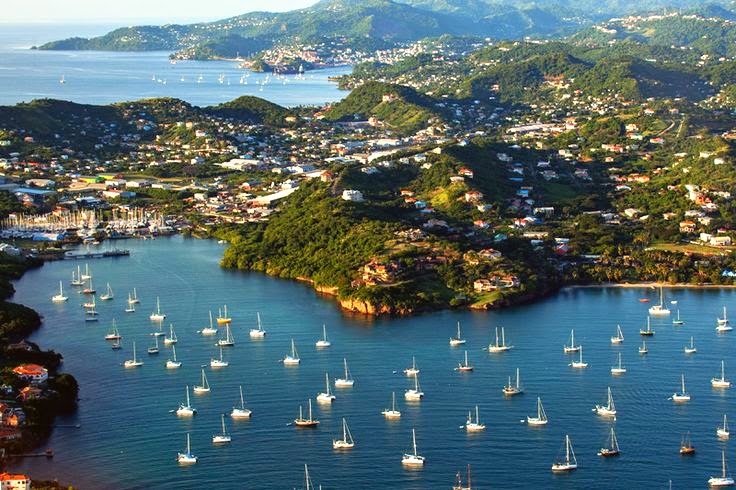
We are currently in Prickly Bay, on Grenada’s south side. Many cruisers come to Grenada for hurricane season, so the bays are crowded with boats.

Map of Prickly Bay, Grenada


Image result for aerial view of prickly Bay

Our plan was to anchor, but we arrived to find that the marina here had filled most of the bay with mooring balls. Prickly Bay is safer than most, as far as local crime, so we chose to stay and take a ball. For those who may not know, a mooring ball is anchored to the bottom with a metal shackle. From there, a line travels up to the surface with a float/ball that you attach a line to.

On the positive side, balls are usually well spaced, and there’s no worry about boats with little anchoring experience breaking loose and dragging. The downside is that you’re never sure what condition the balls are in; whether the lines are still strong and the shackles are good. Several boats here have broken from their mooring here, drifting through the anchorage, one as recently as four days ago.

Our quandary is whether to stay here on the ball, and risk it breaking, or having other moorings break, and those boats drifting our way. Or, head for another bay that is just as full, and risk anchors dragging (instead of moorings breaking) and boats drifting. We considered going to a marina, but they aren’t much more protected from heavy wind, and Scott’s concerned about being tied down and not able to swing with the winds, or cut and run if needed.

Here is Don’s timeline…..Murphy’s Cruising Law: Bad shit almost always happens at night! (we are between the blue line, and the S to the right…roughly 10pm-midnight)

cone graphic

So, we’re hunkering down here in Prickly Bay, and hopeful that Don gives us a gentle welcome to Grenada.

“Shells Sink, Dreams Float. Life’s Good On Our Boat!”
Our Final Push To Grenada

After an easy overnight, we approached Carriacou (pronounced Carri-a-coo) just after dawn. The island belongs to Grenada, and we planned to clear into the country here.

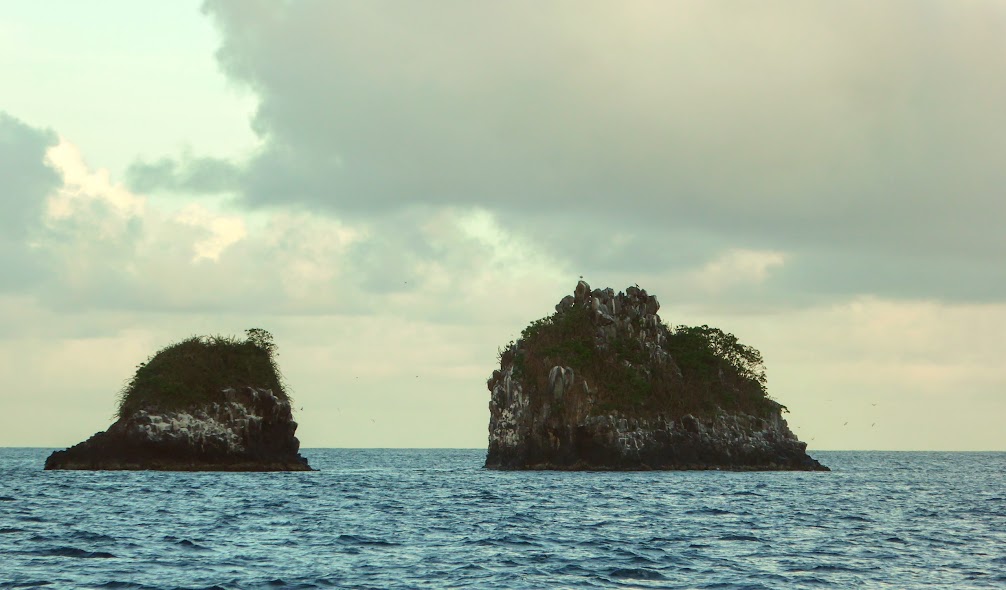
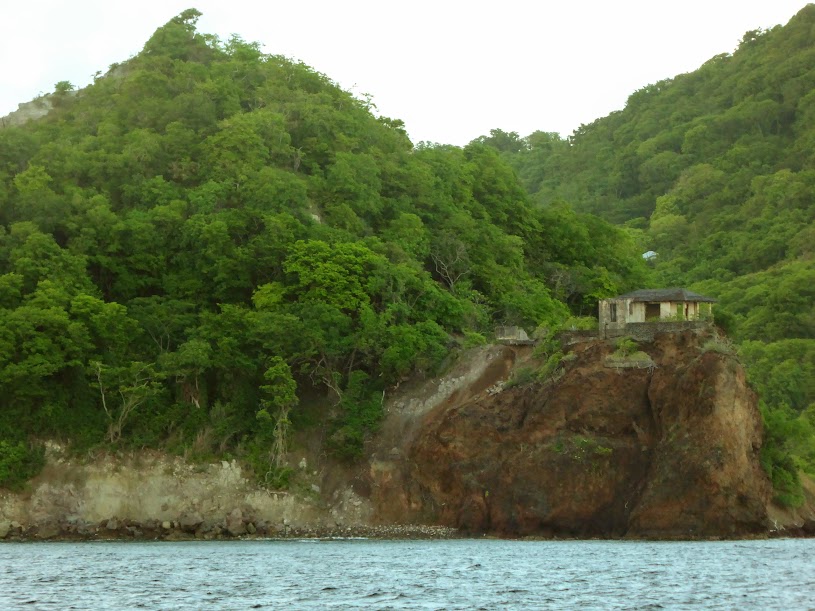
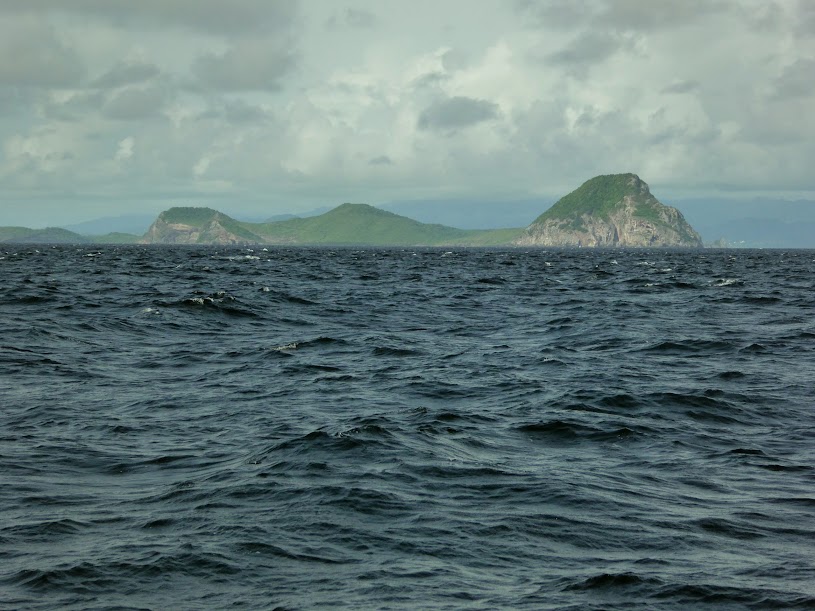
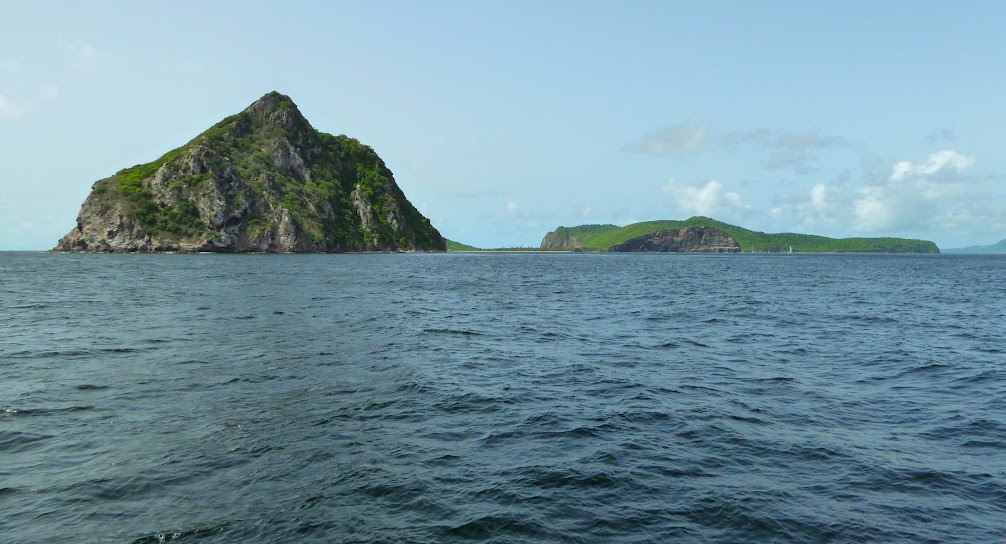
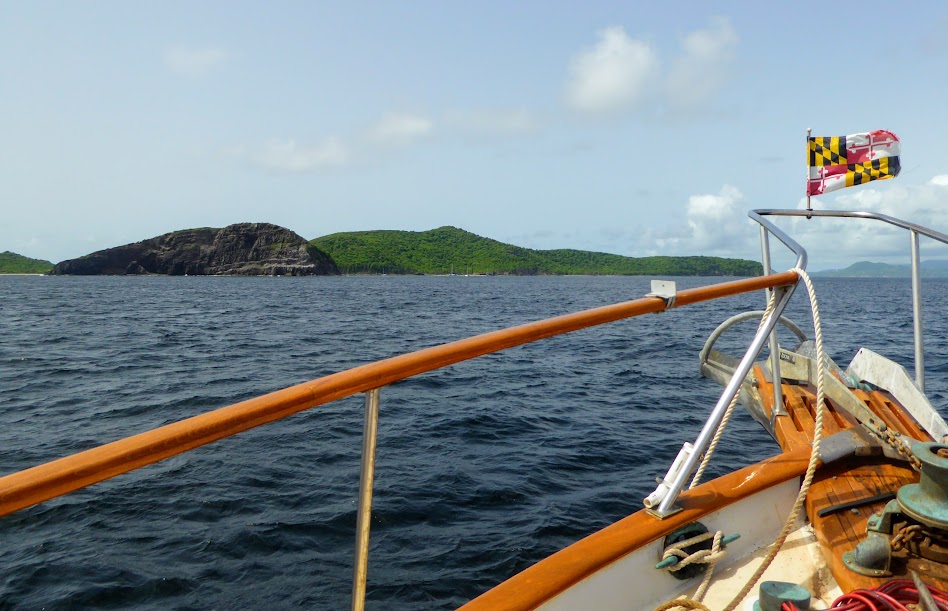
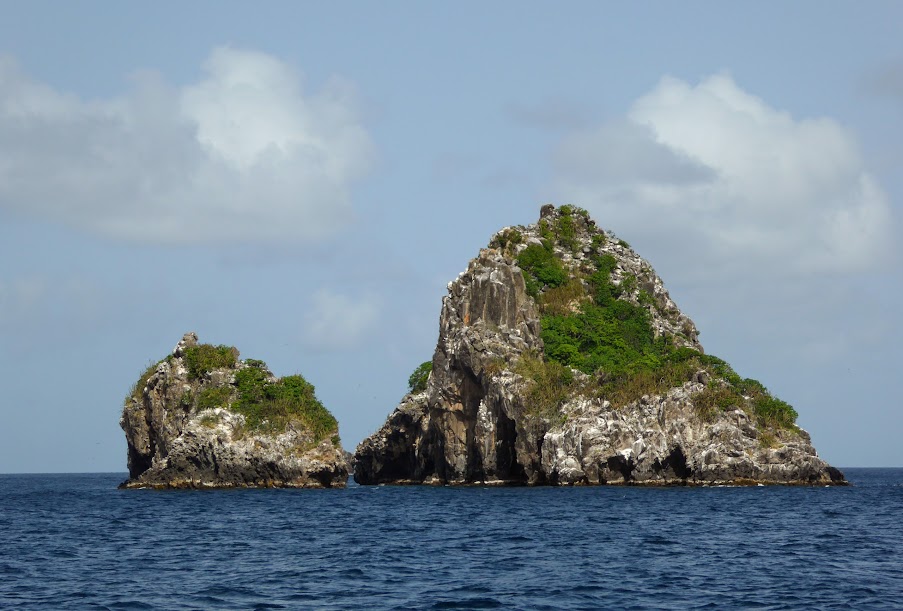
As usual, there were interesting sights along the way: interesting rock islands, and a waterfront house that caught Scott’s eye.

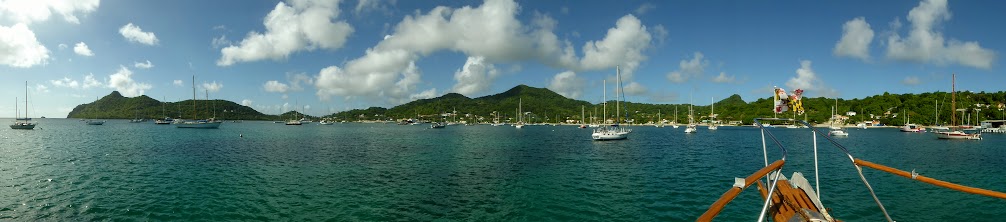
In the early morning hours, we made the turn into Tyrell Bay anchorage. The large bay was full of boats, boats and more boats…I counted 82! We definitely weren’t in Kansas (aka, the Western Caribbean) anymore.

Once we were anchored, Scott made his way over to nearby Tyrell Bay Marina, where the customs and immigration offices were located. He arrived just as they were scheduled to open, but there was no sign of the customs officer. Thirty minutes later, the young officer showed up, and let Scott and several other cruisers inside.

Apparently, he’d been at a party the night before, not getting home until the wee hours, and consequently had a late morning start. Scott, having learned much patience with customs and immigration in the Western Caribbean, just smiled, nodded and waited to be called on. There is an online service in place for several of the Eastern Caribbean islands, called Sea Clear. Clearance forms can be complete online before arriving, saving time when in the office. Customs officials like it, as they spend much less time deciphering handwriting.

Not all cruisers use this service, and end up having to fill out the lengthy forms by hand before getting their turn. As a result, Scott has ruffled feathers more than once, by being waived to the front of the line. Sea Clear, and Scott’s patient attitude, has made for quick and friendly clearance on several Eastern Caribbean islands.

Back to Carriacou…the immigration officer must have been at the same party, and must have stayed even later, as he never showed up at all! Once the customs officer finished his paperwork, he did the immigration clearance for Scott as well, and we were official in Grenada.

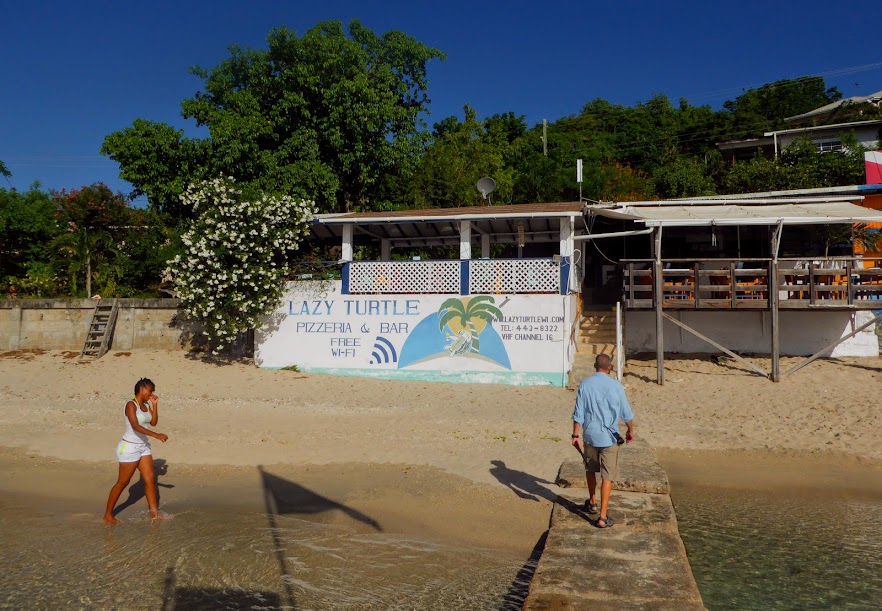
To celebrate, we headed to shore for lunch at the Lazy Turtle. In addition to other items, pizza was on the menu, and was billed the “best in the Caribbean.”

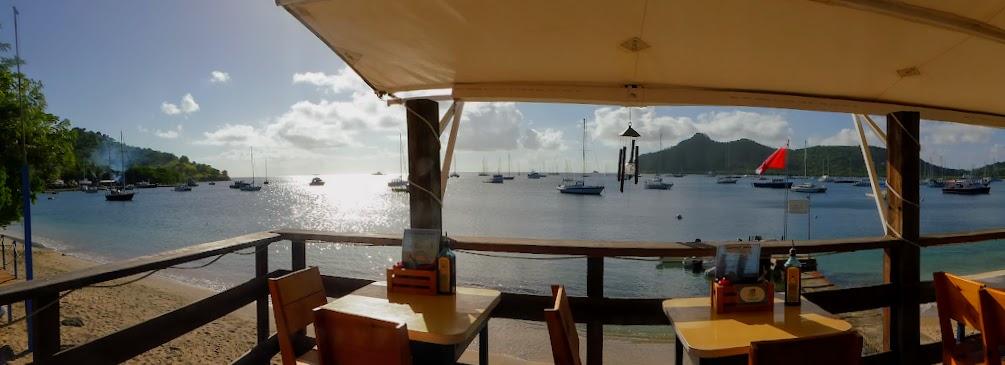
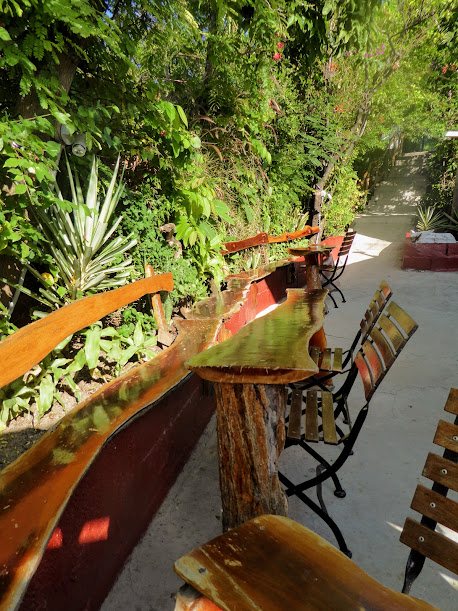
The pizza was far from the best in the Caribbean, but it fit the bill for lunch, and views back out at the crowded anchorage were good. Soon, the afternoon sun had us changing locations, over to some funky, wooden tables in the shade. After lunch, we spent time wandering the island a bit, then returned to Sea Life for an early night.

The next morning, we raised anchor and continued toward Grenada. We made one last stop at Rhonde Island, also owned by Grenada, for a few quiet nights at anchor.

There anchorage has room for only four or five boats, a nice change from 82! We enjoyed the quiet, space and Scott got some exploring in.


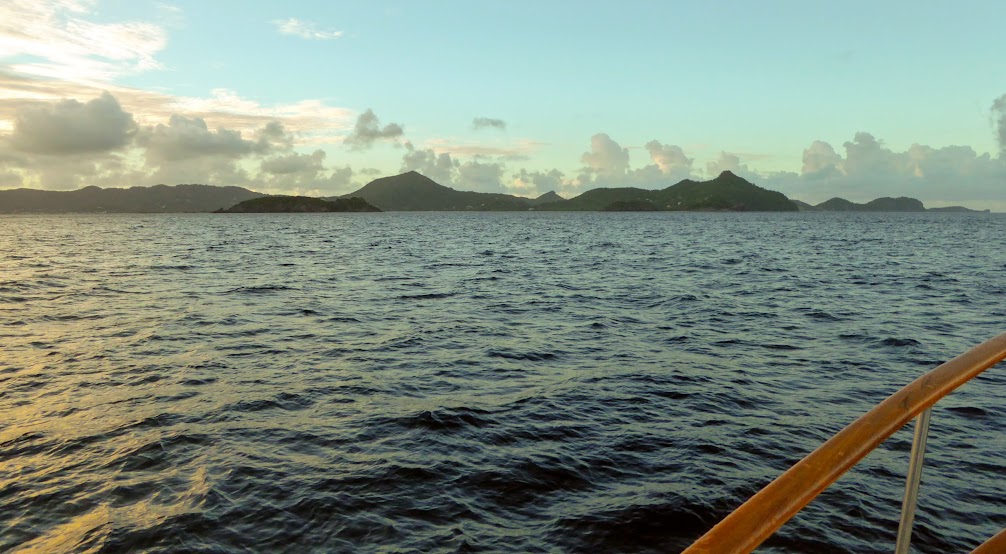
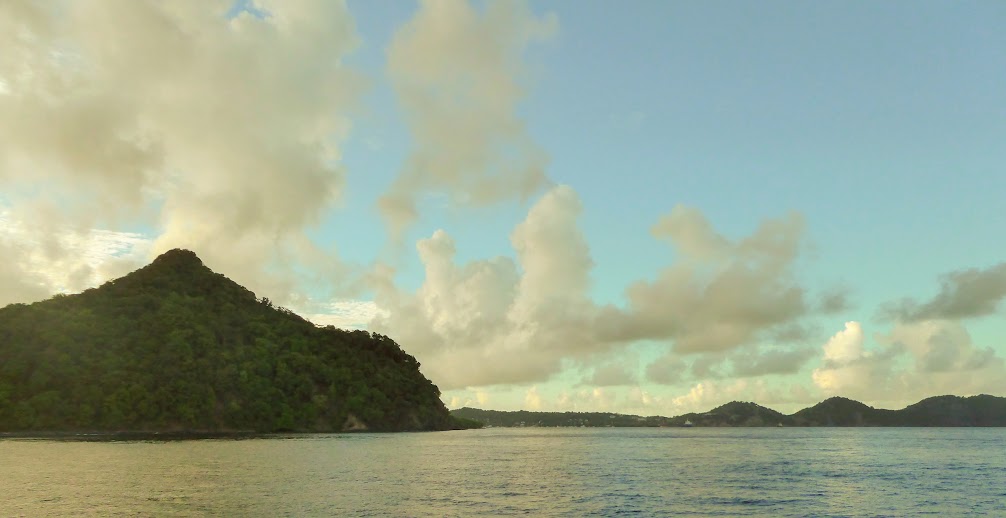
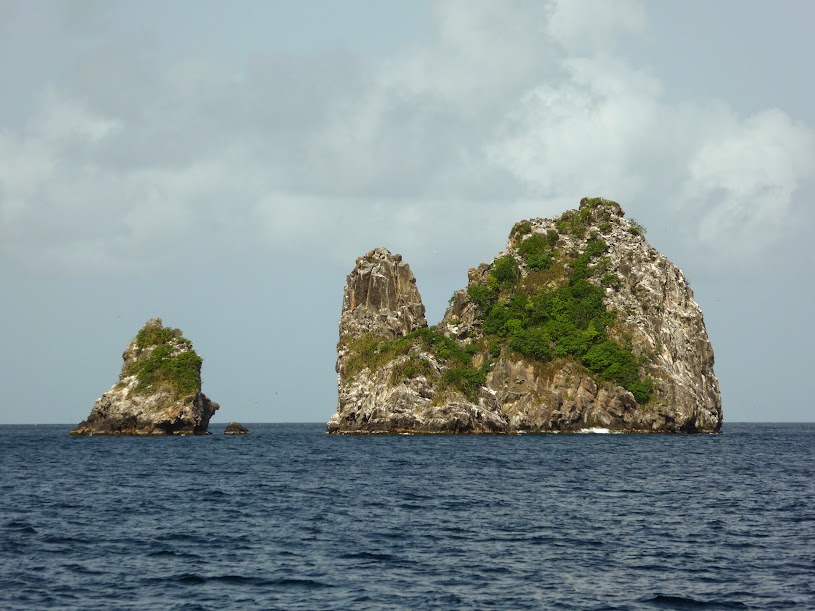
From Rhonde Island, it was just a day trip to Grenada. We passed more interesting rock islands, and Scott put some lines in the water hoping for a nibble; unfortunately, he got skunked again.

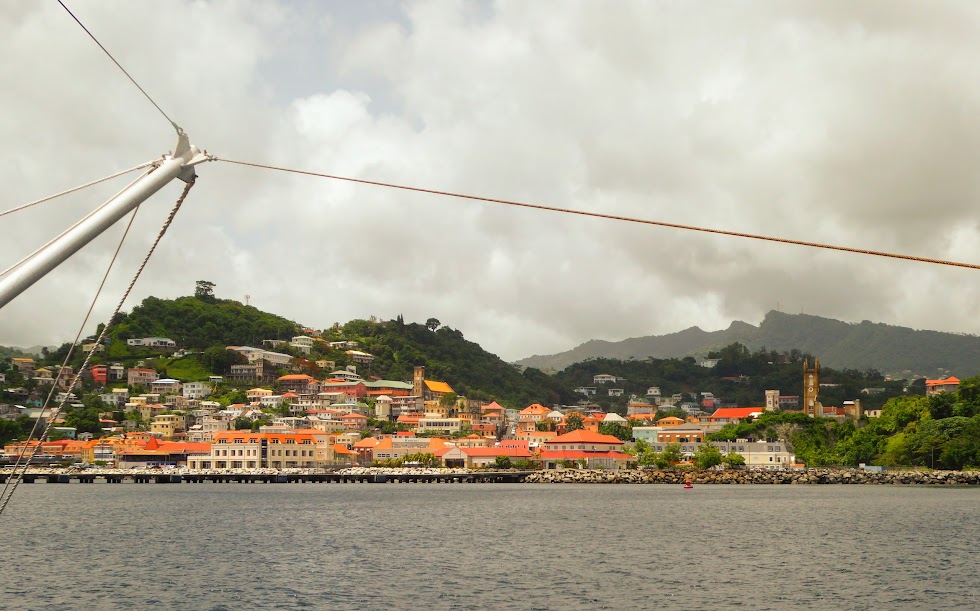
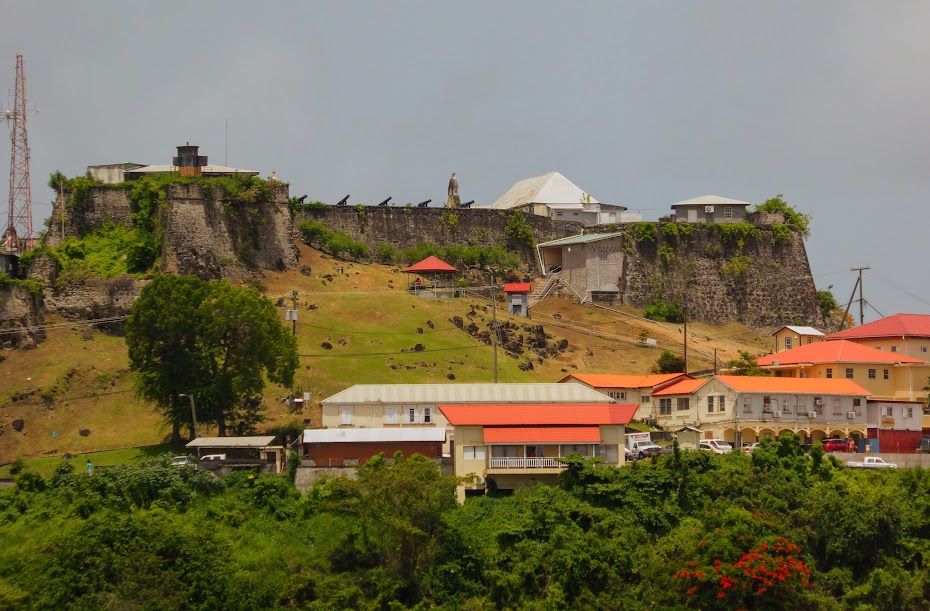
Moving down the west cost of the island, we passed the capital city of St. Georges, and the remains of Fort George.


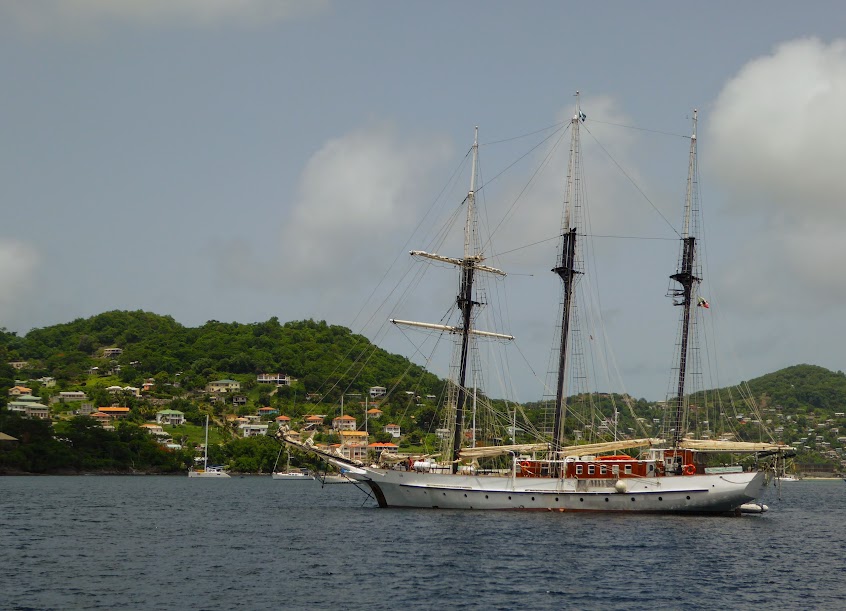
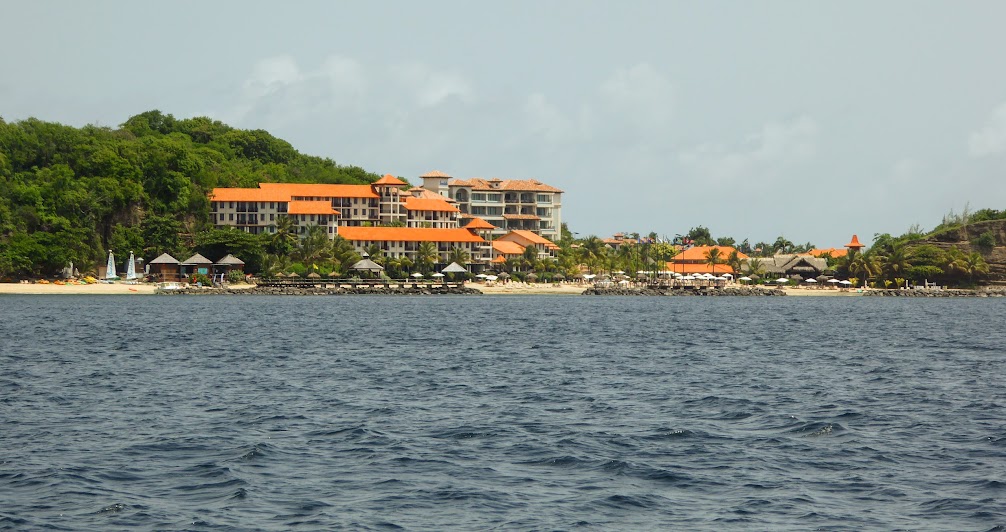
We passed several types of interesting boats in St. Georges anchorage, and the large Sandals LaSource Grenada, before turning east, to head along the south coast.

An hour or so later we made our final turn, into Prickly Bay.  Again, this large bay was full of boats. There wasn’t enough room to lay out a proper amount of anchor chain, so we chose to grab one of the marina’s mooring balls.


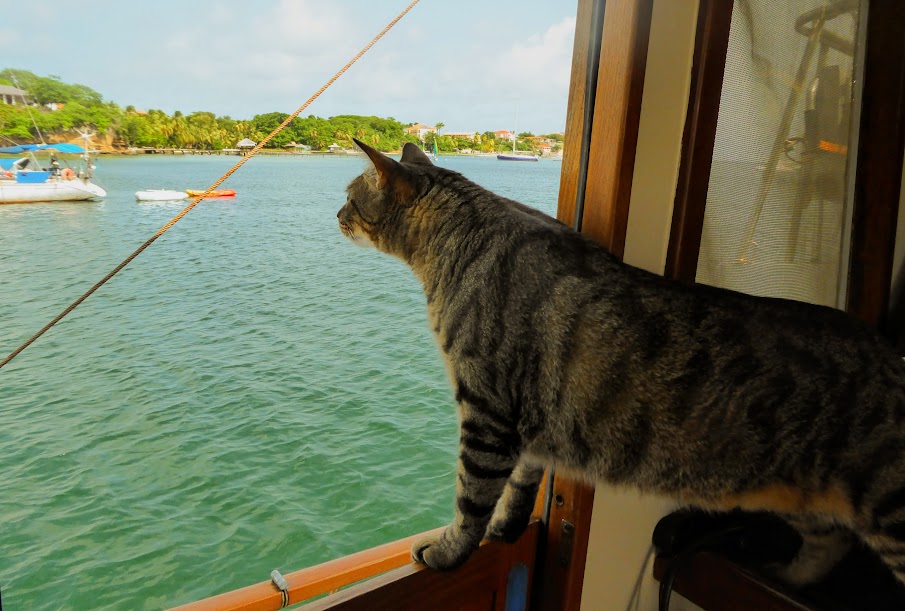
We’d made it to our hurricane season home. Howard checked out his new surroundings, and we settled in.

Here are more photos of our final push to Grenada.


“Shells Sink, Dreams Float. Life’s Good On Our Boat!”

The Beautiful Island Of St. Lucia

Our next stop on the way to Grenada, was the beautiful island of St. Lucia. The island was named by the French, after Saint Lucy of Syracuse, and it is the only country in the world to be named after a woman. The French were the island’s first European settlers, after signing a treaty with the native Carib Indians in 1660. England took control of the island from 1663 to 1667, and in the years following, it was at war with France 14 times. Rule of the island changed frequently (it was ruled seven times each by the French and British), which seems to be a pattern on many of the Caribbean islands.

In February of 1979, Saint Lucia became an independent state, and a member of the Commonwealth of Nations. Formerly the British Commonwealth, the Commonwealth of Nations is associated with the United Kingdom, and made up of 52 member states, which are mostly former territories of the British Empire.

Scott and I vacationed on the island 14 years ago, and were looking forward to a return trip. Unfortunately, the island hasn’t been the most safe location for cruisers in recent years.

We learned early on in our cruising life, that visiting an island by plane, for vacation, is much different than coming by private boat. Cruisers interact much more with locals; shopping for food, eating at local restaurants and exploring an island’s hills, mountains and beaches.

In contrast, most vacationers don’t leave their resort, and for the most part don’t need to (food, beaches, water sports and entertainment are usually all onsite). When they do, it’s most likely with an organized tour of some kind. With cruisers being anchored relatively close to shore, they are more at risk of being boarded by desperate islanders, and unfortunately, boardings on St. Lucia have becoming more violent.

On many islands we visited, cruisers only experience the rare case of a dinghy being stolen, or a snorkel and mask gone missing’ in most cases, these things were left outside, or left unlocked. St. Lucia, however, has seen more and more cases of violent assault on cruisers, both at anchor and ashore. These incidents did not sway us from visiting the island. Instead, we adjusted our anchoring plan for safer locations, and  were extra cautious of our surroundings.

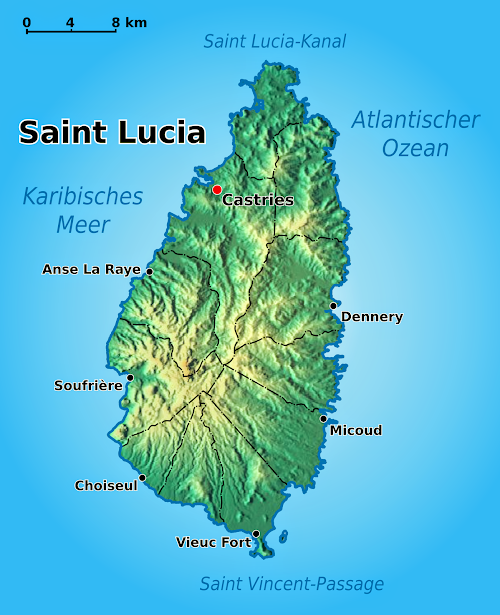
This volcanic Caribbean island is more mountainous than most, with its highest point being Mount Gimie at 3,120 feet above sea level. Here’s a topographical map of St. Lucia that I found online:

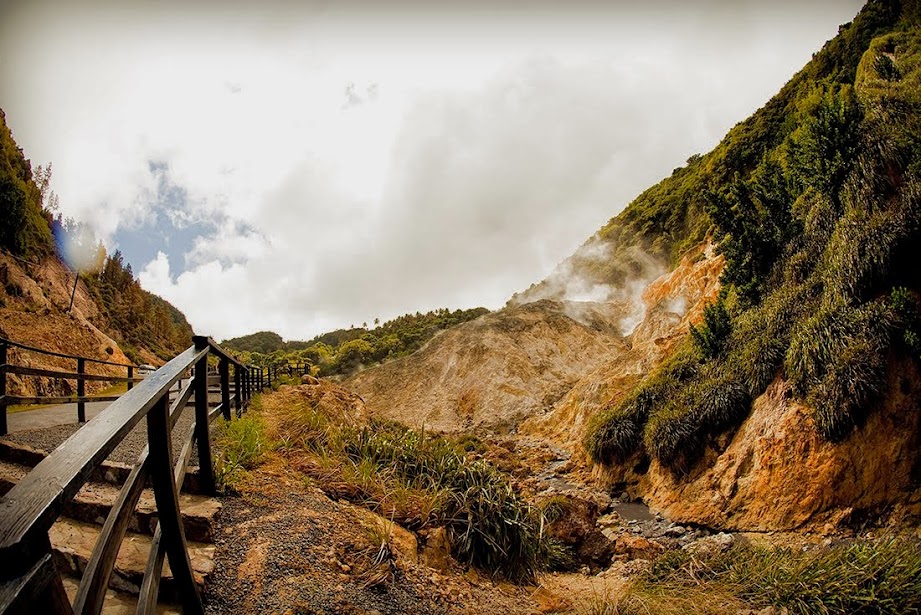
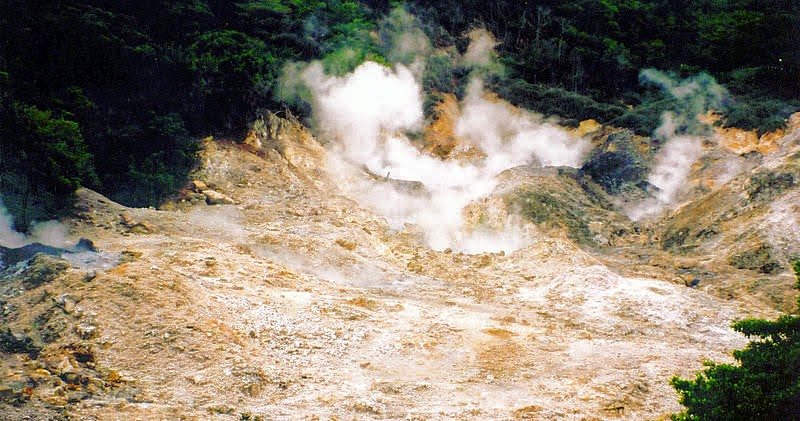
St. Lucia’s Soufriere Volcano, locally known as the Sulphur Springs, is considered the only “drive-in” volcano in the world. It’s a major tourist attraction on the island, with the road running right up to, and through, the crater of the volcano. Steam and sulfur waft out from the crater, providing a lovely, thick smell of rotten eggs. Boiling mud and water bubble just a few feet from the overlook. (We did not visit the volcano during this visit to St. Lucia, so I borrowed some photos online.)
The sulphur springs emit a mixture of iron, calcium oxide, sulphur, copper oxide, carbon and magnesium, creating the pungent smell and staining the surrounding rocks a green color.

The volcano is considered to be dormant, with its last eruption occurring in the late 18th century, unlike the highly active Soufriere Hills Volcano, located on the island of Monsterrat, who’s pyroclastic eruption in 1997 destroyed much of the island.

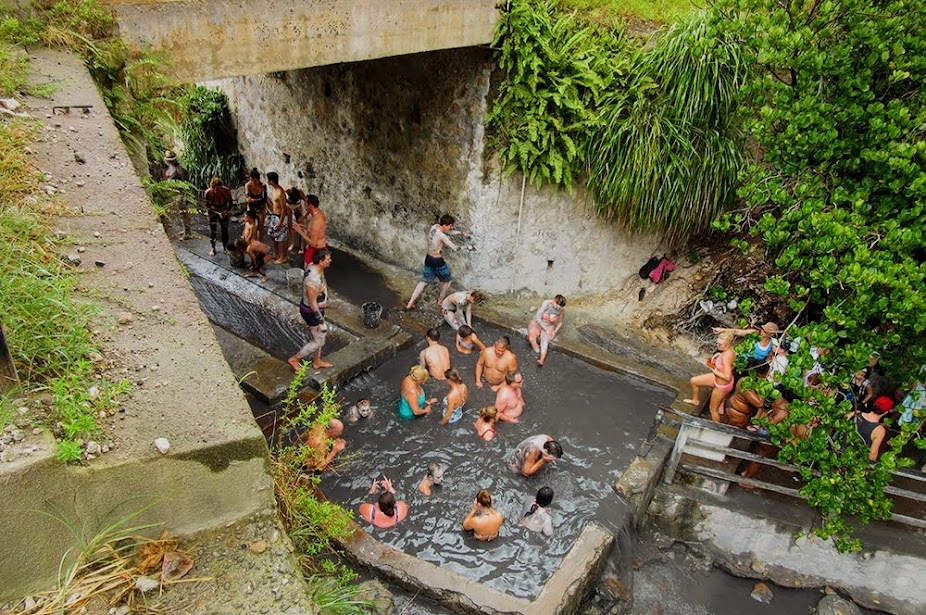
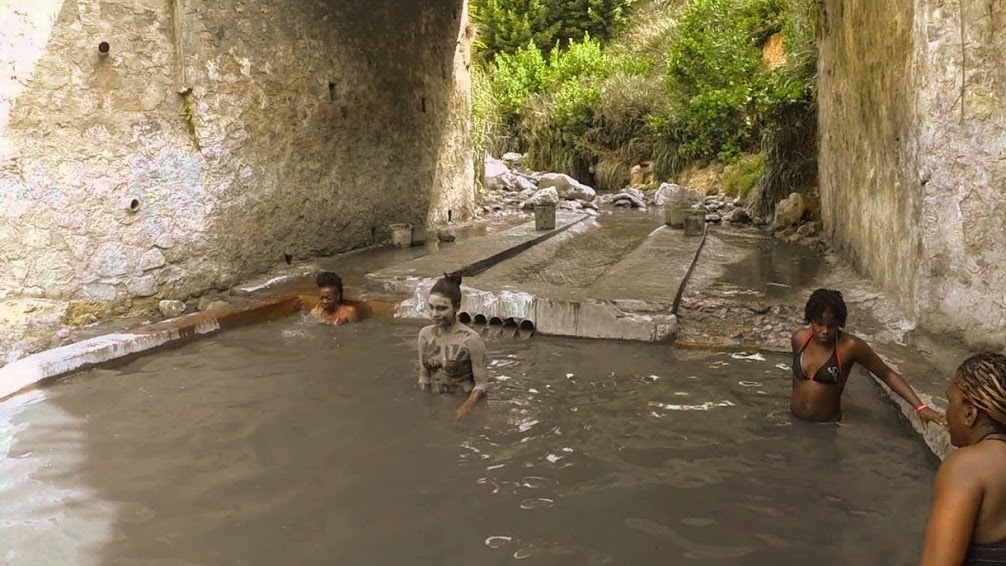
There are well-established hot springs and mud baths here as well. These bathing pools, hotter than the average bath, contain volcanic minerals which are believed to have therapeutic qualities for the skin, and are a big tourist attraction.

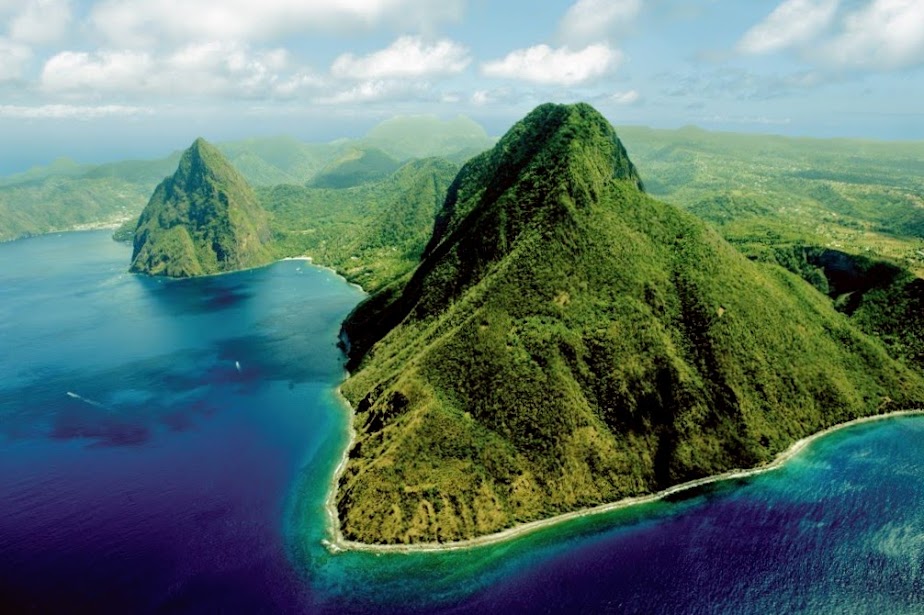
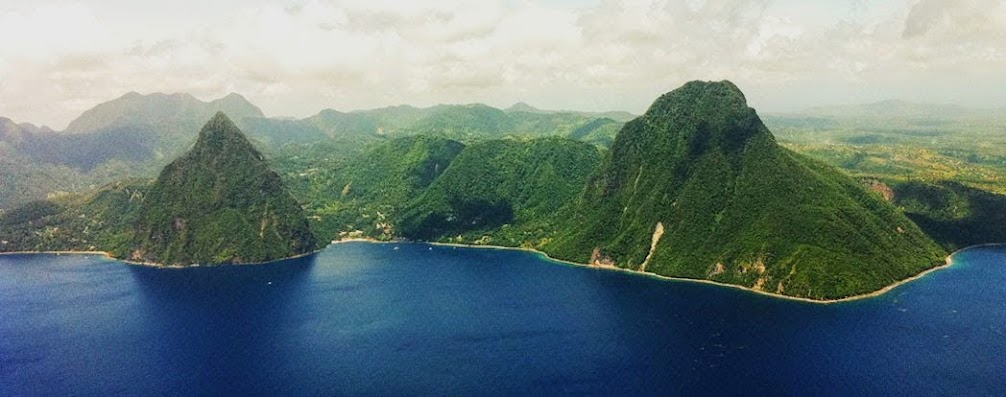
While stinky, mineral-loaded mud baths and hot springs are all well and good, the show stopper on St. Lucia is definitely it’s Piton Mountains. Here are some aerial views of the island’s beautiful signature attraction.

Said to be the most photographed site in the Caribbean, and most famous mountain pair on earth, the Pitons were created less than a million years ago by volcanic activity. Located near the town of Soufriere, in southwestern St. Lucia, the Arawak Indians considered the mountains to have mystical powers, and early European explorers noted their unique beauty. In 2004 the Pitons, along with the Soufriere Volcano, were awarded World Heritage Site status.

These volcanic plugs, land formations made out of volcanic material, are the most iconic sight on the island. They are the symbol St. Lucia, and also appear on the island’s flag.

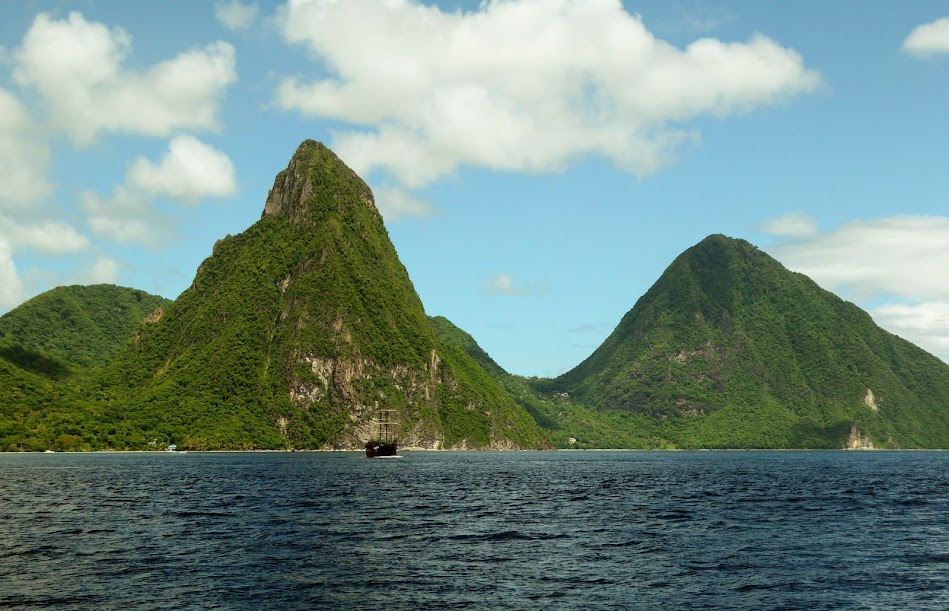
Gros Piton, and its smaller sibling Petit Piton, are easy to spot from many points along the island’s southwest coast.

Although both peaks are available for climbing, locals caution against hiking Petit Piton unless you are an experienced climber, as the mountain is incredibly steep. Gros Piton is the higher of the two mountains. It’s easier to climb than the Petit Piton, but still a strenuous go.

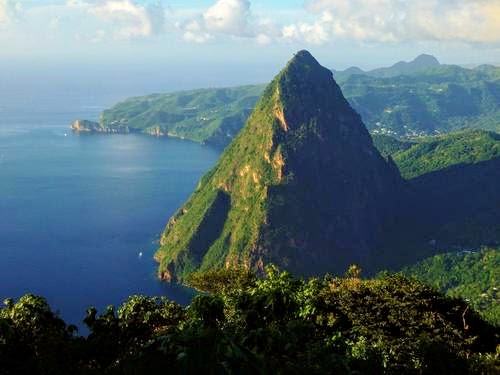
Gros Piton rises to a height of 2619 feet above sea level, and is the second highest peak on St. Lucia, after Mount Gimie (3120 feet). Petit Piton rises to a height of 2461 feet, is steeper than Gros Piton and is therefore much more challenging to climb. Here are views I found online, of views from the top of Gros Piton:

We made our way from Martinique to Rodney Bay, on St. Lucia’s northwest side. The large bay provided an easy ride to customs and immigration, as well as several grocery stores. Customs wanted Howard to have a vet exam for clearance, but Scott managed to convince them that our cat would not be swimming ashore, and soon we were all three officially checked in.

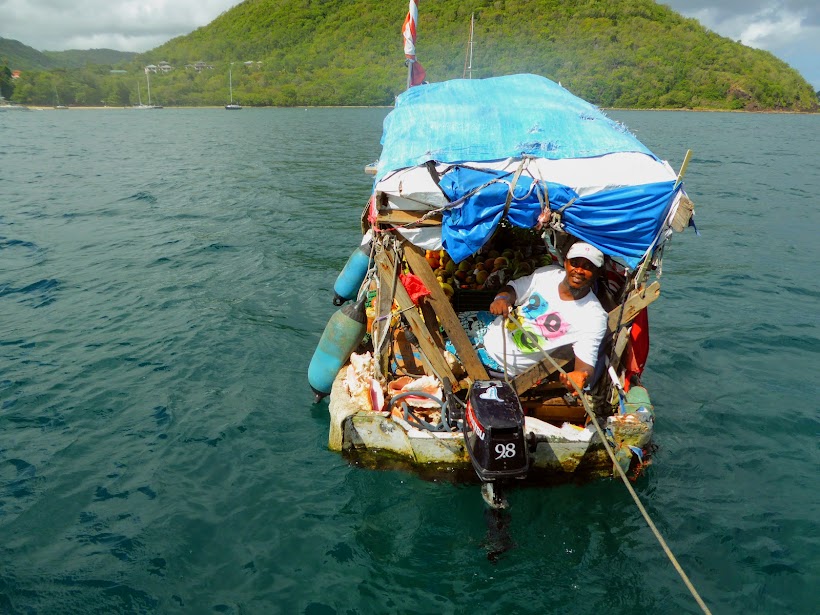
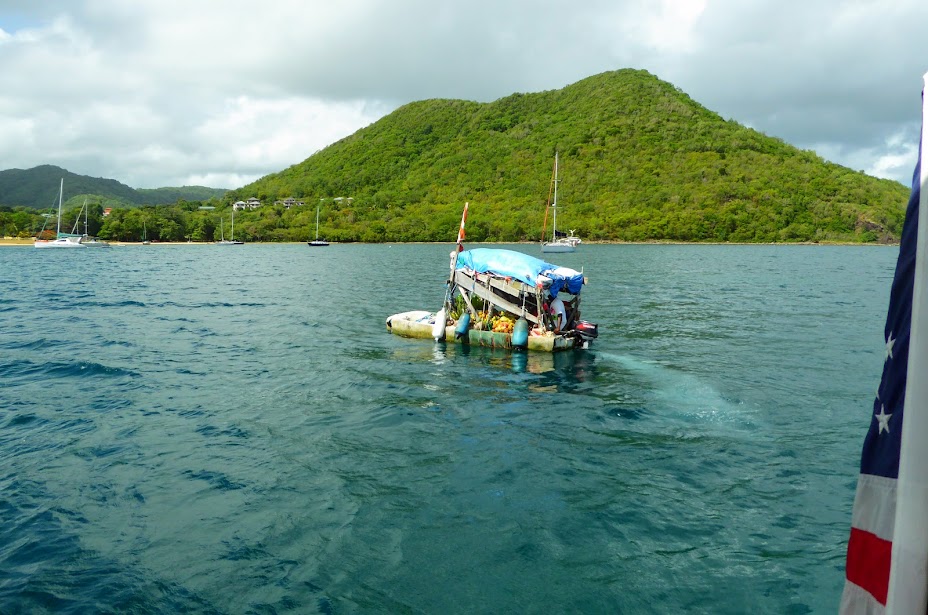
Bright and early the next morning, we spotted Gregory , a local man who’s small boat was loaded down with fruits, veggies and plants for sale. Several cruisers were put off by him, but after having much experience with veggie boats in the San Blas, we were definitely game for some easy, door-to-door local shopping. We chatted with Gregory, bought some sugar-sweet, local mangoes and then he was on his way.

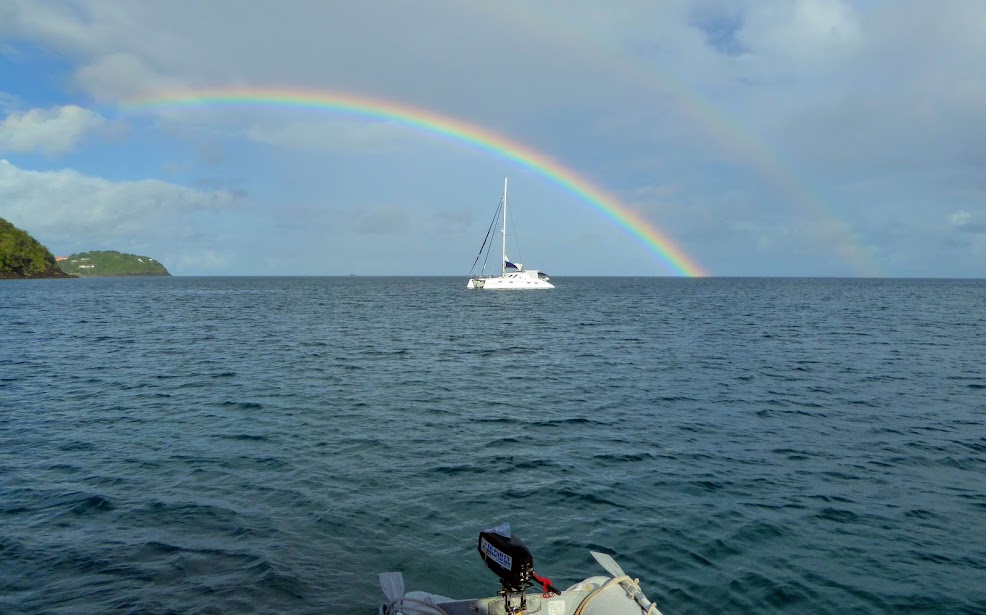
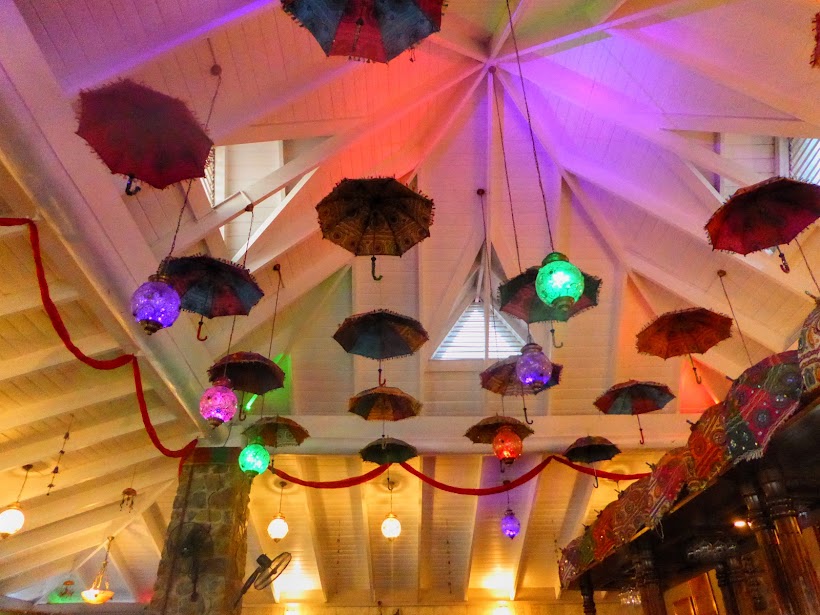
During our shopping run, we spotted an Indian restaurant on the marina grounds, so we decided to treat ourselves to dinner ashore, but not before enjoying a vivid rainbow on the horizon behind us.

We enjoyed a tasty dinner at the colorful restaurant, with views of the marina, and then headed back to Sea Life, taking care to be back on board by dark.

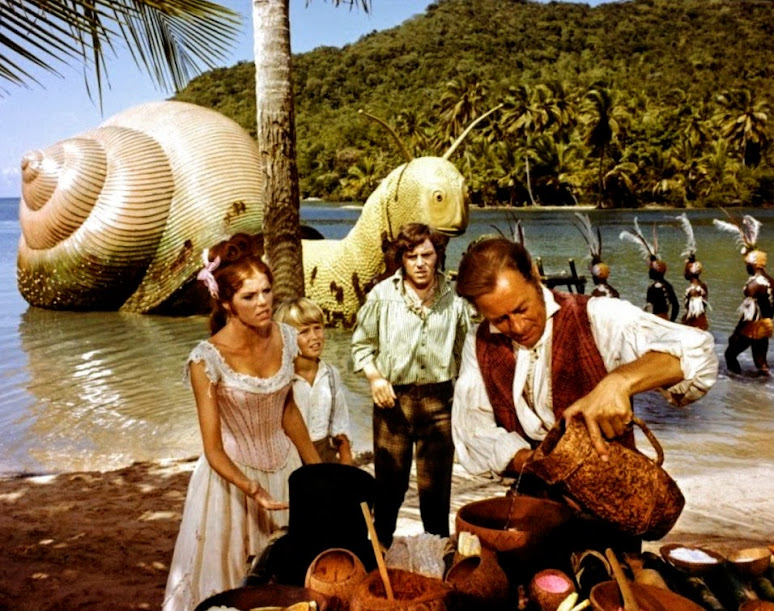
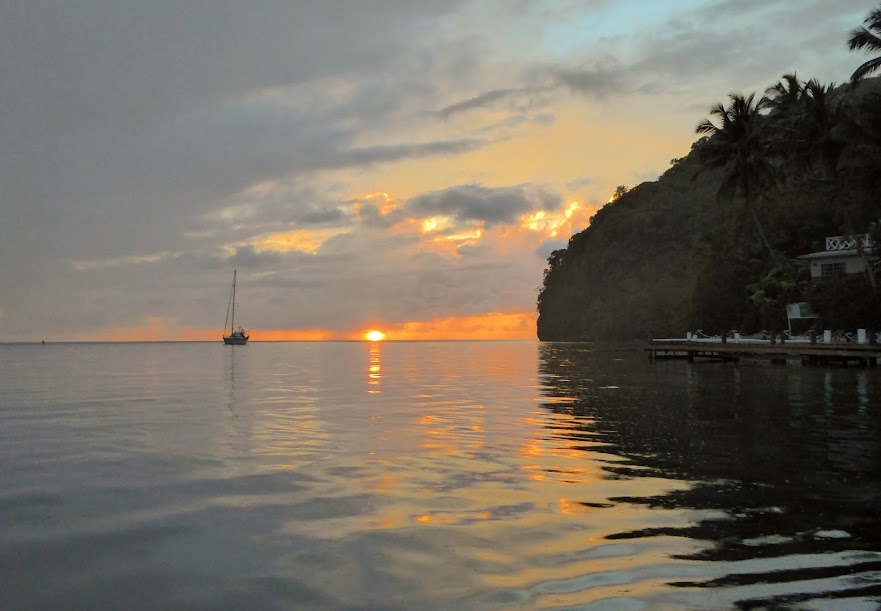
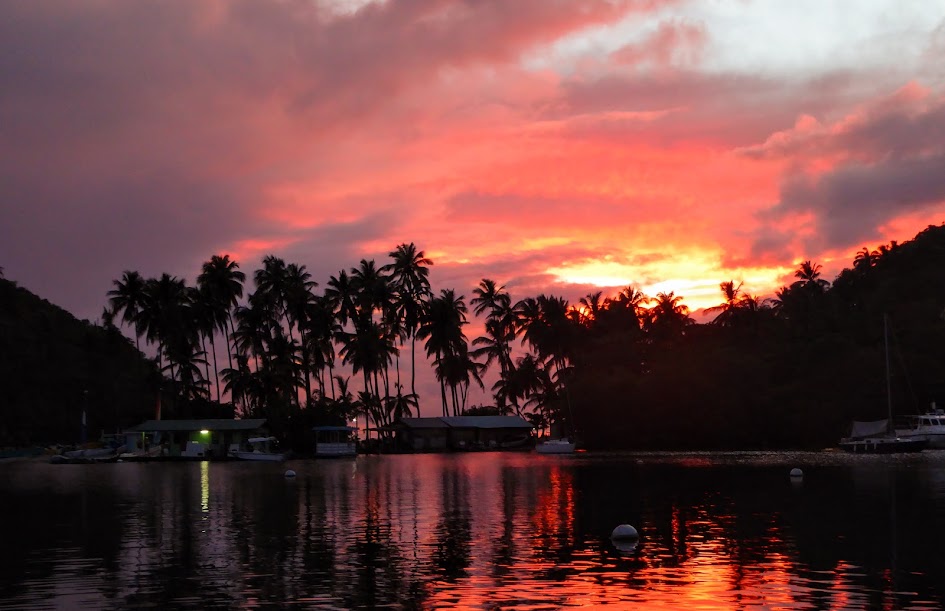
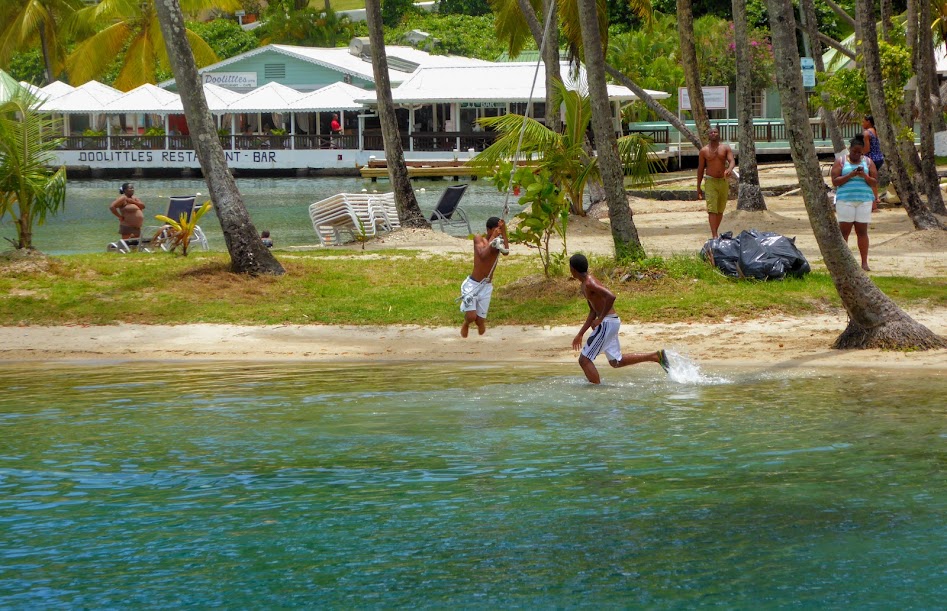
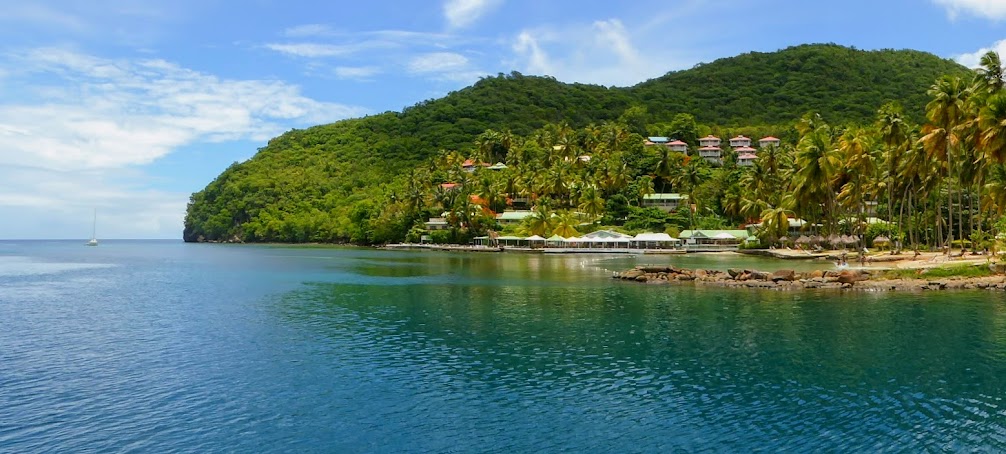
Not having long to linger on the island, we raised anchor the next morning, and headed farther down the coast to Marigot Bay. This scenic bay is a historical landmark, and was the site of many battles between the French and British navies. The bay was also used as the setting for scenes from the 1967 film Dr. Dolittle; the original musical film, not the Eddie Murphy remake.

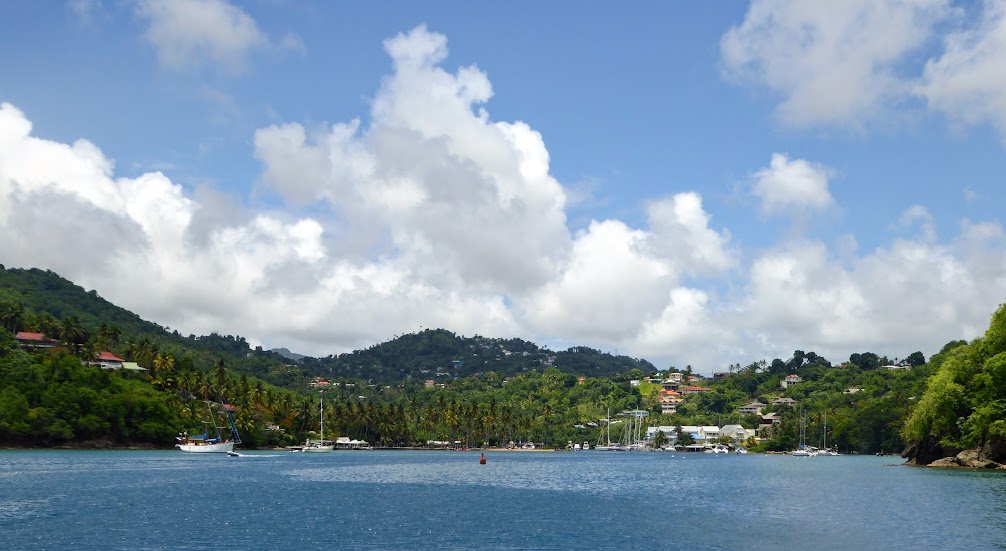
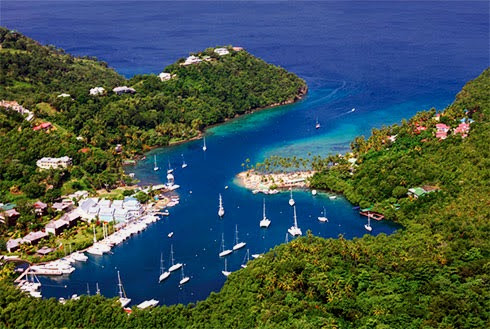
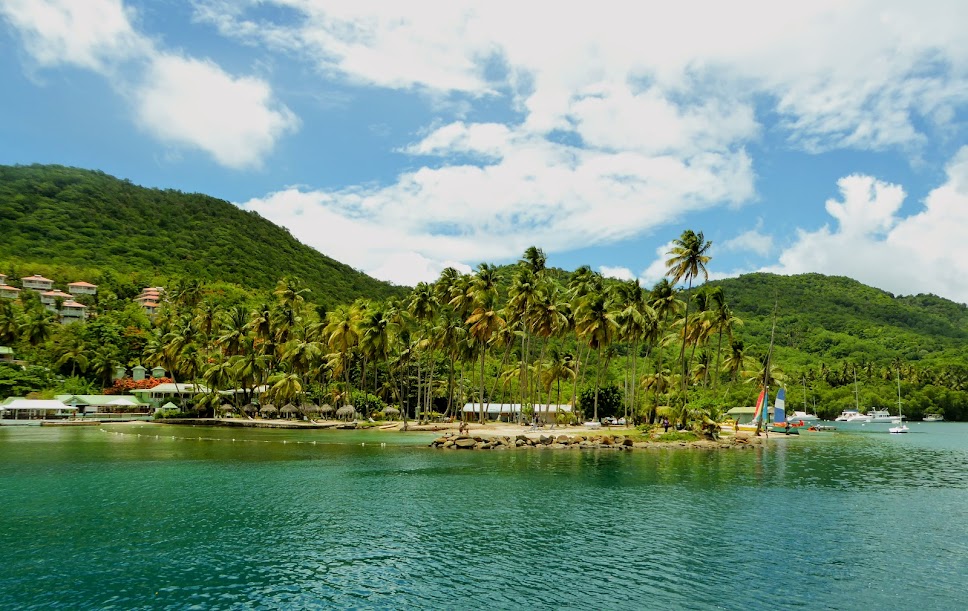
Coming in, a line of palms hide an open area at the back of the bay, but these aerial photos give a better overall view.

Scott and I visited the bay on a day trip when we were on the island 14 years ago, and were eager to see it again. Entering the bay, we were glad to see that the Marigot Bay Beach Resort was still in business.

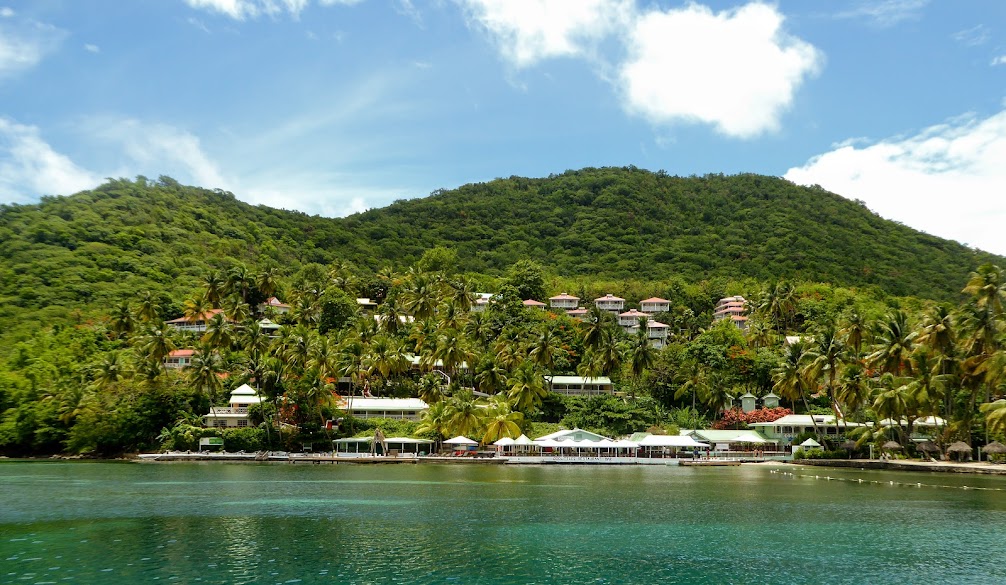
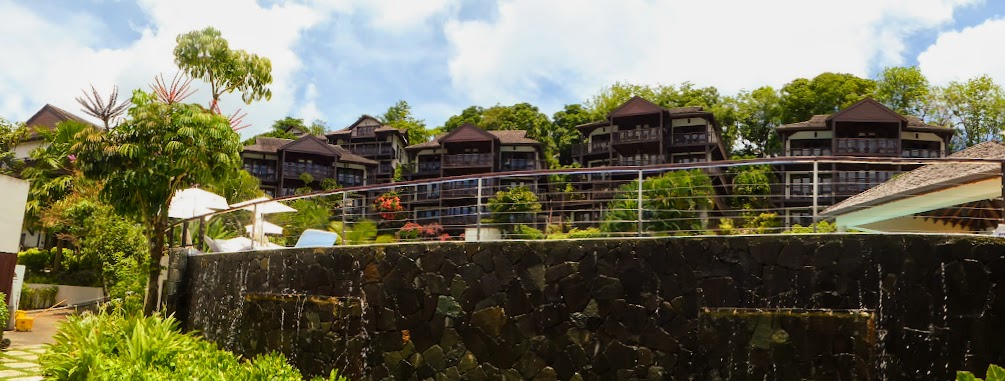
Not surprisingly, there had been much development in the past 14 years, with the addition of an upscale resort and marina at the back of the bay. We made our way in, and picked up a mooring ball just off of the resort.

The development has not detered the locals, who netted bait fish near us in the mooring field.

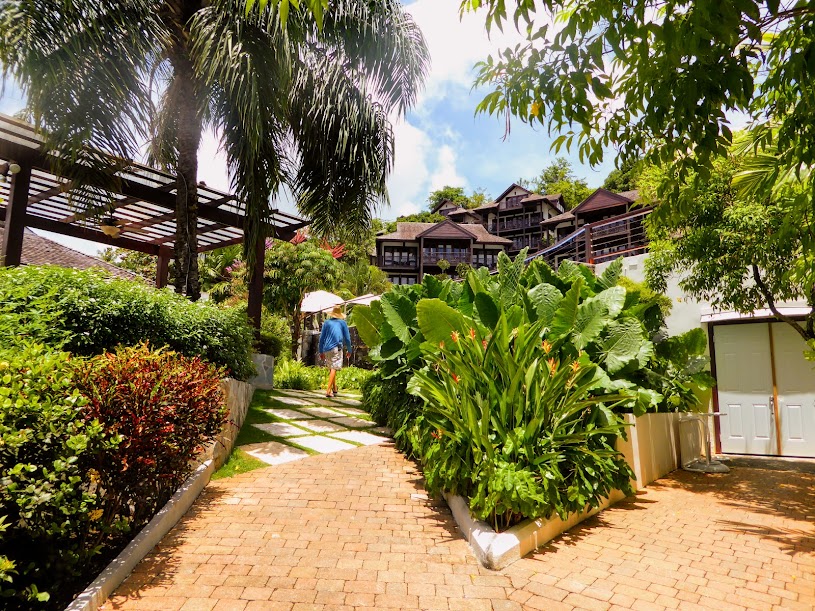
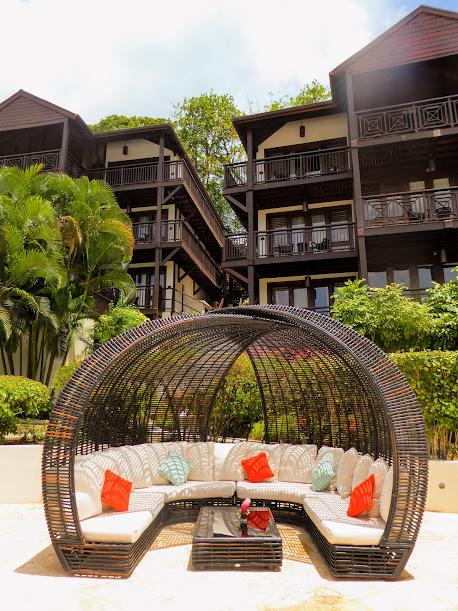
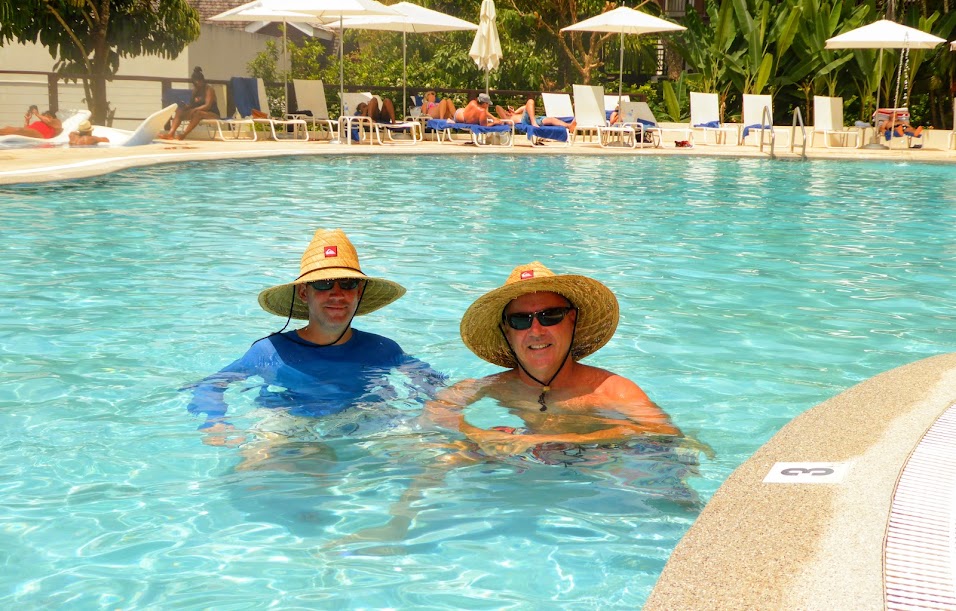
For $20.00 a night, we had use of the resort grounds, pools and restaurants…not a bad deal! The next day we went ashore to wander around, and then settled in for an afternoon poolside.

We’d made new friends in Fort de France, who had traveled to Marigot as well. Mark and Deb were also heading for Grenada, on their catamaran, Kefi. We enjoyed our day by the pool with them, in our posh surroundings.

Mark and Scott have similar taste in hats.

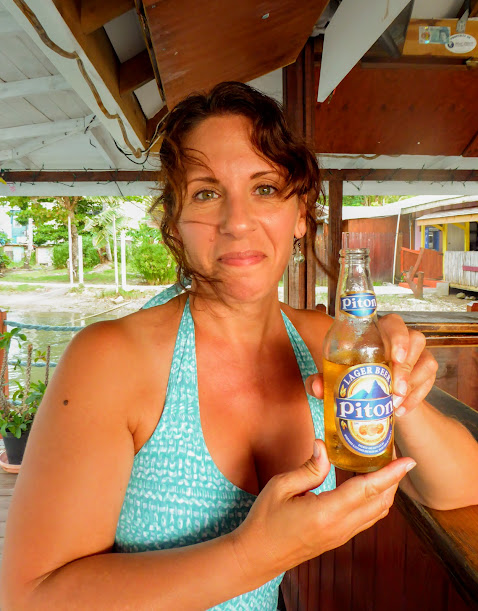
That evening, Scott and I took the dinghy out for happy hour at nearby bars in the bay. We enjoyed rum punches, cold Pitons (the local beer) and a beautiful sunset.

The next morning, it was time to push on. We passed local children having fun on a rope swing and enjoyed a few more scenic views as we said goodbye to Marigot Bay.

We made our way south along the coast, which was dotted with local cottages at the shoreline and multi-million dollar houses in the hills.

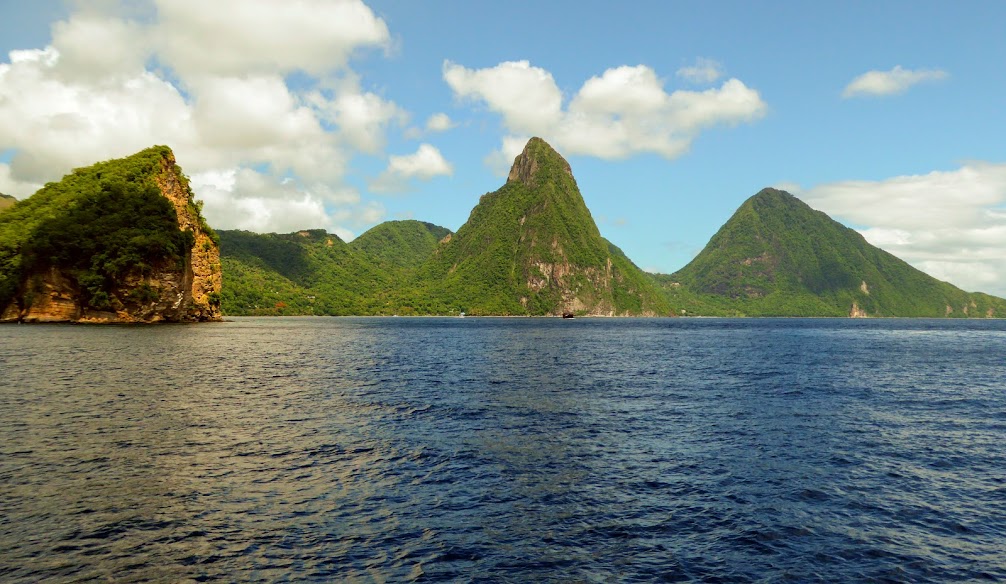
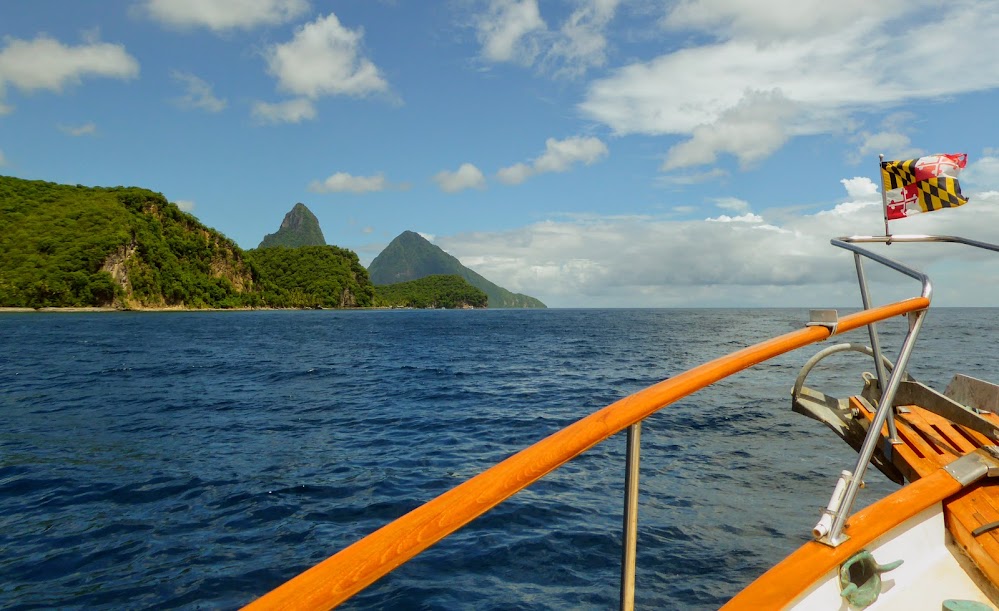
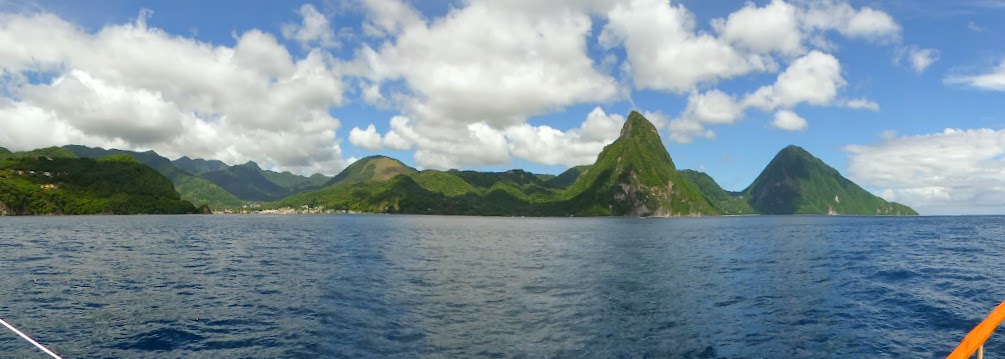
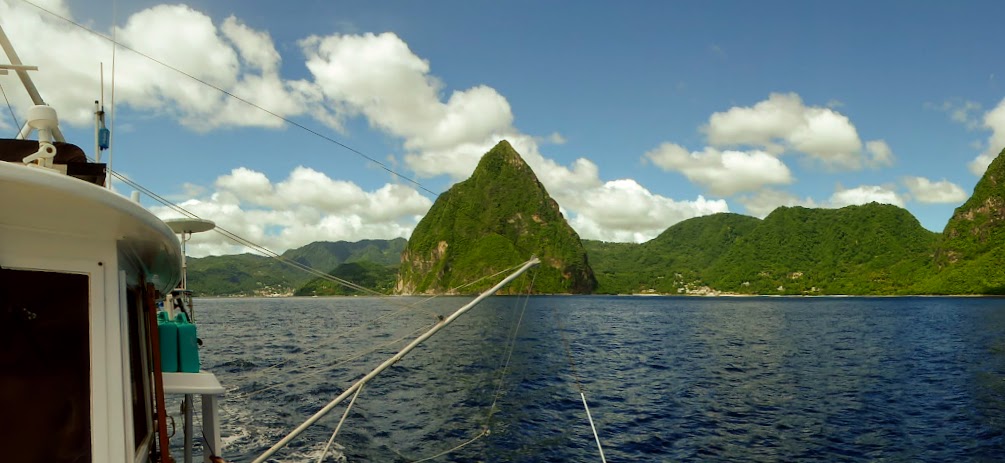
Eventually, we caught sight of the pitons in the distance. Coming south, they look much closer together than they actually are.

There are several resorts with terrific views of the pitons; some have open walls, offering unobstructed views.

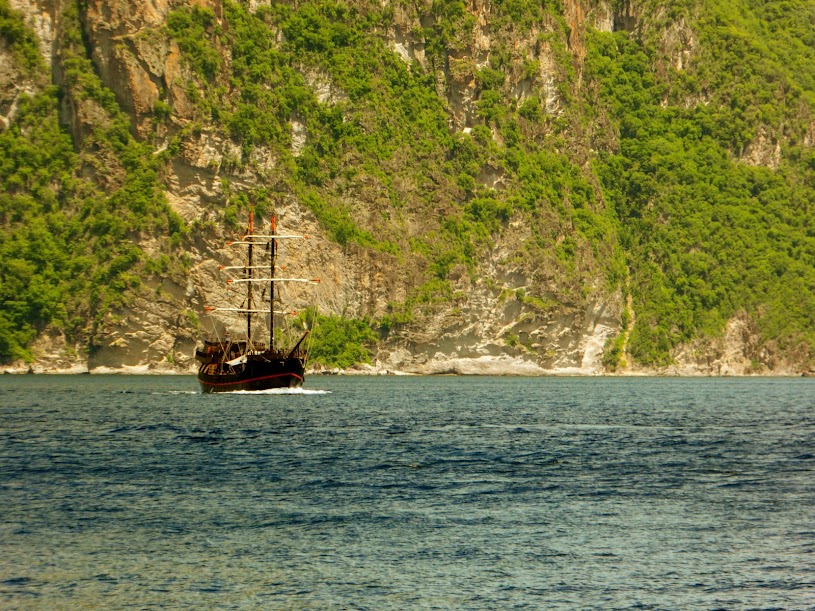
As we approached the pitons, a pirate ship tour boat made for a great, “Pirates of the Caribbean” photo.
There are mooring balls at the base of these awesome mountains, but unfortunately the area around them isn’t safe for boaters anymore, so we didn’t stop. We did, however, take our time passing the twin mountains, to take many, many photos and just admire them.

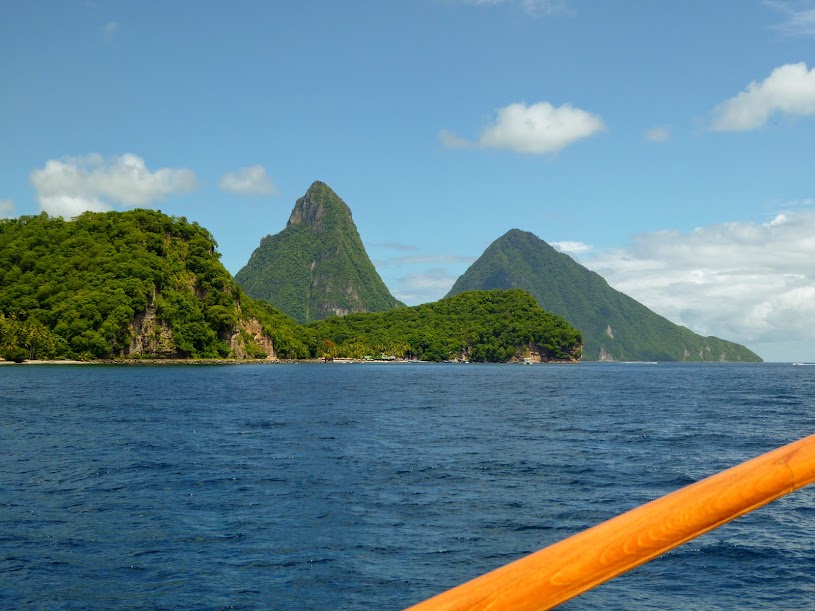
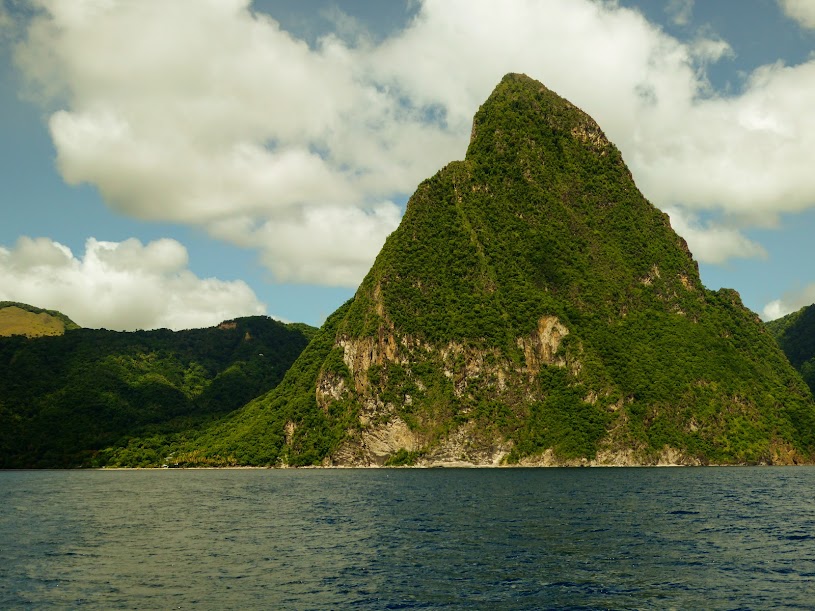
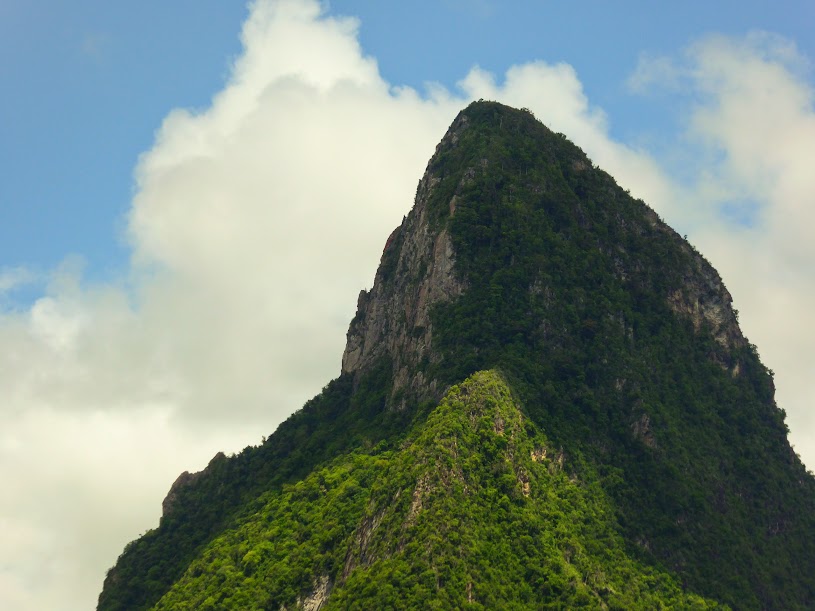
Approaching from the north, Petit Piton seems larger, and it was obvious why this mountain is harder to climb.

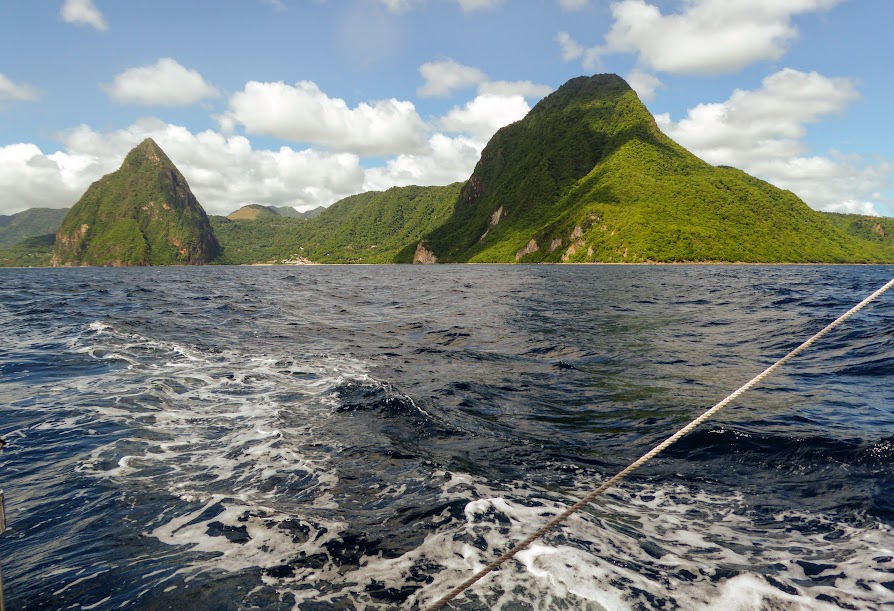
Further along, Petit Piton shrinks in size, and Gross Piton rises above it.

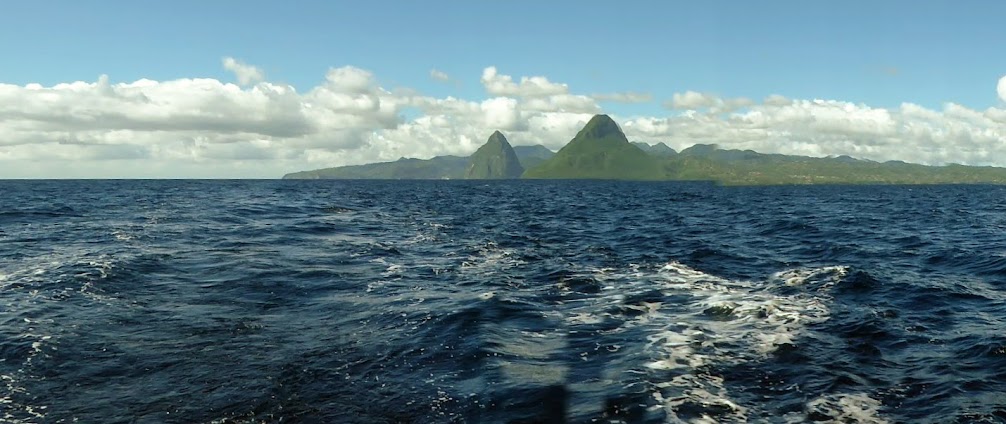
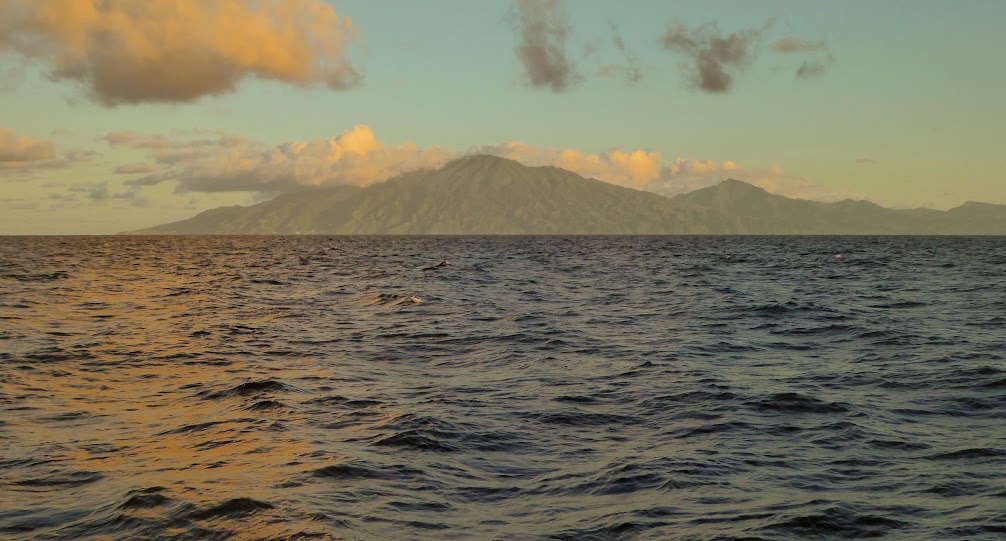
As we pulled away from St. Lucia, I snapped some final photos of the pitons, just as St. Vincent came into view off of our bow.

We were on an overnight run to the island of Carriacou, part of Grenada, where we would clear into the country . Howard was hunkered down for the night, and a bright moon rose over St. Vincent to light our way.

Here are many more photos of our brief visit to St. Lucia, and the amazing Pitons.

“Shells Sink, Dreams Float. Life’s Good On Our Boat!”