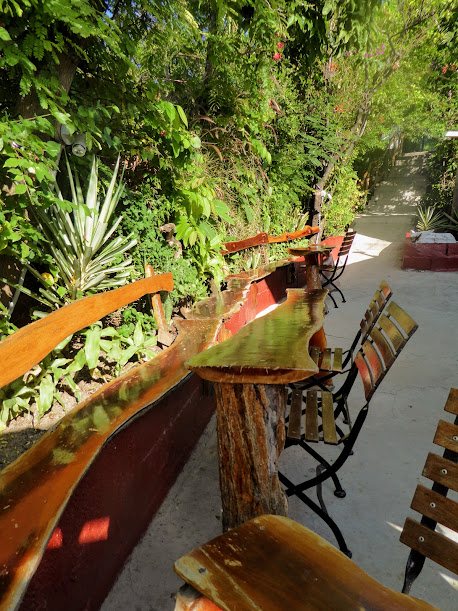
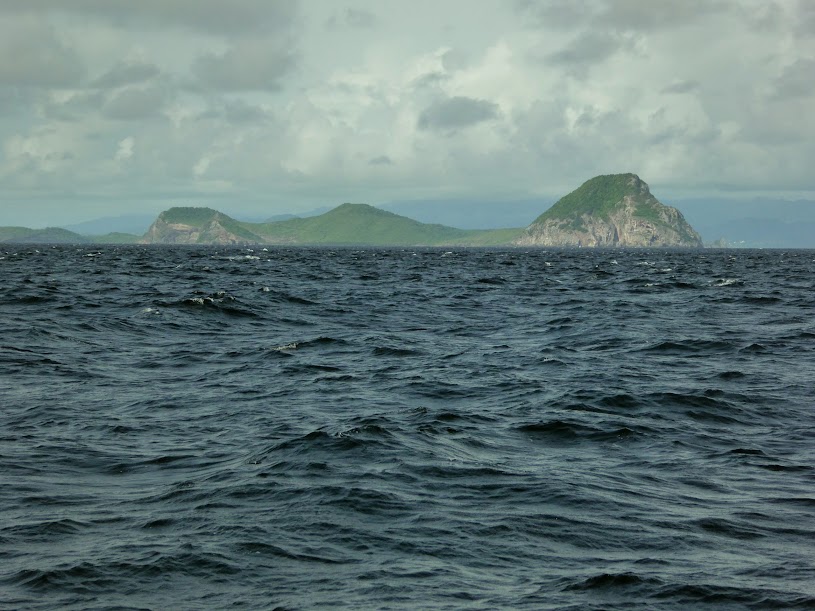
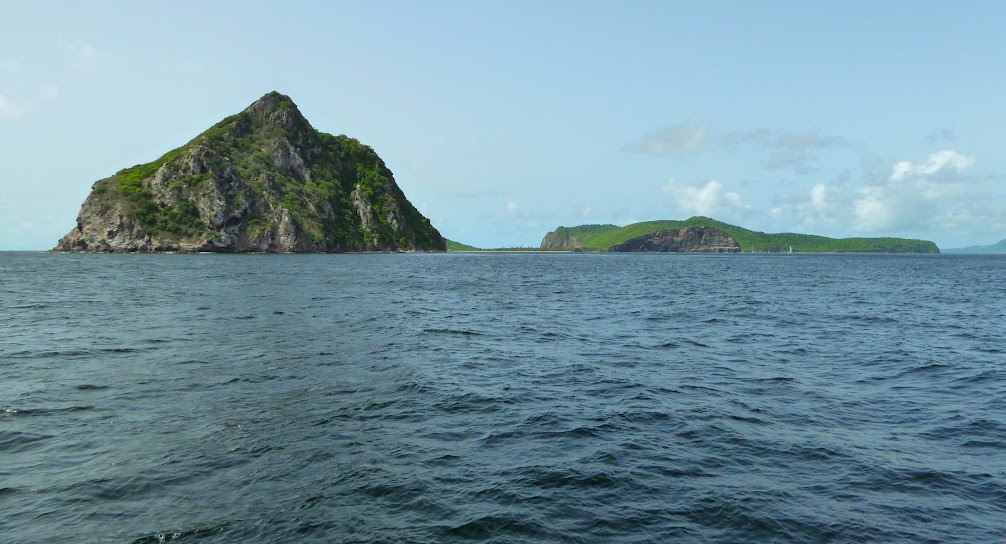
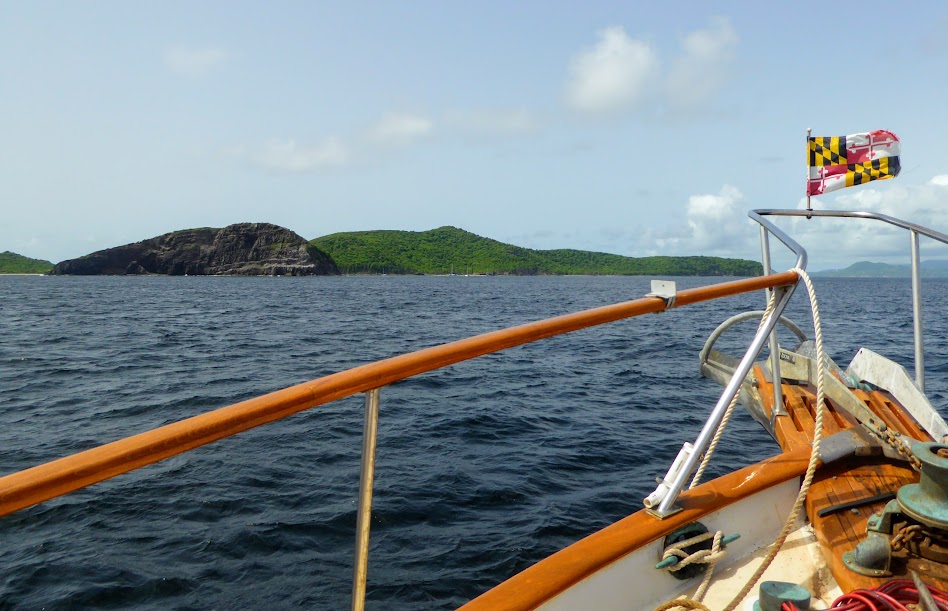
Our Last Days In Grenada

<< Previous | Next >>

By the end of September, Howard was well on the mend, so we felt ok about going home. We first said another goodbye, this time to our friends Nick and Lori-Anne, who were flying back to the U.S. Parting ways with friends is definitely one of the worst parts about cruising.

As I mentioned, it was Scott’s first visit back to the U.S. in two years. Once the boat was settled in a slip at Port Louis Marina, we flew home and ran him around like mad, spending time with family, visiting friends, old neighbors and the gang at Hendersons Marina.

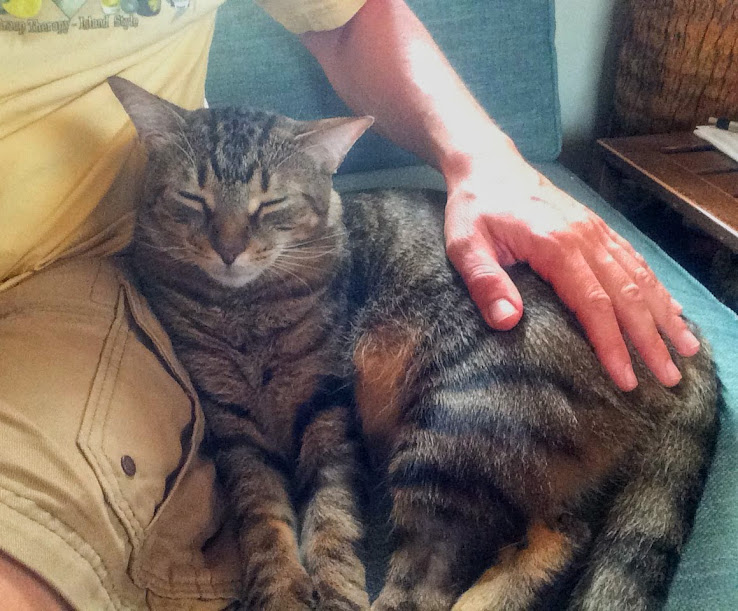
Scott arrived back to a very needy cat. Howard had a hard time in our absence, and consequently, so did our incredibly great friends who fed him while we were both away. In addition to the weeks in and out of the clinic, we haven’t left Howard for more than two nights since we first brought him home. He was glad to see his Dad.

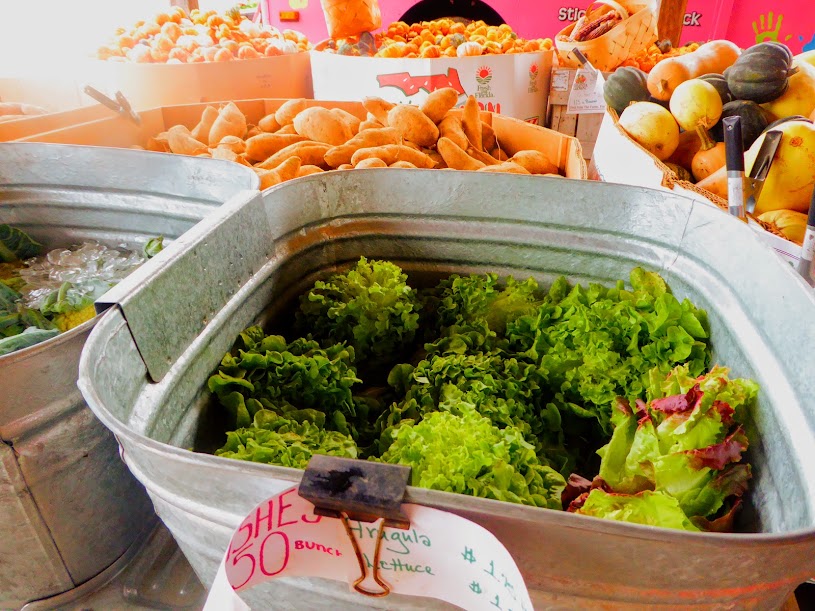
I stayed on for several more weeks at home, spending more time with friends, and stuffing myself with fresh produce! All of these fall veggies are available to us in the Caribbean, but they’re just not the same quality.

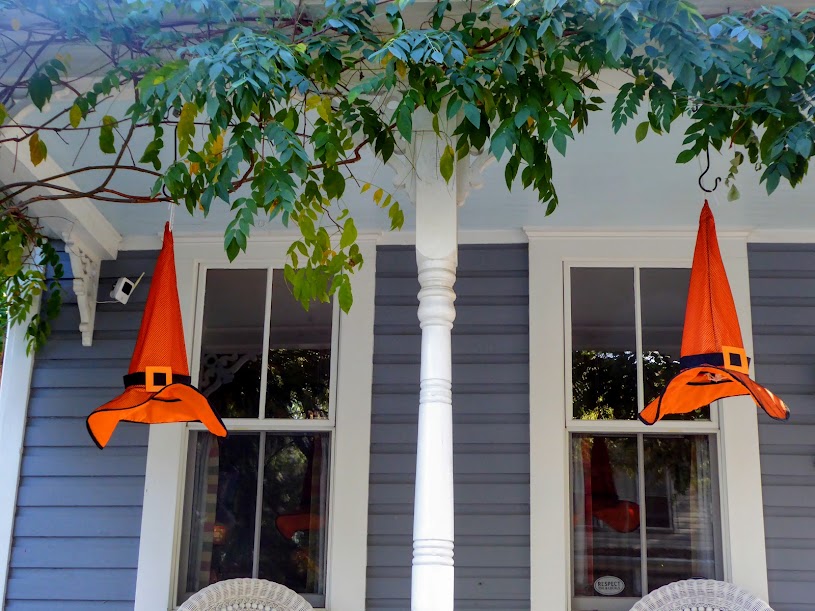
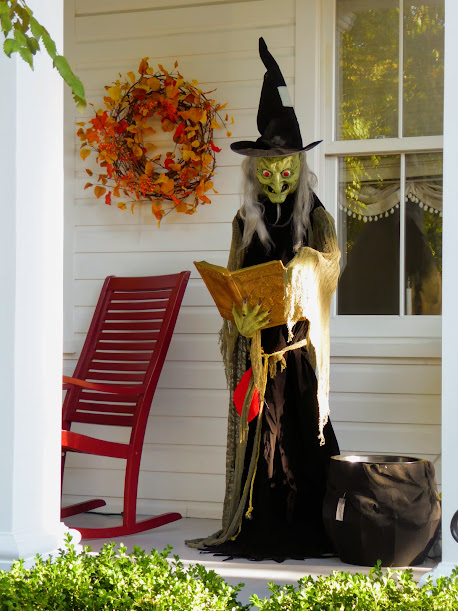
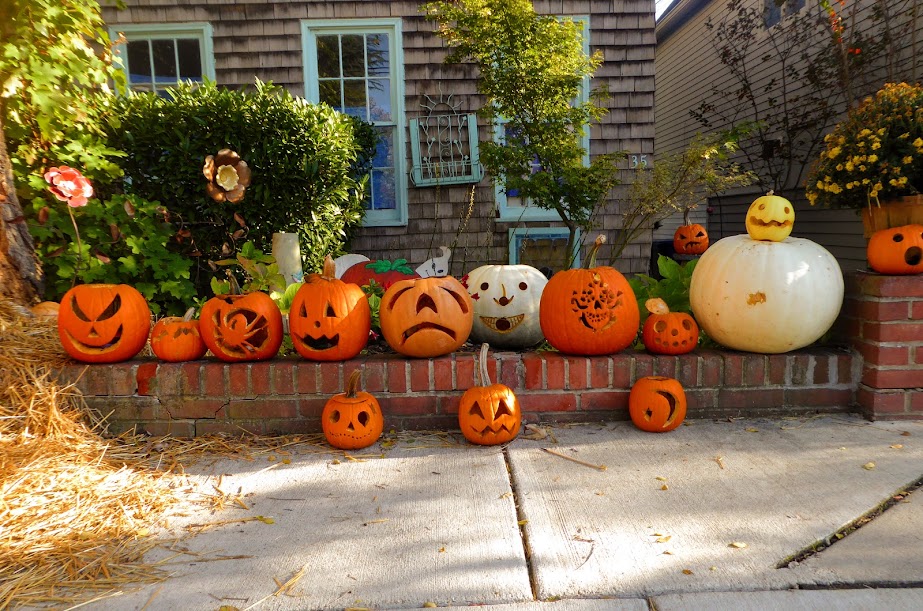
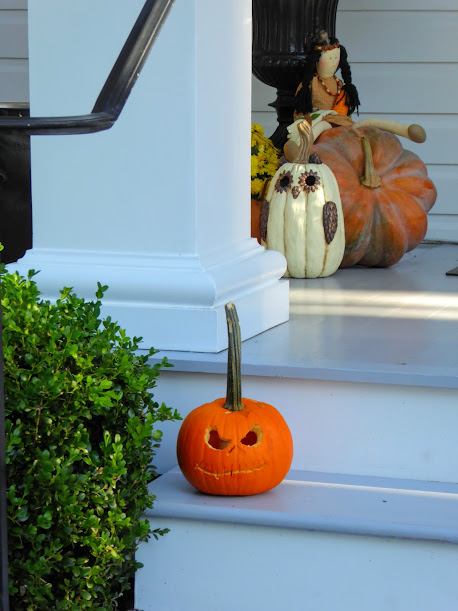
I spent time with my sister and brother-in-law, in their neighborhood of Eastport, just across Spa Creek from Annapolis, where many of the houses were decked out for Halloween.

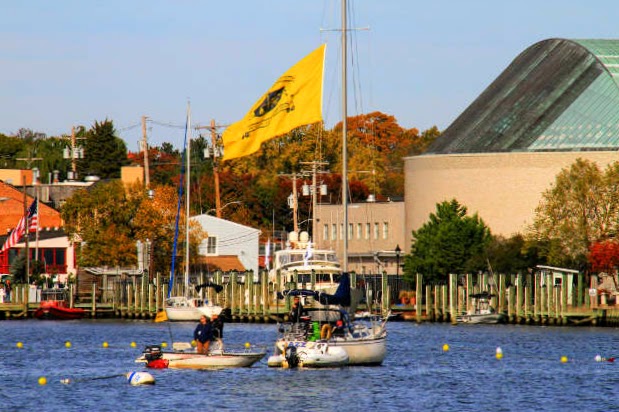
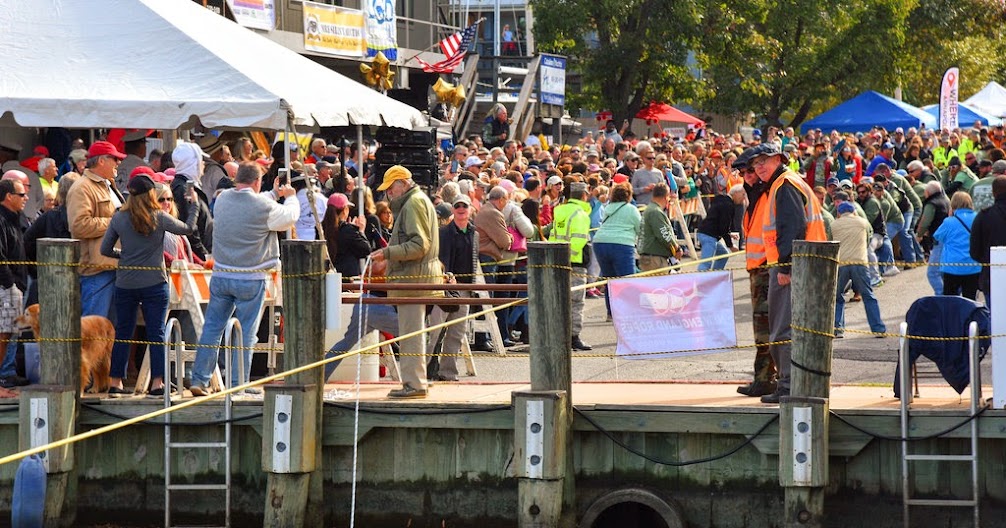
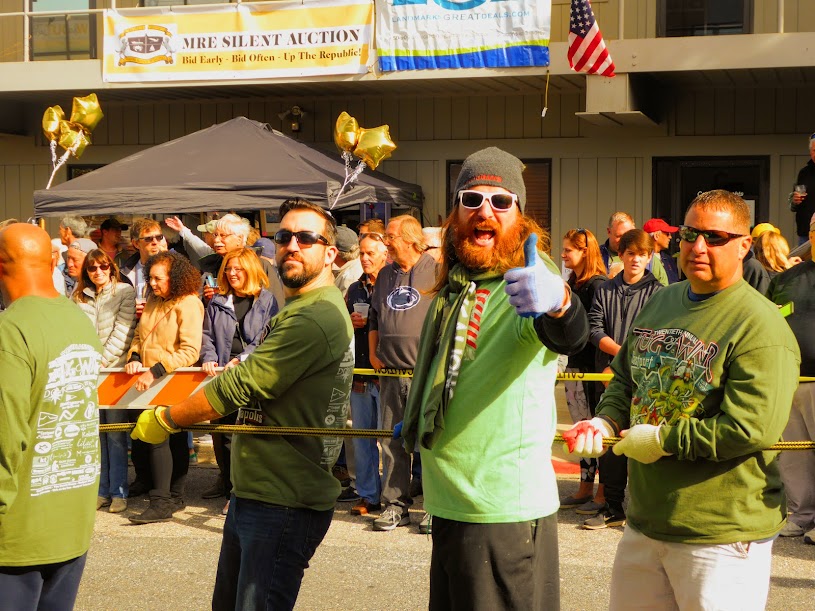
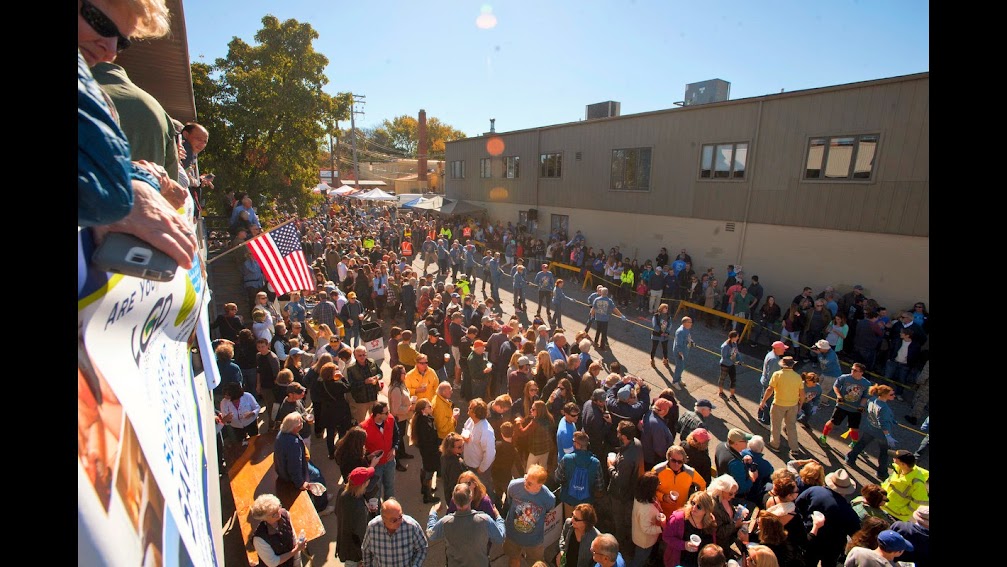
I was also lucky enough to be home for the 20th annual “Slaughter Across the Water,” a tug-of-war match stretching between downtown Annapolis and the Eastport peninsula; that’s a tug, across the water.

The “friendly” competition began in 1998, when the residents of Eastport got fed up with a Public Works Department project that closed the bridge leading into Eastport from Annapolis. Over “a couple of pints and a some scribblings on cocktail napkins,” the Maritime Republic of Eastport was born. The newly-born MRE then proposed a tug-of-war to the townspeople of Annapolis, and a yearly tradition began.

Every year since, on the first Saturday in November, an 1,800-foot rope, half solid yellow and half yellow and black, is spooled out across Spa Creek, and carefully piled onto the deck of a boat that marks the center line. (Not being able to be on both sides of the tug, or on the water, I borrowed some online photos)

Competitors pulled in seven different match-ups, with money raised going to local charities and philanthropic causes; this year’s Slaughter Across The Water resulted in a Eastport taking the event, winning four out of the seven tugs. The event has become a day-long festival with music, crafts and a chili cook-off.

In mid November, I flew back to Grenada. Scott had moved Sea Life from the marina, and was now out in the anchorage off of St. Georges harbour. Once I had unpacked, we planned a short visit to Petite St. Vincent, one of Grenada’s nearby out islands, before clearing out of the country to head north.

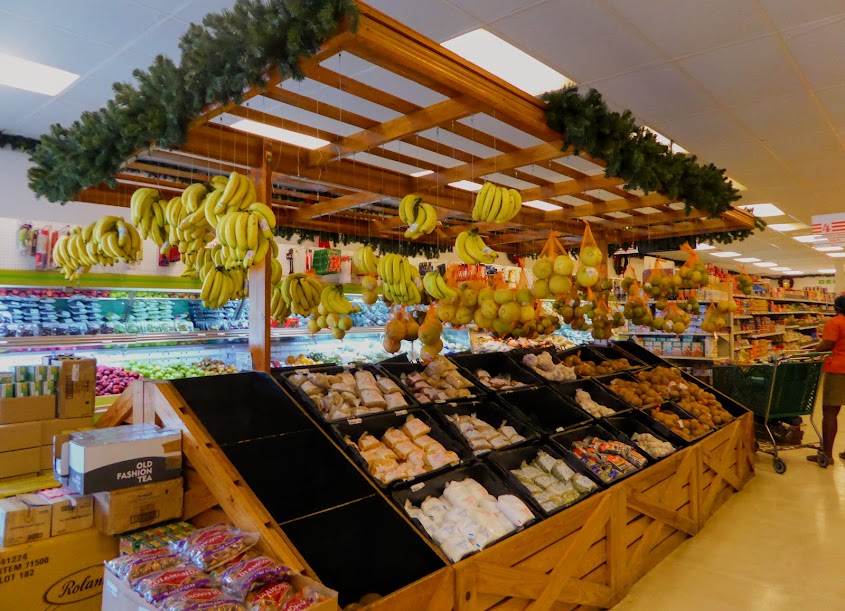
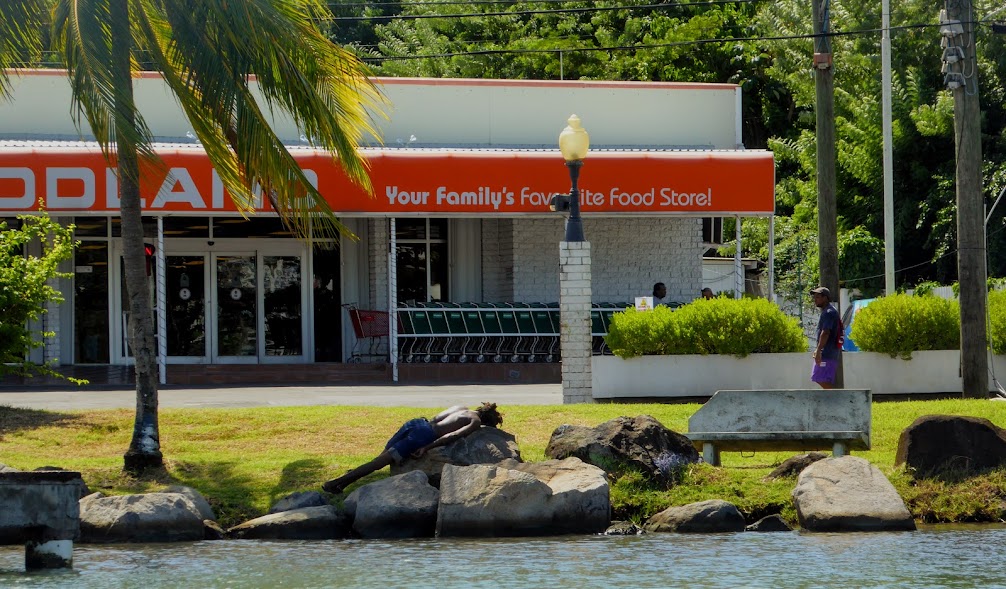
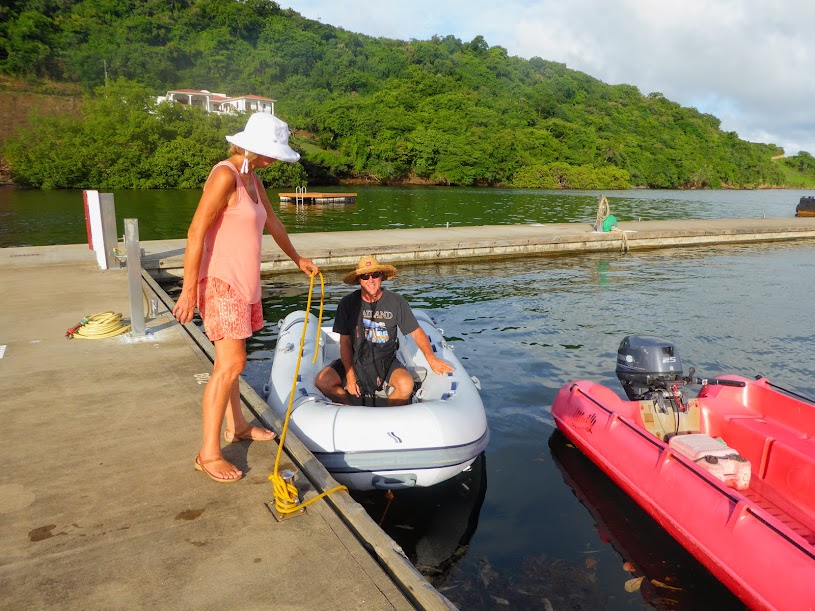
We mad a last minute grocery run to Foodland, located on the carenage. Conveniently, they have a dinghy dock right across the street.

As I mentioned earlier, produce can be challenging in the Caribbean. Check out these tiny heads of cauliflower and cabbage, that Scott can comfortably hold in one hand. The cabbage is marked in Eastern Caribbean dollars, which equals roughly $1.20 usd.

We headed back to the boat, to unload our groceries. As we drove away, something strange caught our eye just beside the dock. We had walked right by this man, asleep across the rocks.

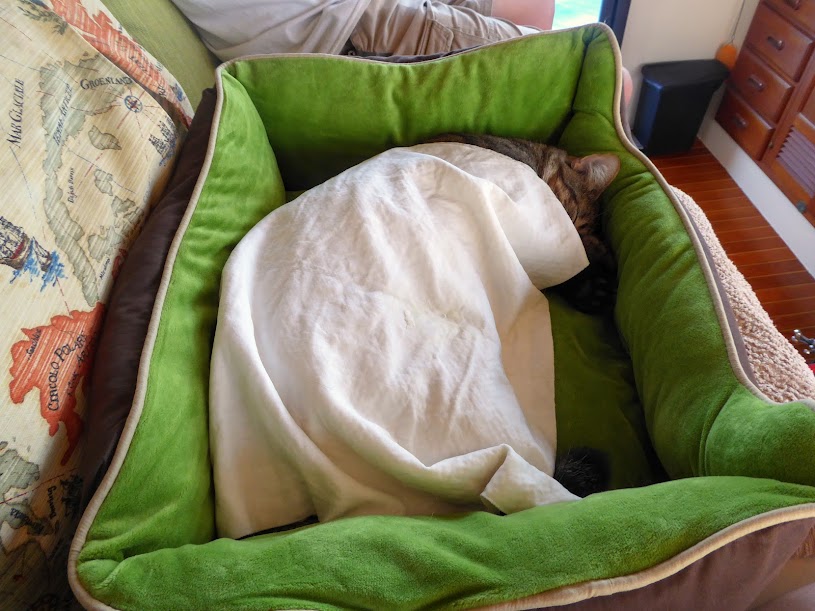
The next day we made the short trip over to Petite St. Vincent. I’d come back with a “travel bed” for Howard. The soft sides allow him to snuggle in, and keep him from moving less while we’re underway. It was a warm day, so a cold sports towel was in order.

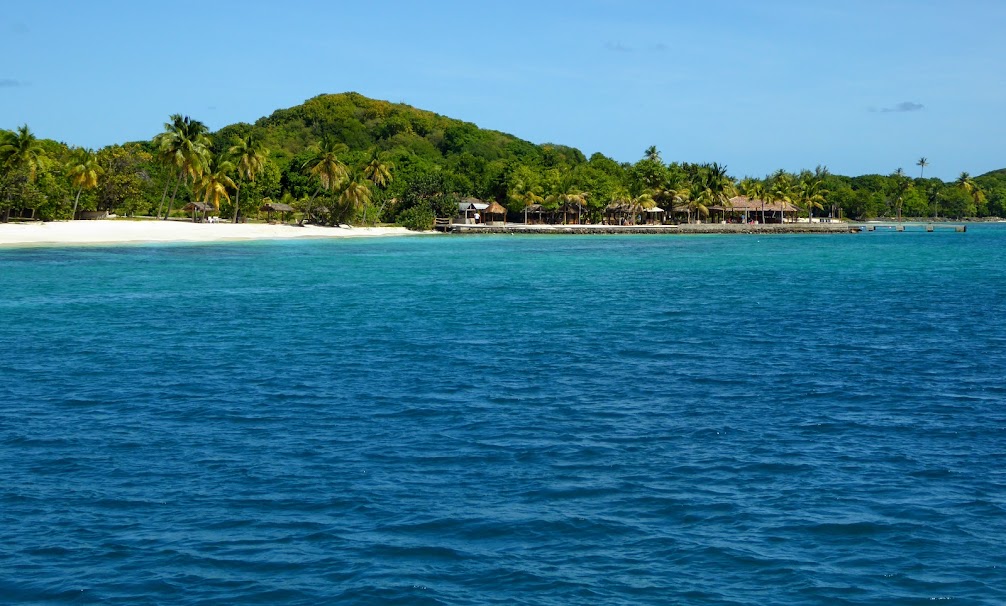
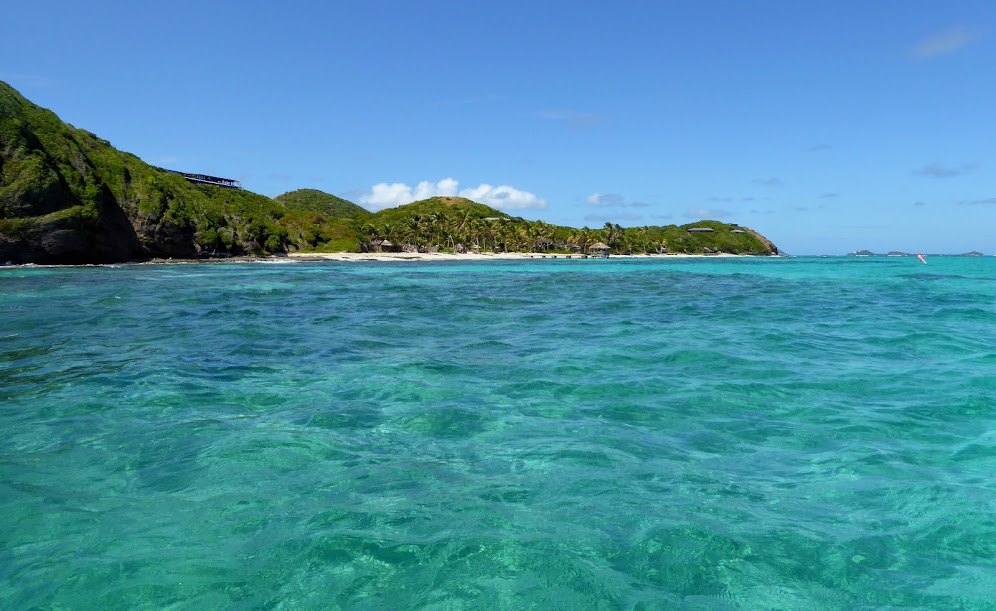
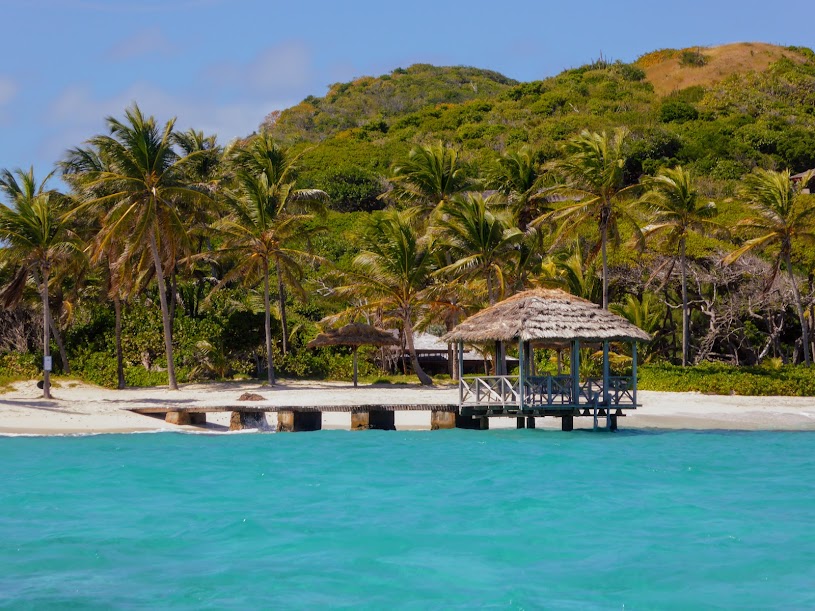
Before long, we arrived at Petite St. Vincent, a private island with an exclusive resort.

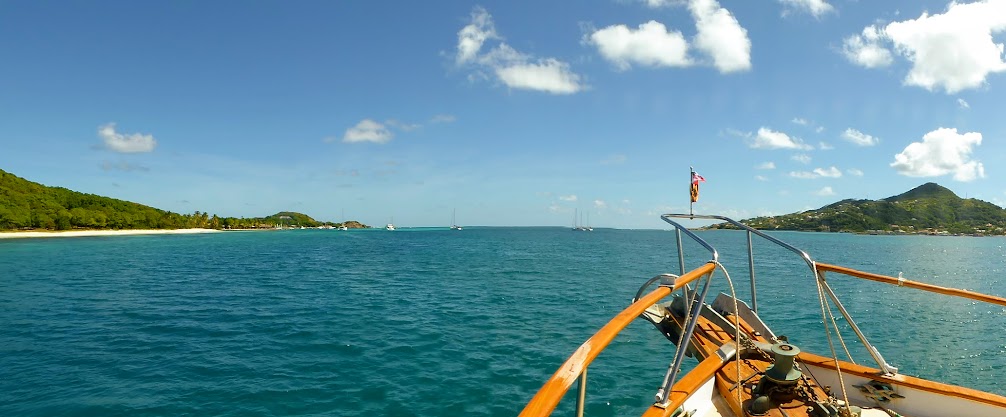
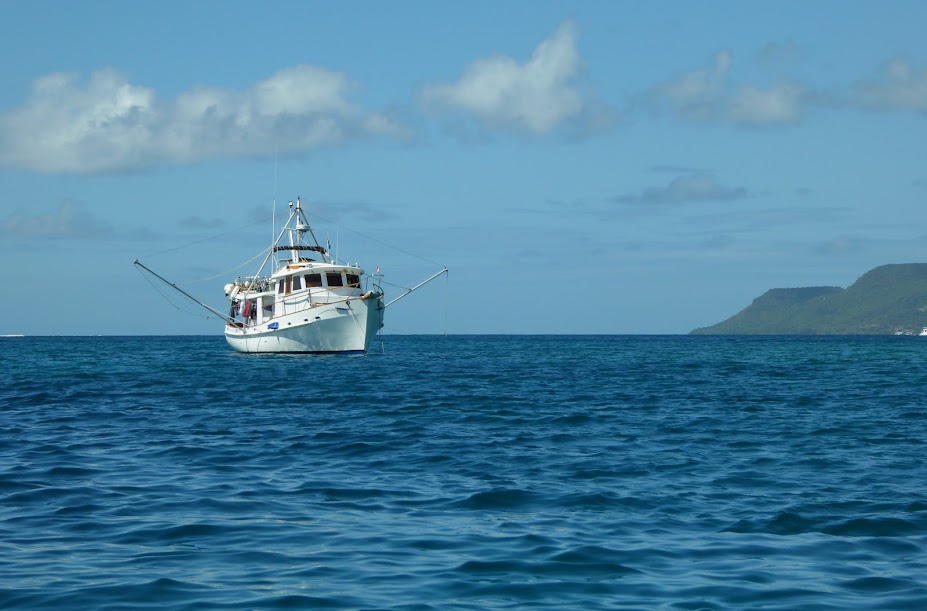
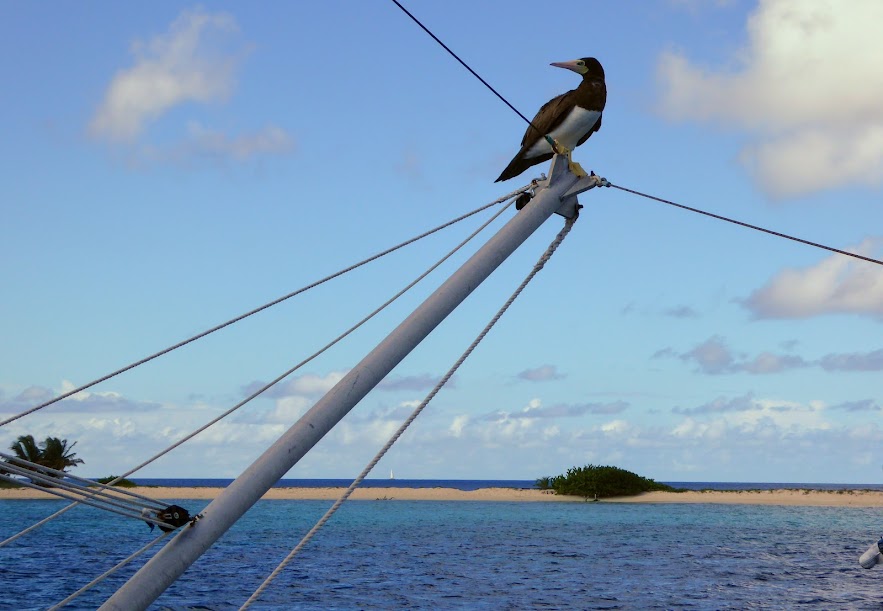
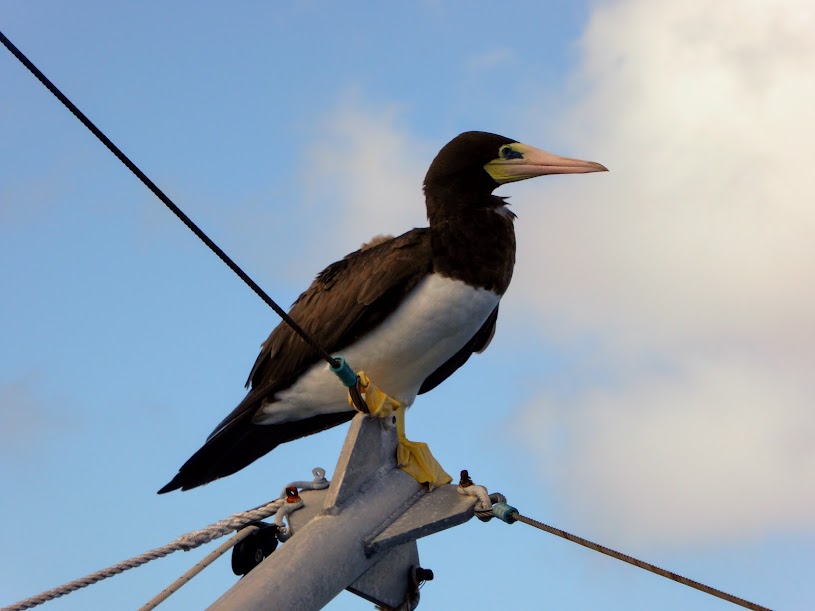
The water colors were gorgeous, and we were able to anchor off to ourselves, not having had this much room around us in months. We soon had a visit from a yellow footed booby, who spent some down time on one of the paravanes.

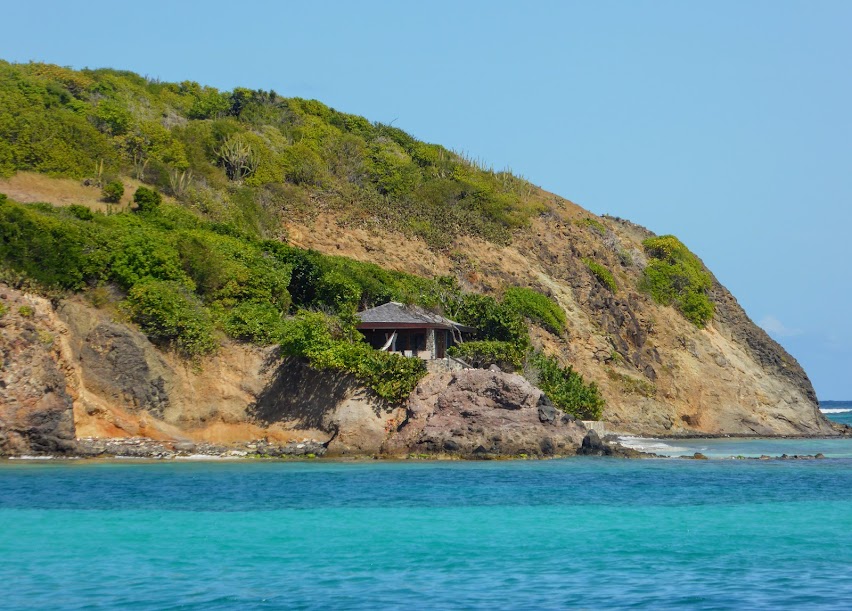
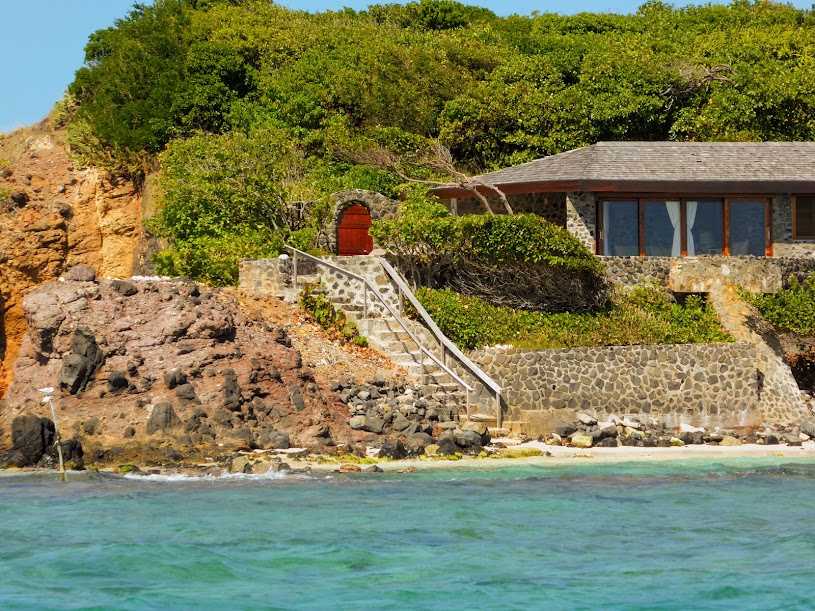
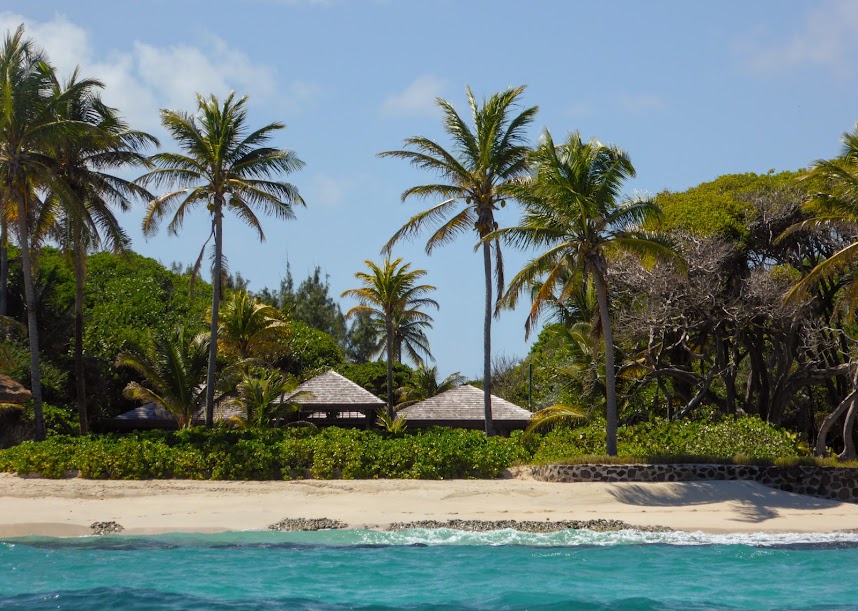
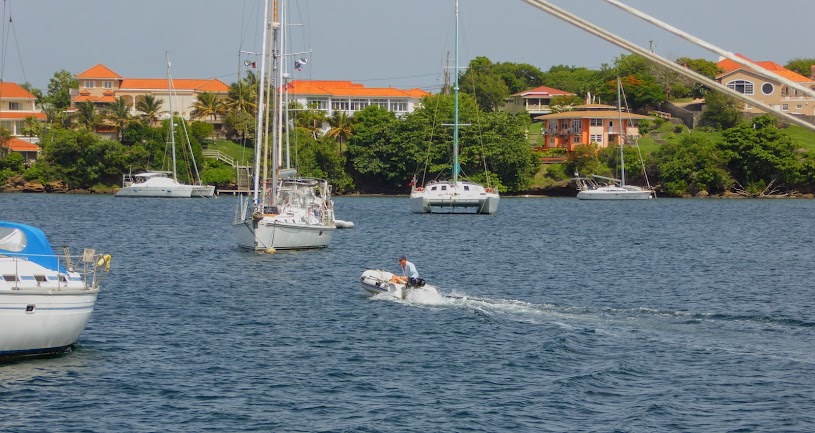
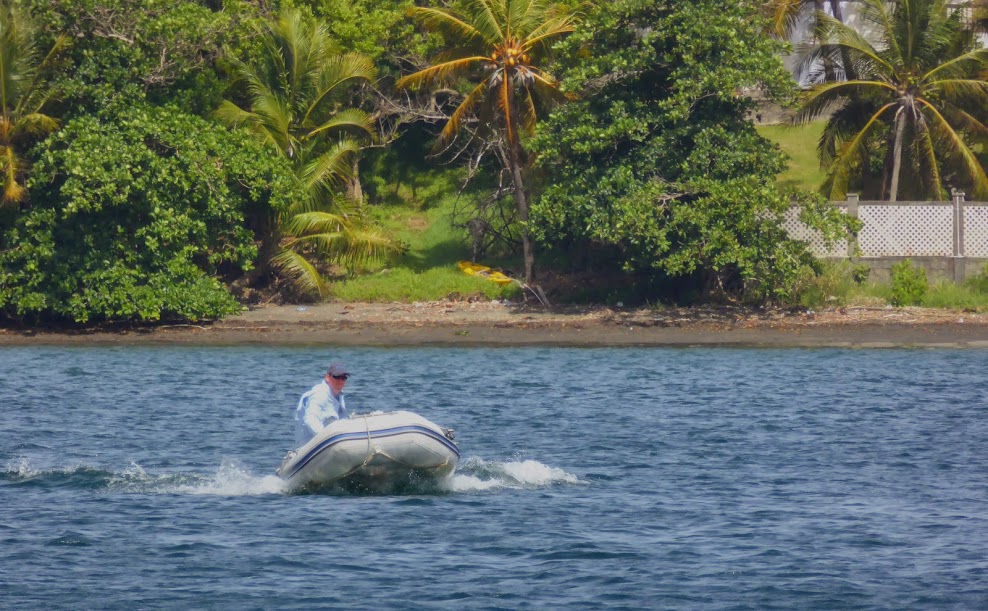
The next day, we set off in the dinghy to explore the coastline, and get a peak at the resort, which spread’s out across the island.

Back at our anchorage, we now had a neighbor…a rather large neighbor.

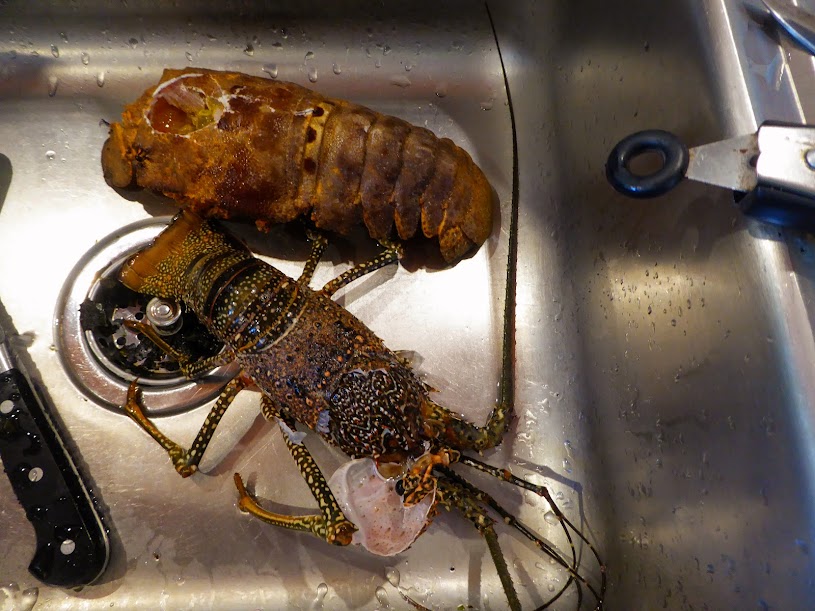
Eager for some more clear water time, Scott took the dinghy out for some snorkeling and underwater exploration. Spear fishing was illegal in the area, but he couldn’t resist the urge for dinner when he came across some lobster. He bashed the poor things to death with the dinghy oar (hence, not using a spear or “official” fishing device), bringing back a speckled and a slipper lobster. Slipper lobsters are creepy, and look like giant pill bugs.

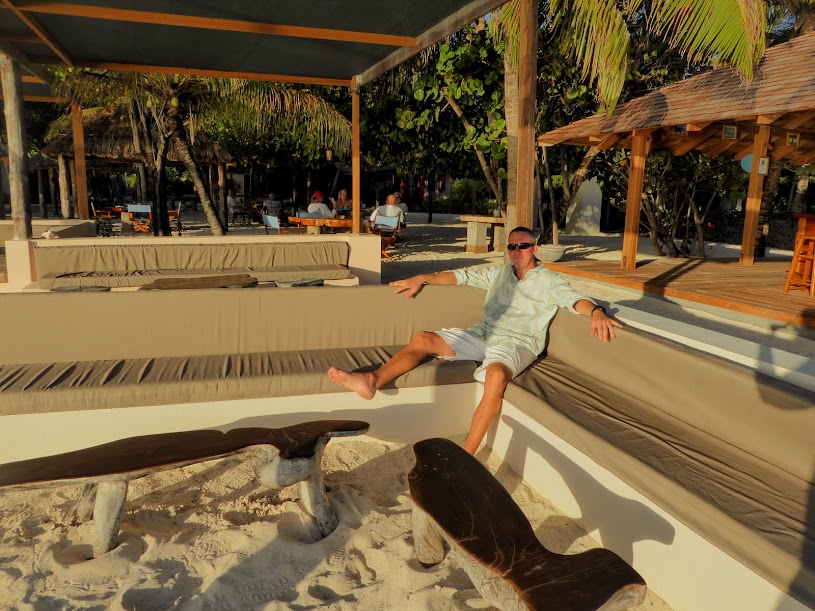
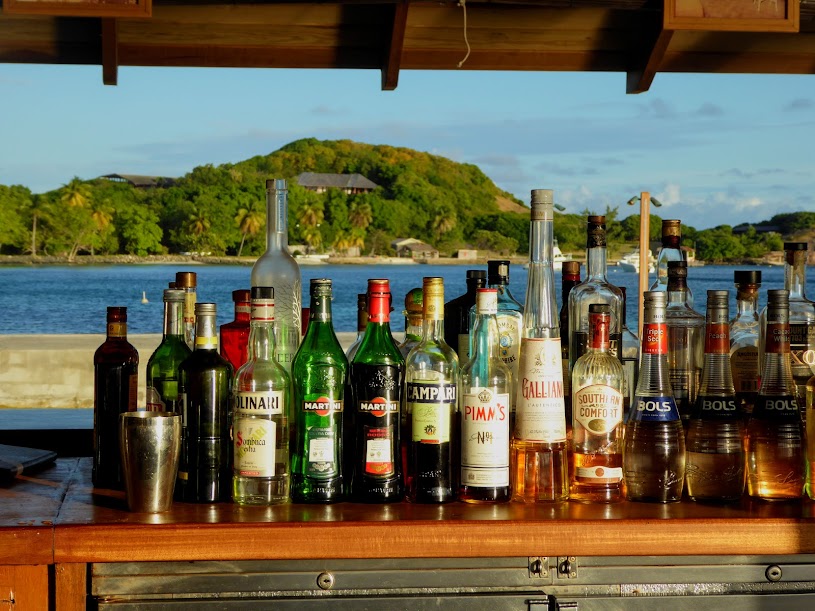
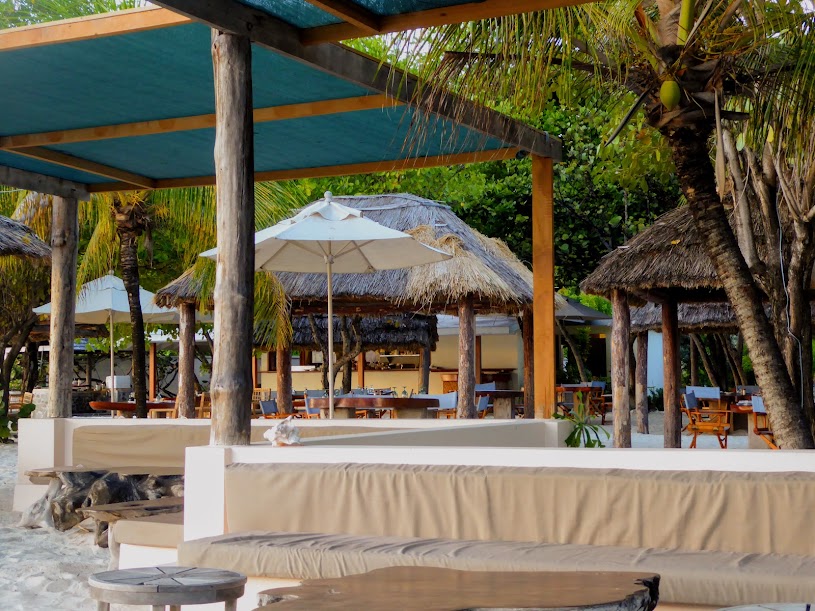
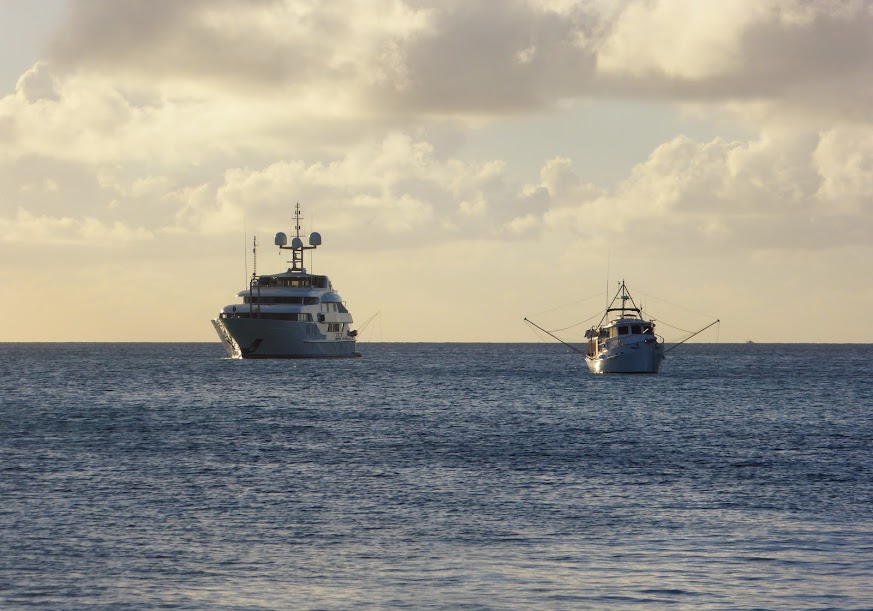
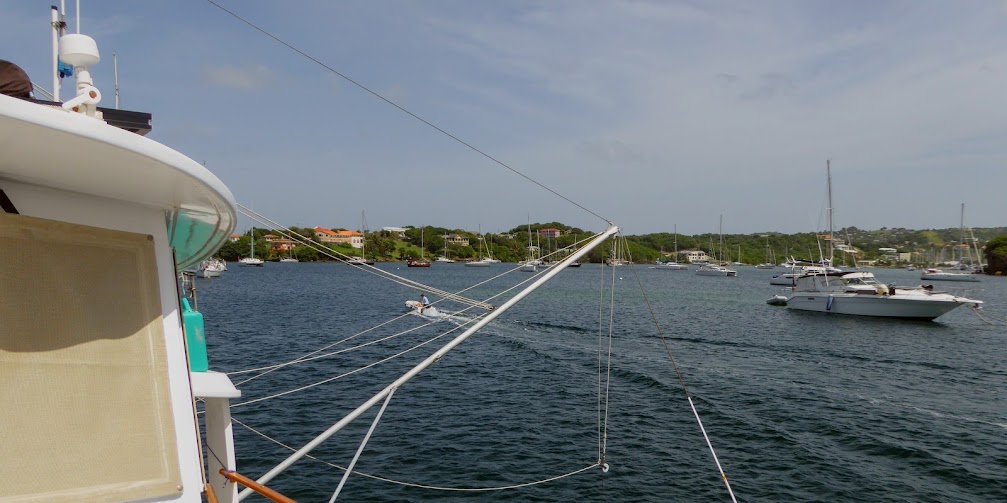
The entire island of Petite St. Vincent is private, but lowly cruisers are allowed to visit the resort’s beach bar, so we cleaned ourselves up and headed to shore for cocktails. We relaxed and enjoyed our drinks, looking back at Sea Life, with her big buddy, out at anchor.

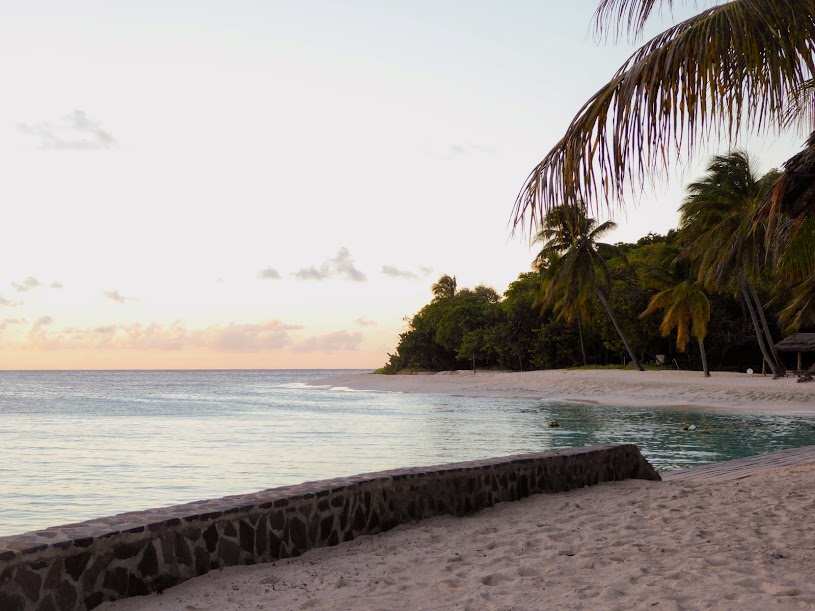
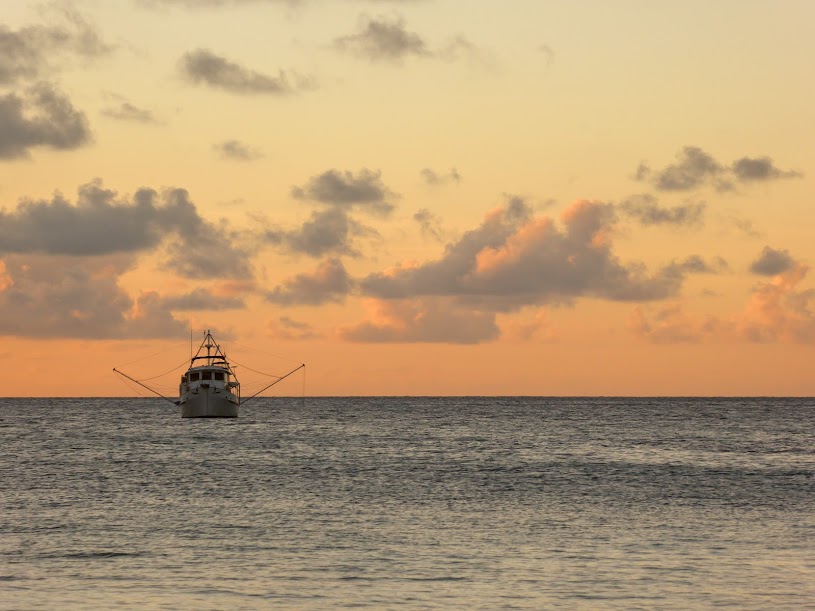
At $15.00 usd a cocktail, one round was all our budget could afford, so we headed back as the sun began to set.

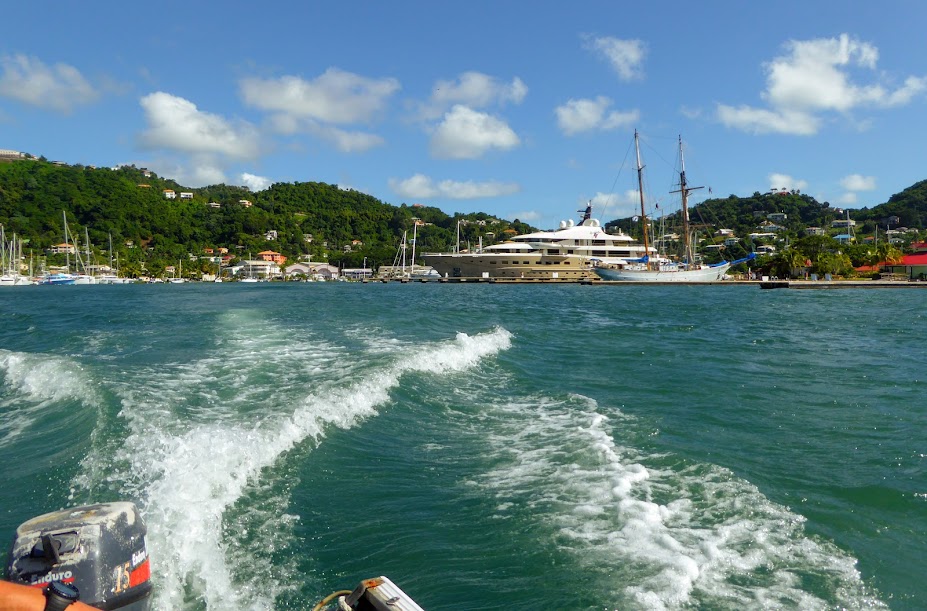
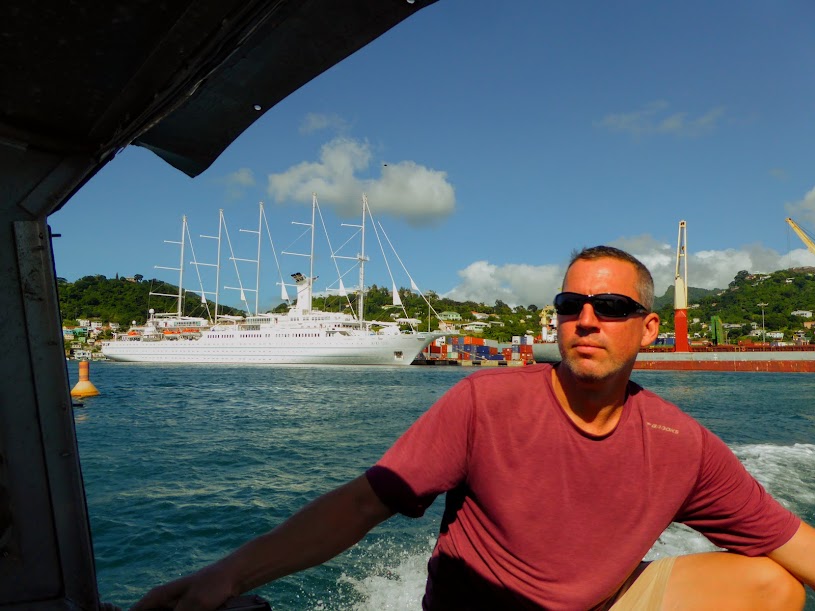
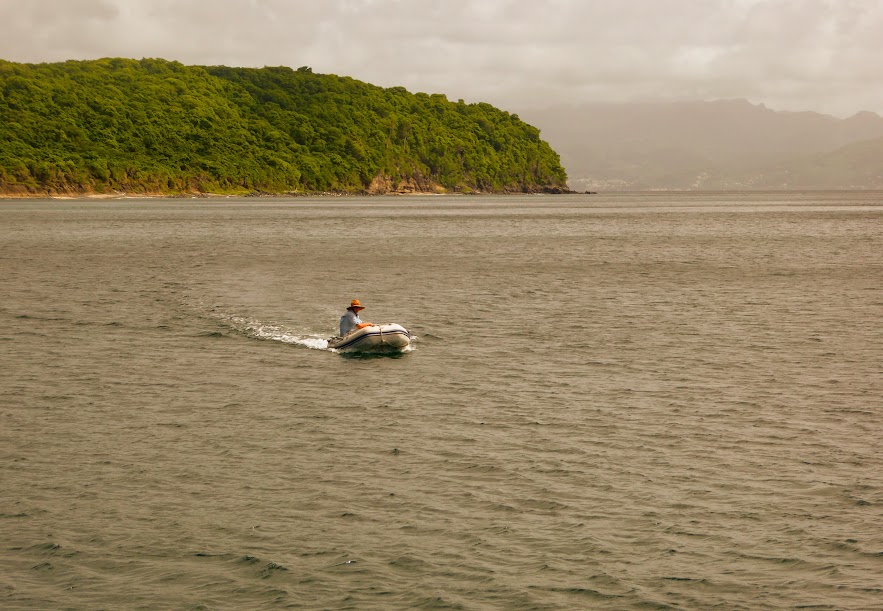
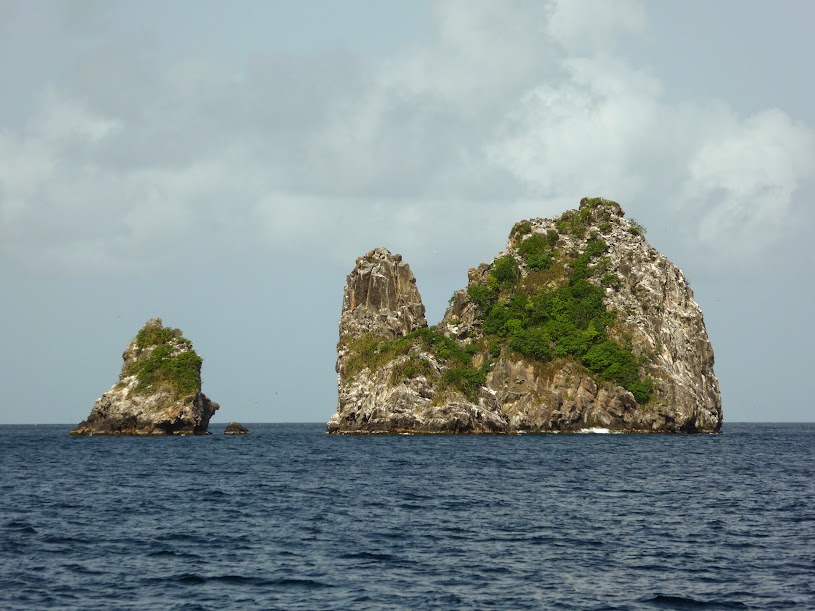
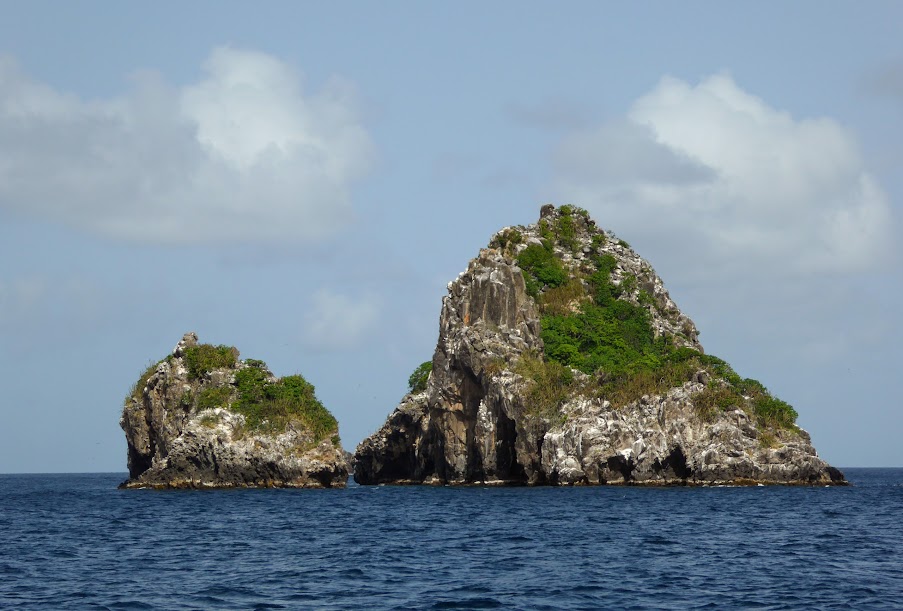
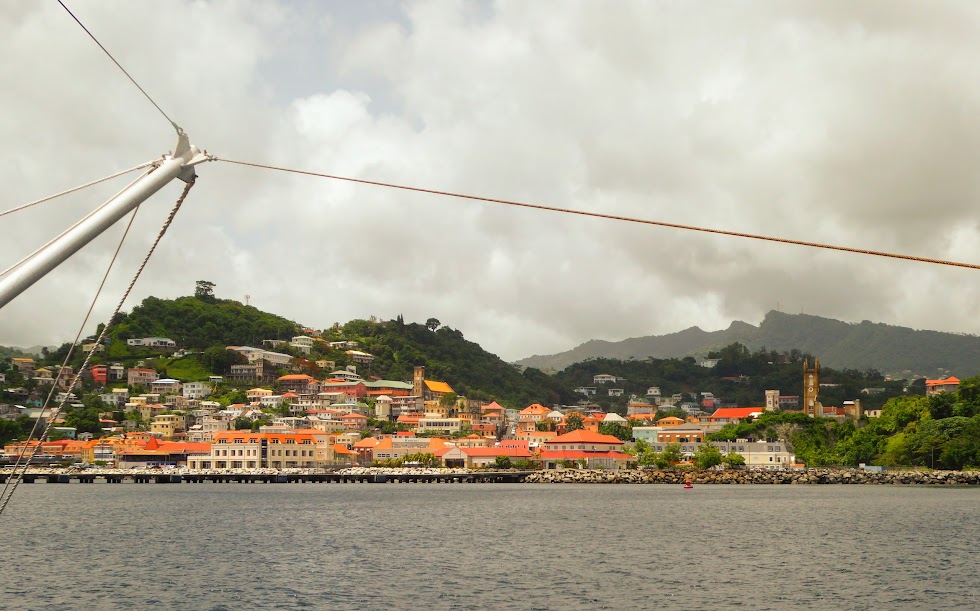
The next morning, we would head for Carriacou, Grenada’s nearest out island, to clear out. It was time to head north. First stop, the Grendine Islands. Here are more photos of our last days on Grenada.

“Shells Sink, Dreams Float. Life’s Good On Our Boat!”


Howard Battles Urinary Issues

Sometime after Carnival, I noticed that Howard was going in and out of his litter box much more than usual, with no result. Not passing urine is a major concern for anyone, animal or human, so after almost 24 hours I called the nearby veterinary clinic, associated with St. George’s University, to tell them that we were on the way. We packed Howard into his “travel house,” and dinghied over to Prickly Bay Marina, where a man named Bernard was always waiting in his taxi for a fare.

We arrived at the clinic, checked in and prepared to wait, since we hadn’t made an appointment. Almost immediately, a vet came out to talk with us, and when she confirmed that Howard hadn’t passed urine, took us back to a room for an exam. Now unfortunately, Howard is not the best patient; in fact, he’s a terrible patient…lots of hissing and growling. So much so that there’s a “Caution” sticker on his file at our home vet back in Baltimore. There wasn’t much need for an exam it seems, as the vet quickly decided to keep Howard, and catheterize him. Ugh. Howard would be catheterized for at least two days, so we were sent home, and told that we were welcome to visit the following day.

The next afternoon, we took the dinghy over to Budget Marine’s dock, and made the quick, but hot walk to see Howard. The road leading to the clinic doesn’t get a breath of breeze, and in the middle of the day, it’s definitely “hot-sun walking.” (As a local said to Scott, with respect, while passing him on the road in Grenada, during peak heat hours; Scott received a fist bump, for his hot-sun walking).

We arrived, wiped off the sweat and cooled down in the air conditioning for a bit, before someone came to escort us back to see our cat. As soon as he heard my voice, Howard chirped, and perked up. He had a catheter tube coming out of his penis, that was taped to his tail. An iv tube was taped to his front leg, and there was a cone around his neck so he couldn’t chew at any of the tubes.

The preferred treatment for a urinary blockage is to place a catheter for three days, while giving a drug that relaxes ureter. Unfortunately, the clinic didn’t have the drug in stock, and there was none on the island; so instead, Howard was given Valium in his iv, along with a painkiller. Despite being a bit loopy, he was happy to see us.

By day two, Howard had enough of wires and tubes. He managed to get the cone off, and remove both the iv and catheter. He had to be put back under sedation to reinsert everything, and an additional sedative was added to his iv meds. With the addition of the third drug  in the mix, we noticed that Howard was much more mellow, and not as responsive at our next visit..

Everything looked great after three days, so the vet removed everything and waited for Howard to pee on his own. He couldn’t, so another catheter had to be inserted. When they sedated Howard, they found some mucus blocking his ureter. It was physically flushed out, a second catheter and iv were inserted, and an additional calming/sedative drug was added to his iv meds.

By the time we visited on day seven, Howard was almost completely unresponsive. He had so many drugs in him, and had been sedated so many times, I cannot believe he wasn’t drooling on himself. His condition had me in tears, and the vet on the case decided to cut him off of all the drugs, and send him home with us.

Back on board the boat, Howard was a mess for the next 30 hours. He had several bouts of what we thought must be his body detoxing the drugs. His temperature shot up, and he moaned as he was breathing. We laid him on an ice pack that was wrapped in a towel, and covered him with towels soaked in ice water, while a fan blew on him.

When he began to growl while in the litter box, I realized that we may have to take him back to the clinic. The thought of Howard having to start that whole process over again turned my stomach, but he needed help. We broke down and decided to go back to the clinic, which thankfully is staffed 24-7.

With no idea how to get a cab after midnight, Scott headed over to Prickly Bay Marina in the dinghy. As luck would have it, there was a Meriweather vs. “Someone-I-don’t-know” fight going on, so the tiki bar was open later than usual. Scott informed the bartender that we had a vet emergency, and asked if there was a cab in the area. She immediately came from behind the bar, and went into the crowd to talk to a man who immediately went to get his van to take us. Scott explained that I was still on the boat with our cat, and he agreed to wait (Again, Grenadians, the friendliest people ever).

During all of this, the heavens had opened, and Scott came back to the boat soaked and dripping wet. We loaded Howard into his carrier, and went to the dock..in the still-pouring rain. The van took me to the clinic, while Scott went back to get dry clothes and raincoats. He then motored the dinghy to the far side of the bay, and walked to meet me.

Once the vet arrived (he too was out watching the fight), he had me hold Howard, so that he could feel his bladder. It was full, and as he felt it, urine leaked out. Realizing the Howard wasn’t completely blocked, the vet manually emptied the bladder (much pressing and squeezing). Howard was very angry, and growling, but quiet off and on, as I think he realized the doctor was relieving his pressure.

As I continued to hold Howard, the vet was able to do an ultrasound of the bladder. Satisfied that there were no crystals or stones, he opted to put Howard on anti-inflammatory pills for five days, and sent him home, not wanting to re-start the drowsy-drug carousel. Scott and I were both thrilled, and headed back to the boat with our cat.

Unfortunately, Howard still wasn’t able to pass urine, and was also still growling when in the litter box. We had to again return to the clinic, where they inserted another catheter and iv. We felt so bad for our boy, that he didn’t understand what was going on. It broke my heart that he went to sleep, and woke up with a catheter and iv back in. We visited every day, and Howard would just want me to rub and scratch his head and face, especially the area where the cone lay against his neck.

I cannot say enough about the veterinarians and staff who helped us. The clinic was large, clean and bright, with all the facilities you’d expect in the U.S. Howard was in a cage located in the main treatment area, where people were near him all day. They all just wanted to pet and love Howard, but he was not having it. It made me so sad, as I’m sure he’d have felt a lot better getting love and attention all day, and not just during our visits.

After several more days, the doctors again felt sure that there were no crystals or stones in Howard’s bladder, but sent his urine out for further testing, just to be sure. We again brought Howard back to the boat; however, if he blocked again, we’d be facing the fact that there was a good chance that surgery was in his immediate future. The procedure involves cutting off the penis, and changing the route of the urethra, so he would urinate like a female cat (they have a shorter, and more wide urethra), allowing any stones or crystals to pass through. The recovery is challenging, and the risk of recurring urinary infections is high…oh joy.

Because Howard was so wobbly and loopy (20 mgs of Valium per dose!), we were now on round the clock shifts, so one of us could constantly be with him. We’d follow him back and forth, from the couch to the litter box, checking for progress, and all surfaces in the saloon were now covered with trash bags and towels, to keep up with the dribbling of urine.

The clinic contacted us to say that Howard’s urine test showed an angry infection, most likely due to the several catheters that had been inserted and removed. We were given an antibiotic, and hoped for improvement.

The clinic was still unable to get the preferred drug for relaxing Howard’s ureter, so I contacted my vet back in Baltimore, who ordered it for us. I then contacted our friend, Christine, to see if she would mind picking up the drug and shipping it to us. She immediately left her desk at work, went to the vet and then straight to Fed Ex…a life saver! The package was scheduled for a three- day delivery, but the coming weekend meant a delay for picking it up in Grenada.

Worried that Howard may block again before the drug arrived on the island, Scott and I reluctantly decided to take our poor cat back to the clinic, so he’d be on site, just in case. It meant another catheter and iv for Howard, and this time he wasn’t in the main area, but down the hall in a room by himself. While it may have been more quiet for Howard, there was no way the staff could keep a good eye on him there.

The first day we arrived to visit, Howard’s bedding was wet, as he’d obviously leaked urine on it. Most of the staff were too scared to go into the cage, so Scott and I changed the wet blankets out for dry ones.

The next day, in addition to being wet, the bedding also had poop on it. Sigh….we again cleaned his cage. During our visit, we noticed that whenever Howard was in the litter box, he would arch his neck, mouth wide open and move his head side to side. After passing only a few drops, he’d come out and lay on his side. His whole body would curl up, and he’d release a small puddle of urine onto the bedding. We were obviously upset by this, and alerted the staff, who told us that it was a reaction to the pain of the urinary infection….hmmm.

We arrived on day three to a pitiful sight. In addition to urine, and poop, there was blood on Howard’s bedding….blood?!? We managed to flag someone into the room, who told us that Howard had again managed to get his iv out (the fourth time, for Houdini Howard), and it had bled for awhile, before they’d noticed and replaced it. I brought to their attention that his current iv paw was very swollen, and we helped to re-tape it. Our poor cat now had parts of all four paws shaved, from so many ivs. Howard’s mood was so depressed that he just lay in my lap with his eyes closed. It was time to take him home, I’d risk a blockage.

Back on board, Howard was still doing the strange head wobble, open-mouth thing while in the box, and curling his body to release urine while laying on his side after. Scott recorded video if this, and took it to the clinic for the vets to see. They were immediately concerned, and Scott was told that Howard was having seizures. I was more than miffed upon hearing this news, as we’d tried to call their attention to it previously. Scott came home with an anti-seizure med.

We were now dealing with constipation, due to all the drugs and sedation. We took Howard in for an x-ray, that showed he was full of poop..which I’d already tried to explain. The vet administered an enema, which Howard didn’t release, and suggested we take him home where he’d be more comfortable. We also came away with some laxative, to keep things moving.

We made the ten minute walk back to the dinghy, with Howard in his carrier, and then headed for the boat. Just as we were tying to the swim platform, Howard became very agitated, so I got him on board, out of the carrier and to the litter box as fast as I could, with a trail of liquid poop behind me. I left him to finish in peace, and cleaned up the poop trail….poor animal.

The muscle relaxer drug arrived, taking the number of meds that Howard was getting to SEVEN: anti-imflammatory, Valium, painkiller, antibiotic, anti-seizure, laxative and the muscle relaxer (most all causing drowsiness). Because poor Howard was so drowsy, we were able to administer the barrage of meds with little trouble.

We were still on round the clock watch, keeping an eye on the litter box, and making sure that Howard wouldn’t hurt himself. The poor animal just wanted to feel normal, and would wobble to the door of the saloon, wanting to go outside. I would carry him out into the cockpit, and we’d look at the water, his head laying over my arm.

Soon, the vet was ready to begin weaning Howard off most of the meds, which we were thrilled about. Over the next several weeks, we whittled down, until Howard was only getting the muscle relaxer twice a day. His mood, and balance improved, and although not completely normal, he was passing much more urine each day.

We had a trip home scheduled, that had to be postponed three times. It was to be Scott’s first trip home in two years, but there was no way we could leave Howard in someone else’s care while he was so sick.

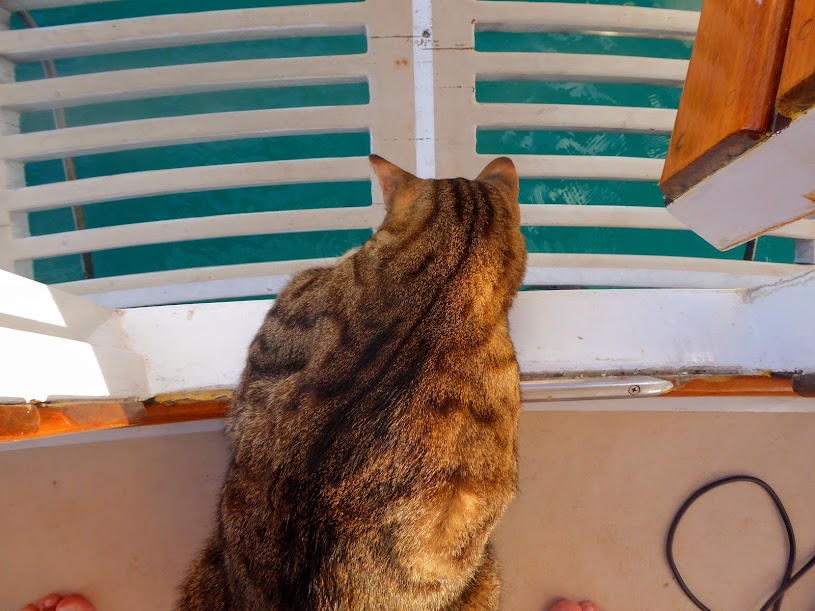
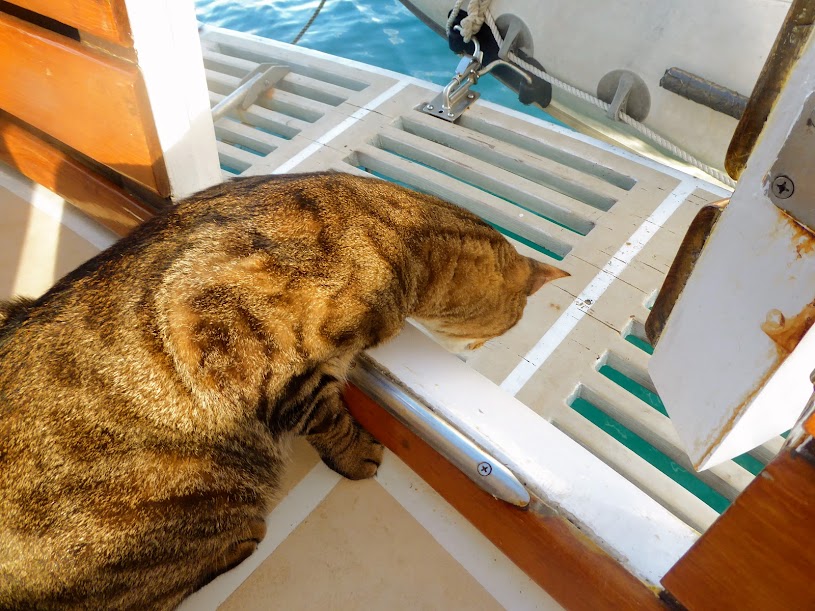
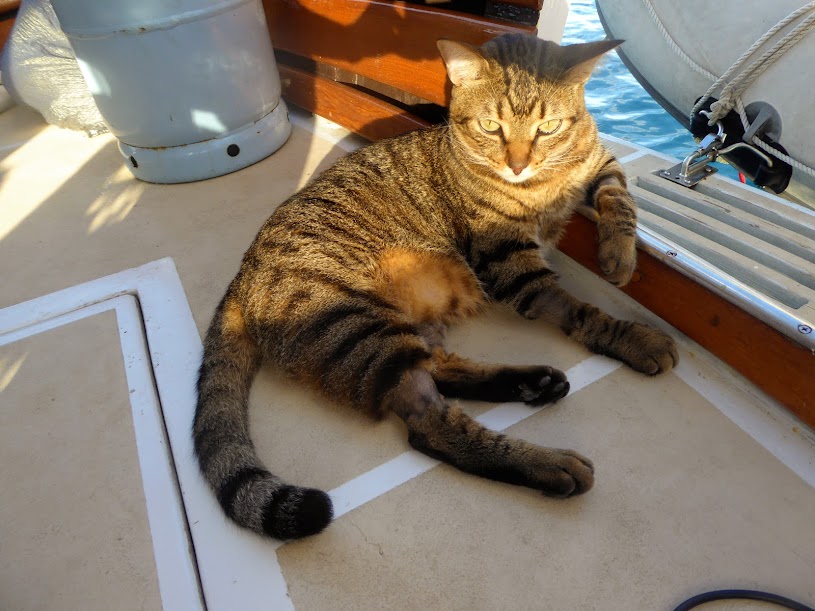
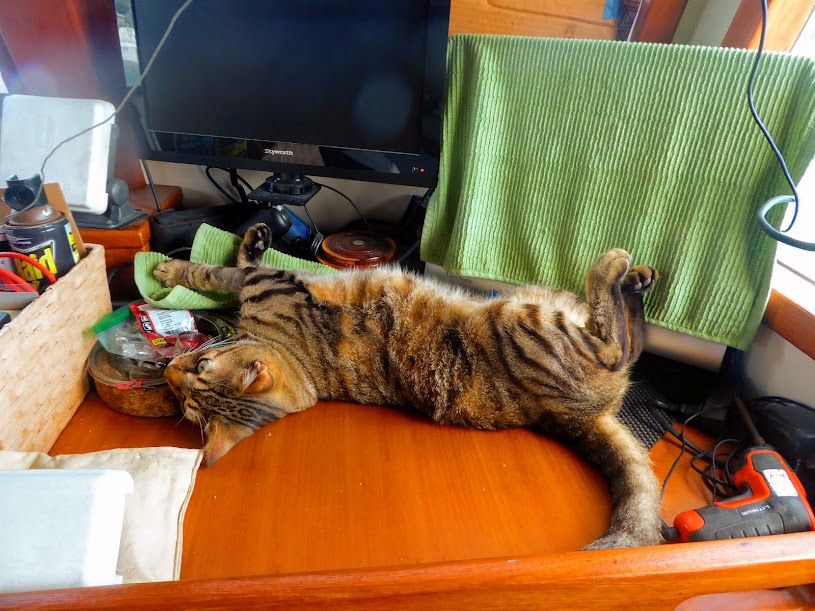
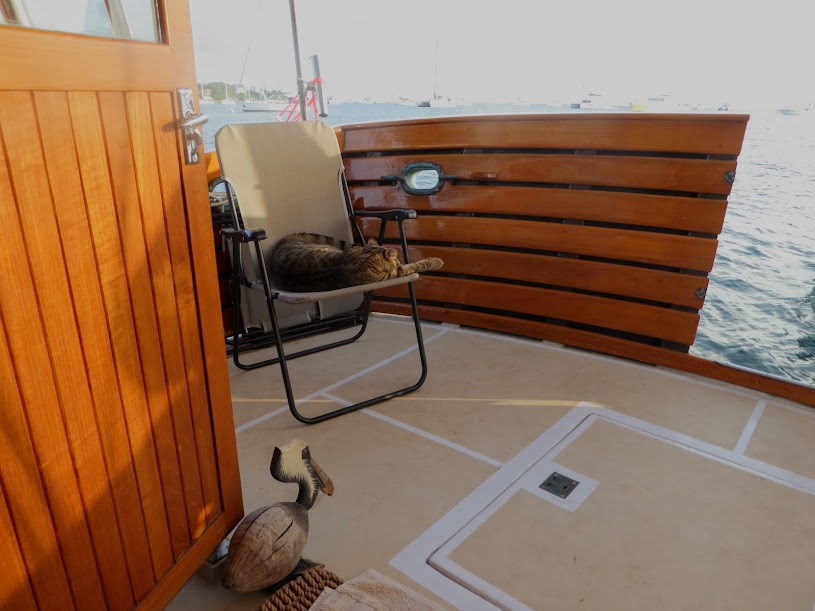
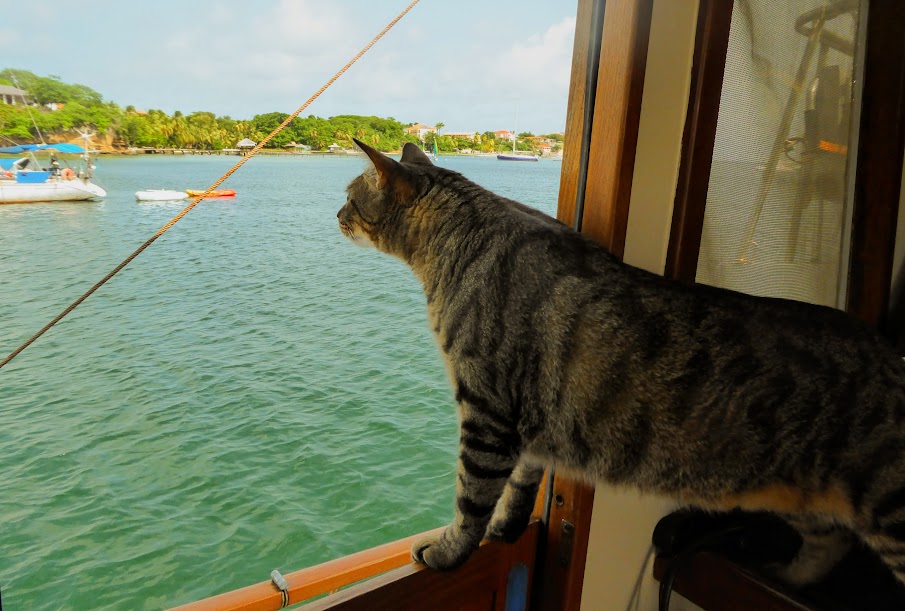
After seven weeks of hell for all three of us, Howard was thankfully doing much better, and began to wander out to the cockpit on his own, to look for fish, nap and oversee boat projects.

Notice the “poodle paws”

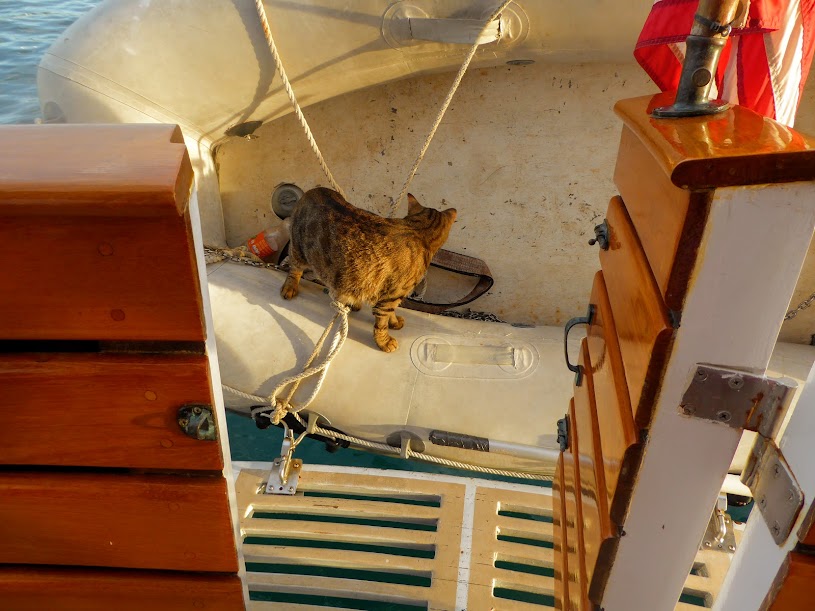
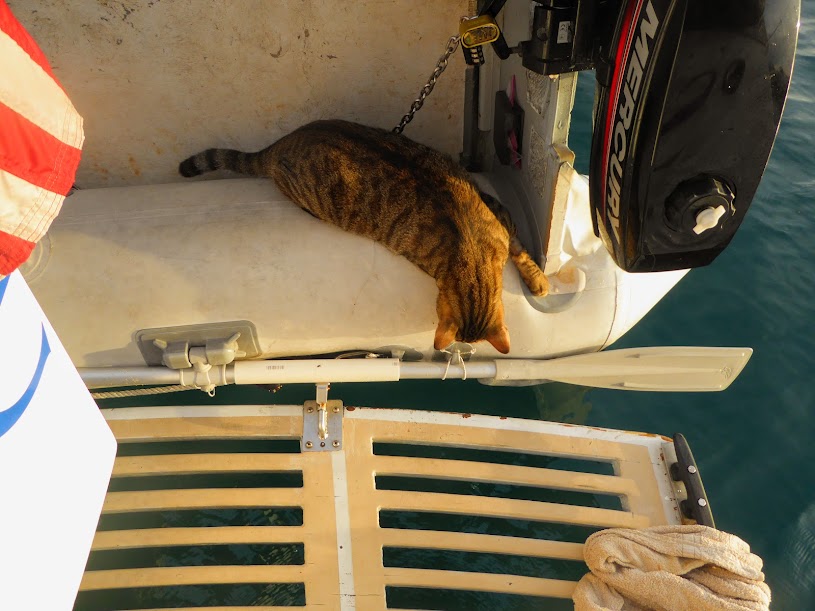
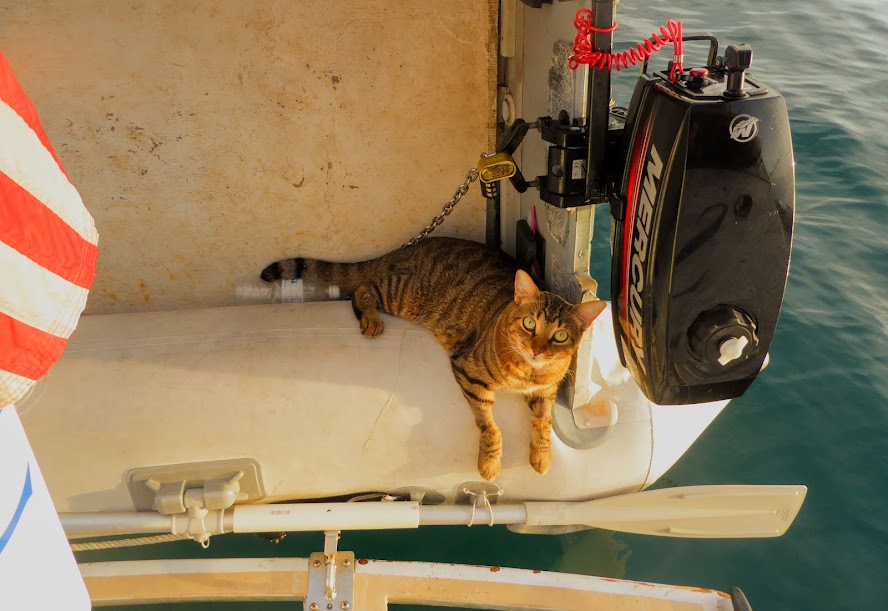
He even began to feel good enough to climb onto his dinghy “jungle gym.”

We could finally breath easier, but I still felt terrible for all our poor cat had been through. Scott tells me that Howard is young and tough, and won’t remember this, once he’s back to his old self. I hope it’s true.

“Shells Sink, Dreams Float. Life’s Good On Our Boat!”


Dink-zilla

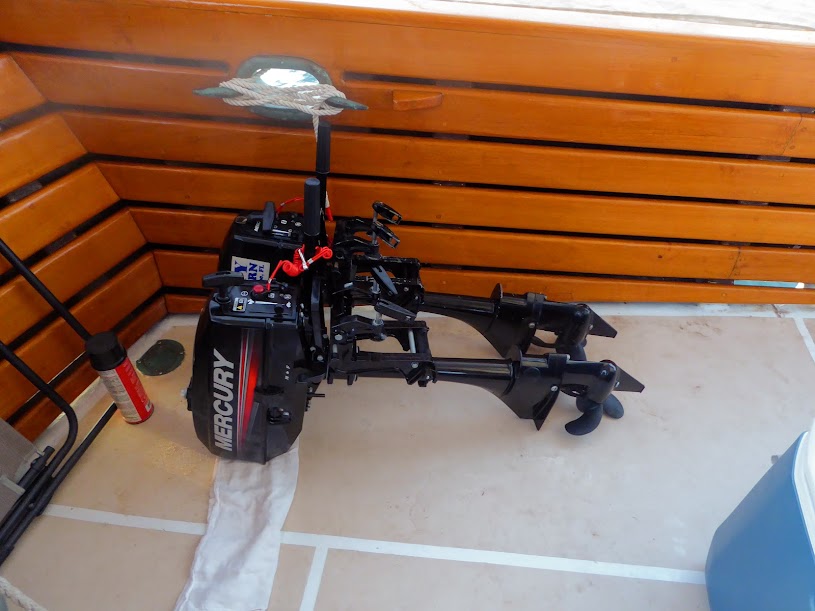
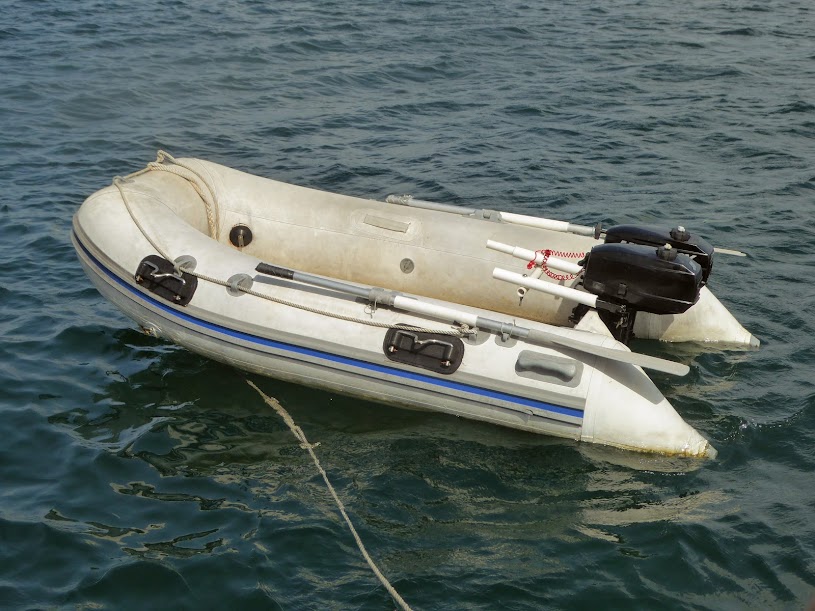
We purchased our inflatable dinghy and motor fifteen years ago. They have served us well, but the motor has given Scott ongoing carburetor issues the entire time. Having grown weary of constant fiddling and repairs, Scott decided to break down and buy a new dinghy motor while we were in Grenada.

We brought out brand new motor home, but Scott didn’t want to get rid of the old one….grrrr. His “plan” was to sell it, but I reminded him how much he hates selling things, how little he’d get for the well used, much jerry-rigged motor, and and how mad he would be by the end of the process. I told him to just get rid of the poor thing, but it continued to sit up on the flybridge.

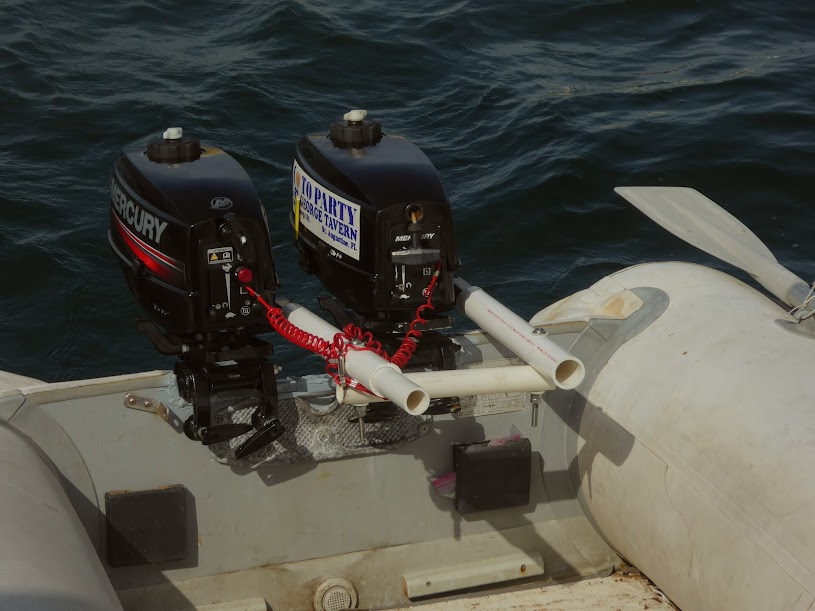
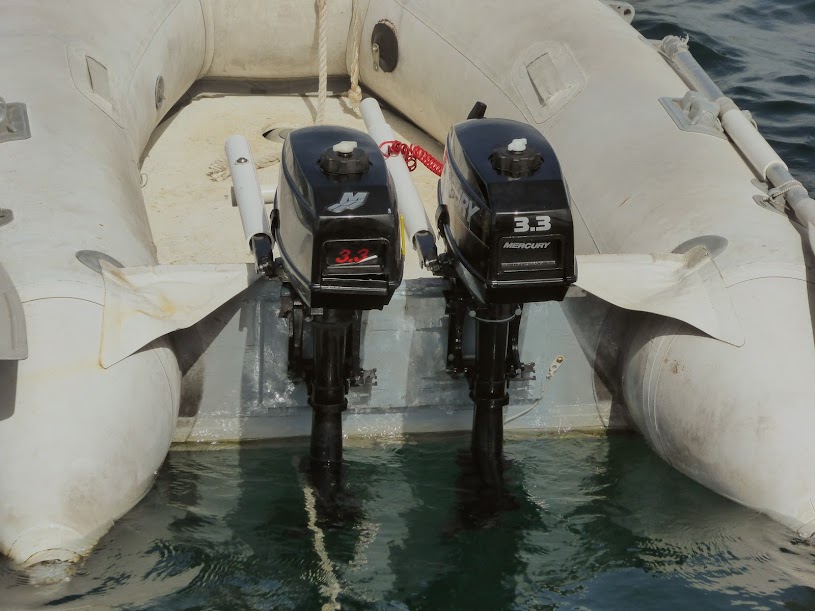
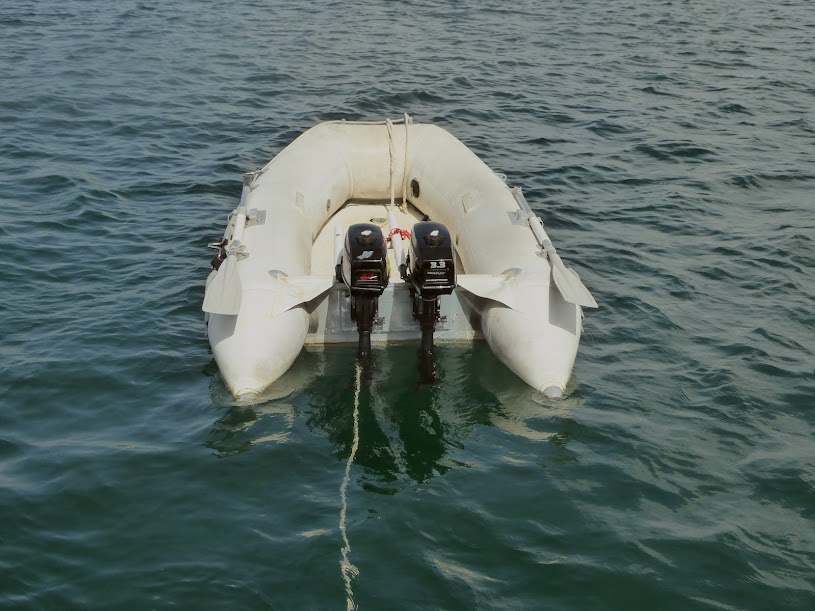
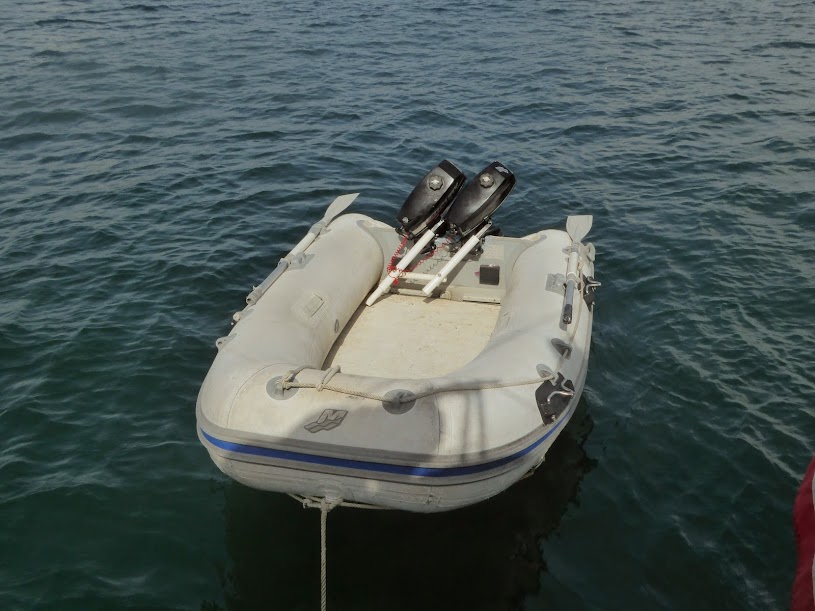
That is, until one day when Scott was enjoying some afternoon cocktails, with too much idle time. While up on the flybridge, he looked at that old motor, and the wheels in his head began to turn. If one 3.3 was good, TWO 3.3s were better…and faster. It was time to get to work.

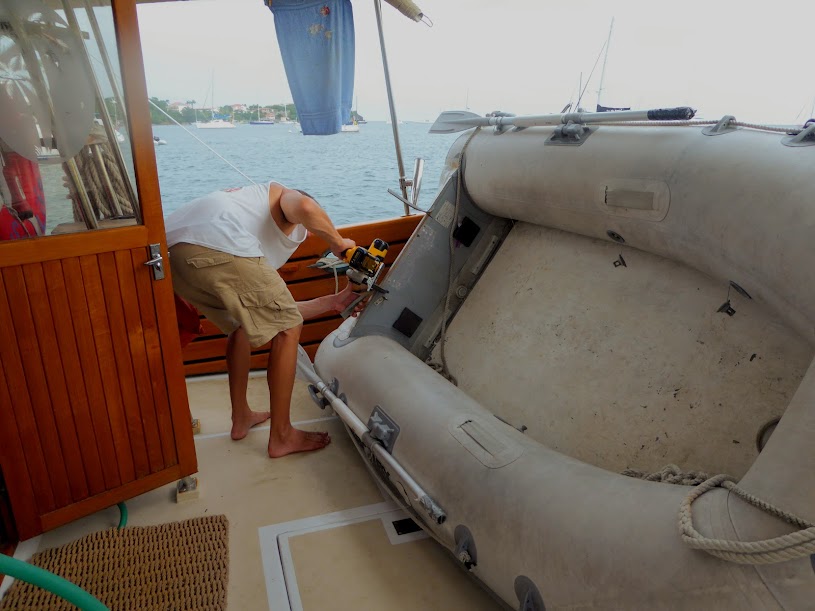
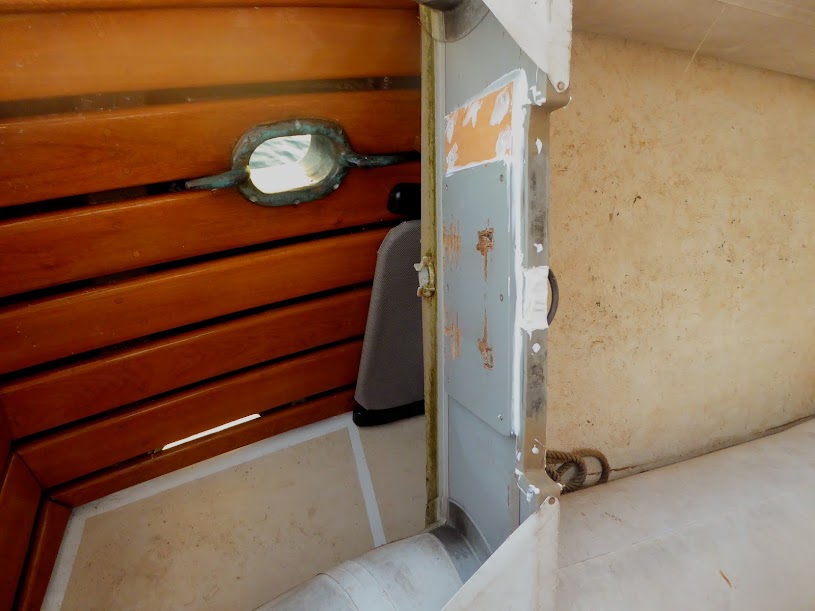
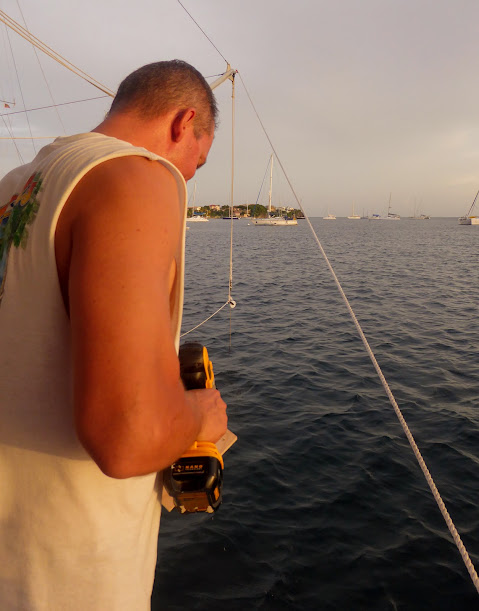
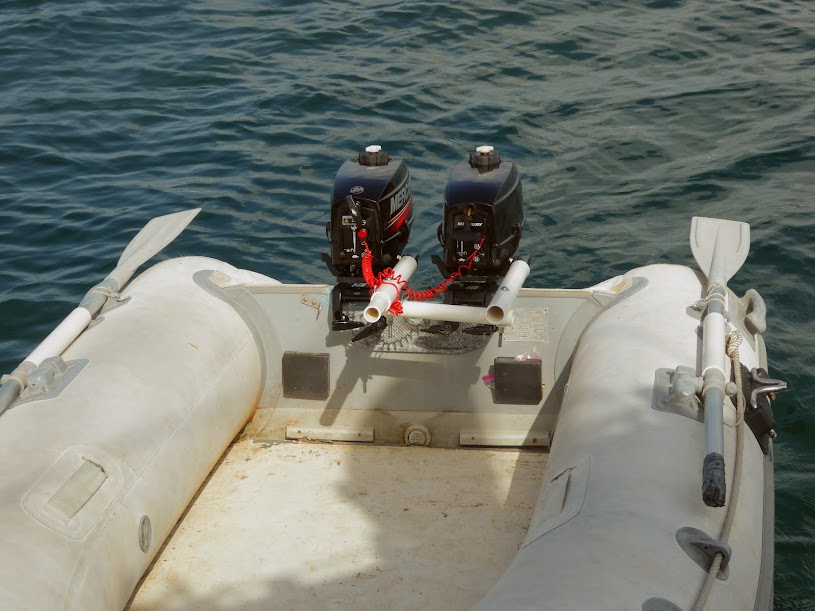
To support the weight of both motors, Scott screwed a piece of wood onto the transom of the dinghy, giving the mounting surface more room and more stability.

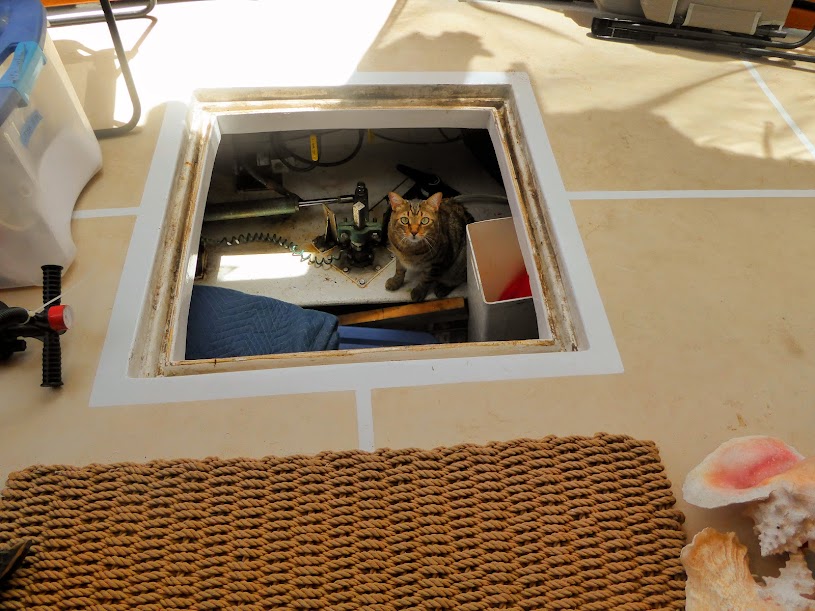
While Scott did this, Howard made sure all was well in the lazarette.

Once the motors were in place, Scott used pvc pipe, to allow him to steer both motors as one.

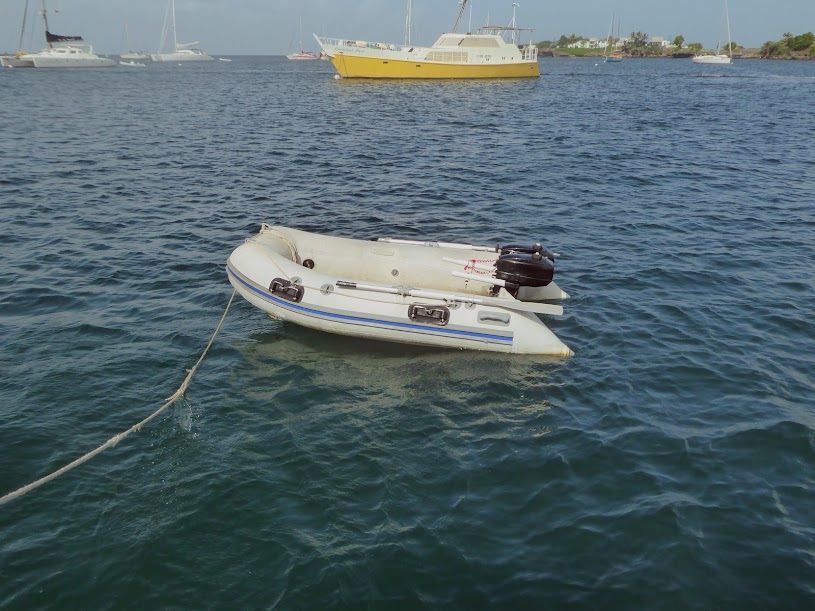
With that, the job complete, and “Dink-zilla” was born.

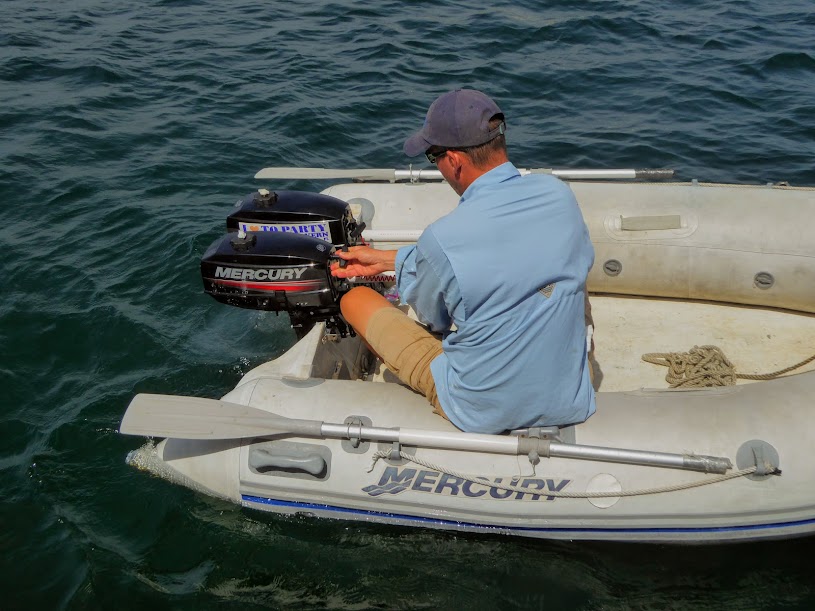
Now it was time for a test drive. As usual in this situation, I was summoned to take photo and video documentation of the testing. Both motors started up, and Scott stopped to enjoy the sheer sound of the two powerful 3.3s at work. Then away he went.

With speed still well below most other dinghy motors, but at mach five for ours, Scott happily raced through the Prickly Bay anchorage:

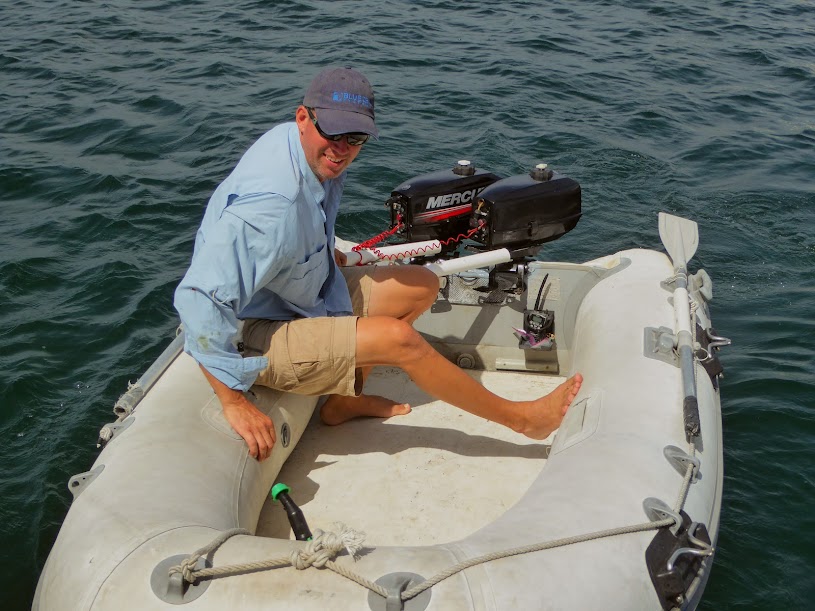
Once testing was complete, it was time to sit back and admire his work.


We still use one motor most often. But occasionally, when Scott wants to make time getting somewhere, or we have a heavy load on board, number two comes out, and we’re off and running.

Why put two 3.3 motors on a dinghy? Scott will tell you, “Because I can.” I’d tell you, “Because we can’t have enough “redneck” on board Sea Life.

Here are a few more Dink-zilla photos.

“Shells Sink, Dreams Float. Life’s Good On Our Boat!”

Cruising Life On Grenada

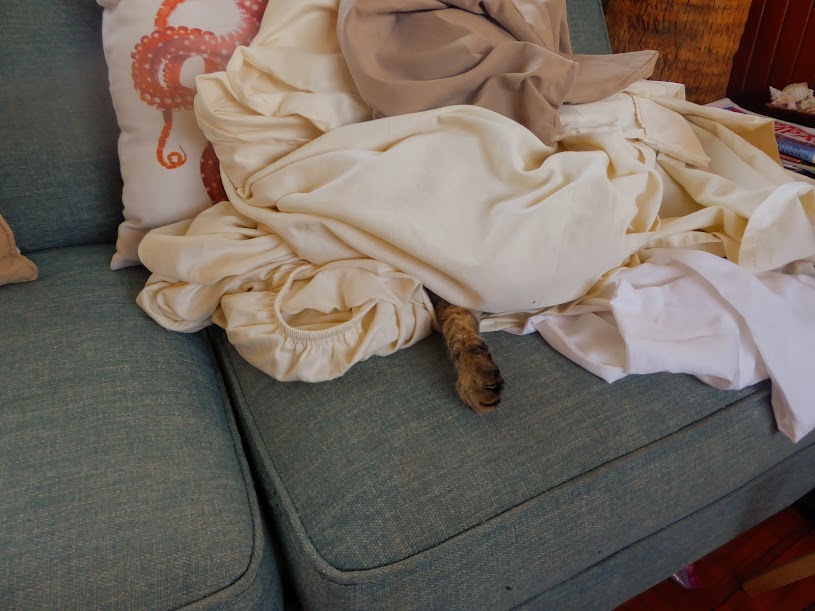
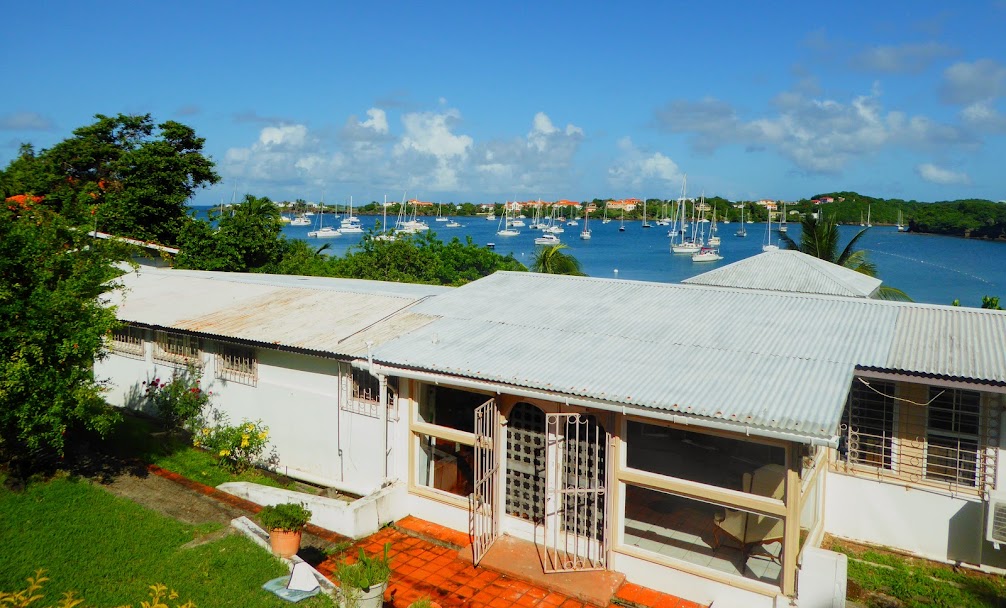
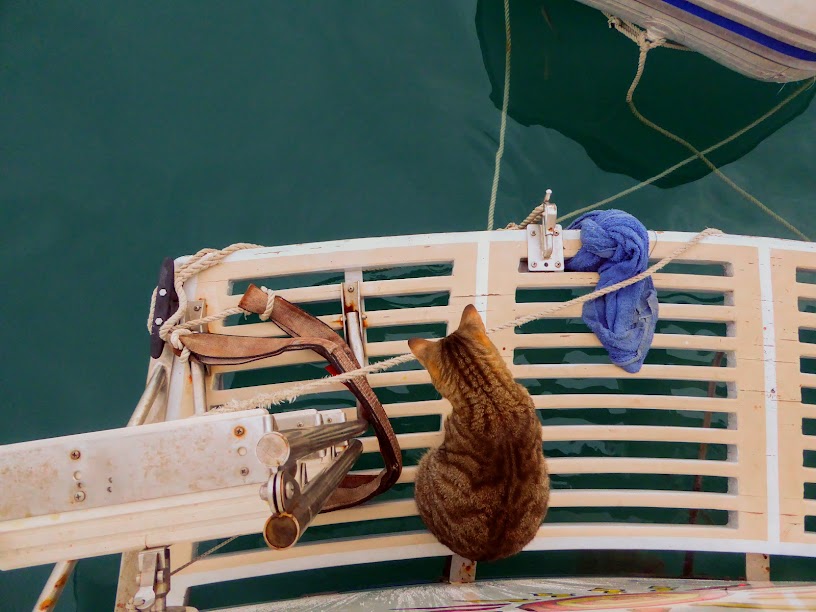
Spending four months of hurricane season in Grenada allowed us a chance to really get a feel for the island, and all it had to offer. Howard settled right in, seeming to know that we were going to linger for awhile. He enjoyed cockpit naps and “laundry” naps, kept an eye  out for fish and happily dried the ice machine when it was through running.

Every inch of the anchorages in Grenada’s southern bays were full of cruisers. Most were here for hurricane season, but there were also many who stay year round. The boat yards were equally as crowded, as some owners hauled out to have work done, and others traveled home.

With so many cruisers on the island, there were endless options to fill time. At any given day, you could opt for yoga, tai chi, dominoes or poker. We were moored in Prickly Bay, and the marina there hosted free movie nights, Friday evening steel drum and dance bands and their famous Bingo night.

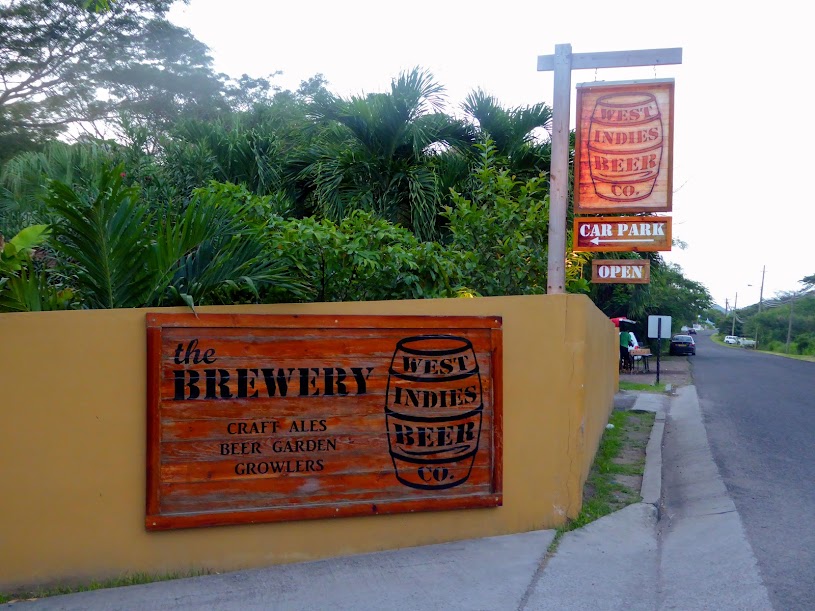
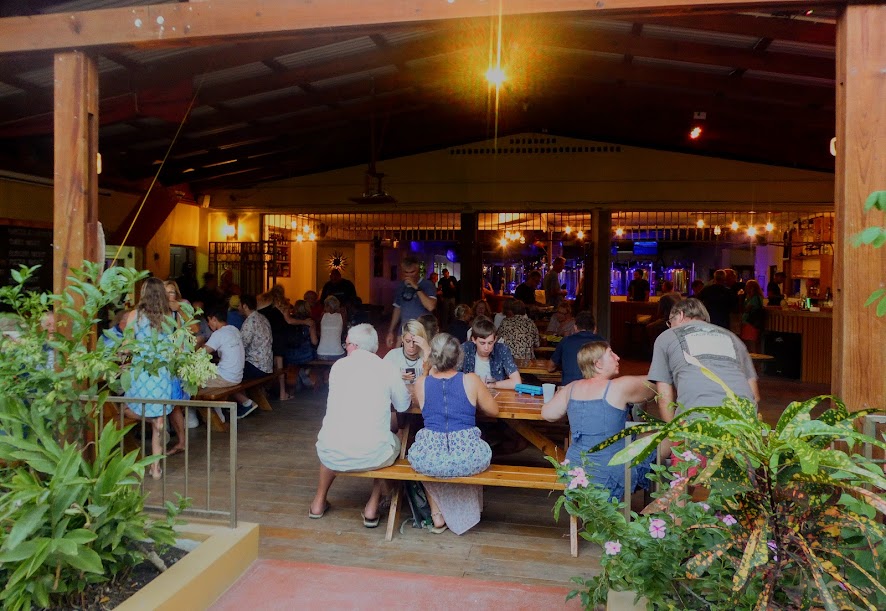
Just a short walk from Prickly Bay, the West Indies Beer Company hosted a weekly open jam night, that was always well attended. The music was always great…singing, not always as good, but a fun evening out just the same.

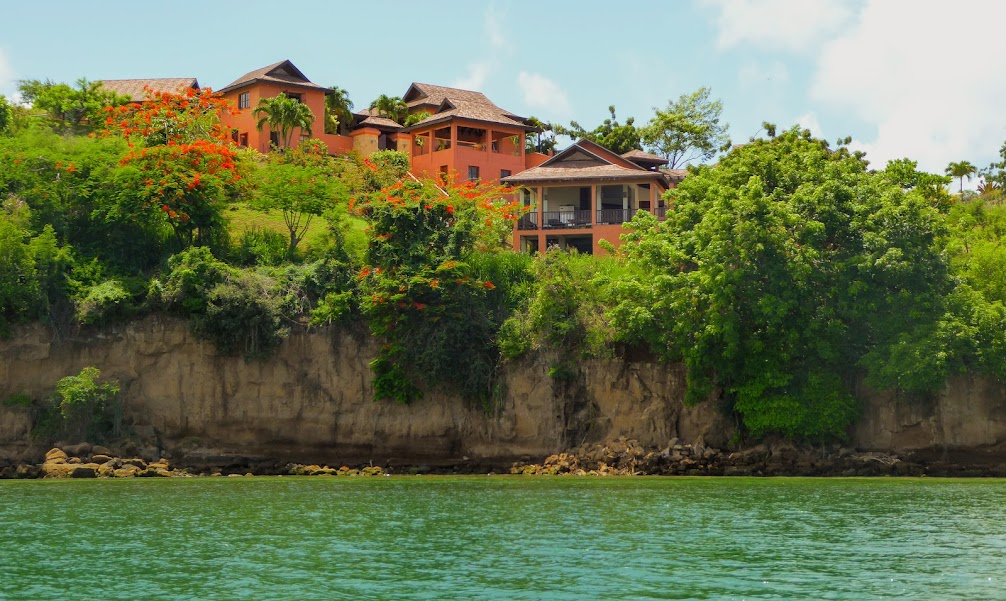
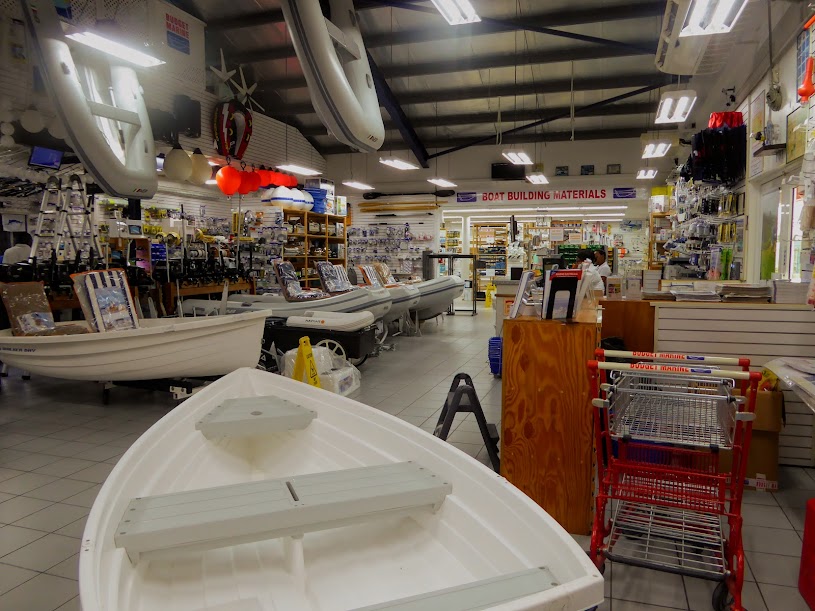
Houses of all shapes, colors and styles lined the hills around us, and Budget Marine (the Eastern Caribbean’s answer to West Marine) was just a shorty dinghy ride away. Scott was eager to peruse the shelves, but came away with sticker shock; the EC is much pricier than the western side!

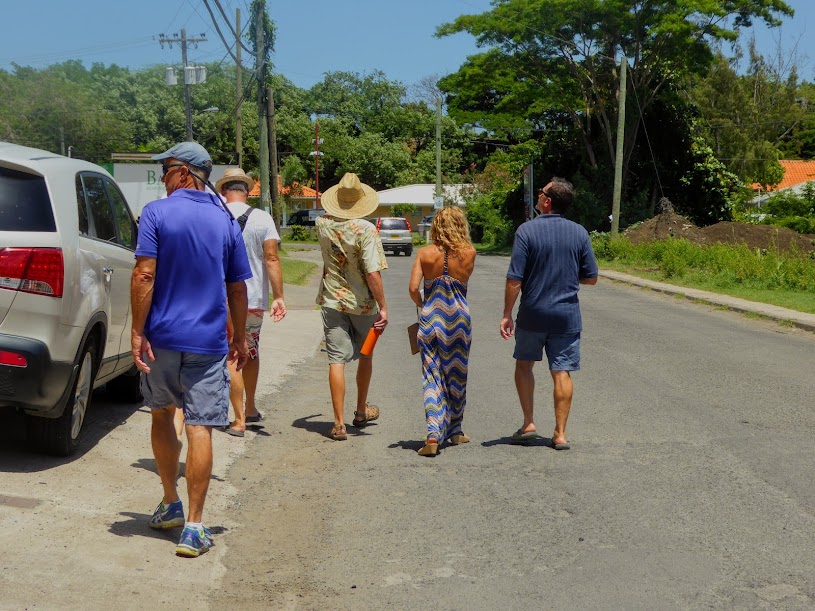
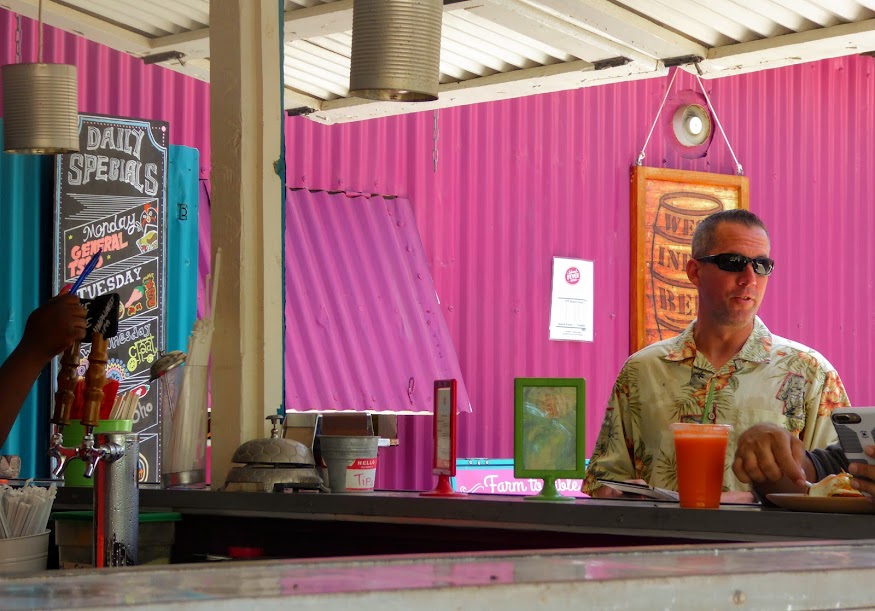
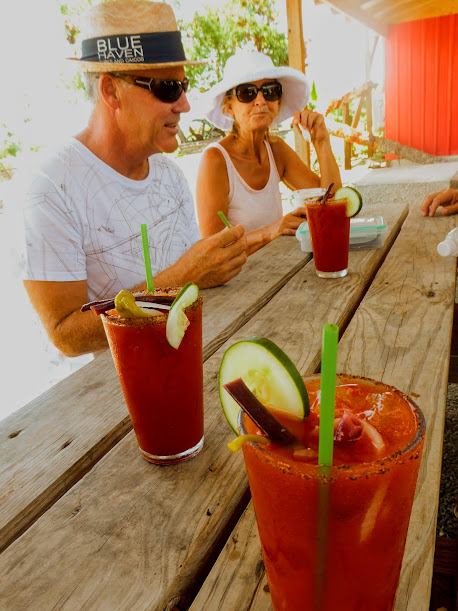
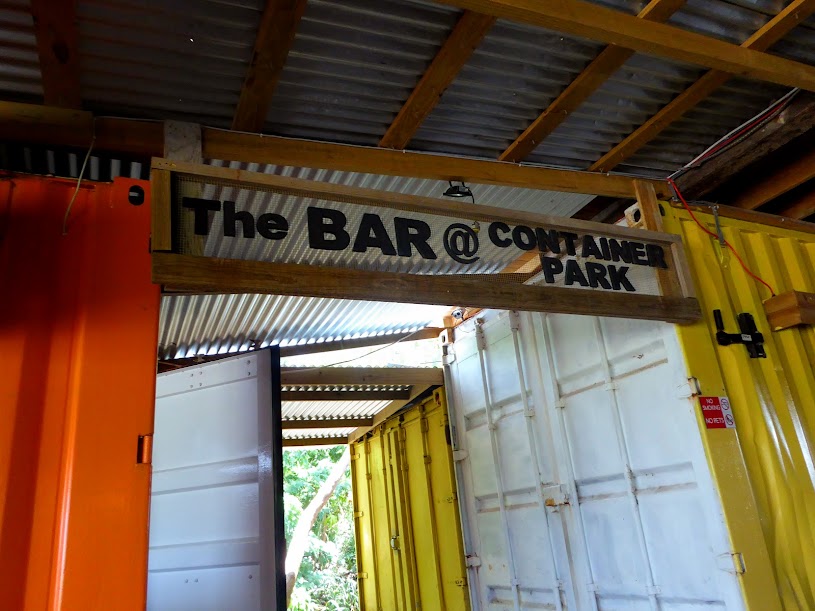
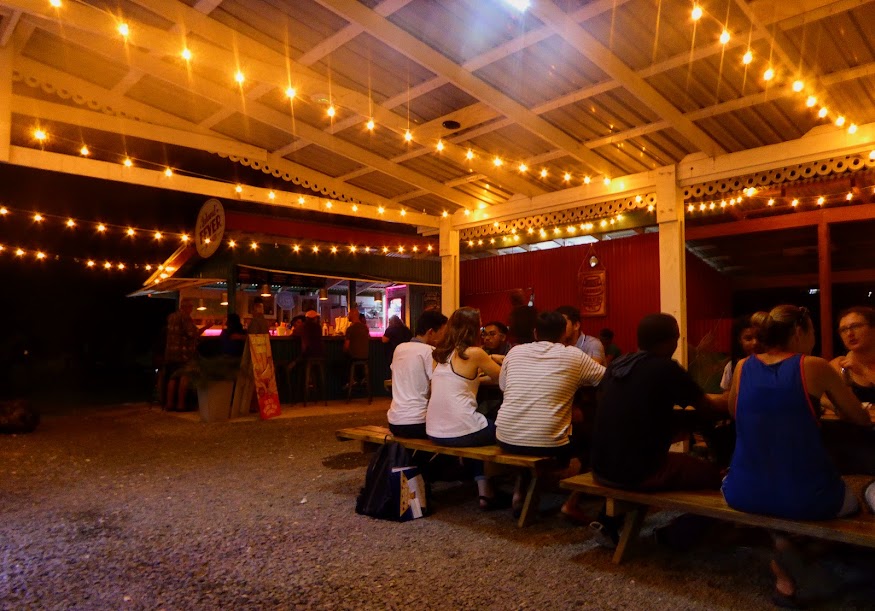
From Budget Marine’s dinghy dock, it was an easy walk to the Container Park, a food truck complex of sorts, with containers housing various food choices instead of trucks. The group of hodgepodge containers offered paninis, coffee drinks, ice cream, burgers, Thai and Mexican food and many other options. We enjoyed brunch and bloody marys with friends, and visited during evening hours as well.

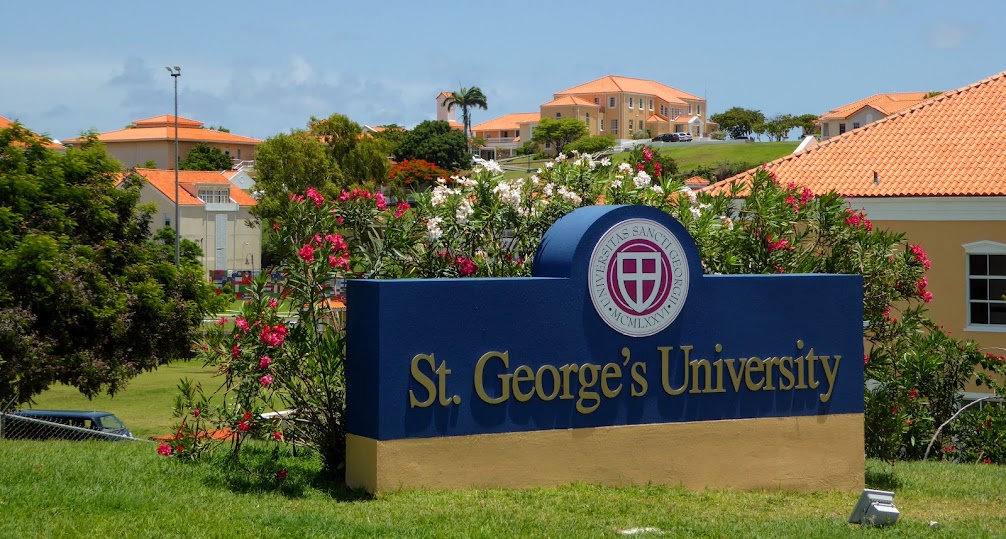
St. Georges University is located just down the road, and as a result, many small bars, restaurants and food stands line the street leading to the Container Park.

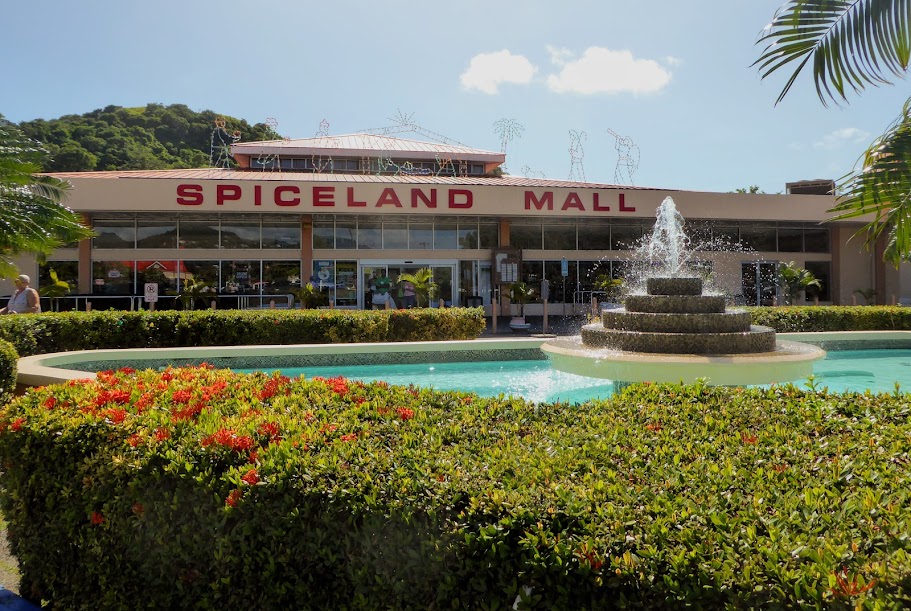
There were many shopping options for us on Grenada. Not far away was an Ace Hardware, and also CK’s, a bulk grocery store. Further down the road was Spiceland Mall, which housed a home goods-type store, a large IGA grocery store, as well as other shops and a small eatery.

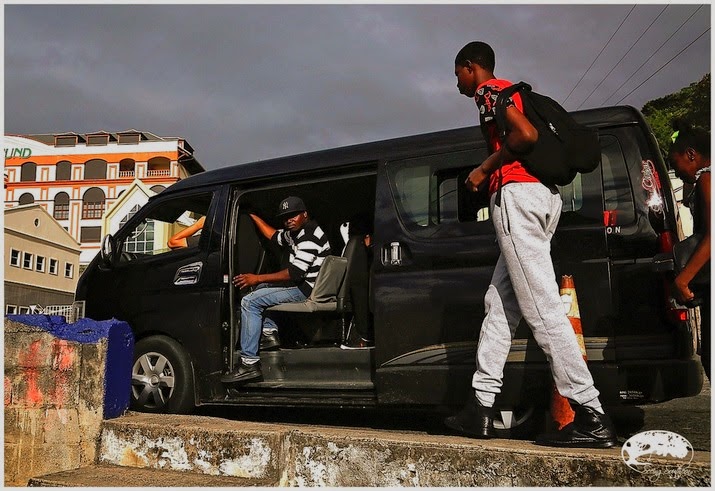
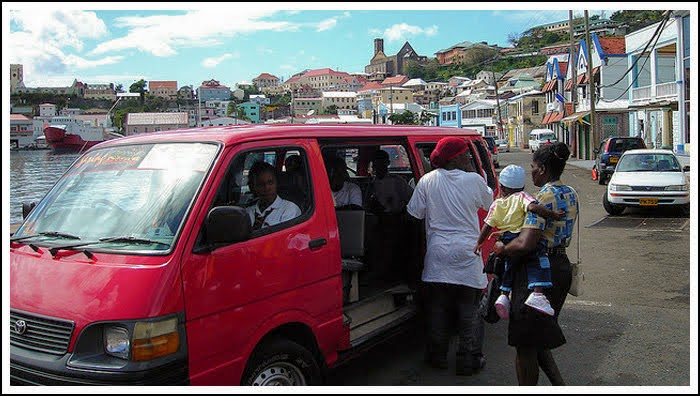
Which leads me to how we get to said stores…the local buses. On Grenada, as on many Caribbean islands, public buses are actually mini vans, and 90 cents USD, will get you a ride anywhere on the island. In addition to the driver, each bus has a “conductor.” This person sits behind the passenger, near the sliding side door, and it’s his job to fill the bus and collect money, while the driver drives.

Buses in Grenada are privately owned, and have interesting names that are proudly displayed across the windshield: Humble Thy Self, Scare Dem, Nothing Yet, etc. The more fares they can squeeze in, the more money they’ll make, so conductors constantly scan the roadsides for possible passengers (There are bus stops throughout the island, but unlike the U.S., passengers can get on and off at will). With keen eagle eyes,  they’ll noticing you long before you even come near a bus stop, or start to look for a bus; don’t’ worry about catching a bus on Grenada, it’ll “catch” you.

With half their body hanging out the open side door, conductors will whistle, or call out “Bus, Bus, Bus!!” to get your attention. At times, we were only going a short distance, and chose to walk instead of ride, having to politely wave off the many honks and shouts to get on board. On a particularly cloudy day, after waived off our I-don’t-know-how-many-ith bus, the driver responded: Sure?…..it’s gonna rae-een!

In order to pick up as many passengers as possible, buses often deviate from their set route. A bus will often detour up into to hillside neighborhood, or back up a side street to pick up a fare; sudden, sharp braking is regular, and so is backing up….on main roads. While the buses race to try and get as many fares on board as possible, it does not diminish their politeness. They will patiently wait for a passenger, no matter the age, to to get on the bus, even backing up to shorten the walk. Local children ride the buses to and from school, and conductors will see them safely to the far side of the street when getting off.

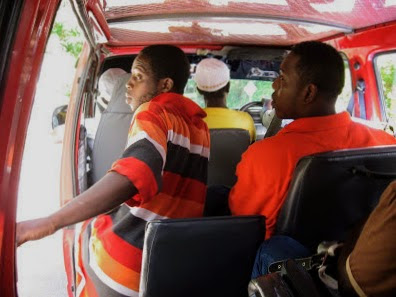
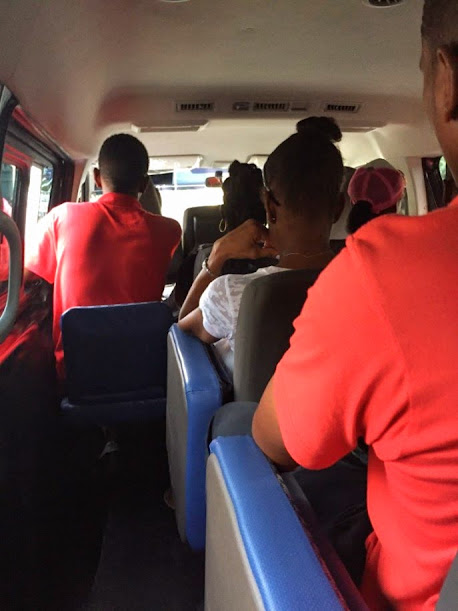
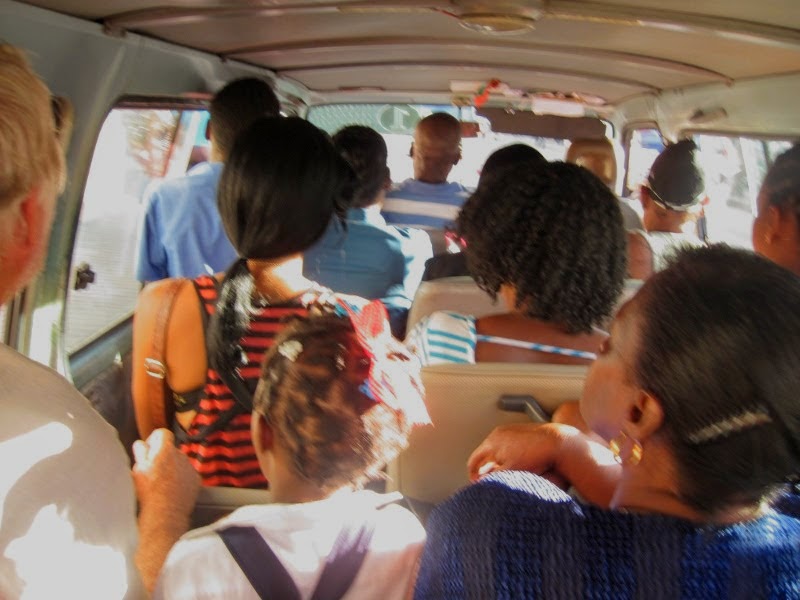
A bus inGrenada is a 14 passenger mini van, with an additional row of fold-down, jump seats. They make full use of every inch of interior space, stuffing us in like sardines. People are expected to sit on the gap between the permanent seat and the jump seat (not comfy), and also on a fold-down seat between the driver and passenger. We’ve also seen people sit next to the sliding door, facing backwards, on a hump that extends out from under the passenger seat.

And air conditioning?? The driver most often runs it for himself, while the rest of us gasp for any breeze that comes in through the open windows (I borrowed these bus photos online, as I was always too hot, crammed in or holding on for dear life to think about my camera). Reggae or dance music is played at vibrating decibels, perhaps to try and distract you from the heat.

Whatever you’re carrying with you cannot take up valuable seat space. Shopping bags are jammed in front of you on the floor, stacked up to your nose if necessary. This proposed quite a problem for Scott, as the distance to the back of the seat in front of him was so short, he had to ride with his knees to his chest.

A knock on the tin roof or side wall of the bus signals that you want to get off. This request is relayed by the conductor, because there’s no way for the driver to hear your knock over the volume of the rolling dance party. Once your signal  is received, the bus may jerk to a stop, let you off further down the road…or at the next bus stop. The sardine can-packed bus will, more often than not, have to unload like clowns at the circus to let you off, before reloading and continuing on.

As I have mentioned before, local Grenadians were the most incredibly friendly and welcoming people we’ve interacted with on our entire adventure to date. They appreciated the cruisers’ presence on the island, and the business opportunities that it afforded…in a positive way. Instead of trying to take advantage of the boaters, they truly wanted us to enjoy their island, including and mingling with the cruisers at bars, restaurants, events and gatherings.

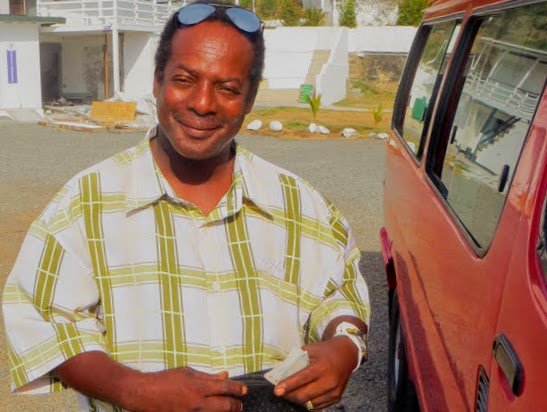
This is especially true for a group of  bus drivers who play a huge part in providing cruisers with transportation for specific needs and special events. Like the buses, these drivers all use colorful nicknames, such as Shademan and Christ Child. Five days a week, these men offer shopping buses, making pickups at the various marinas, and then stopping at Ace Hardware, CK’s Discount Store, an ATM machine and the IGA.

Shademan is amazing with the cruisers. He’s on the net every morning, announcing what trips or services are offered for that day, and the rest of the week. We rode with him to see the pan orchestra practice, and costume making, and he also ferried us back and forth to the various parades during carnival.

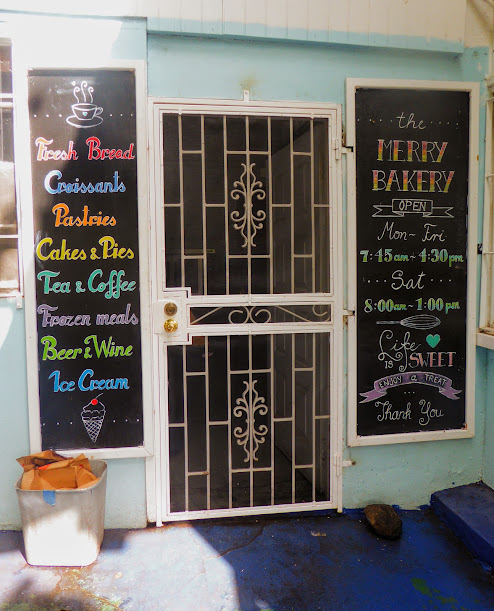
Shademan also offers a Saturday shopping bus that goes into St. Georges, for the weekly market. We hopped on one Saturday, interested to see the market, and a bit of downtown. Our first stop was the Merry Baker, located on the grounds of the Port Louis Marina. We were either too early, or too late, as the shelves were nearly empty. However, being one of the first ones out of the van, I managed to get the last loaf of ciabatta bread…score one for me!

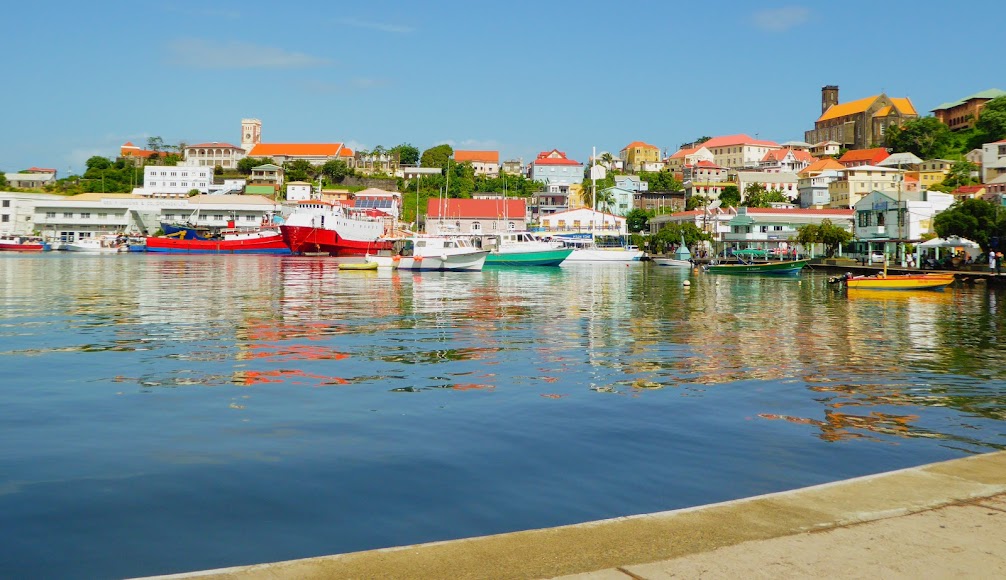
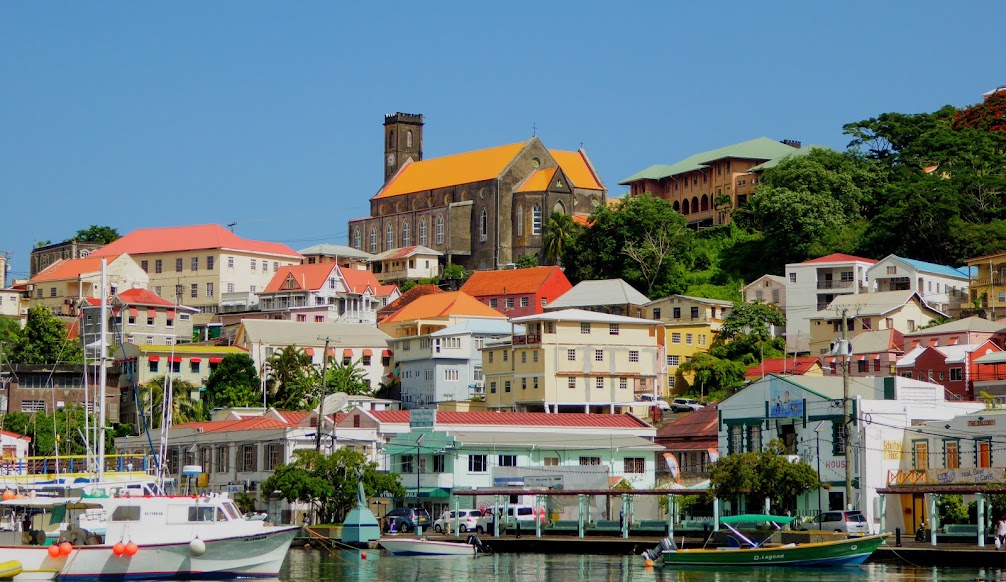
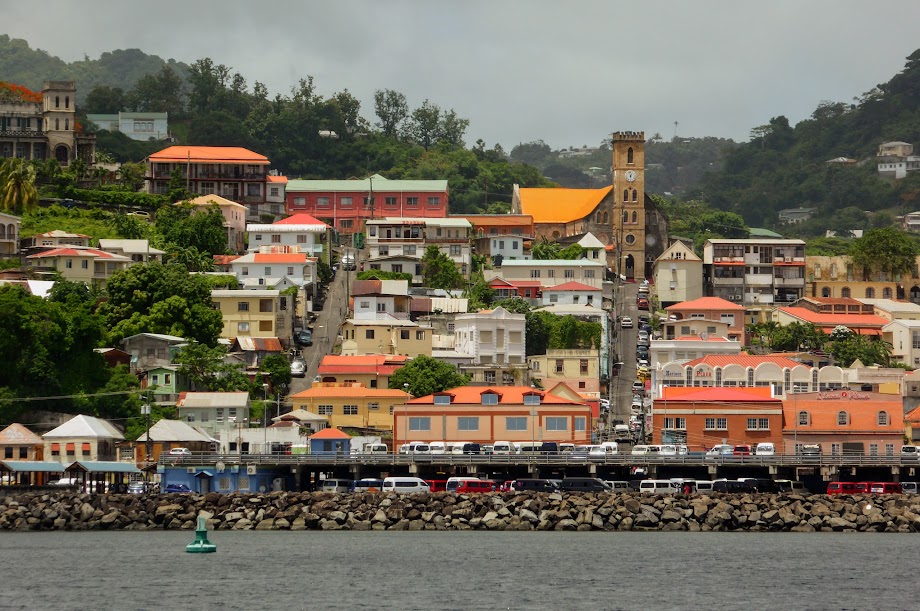
It was a clear, blue-sky morning, and the buildings across the bay were bright and colorful, as we made our way around the carenage.

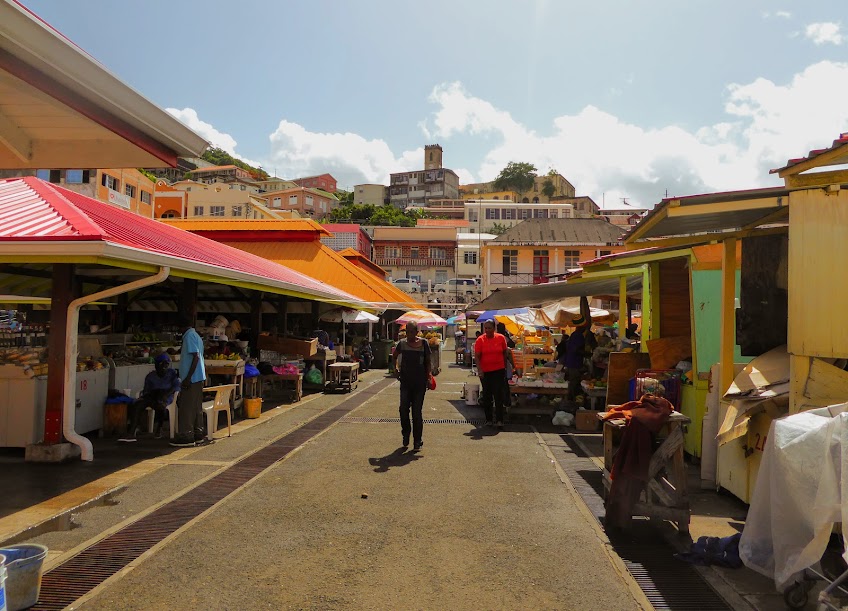
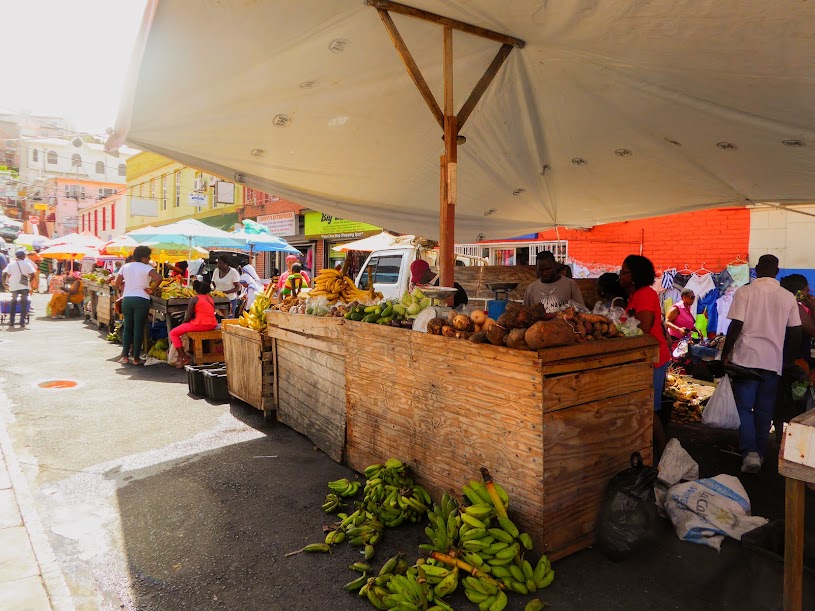
We arrived downtown, where Shademan dropped us off for 90 minutes of shopping. The open market and many street stalls covered several blocks.

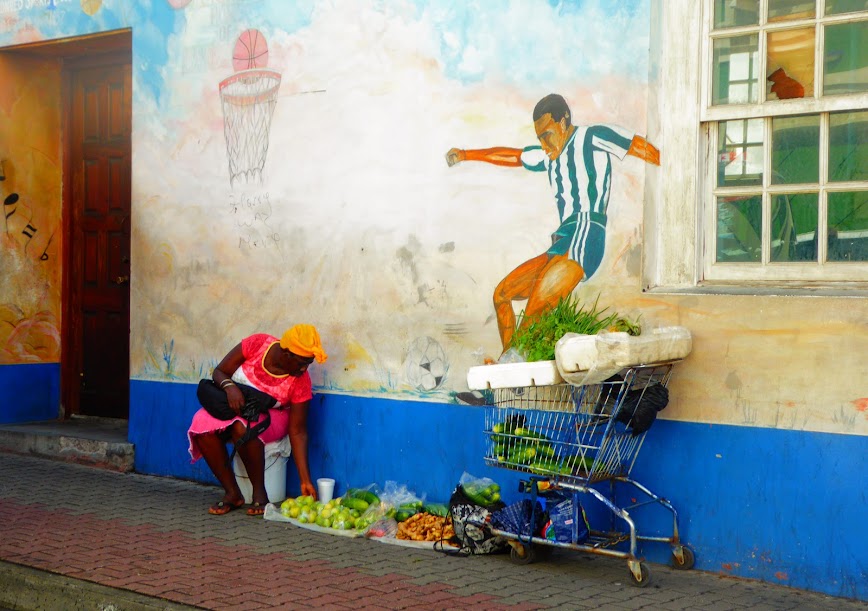
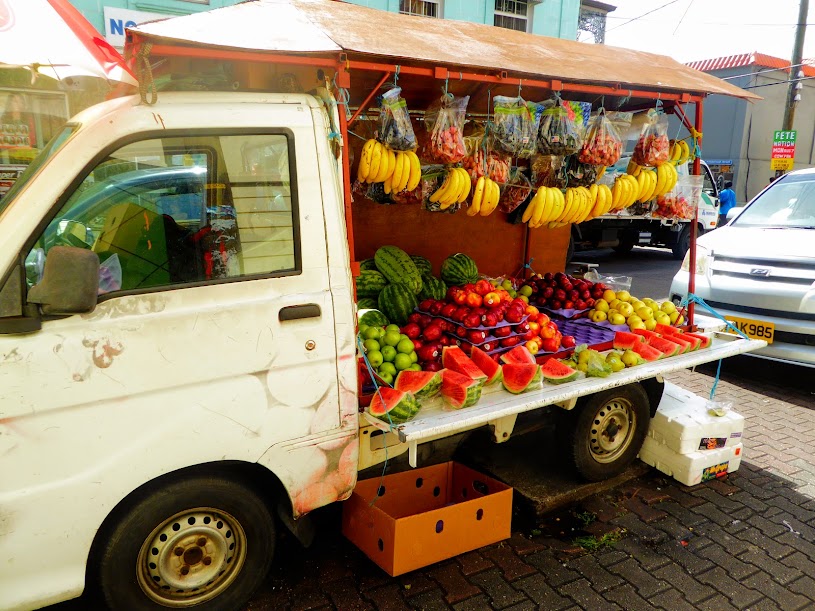
In addition to stalls, many people had set up shop on the sidewalks, or along the side of the road, selling produce and other goods.

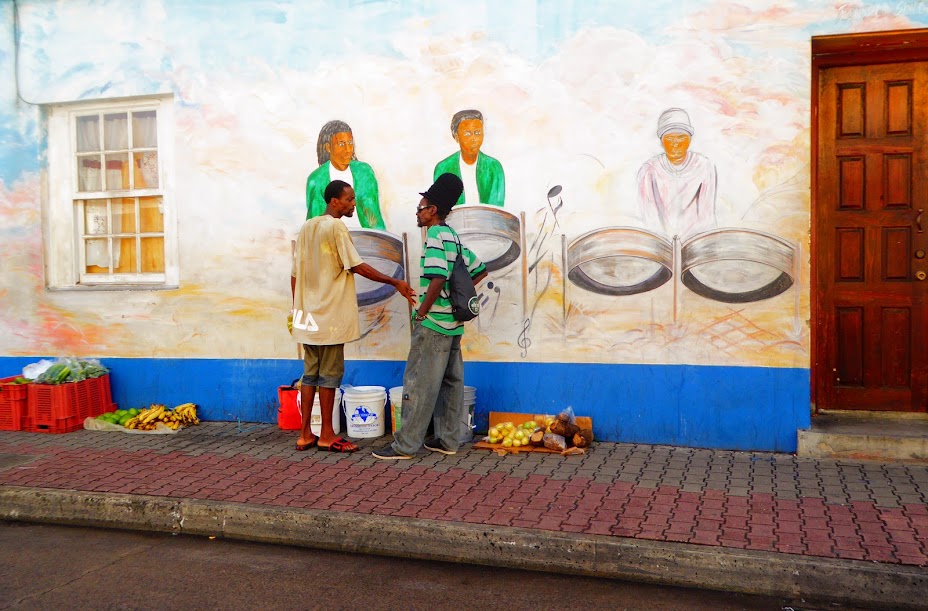
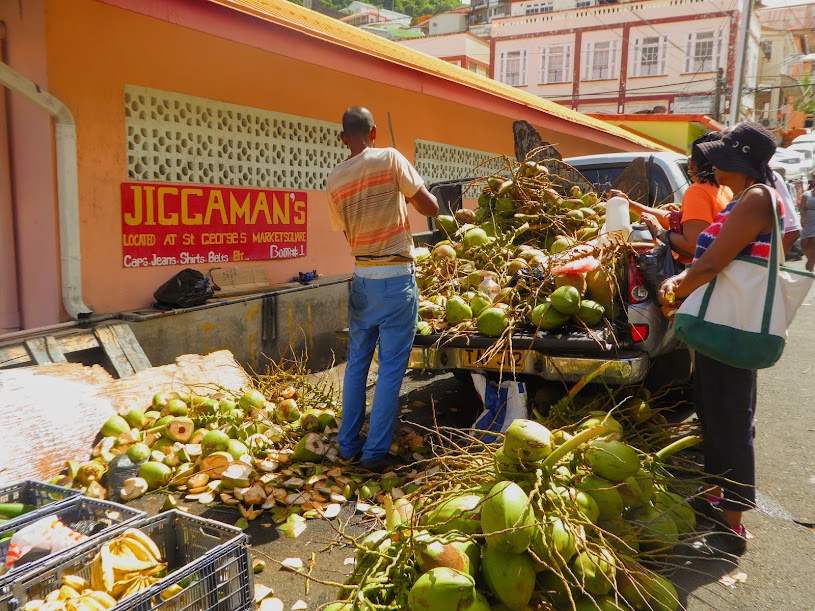
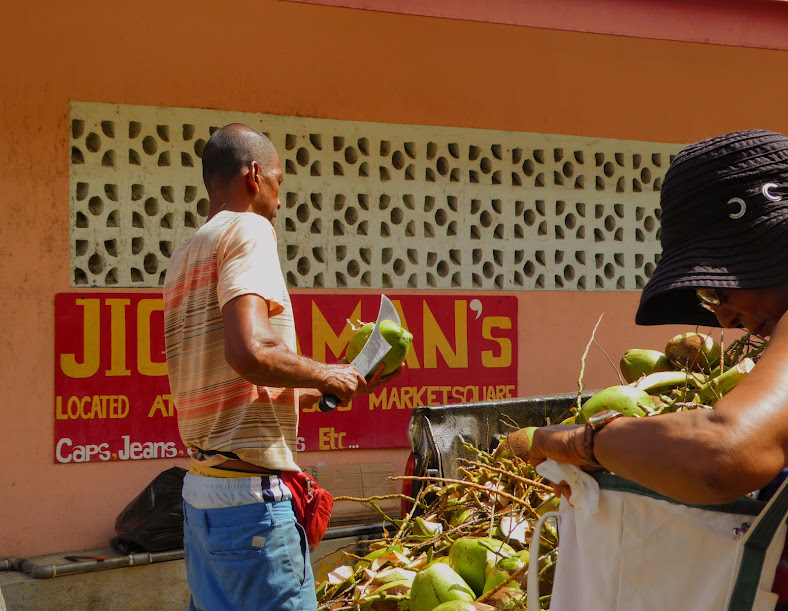
We came across a man selling fresh coconut water, who was very popular…and handy with a  machete! Waiting patiently, behind piles of coconuts, people brought along their own bottles and jugs for filling.

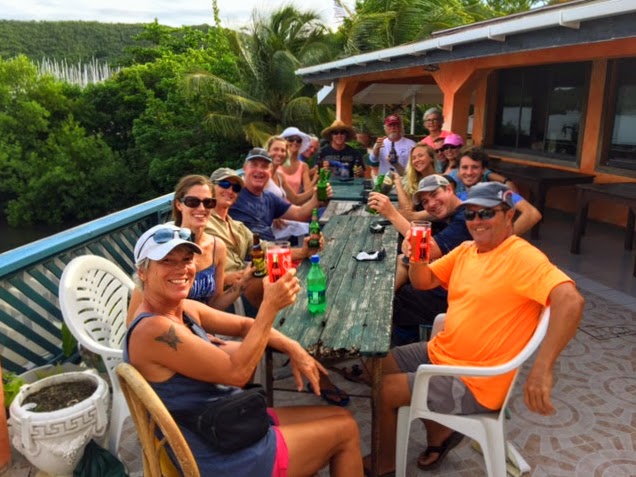
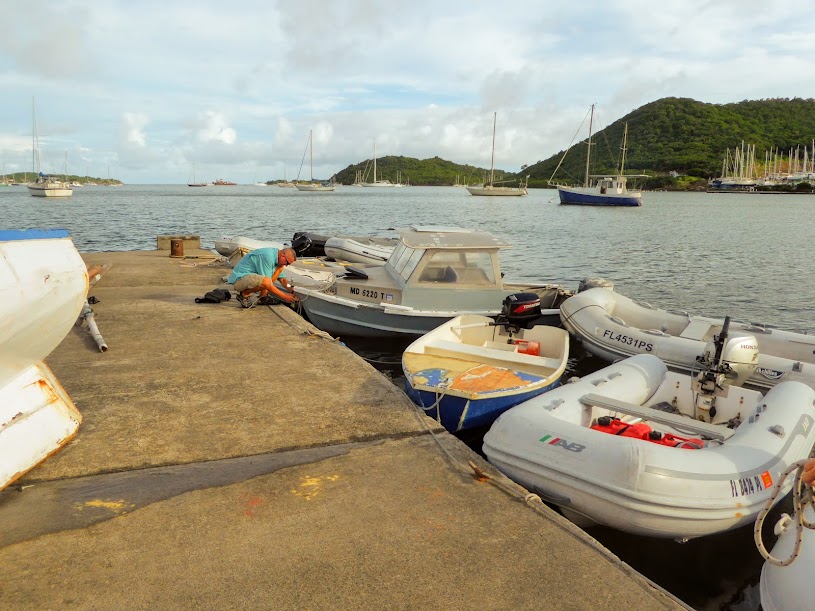
In addition to the many planned events and gatherings, we made our own fun. A group of us who were moored in Prickly Bay decided to do a dinghy bar crawl, visiting places in the nearby bays around the corner.

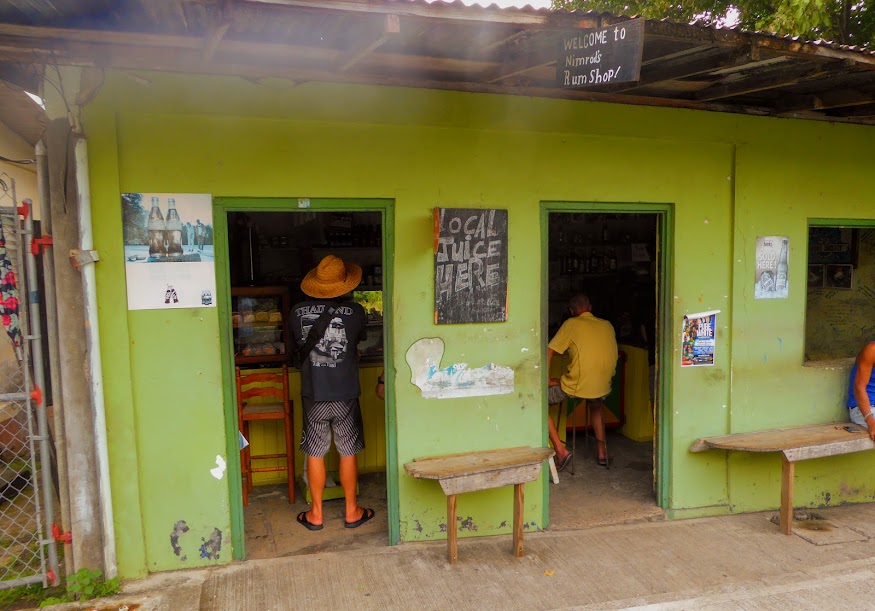
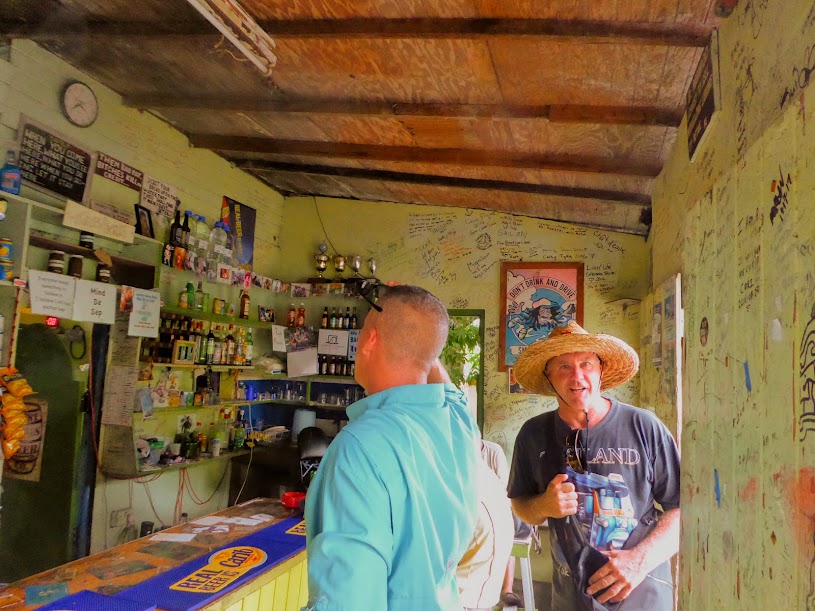
Nimrods rum shop was especially fun. In addition to rum and beer, this tiny bar also sold fresh bread, boxed milk and some local vegetables…a one stop shop!

We ended our crawl at Le Phare Bleu, sponsor of the dinghy concert we attended. The really cool-looking Lightship Bar was closed, so we opted for drinks in restaurant.

After a fun day with friends, Scott and I headed back to Prickly Bay, wanting to get around the corner and out of open water, while there was still some light left.

We sadly said goodbye to our Aussie friends, Mark and Deb, who left us just after Carnival. They had their catamaran, Kefi, hauled out for two months, and were headed home to Australia for a visit. Upon their return, they would head for the Western Caribbean, and the Panama Canal, while we planned to head north.

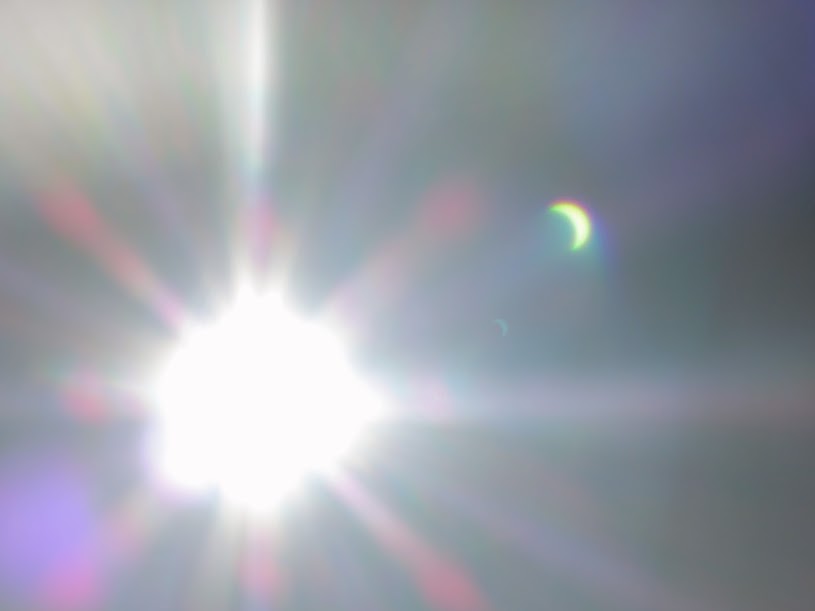
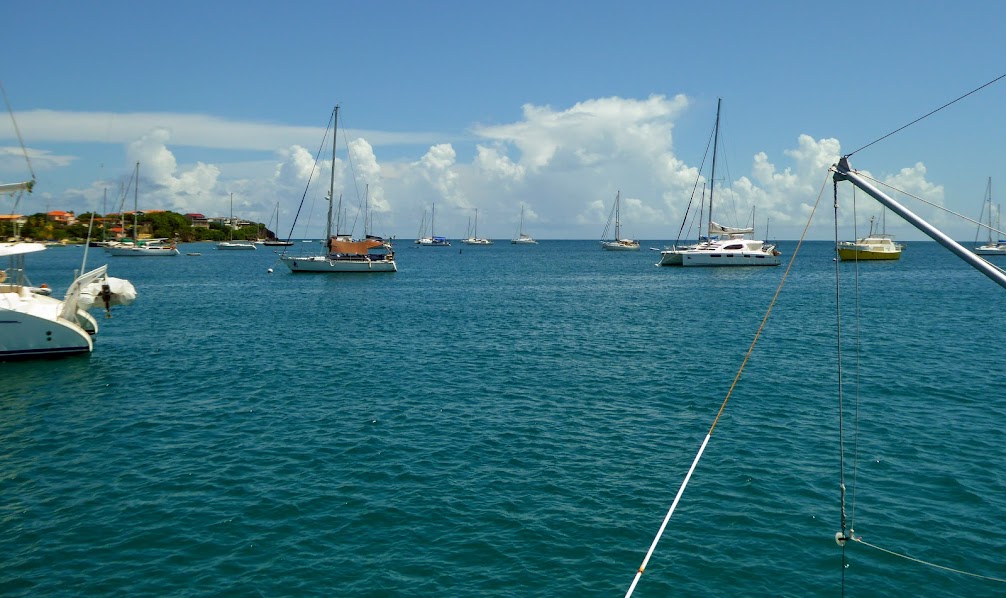
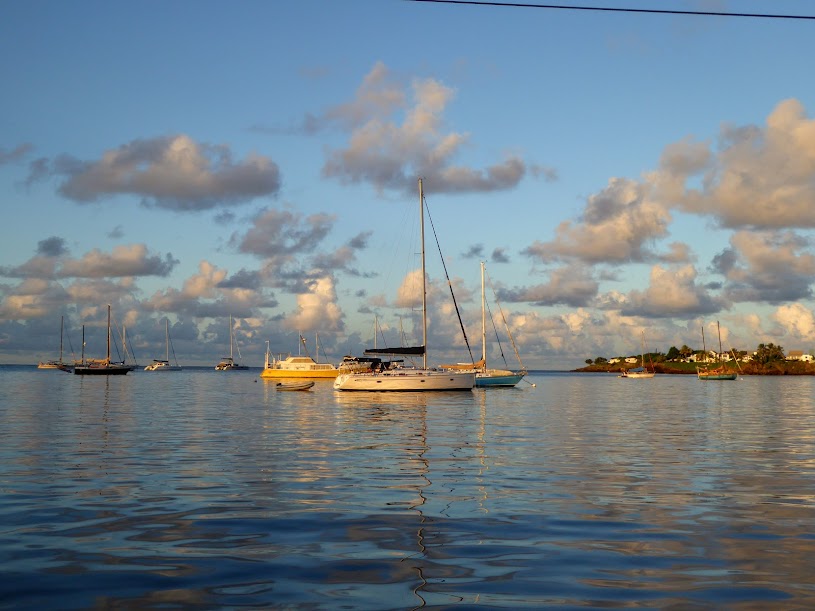
From our mooring in Prickly Bay, we  had decent views of the solar eclipse in August, and even though the anchorage was crowded, sunrises and clear, white, puffy cloud days were still scenic.

So that’s a peek into cruiser life on Grenada. Here are more photos.

“Shells Sink, Dreams Float. Life’s Good On Our Boat!”

Hey Don, Thanks For Going Easy On Us!

With Tropical Storm Don predicted to make a direct hit on Grenada, we prepared for 60 knot winds (always prepare for the worst). Scott secured loose things on the flybridge, stripped the canvas off of our bimini (canvas that shades the flybridge driving station), took the window covers off, removed our flags and stowed our extra solar panels (more on those later).

He tied an additional line to the mooring ball; readied our anchors in case we needed to drop them; put our large fenders in the cockpit, making them available in case another boat broke from it’s mooring and drug toward us; brought in our flopper-stoppers (large plates that hang from the paravanes, and reduce rolling at anchor…greatly reduce); and raised the paravanes, to reduced risk of another boat hitting them, making us more maneuverable through the anchorage should we need to move in a hurry.

While we were preparing the boat, the island of Grenada was preparing as well. One of the local radio stations broadcasted storm preparation information, and we heard the local Red Cross and Coast Guard making contact with each other over the vhf radio.

Businesses were required to close at 3pm, and we were very surprised to hear that public water and sewer were to be turned off at 7pm! Here’s a posting from the National Water and Sewerage Authority, with some interesting information:

ADVISORY – NAWASA TO SWITCH OFF ALL WATER SYSTEMS ON TUESDAY JULY 18TH, 2017

The National Water and Sewerage Authority (NAWASA) wishes to advise the general public that following a meeting of its Disaster Preparedness Committee, the following decisions were made:

– ALL WATER SYSTEMS will be switched off later this evening. A timeline will be provided once an update on Tropical Storm DON is received from NaDMA.

– Once our systems are switched off, consumers island wide will have their service interrupted WITHOUT A DEFINED RESTORATION TIME.

– An analysis of ALL water systems will be conducted by our engineering team on Wednesday July 19th and restoration will commence thereafter.

The Authority implores on the general public the need to:

• Collect and store water in clean, non-corrosive and mostly tightly covered containers both in and out of your refrigerator. To increase shelf life of water, group bottles in dark plastic trash bags to keep light out.

• Store enough water for each member of your family and pet. week.Have at least a minimum of three days supply, of thirty-five gallons per person, per day for domestic use. OUR MAIN ADVISORY – Water collection and storage to last minimum of three days and a maximum of 1 week.

• Store water in bath tubs, drums, pails and buckets for flushing of toilet, washing and general cleaning.

• Shut off water tanks and individual property connections. Your water can be shut off at either the outlet valve or the water meter. Everyone in your home should know where these are located.

NAWASA apologises for the inconveniences likely to be caused by this decision, but advises that this precautionary measure is necessary to safe guard our infrastructure and is in the best interest of the consumers we serve.


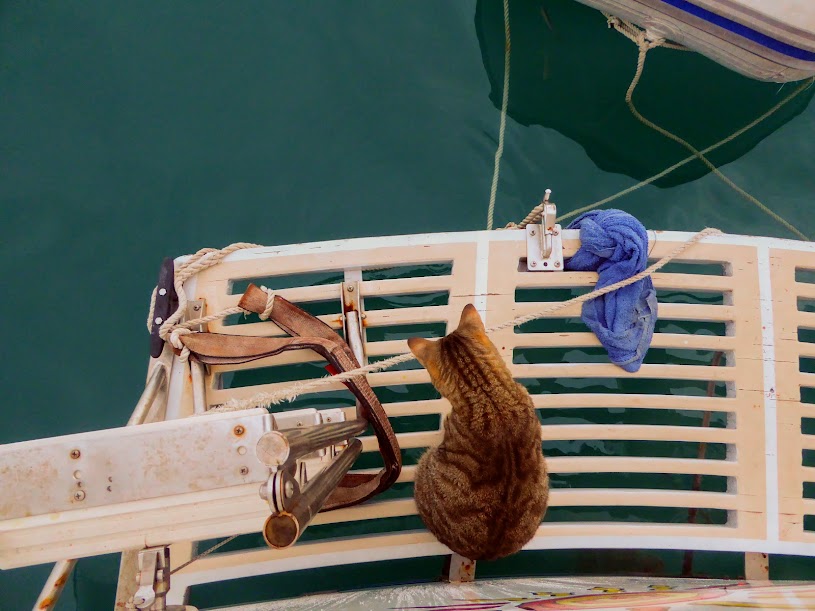
When our preparations were complete, we spent the rest of the day checking various online sites for updates on Don, and just waited, along with everyone else in the bay. Scott had a pre-Don cocktail, and Howard kept watch for fish.

Watching for fish can be tiring. Sometimes  you have to lay down on the job.

We were getting reports that Don was speeding up, but the eye was collapsing, and that wind speed predictions had dropped a bit; all good news.

As the day wore on, the winds died completely, and by early evening the bay was lake-like.  We watched the barometer drop on our weather station, and considered this the calm before the storm. The bay was noticeably less crowded, as many chose to hunker down in marinas or other island locations.

By sunset, Don was predicted to only cause us an hour’s worth of havoc, and at a much lower intensity. We began to get a decent swell coming into the bay, and readied for our 60 minutes of storm drama.

Instead, Don fell apart as it passed twenty miles south of us. We watched the radar updates online, and by 10 or 11pm, the storm, now reduced to a tropical wave, had officially passed us by without incident.There had been no wind to speak of, and we only received a quarter inch of rain.

The incoming swell lingered on though, and we continued to roll around for hours. Rolling back and forth (actually, Sea Life tends to lumber back and forth, as opposed to rolling) wasn’t as irritating as the noise from one of our paravane cables rubbing along a mast wire; the metal scraping sound was maddening. Realizing that Don was now a non-event, Scott lowered our paravanes and put the floppers back in the water….ahhhh.

So, Don fizzled out, thank goodness, and we dodged a tropical bullet. I’d like to believe that this was our one and only scare for the season, but we’ve learned all too well on this journey that Mother Nature is fickle.

“Shells Sink, Dreams Float. Life’s Good On Our Boat!”


Our Final Push To Grenada

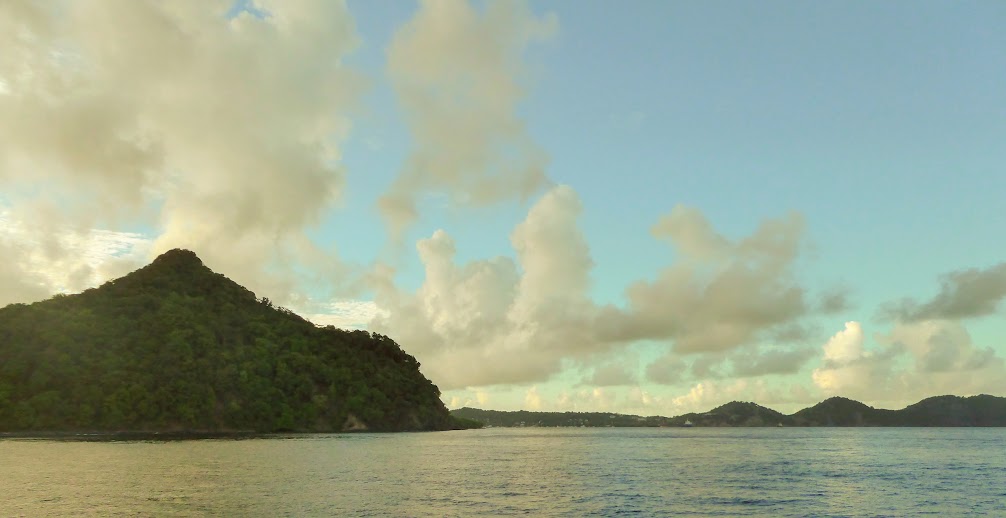
After an easy overnight, we approached Carriacou (pronounced Carri-a-coo) just after dawn. The island belongs to Grenada, and we planned to clear into the country here.

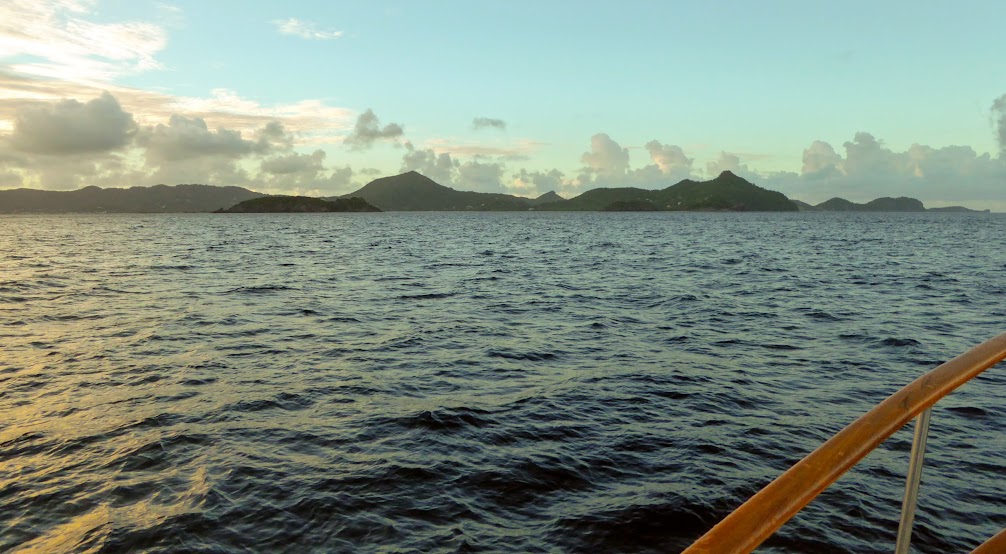
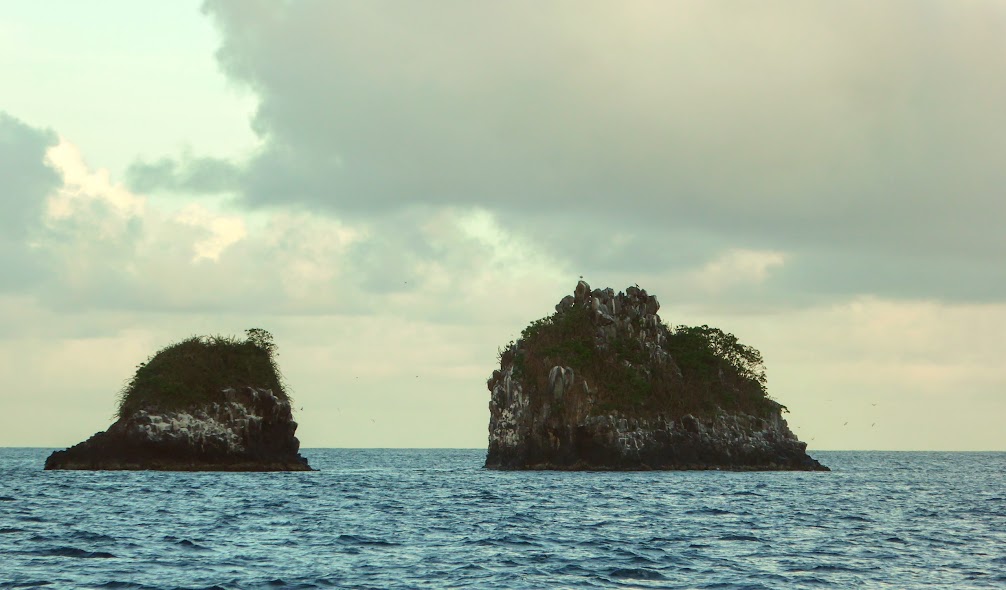
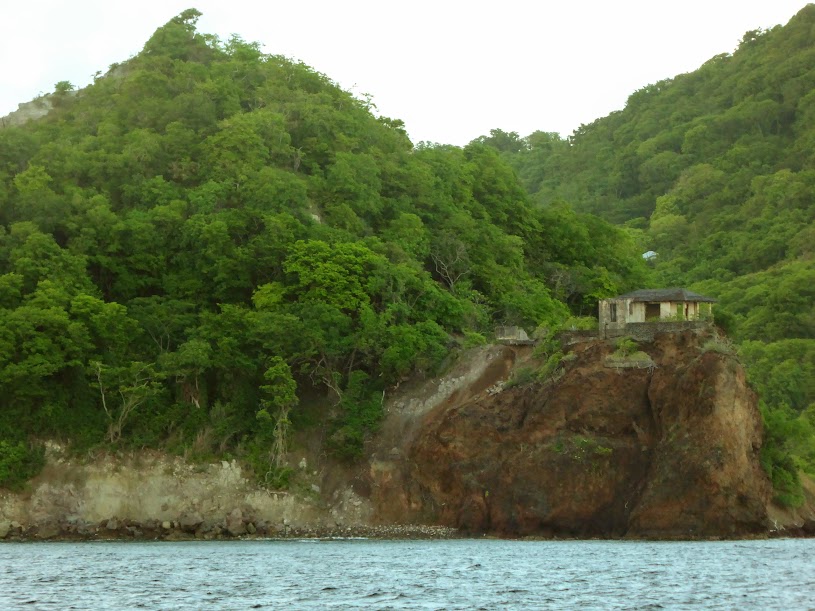
As usual, there were interesting sights along the way: interesting rock islands, and a waterfront house that caught Scott’s eye.

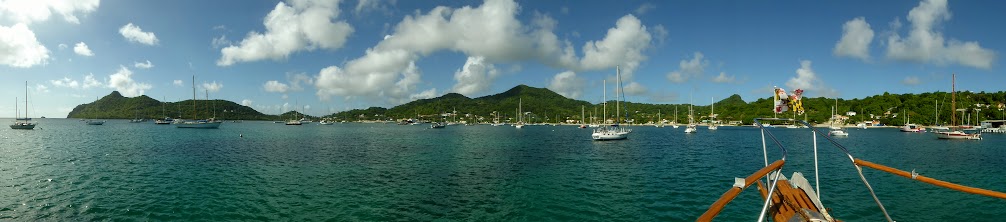
In the early morning hours, we made the turn into Tyrell Bay anchorage. The large bay was full of boats, boats and more boats…I counted 82! We definitely weren’t in Kansas (aka, the Western Caribbean) anymore.

Once we were anchored, Scott made his way over to nearby Tyrell Bay Marina, where the customs and immigration offices were located. He arrived just as they were scheduled to open, but there was no sign of the customs officer. Thirty minutes later, the young officer showed up, and let Scott and several other cruisers inside.

Apparently, he’d been at a party the night before, not getting home until the wee hours, and consequently had a late morning start. Scott, having learned much patience with customs and immigration in the Western Caribbean, just smiled, nodded and waited to be called on. There is an online service in place for several of the Eastern Caribbean islands, called Sea Clear. Clearance forms can be complete online before arriving, saving time when in the office. Customs officials like it, as they spend much less time deciphering handwriting.

Not all cruisers use this service, and end up having to fill out the lengthy forms by hand before getting their turn. As a result, Scott has ruffled feathers more than once, by being waived to the front of the line. Sea Clear, and Scott’s patient attitude, has made for quick and friendly clearance on several Eastern Caribbean islands.

Back to Carriacou…the immigration officer must have been at the same party, and must have stayed even later, as he never showed up at all! Once the customs officer finished his paperwork, he did the immigration clearance for Scott as well, and we were official in Grenada.

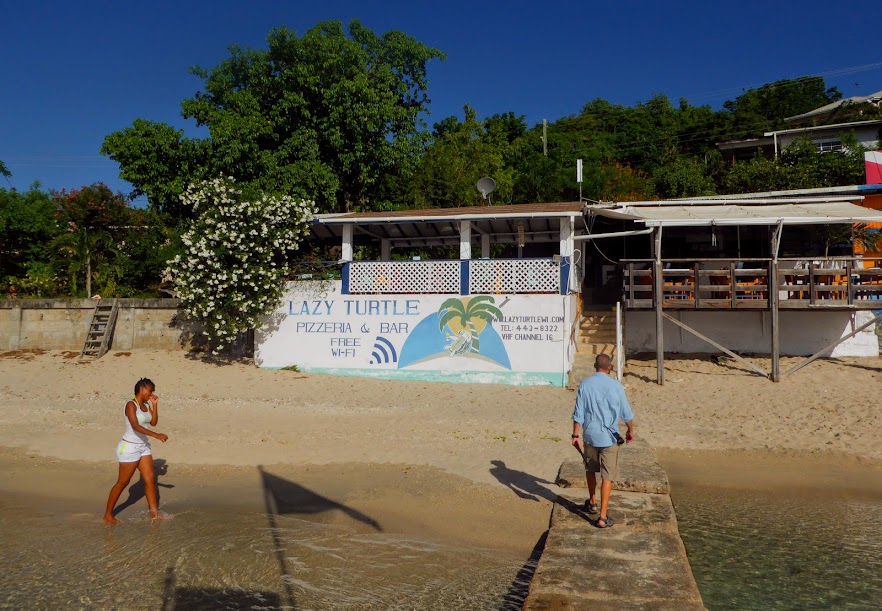
To celebrate, we headed to shore for lunch at the Lazy Turtle. In addition to other items, pizza was on the menu, and was billed the “best in the Caribbean.”

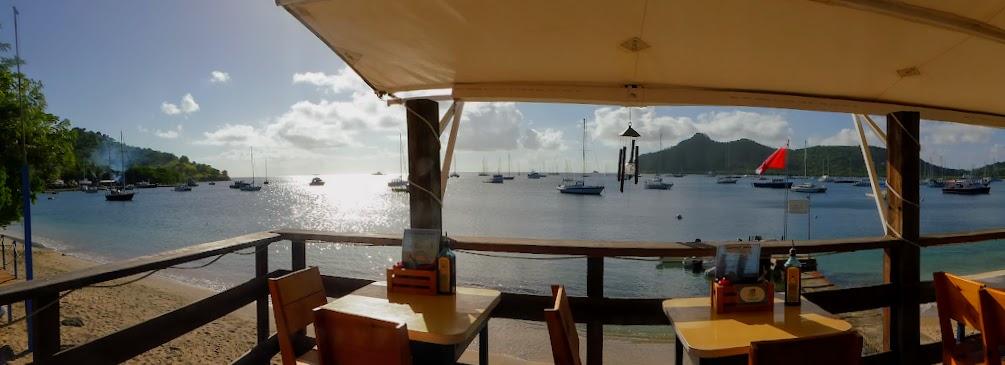
The pizza was far from the best in the Caribbean, but it fit the bill for lunch, and views back out at the crowded anchorage were good. Soon, the afternoon sun had us changing locations, over to some funky, wooden tables in the shade. After lunch, we spent time wandering the island a bit, then returned to Sea Life for an early night.

The next morning, we raised anchor and continued toward Grenada. We made one last stop at Rhonde Island, also owned by Grenada, for a few quiet nights at anchor.

There anchorage has room for only four or five boats, a nice change from 82! We enjoyed the quiet, space and Scott got some exploring in.


From Rhonde Island, it was just a day trip to Grenada. We passed more interesting rock islands, and Scott put some lines in the water hoping for a nibble; unfortunately, he got skunked again.

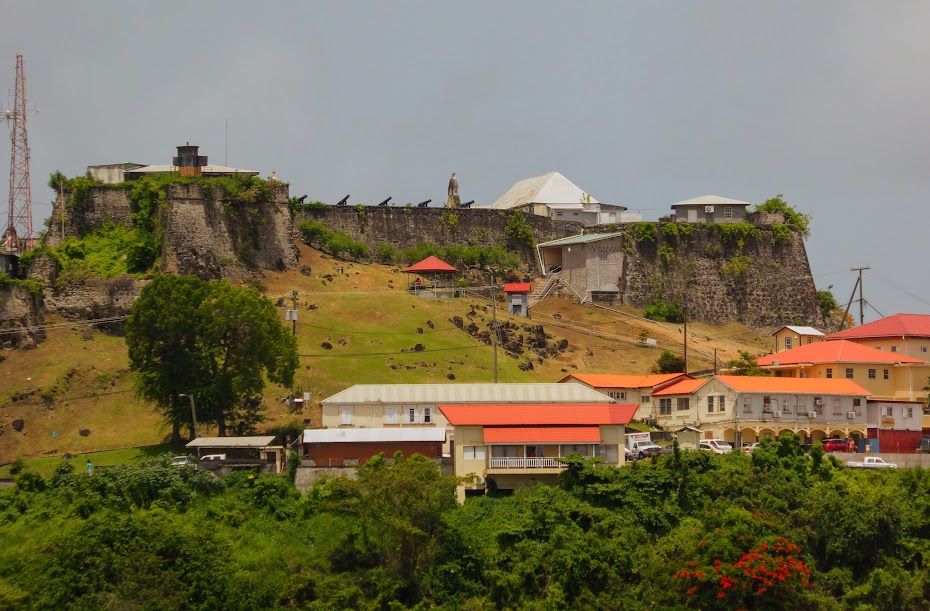
Moving down the west cost of the island, we passed the capital city of St. Georges, and the remains of Fort George.


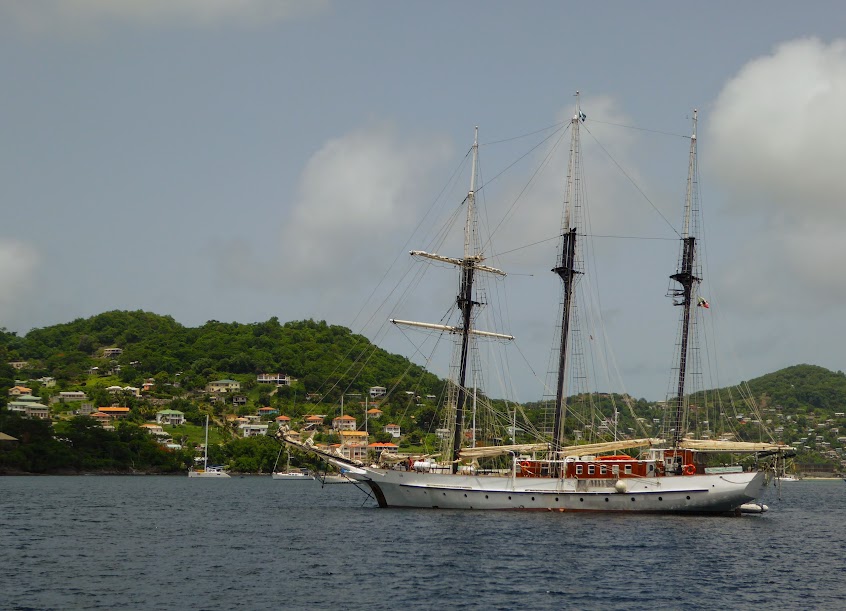
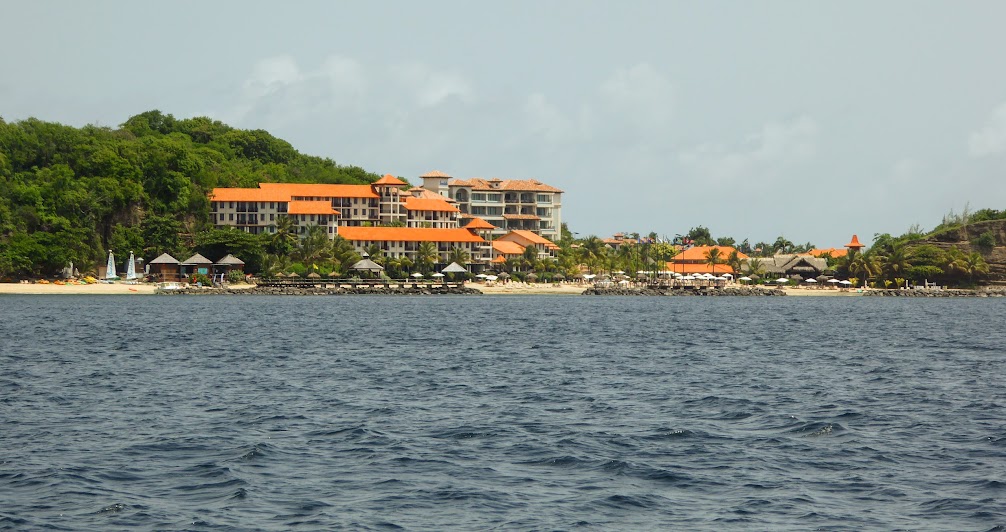
We passed several types of interesting boats in St. Georges anchorage, and the large Sandals LaSource Grenada, before turning east, to head along the south coast.

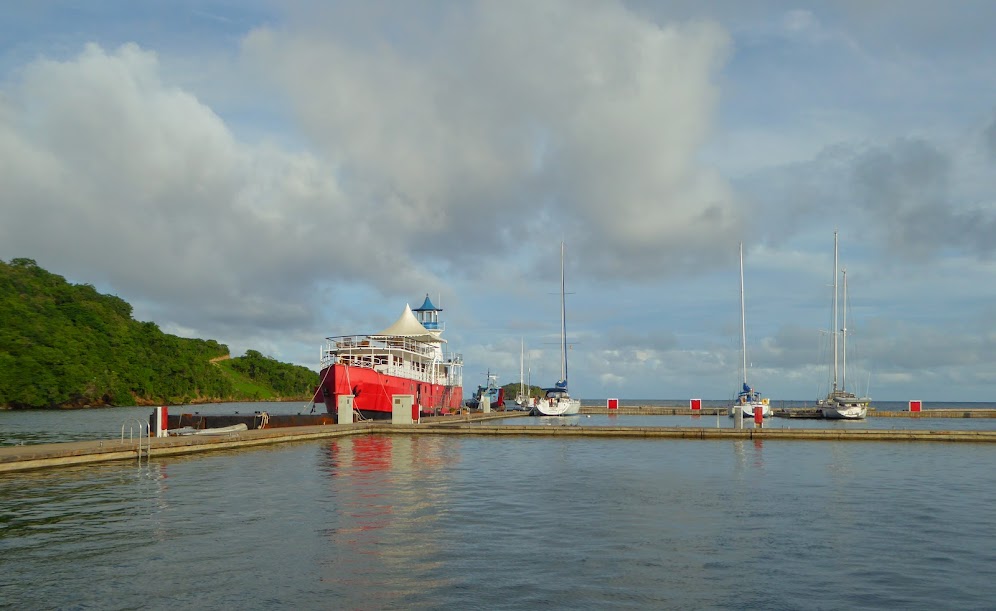
An hour or so later we made our final turn, into Prickly Bay.  Again, this large bay was full of boats. There wasn’t enough room to lay out a proper amount of anchor chain, so we chose to grab one of the marina’s mooring balls.


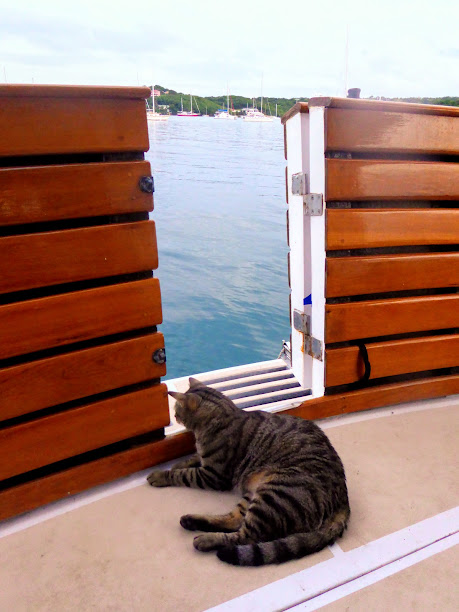
We’d made it to our hurricane season home. Howard checked out his new surroundings, and we settled in.

Here are more photos of our final push to Grenada.


“Shells Sink, Dreams Float. Life’s Good On Our Boat!”

Bon Jour, Saint Pierre, Martinique!!

After a month in Virginia, Mom was healing like a champ in rehab, and Dad had food in the freezer. It was time for me to head back to St. Thomas, where Scott and I would point Sea Life toward Grenada, where Sea Life would spend hurricane season.

Soon after I returned, the wind forecast was favorable for an almost three day leg to Martinique (a hop, skip and a jump, after the hellish 6.5 days from Cartagena to Puerto Rico…ugh!). After two over-nights, and zeroing in on hour 50, we caught sight of the beautiful, volcanic island.

We made our way down the coast, admiring the steep, deep green slopes, dotted with small villages and bright green fields.

Our destination was the small town of Saint Pierre, not far down Martinique’s west side. I found this great geographical map online, marking Saint Pierre, and also showing how  mountainous the island is.

Image result for map of martinique

We approached the quiet town, and anchored at the south end. Local children played in the sand on shore, and we had views of Mt Pele in the distance. In the evenings, the sounds of tree frogs in the hills just off shore was music to our ears. It was relaxing, peaceful and beautiful.

Howard immediately liked Saint Pierre, heading outside as soon as the motor shut off.

He and Scott spend time relaxing on the side deck, taking in the sights and “smells,”


Scott enjoyed a celebratory, end-of-passage/arriving-at-a-new-island cocktail, while Howard enjoyed a post-passage scratch on the dock lines hanging nearby.

Knowing that this doesn’t thrill Scott, Howard will look back, to see if there’s a reprimand coming.

Later, there was play time on Howard’s “jungle gym,” aka our inflatable dinghy. For one reason or another, and always on passages, the dinghy get’s stored on the side deck, and Howard cannot resist jumping up on it.

It is free for cruising boats to clear in and out of the French-owned islands…big plus; cheap wine, bread and pastries…even BIGGER plus! There are usually several locations on the islands (stores and shops) who have a computer on site, and cruisers just have to enter their boat information, etc. and click “print” for clearance papers. There is even an option of clearing in an out at the same time, if you enter your expected date of departure.

The morning after arriving, we went to a local restaurant  just a block from the town dinghy dock,  to use the clearance computer. With the online form in French, the obvious language barrier made filling in our information a bit challenging at times, but the owner happily helped us. He spoke English, and helped me better pronounce a few key phrases (most important: Please forgive me, I’m just learning, and my French is horrible!), and served us cold, Lorraine beer while we finished our check in form.

Now that we were official, it was time to wander through town a bit.

Scott was also thrilled to once again be able to buy Orangina (still another French island plus), which he’s come to love.

We learned that Saint Pierre used to be known as the “Paris of the Caribbean,” and was culturally and economically the most important city on the island. Unfortunately, this town has taken quite a beating over time.

A hurricane pummeled Martinique in 1780. Known as “The Great Hurricane,” it produced a storm surge of 25 feet, which inundated the city, destroying all houses and killing 9,000 people. The devastating storm is the deadliest Atlantic Hurricane on record. Between 20,000 and 22,000 people died throughout the Lesser Antilles Islands, when the storm passed through them from October 10th–16th of that year. Specifics on the hurricane’s track and strength are unknown, because the official Atlantic Hurricane database only goes back as far a 1851.

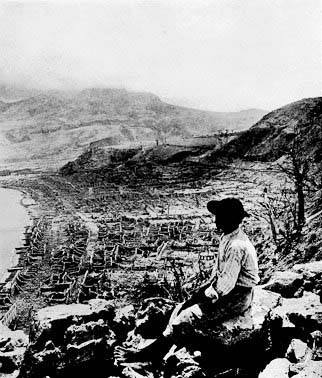
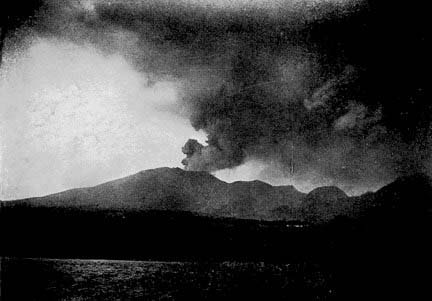
The town was destroyed again in 1902. when the volcano Mount Pelée erupted. It’s destruction dubbed the Mount Pele Eruption the worst volcanic disaster of the 20th century. The eruption killed approximately 30,000 people with a pyroclastic flow (a dense collection of fragments and gases, which is much more dangerous than a lava flow).

Mount Pelée sent a cloud of super-heated gas and dust racing toward the city. Within a single minute, the 1,075 degree pressure wave flattened nearly every building in the city of St. Pierre. Anyone unlucky enough to be in its way would have instantly caught fire and burned to death. Even those in shelters suffocated, as the super-heated wave burned up the oxygen and replaced it with deadly gases; lungs were incinerated from the inside, with even a single breath (gross).

 The deadly eruption completely destroyed the city of Saint-Pierre (which was, at that time, the largest city on the island), within minutes. Approximately 30,000 people were killed instantly; the entire population of the town, as well as people from neighboring villages who had taken refuge there for safety. The city burned for days afterward.

Before:

After:

Apparently, there was considerable eruptive activity in the two weeks prior to the fatal blast, but since pyroclastic flow was not yet understood, the danger was thought to be from lava flows. It was believed the lava would be stopped by two valleys between the volcano and the city.

The main eruption left only two survivors in the direct path of the flow: a prisoner in a poorly ventilated, dungeon-like jail cell, and a man living on the edge of the city, who escaped with severe burns.

Mount Pele is currently in a dormant state, but is registering seismic activity.

The city of Saint-Pierre was never fully restored to its former self. However, it is now referred to as a city of art and history.  There were many reminders of the eruption’s damage, as we walked the streets.


The cathedral in town was rebuilt after Mount Pele’s destruction, and the “new” cathedral looks much different.  Only its lower floor, spared by the pyroclastic flow, was preserved in the reconstruction.

The large cathedral was undergoing a current reconstruction when we visited.

We walked along an upper road, and came to the remains of the Theater of San Pierre.

Able to seat 800 people, we read that it was often booked to capacity, with plays ranging from classical to vaudeville, as well as operas. On evenings when there were productions, the stairs and entrance railings were crowded with vendors, selling oranges, pistachios and sweets. The theater also hosted political meetings, and even balls during carnival time.

Due to economic reasons, the theater was closed, just a year before the Mount Pele eruption. The staircase is still pretty well intact, offering views back out to the Caribbean, but not much remains of the great theater’s interior.

On the other side of the theater wall, and down the hill, are remains of the prison, and it’s cells.

On May 7, 1902, a day before the Mount Pele eruption, Louis Sylbaris, the town troublemaker, ended up in solitary confinement here. Since all records were destroyed, and all witnesses killed by the eruption, what Louis was being imprisoned for is a matter of speculation. He later said it was because of a fight, but the cell he was in would have been where someone accused of a more serious crime, such as murder, may have been held.

Trapped in his cell when the volcano erupted, Sylbaris felt the intense heat from the 1,000-plus degree pressure wave, as ash came flying in through the tiny slot in the door. Suffering from burns and desperate to cool down, he urinated on his clothes and stuffed them into the opening. It was just enough to save him, and four days later, rescuers freed him.

Having survived the worst volcanic disaster of the 20th century, Sylbaris became a celebrity, and toured the world with the Barnum & Bailey Circus. He was billed as “The only living object that survived in the ‘Silent City of Death.'” While the eruption was doomsday for the town of St Pierre, it may have been Loius Sylbaris’ savior.

We made our way back to the high road in town, to an overlook area with views of the sea. Fisherman cast lines off the docks below, to the north, and Sea Life was contently at anchor to the south.

Immediately below us…more of Mount Pele’s devastation.

Maritime commerce increased through the eighteenth century, and by the mid-century,  seven eighths of all the island’s trade came through St. Pierre, as well as that of St. Lucia, Guadeloupe, Dominica and Grenada. With such a high volume of commercial activity, there was a great need for warehouses and shops along the waterfront. As a result, Quartier du Figuier was developed.

Scott and I went down some steep, steep steps, to the road below, to get a closer look at the remains of the buildings.

Warehouses along the Quartier du Figuier held merchandise that had just been loaded off of ships, and also goods waiting to be loaded. Shops stocked items that ships traveling through may need, such as ropes, hoists, anchors, etc. Most of the buildings had upper stories, which were used for residences.

With a full day of wandering behind us, we stopped for a pizza to go, and enjoyed cold Lorraine beer while it cooked. Then it was back to Sea Life, traveling along the historic town’s shoreline, as we made our way in the dinghy.

Tomorrow’s plan…..a day of rum! Here are many more photos, of our stay in Saint Pierre.

“Shells Sink, Dreams Float. Life’s Good On Our Boat!”


Passing Through The Spanish Virgin Islands

** Disclaimer:  Yes, I am behind on my posts.  No, this post is not real time, meaning we’re not in currently in the Spanish Virgins. Keep track of our current location through the Where Are We Now page. **

The weather wasn’t favorable for a smooth ride straight to St. Thomas (going east, and consequently into the wind, is always challenging), so we chose to make a quick visit to the island of Culebra, one of the Spanish Virgin Islands, along the way.

Culebra and Vieques are the primary islands in the Spanish Virgins, but there are also many other smaller islands closer to shore. They’re all part of the Commonwealth of Puerto Rico, and therefore also a territory of the United States. The islands belonged to Spain, before the Spanish-American War, and Spanish is still the primary language. Here’s a map I found online:

Image result for map of the spanish virgin islands

We raised the anchor at dawn, in our quiet, scenic spot along Puerto Rico’s southern coast, and began our short journey to Culebra as the sun rose.

Lush green hills, and many more windmills lined the shore, as we neared the end of mainland Puerto Rico.

It was still pretty early for Howard, so he took advantage of the usual “towel fort” that we build him for travel, and caught some more zzz’s.

We passed by Vieques, the larger of the two main islands, and were anchored behind a reef, off of Culebra’s southwest side by mid afternoon.

We’d had overcast weather during our trip over, but not long after we’d set the anchor, the sun came out to greet us. The view behind the boat was a mix of brilliant green, meeting clear blue, with many different homes scattered among the hills. Off of our bow, we had an open view to the bay, and nearby reef.


AND, we were lucky enough to spot flamingos!!….Honest to goodness flamingos, feeding along the edge of the reef!! Pretty cool, even if I had to look through binoculars to see them, and zoom the camera lens to capture a photo.

Howard took it all in from his shady perch up on the flybridge, beneath the Aluminum Princess. Later, he and Scott enjoyed the sunset together.

The next morning, we decided to dinghy into the bay, and explore the small (and I think only) town of Dewey. We passed the popular Dinghy Dock Restaurant, and continued on, through a short canal that lead to the western side of the island.

Once on the other side, a huge, Rasta-like, metal, monkey-looking sculpture welcomed us to a beautiful, blue water bay. Unfortunately, the winds weren’t favorable for anchoring here.

We came back through the canal, tied the dinghy at the town pier, and walked through town, which didn’t take long. Feeling hungry and parched, the Dinghy Dock called to us. While we had lunch, a school of huge tarpon waited in the water just off the restaurant’s pier for handouts.


Having conquered town, we made our way back to the anchorage. That evening, when Scott dropped the fish light in the water, it seemed the tarpon had followed us home. They were much larger than Howard was used to, and made quite a racket when jumping for smaller fish attracted to the light; scared Howard and me both…yeesh.

The next morning, we would continue on to St. Thomas. Here are a few more photos.

“Shells Sink, Dreams Float. Life’s Good On Our Boat!”

Our Passage From Cartagena To Puerto Rico

Settle in…this one will take awhile.

To make the Eastern Caribbean, Scott’s plan was to head immediately north out of Cartagena, getting as much distance from the Colombian coast as possible, before turning east in a tight reach run toward Puerto Rico.

With this passage being our longest and most challenging, he decided to defer to a professional, and pay for weather routing. The plan came back for us to follow the Colombian coast, keeping out of some current and then turn north. Scott wasn’t thrilled with the idea, but he resisted the urge to argue.

Taking into account the oncoming wind and waves, and constant use of the paravanes, we hoped for a speed of six knots, worse case five. When we received the route, it had us arriving a day earlier than Scott’s calculations, so there was some back and forth to confirm how fast our boat would be able to travel.

With a weather window that wouldn’t get any better in the near future, we cast off lines, and headed east. Our destination was Ponce, located on Puerto Rico’s south central coast. There were other options, but Ponce was farther east, and had many stores in the area for us to shop (Walmart Supercenter, Home Depot, Ace Hardware, auto parts stores, PetSmart, and….fast foodl!).

Sunday – Day One: We made our way out of Cartagena’s harbor through the north cut. It was shorter than the south route we followed into Cartagena, by more than two hours, but challenging to navigate.

There is an old submerged wall at the north cut, put in place to be a harbor defense. Ships would run aground on the wall, tearing their bottom out. This forced them to use the deeper south entrance, which is visible from forts in the area and more easily defended.

A section of the submerged wall has been removed for boats to pass through, but we were unsure of it’s depth. After inquiring online, a local expat informed us that we had eight feet to work with; more than enough, as we only needed five. We made our way easily through the cut, and out into the Caribbean Sea.

As predicted, our passage began with unusually calm conditions, considering Colombia’s coast is the most challenging Caribbean location to “escape” from. Even with virtually non-existent wind, the swells were very sizable. Luckily, they were far enough apart, so even in a head sea we traveled over them comfortably.

As is usual for this area, the winds picked up considerably as evening approached. We spent the entire night traveling right into 20 knot winds, which was a bit lumpy. I was so grateful for our bow height! Even at nine feet above the waterline, we were getting covered in heavy spray. The pilot house was also worth it’s weight in gold at this point, provding the opportunity to be inside!

Howard did not enjoy the increase in wind and swells. I managed to get food into him in the afternoon, and we made two successful trips to the litter box. I helped brace him as he did both numbers one and two (it was clear by the look on his face that he was mortified by this), and was satisfied that basic needs were being met.

However, later attempts to get food into him resulted in two vomiting episodes, and a generally miserable feline. I tucked him in tight with pillows to keep his movement to a minimum and covered him in cold towels to help keep him cool, which seemed to help.

We began the passage with the saloon doors open and the screen pulled across for fresh air. After dark, the sounds of flying fish landing and flopping in the cockpit was too distracting for seasick Howard. It wasn’t worth risking more vomit, so we closed the doors.

I have a hard time sleeping while on passage, only getting an hour or so at a time, and this time was no different.  It’s hard for me to block out movement of the boat and noise of the motor. On this passage, I was also trying to block out noise of the wind and waves, which was almost impossible.

As a result, I took watch as much as possible, and let Scott store up on sleep. He’d begin the day at dawn, while I rested on the couch and did a few chores. At about 10-11am, I’d come back up to the pilothouse until 5pm, and Scott would come on until I started my night watch, which usually ran from 10pm until 5am.

As usual, I sang my way through eight hours of night watch, while keeping an eye on the instruments and radar. Our Delorme satellite tracker is invaluable when we’re underway. I am able to text with others cruisers, and friends at home, until they go to bed. Then I switch over to friends in the UK as they wake up…awesome!

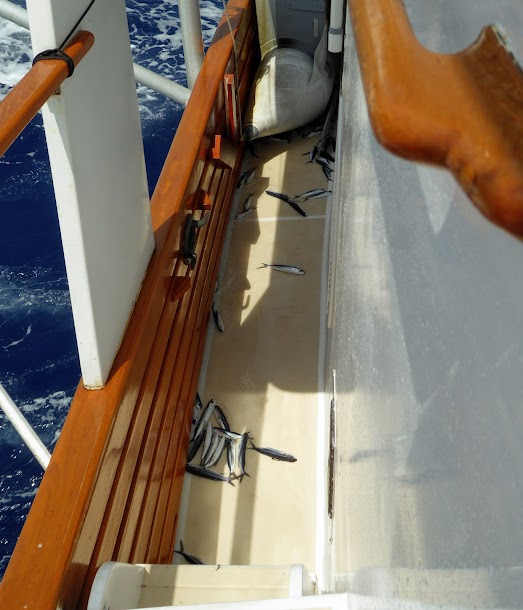
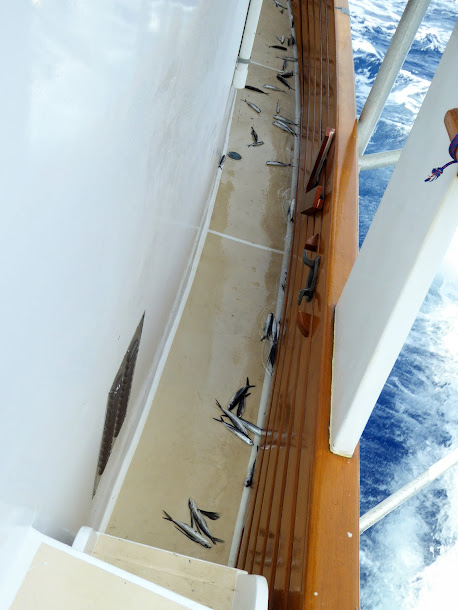
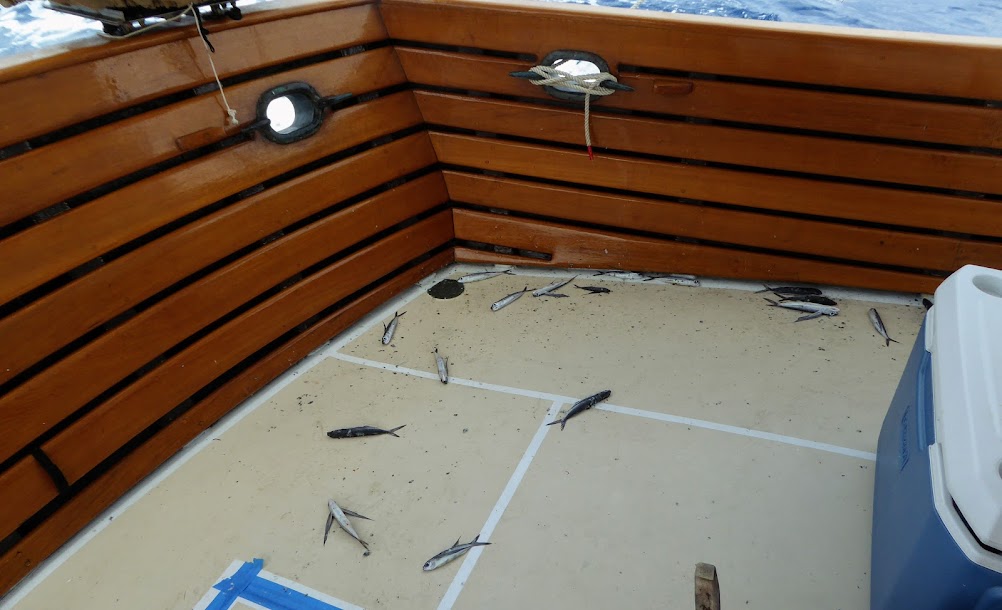
Monday – Day Two: When I woke Scott at dawn, the winds were back down to ten knots. We opened the saloon doors and the smell of dead flying fish hit us in the face. Scott collected thirty, from both the cockpit and side decks.
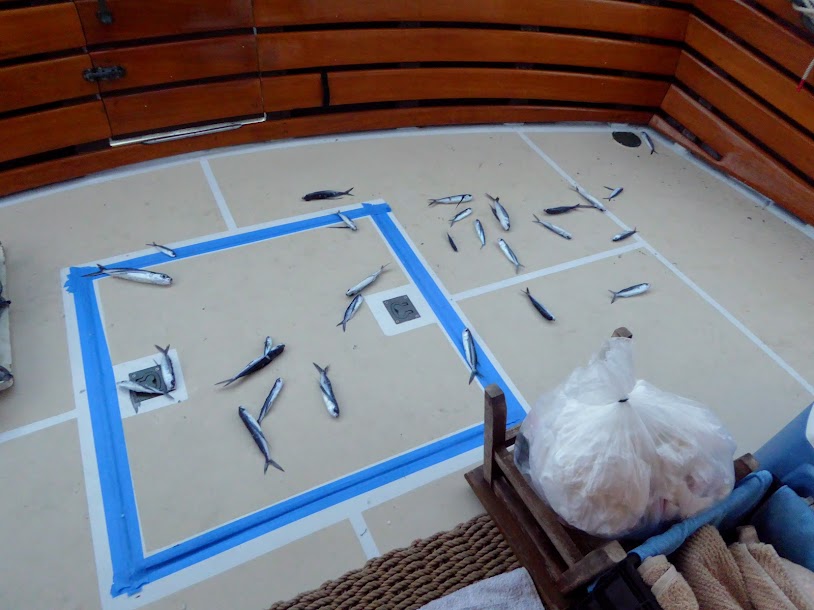
Later in the day, he went up onto the flybridge, to investigate an unnerving noise (Many sounds occur in big seas, from unexpected items rolling around. Some are never identified, and remain maddening), and found a dead flying fish up there as well!

Even though the winds had subsided, it took hours for the swells to follow suit, but by late morning we were back in easily tolerable head seas. I took the calmer conditions as a chance for Howard to lap up some chicken broth, and he was able to get some actual rest, wedged in between the legs of whomever was sleeping on the couch.

Again, the winds increased in the evening. Scott was concerned that we were now near the Colombia/Venezuelan border, and asked me to be extra diligent as I kept an eye on the radar screen that night. There haven’t been any recent reports of issues with boats in the area, but it never hurts to be more aware. I saw two or three large ships on the screen, more than twelve miles out; aside from that, we were alone.

Tuesday – Day Three: I’d spent the night hearing almost constant thuds outside from fish impact, and in the light of day I could see why. The dead carcasses were everywhere, and their odor came right through the closed doors. Our saloon smelled like a fish cannery, and Scott’s morning carcass count came to a whopping 130!
Fish aside, by now, I could no longer stand the smell of myself. At night, the saloon and pilothouse doors were closed, to keep flying fish out. This stems from one managing to make it’s way through a window that was barely cracked open on a previous passage. It landed on Scott’s face as he slept on the saloon couch, so now….doors closed at dark!

As a result, the boat gets quite toasty inside at night. We keep fans pointed at us, but it’s still pretty darned warm. The need for a shower was now interfering with what little sleep I manage to get, so I decided that come hell, big wind or swells, I was bathing today! It went better than expected, with the molded shower seat coming in handy, and I emerged a new, non-smelly person.

By late afternoon, the winds ramped up with a vengeance. I spent the night watching winds stay at 20+ knots, almost squarely on our nose. We now had white caps and sizable waves along with the huge swells. At one point, I looked out, and saw the churning sea below us. We were perched up on a big-mamma wave, before sliding down it’s side. I was glad that it would soon be dark, hiding my view of the chaotic water coming at us.

Frequently, as we were coming down a wave, another would hit with us from underneath, and the sound of impact was loud, jarring and scary. Sea Life handled the conditions like a champ; the crew, not so much. Howard threw up again, and Scott went to sleep with the assistance of a Valium.

Wednesday – Day Four: Since we were virtually alone, and there was just the occasional ship passing 12 or 16 miles away, I’d spent the night watching movies. Our friends aboard s/v Prism were also underway, heading from the San Blas to the Cayman Islands. We each have a Delorme, so Shannon and I spent time each evening chatting  back and forth. At dawn, I came off watch and woke Scott. Our morning fish carcass count was only 30. I think we were too much of a moving target, for them to intersect with.

Howard was becoming more tolerant of the conditions underway. He kept down some broth and canned chicken, and made another successful visit to the litter box with help from me for stabilization. I considered it progress.

The stupid, big winds lasted for 18 nerve-wracking hours, before dropping back down to 12 or so knots mid-morning. It’s amazing how quiet and calm 12 knots is, after living with winds in the 20s for so long. The strong winds along with current in the area kept pushing us west during the night but Scott was now able to change our course a bit, putting us more on track for Puerto Rico. We are finally crossed the halfway point, but three more days of this seems like forever!

Thursday – Day Five: Overnight conditions remained the same as the previous night. Winds increased, and we lumbered through the waves and swells. While on watch, I suddenly heard a strange thud in front of me, inside the pilothouse, and knew exactly what had happened….fish breach.

I mentioned Scott being hit in the face as he slept, when a fish came through a cracked window. This time, one managed to travel under the solar panels (which are mounted above the pilothouse, and sit only six inches above the pilothouse roof) and down through one of the small hatches in ceiling! We keep these hatches open, unless the air conditioning is running. With the solar panels mounted just above them, we can get air into the pilothouse without worrying about rain or the sun’s heat coming in, but obviously fish are a concern.

As the smelly fish flopped around on the chart table, I stayed put on the bench and yelled out, “SCOTT!!!!…..FISH!!!…SCOTT??!?!?…FISH INSIDE!!! Scott woke immediately from his sleep, and quickly appeared with paper towel in hand. In the dim light, he located and grabbed the icky, flopping fish and chucked it out of the pilothouse door. Scott then attempted to wipe up the mess left behind; slim, scales and whatever those things throw up when they’re under stress. As you can imagine, the pilothouse now smelled wonderful. Aside from the drama of a fish breach, the rest of my night watch was uneventful. I saw one or two ships on the radar the entire time, none closer than 12 miles.

Day five brought several variables converging at once, making for a stressful day of calculations, schedule change and worry.

After learning that Colombia only sells bio-diesel fuel, we did not take on fuel in Cartagena, A mix of diesel and vegetable oil, it’s make-up “cleans” the build up inside fuel tanks, resulting in clogged filters and the need to change them more frequently to avoid motor issues. Scott stocks spares (of everything), but did not want to make a passage of this distance not knowing how the bio-diesel would react, and not wanting to be in the engine room changing filters throughout the trip.

Scott keeps records of our fuel usage, and accurately knows how much we use, depending on travel speed. What he needed to know, was how much fuel remained in our tanks as we prepared to leave Cartagena . Getting a somewhat accurate read on our fuel levels was challenging, as the tanks are oddly shaped, versus a clean rectangle or square.

There are sight lines marked on the tanks, but Scott was unsure as to their accuracy. After discussions with fellow Krogen owners, who have boats of similar age and cruising distance as Sea Life, Scott calculated, and calculated and calculated some more….and after more calculations was comfortable that we had enough fuel to get us from Cartagena to Puerto Rico, with 100 or so gallons to spare..great!

This was all well and good until day three of our passage, when we began to fight a strong, unexpected oncoming current, which slowed our speed considerably. Scott estimated our speed to average at near 5.5 knots, allowing for slowing from paravane use, increased wind and a running in and out of some current. Unfortunately, we hadn’t been able to shake the current, and winds were also stronger than predicted. These variables had us traveling at an average closer to 4 knots (much of the time, in the high 3 knot range).

At this much slower speed, it seemed our arrival time may be delayed by a day, maybe two. This brought concern as to whether there was enough fuel to continue for that amount of time. We discussed alternate locations (Dominican Republic and Jamaica), but weren’t sure they were viable options for saving fuel. Scott checked the levels again, which was challenging with the movement of being underway. We had fuel left in both tanks, and Scott planned to run one dry, giving him an idea of how much we’d have left in the remaining tank to use.

Meanwhile, I was wrapping my brain around the possibility that we had more days ahead of us than originally planned. My threshold for passages is three days, after that, I’m done; done with wind, boat movement, motor noise, shifts, odd sleep patterns…just done. Our longest trip so far has been almost four full days, and that was more than enough for me. I was already dreading the fact that we had to endure six days to get to Puerto Rico. My passage frustration peaked on day four, and the idea of more travel time made me insane.

Friday – Day Six: During my overnight shift, our speed suffered, averaging  2.9-3.5 knots. We just couldn’t escape the strong, oncoming current, and it was maddening. After awhile, I just stopped looking at the speed. I’d already stopped looking at the weather station, as our wind speed never went below 20. Passages suck.

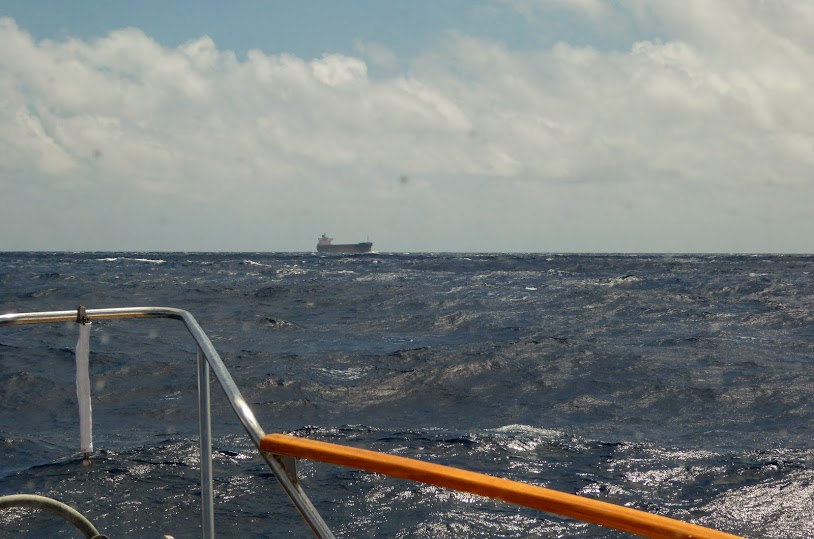
The only ship that we were able to visibly see (not just on radar) passed by off to our starboard side in the morning. It detoured around us, saving an uncomfortable course change. This photo doesn’t look across the water at the ship. You’re looking at a wall of water.
At roughly 3pm, the winds increased to 30 knots. Our speed, which had gone back up closer to 4 knots, was now back at 2.9-3….terrific.These conditions were insanely unnerving. We were seeing more sky than water out of the front windows, as the boat launched up huge waves. The noise of the wind, and the sound of the motor as the boat battled it’s way up and down the waves was terrifying at times.

When we began cruising, the sight of larger waves and water coming at us scared me to death. It’s one of the main reasons that I choose to do the all-night watch, so I cannot see the big water. I have made great strides along the way, realizing that Sea Life can handle this stuff, and have become much better at looking out the windows. I was very proud of myself on this passage, being able to stare out at a sea in 20+ knots of wind and not flinch….up until now.

At 30 knots, the seas were huge and angry looking, so I did the last of my afternoon watch focusing on the radar, or the computer screen, and not outside. Downstairs on a break before my night shift, I wasn’t sure if I’d be able to go back up to the pilothouse; I was terrified. However, by 10pm, after seven hours of 30 knots and huge seas, I was numb to it, and handled my night shift just fine.

Oddly, as outside conditions worsened, Howard transitioned, and became much more tolerant of all the movement and noise. It was as if he thought this was his new life, and he may as well adjust to the situation. Wind or no wind, wave jolts aside, motor noise be damned, he was gonna eat and sleep as usual.

He began to demand food, jumping from the end table up to the raised galley counter, where he could lay supported by the surrounding fiddles (raised wood trim). I hesitantly fed him, and he demanded more, so I gave him seconds. Later in the day, I noticed that he’d made a successful trip to the litter box on his own. Howard was becoming a champion passage cat!

Scott continued to keep a close eye on our fuel consumption. We were still drawing from the tank that he planned to run dry,  so it seemed that we’d make Ponce without having to paddle….fingers crossed.

By 3am, the winds eased a bit, and were back down to just over 20 knots, but it was still an unnerving go. Shortly after, I noticed a band of rain heading for us. I woke Scott, just to be sure it wasn’t something to be concerned about. After checking the radar screen, he informed me that it would most likely miss us. It did not miss us, and the winds quickly ramped up to 37 knots, with higher gusts….yay for us.

Saturday – Day Seven:  We’d expected to arrive in Ponce Puerto Rico sometime after dawn this morning, but were now just hoping to make it by dark. The good news was that Scott was now completely confident that we had the fuel to get there.

I came downstairs after my night watch to wake Scott, and found Howard laying on the floor outside the galley, waiting for food. He seemed oblivious to the fact that he was sliding back and forth with the movement of the boat. I fed him a normal amount of his usual food, and he scarfed it up. At least someone was tolerating this stuff.

Moving around the boat had been challenging since the beginning. We have grab rails in place, allowing something to hold on to while coming out of the pilothouse and down to the galley, and also going down below to the head.

Getting to and from the couch in the saloon to sleep, was a different matter. Scott is tall enough to reach the grab rail along the ceiling, but it’s a reach for me when we’re not moving, and became impossible during our lumpy ride. I would swing myself toward the couch, using the pole in the galley counter, landing in a flop. Getting off of the couch was more difficult. With nothing to pull myself up, I’d end up launching forward as I rose, going into an immediate crab walk to keep from falling over.

As conditions worsened, it became increasingly hard to move around. Simple things became challenging, and sometimes dangerous. When getting something out of the refrigerator, you had to keep hold of the door with one hand, to keep it from banging into you. Going up and down to the pilot house was hard, even with the grab rails. I chose to almost crawl, keeping a low center of gravity, and my crab walk had become more of a caveman-like stomp.

I was dying for another shower, but it was just too stinkin’ rough to chance it. Instead, I settled for attempting freshness with baby wipes, deodorant and fresh clothes.

In Howard’s efforts to adjust to his “new life,” he attempted sleeping in his usual spots. I discovered him trying to sleep on top of the cabinet below our tv. Again, he was sliding back and forth with the boat’s movement, so I wedged a towel on one side of him for support.  Next, he attempted to sleep in his “taco,” which is attached atop a scratching post, Worried it would topple over, with his weight to one side of it, I took him out and laid the thing down on it’s side. He promptly straddled it, to stretch and scratch. If only I could adjust half this well.

The rain squalls moved over us until late morning. I laid on the couch, listening to the winds howl, and bracing myself against the boat’s movement, having another bought with terror. After some time, I again realized the boat could handle it, but was beyond done with wind, waves and current. With Scott being well rested, he offered to hunker down and keep watch for the final leg, God love him. Not that there was much to watch…winds still mid to upper 20s, with occasional stretches of 30, current still against us and seas still angry.

Scott settled into an iPod trance in the pilothouse, I continued my marathon re-watching of the tv show LOST in the saloon and Howard became an eating machine, making up for lost time earlier in the week;  we were all just trying to get through it.

I’d occasionally check on Scott, and find the winds, current and sea state just as I’d left them. By mid afternoon our speed was thankfully back up to 4 knots, and we were on track to arrive in Ponce at approximately 6pm! Scott was now counting down time to our arrival at the channel’s entrance. From there, it would be less than an hour to the marina.

Soon, Puerto Rico finally came into view! As the coast of Ponce got closer, we kept our eyes glued to the horizon, for a first glimpse of the red and green channel markers.
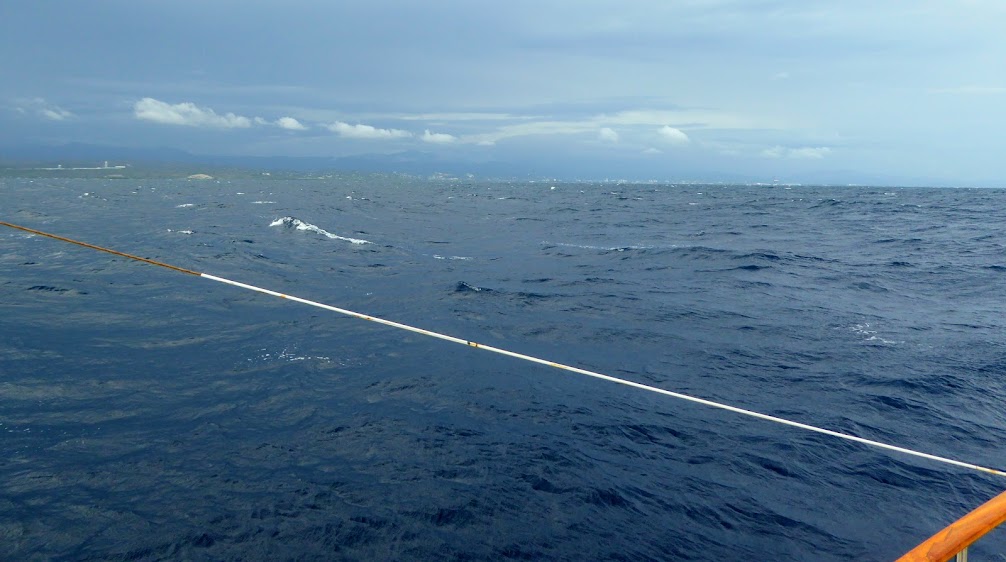
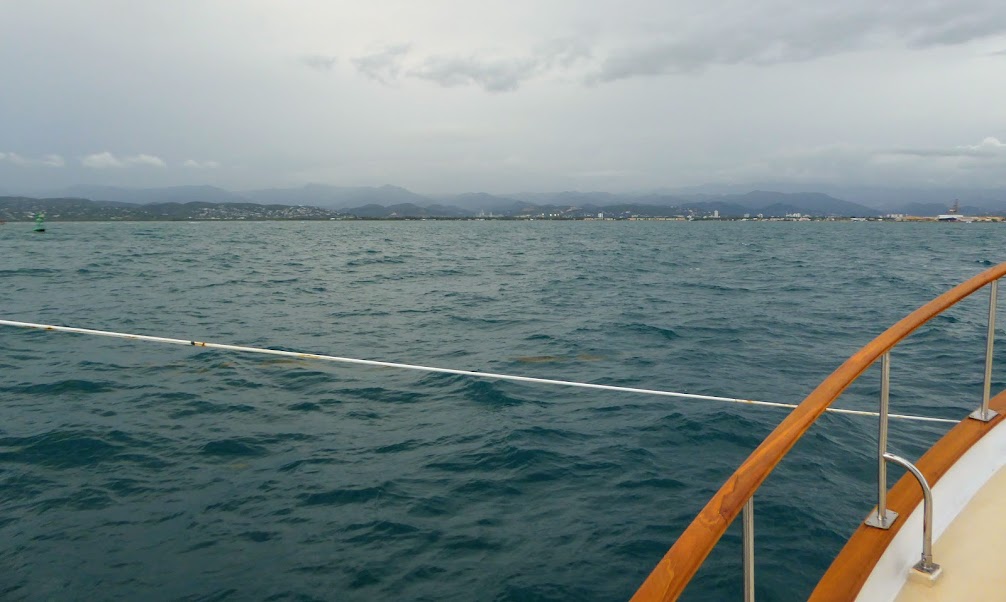
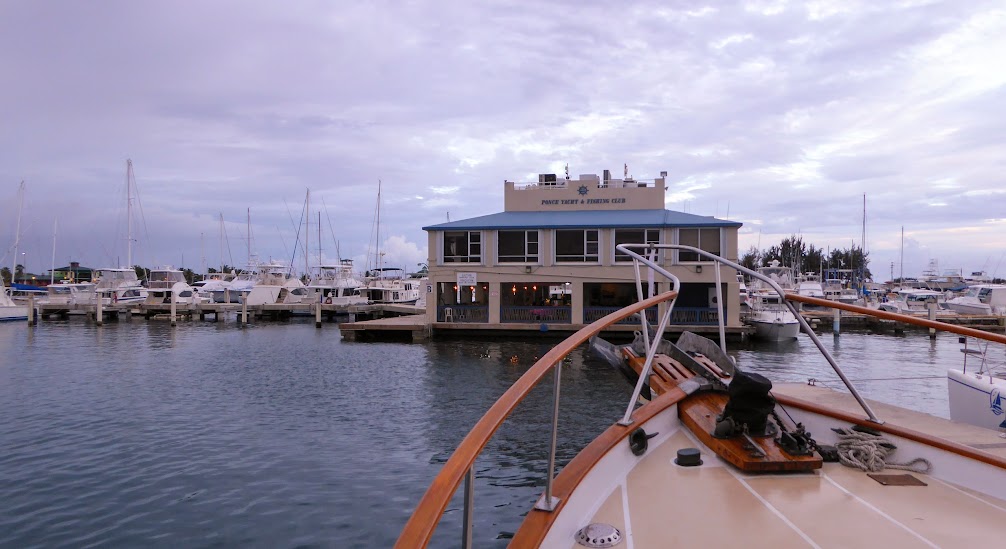
Just before 6pm, we entered the Holy Land….Ponce channel! As we approached the marina, Scott brought the boat to idle, so he could pull the birds in, raise the paravanes and get our fenders down from the flybridge for docking. We had our slip assignment at Ponce Yacht & Fishing Club, but weren’t up for trying to find it in the dark.  Since the tanks had to be filled at some point, we chose to tie to the fuel dock for the night, allowing us to get that job out of the way first thing in the morning.

At 6:30pm on April 29th, we turned off the motor, which had run for six and a half days. Considering our struggles along the way, we could live with arriving twelve hours past our original target time. Sea Life had handled the passage like a champ. We were reconfirmed of our decision to purchase a Krogen, with it’s incredibly seaworthy, full displacement hull. She was a tank in the heavy winds and huge seas, not slamming up and down, but firmly launching up one side of a wave, before sliding down the other side like a beach ball.

We were completely exhausted, but thrilled to be over this huge hurdle, and safely in the Eastern Caribbean! As we tied up to the dock and opened the doors, Howard was happy as a clam to breath in the new smells, and scope out his land surroundings.

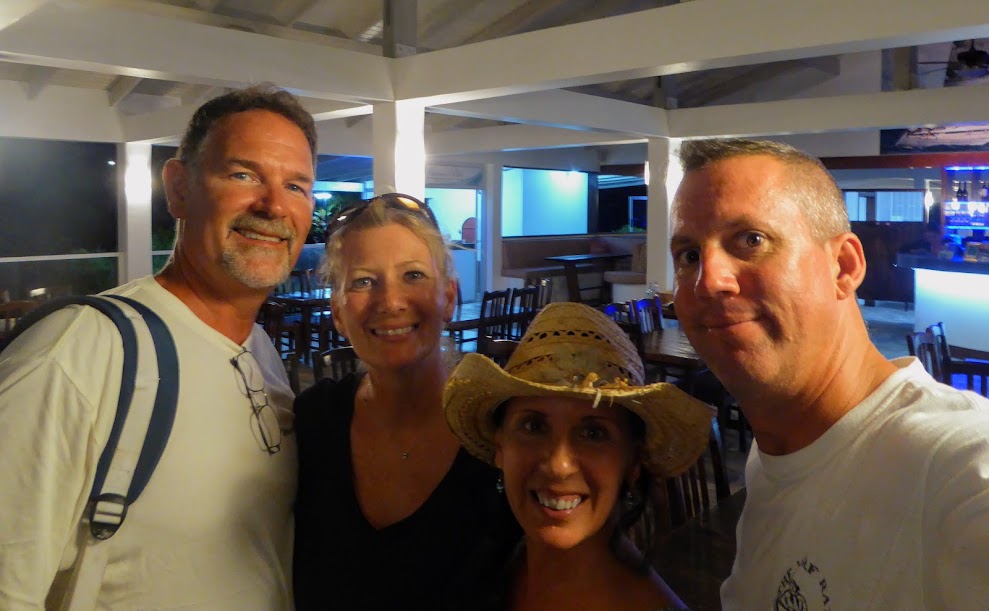
Once we were safely tied to the dock, Scott ran the generator so we could sleep in the air conditioning. Now, first and foremost….showers, showers, SHOWERS!! We enjoyed some well deserved celebratory cocktails with a frozen pizza dinner, and then the crew of Sea Life, Howard included, collapsed into post-passage comas.
“Shells Sink, Dreams Float. Life’s Good On Our Boat!”
 

Howard’s Cartagena Vet Visit

Howard was coming due for his yearly rabies vaccine. Few animals enjoy vet visits, but instead of being quietly terrified (as my last two female cats were), Howard is very “sassy.” He has a Caution sticker on his file at home, and the older and stronger he gets, the more “piss and vinegar” he spits out at a visit. If anything more than a quick vaccine is needed, we have to take him in for the day, to be put under anesthesia.
As we travel, vets and techs are always surprised at Howard’s size when he comes out of his carrier. At just under three years old, he’s 16lbs and very strong. In Roatan, the vet sprayed some pheromones in Howard’s direction, in an effort to calm him. I wanted to inform the poor vet that there weren’t enough pheromones in the building to calm Howard when he’s mad, and I was right. The vet only got half of the vaccine amount in, the rest going all over me and Howard’s fur. Knowing that Howard has no chance of catching rabies, half a shot didn’t concern me. All I wanted was that piece of paper showing a record of the vaccine for customs, which we got…for only $15.00!

Extra stresses, like dinghy and panga rides, and hot car and rooms only make vet visits while cruising worse, and after a terrible experience in Bocas del Toro, we now try to minimize things that will accentuate said “sass.” Cartagena seemed like a good place to get Howard his latest rabies vaccine: we were at a dock, so getting on-and-off the boat was easy; with the great exchange rate for our U.S. dollar in Colombia, the vet visit was affordable and cabs were cheap. There was a vet in the Manga neighborhood, not far from the marina. Scott and I went on a reconnaissance mission, and all seemed good, so I made an appointment.

On vet day, we loaded Howard into his carrier, walked him through the marina and out to the street to catch a cab. He stayed calm, and seemed to enjoy taking in all the smells as we walked. The short cab ride was air conditioned, and so was the vet’s office (both things were taken into account on the recon mission….a cool cat is a less stressed cat), so things were going along smoothly.

Our wait was short, and we were soon back in the exam room with the vet. He wasn’t fluent in English, but was very friendly. We managed to get Howard out of his carrier, vaccinated and back in before he hardly had a chance to hiss…excellent!

The vet suggested that Howard also have a vaccine for Feline Leukemia. Howard is never around other cats, to contract the disease, so I declined. After the rabies vaccine, the vet again stressed the Leukemia one. He even phoned his daughter, who spoke fluent English, and had her talk to me.

It wasn’t that I didn’t understand, I just didn’t want to put Howard through another vaccine. However, worried that a customs agent somewhere in the Eastern Caribbean may require it, I changed my mind. We pulled poor Howard back out of his carrier for vaccine number two….BAD idea.

Howard knew he was still at the vet, and coming back out of that carrier meant nothing good was going to happen. He came out growling (skipping hissing, and going right for growling), and fought hard as Scott tried to restrain him long enough for the vet to get the vaccine in. When the needle went into his skin, Howard lashed out at the nearest thing possible; unfortunately, the nearest thing was Scott’s hand, and he suffered another puncture wound to the hand.

Scott released our seethingly angry cat, and cleaned his hand in a nearby sink. The vet held up the half-full needle and looked at me, as if to imply that he wanted to inject the remainder. Fat chance! We’d all had enough drama and stress for one day.

I blamed myself for not leaving well enough alone. We’d had the best ever vet visit going, and changing my mind had caused havoc. I should have known better, and felt terrible for both Scott and Howard. Howard only lashed out in fear and anger, trying to protect himself from perceived danger, not knowing that he was hurting Scott. Thankfully, this wound was nowhere near as serious as the bite Scott received in the San Blas, and it healed quickly.

So, I again walked away with half a dose of vaccine in my cat, and another updated record. Fingers crossed, we’re free of vet drama for another year and things are back to normal in Howard’s world.

“Shells Sink, Dreams Float. Life’s Good On Our Boat!”