Cartagena’s Artsy, Funky Gethsemane Neighborhood

The colonial center of Cartagena’s walled city is beautiful, but most always bustling with people. Tourists come on foot and by the busload to tour museums, cathedrals and other historic sites. Street performers and vendors are prevalent in the city’s many squares, and horse-drawn carriages are around every turn.

Despite the area’s color and beauty, its energy can become overwhelming, especially in the Colombian heat. Luckily, we wandered outside the hub of the city, and discovered the streets of nearby Gethsemane.
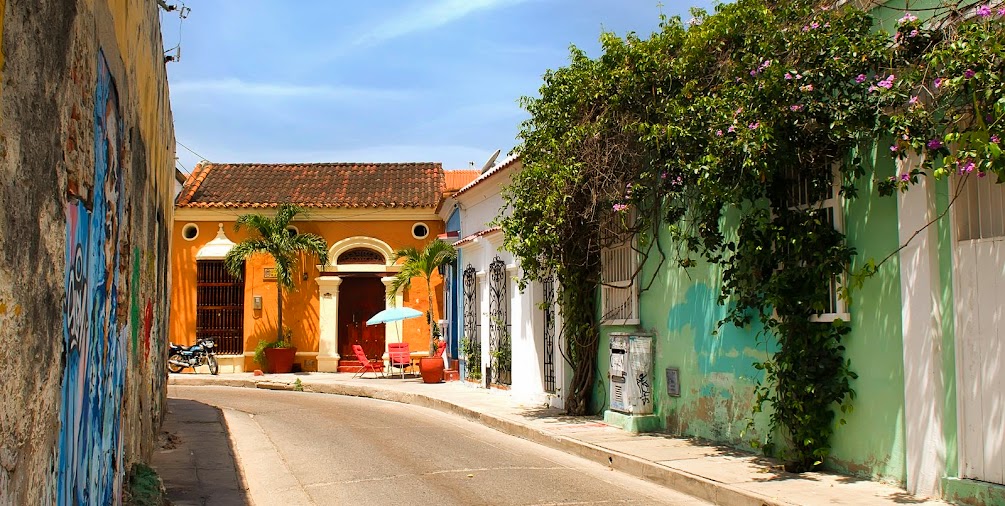
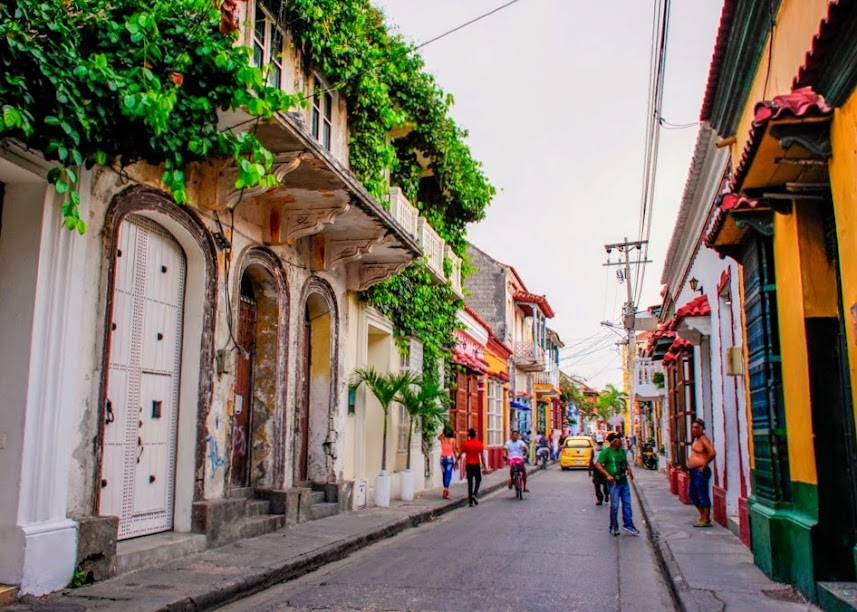
This area was the birthplace of the revolt against Spanish rule in the early 19th century. Cartagena became one of the first cities in Colombia to declare independence from Spain, supported by a group called the Gethsemane Lancers, who continued to resist the Spanish until the city won its independence 1821. By then, Gethsemane was home to craftsmen, freed slaves and merchants, and the area became known as the “popular quarter.” Gethsemane is now often referred to as the “culture quarter,” as poets, painters, photographers and other artists settled into the neighborhood.

Outside the original walls of Cartagena’s historic old city, Gethsemane was formerly a haven of prostitution and drugs. However, as in many city neighborhoods with a gritty past, there has been a resurgence in the area. Most of the old colonial buildings have been converted to backpacker hostels, boutique hotels and bistros, and the area now has an artsy, funky vibe.

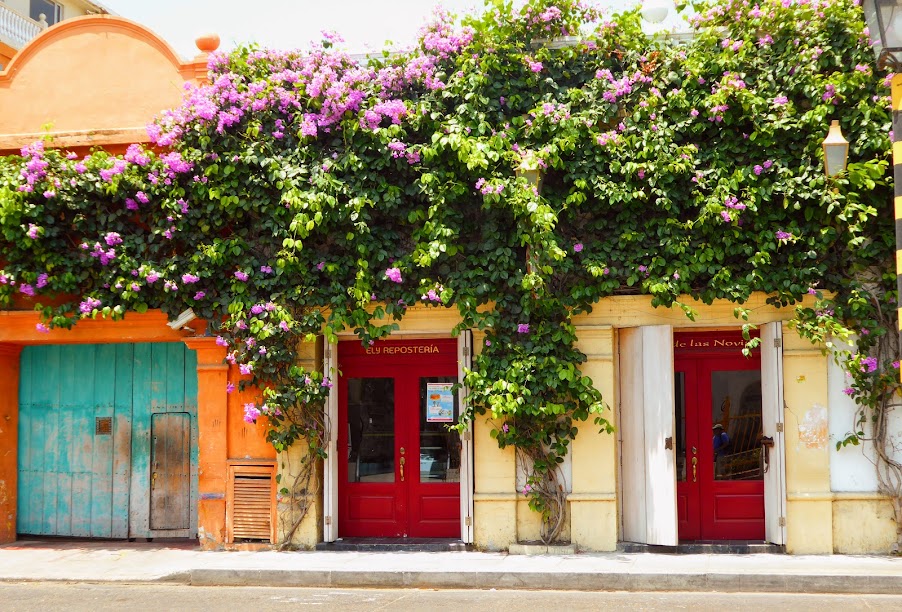
Unlike the colonial center, there are no major museums, cathedrals or other traditional sights to see. This neighborhood is an attraction in itself.
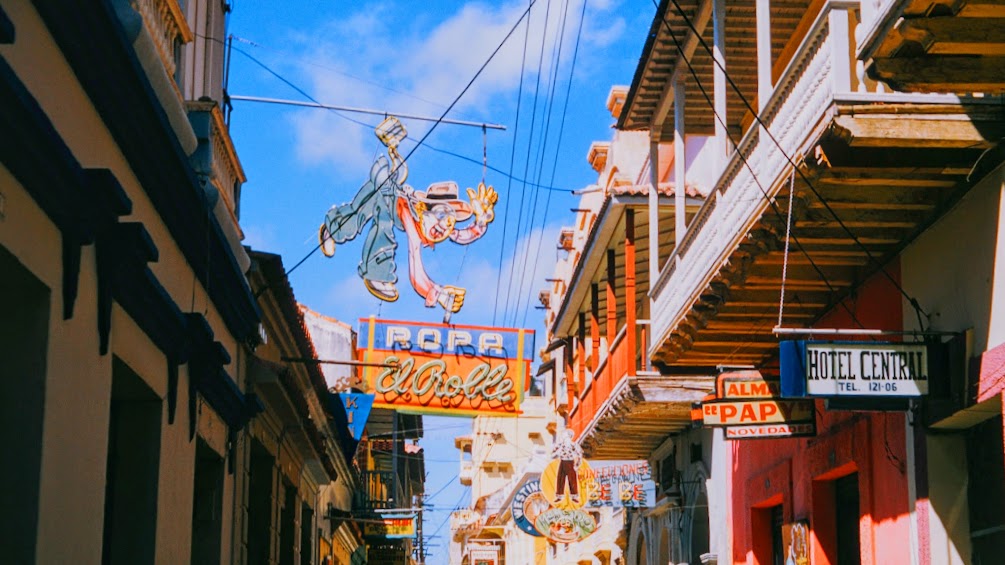
We first went to the Gethsemane neighborhood in search of Beer & Laundry, after Scott noticed it when reading restaurant reviews online. In addition to laundry service, Beer & Laundry also sells beer and pizza, and was getting rave reviews. Customers talked of the friendly the owner who was fluent in English, among several other languages, who happily offered local information. We read that the pizza was great and the beer was cold.

I didn’t need laundry service, as we thankfully have a machine on board. However, I’ve never met a cold beer I didn’t like, and we’re always up for a good pizza, so we set off to find this “Beer & Laundry.”

After crossing the bridge from Manga, where our marina was located, we decided to walk the wall for a bit, admiring the massive structure along the way.
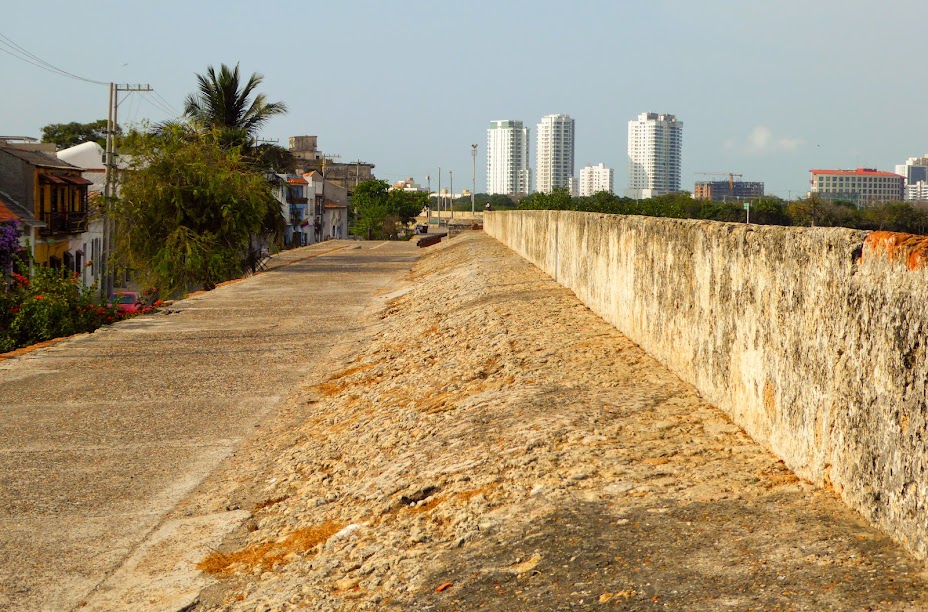
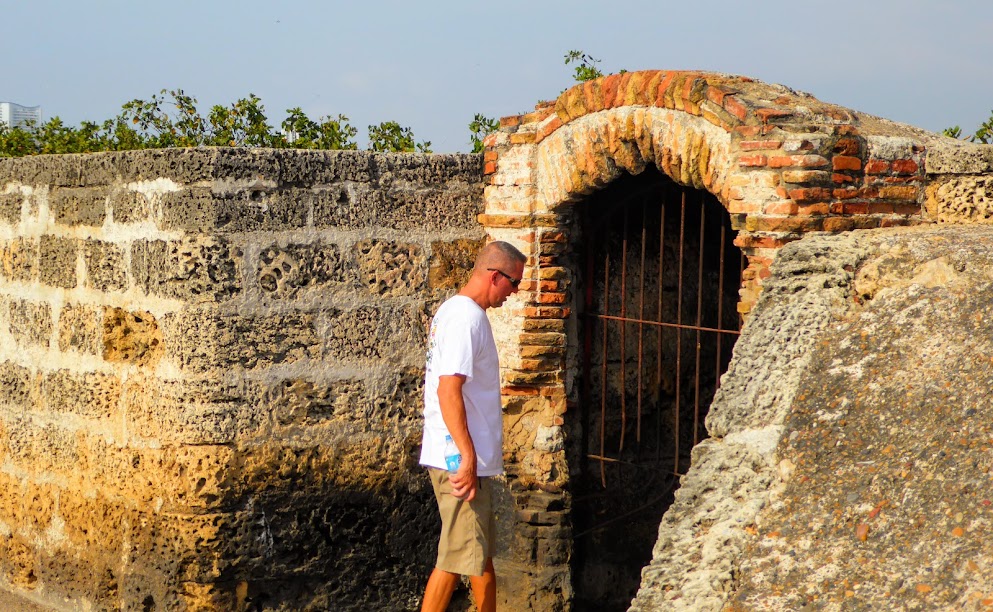
High atop the huge stone wall, we had a clear view of Castillo San Felipe, as well as houses and shops along the outskirts of the neighborhood.
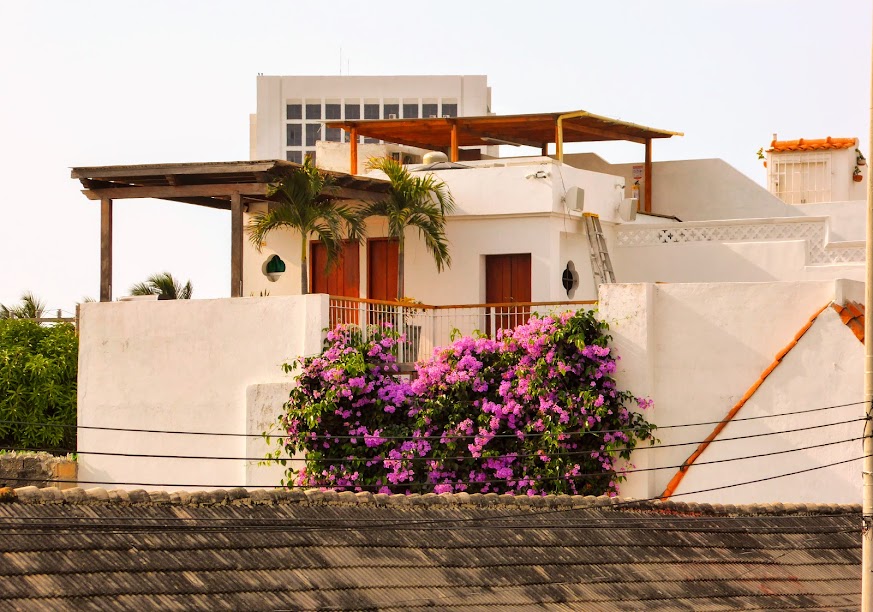
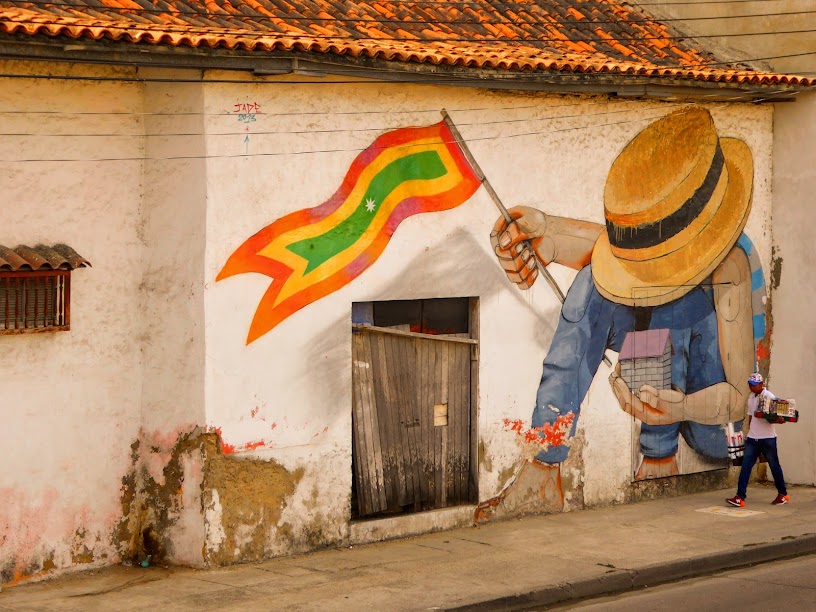
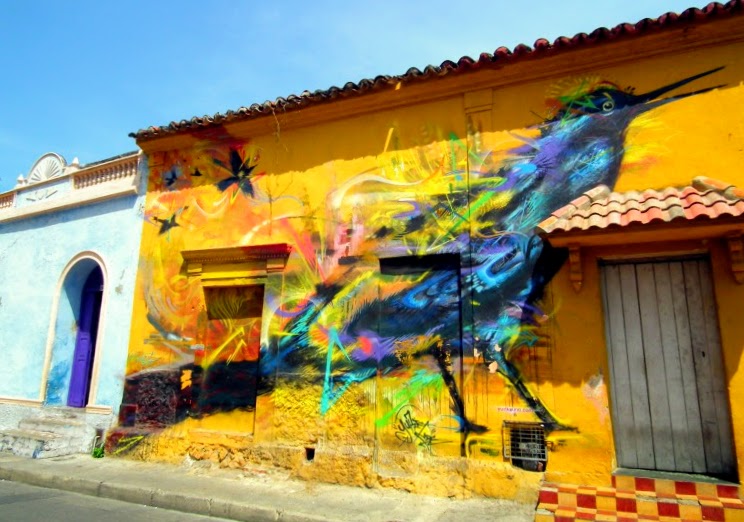
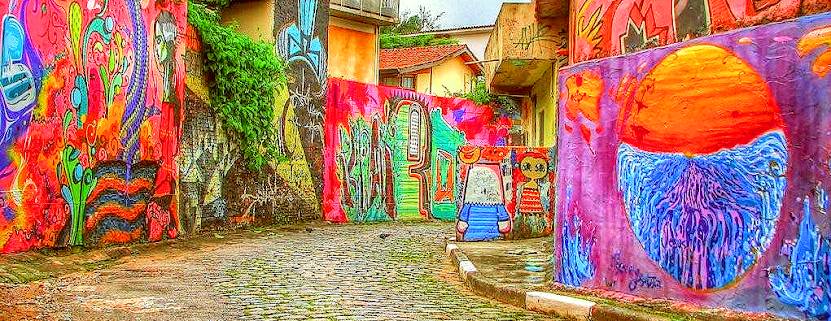
We also had our first look at some of the street murals that Gethsemane is known for.
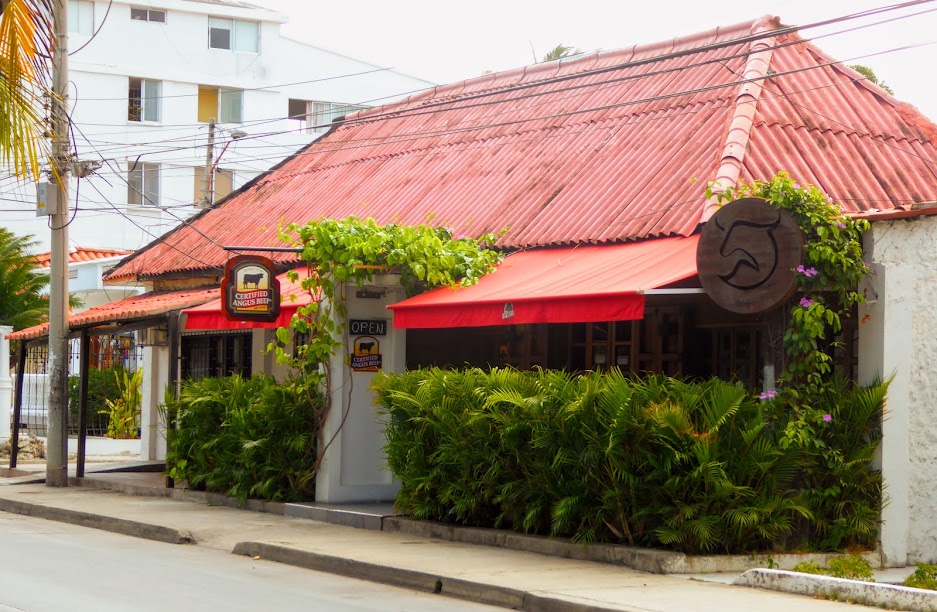
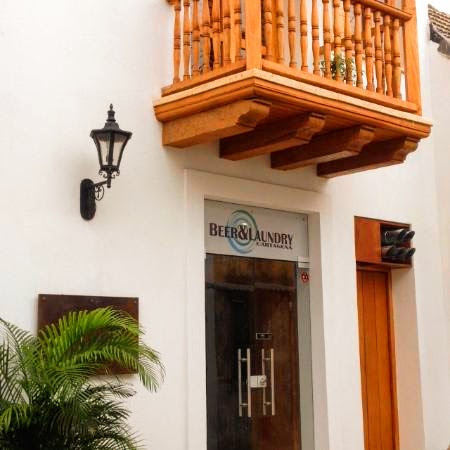
After rounding a block or two, and getting our bearings, we located Beer & Laundry. I was so excited about a cold beer (after the hot, sweaty walk) that I forgot to take a photo of the exterior, so I borrowed one from online.
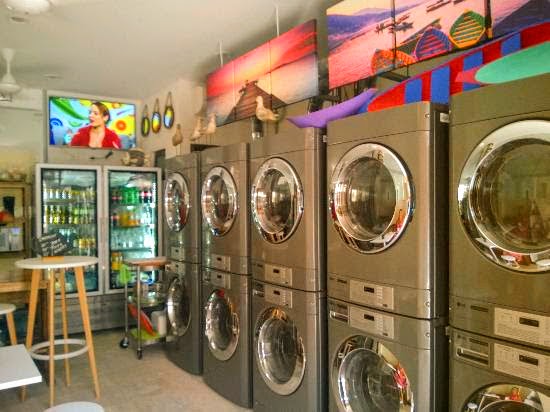
Inside, large, shiny-new washer and dryers lined one wall of the narrow space. Along the other wall were several small tables, surrounded by benches and chairs.
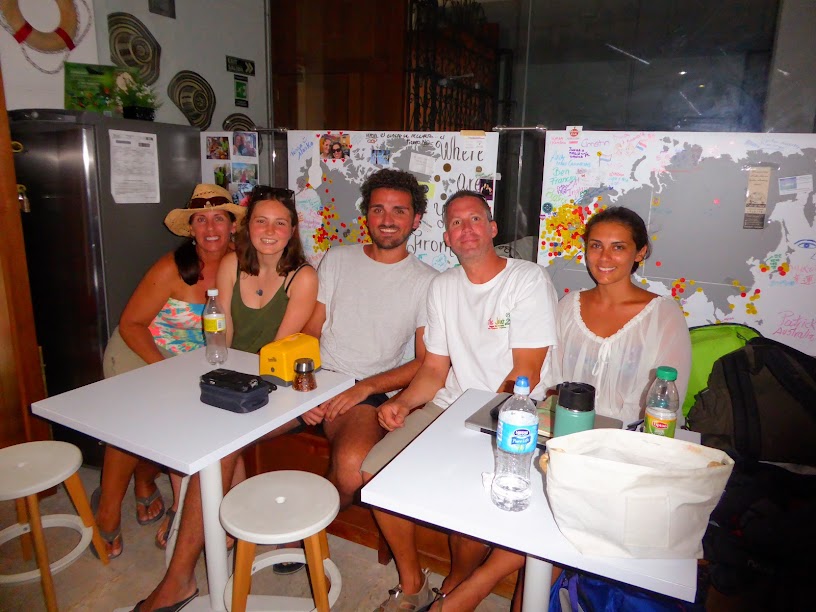
Anna, the owner, came over to greet us, and laughed when she learned we had no need for laundry, and were instead in search of pizza and beer. Customers happily share tables in the small space, so she sat us with several people who were visiting Cartagena as part of a trip across South America (The glass wall behind us held maps of the world, for customers to mark where they call home).

It seemed crazy to us that they were traveling with only a backpack or two, and they were amazed at our boat life. We had a great time chatting with each other, and exchanging stories of our travels.
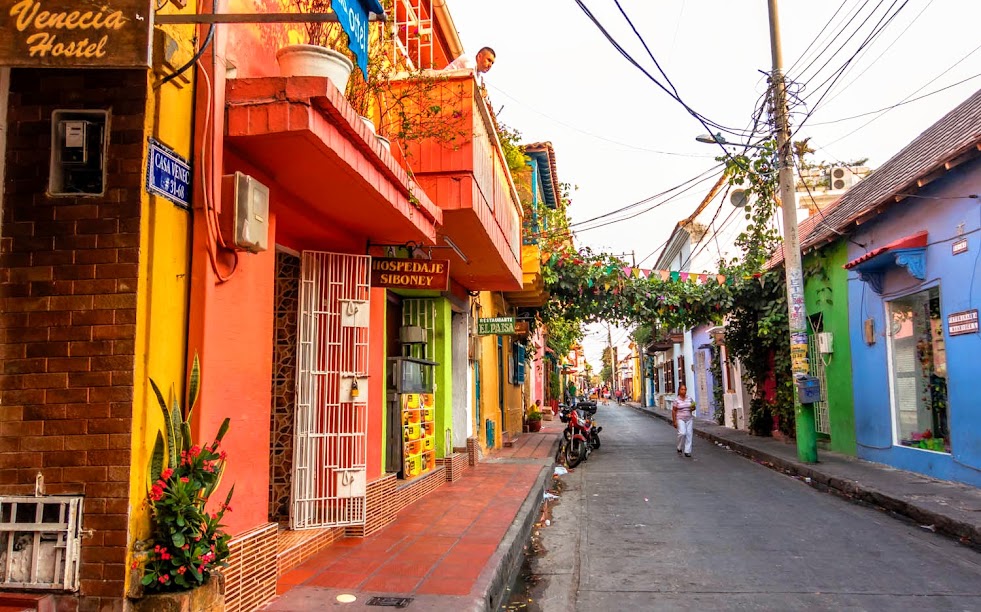
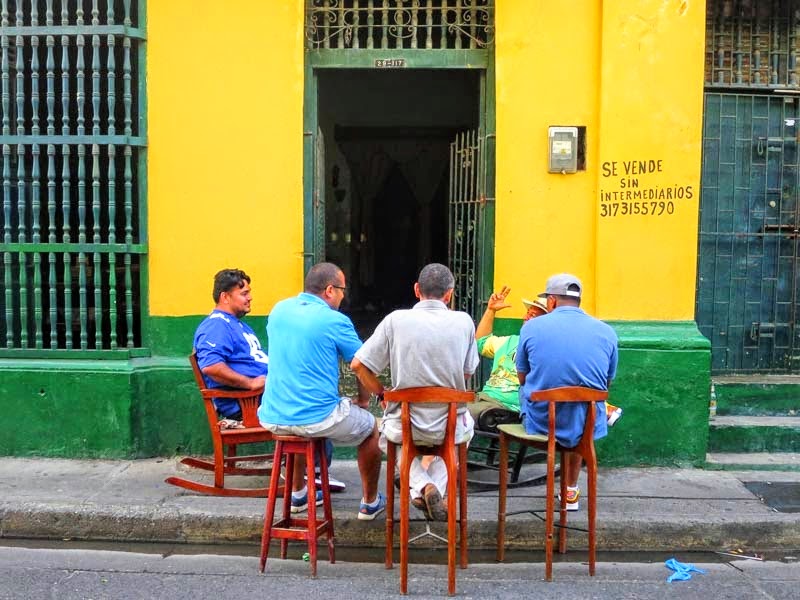
After feeding our bellies and cooling off a bit, we wandered the streets of Gethsemane. Here, locals far outnumbered tourists. Instead of vendors selling hats, paintings and jewelry, and tour representatives calling out to get your attention, local men played board games on the sidewalk or just gathered to chat. It was obvious that most residents had lived in Gethsemane all their lives, and there was a great, small-town feel to the neighborhood.
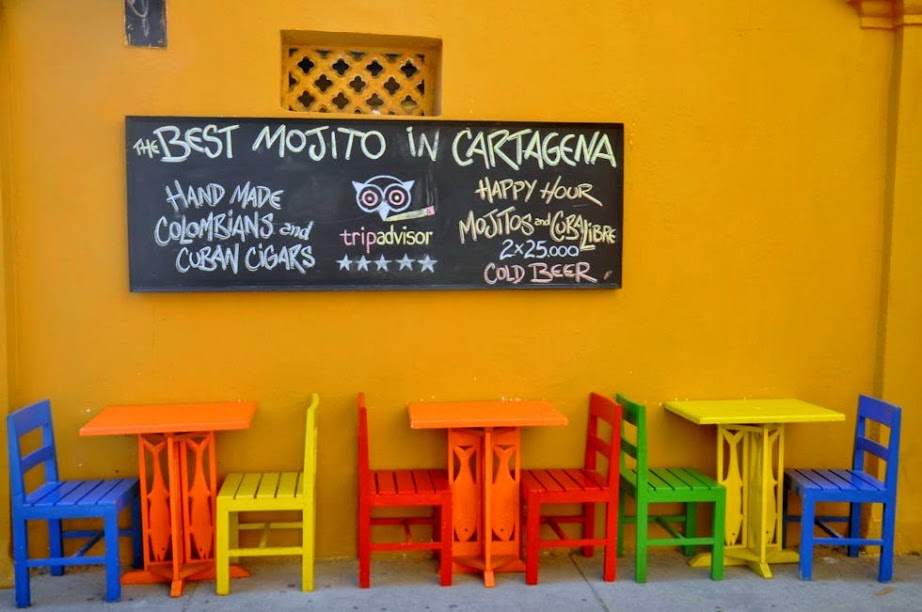
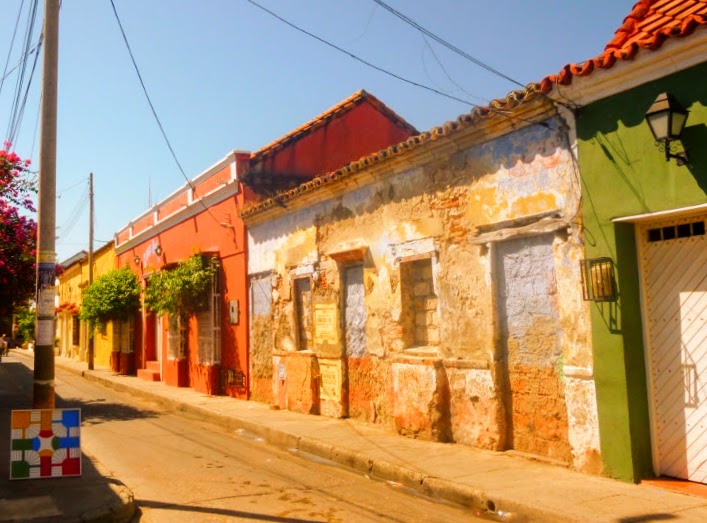
Gethsemane’s streets are just as colorful and scenic as those in the historic center, with one more interesting than the next. We tried to walk a different path each time we visited, enjoying each street’s unique feel.
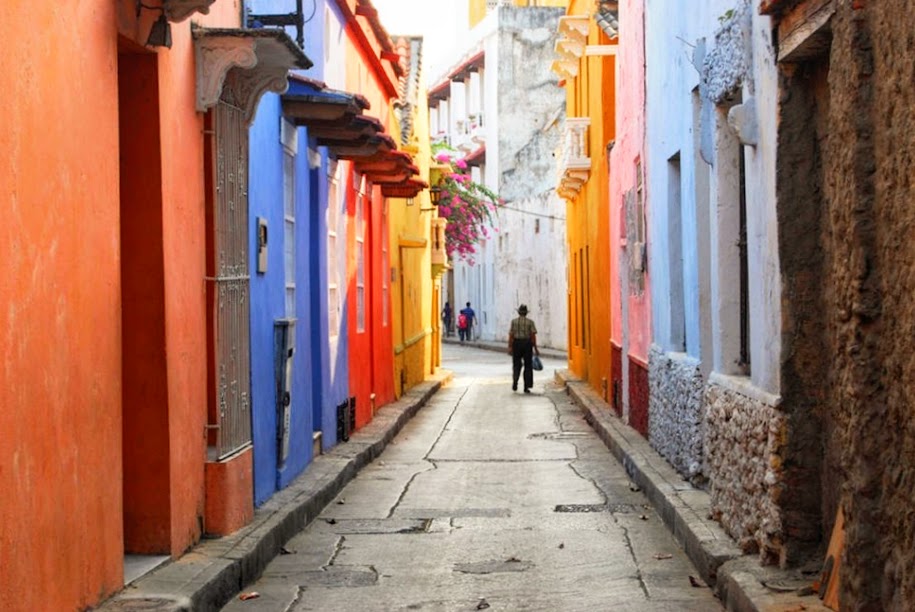
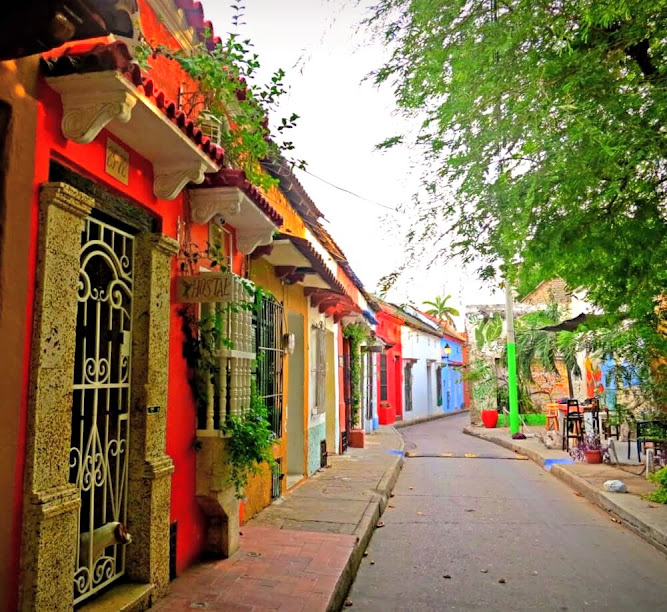
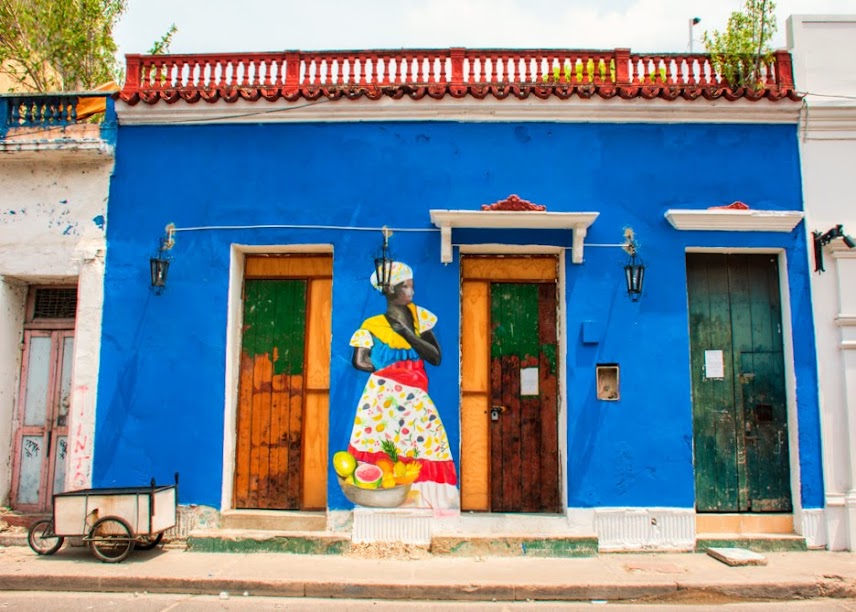
At almost every turn, we were met with beautiful wall art. The vivid, urban murals were striking, against the backdrop of a faded colonial wall or building.
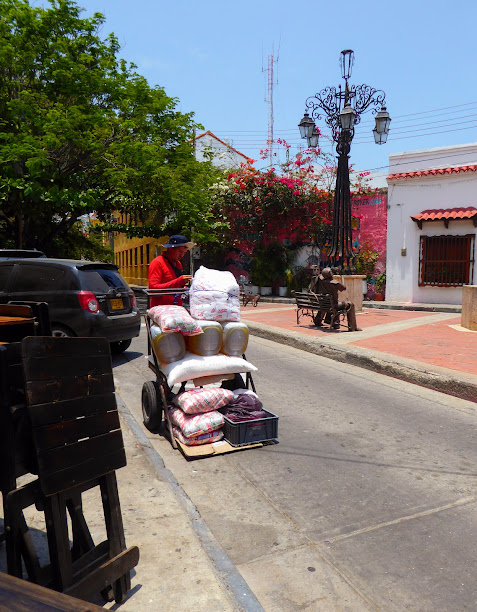
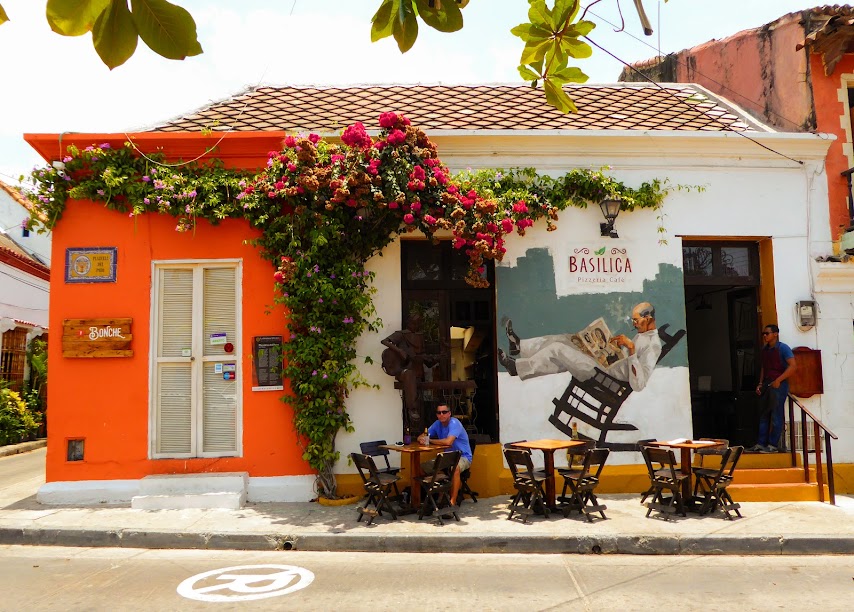
We discovered Basilica Pizzeria, opposite a quiet square off the beaten path. Our lunch was delicious, and we were amused at how nearby restaurants receive their deliveries..by glorified hand truck!
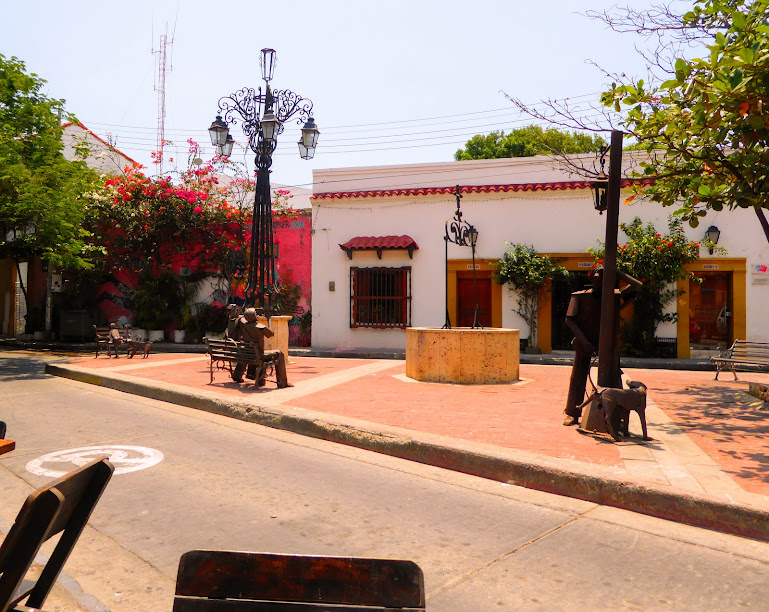
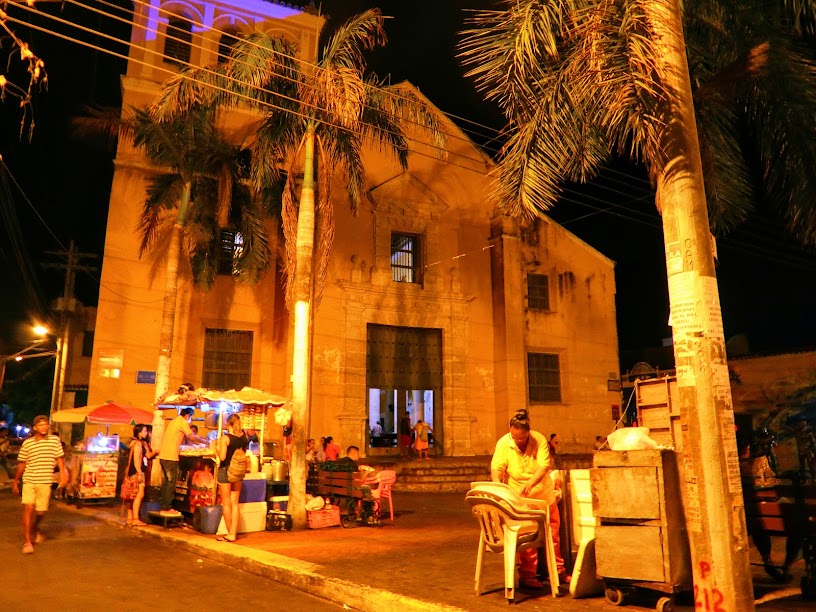
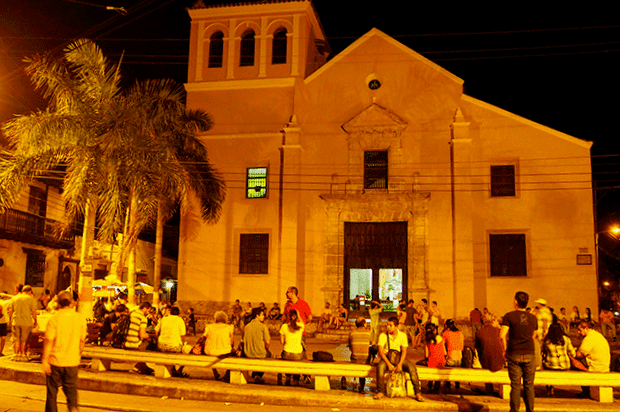
All streets in Gethsemane seem to lead to Plaza de la Trinidad , which is anchored by the Iglesia de la Santísima Trinidad (Church of the Holy Trinity), built in the 17th century (During the day, the quiet plaza looks something like this).

The plaza is charming and welcoming, and the natural “hub” of the neighborhood. It comes alive at night, with residents and tourists gathering to eat at the surrounding restaurants and cafes.
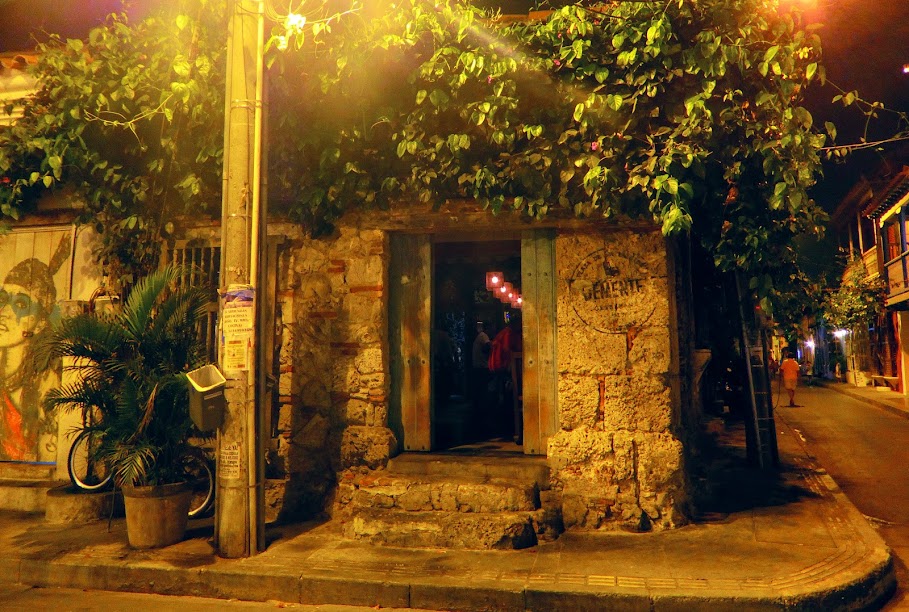
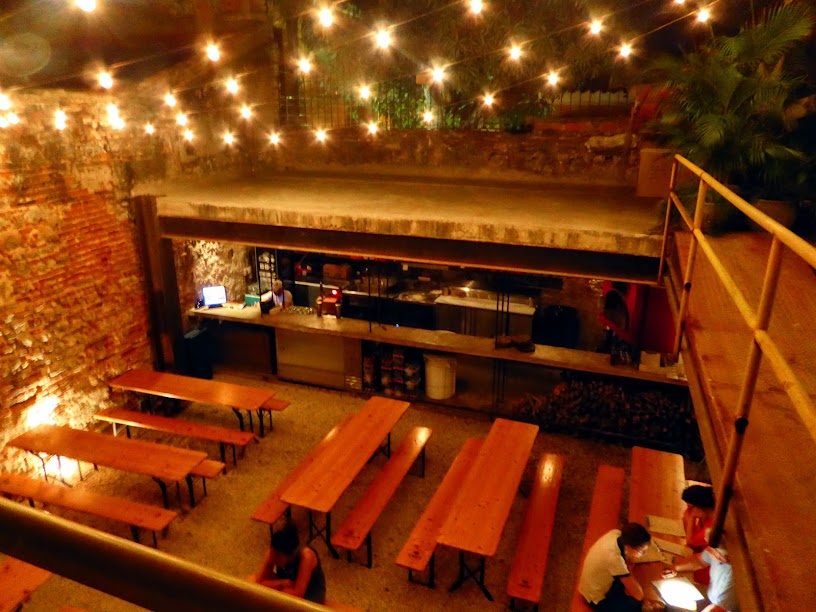
We enjoyed a tapas dinner at Demente, on the edge of the plaza. They have a retractable roof in the bar area, to take advantage of the cooler evenings, and open-air patio seating out back. After our meal, we wandered the area, enjoying the sights, smells and people-watching.
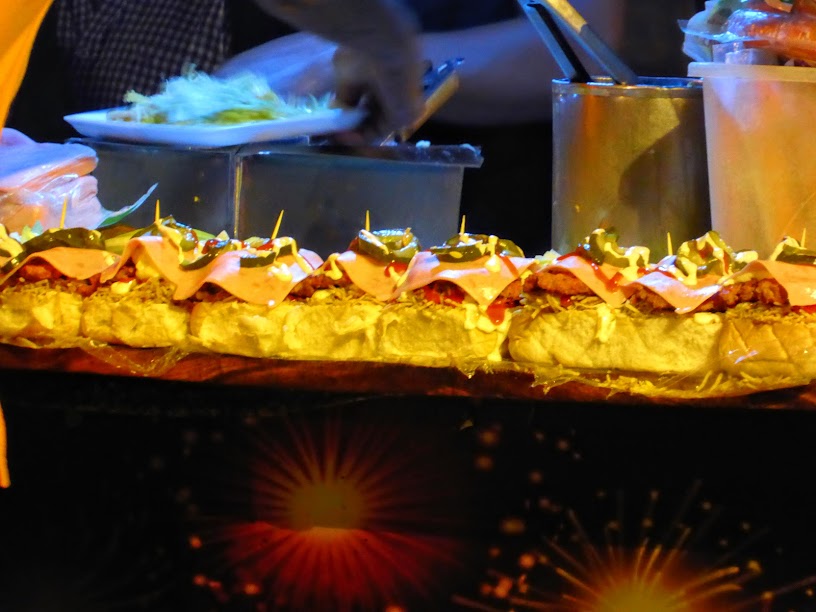
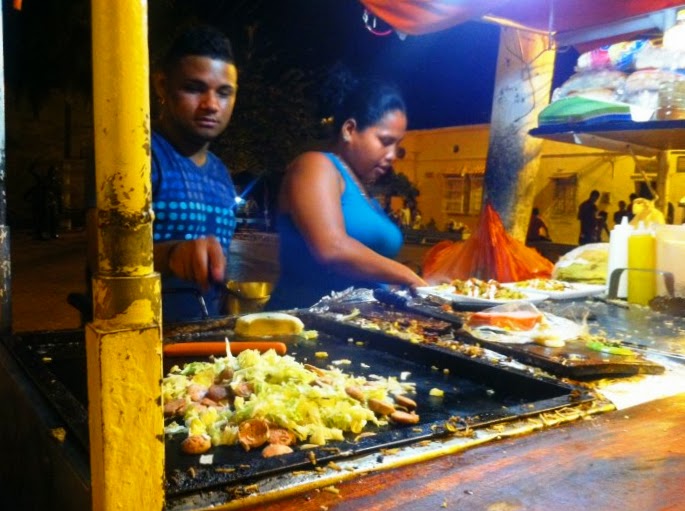
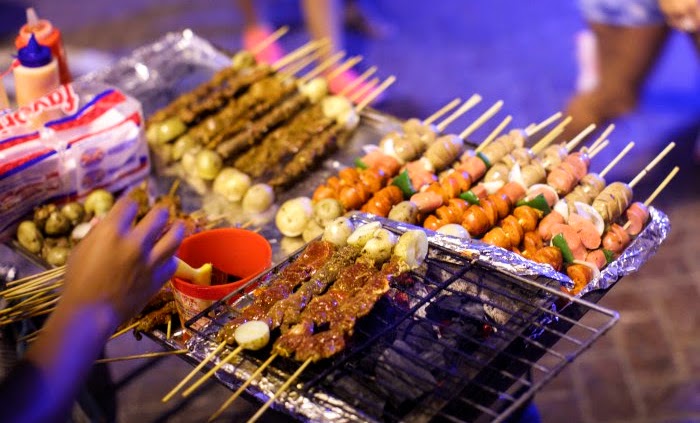
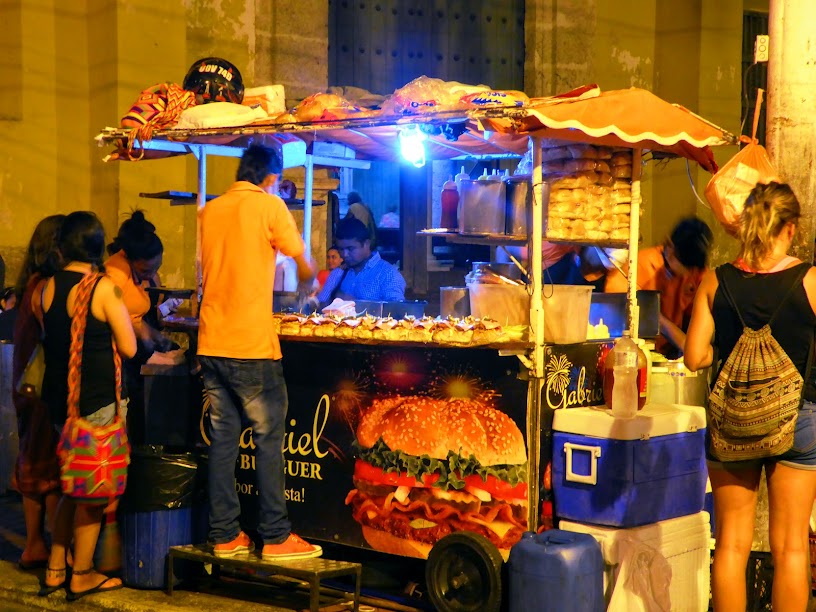
The star of the plaza in the evening is definitely the street food. Vendors set up throughout the square and surrounding streets, with food to satisfy most any craving.


Burgers and hot dogs with all the fixins’ (Scott was sorry he’d eaten so much at dinner)
Lots of things on sticks.
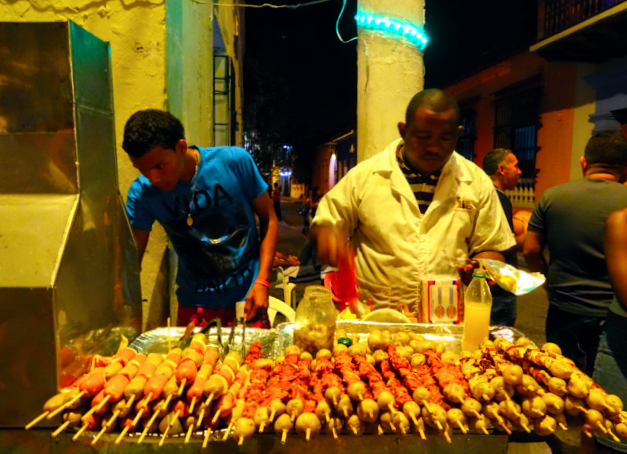
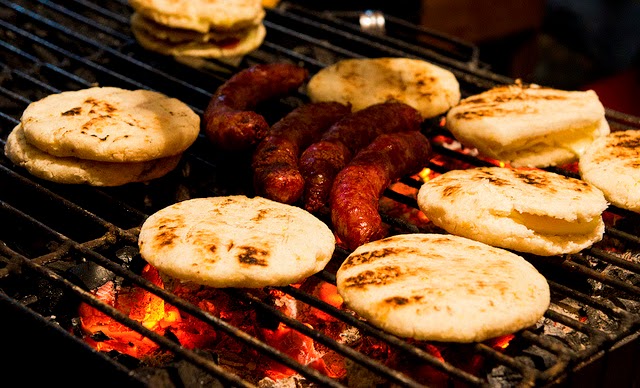
And of course, arepas. (I was sorry I’d eaten so much at dinner)

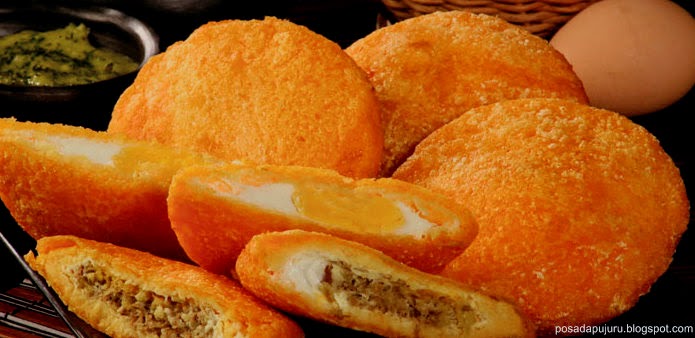
Arepas are found in nearly every park and square in Cartagena. Arepa de choclo are made by blending yellow cornmeal and fresh corn kernels. This mixture is then combined with milk, salt and sugar, making a batch of something similar to thick pancakes. The pancakes are joined together and grilled with a filling of mozzarella cheese, egg and/or meat….and more butter. They seem to be most popular for breakfast, or lunch. Scott and I enjoyed several of them from a vendor just outside of Club de Pesca (borrowed photo).

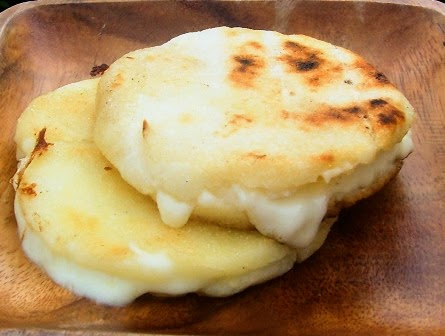
“Arepas de queso are made with white corn, milk, butter and salt and then pan-grilled. They are sometimes opened up to allow more cheese and butter to be shoved inside. Sadly, we never tried these yummy-sounding/looking things (more borrowed photos).
Amidst all the frying and grilling, we were surprised to see fruit vendors. With brightly loaded carts, they were in full force among the evening plaza scene.
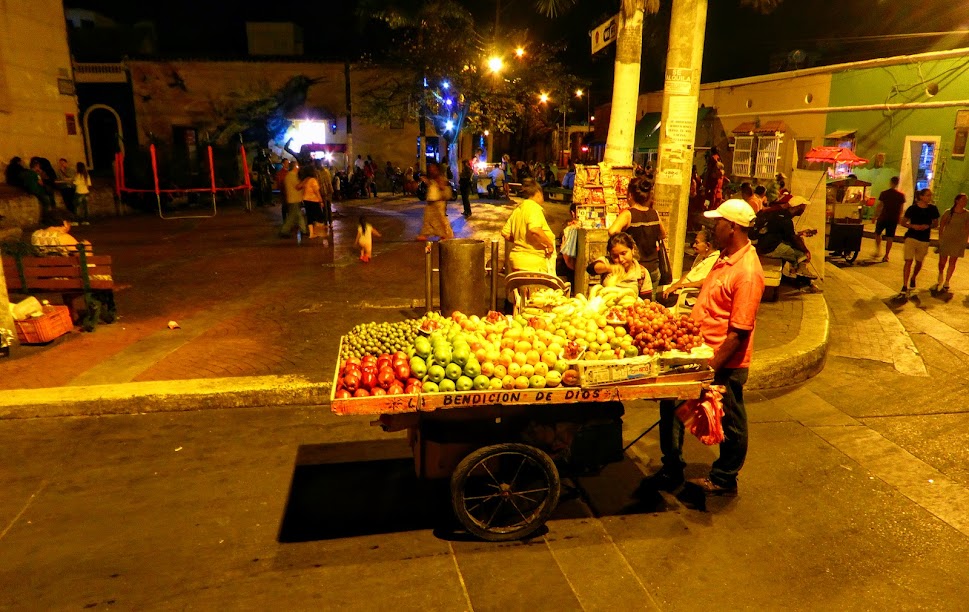
Lunch at Basilica Pizzeria was so good, that we returned for dinner with our friends Bob and Irma (s/v Gaia), who we’d met in the San Blas. At night, the square was filled with tables of diners from the surrounding restaurants. Soft street lighting and local live music made for a great atmosphere.
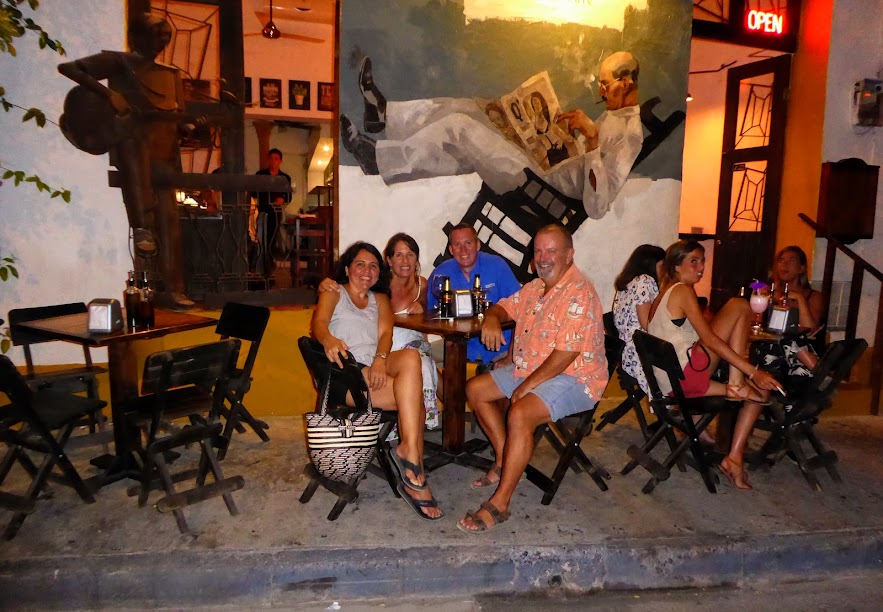
We spent many afternoons exploring Gethsemane’s streets, and enjoying the evening atmosphere. With its laid back feel, and friendly locals, it was easy for us to become hooked on this hip, but quaint, neighborhood . Here are more photos of Gethsemane.

“Shells Sink, Dreams Float. Life’s Good On Our Boat!”


Our Visit To Cartagena’s Massive Castillo San Felipe de Barajas

From our slip at Club de Pesca, we had a great view of Castillo San Felipe de Barajas. The massive fort dominates an entire section of Cartagena’s skyline, and is the largest, most complex Spanish fort ever built in the New World. These photos  I found online give you an idea of just how mammoth this thing is.

Having never met a fort he didn’t like, Scott obviously wanted to visit. The sheer size intrigued me, so I was game as well, despite Cartagena’s intense midday heat.It was  just a short taxi ride to the fort, and after purchasing tickets, we made our way up the switch-back ramps that lead to the top.


Once there, we took time to enjoy views of the city below.

We then met our guide, who lead us on a tour, and provided us with many interesting facts about the fort and its history.

The original fort was commissioned in 1630 and was quite small, with eight batteries for artillery and barracks for 24 soldiers. Construction began on top of the 131 foot-high San Lázaro hill, and the fort took its shape over a period of 120 years. The original portion of the work, which included constructing the “old fort,” should have taken five years, but the governor’s unmerciful schedule pushed workers to complete it in just one.

In 1762 an extensive expansion began, which resulted in the entire hill being covered over with the huge fortress (online photo).

Slaves used pickaxes and shovels to first clear the highest point on the hill (pickaxes and shovels..no small feat), and then began building the fort from the top down. Using rectangular blocks gouged from both the coral reefs offshore and from a quarry nearby, the hill was covered with walls and ramps; sentry stations; watchtowers and bell-towers; weapons plazas, ramparts for cannons and artillery.

Structures were also built to maintain 500 troops at any one time, such as a central kitchen, laundry, hospital, foundry and huge cisterns to collect water during the rainy season, in preparation for times of drought.

There are extensive labyrinth-like tunnels that run under the fort, many dug by Welsh miners brought over especially for the task. The main underground tunnel runs along the perimeter of the fort’s complex at sea level. Chambers within it could be exploded, preventing the advance of overhead attackers.

This complex system of tunnels connected strategic points of the fortress, and were used for moving and storing provisions (food, weapons, gunpowder, etc.) as well as re-positioning troops or even evacuation, if ever needed, through a protected exit at the base of the fort.

The tunnels were constructed in such a way that any noise reverberated all the way along them, making it possible to hear the slightest sound of the approaching enemy’s feet, and also making it easy for internal communication among troops. Soldiers used verbal commands, or sent alerts by ringing bells with pre-arranged codes, their sounds echoing through the intersecting tunnels.

There are only a few tunnels open to the public, and I can only imagine the fear in taking a wrong turn (like a rat in a maze). We came upon a group of girls who had gotten turned around, and were a bit panicked. I was glad to have a guide to take us through the dark maze; at times, we used our cell phones for light!

As we entered the tunnels, our guide pointed out exposed sections of the coral and brick construction.

The strategic placement of the San Felipe was key in its defense. Located at the base of the fort was a “hospital” for lepers (where treatment consisted solely of prayer), which was avoided by all who feared the dreaded flesh-eating disease, believed to be caused by demons. The area surrounding the castle on three sides was a mixture of lowlands and hills, frequently flooded by seasonal heavy rains.

An elevated roadway connected these inhospitable surroundings to the fort. It served as a route for supplies, but was useless to attackers, as the road was well protected by the fort’s cannons.

Swamps lay on either side of the road, thick with swarms of mosquitoes carrying malaria and yellow fever that had been introduced to the New World by the African slaves, further hindering enemy troops; an army weakened by disease, exhaustion and thirst was an easy foe for the Spanish to overpower.

The fort itself was actually seven defensive structures, with overlapping fields of fire. Should an attacker actually breach one of the outer parameters, they’d find themselves confronted with a hail of gunfire coming from two or more of the remaining six fortifications. It was a death trap waiting to trap any enemy fool enough to accept the challenge.

The photo below shows long, angled sections designed for artillery fire.

Cannons fired through the upper openings, while men with rifles laid down to fire through the holes below.

The small slits at the other end allowed enough room for rifles to fire out, but prevented enemy fire from coming back through.

The entire massive fortress stands as a testament to Spanish tenacity and genius. It was truly impregnable, and was never taken, despite numerous attempts to storm it.

The geometry of San Felipe was years in advance of that practiced in Europe; a full half-century would elapse before fortifications on the continent would rival this enormous fort in Cartagena. Along with the old City of Cartagena, the fort was recognized as a UNESCO World Heritage Site in 1984.

When our tour was over, we spent more time admiring the views of Cartagena, from high atop San Felipe.

At night, the fort is lit with a warm glow, like a towering beacon on the hill. Here are a few online photos, the second is the view we had from our slip:

I have to say, the imposing and impressive Castillo San Felipe de Barajas was worth the day of sweat.

“Shells Sink, Dreams Float. Life’s Good On Our Boat!”


Cartagena’s Historic Walled City

Without doubt, Cartagena’s old walled city is its key attraction. The imposing walls were built to protect the city from pirate raids…an annoying side-effect of being a prosperous city on the Caribbean Coast of South America (I found this great aerial view online).

The city was founded in 1543, and served a key role in the organization and expansion of the Spanish empire. By the early 1540’s, had established itself as the main gateway for trade between Spain and its overseas empire.

During the colonial era, Cartagena was a key port for importing African slaves, and especially for precious metals. Gold and silver from mines in New Granada (what is now modern day Colombia and Panama) and Peru were loaded onto ships  bound for Spain, causing the city to be raided numerous times by pirates.

As a result, construction began in 1597 on a walled fortification around the city, which took nearly two centuries to complete, due to repeated damage from both storms and pirate attacks. It was finally finished in 1796, making the city virtually impenetrable.

In 1984, Cartagena’s colonial walled city and fortress were designated a UNESCO World Heritage Site. The massive coral-constructed walls are 30 feet high, and 65 feet thick at their base, complete with angled bastions (sections that project out from the wall and built at an angle, to allow defensive fire in several directions), towers and cannons.

The seven miles of huge stone walls that surround the historic center are in remarkably good shape.  The wide, expansive tops of the walls now serve as walkways for visitors, providing scenic city and sea views.Another online photo, showing the extensive upper walkways.

Inside the old walls, Cartagena’s historic streets are packed with churches, plazas, shops, cafes and restaurants, and the city is bursting with color. In addition to buildings of all shades, flower stalls, local lunch spots, produce carts and shops are a rainbow of bright hues .

A popular item seen in the city’s shops are items made from reed grass and wood. After the reed is hand-dyed, it’s cut into small pieces and used to accent wooden bowls and vases with bright, beautiful patterns. I couldn’t resist them, and chose this bowl to take home.


In addition to the endless shops in old Cartagena, many street vendors line the sidewalks with vibrant items for sale as well. The colors draw you in, and make it hard not to walk by without purchasing these beautiful items.

Even donkeys are colorful in Cartagena.

Old Cartagena has a very European feel, with it’s narrow streets, quaint balconies and  many church steeples visible from the city streets; a stark contrast to the Central American locations we’d visited over the last 18 months. It was as if we’d crossed an ocean instead of having made a thirty-some hour passage on the Caribbean Sea.

Modest houses and mansions alike are adorned with overhanging balconies of all shapes and sizes, and shady patios,  most accented with bright, colorful plants.


Large wooden doors are a common sight in many of the city’s houses. We were told that the large doors were used by carriages, and that the smaller doors within the larger doors were used for servants. We also heard that the smaller doors were used to prevent a hot blast of the tropical air entering the building when the door is opened, by minimizing the size of the entryway, and the larger door is used for big deliveries. Whatever the true meaning, the historic doors are beautiful.

Doorknockers, called aldabas in Spanish, are a common sight in Cartagena. The aldabas come from a time when social hierarchies meant families were eager to display their status. The size of the aldaba was an immediate indication to the public of your social standing and wealth. It was the ultimate status symbol, and a constant reminder of your place in Cartagena society.

In addition to their size of each aldaba had a symbolic meaning. The animal shapes corresponded to the owner’s profession:

Lizards represented royalty, signifying a family’s Royal Spanish background.

A fish or mermaid referred to the merchant class, particularly those who made a living from the sea.

We were told that lions represent teachers…and also the military.

Today, the aldabas are simply decorative, and Cartagena’s many shops sell all varieties and sizes.

Cartagena’s “fruit ladies” are a fixture on the city’s streets. They sell fresh fruit at a very cheap price, and also accept a tip for photos (we paid for some, and snuck in a few others).

The women were originally from San Bassilo de Palenque, which is located to the south of Cartagena. The small town was founded during the Colonial Era by runaway slaves who claimed to be obligated to no government.

The Palenqueras were so successful, that the town was able to negotiate its freedom.  In 1691 a royal decree established the village as its own entity, making residents the first free Africans in the Americas. The town is widely considered to be one of the first “free” towns in The New World.

On two ends of the city’s walls, restaurants are located atop the bastions, providing great views of the modern city and sunsets over the water. Cafe del Mar is at one end of the city, and draws a big crowd for daily sunsets.

From our slip at Club de Pesca, we could see Casa de la Cerveza, and enjoyed several fireworks displays that were set off here during our stay.

Cartagena’s most famous landmark, the Torre del Reloj, or Clock Tower, was once the main gateway to the walled city.

Of the three arched doorways, only the central one existed originally; the other two were occupied by a gun room and a chapel. In 1874, a clock was added to the gate, brought over from the United States. It was updated 63 years later, with a Swiss clock, which is still in place.

A short, fifteen minute walk from our marina put us at the clock tower gate. We seldom ventured in during the day, as the heat was brutal. By late afternoon, the sweltering temperatures would subside, and a much welcome breeze would blow, allowing us to wander and enjoy the city as it came alive in the evening. I borrowed this online photo of Cartagena aglow at night.

Colombia was not on our list of places to see, but every cruiser friend we met who’d visited told us that Cartagena was a must-do. We are thrilled to have listened to them, as this beautiful, historic city is a gem. Here are more photos of Cartagena’s colorful walled city.

“Shells Sink, Dreams Float. Life’s Good On Our Boat!”


On To Cartagena, Colombia

After spending four months in the San Blas, doing short, 2-4 hour jumps at most, between anchorages, we now faced a thirty-some hour run to Cartagena, Colombia. We hadn’t planned to visit Colombia at all, but everyone we’ve met over the last 18 months who’s visited the city says not to miss Cartagena, so here we go . Like the forts we visited in Portobelo, Panama, the city’s historic walled area is also a World Heritage UNSECO site. We’ve been told that it has a very European feel, and are anxious to explore the area.

Whenever we settle in for an extended period, the thought of a long, overnight passage is unsettling. It’s always nerve wracking as we set out. Seas that were previously the norm for us, seem insanely huge until we get our passage “pants” back on.

Our trip got off to a more bumpy start than expected. As predicted, the winds and seas picked up overnight (not Scott or Howard’s favorite trip, so they weathered most of it out on the couch together). Thankfully, by the time we made the turn for our final leg, which was in  a head sea, both wind and wave conditions had calmed wonderfully.

After 27 hours, we approached Cartagena Bay, noticing the increased presence of fast pleasure boats running in and out of Cartagena (yay….wakes!).

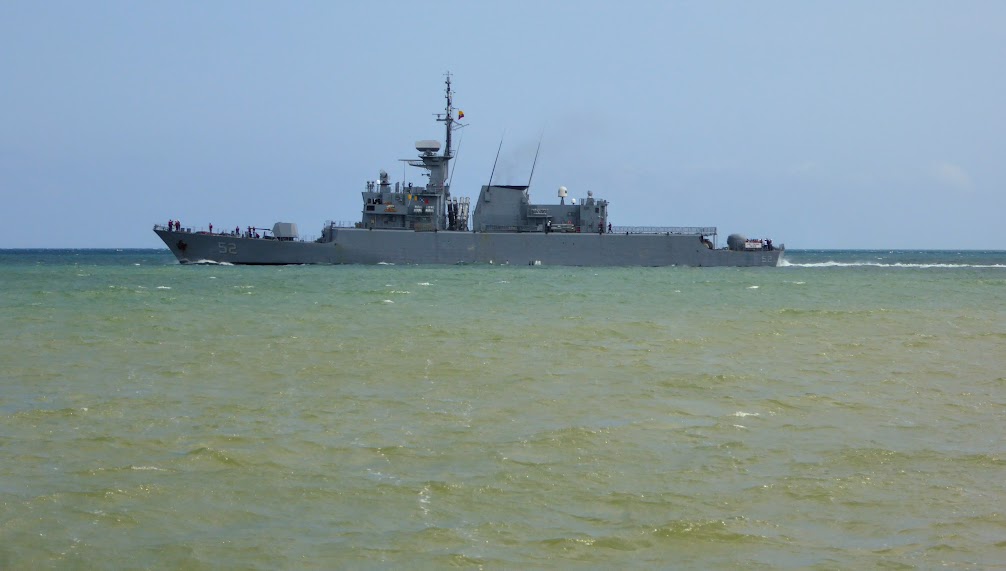
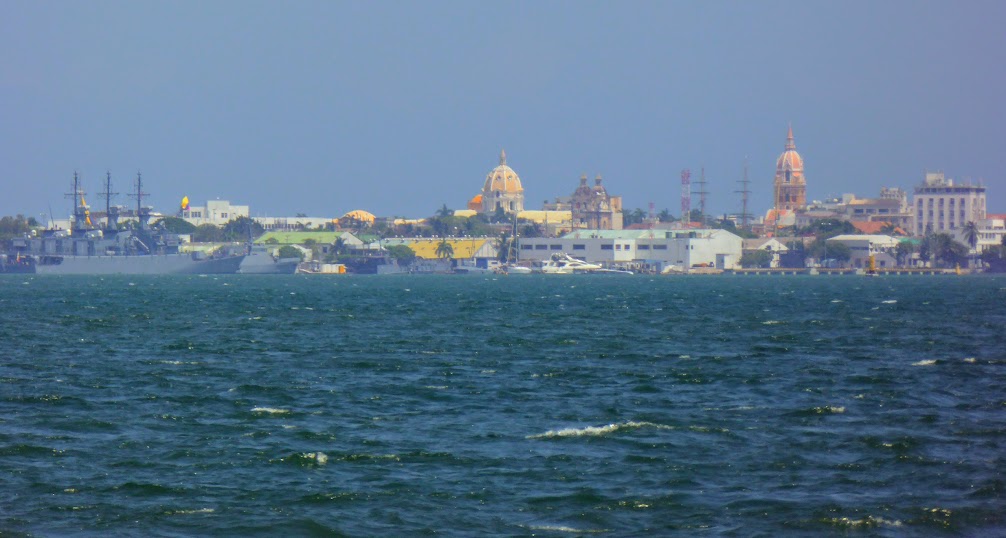
The Colombian National Navy has a base near Cartagena, and we saw several of their ships on our way into the harbor.

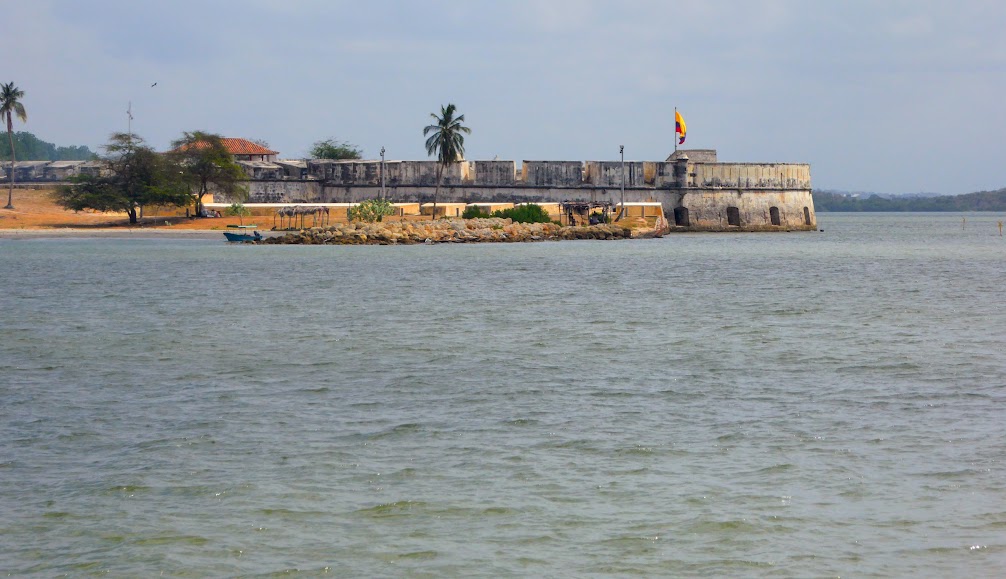
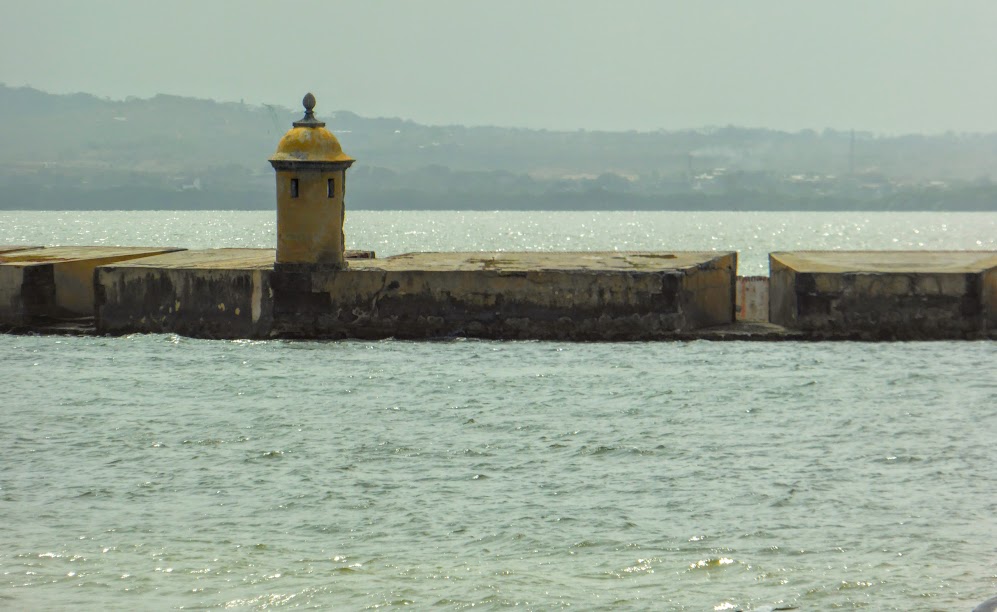
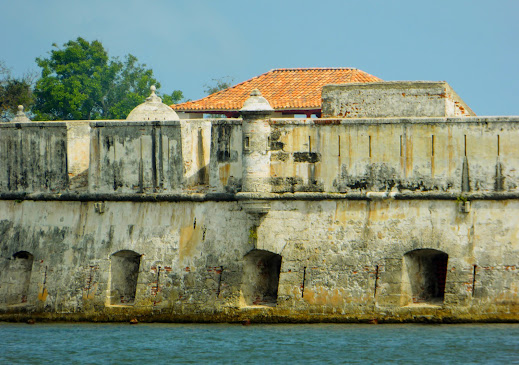
We passed the remains of several forts, their walls still mostly intact. At one time, all of Cartagena harbor’s natural entrances were protected by forts, and the huge  Castillo San Felipe de Barajas that dominated the city to the east, from atop it’s rocky cliff.

MAQUETA

CUADRO DESEMBARCO

Many of these forts are still standing in some form, and we passed several on our way into the bay.

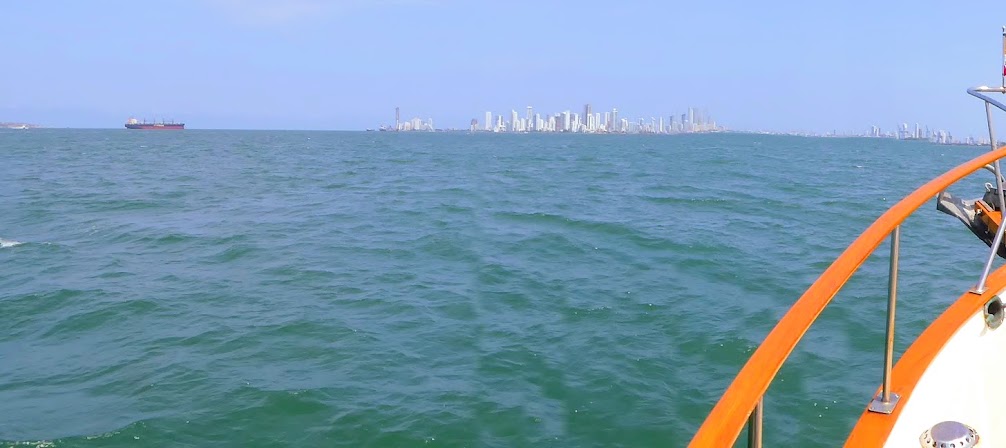
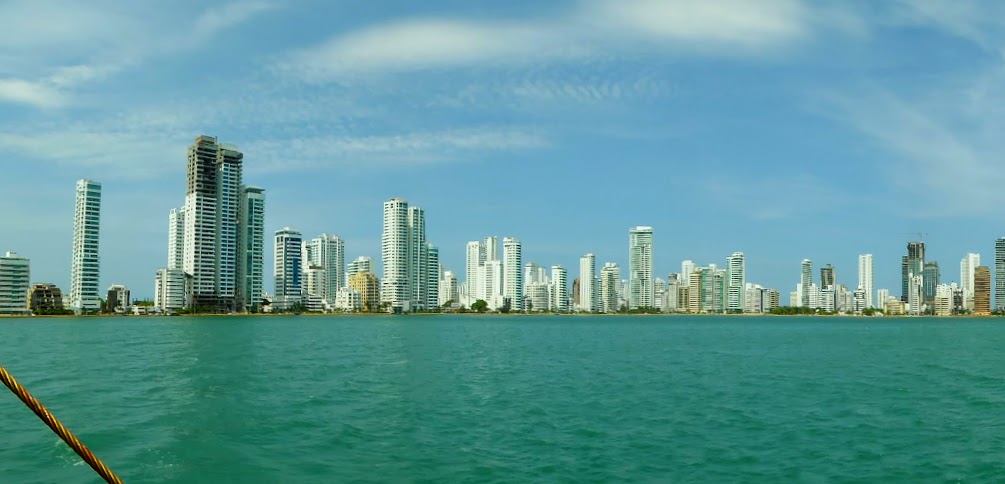
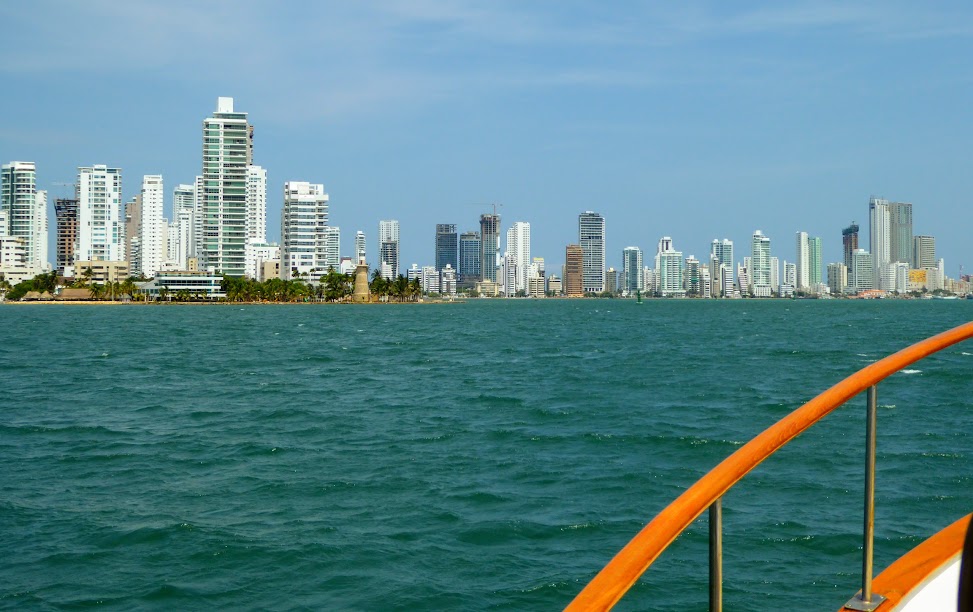
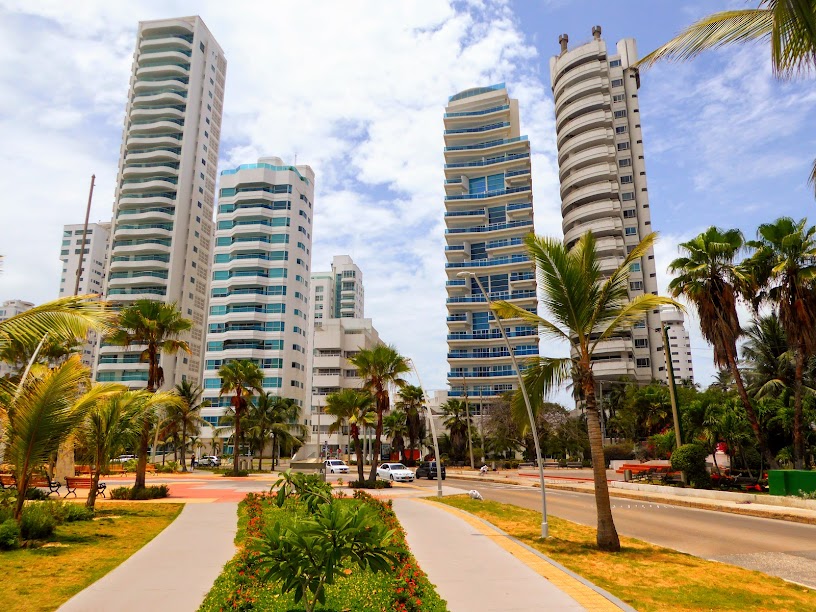
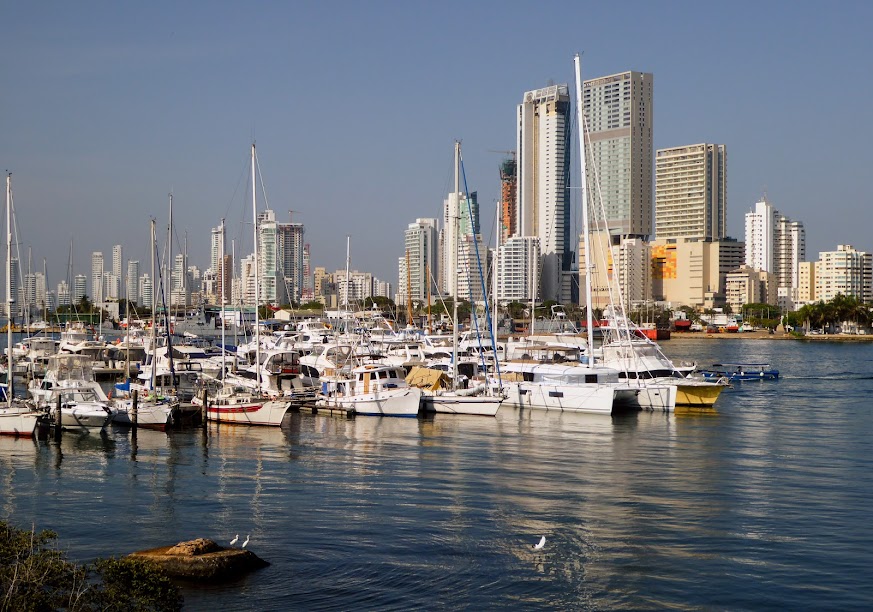
After passing towns and villages,  we eventually got our first glimpse at the modern skyline of Cartagena’s Boca Grande peninsula.

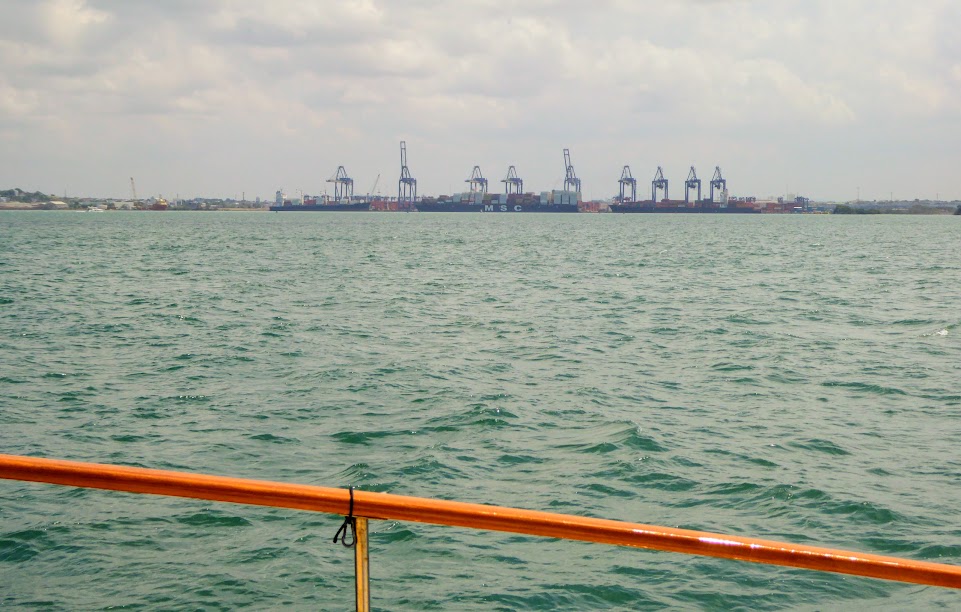
To the west was Cartagena’s commercial port, reminding us of scenes from our home port of Baltimore, Maryland, and it’s busy commercial shoreline.

As we came further into the harbor, the expanse of Boca Grande’s high rises came into clear view. The bright, white buildings with their blue and green glass windows gleamed among the palm trees and blue sky, very similar to the syline of Miami, Florida.

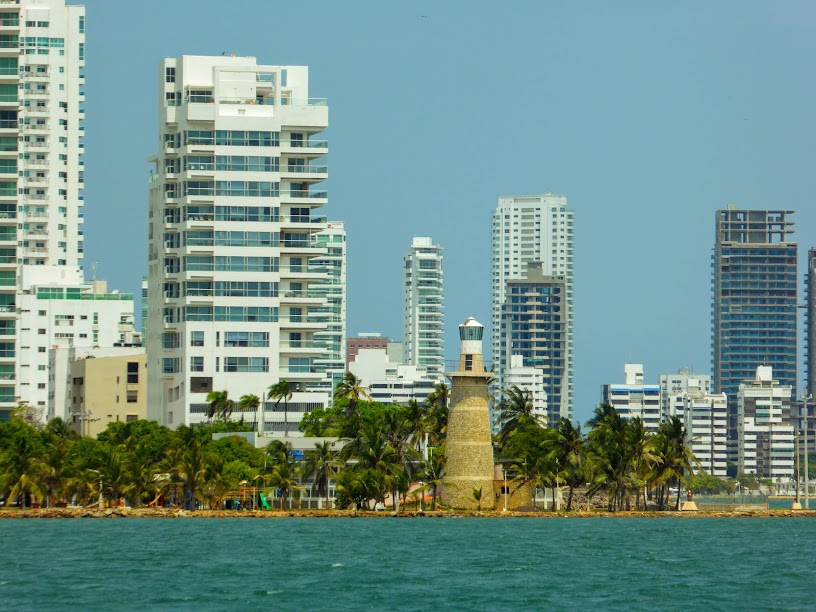
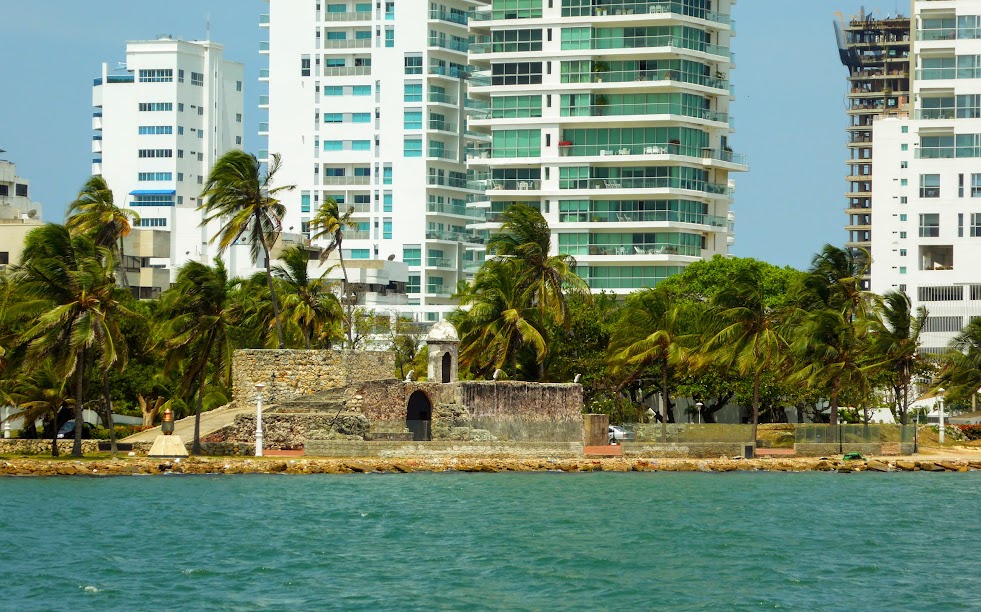
The Castillo Grande Lighthouse, and remains of Fort San Matias stand as a reminder of Cartagena’s history, among the modern skyline.

As we neared the harbor, the old, walled part of the city came into view, with it’s many church steeples rising into the midday sky.

We arrived at Club de Pesca, and headed for our slip. Docking was a bit challenging, as we only have one motor and don’t have the luxury of a bow thruster (they provide propulsion, making a boat more maneuverable). We usually rely on the outer poles of a slip, resting against one as we pivot into the place.

The slips at Club de Pesca didn’t have outer poles, and there were only finger piers on one side of our slip. That meant we had to come into the slip without making contact with the boat next to us, and without a pole to use for pivoting…making  things extra challenging.

Luckily, our friends on s/v Sirena were docked right next to us, on the “open” side of the slip. They’d heard us hail the marina on vhf, and Shawna was out on the bow, in case she needed to fend us off. That left me free to keep watch on the very large boat on the other side of us, as he stuck pretty far out past the short finger pier. There’s always a flurry of activity, and calling back and forth as we back in, but everything went fine.

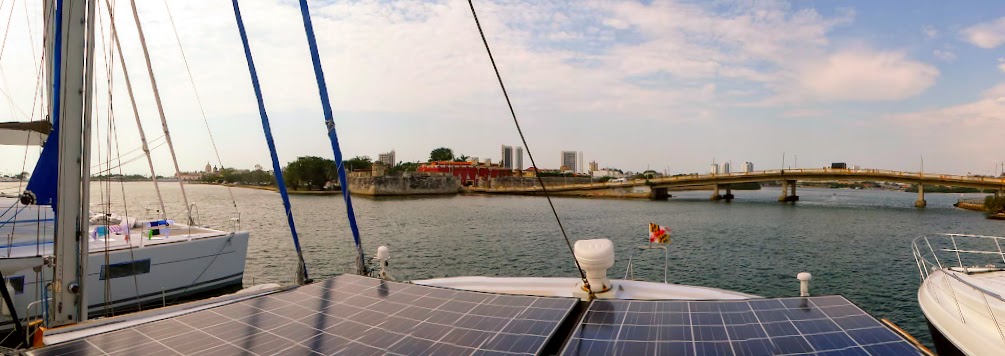
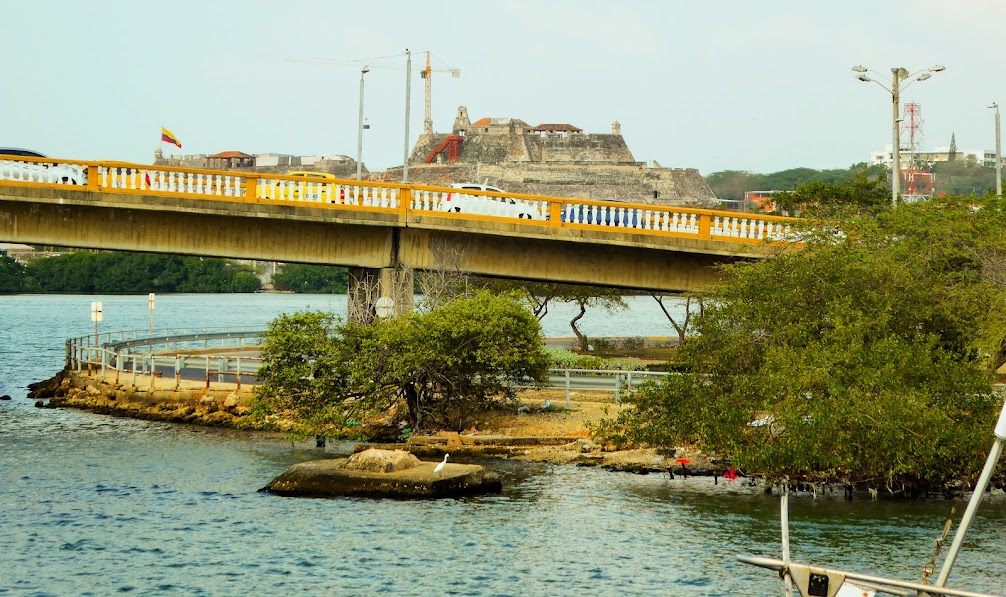
We were required to use an agent for clearing into Colombia, and Julio was waiting for us on the dock as we came around the corner to our slip. He collected our passports and other needed documents, and was off to begin our clear in process. We settled into our slip, with a great view Roman Bridge, and the edge of the walled city.


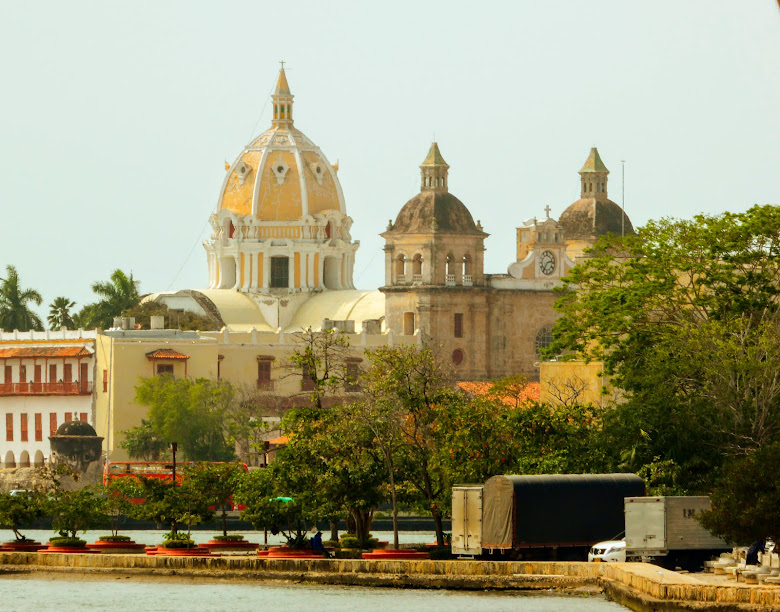
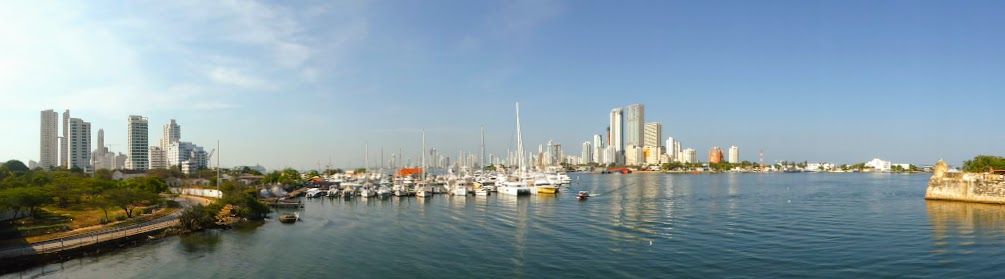
We could see over to the many church steeples in old town, and also had views of Castillo San Felipe; behind us, the skyline of Boca Grande.

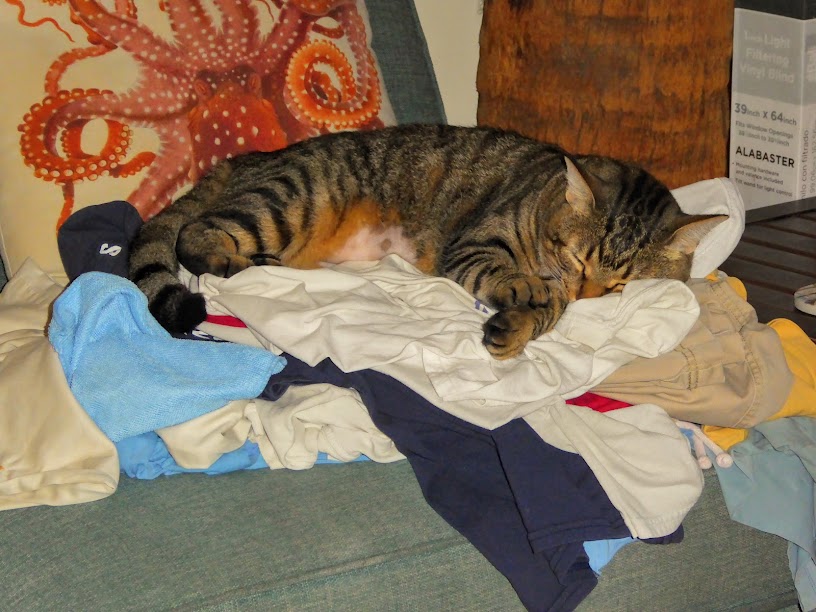
Howard took his usual post-passage, coma nap.

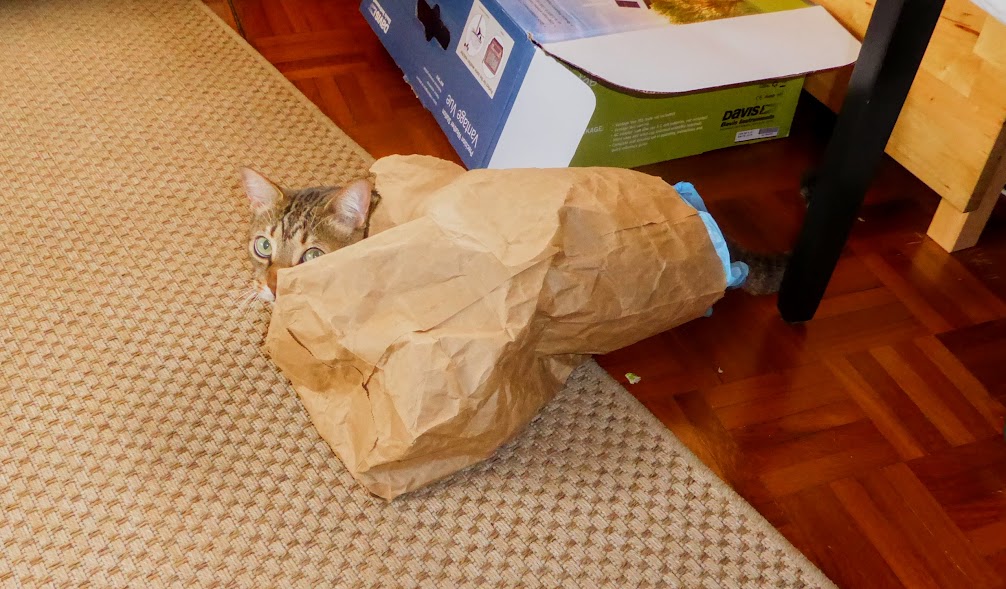
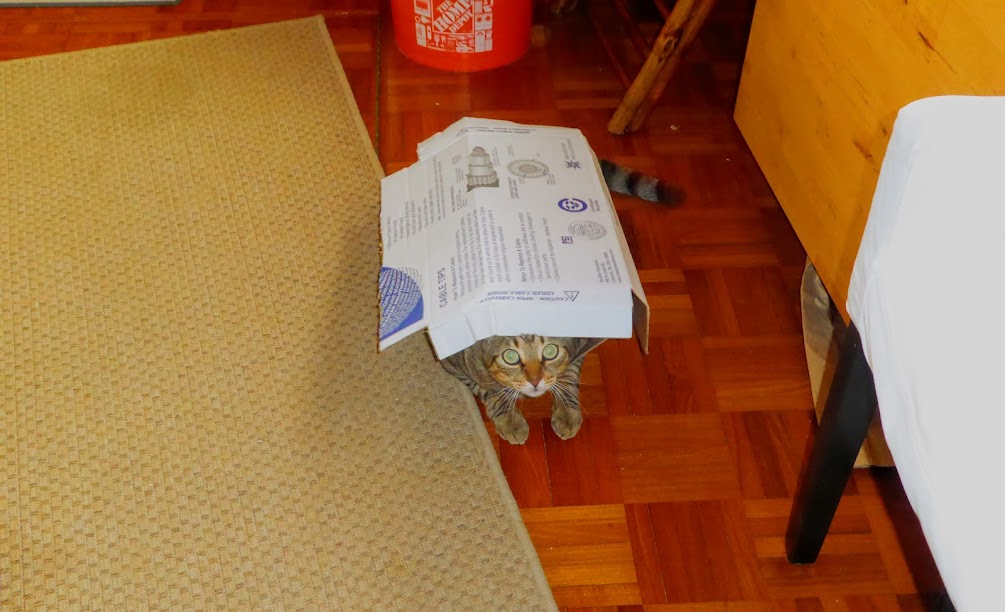
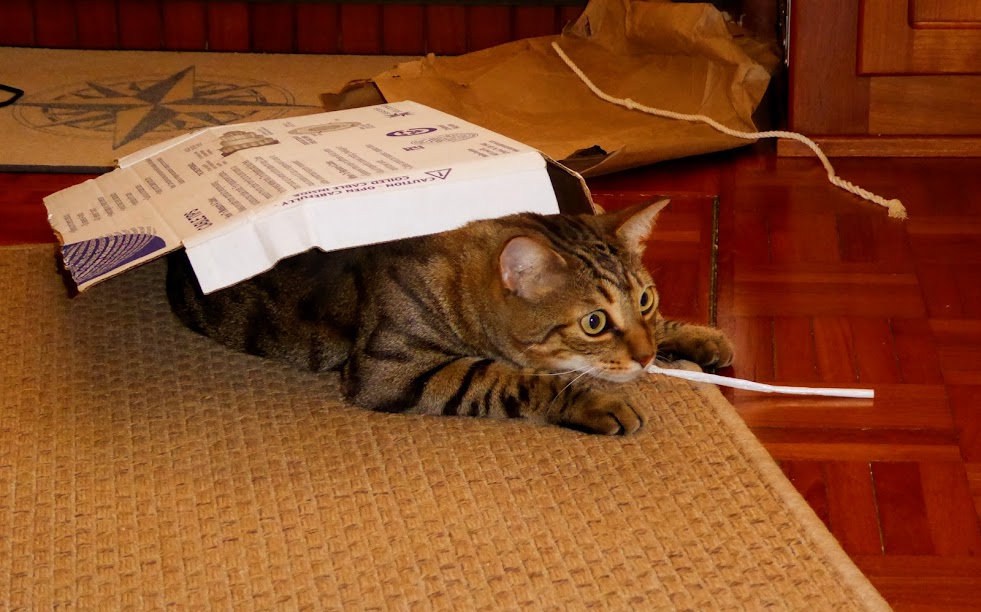
Once rested it was “turtle” box time. He loves to get under this collapsed box and run around, wearing it like a shell. Throw in some string and a straw, and it’s pure bliss…cats are weird. After clearing in, it was time to again raise the Colombian courtesy flag, and Howard helped make sure we had the right one.
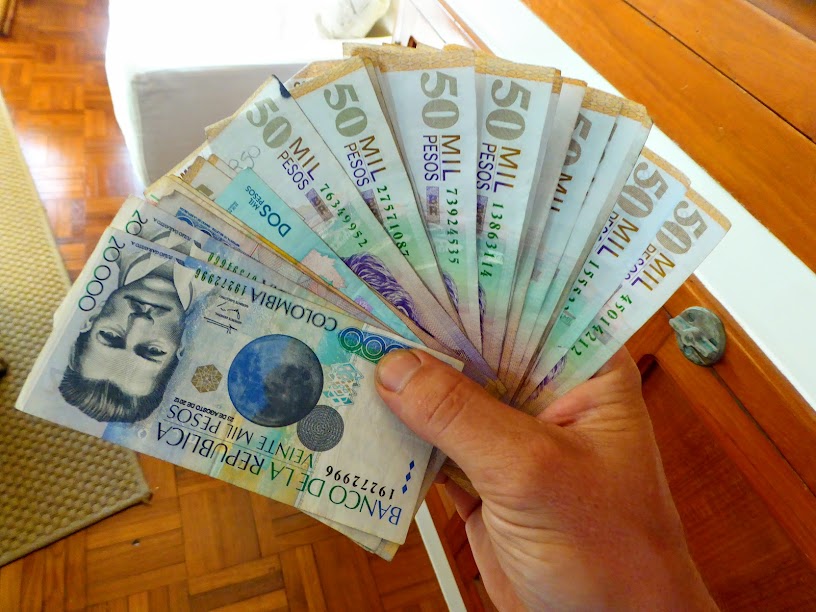
Scott visited the atm to withdraw some cash. The exchange rate in Colombia (as we learned during our stays last year in Providencia and San Andres) is insane: 3,000 Colombian pesos to 1 US dollar; we’re millionaires here! Scott returned with a fist-full of bills…..20,000, 50,000, good grief!

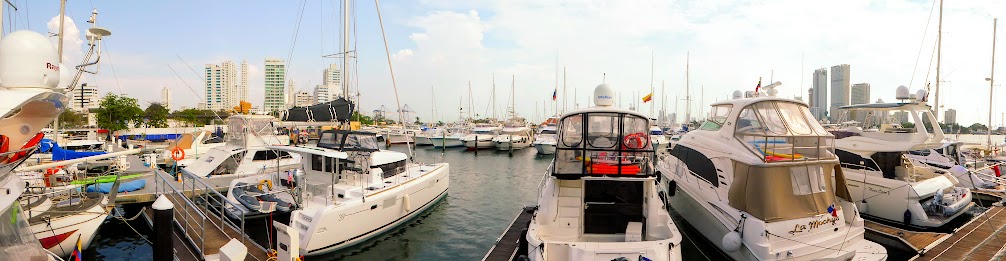
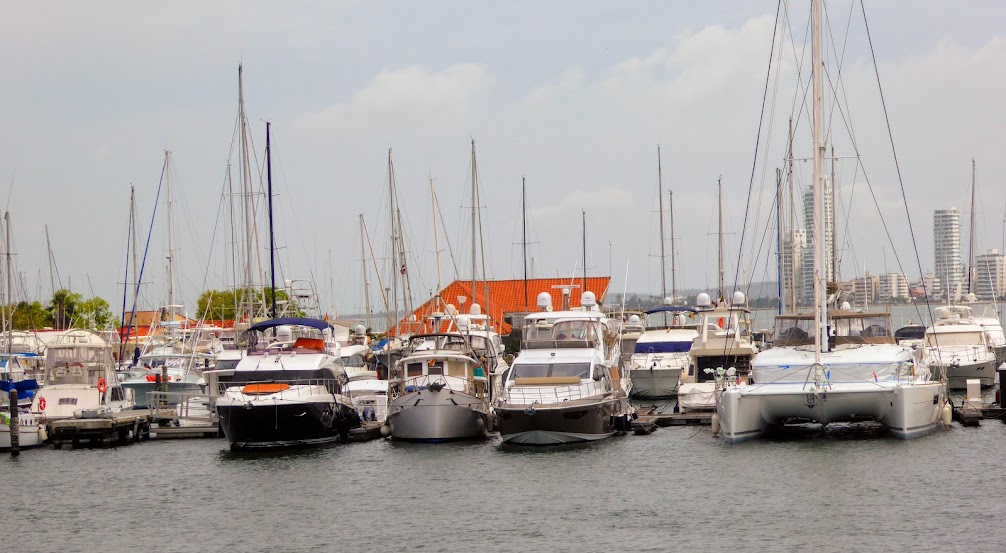
We began to explore our surroundings. Shawna and Chris (s/v Sirena) filled us in on the need-to-knows: locations of grocery stores, restaurants, ice cream spots, etc., and we perused the marina grounds. It was a full house, with lots of daily activity, in the form of washing, waxing and detailing. I think most of the boats were cleaned more than they were used!

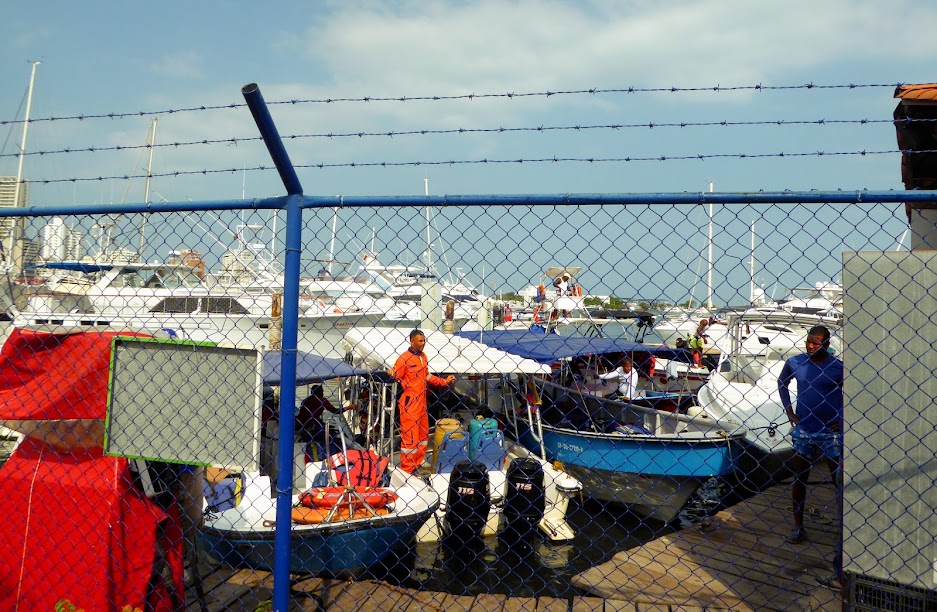
The fuel dock was a traffic jam every day, with boats of all sizes waiting in line to fill tanks and/or jugs. It was amusing for Scott to watch the organized chaos.

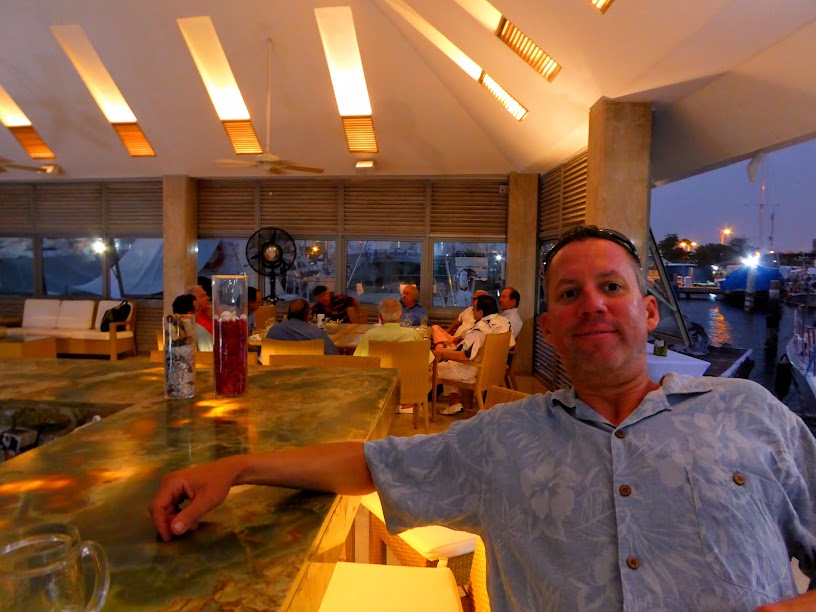
We stopped at one of the two restaurants on site for a happy hour cocktail, and were convinced that there was a meeting of the Colombian mafia at a nearby table. It was like a scene out of Scarface or Goodfellas. We remained quietly amused, not needing Colombian enemies.

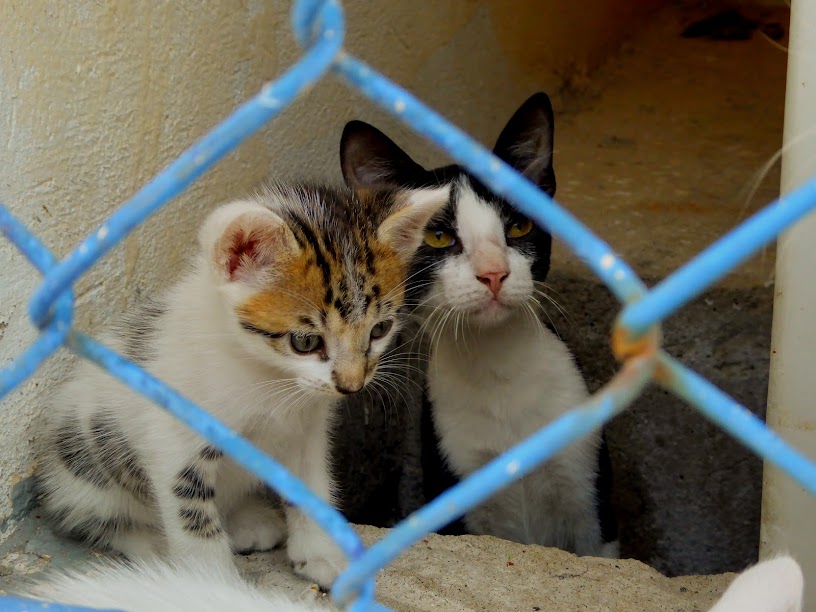
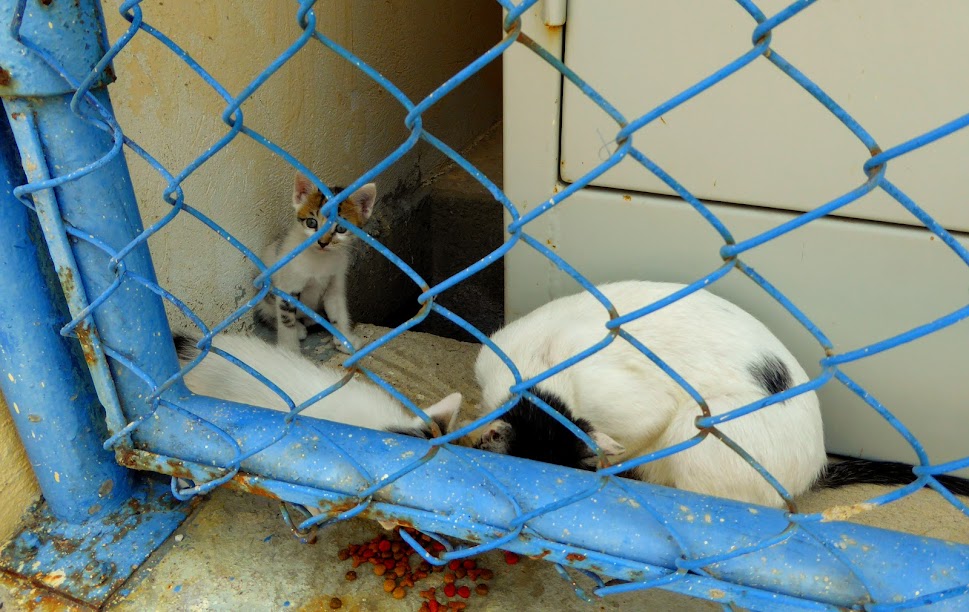
Shawna had told me of the many kitties that call the marina grounds home. I bought some cheap cat food at the grocery store, and carried a bag with me whenever we came and went (Of course, I couldn’t get the bag out, without giving Howard some… I called it his McDonald’s treat). The cats came to know our step, and would pop out of their shelter spots, or run up to us for food.

Groucho (aptly named by Shawna because of his black mustache) was one of my favorites. He was very vocal, always greeting us for food near the rear marina entrance. If I thought I could talk Scott into it, and if there was a chance that Howard would share his space….and food, we’d have a second cat.

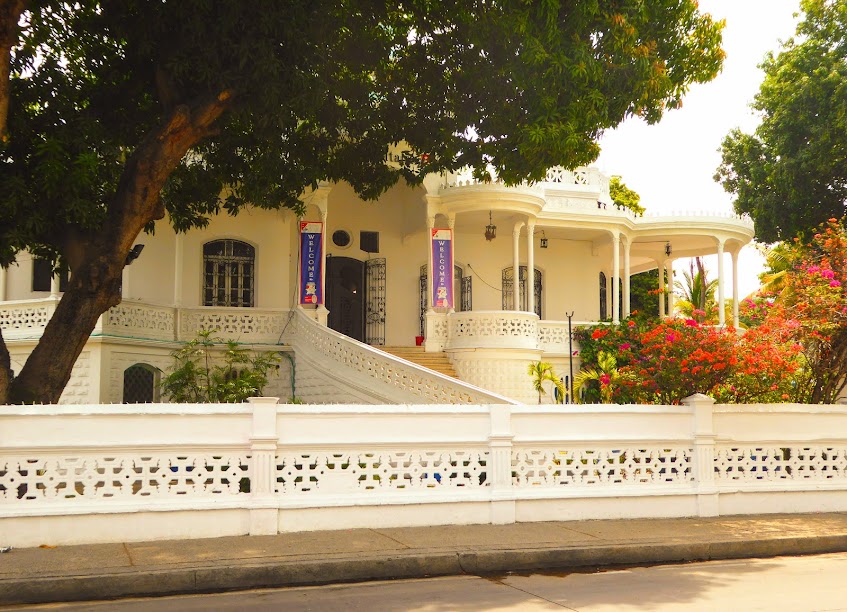
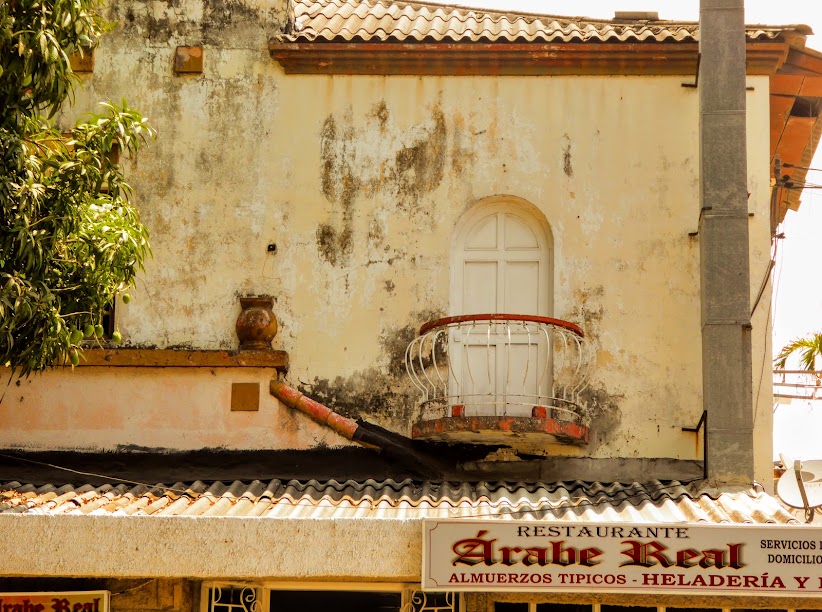
Club de Pesca in located in the Manga neighborhood, just a short walk across the bridge from the walled city. It was a very safe area, and we enjoyed wandering the streets.

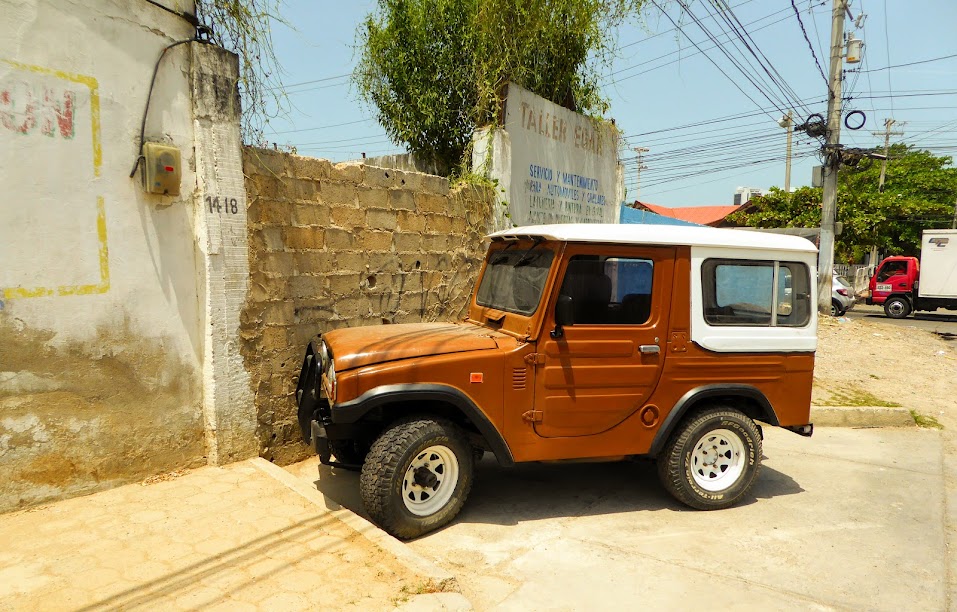
Of course….Scott can always sniff out a unique vehicle.

Shawna and Chris took us to their favorite local find, D’Res. It was just across the park outside the  marina, and had terrific steaks at great prices! We returned several times, to get our red meat fix.

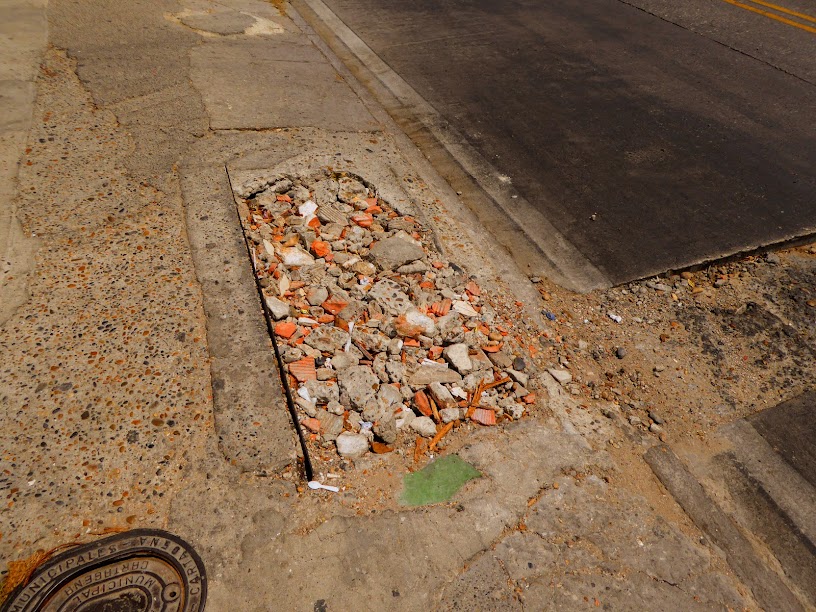
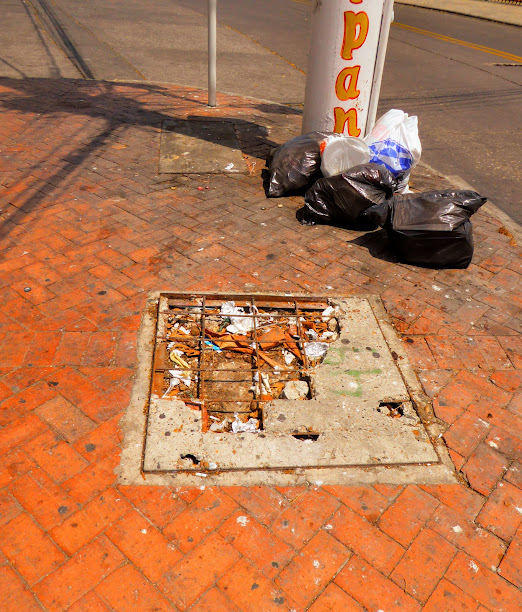
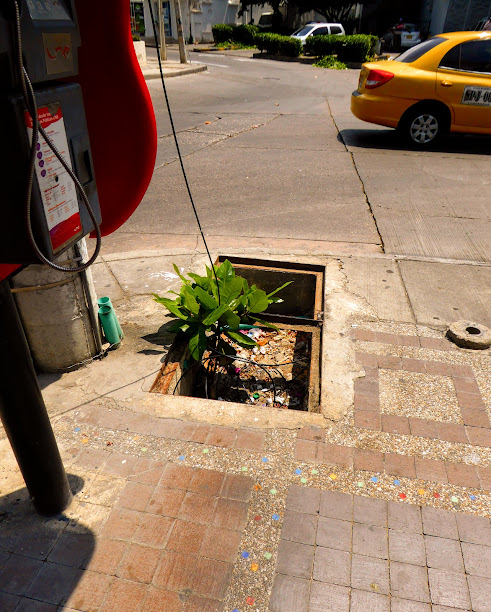
The streets of Cartagena are insanely clean, with crews sweeping them every morning. However, the condition of the sidewalks are treacherous. If you’re not frequently looking down as you walk, it’s easy to twist and ankle on the horribly uneven surfaces, or in the patches of rubble “repairs.”

In other places, exposed rebar and open holes wait to cause you harm, making it challenging to try and find your way along streets and across intersections, while looking down for these sidewalk traps.

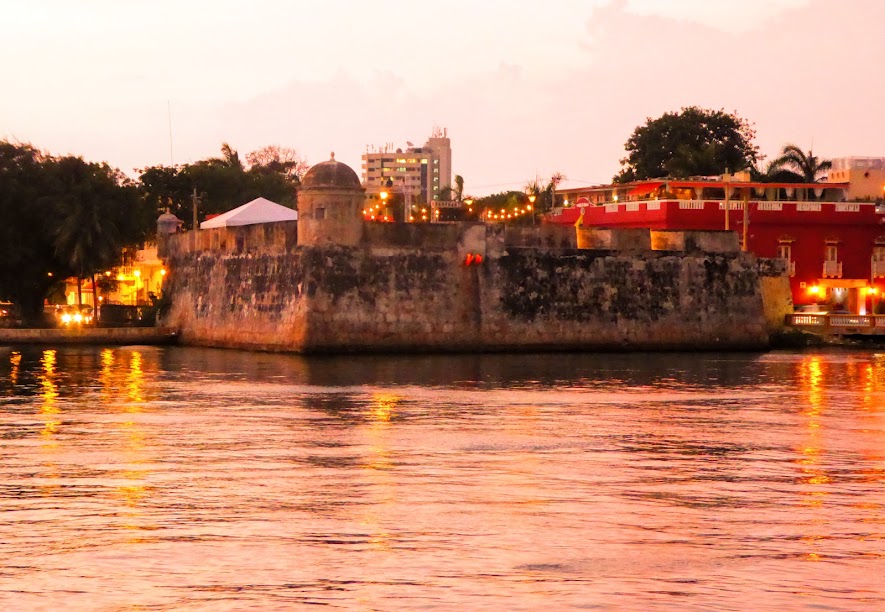
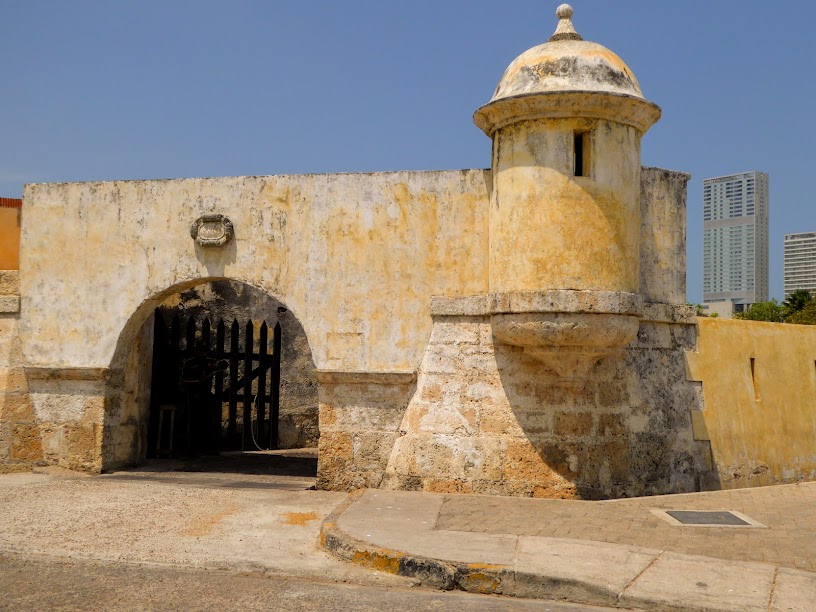
In the late afternoon, when the marina office is closed, we enter through the old walls of Fort Manga, a daily reminder of the history surrounding us.

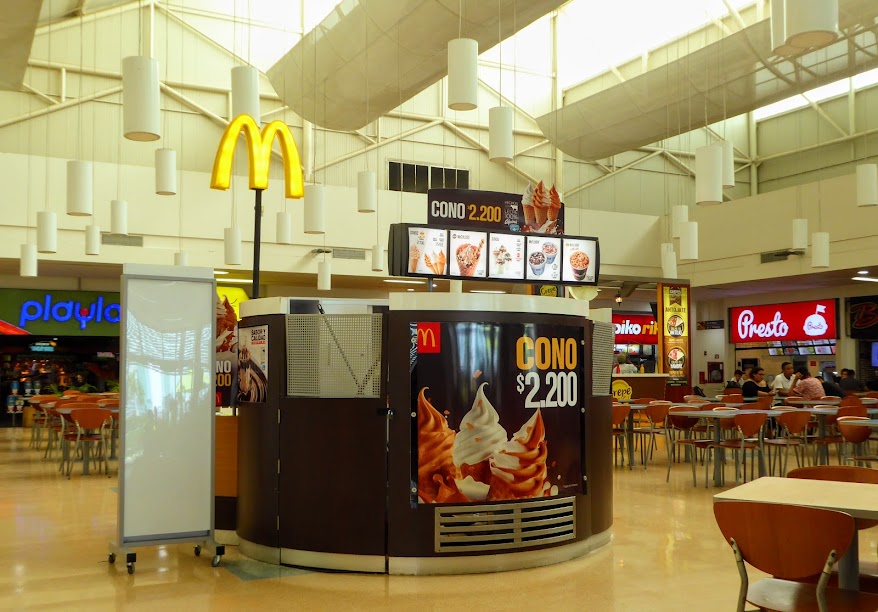
We ventured out to the nearby mall, in search of a sim card for our phone and of course, a McDonald’s fix for Scott. They made the food to order; still quick, but deliciously hot and yummy….. the best McDonald’s ever!!!

You couldn’t spit without hitting an ice cream place in the mall (or in all of Cartagena for that matter). I counted four, just in the food court area, including a McDonald’s stand-alone kiosk. At most locations, there is a separate ice cream counter, next to where you order burgers and fries. They’re serious about ice cream here.

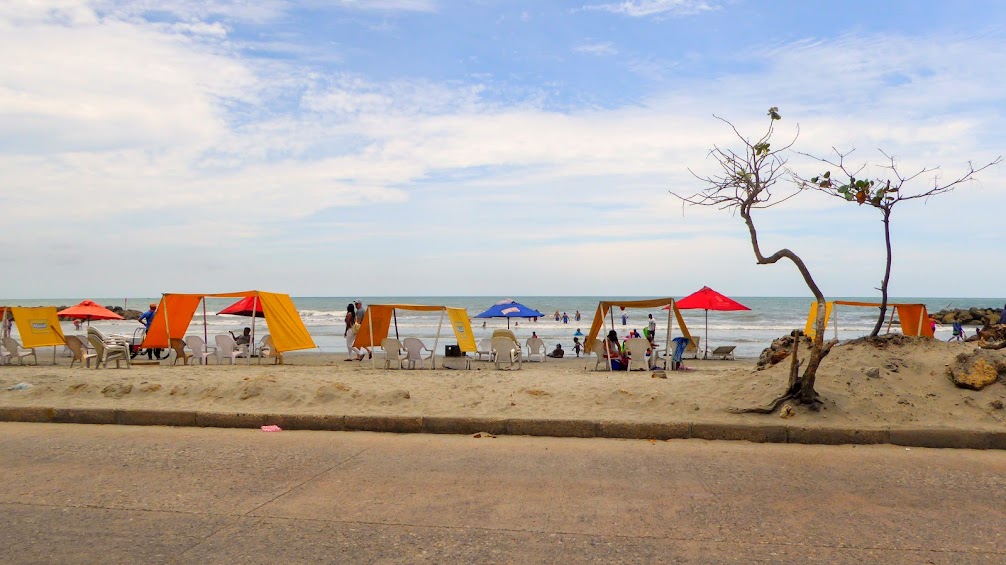
Scott sought out a dermatologist in Boca Grande, and made an appointment for some routine scans. He walked there and back, past the high-rises and beaches. As a reward, he visited Burger King after the appointment, for another fast food fix. Much to his disappointment, it was not nearly as yummy as the McDonald’s food we’d enjoyed at the mall, much to his disappointment.

We were spending a month in Cartagena, so Scott took time for some boat projects. He replaced the raw water impeller, during routine maintenance of the pump. He finds it more thorough to just take the pump apart, so he can inspect all of it’s workings.

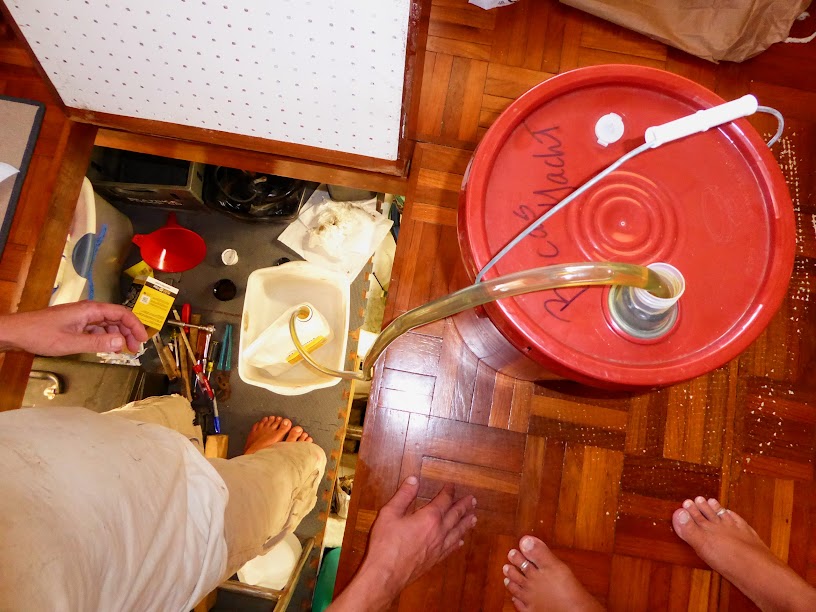
An oil change for the motor was also in order. During the process, he used a jiggle siphon to transfer oil from a five gallon bucket that he’d purchased in Bocas del Toro, to smaller containers for easier storage.

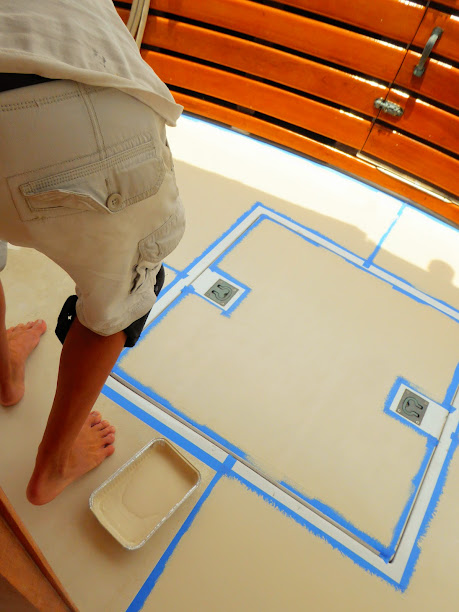
And, our poor, dirty cockpit got a fresh coat of paint…hurray!

As usual, we’re one of the smallest, oldest boats in the marina…but we’re ok with that. We’re enjoying our Cartagena home, and look forward to exploring the walled city!

Here are more photos.

“Shells Sink, Dreams Float. Life’s Good On Our Boat!”


Farewell Panama, You Were A Beautiful Host

After spending eight months in Panama, we prepared to leave the San Blas Islands, and head for Colombia. Our original plan was to be in Bocas del Toro by the end of June, and stay for a month. After that, it would be on to the San Blas for the month of August, and then head for Colombia in September. As we’ve well learned, weather rules the cruising world, and as a result, we didn’t arrive in Bocas until the first week in August.

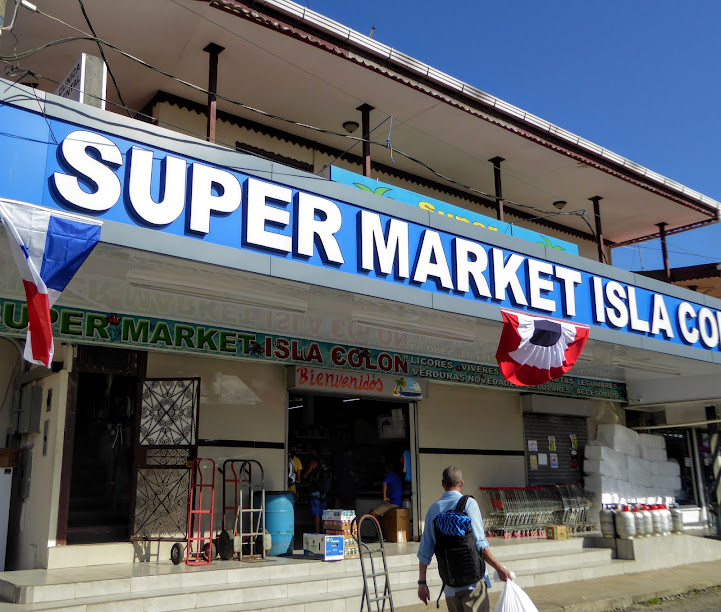
Since we’d arrived late, and paid several hundred dollars to clear into Panama, I told Scott it would be a shame to rush through the country, so we slowed our plan. Almost three months later, we’d grown attached to the laid back, comfortable town of Bocas del Toro, and the scenic surrounding islands. We met new friends, and frequented stores and restaurants in town so much that we were recognized on the street.

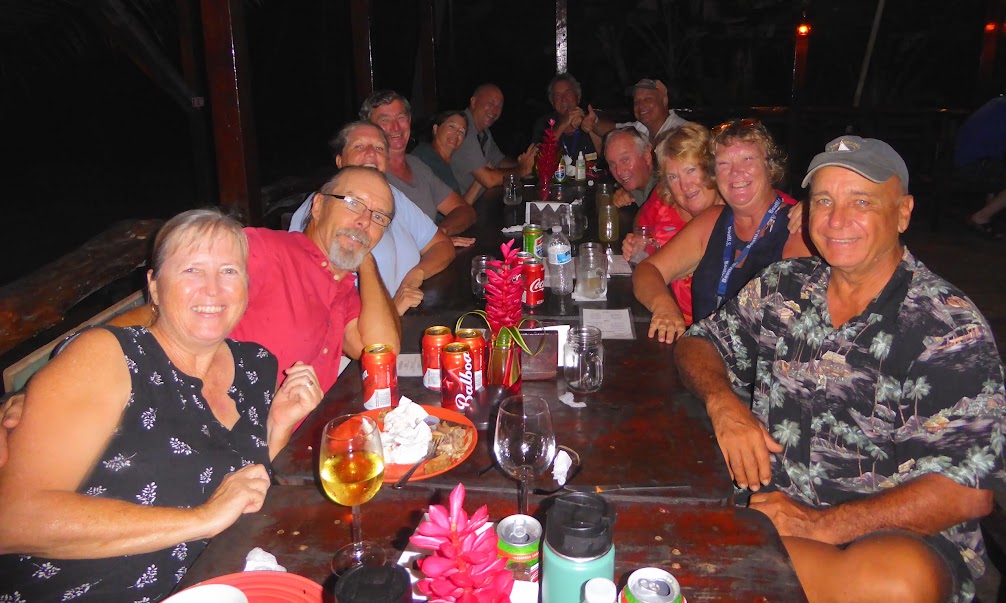
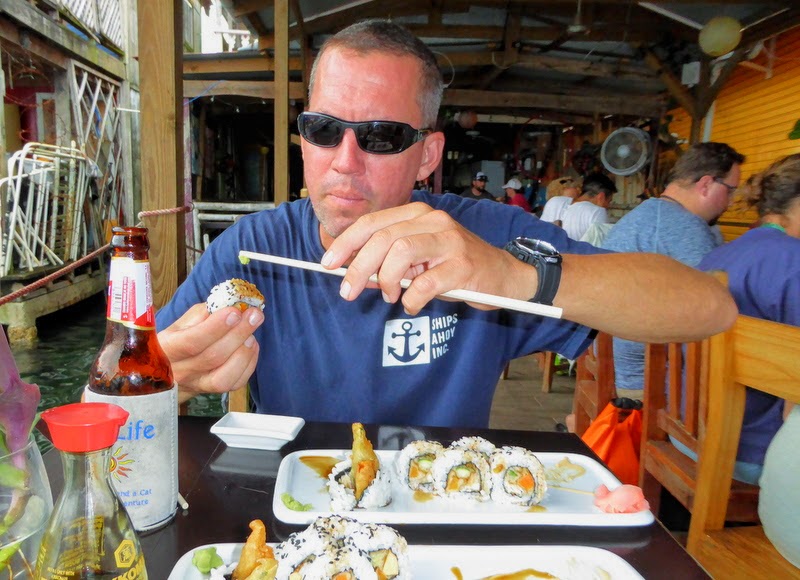
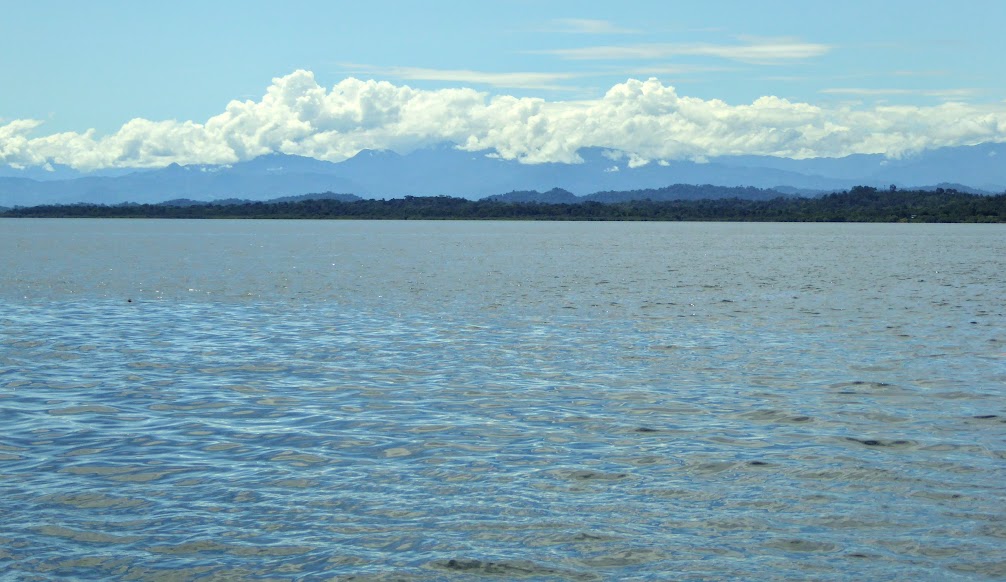
We ate fresh made pizzas at Bocas Marina’s barbecue night, got to know most every happy hour special in town (Scott even came to like sushi!) and never got tired of the mountain views.

At Red Frog Marina, we were surrounded by lush jungle rain forest, and enjoyed the short walk through tropical scenery to the beach, for yummy tacos. The staff quickly became friends, and the sights and sounds of the property were truly beautiful.


Scott crawled through caves with bats, hiked trails on Red Frog’s property and explored the archipelago with the Aluminum Princess.

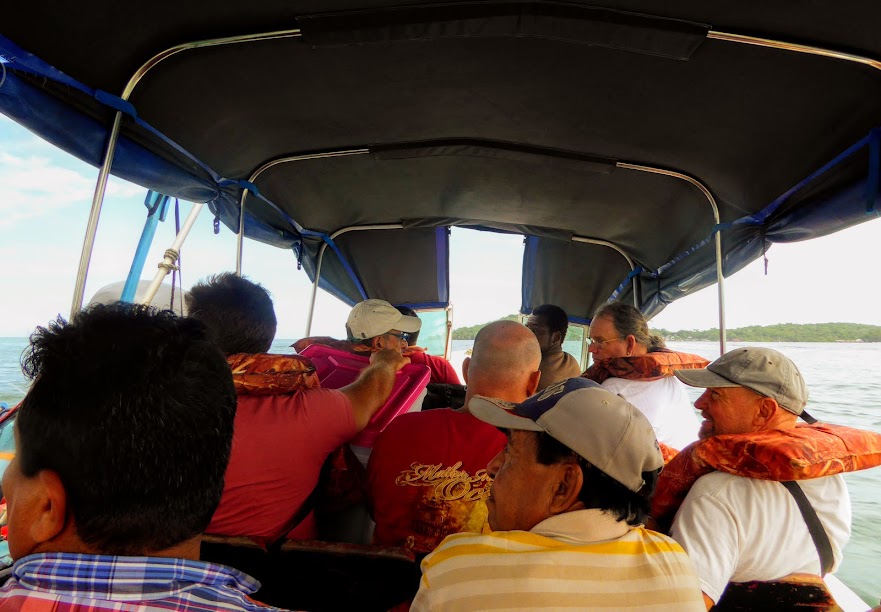
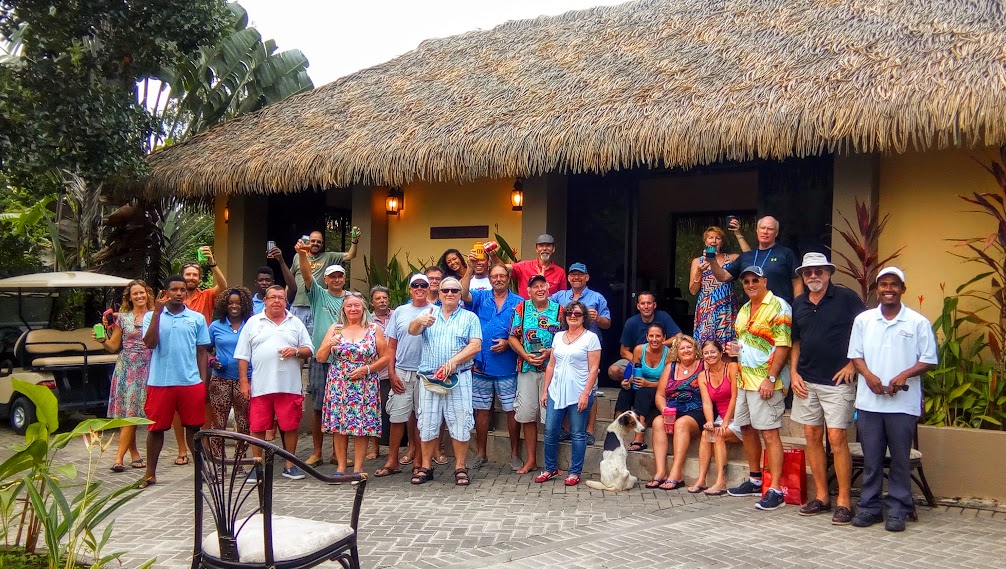
We went to Sunday parties at Ron Azul,  attended many happy hours on Red Frog’s dock, survived crazy, crowded, high-speed panga rides to and from town and celebrated Thanksgiving at a terrific potluck with friends during our final days in the area.

It was hard to cut the apron strings and leave Bocas, which will always have a special place in our cruising memories, but there was more of Panama to see.

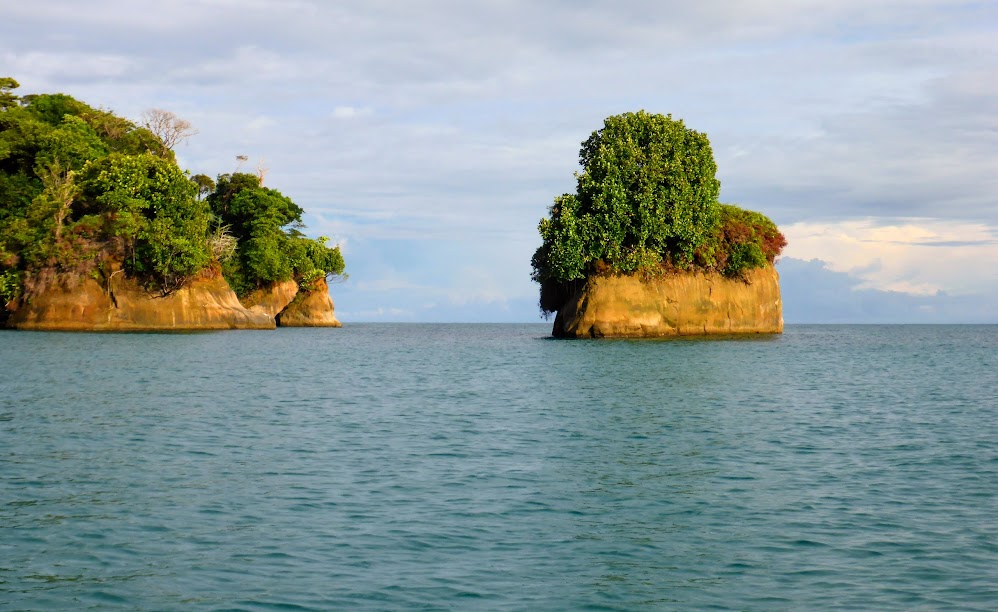
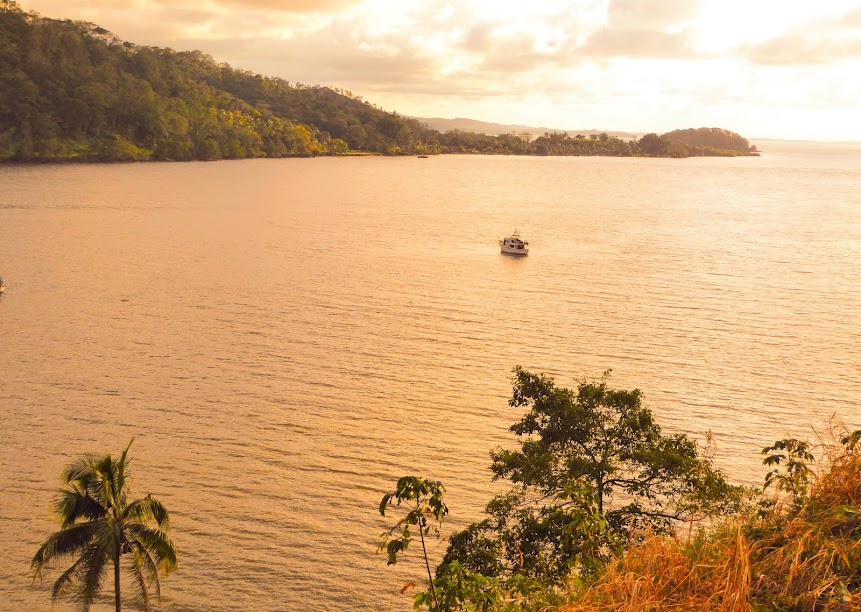
As we headed for the San Blas Islands, our route took us to more beautiful locations. The shoreline scenery at Escucdo de Veragus was almost otherworldly, and we spent hours in the dinghy taking in the sights.

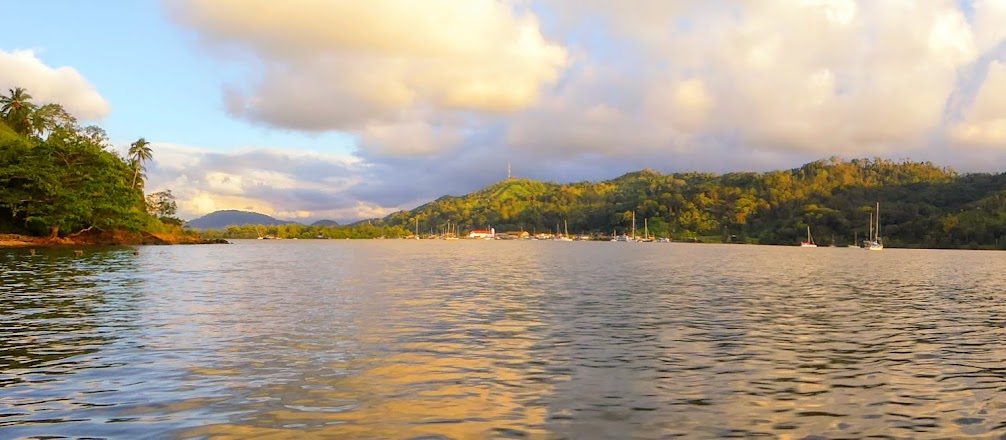
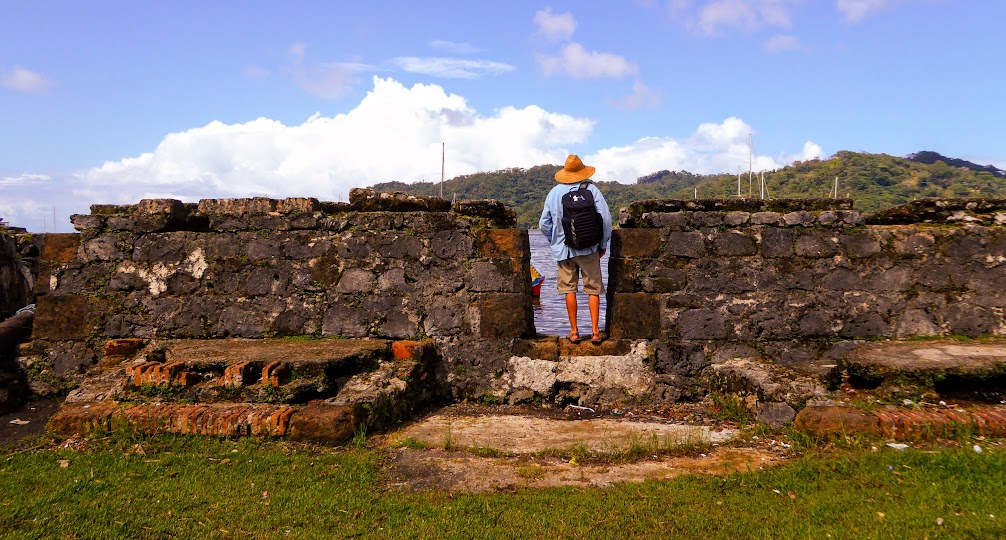
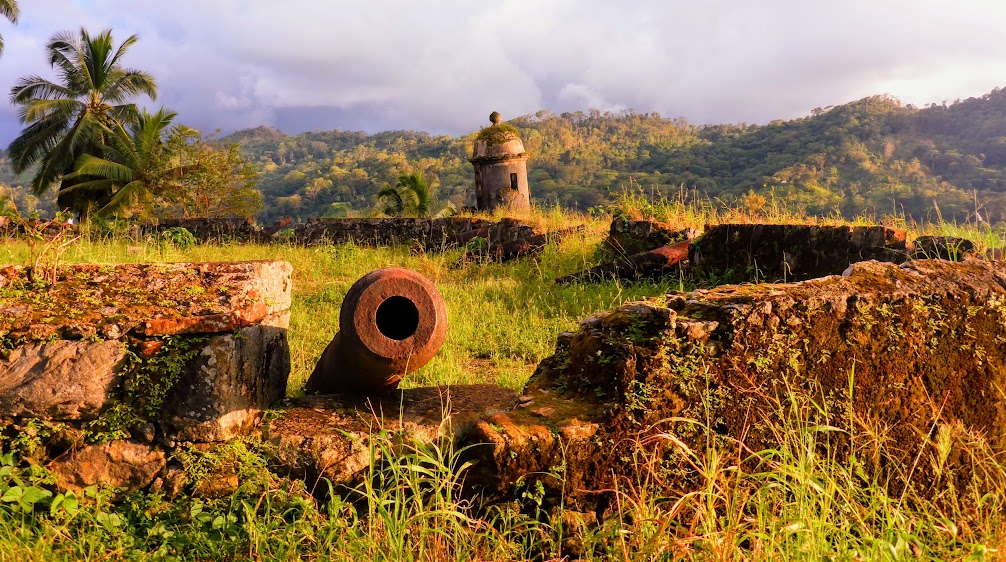
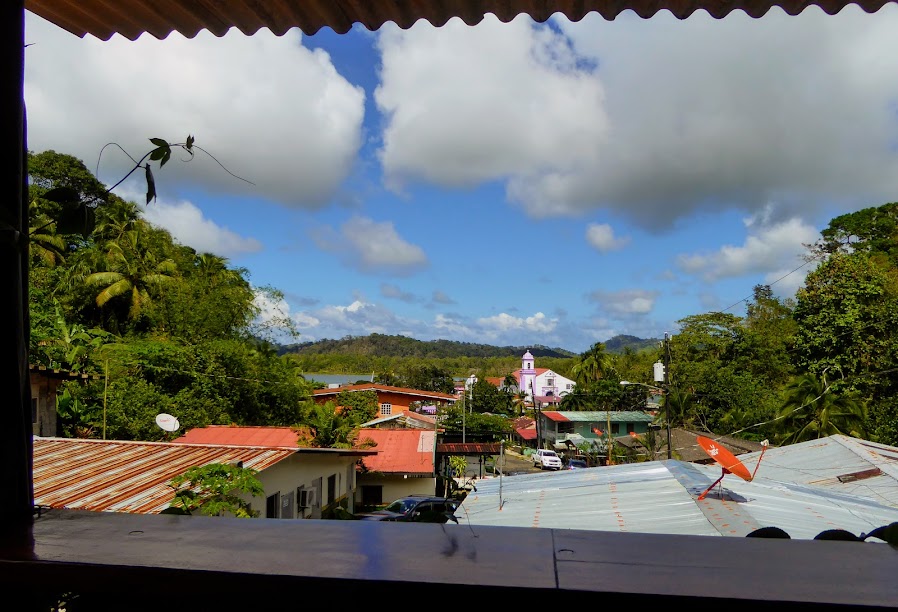
Portobelo’s harbor was quiet and picturesque, and we enjoyed roaming the ruins of the many forts that surround the town.

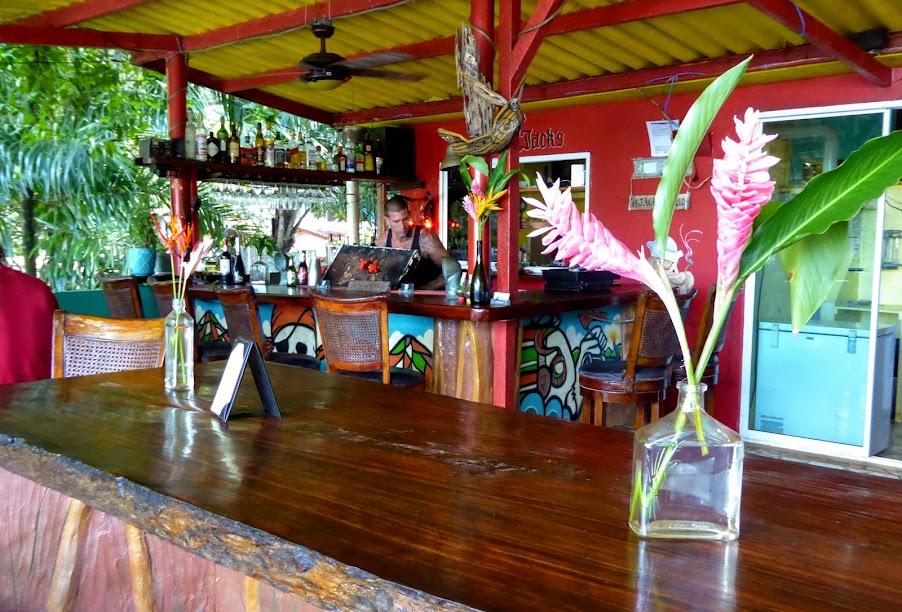
At Captain Jack’s, perched on a hill in town, we were welcomed with cold towels, local info., and delicious food. We’d have liked to linger longer in Portobelo, but weather pushed us on.

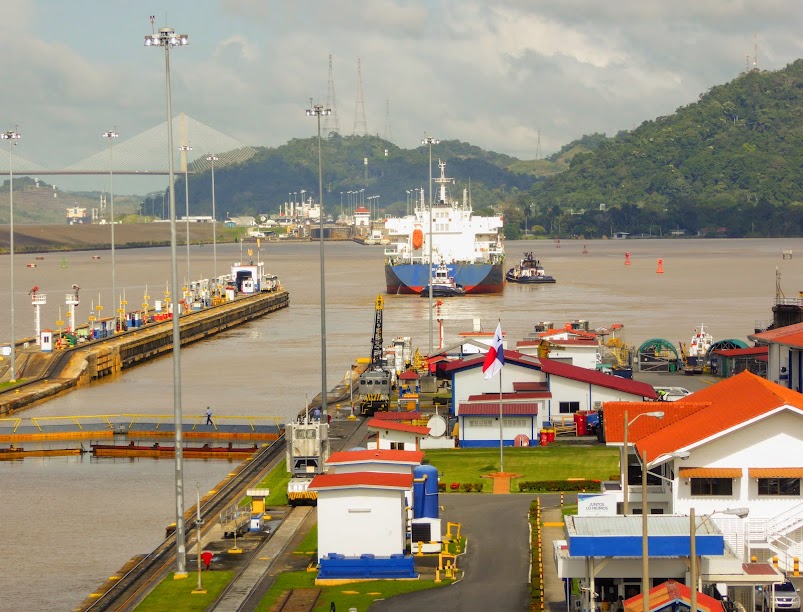
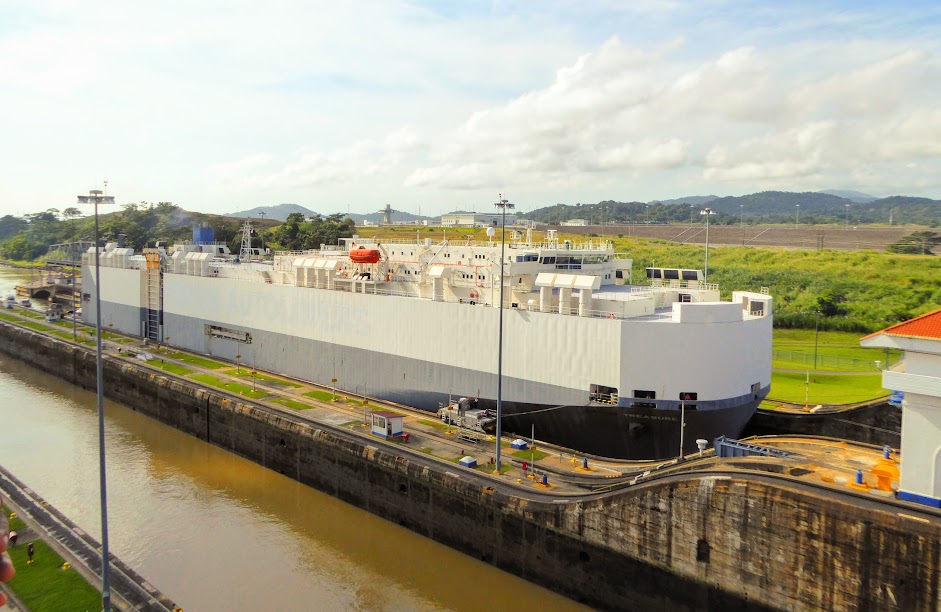
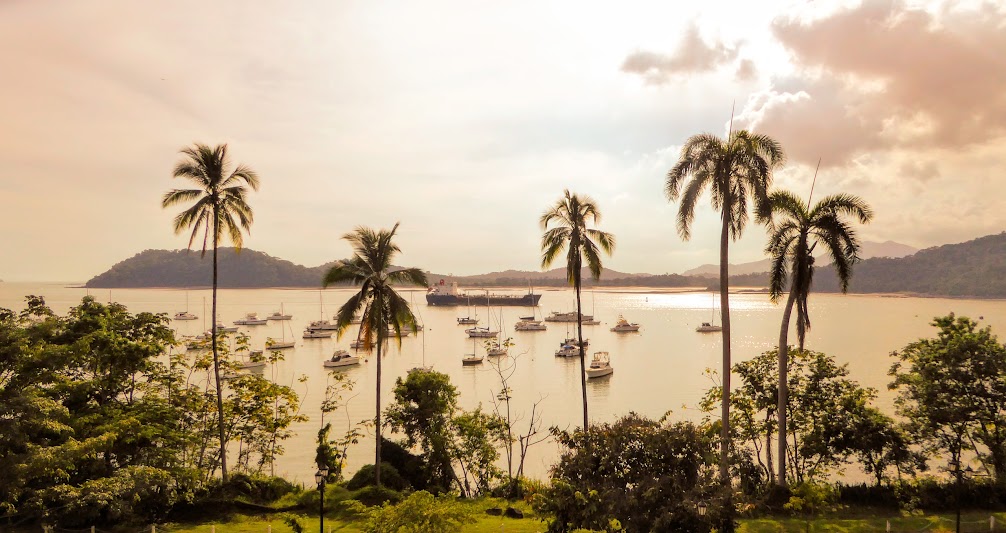
Next was a pit stop at Linton Bay, for an overnight trip to Panama City, and a visit to the Panama Canal. We spent hours watching the huge ships close up, as they passed through the locks on their way to the Pacific.

Then it was on to our hotel for the night, where we continued to watch the ships pass by. It was also a treat to watch tv in English, and take roomy showers.

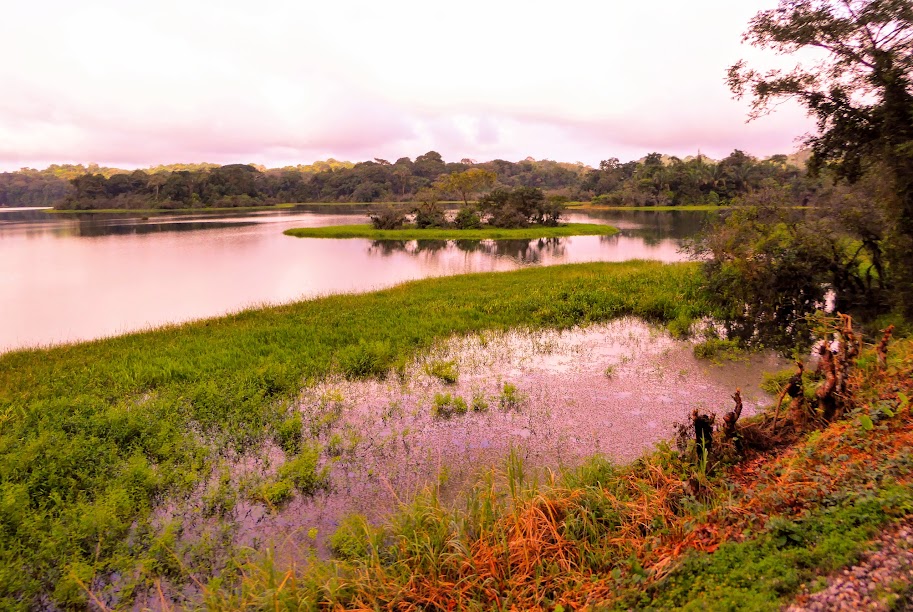
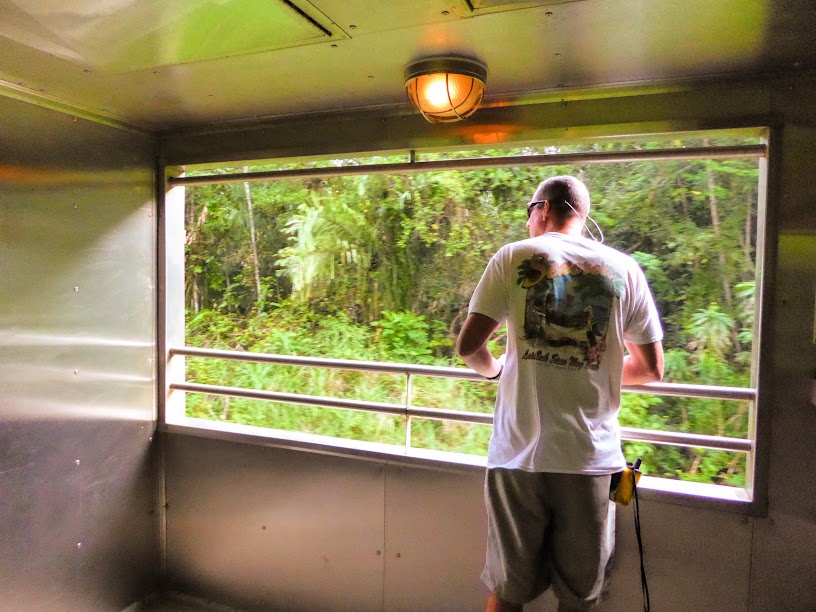
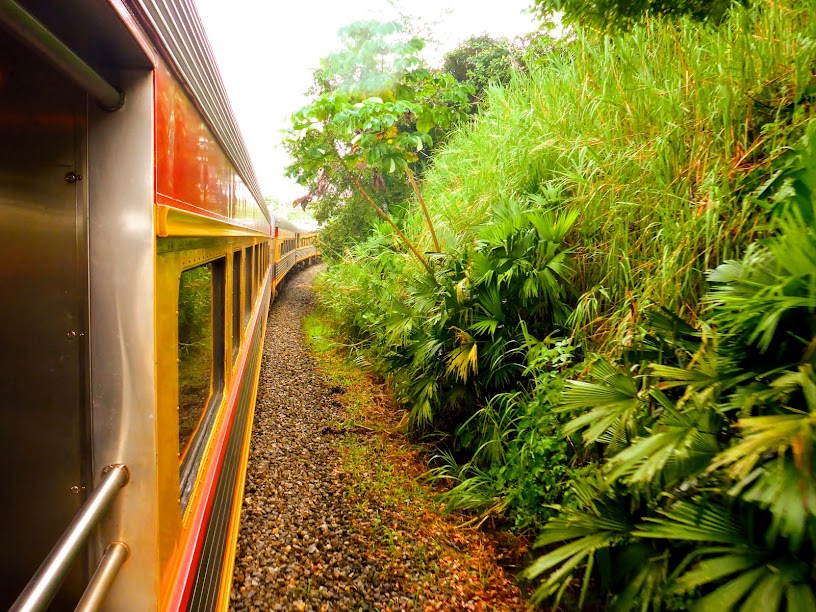
Our return trip toward Linton Bay was by train, on the Panama Canal Railway; what a cool way to travel! We spent the entire ride out on the observation deck, getting up close and personal with our surroundings.

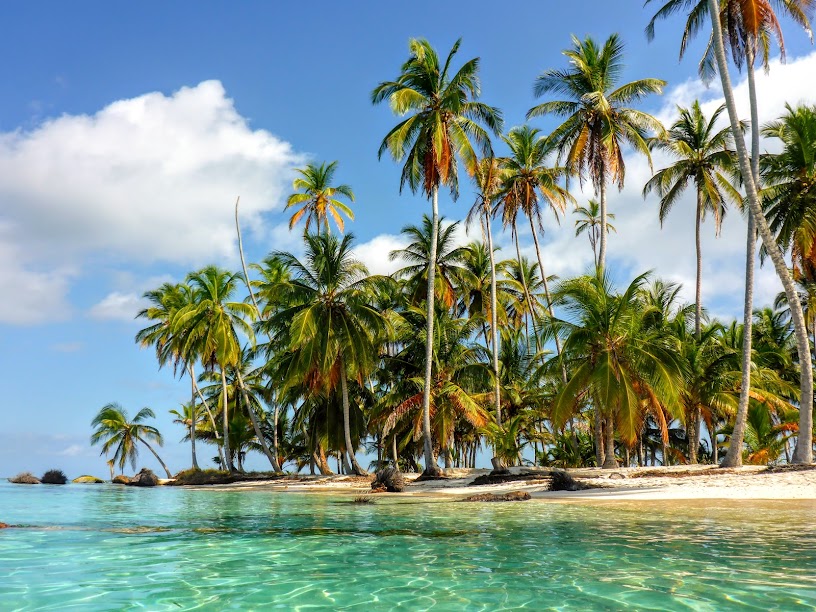
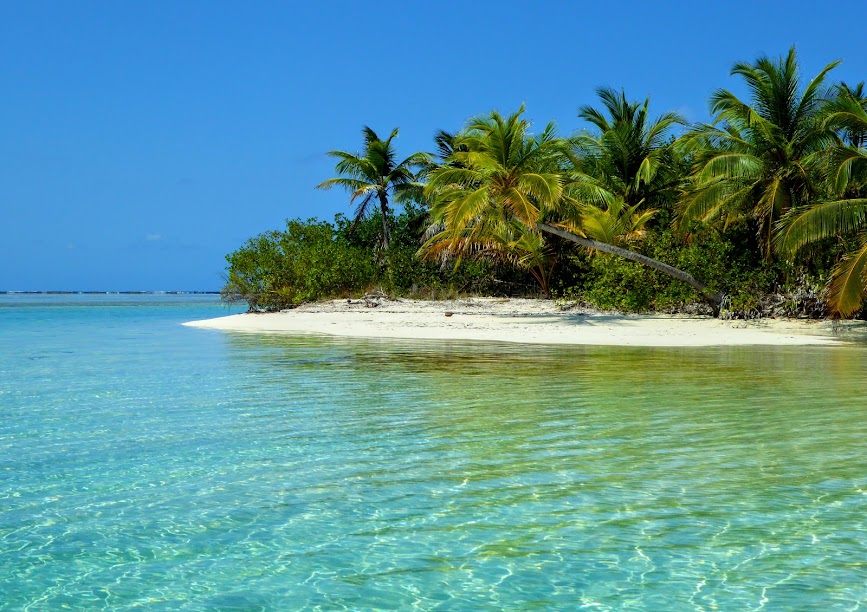
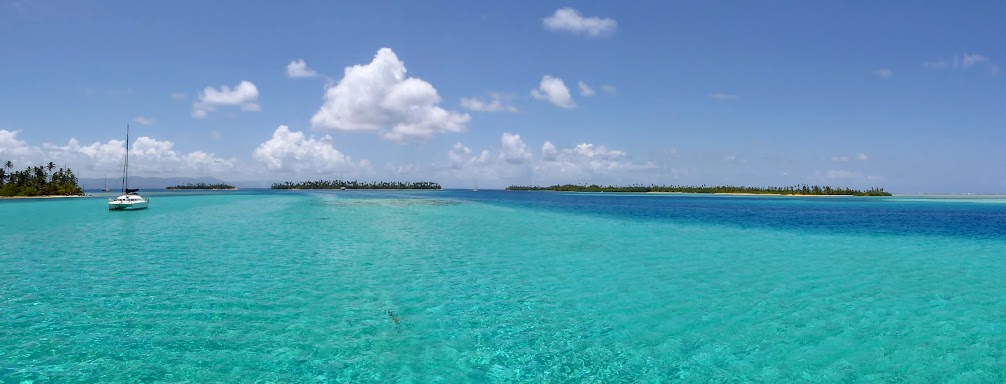
We took advantage of a lull in the wind, and enjoyed a calm ride over to the San Blas Islands, where we enjoyed a tropical Christmas and spent almost four months surrounded by gorgeous water and uninhabited palm tree islands.

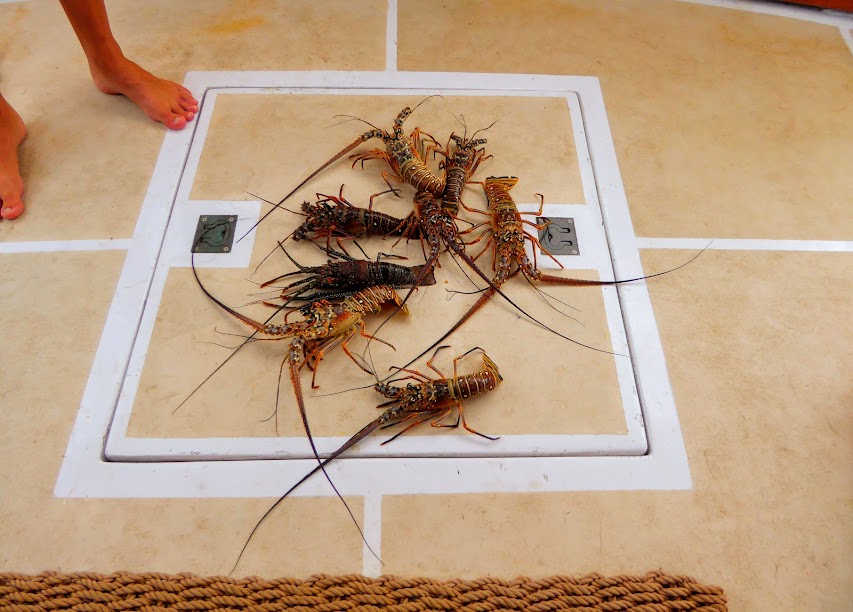
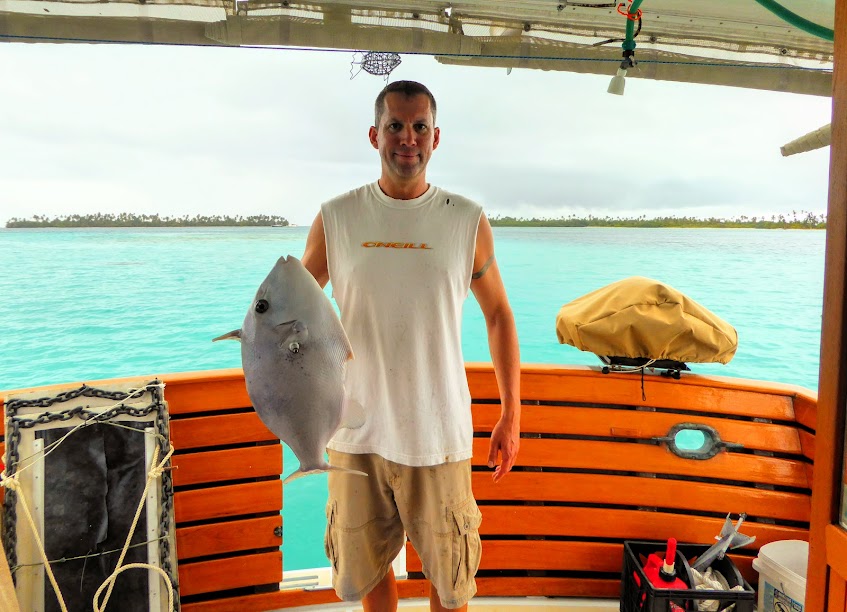
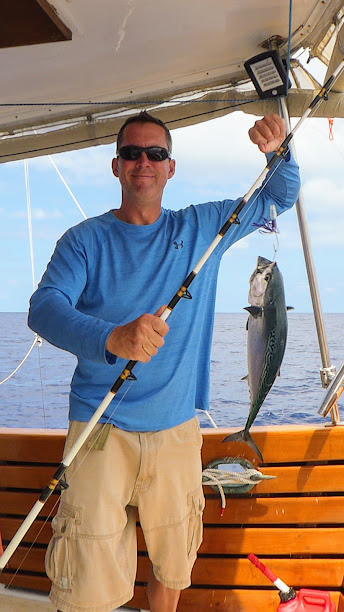
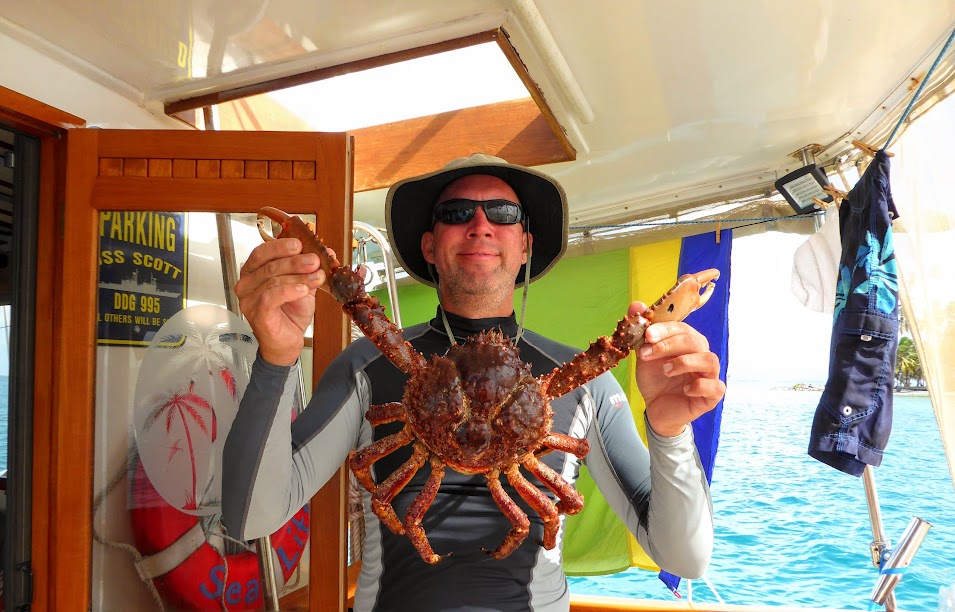
Scott fished almost every day, catching endless lobster, then using the heads as bait for delicious Trigger fish!


There were endless anchorages, some near the lush, mainland mountains and others surrounded by reef and palms. 

We enjoyed getting food from veggie boats, and interacting with the friendly Guna people.

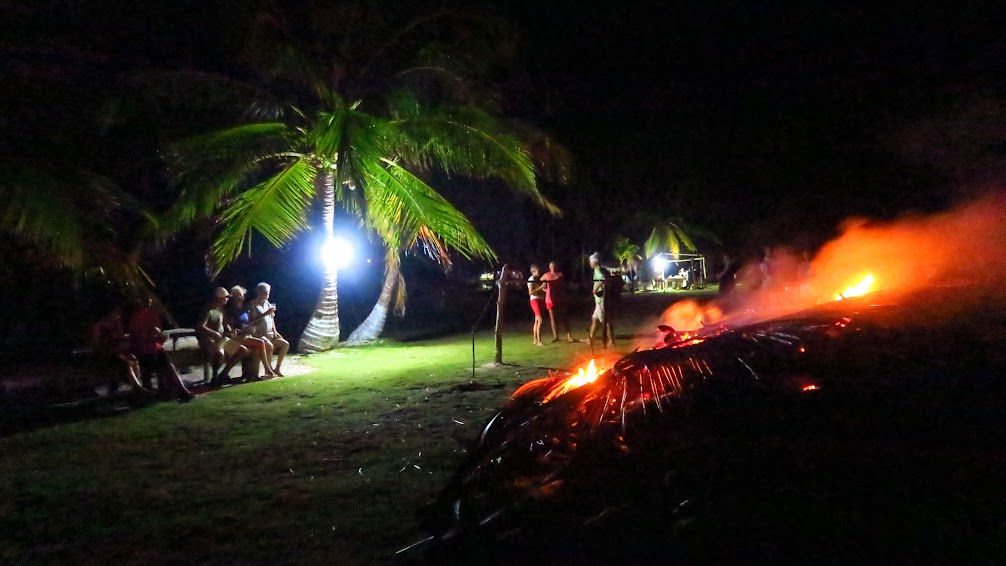
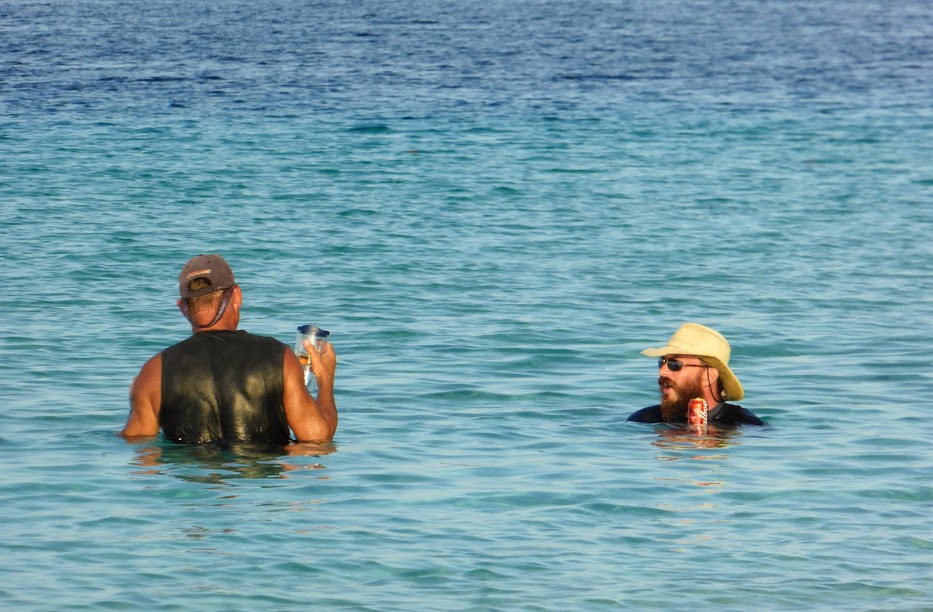
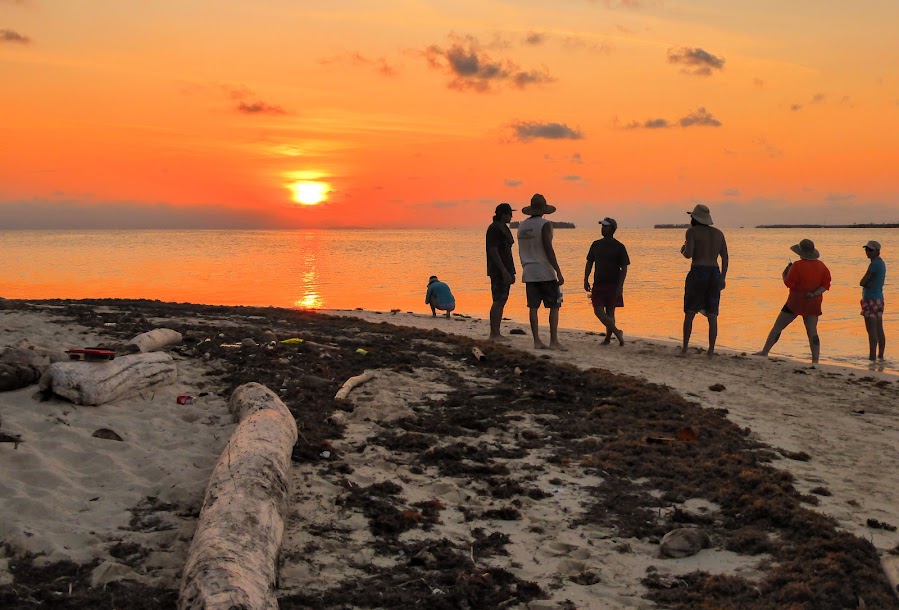
For somewhere so remote, our social calendar was quite busy! We made terrific friends here, who we’ll keep in touch with for years to come. There were many beach parties, as well as trash burning gatherings, which was always a good excuse to bob in the water.

During our time in the San Blas, we had our first official cruising visitor. Our friend Karen made the adventurous journey to see us, and we had a ball catching up, introducing her to our friends, and showing off our “neighborhood”!

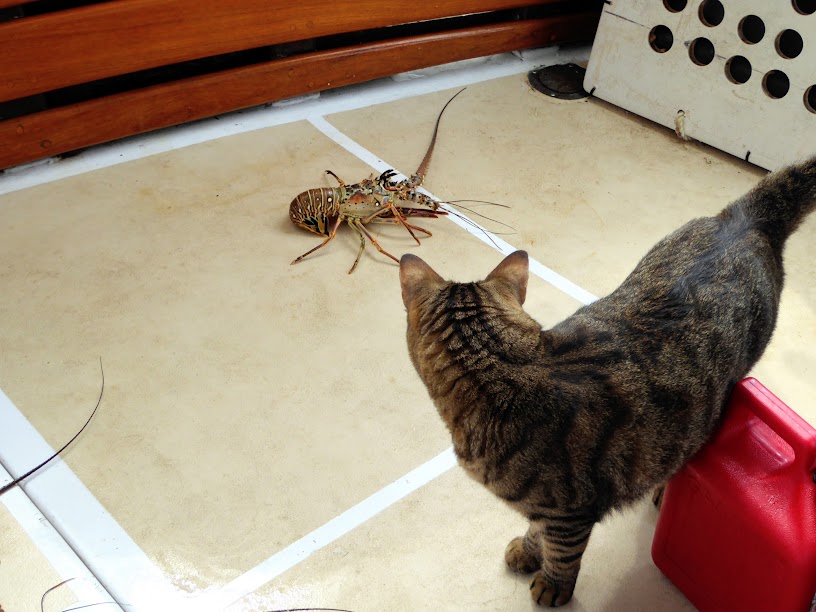
Scott continued his explorations, by land and sea, and Howard spent his time in Panama as he does in every location we visit, playing, napping and watching for fishes….and occasionally sharks, and generally keeping us on our toes!


So now it’s time to move on, and leave where we’ve called home for the last eight months. We could spend years here, or very easily live here. The country is beautiful, and offers much to see and do on the water and inland, as well as in Panama City. Our departure is bittersweet, but we look forward to our next stop, and for the adventure to continue.


“Shells Sink, Dreams Float. Life’s Good On Our Boat!”


Snug Harbor And Our Last Days In The San Blas Islands

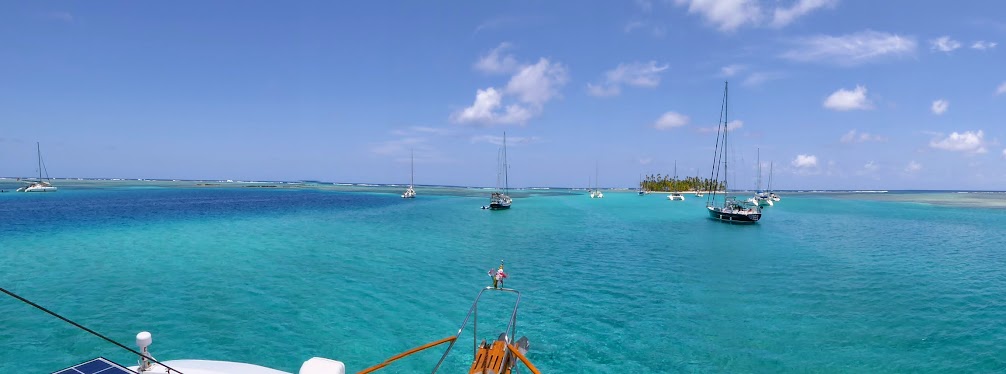
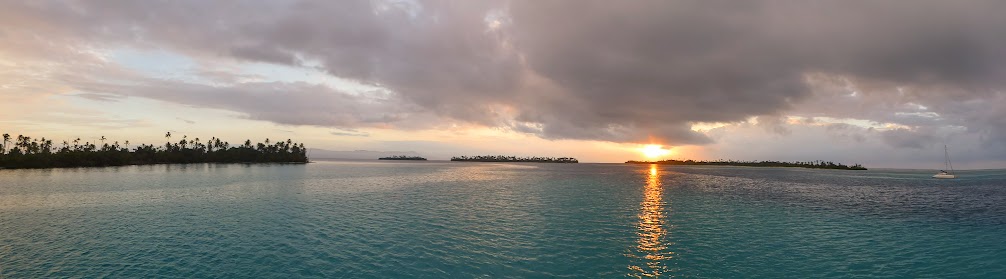
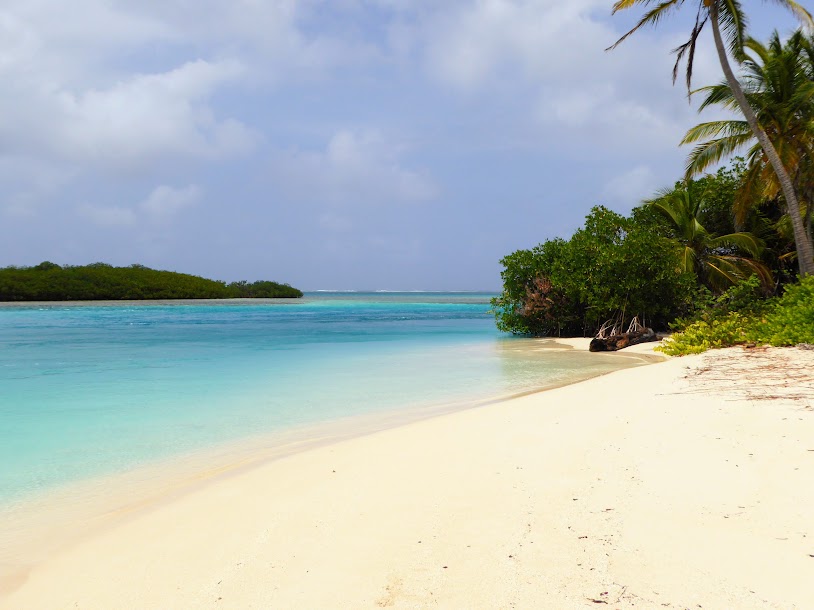
We waived a final goodbye to the swimming pool anchorage, and traveled six hours east to Snug Harbor, one of many anchorages, islands and villages farther east in the San Blas. The quiet anchorage was beautiful, surrounded by small islands made up of palms and mangroves, and again set against the lush mainland mountains.

The three of us spent the evening out in the cockpit, enjoying the scenery (us) and smells (Howard).

After parting ways in the Robisons, our friends Ted and Barbara (s/v Rosa dos Ventos) caught up with us in Snug Harbor. The four of us made our way into the nearby village of Playon Chico, connected to the mainland by a long bridge.

We were in search of the usual…veggies, eggs, Coke and Guna bread. As we wandered the quiet streets, a man offered to help us locate a woman who sold bread. We purchased the most delicious rolls from her, still warm from the oven. The man then led us along a narrow path that wove it’s way tightly between some of the village houses; I didn’t dare take a photo at the most narrow spots, as we were practically inside of peoples’ homes!

The labyrinth-like path ended at the village docks, where two supply boats were tied. We were able to buy eggs, beer, sodas and a few veggies right off of the boat.

After we’d returned to the boat, and put away our things, Scott and I took a happy hour ride around the anchorage, exploring our surroundings.

As usual, Scott wanted to get his hiking fix in. He’d heard there was a waterfall in the area so he set out the next day with Ted and Barbara to search it out. The threesome made their way to shore, and into the woods.

They passed by several fincas, or farms, where villagers grow vegetables. One farmer offered to lead the three of them to the waterfall. Having local knowledge is always helpful, and it’s also a nice to learn about plants and such along the way. Ted is fluent in Spanish, and could easily translate information, so they accepted the farmer’s offer and continued on with the now guided tour; one of his helpers tagged along as well.

They learned that dark, dirt-like edges around the garden areas was actually made up of ant nests taken from higher elevations. Cutter ants can tear plants to shreds, but it seems the cutter ants down near the fincas don’t like the smell of the “higher” ants, and therefore keep out of the gardens (not sure if this works for other critters as well).

Water is carried from the falls back down to the village through a  pipe system that follows the trail. In most places, the pipe is raised off the ground in an attempt to keep it as straight as possible, and out of the water, using branches and wires.

The guide pointed out a tree whose fruit is used for containers, when dried.

Voila! Guna tupperware!

We have noticed many of the Guna people with red paint-type stuff on their faces. The guide informed Scott, Ted and Barbara that it is actually a type of sunscreen that comes from the berries on this tree. We’d assumed it the red faces had some kind of traditional meaning…sunscreen, go figure.

They continued on through the woods, making their way higher and higher, with the water line leading the way.

The guide stopped to show the three an ant nest, used to create barriers around gardens in the fincas below.


After walking approximately four miles, they arrived at the waterfall. It was time for a lunch break…and a swim!

Fed, rested and cooled off, the group began to make their way back. As they walked, Scott noticed a big line of carpenter ants carrying leaves of a tree, along the top of a water pipe. We’re always amazed at what they can carry, and how quickly they can tear something apart.

Nearing the end of the hike, the guide stopped to pick coconuts, so the three could enjoy some fresh coconut water. Thankfully, Scott has not yet attempted to harvest a coconut himself (Kevin Stotz, if you were here, he’d most likely make you do it!), but I’m afraid that day is coming.

Once they were back down among the fincas, the three were met by other little helpers, who were finishing their day’s work on the farms. They happily posed for a photo.

After only a few days at anchor in Snug Harbor, Scott noticed a good weather window for us to get to Cartagena. Not knowing how long we’d have to wait for another, with early spring weather being unpredictable (scratch that, with all weather being unpredictable), we decided to forgo visiting any more of the eastern islands, and make the jump. It would be goodbye to the San Blas, and sadly, to Panama. Here are more photos.

“Shells Sink, Dreams Float. Life’s Good On Our Boat!”

Our Last Weeks In The San Blas Islands

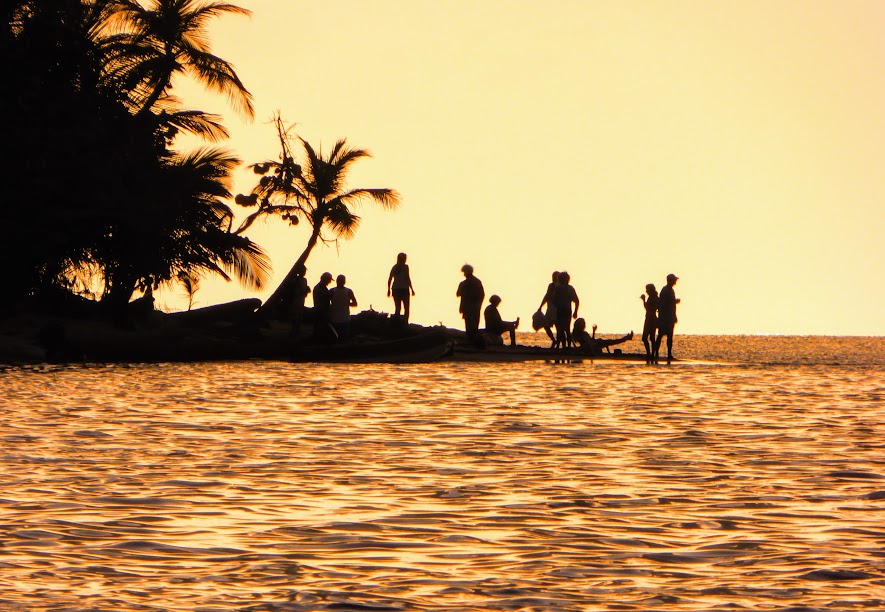
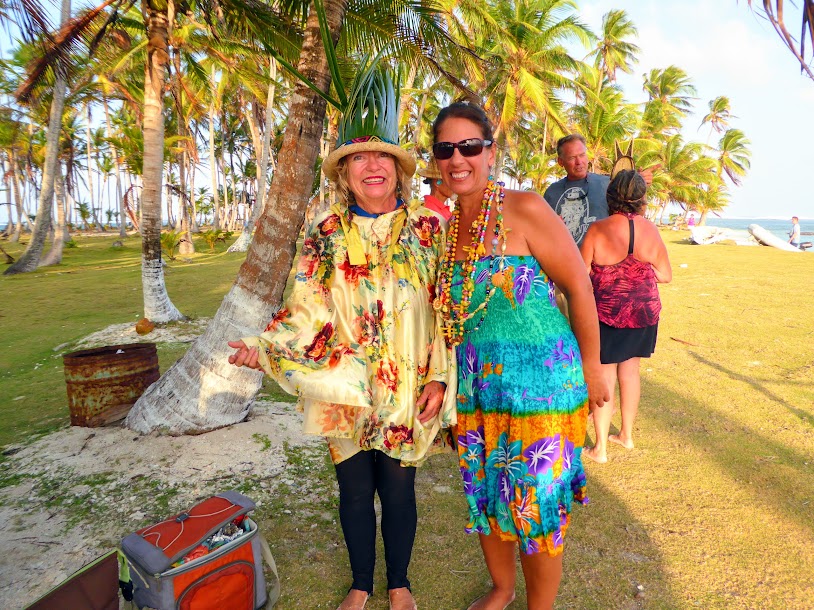
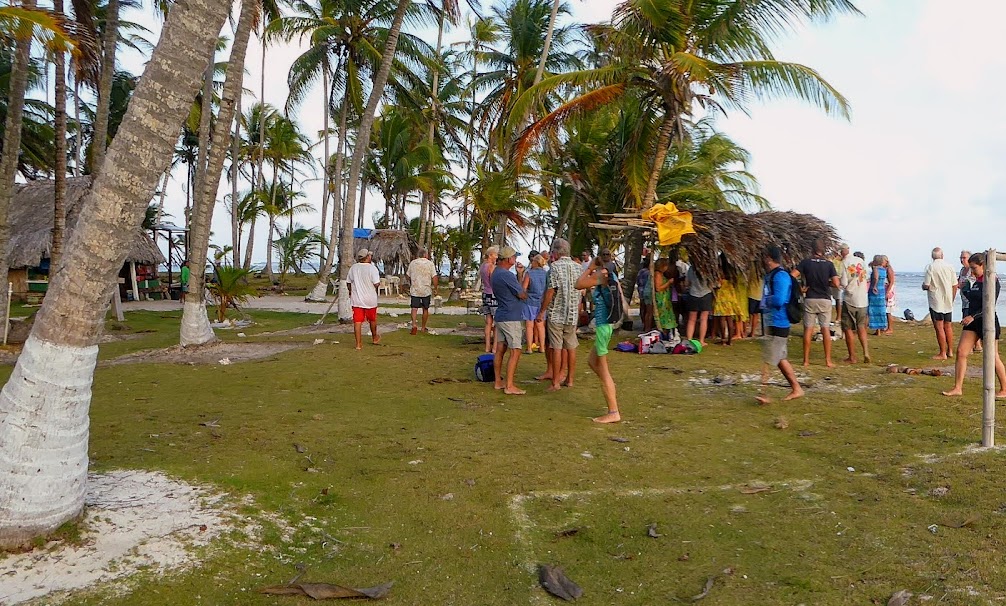
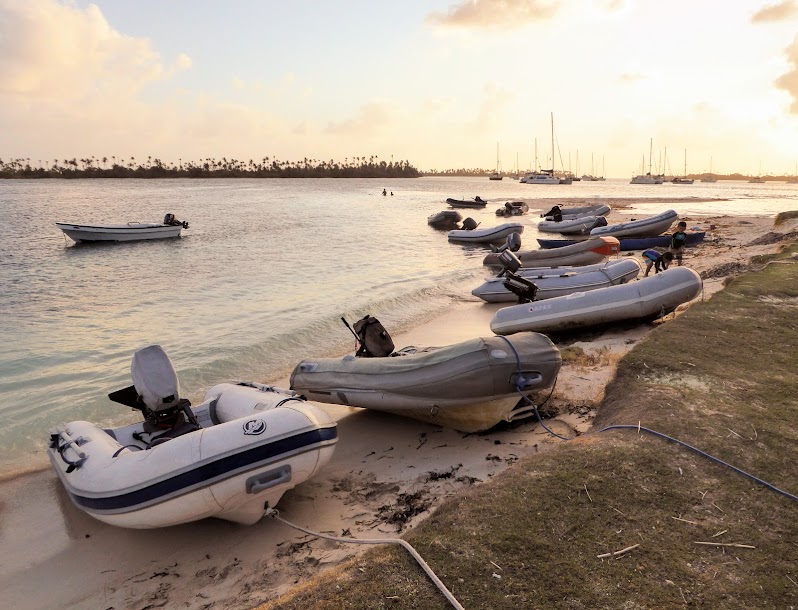
Our last few weeks in the San Blas were spent revisiting several anchorages and saying final goodbyes. I had spread the word for cruisers in the area to gather for a Mardi Gras celebration on Barbecue Island, located at the head of the swimming pool anchorage. We had a terrific turnout, with nearly 40 people arriving by dingy. It was a fun and festive evening!


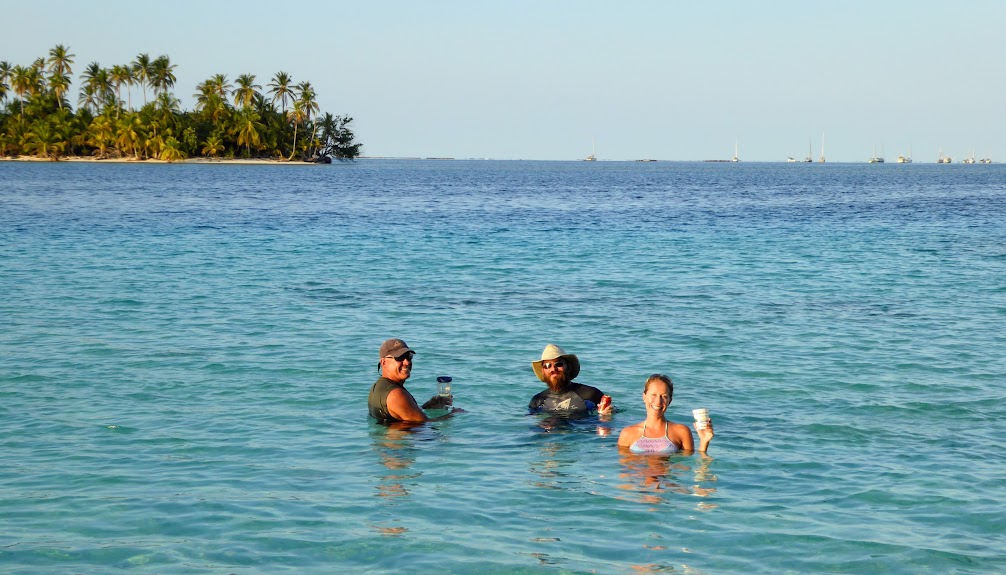
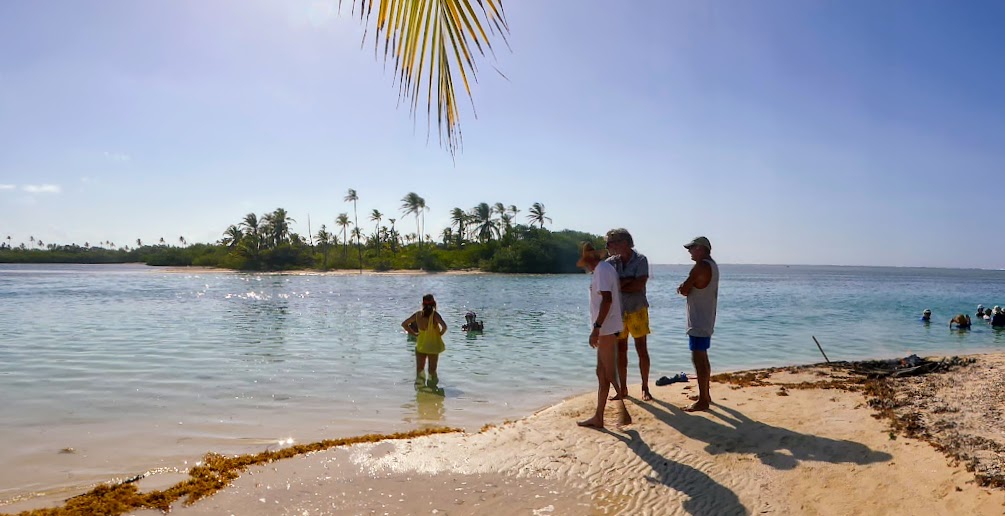
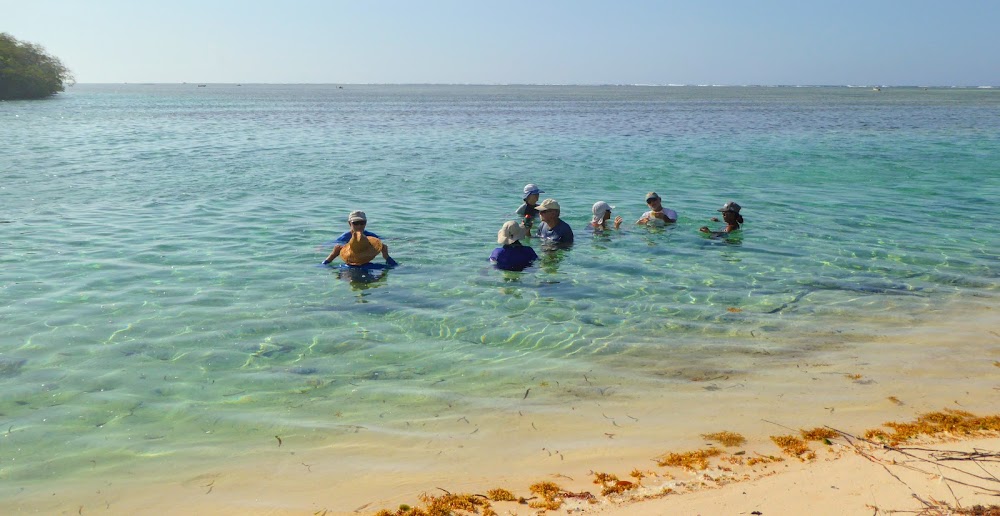
Our friends Tate and Dani (s/v Sundowner) were entertaining their friend, Michele, who was visiting from New Orleans, so several of us gathered at our usual beach spot for afternoon drinks, bobbing and of course some trash burning.

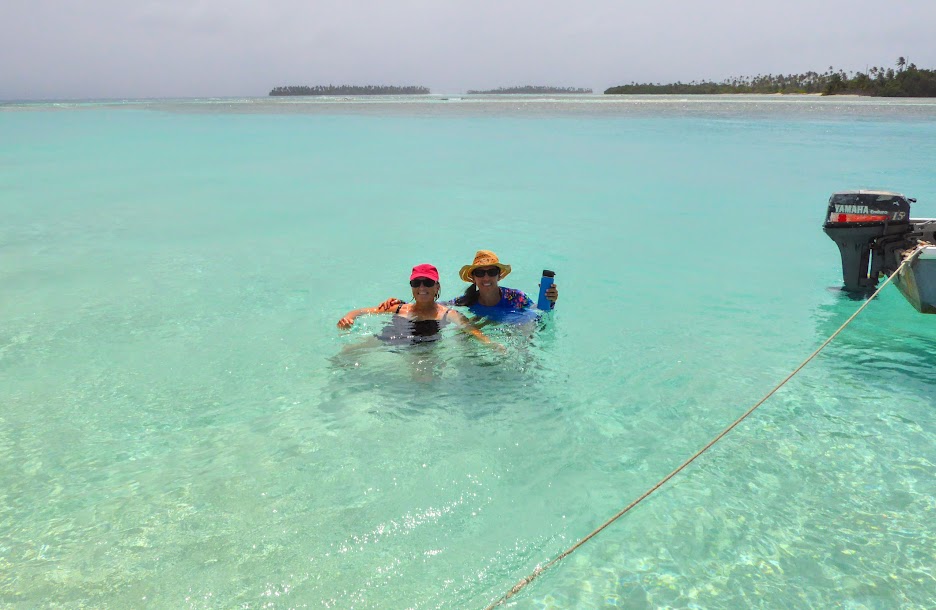
Scott and I brought Micah along, who was aboard Dauntless, our fellow Krogen, and we were all thrilled to have Debbie and Reg join us, from s/v Runner. They have been living at anchor in the swimming pool for almost ten years!  Everyone enjoyed time in the water, and the fun lasted until after sunset.

The forecast called for winds to increase in the coming days, so the following morning we headed just around the corner to the hot tub anchorage, which usually offers a bit more protection from winds and the current that comes with it. For this go-round however, the hot tub was still considerably wind-chopped. In addition, the sun decided to take a break, and windy, cloudy conditions lasted for nearly ten days.

We had sizable neighbors just outside the anchorage, in the form of several large charter yachts. I named this one “Little Titanic.” It was a beautiful yacht from the 1920s, completely refitted in 2003, at what I’m sure had to be an astronomical cost. Speaking of astronomical, $500,000.00 (yes, half a million U.S. Dollars) will buy you a week-long charter….for eight guests. I was happy just to enjoy the view.

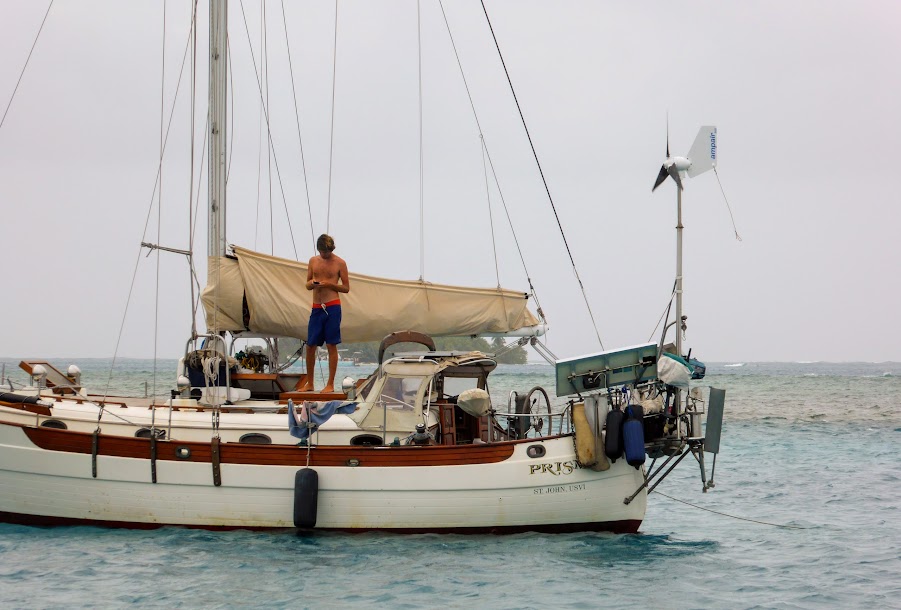
Several of our cruising friends waited out the windy weather with us in the hot tub as well. We passed time visiting each other by dinghy, and dealing with the ongoing internet challenge. Our friend Jon spent much time at what we called s/v Prism’s “internet cafe.”

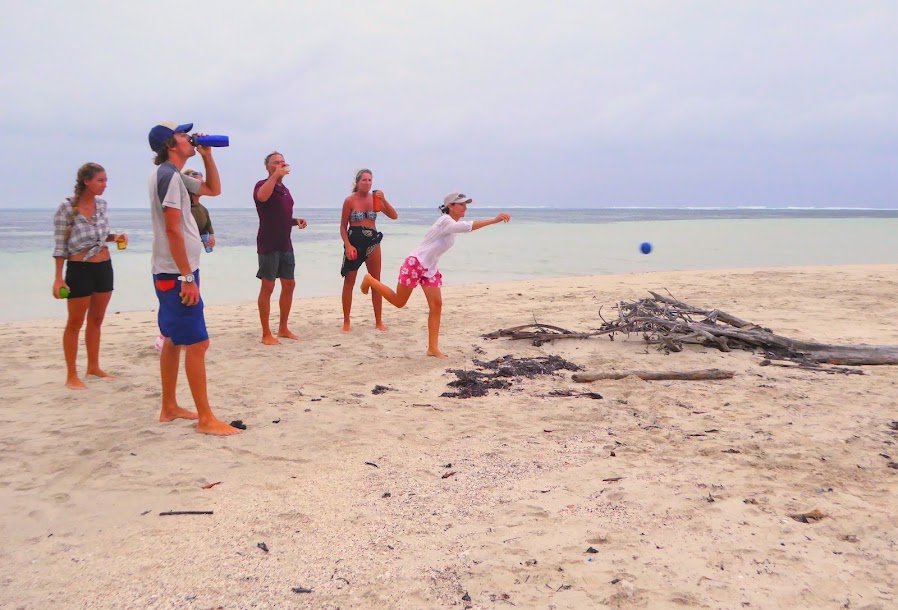
There were several boccie matches on the large beach of a nearby island, an afternoon trash burn at the nearby lazy river beach (you can ride the current, just floating along, around the end of the island) and Sea Life hosted our friends in the anchorage one evening, with Scott making his now-famous quesadillas.

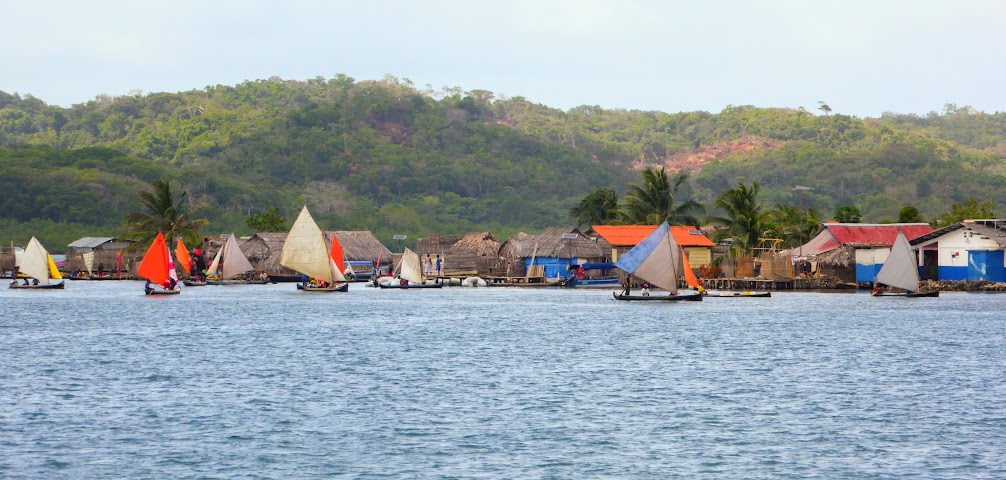
The winds began to die just in time for us to head back to the Robison Islands. A regatta was being held, made up of local Gunas in their sailing ulus. Our friends Ted and Barbara (s/v Rosa dos Ventos) were also in the Robisons, with things for us from Panama City (yes, you always take advantage of having things brought from the city!).

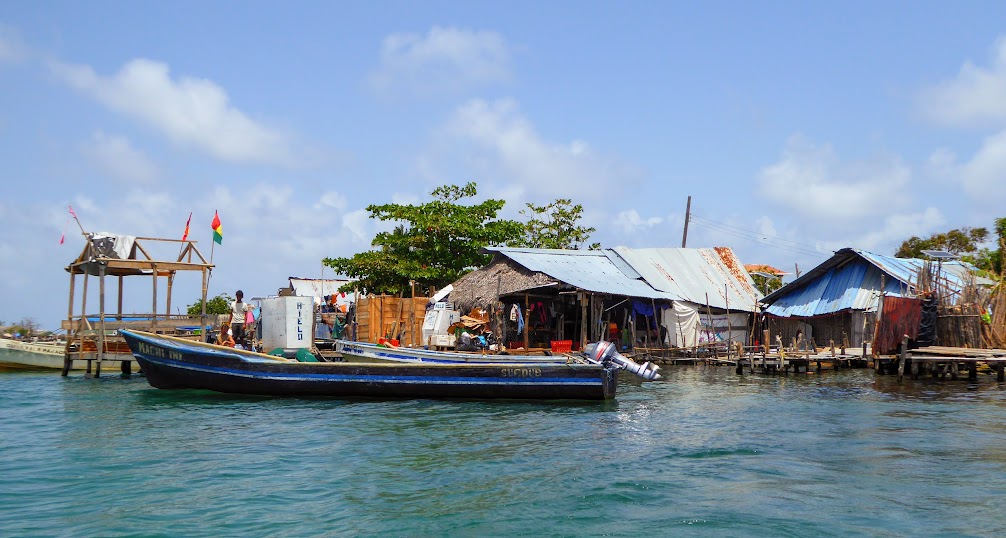
On our way, we decided to make a stop at the Carti Islands, to shop the tienda there. Many friends frequently mentioned it as one of the best locations for produce in the San Blas. We anchored right off of the island, which was crammed with houses and other buildings. Thankfully, it didn’t take us long to locate the ice machine we were told to look for, which marked the pier leading to the tienda.

As we approached, I thought we must have been coming up on the wrong location. Surely this store wasn’t going to have much, other than junk.

Inside, we were impressed with the variety and amount of produce jammed into the small store with dirt floors. There were large bags and boxes full of tomatoes, lettuce, zucchini, eggplant, cucumbers, potatoes, carrots and cabbage, as well as apples, bananas and papaya. A large cooler contained plenty of parsley, celery and culantro, and an abundance of pineapples and netted sleeves of garlic hung from the ceiling beams.

The small store also carried a decent supply of canned food, rice, sodas, cleaning supplies and similar shelved items. We arrived at Carti, shopped and were back on board raising anchor within two hours, and then continued on to the Robisons.

Unfortunately, we decided not to fight winds in the open water, to arrive in time for the regatta. Many cruisers who were already on the Robisons’ side of the archipelago, with a more protected course, had come for the event as well. Most arrived the day before the regatta, and the anchorage was much more crowded than in our previous visit.

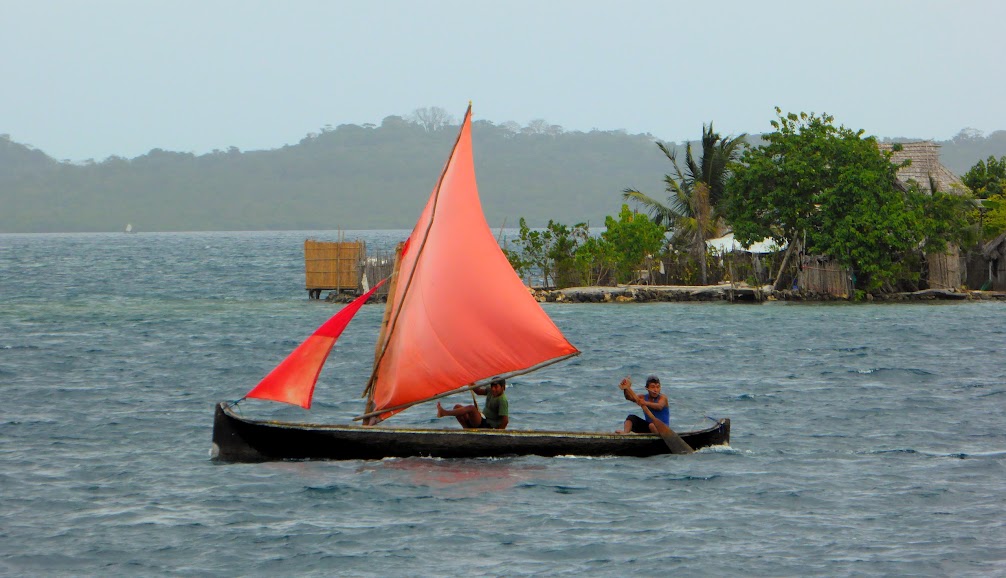
By the time we anchored, the main dock on the largest village was crowded with dinghies and ulus, as everyone gathered for an awards celebration. When the party broke up, I was able to get many photos of the colorful ulus sailing away from the village.

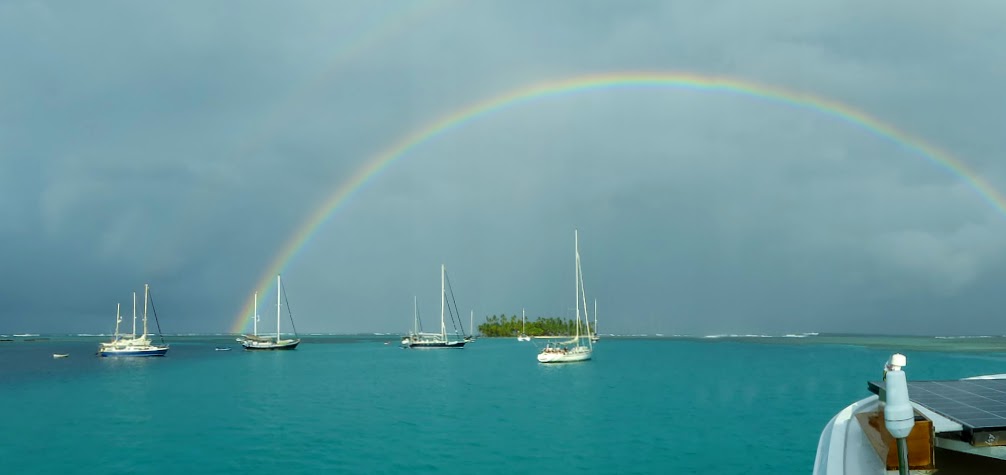
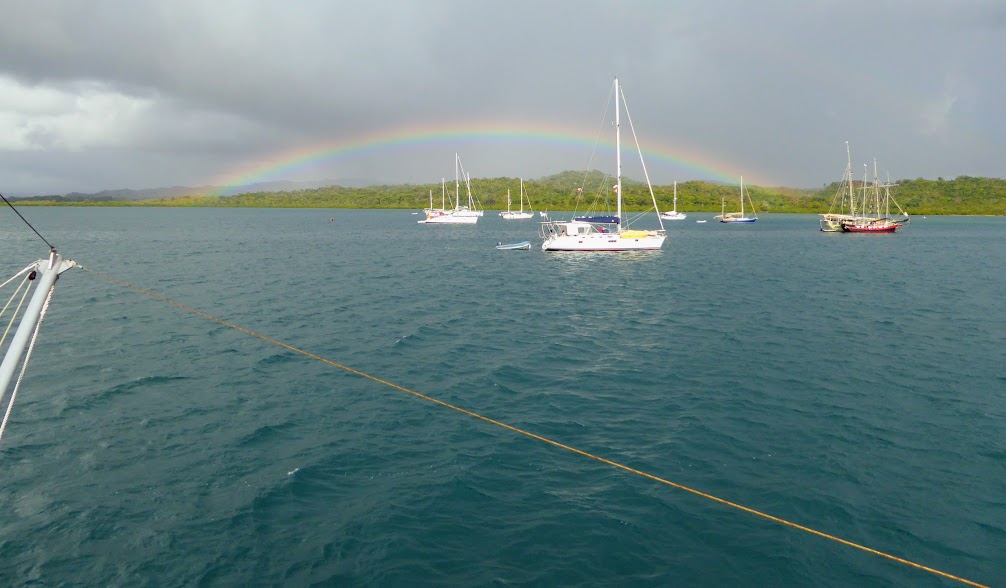
Ted and Barbara came over to deliver our requested items from Panama City. We thanked them for their efforts with dinner aboard, and were treated to another full rainbow over the anchorage.

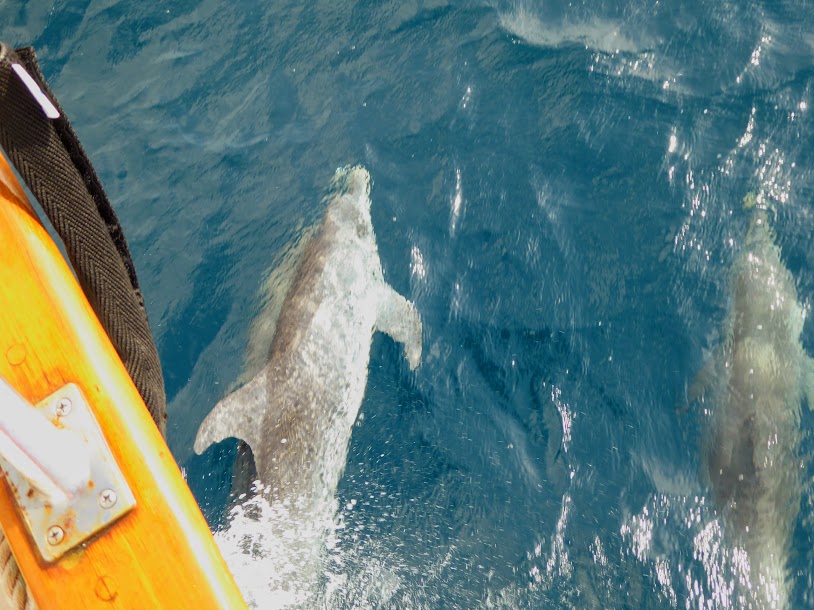
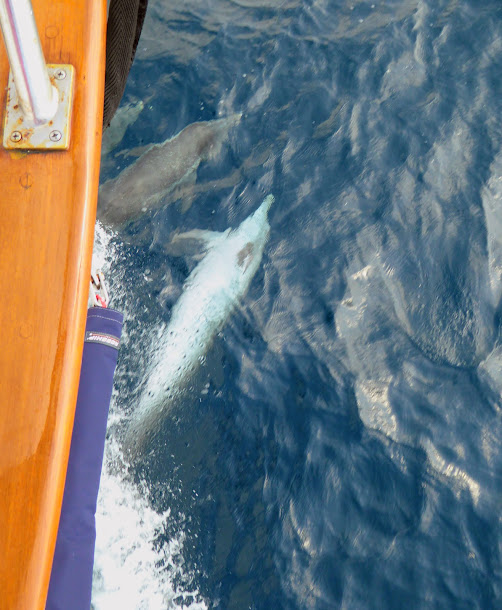
The next morning, we made the 90 minute trip back to Porvenier, with fingers crossed to get ourselves cleared out of Panama. Several dolphins joined us along the way, and they caught our eye as looking a bit different from others we’d seen. They had white speckled bodies, and after some checking, we discovered that they were spotted dolphins.  One of them was completely content to swim upside-down for an extended time alongside the boat. Dolphins….always amusing.

Inside the office, it took some doing to get our exit stamps. The officer was concerned about our paperwork. We had recent exit and re-entry stamps (from my adventure to Panama City with Howard), but our customs form had us checked out three months prior to those dates. Scott explained that the discrepancy wasn’t Panama’s concern, as we weren’t coming back to the country; it was an issue for the agent in Colombia to deal with. He finally got the message through, and the officer stamped us out of the country, but not before confirming one more time that we would not be coming back to Panama anytime soon.

From Porvenier, we began a San Blas farewell tour. Our friends Dani and Tate were anchored in the eastern Lemmon Cays. They had recently decided to sell their sailboat, Sundowner (setting their sights on a larger cruising boat), and the Lemmons anchorage provided a short sail to the mainland for meeting potential buyers. It would be our last chance to see them, and since the anchorage was just 90 minutes from Porvenier,  we headed their way.

Unfortunately, we couldn’t get to the Lemmon Cays without some time in open water between reefs. Scott decided that since  it was only a short stretch, we could forego putting the paravane birds in the water. He quickly regretted the decision, becoming seasick in the rolling swells. Not wanting to lose speed or time by stopping to put the birds in, Scott instead chose to battle his stomach for the 30 minute open water ride.

I still had some ground beef stashed in the freezer, from Bocas del Toro, so we invited Dani and Tate over for a burgers. The two of them were some of the first cruising friends we met in the San Blas, and we were going to really miss seeing them regularly.

The next morning, our friends Chris and Anne (s/v Mr. Mac) hailed us on the vhf. They had just arrived in the Lemmons, and were anchored right near us, stopping on their way back to Bocas. Mr. Mac would be stored for the summer at Red Frog Marina, while Chris and Anne headed back to North Carolina.

A plan was made to meet at the small restaurant nearby for happy hour drinks, and then back to Mr. Mac for dinner. The four of us met during our stay at Red Frog, and immediately hit it off. It was a treat to have them in the San Blas for much of our stay, and we’ll definitely miss our time together.

From the Lemmons, we made our way to anchor in the swimming pool one last time. Several of our friends were there, giving us the chance for more goodbyes. Another large gathering was planned for Barbeque Island, to celebrate all cruisers with March birthdays. This included several of our friends, so we made our way ashore for one last potluck happy hour.


We spent a few more days at anchor in the pool, managing to squeeze in a final trash-burn gathering on one of the local beaches (cocktails included of course), before saying final goodbyes to the people we’d become close with.

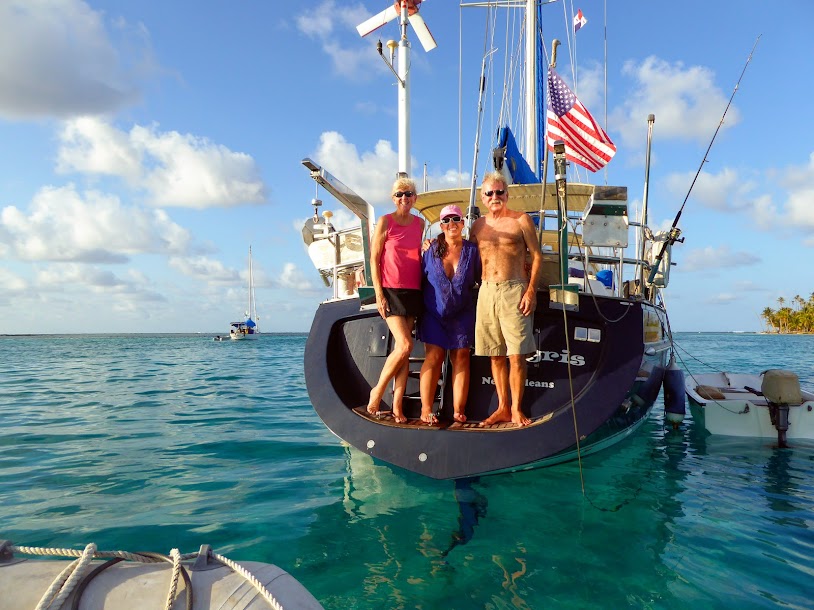
Our friends Julie and Tom (s/v Gris Gris) have spent many years cruising the area, and were immediately welcoming when we arrived. They shared their extensive knowledge of the Guna people, and helped with many San Blas cruising details during our stay.

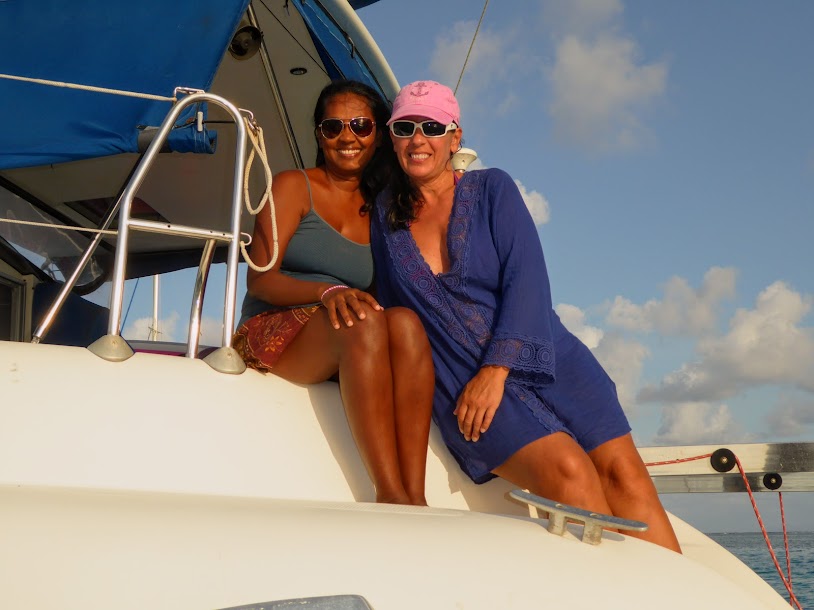
Our beautiful, Trinidad-born friend, Sharda, had worked many years in bakeries, much like myself. We hit it off, trading recipes and tips, with our husbands reaping (or should I say eating) the benefits of our friendship.

With the farewell tour complete, it was time to make our way further east. We would head for some of the more remote anchorages and villages in the eastern San Blas, while waiting on favorable weather to head for Cartagna. It was definitely hard to leave this beautiful place, and all of the great friends we’d met during our stay.

Here are more photos.

“Shells Sink, Dreams Float. Life’s Good On Our Boat!”

Visiting The Western San Blas

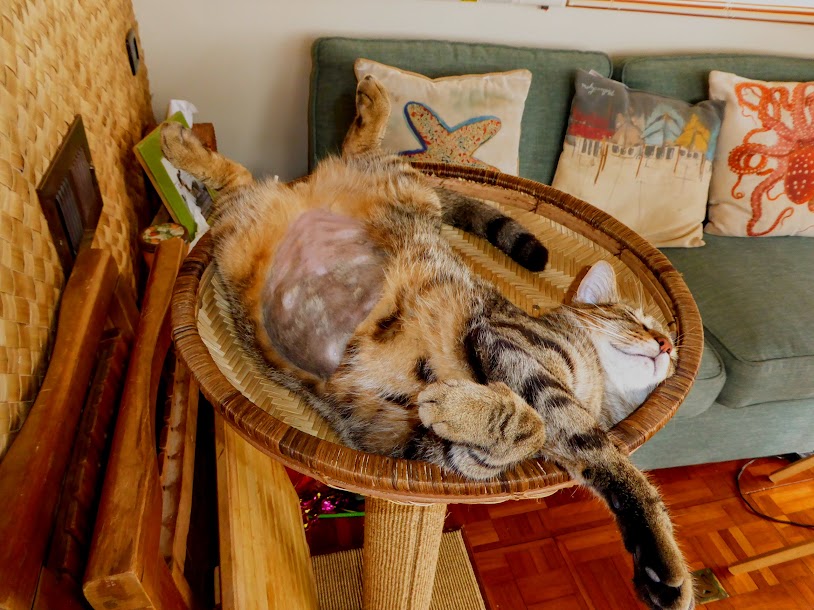
After Howard’s Panama City adventure, we headed back to the Eastern Holandes. We were told that Howard’s post-vet photo didn’t come through on my previous post. It can now been viewed, but here he is in all his shaved belly glory, just hours after returning from his adventure.

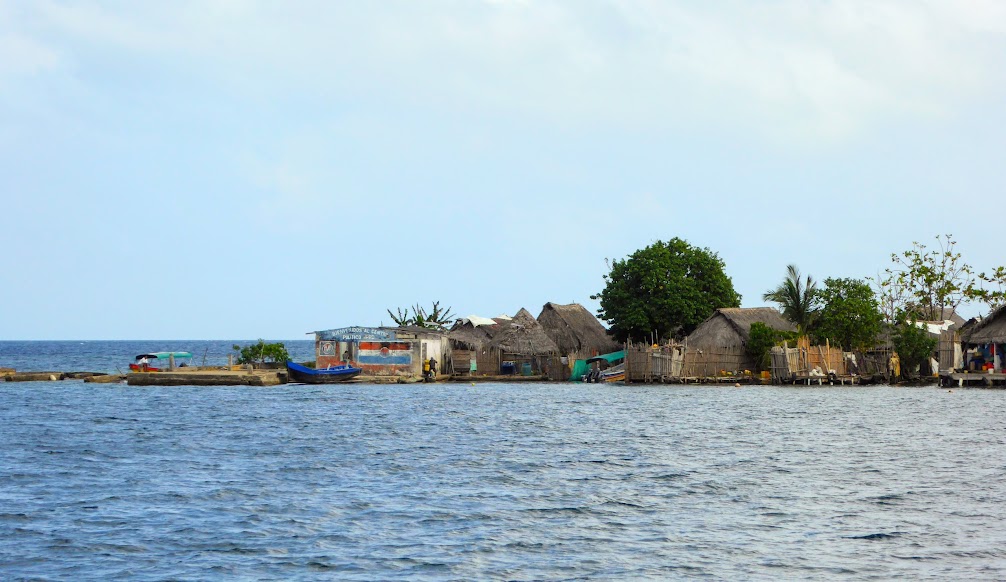
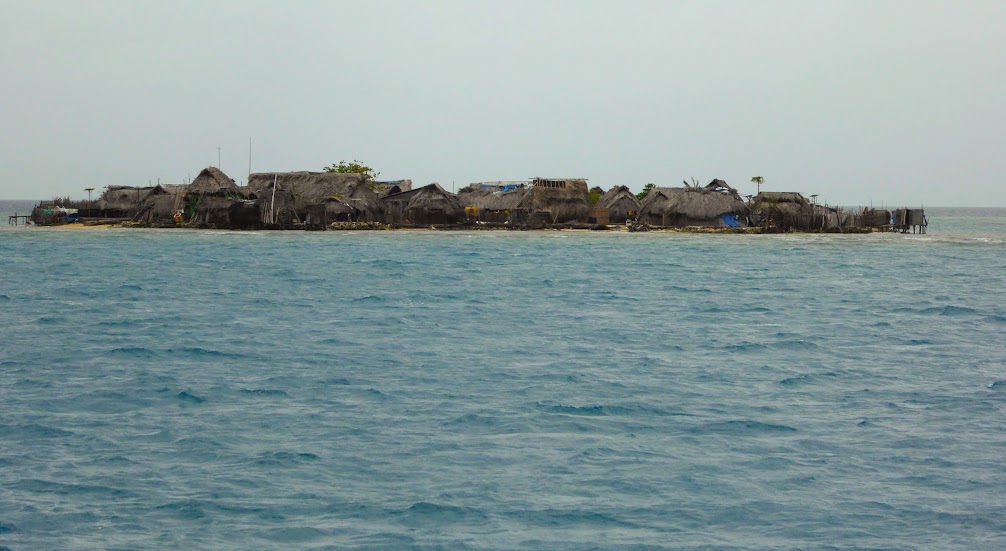
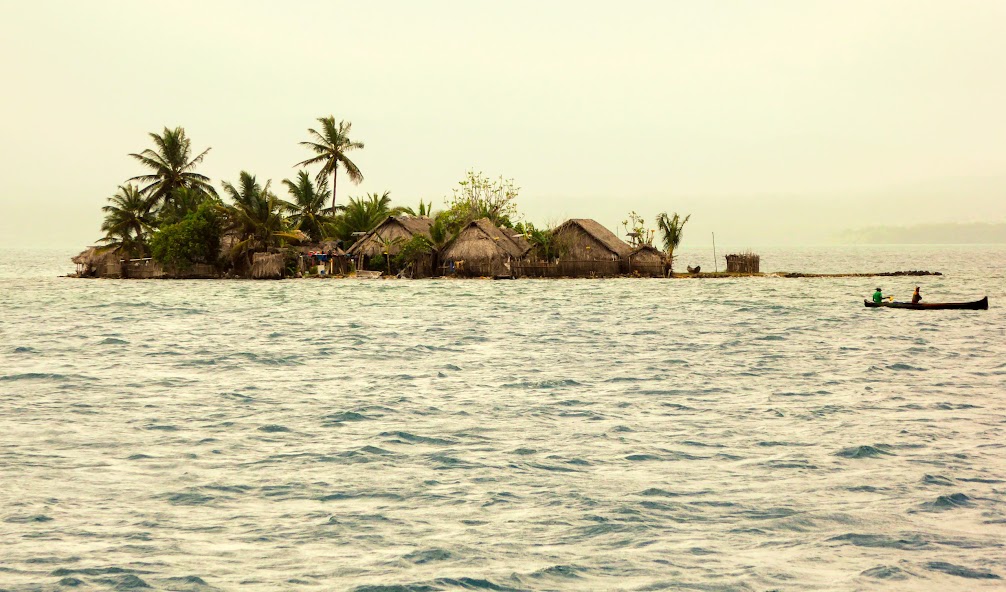
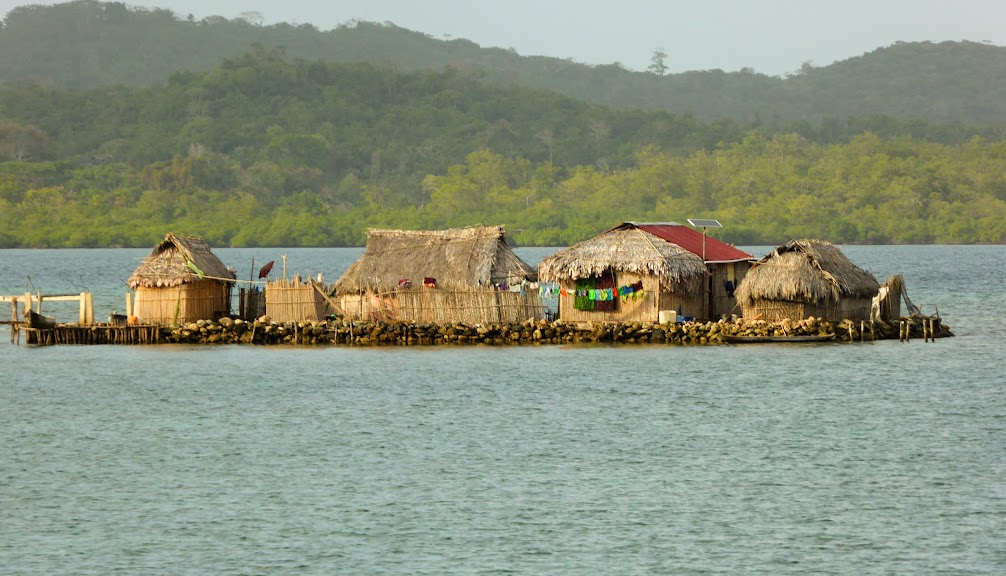
Our route took us past the Carti group of islands, most of which had densely populated villages. This overhead photo gives you a good idea of just how crowded they are.

I snapped pictures of the villages as we passed by, and of women paddling their ulus.

We moved father east, and chose to travel through the Lemmon Cays along the way, admiring the return of sandy, palm tree islands and beautiful blue water.

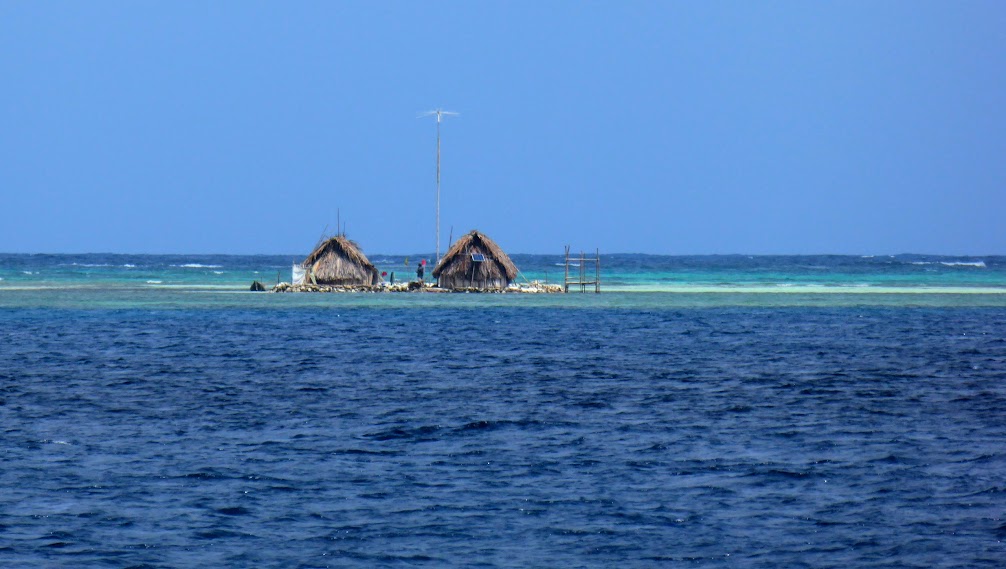
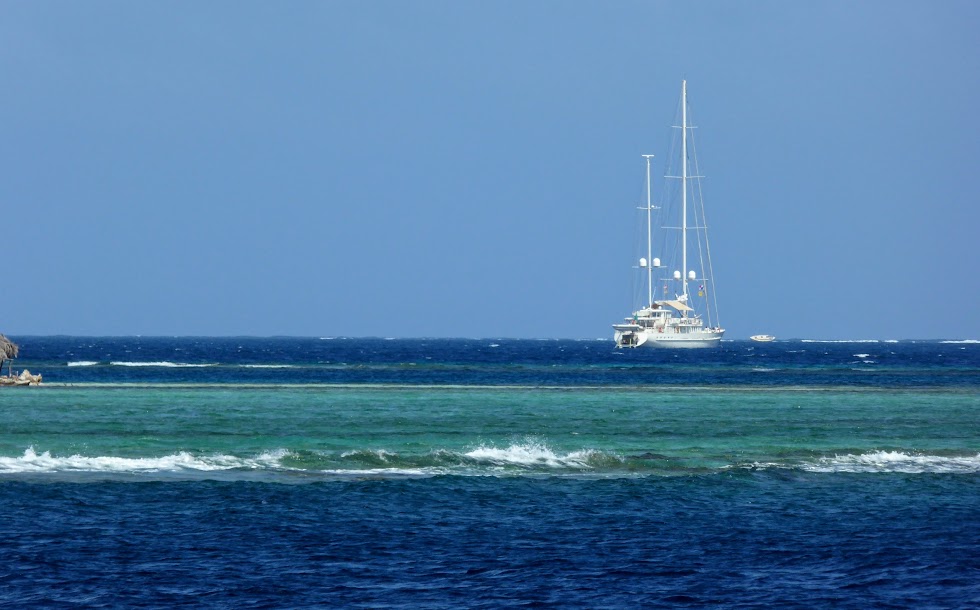
We were amused by these two little huts, smartly outfitted with both solar panels and a wind generator, and also a huge sailing yacht!

In four hours time, we were back in the “hot tub,” and delivered goodies from Panama City for our friends Tate and Dani (s/v Sundowner).

After some time with friends anchored in the area, we returned to Porvenier in early February to see Joe, for Scott’s passport renewal stamp.

My passport stamp date is now different from Scott’s, as I’d flown in and out of Panama when I visited Baltimore, so I am now permitted to be in the country on a “tourist” visa (good for 180 days) until the beginning of April . Since Scott was still working with a “mariner’s visa,” (stamped when we arrived by boat in August), his stamp expires every 90 days, so we needed to get his renewed again.

When we arrived at the immigration office in Provenier, Joe wasn’t there, but the young man on duty stamped Scott’s passport with no problem, (and no charge!) and we headed happily back to the boat.

Our supply of dinghy gas was getting low, so Scott planned to make a stop at the nearby island of Wichubwala while we were here dealing with immigration. However, it was now too late for a gas run, so that would have to wait for morning.

The anchorage off of Porvenier is open to the ocean swells, and even with our flopper stoppers in, it was a rolly go; so much so that Scott got seasick. The next morning, he mustered up the energy to go for gas, only to realize upon arriving at the dock that everything was closed. It was Sunday, so that meant we’d be spending another rolly night at anchor.

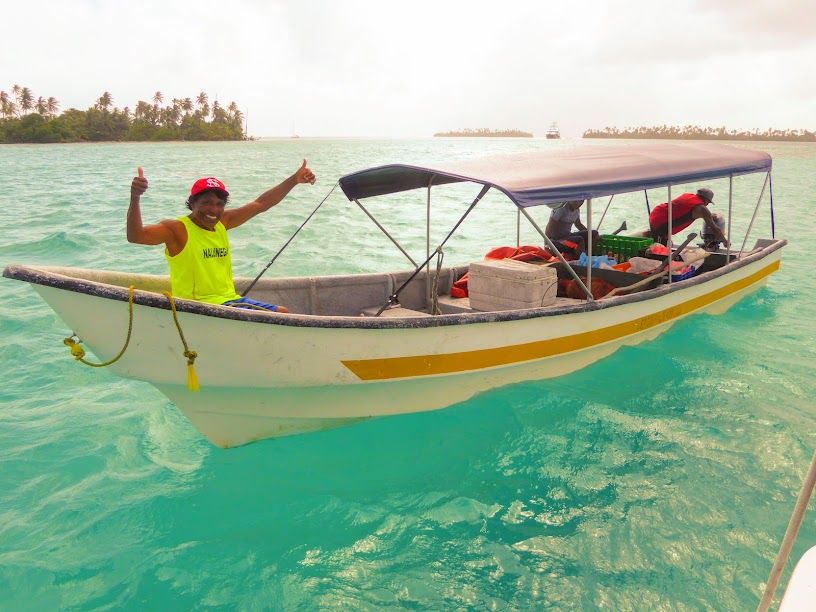
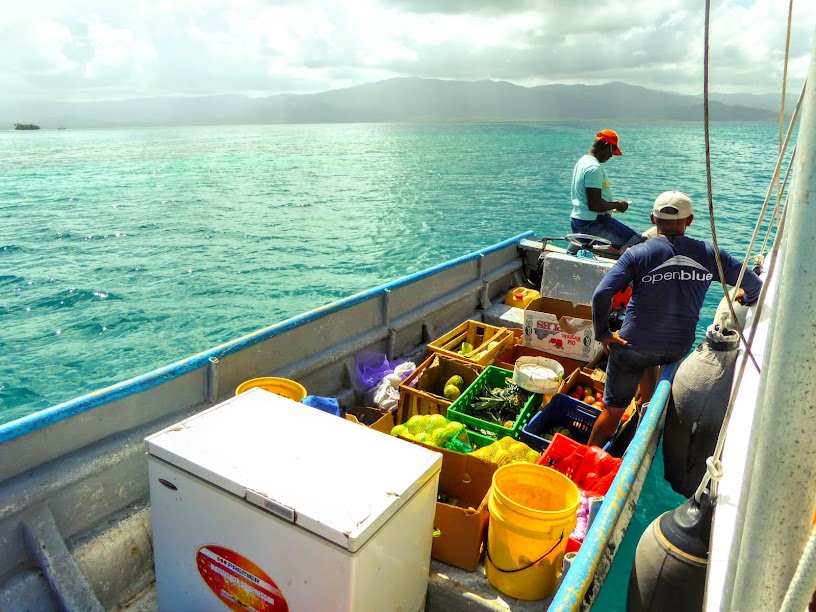
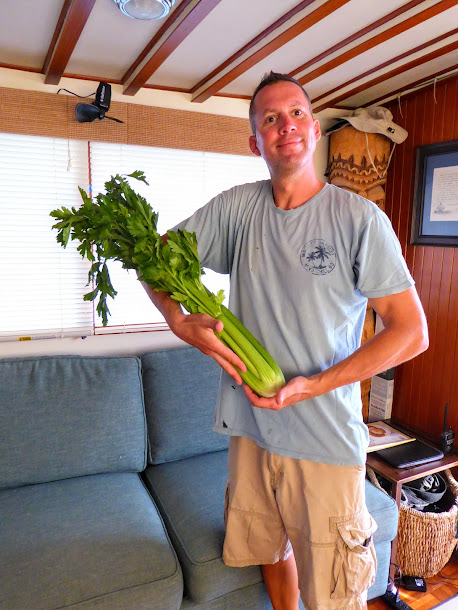
Our extra day was not completely in vain, as we were visited by the mother of all veggie boats! The National Waiters panga stopped by on their way to the outer anchorages, loaded with produce.  As they cut open the large bags of potatoes, onions, cucumbers, peppers and other items to sell us, it was like Christmas! The produce was some of the best we’d purchased so far, including a the longest bunch of celery I’ve ever seen!

After filling our dinghy gas tanks on Monday morning, we left the area near Provenier, passing more densely populated islands. After traveling close to the shore of Panama’s mainland, now in the western area of the San Blas islands, we decided to investigate Nalia Bay.

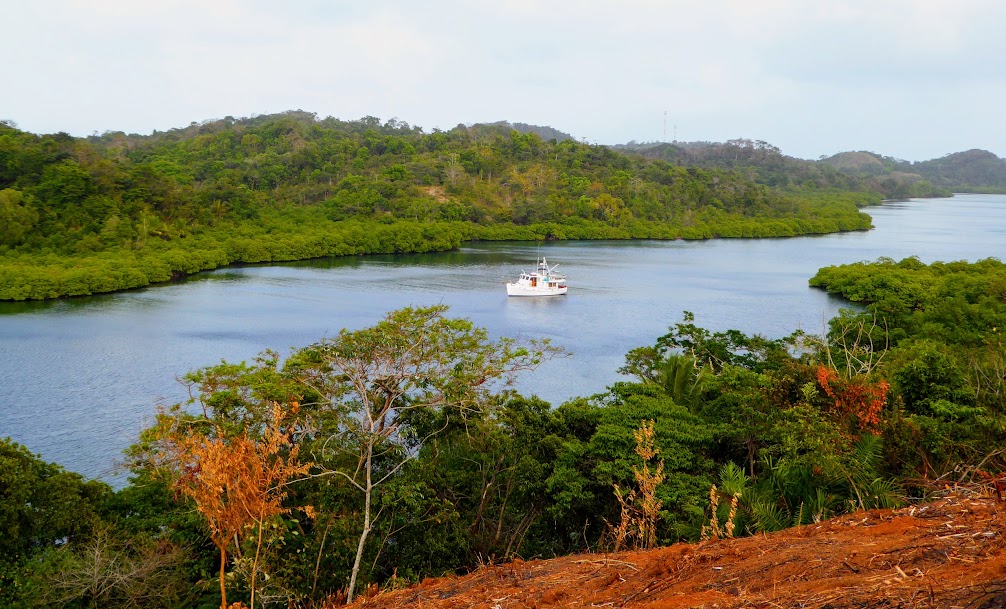
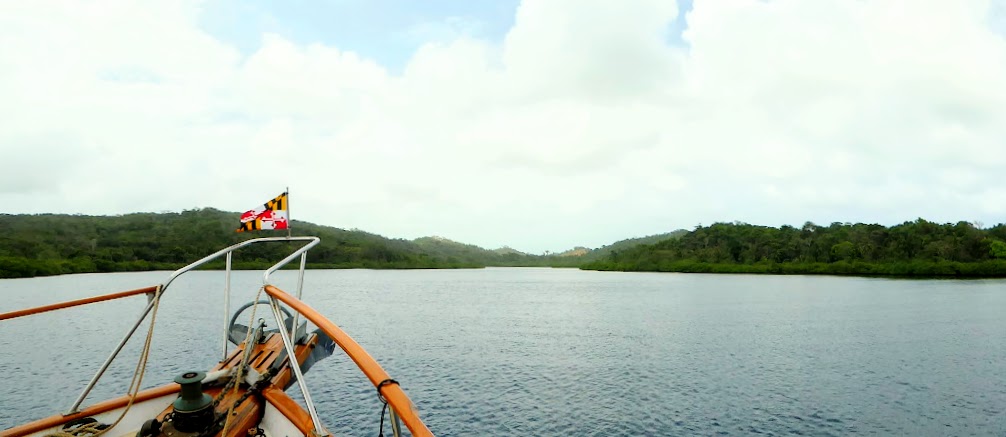
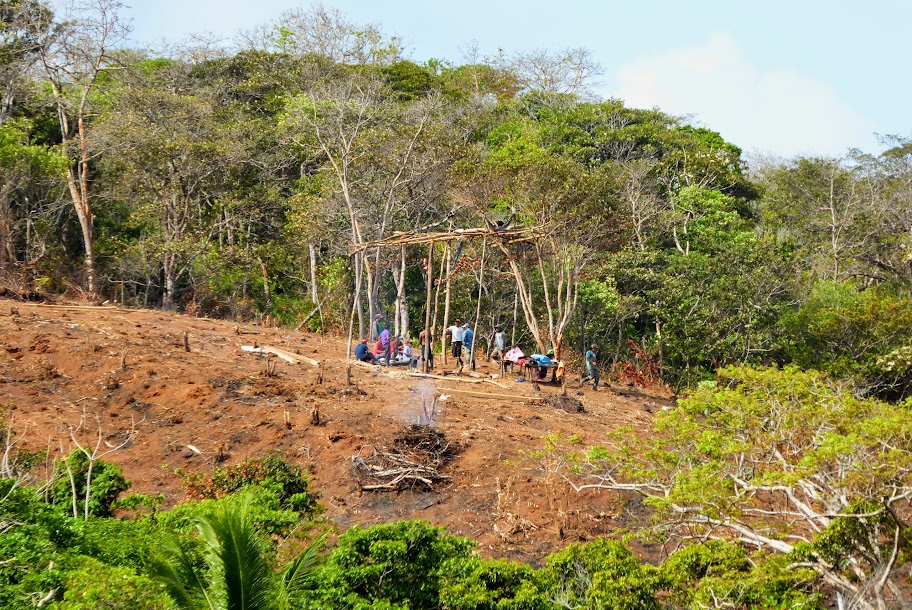
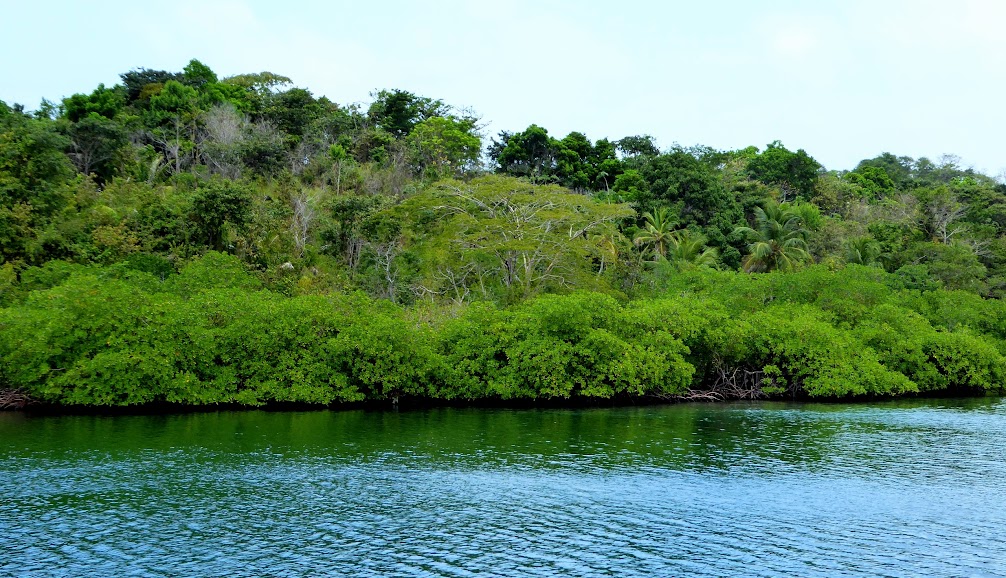
The bay was lined with beautifully lush rain forest. Since we hadn’t seen that much green in months, it seemed like a great place to spend a few days. We had the bay all to ourselves, except for the few locals who were clearing land up on one of the hills, preparing to build a house; they waved their arms in a hello as we dropped anchor.

The surroundings were gorgeous, and it was a treat to have the area all to ourselves. However, in all our excitement, we failed to realize that our anchorage was also surrounded by mangroves….many, many mangroves…which means biting noseeums!

By the time we had pulled all of our screens closed, it was too late. Those evil bugs, the size of a grain of pepper with a bite like a bee sting, had taken over inside the boat. I spent hours just slapping my legs, trying to kill them as they bit me. Scott chastised me, for not “just dealing with it,” but later we both spent the night in long pants and long-sleeved shirts!

Scott finally snapped, as they bit at his uncovered face, and began to smash all he could see on the stateroom wall. Counting each one, he killed 320…just in our stateroom.

Even though the bugs were miserable, the internet signal was surprisingly terrific considering we were surrounded by dense jungle (I have given up trying to make sense of when, where and how internet signals work in the San Blas). We decided to gut it out one more day, so I could upload photos, and get a blog post or two out.

Scott took advantage of his surroundings, and went off immediately the next morning to explore the bay.

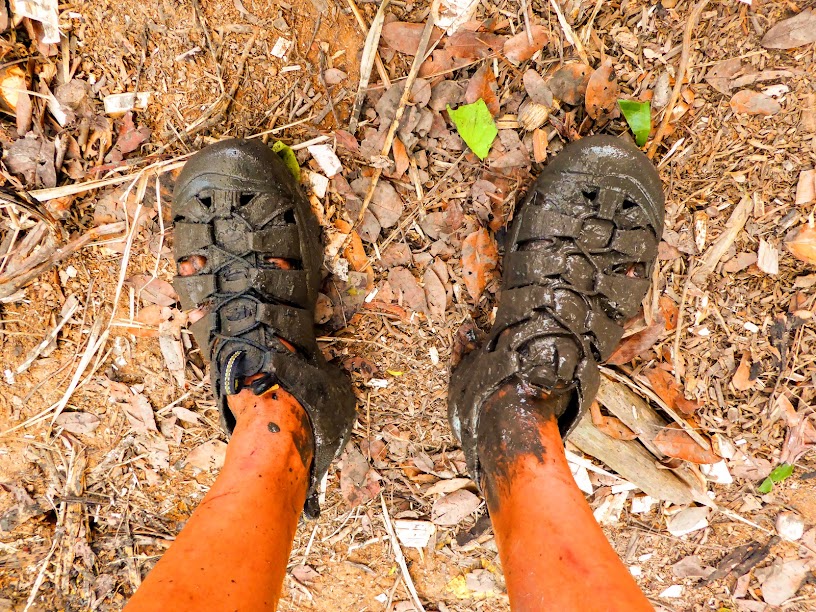
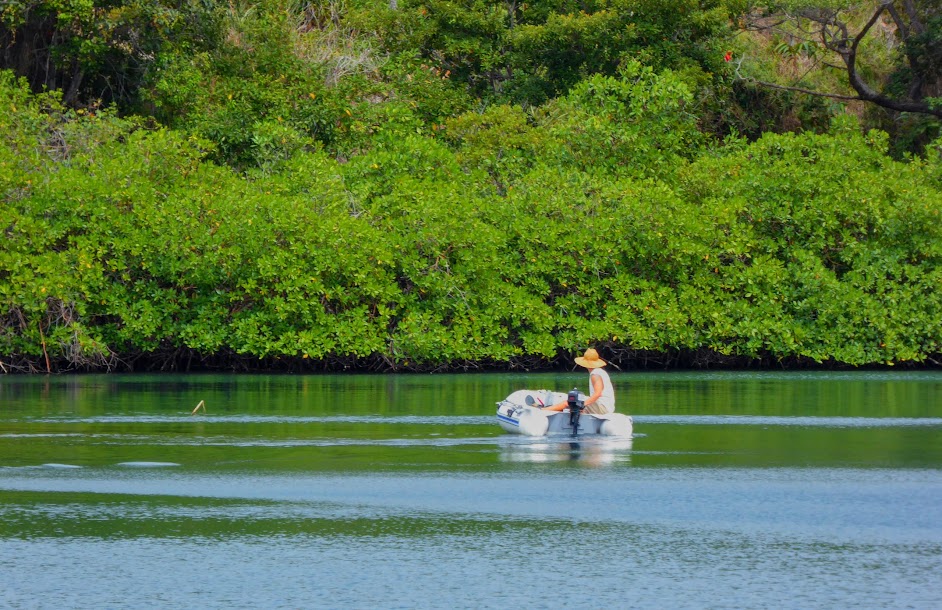
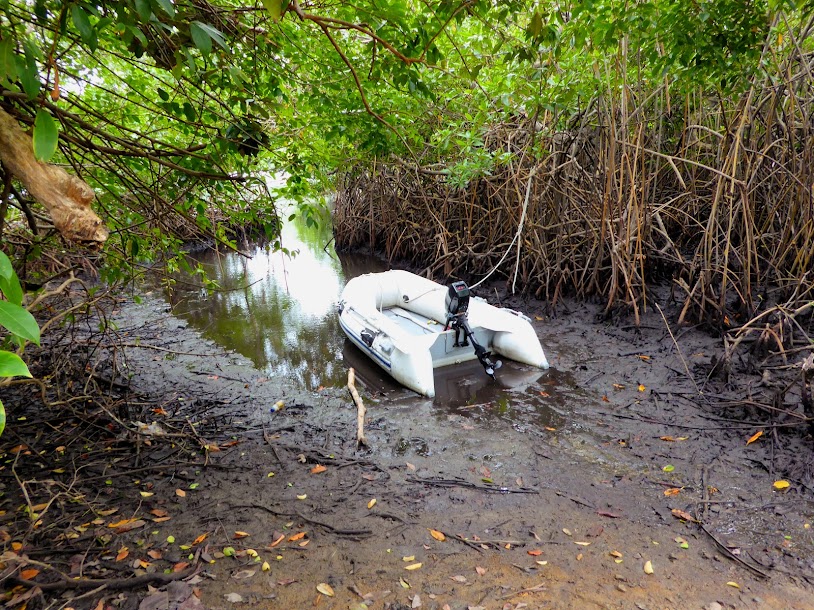
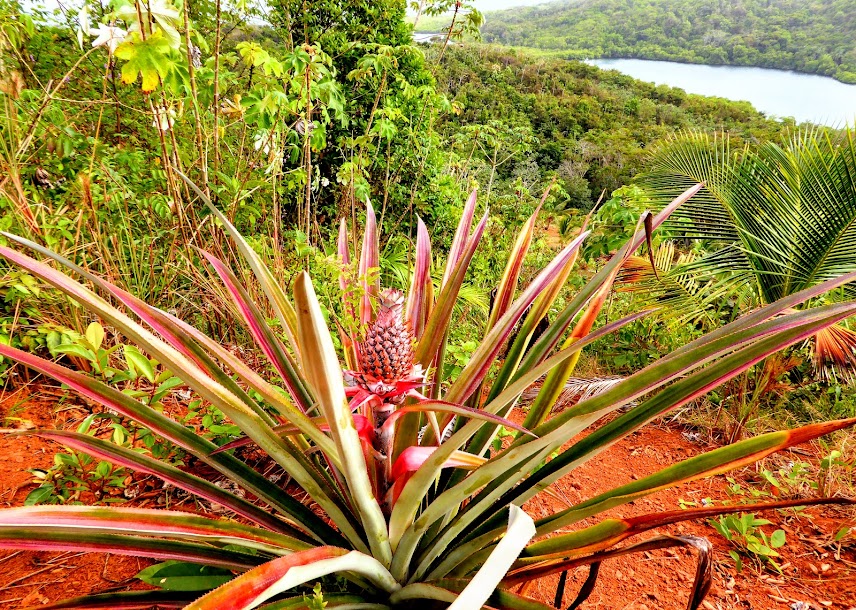
He landed the dinghy in a “mud hole,” and ended up hiking through the surrounding hills.

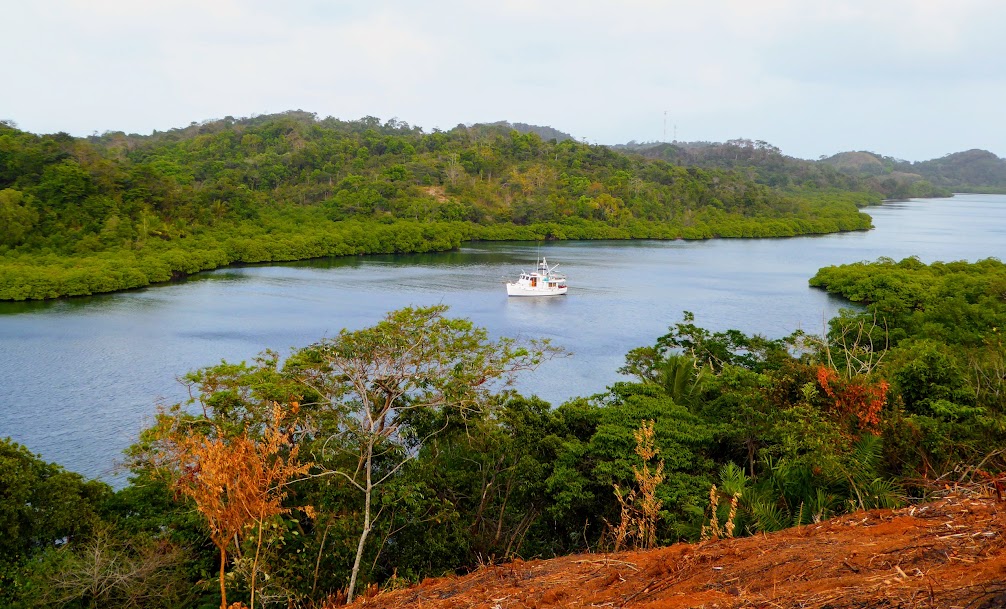
He came back with some great photos of Sea Life alone at anchor, but his shoes were caked in mud.

An additional day was all we could stand, and the following morning we ran, covered in bites, for open water, where welcome winds blew away the unwanted pests.

We continued to follow the mainland coast, and our next stop was the the Robison Island group, where there were many Guna island villages. Here we chose to anchor just off of the mountainous mainland, near three villages, offering us a beautiful view.

The two smaller islands were each made up of one extended family.

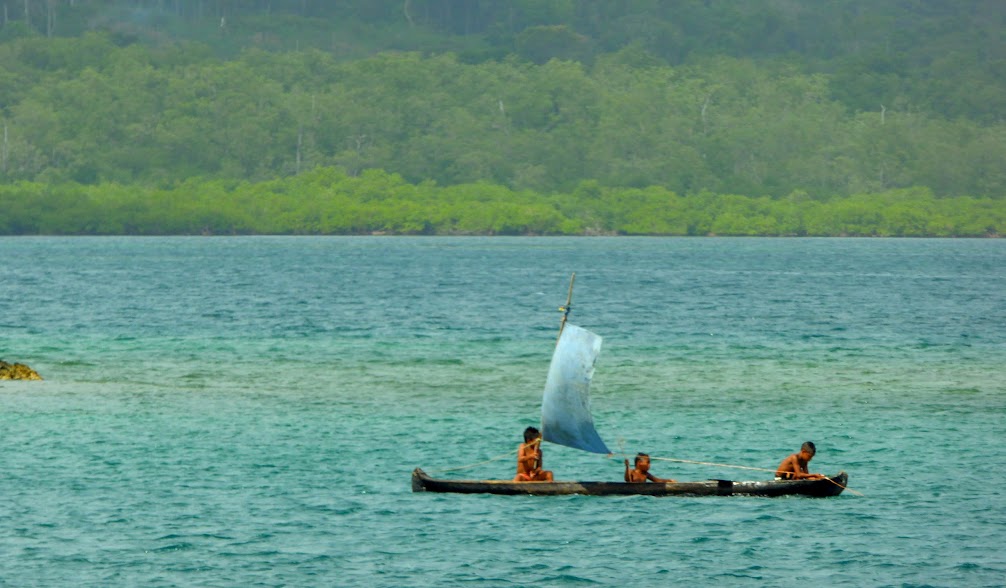
There were many more ulus with sails here (notice the man in green shirt falling overboard…which we saw happen several times, as the narrow boats suddenly shifted).

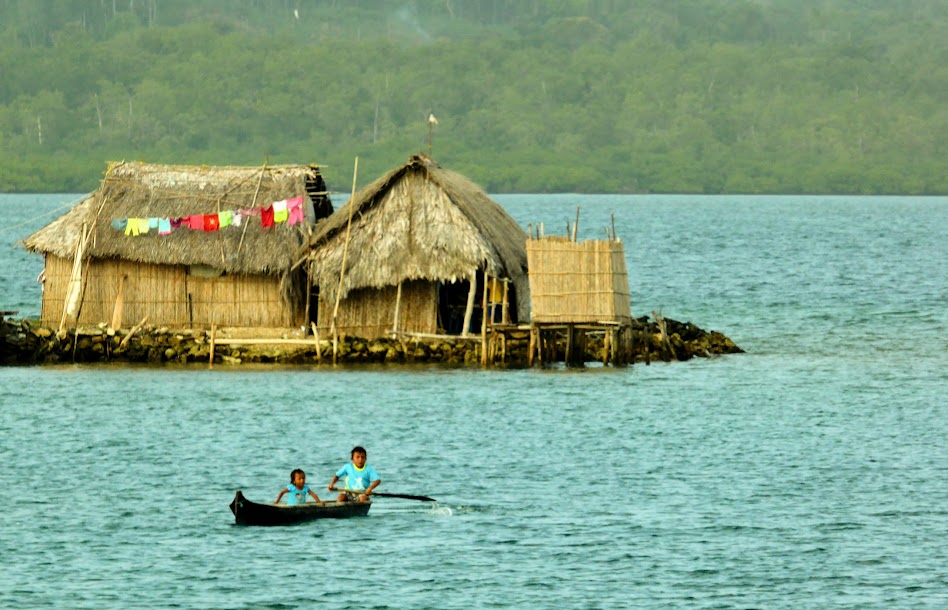
We noticed many more children than we’d seen before, and it was also surprising to see very, very young children out paddling and sailing in ulus without adults. It’s obviously a much simpler, safer life here.

Our friends Ted and Barbara (s/v Rosa dos Ventos) were here when we arrived. We’d seen them at anchor in Isla Mujeres last winter, but didn’t actually meet until we were both in Providencia in June. It was good to catch up with them, and have friends in the anchorage here to spend time with.
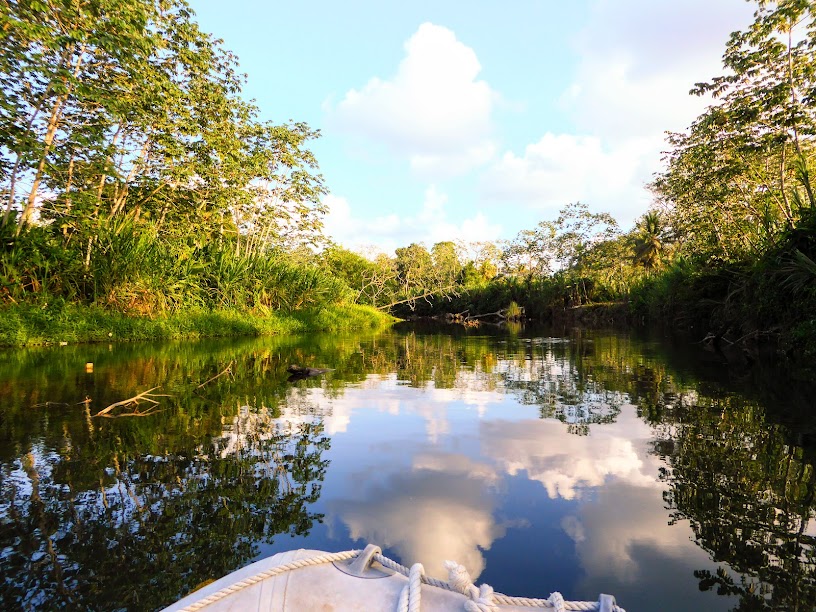
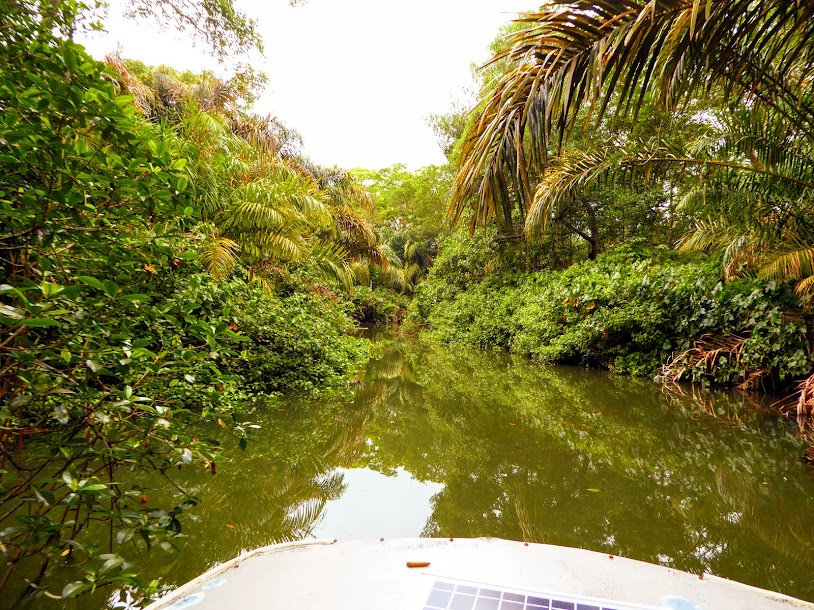
There were several inland rivers nearby, so Scott lowered the Aluminum Princess for some extreme exploring. He traveled miles up the up the Mandinga River, lined thick with jungle vines. It became quite narrow in places, and almost blocked his way in others.

He fought his way past the dead wood coming out of the river, which offered more sandy banks along it’s route.

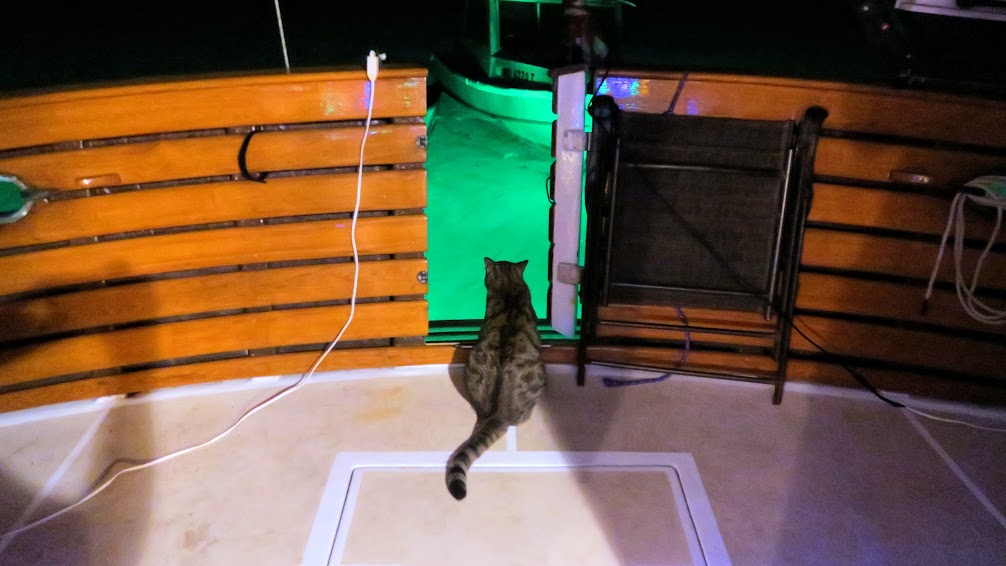
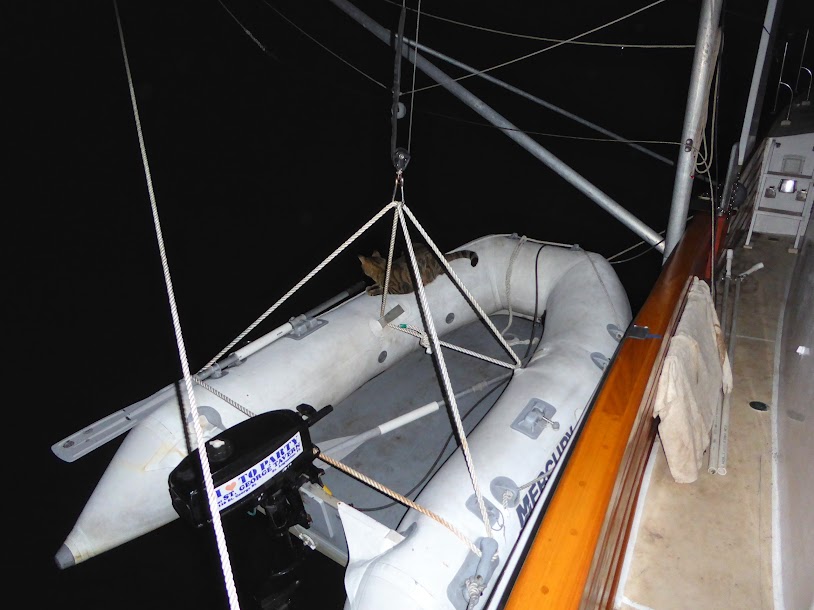
Howard enjoyed the anchorage here as well, and the many smells coming from land close by. When Scott lowered his green LED light into the water each evening, Howard would go right out to the swim platform, for a look at the fish below. However, he also enjoyed waiting for the fish to jump, from the inflatable dinghy, that spent evenings hanging from our port side.
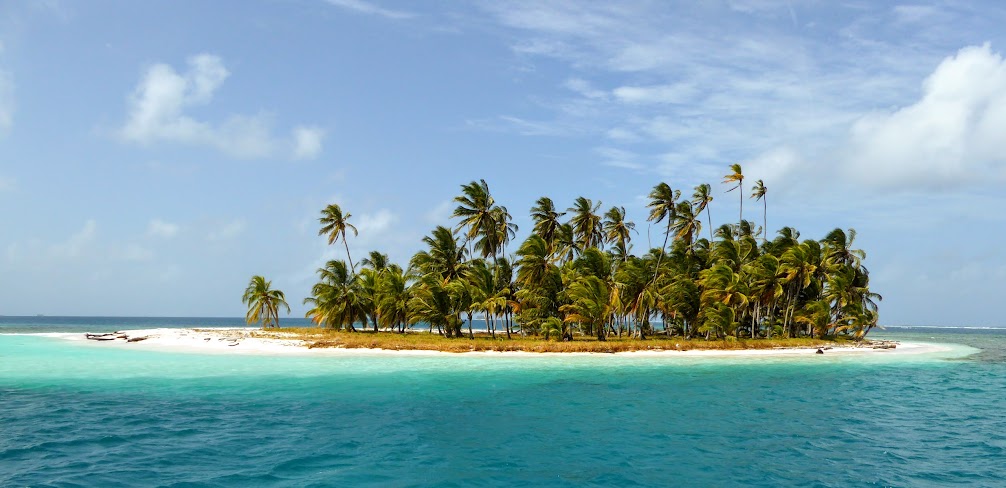
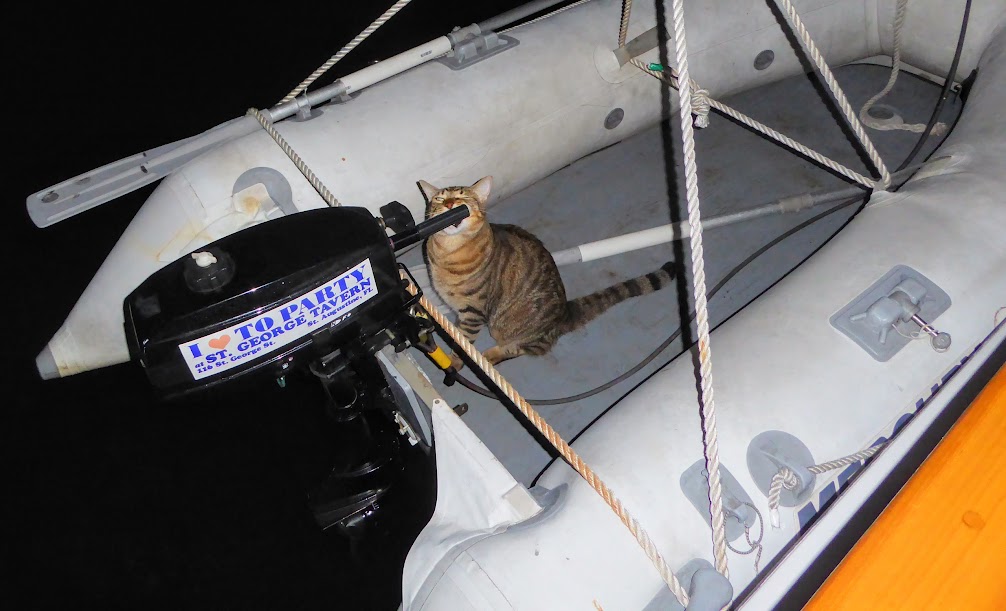
Scott tolerated this surprisingly well, but became pretty peeved when Howard decided that the tiller for the dinghy’s motor made a good chew toy.
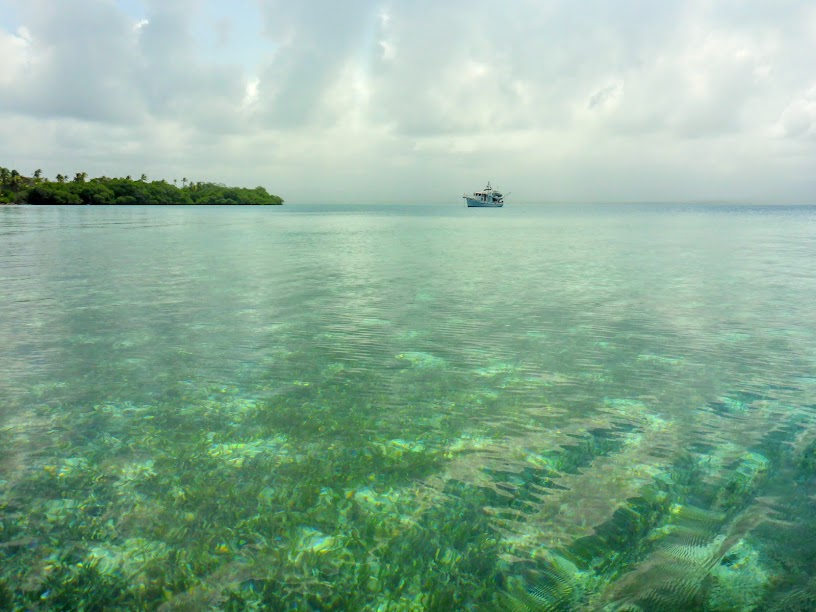
Aside from the sound of people talking in passing ulus, or children playing on the islands, it was quiet, and very peaceful. Being close to the mountains, it was cooler here at night, and the smell of smoke from the villages came gently through our stateroom hatch. It was like we were camping, with the smoldering campfire just outside our tent. These things filled in for the feel and smell of fall, that we miss. Here are more photos.

“Shells Sink, Dreams Float. Life’s Good On Our Boat!”


Here are more photos.

“Shells Sink, Dreams Float. Life’s Good On Our Boat!”

Dinner And Drama

We enjoyed getting to know Michele, who was visiting our friends Dani and Tate (s/v Sundowner), so before she left to go home, Scott and I wanted to have the three of them aboard Sea Life for dinner. Unfortunately, when date night came around, Dani wasn’t feeling well, so Tate and Michele joined us as a twosome.

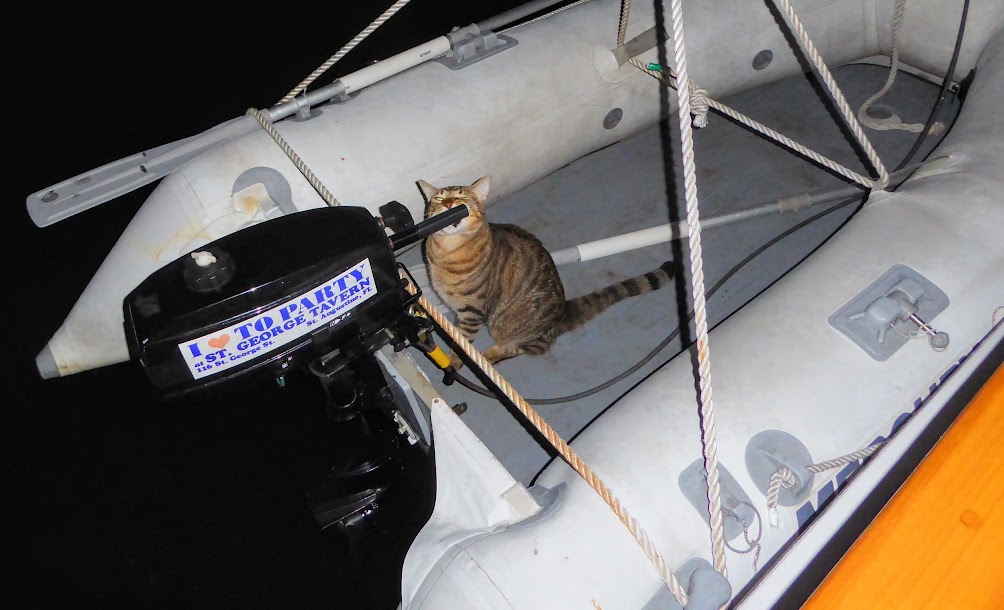
The four of us enjoyed dinner, and Howard amused us all with his usual antics. He tends to burn off his evening energy by racing around the decks like a maniac, before jumping from the cockpit, to the rail, onto the grill, and then launching up to the flybridge. Because we had guests on board, he was extra wound up, and had too much momentum going from the rail to the grill. Instead of landing on it, he sailed past….and into the water.
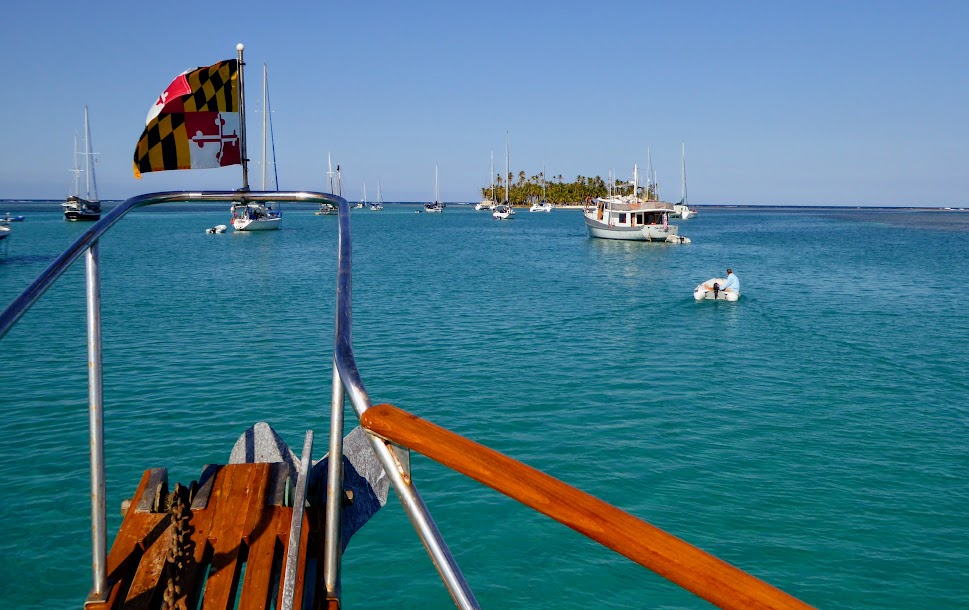
Luckily, Scott and Tate were outside, and realized that Howard had gone overboard. They began to try and locate him in the water, while I yelled to them to get a towel (A cat can grab the towel with his claws, and hang onto it as you pull him in. We used this tactic on one of the three times Howard went into the Baltimore harbor).

Scott and Tate spotted Howard swimming off of our port side. On top of it being 10pm and dark (why do things like this always happen in the dark?!?), there was a bit of current running through the anchorage. With the Bengal breed being part of his make-up, Howard is a good swimmer, but Scott was concerned that the current would be an issue. As I was still yelling to get a towel, he thrust his hand into the water, hoping to pull Howard back on board.

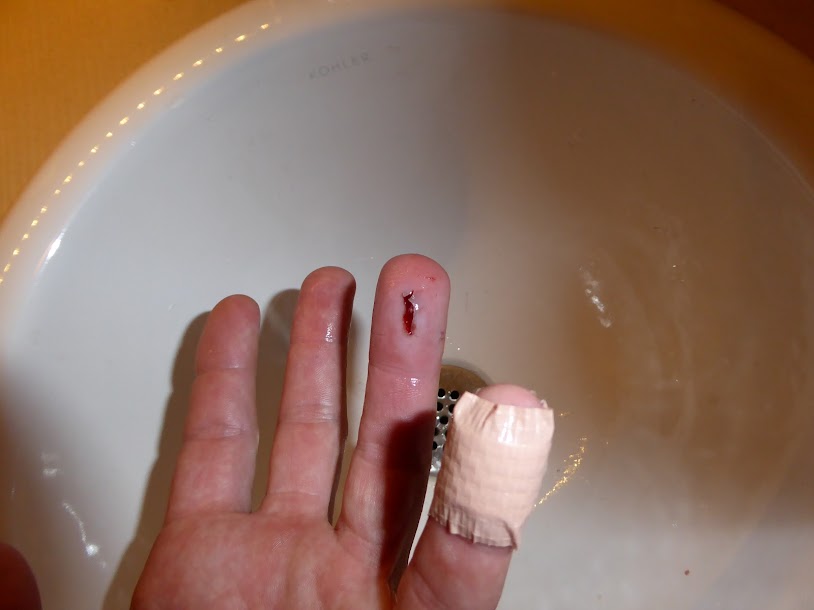
As Scott reached toward him, Howard bit right into the last two fingers of his right hand, puncturing the pinky, and tearing through the ring finger. With his bloody finger, Scott was still trying to help Howard, who was now attempting to get hold of our inflatable dinghy. Realizing that his finger needed immediate attention, Tate took Scott inside to help wrap the wound.
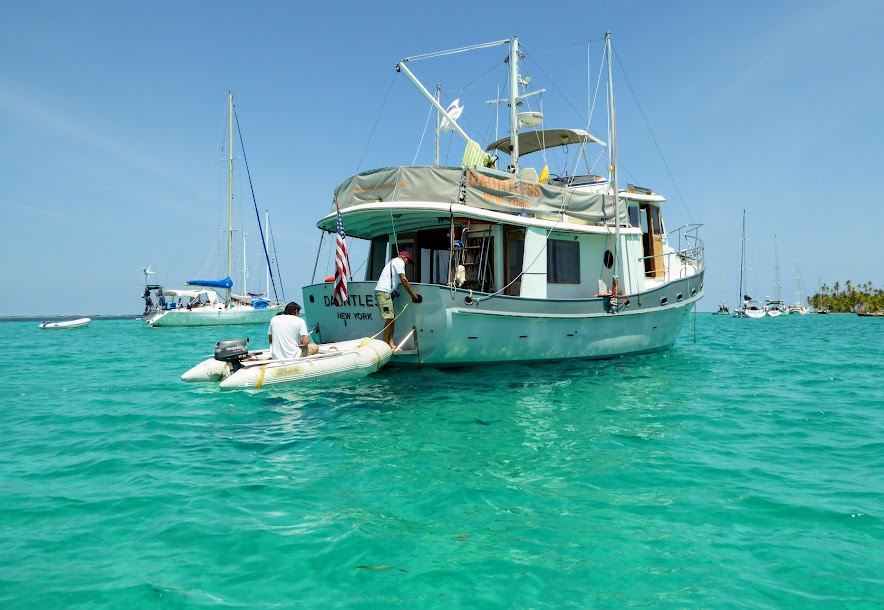
By now, I was out on the swim platform, and Howard had made his way around to the back of the boat. As he bit at one of our fenders hanging in the water (we later realized that he popped it; jaws of steel), I realized that Howard had not intentionally bitten Scott. He was just desperately trying to grab hold of anything he could with his teeth, to get out of the water as he swam. Howard grabbed right onto the towel that I threw in the water, and I was able to pull him up onto the swim platform and into my lap.

Michele tossed me another towel, and Howard stayed in my lap as I began to dry him off. Once he’d caught his breath, we moved inside, and I went over his fur with “kitty wipes,” so he wouldn’t ingest too much salt as he continued to dry himself off.

Meanwhile, Tate had helped Scott wrap his finger, and was now attacking drops of blood on the saloon rug with hydrogen peroxide (It took the spots right out, along with those on Scott’s shirt; a nice little trick to remember). He suggested that Scott immediately start taking an antibiotic, so I unearthed a bottle of Cipro from our stash of drugs.

Not fifteen minutes after coming out of the water, Howard was crying for food. He wolfed it down, followed by some water (Maybe he was trying to get the taste of salt water out of his mouth?). Once things had settled down, Tate and Michele headed back to Sundowner. Tate was a huge help, and Michele went home with quite a story!
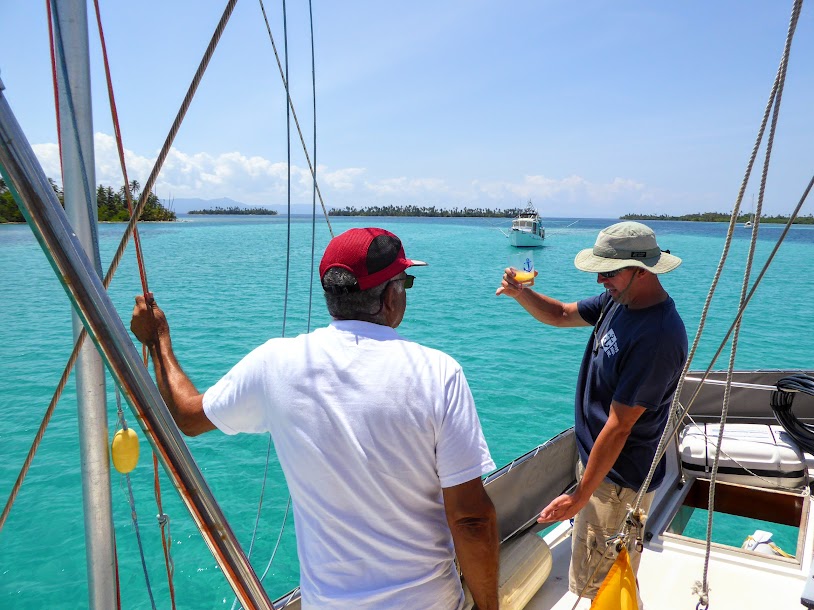
The next morning, being concerned about a cat bite in salt water, I suggested that we try and raise our friends Ted and Barbara (s/v Rosa dos Ventos) on the vhf. They are both doctors, and I wanted to make sure that we treated Scott’s wound correctly.
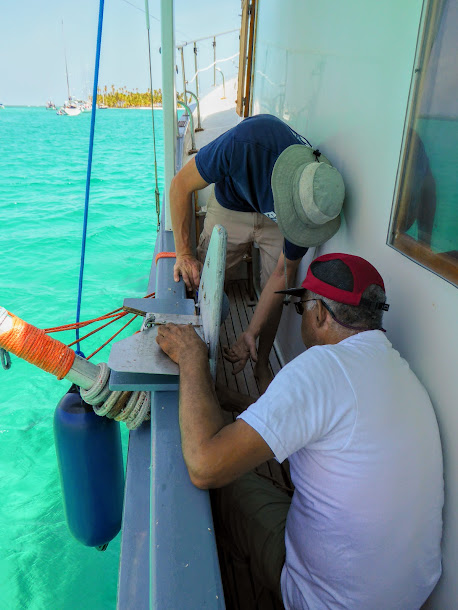
We were able to reach Ted and Barbara, but because they were several islands away, and our vhf antenna is not nearly as high in the air as that of a sailboat, it was a very, very hard to hear them through the static. Fortunately, our friend Judy was anchored nearby (s/v Chinook). She heard our struggling conversation, and stepped in to relay the conversation for us through her vhf radio; this was a huge help.

Both Barbara and Ted asked Scott several questions, gathering information about the wound. They instructed Scott to add 1500 milligrams of Amoxicillin per day, to the 500 miligrams of Cipro that he was already taking. The two drugs together helped fight any possible infection in a more broad spectrum. In addition, Scott was told to soak the finger twice a day with a diluted iodine solution, and to not fully close the finger up for several days. This would allow the iodine soak to really clean out the wound.

Barbara and Ted suggested that Scott may need a few stitches to close the wound on day three or four. This posed several questions: Do we make the costly trek to a hospital in Panama City, head back to Nargana, and have it stitched at the clinic there or take our friend Chris (s/v Mr. Mac) up on his offer to close the wound (Between our two boats, we had everything needed for this.)? Of course, Scott was voting for option three. Chris had only stitched up lab animals, but skin was skin….right??

Thankfully, we didn’t need to put any of the options in play. Judy came over to take a photo of Scott’s finger on day three (which I had still not looked at…gross). When she sent it to Barbara and Ted, they said that the finger looked great, and instead of stitches, Scott could get just use a sterile-strip to close the wound (thank you to our friend Maria, who is a nurse, and stocked us up on many emergency items before we left home!).

Of course this meant Scott was out of the water for at least two weeks, something he was not happy about. However, during his entire “sentence,” the winds picked up and it was mostly cloudy, which somewhat softened the blow. Scott’s finger healed beautifully, and he and Howard are still friends…for now.

A Fellow Krogen Comes To The San Blas

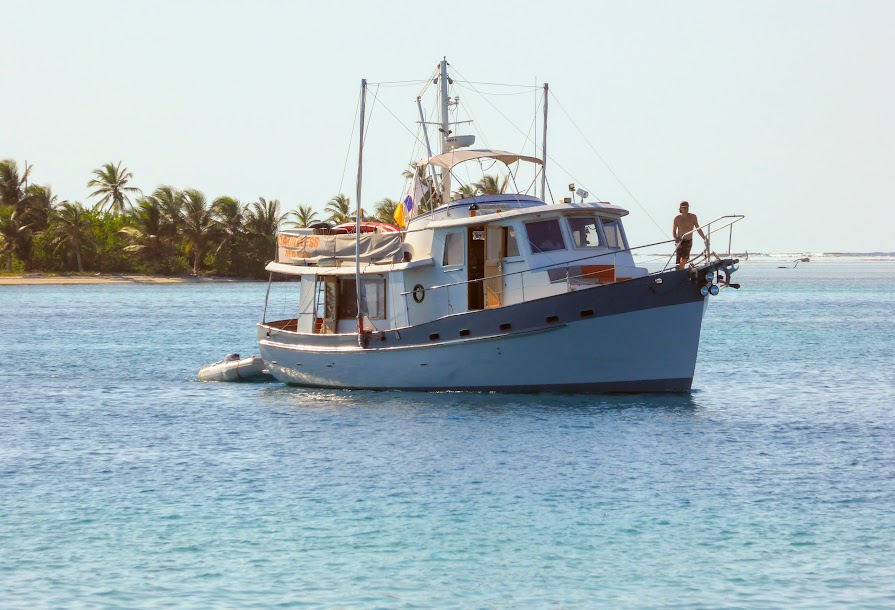
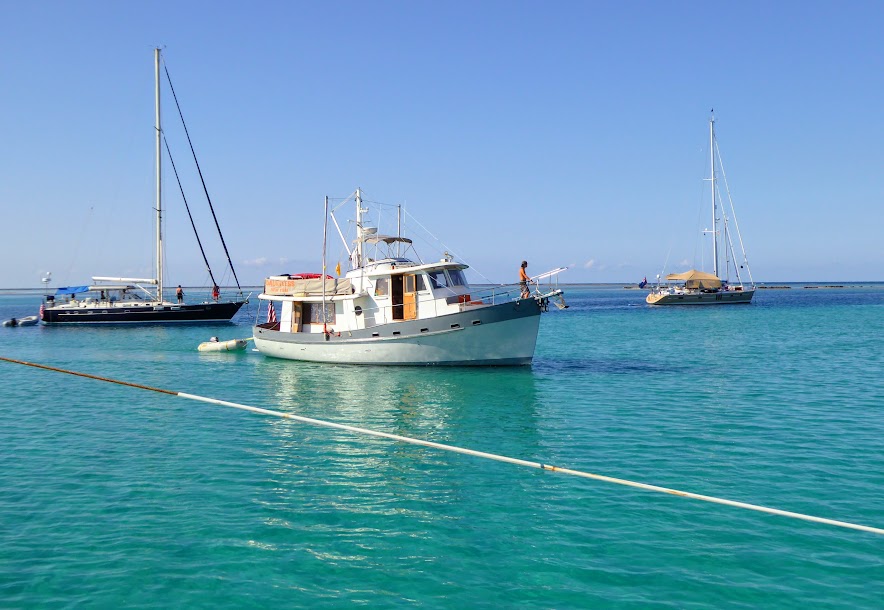
Scott regularly follows cruising and trawler websites, as well as several blogs. During our refit, and over the last 18 months or so of actively cruising, the various sites and forums have been useful sources of information and first hand knowledge. One of the more interesting blogs is that of Duantless, another 42′ Kadey Krogen trawler.

Richard Bost began cruising with Dauntless in the Bahamas, and then traveled back up the east coast to New York. After his “shakedown” cruise, he headed for Nova Scotia, and then crossed the Atlantic (traveling alone from the Azures to Ireland). Richard wintered in Ireland, and then spent time extensively cruising areas throughout the North and Baltic Seas.

Dauntless returned to Ireland for maintenance and repairs, and then continued on, making stops in France, Portugal, Gibraltar, Morocco and the Canary Islands before crossing back over the Atlantic, and into the Caribbean. After spending time in Martinique to rest and refuel, Richard planned to head for the Panama Canal, stopping in Cartagena along the way.

Scott and Richard had been communicating through Trawler Forum for about a year, trading information back and forth. When logistics for stopping in Cartagena became an issue, Scott convinced Richard to make a detour, and come to the San Blas for a visit.

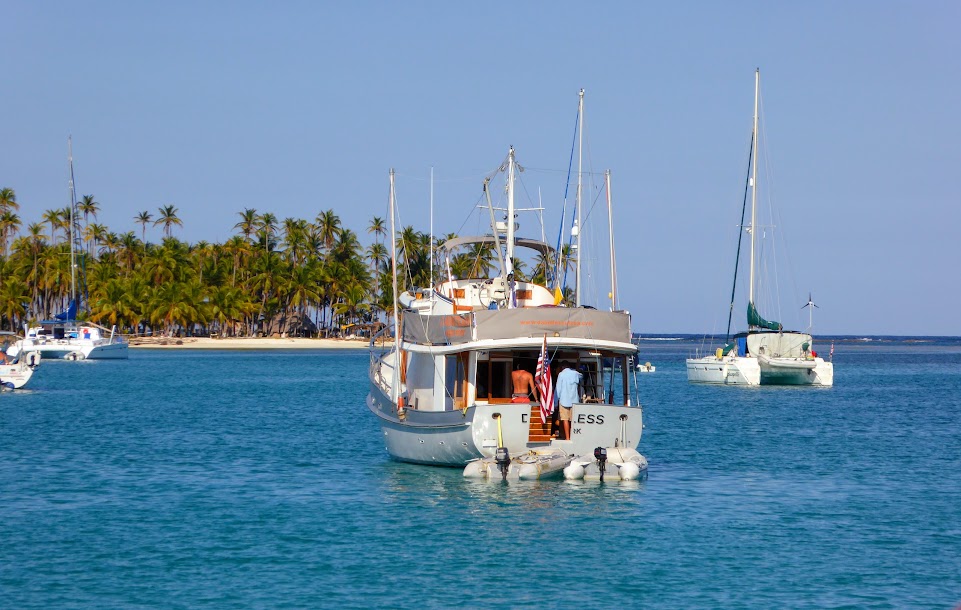
As Dauntless approached the San Blas, we kept an eye on Richard’s progress through the Delorme link on his blog. We noticed him stopped in Nargana, and realizing that he’d been informed we were there, Scott contacted Richard to let him know that we were now in the Eastern Holandes. It wasn’t long before we spotted Dauntless making her way into the swimming pool anchorage.

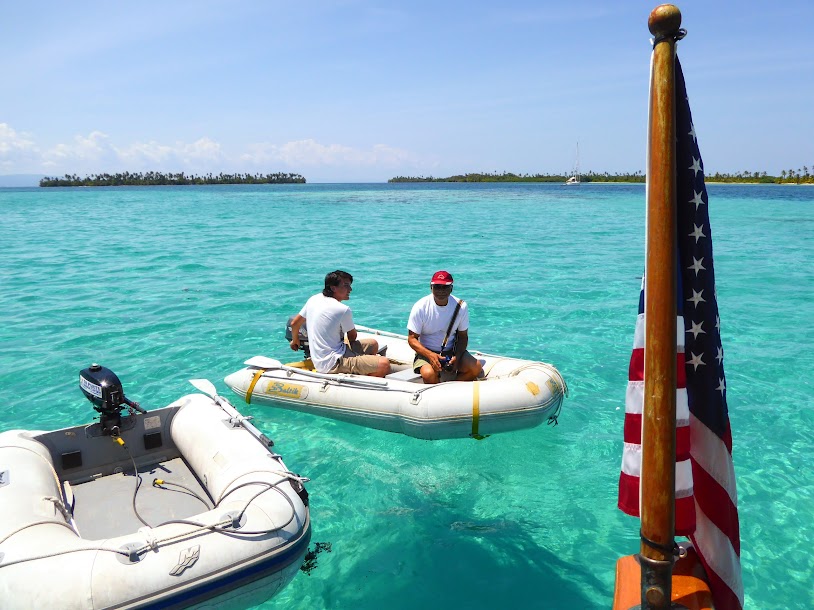
Once they were anchored, Scott went over to officially welcome Richard and his nephew Micah to the pool. They had traveled straight through from Aruba, so we made a plan to meet aboard Sea Life for brunch the next morning, giving the two a chance to rest up.

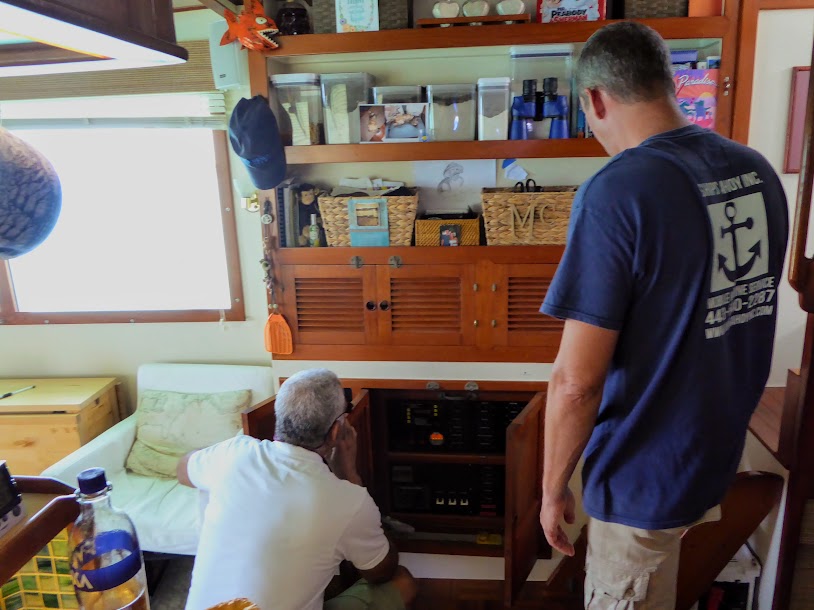
In the morning, rested and refreshed, Richard and Micha joined us for brunch. With full bellies, the inspection of Sea Life began.


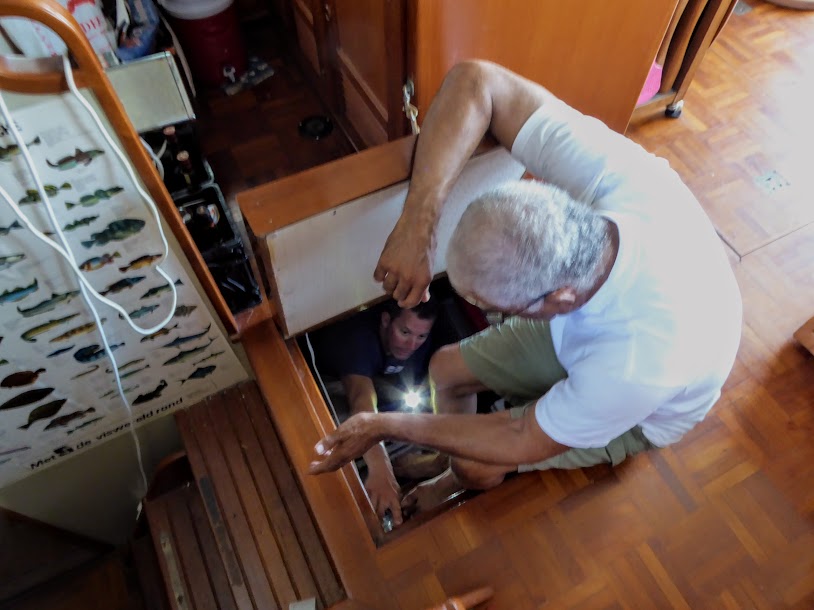
Then it was back over to Dauntless, where Richard and Scott compare boats and notes.


The two enjoyed exchanging information, learning much about how each boat was outfitted. Unfortunately, Richard was on a tight schedule to make his Panama Canal date, so it was a short San Blas visit, but we enjoyed meeting him, and Micah, after following Dauntless’ adventure for the last several years. It was also nice to have another trawler in the anchorage, among all the sailboats!

“Shells Sink, Dreams Float. Life’s Good On Our Boat!”