Exploring New Anchorages

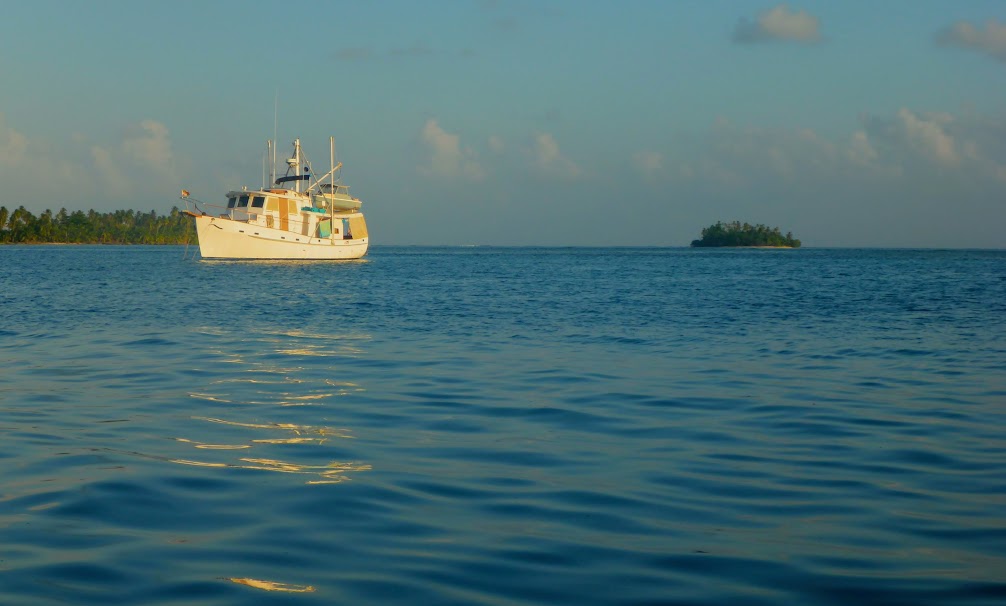
After our stay in the eastern Holandes, anchored in the Swimming Pool and then Hot Tub, we were ready to explore more of the many anchorages here in the San Blas islands. Our friends, Dave and Sharda, (s/v Morgan) were anchored in Esnasdup, located in the southeast area of the San Blas, so we decided to head over and join them.

The Guna islands of the San Blas have very unique names. Many end in dup (pronounced “doop”)…Esnasdup, Miriadup, Salardup, etc. We’re told that “dup” means that there is a well located on the island.

More than one of these islands have the same name. There are several Banedups, Miriadups and Waisaladups, just to name a few. This can make trying to meet or locate friends challenging…”which Banedup are you anchored off of?” “Is that the Waisaladup in the western Holandes, or near Green Island?” Cruising is a constant state of learning and adjusting.

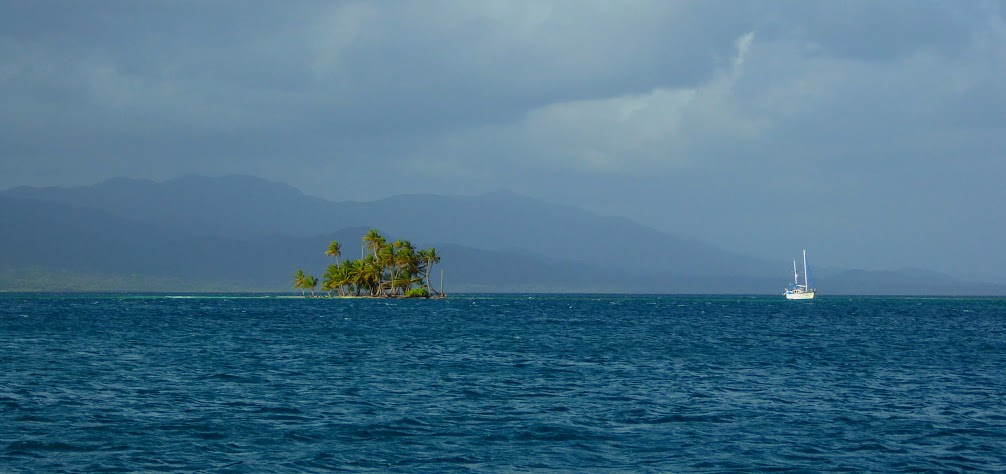
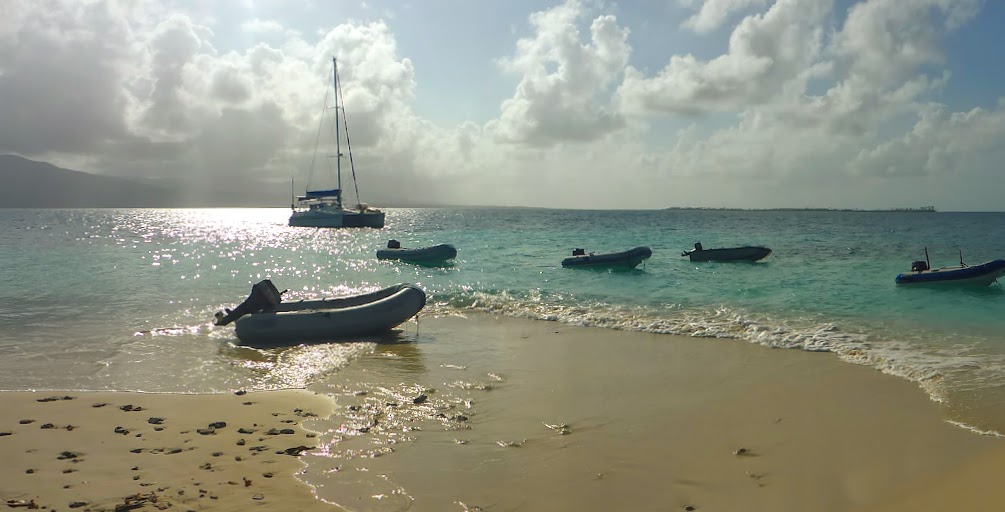
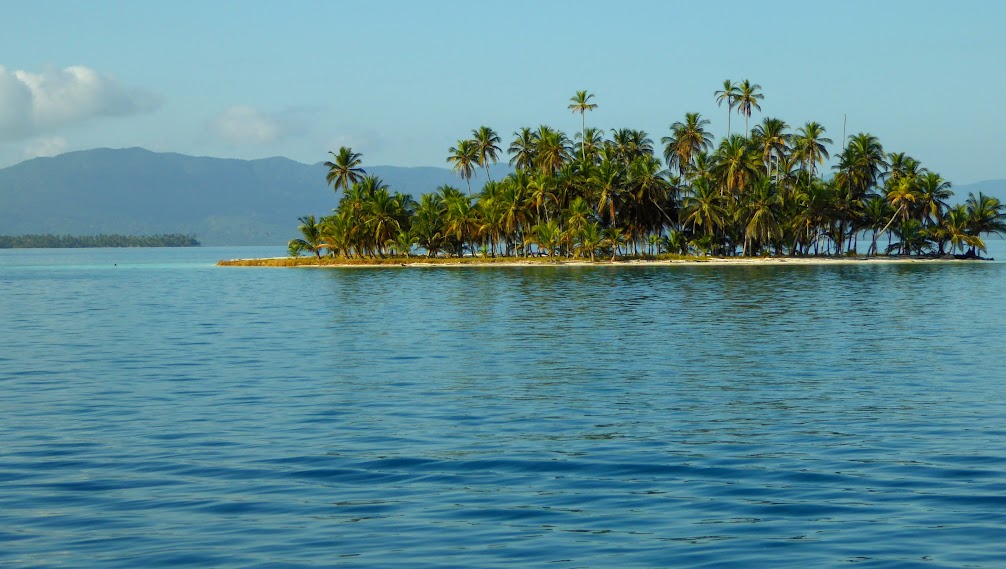
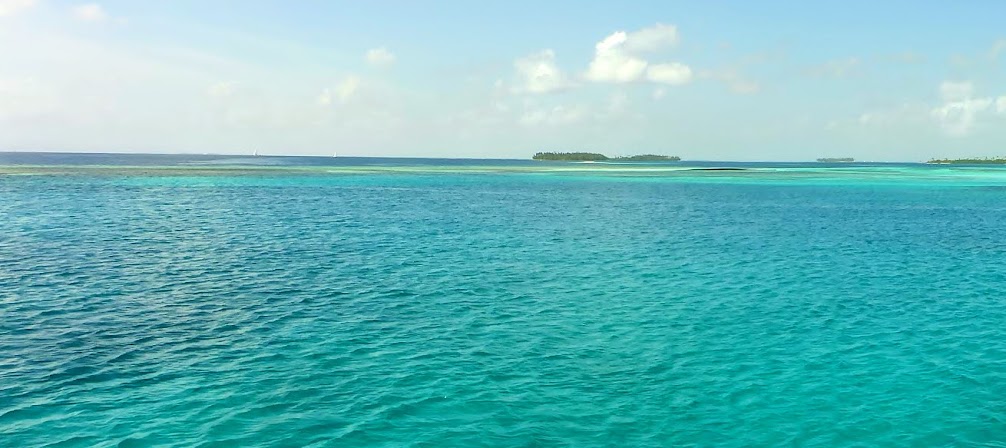
To get to the southeast islands, we had to come out from the protection of the reefs, and cross open water. We rolled across the large swells, and I was glad to have taken time to secure things for big water. Soon we were behind the protection of another reef, and in sight of Esnasdup. These islands are closer to the mainland of Panama, with views of the mountains in the distance.
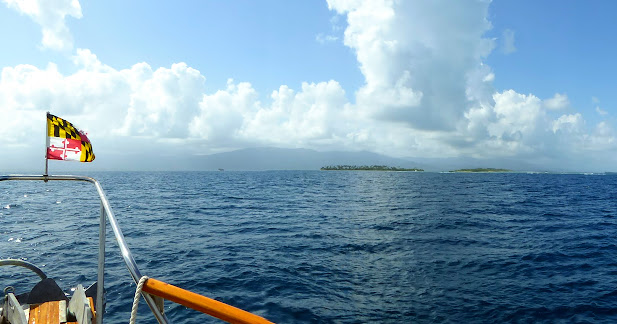
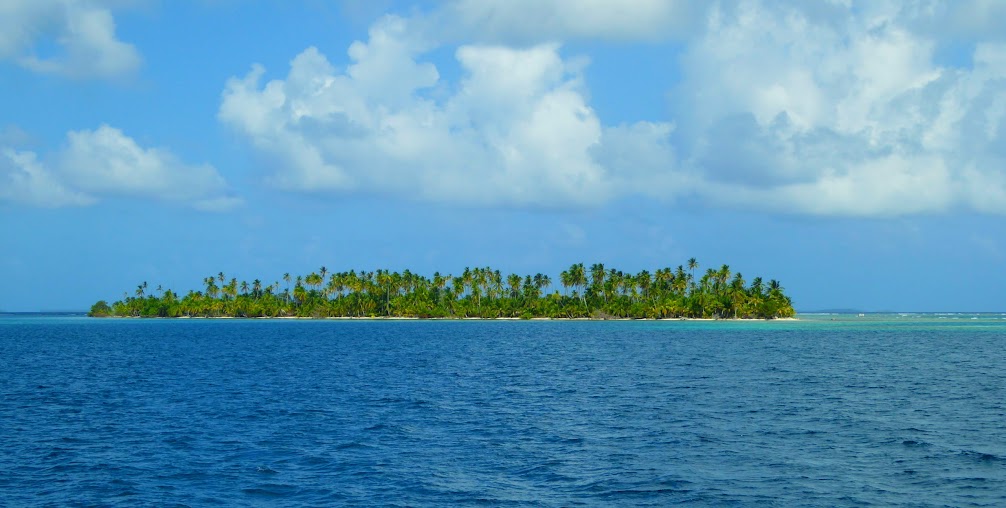
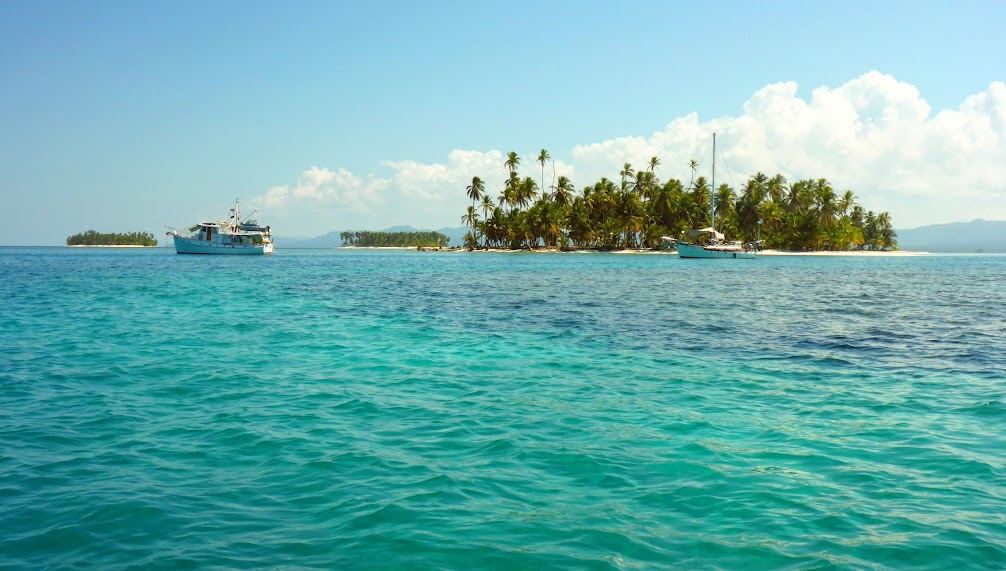
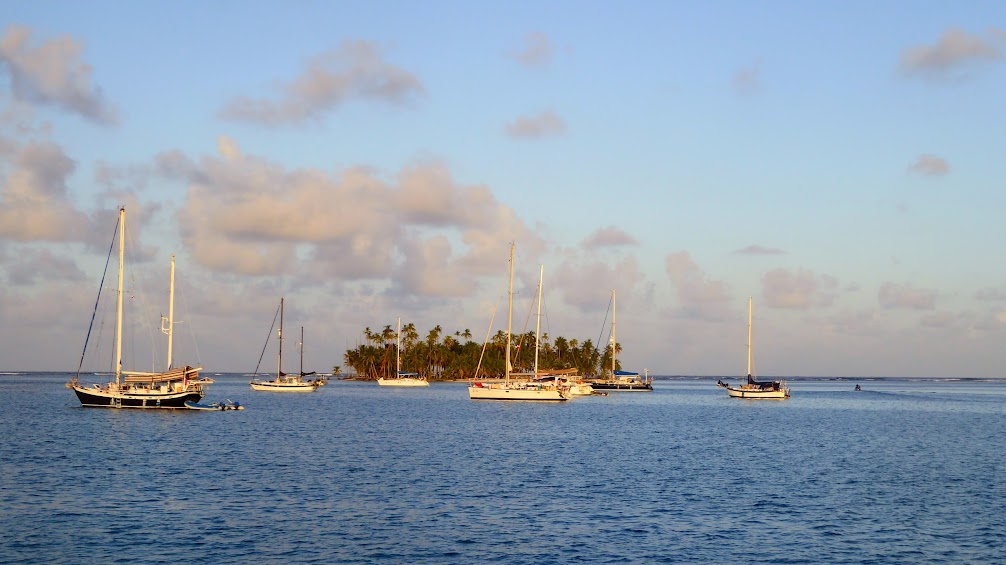
In keeping with the multiple names theme, Esnasdup has a “pool” of it’s own, located between two islands, and just behind the reef. Dave and Sharda were anchored in the pool, and we dropped anchor there to join them. It was great to enjoy views of the reef off our bow, and still have the mountains in sight behind us.

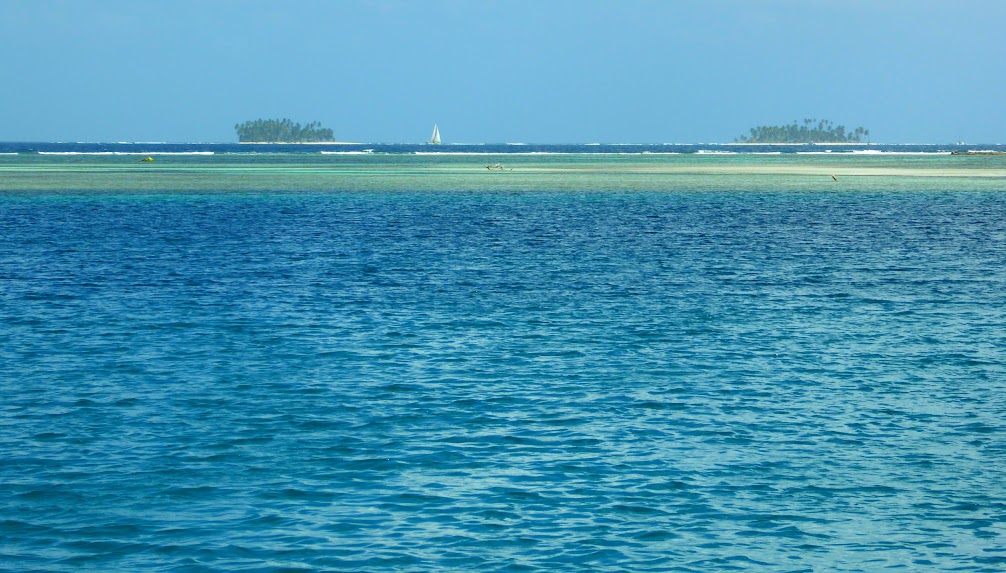
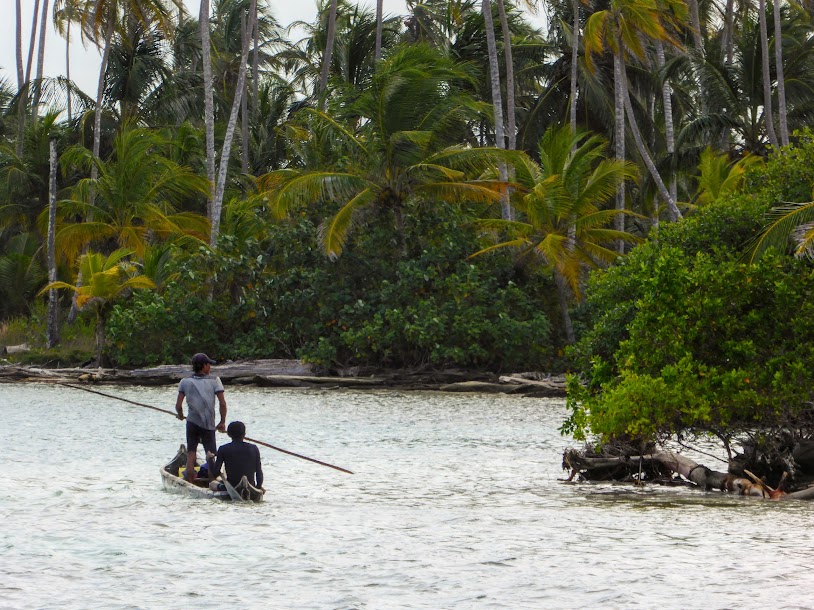
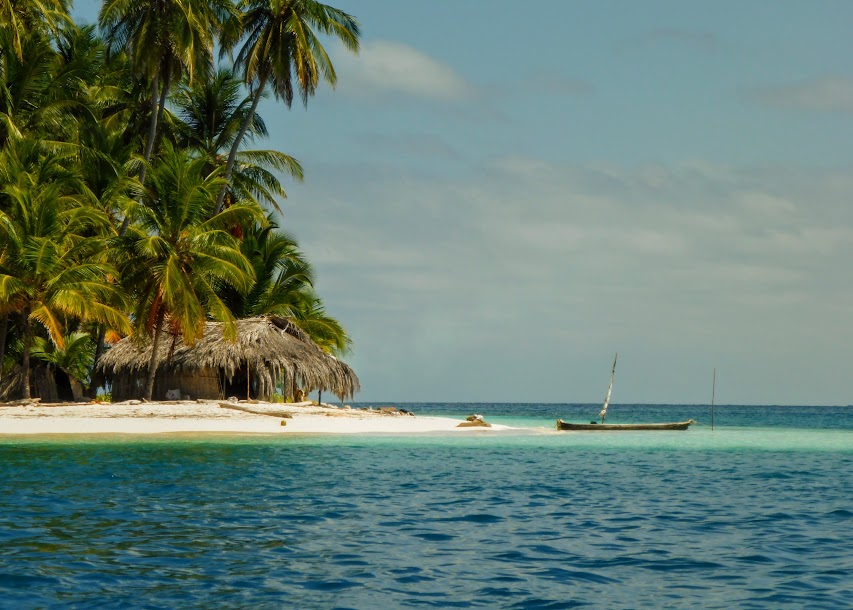
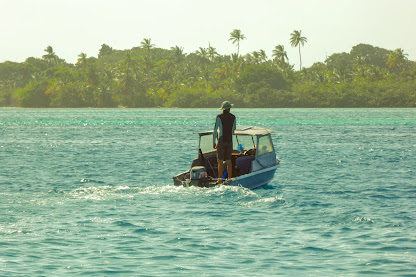
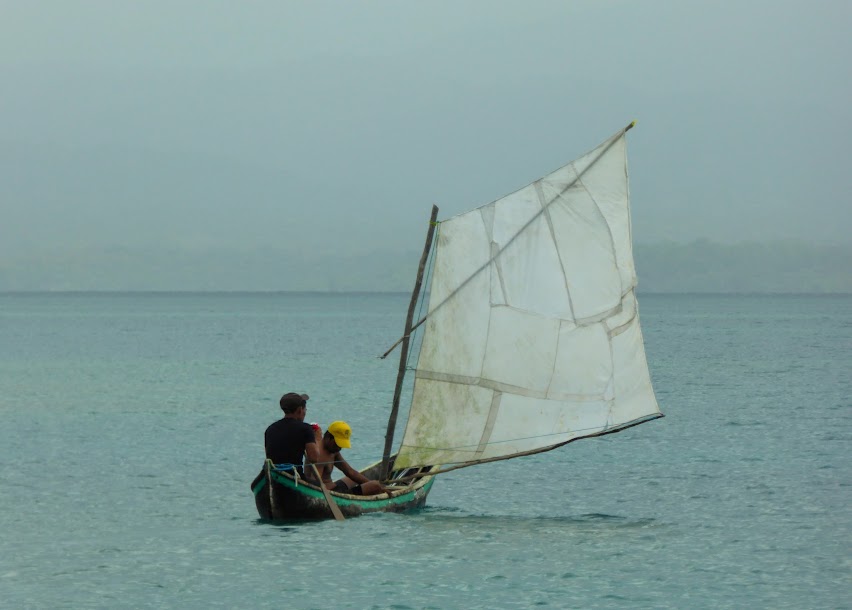
As usual, the islands surrounding us were beautifully scenic, and we often saw the locals in their ulus, fishing in the area.

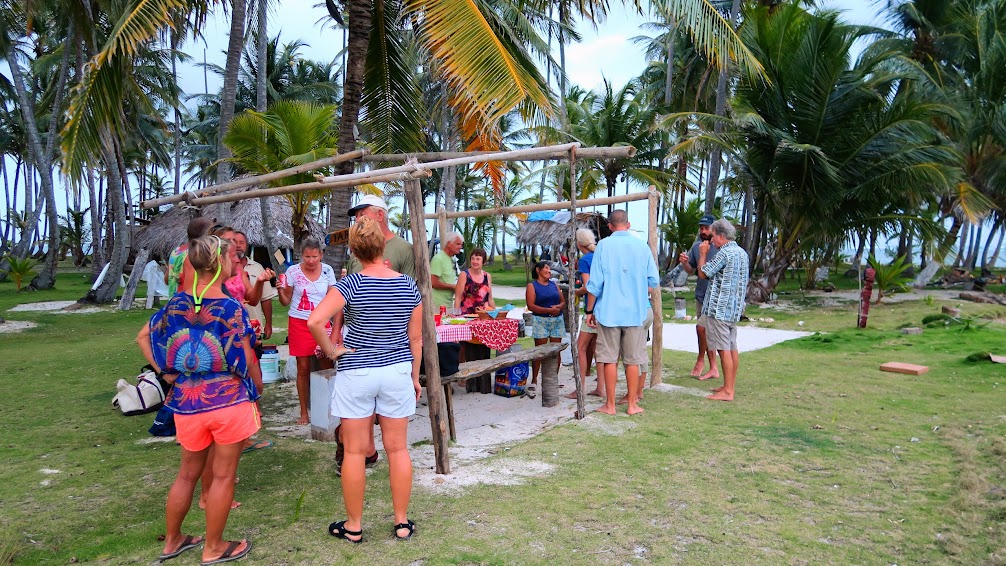
There was talk of a full moon trash burn on a nearby beach, so I spread the word to make it an appetizer pot luck as well. I wracked my brain to come up with some sort of table, because the alternative was for everyone to hold their dish in one hand and pass it around, drink in the other hand, while trying to eat at the same time (this has happened).

I came up with my own “MacGyver” idea, to fashion a table from items on board Sea Life: a piece of plywood we had under the couch cushions, and some milk crates that were being  used to store provisions…well done me!

As expected, Scott was less than thrilled to have to empty said milk crates of their contents, and to use his piece of plywood, but he helped me gather the stuff, and then hauled everything over to the beach. He also went over early in the day, to clear the sand of driftwood and other things, opening up more usable beach space.

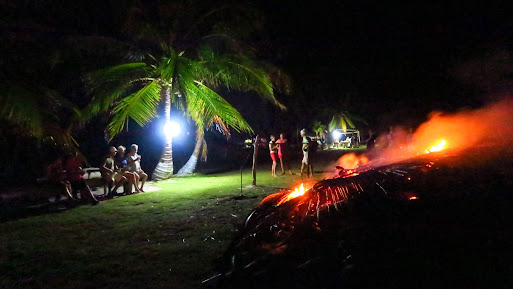
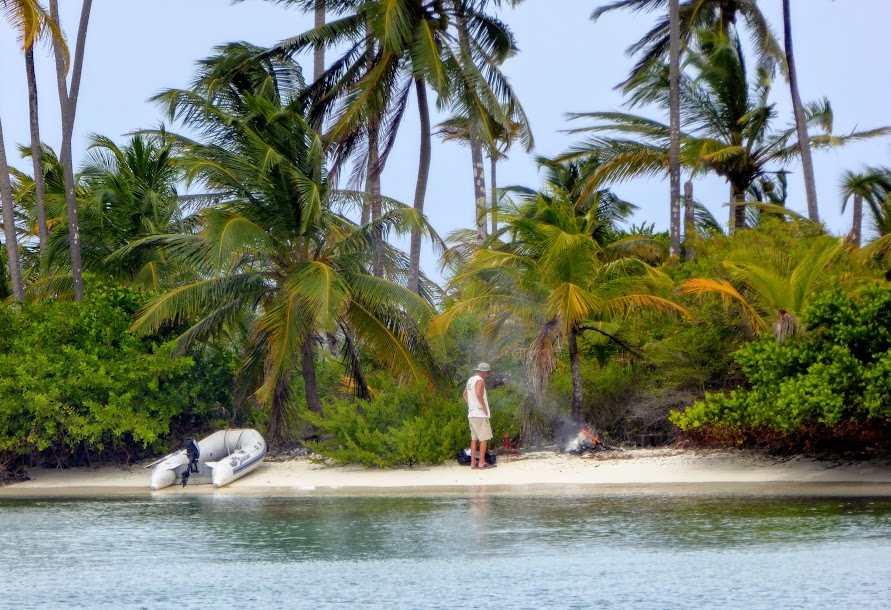
Everyone was very happy to have somewhere to put the food, and the night was great fun. All trash was burned, and the moon was beautiful. I was busy talking and eating, so unfortunately, no moon photos.

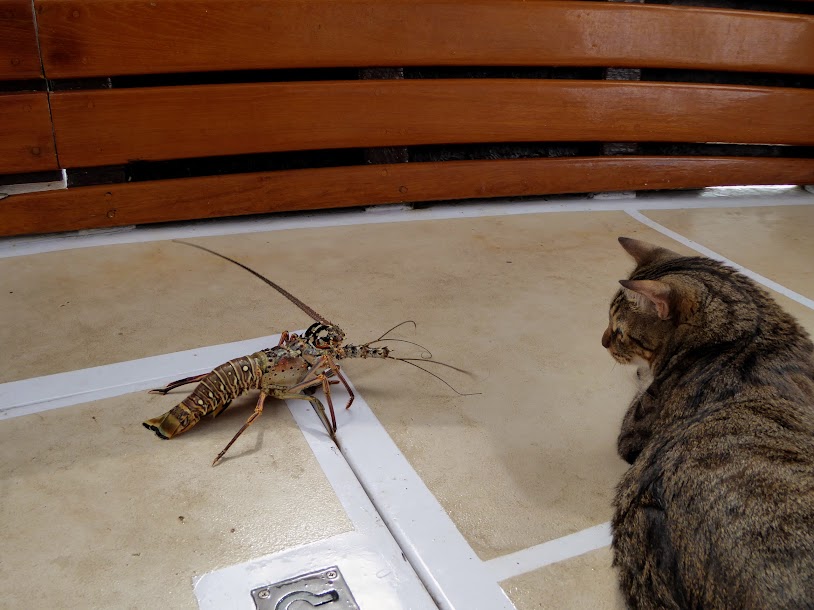
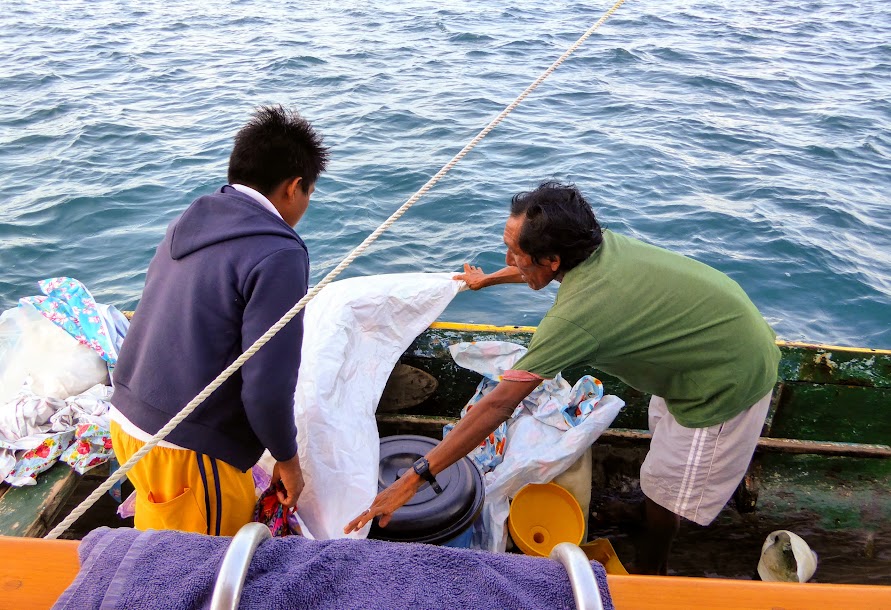
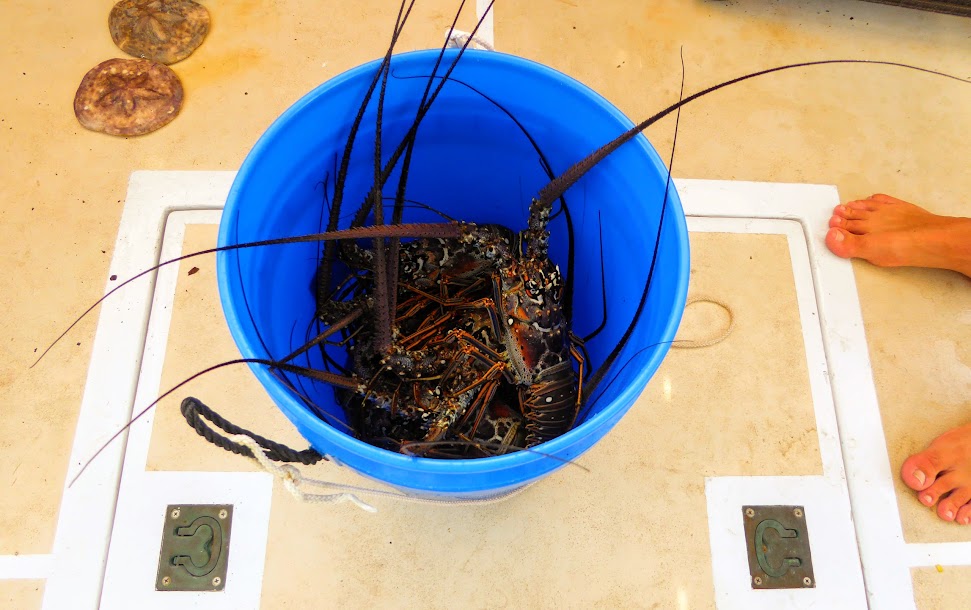
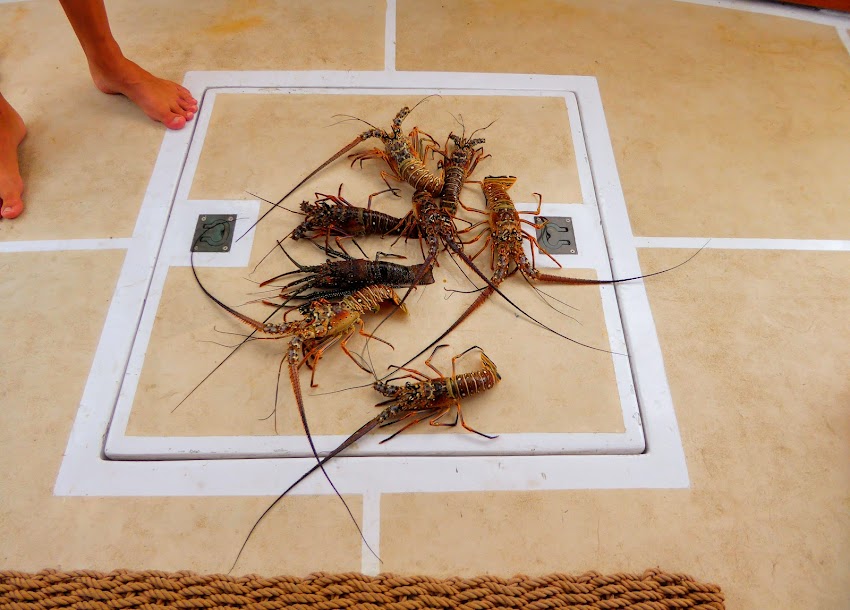
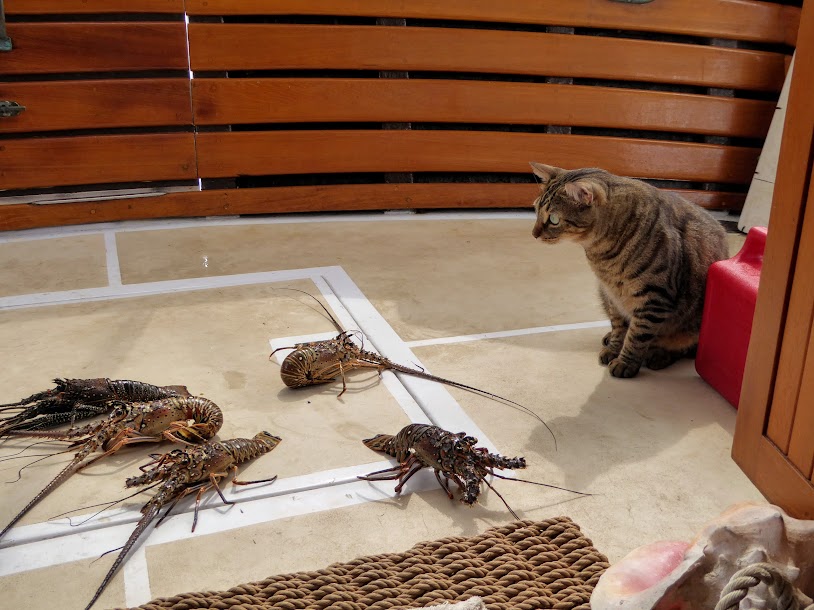
Scott came up empty for fish or lobster in the area around Esnasdup, so we purchased eight lobsters from a local fisherman…for 15.00! Howard has become very intrigued by lobsters, and he had quite a stare-down with one of this bunch.
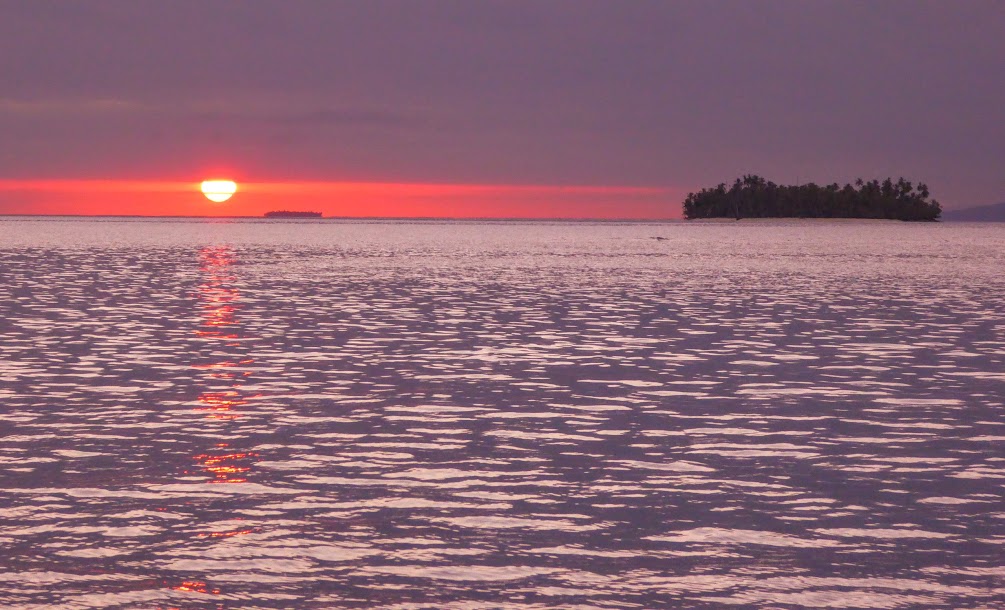
With more windy days predicted, we decided to leave the exposed location we were in and head for an anchorage nearby, off of Green Island; there was also talk of very good internet there. We didn’t find the good internet (none at all, actually), but did find a scenic spot to anchor off of Kuigaladup (say that three times fast), near Green Island, still enjoying the mountain views behind us in the distance.
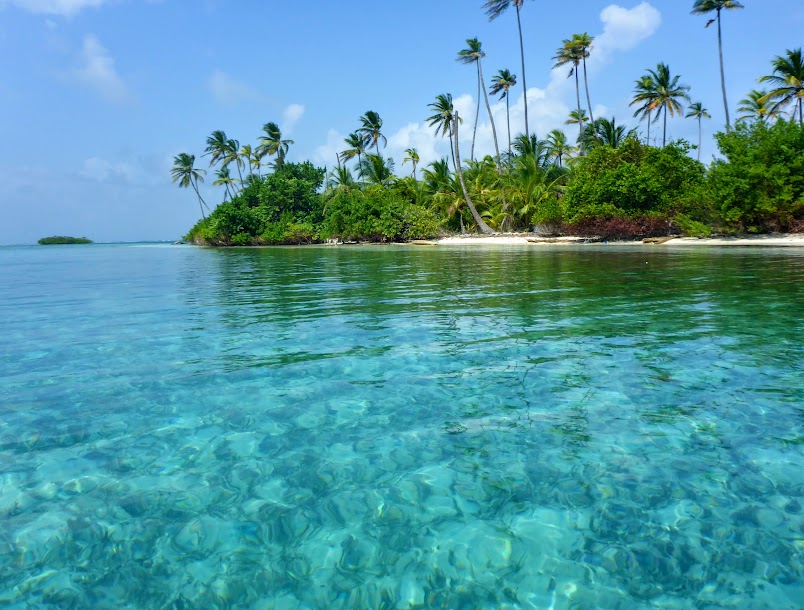
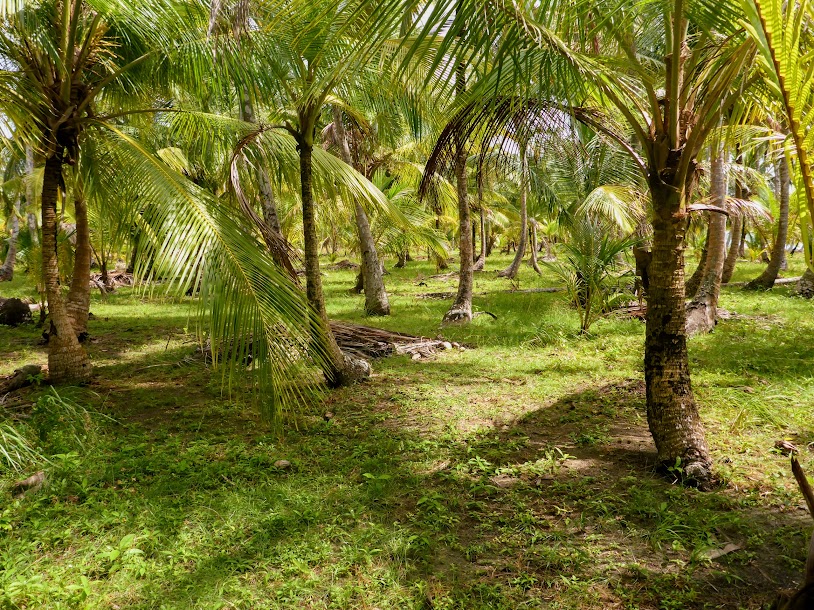
Scott took the dinghy over to Green Island, for a walkabout (not all of the islands are cleared well). It doesn’t take long to cover these small islands, but he had fun wandering around for a bit, and stretching his legs.
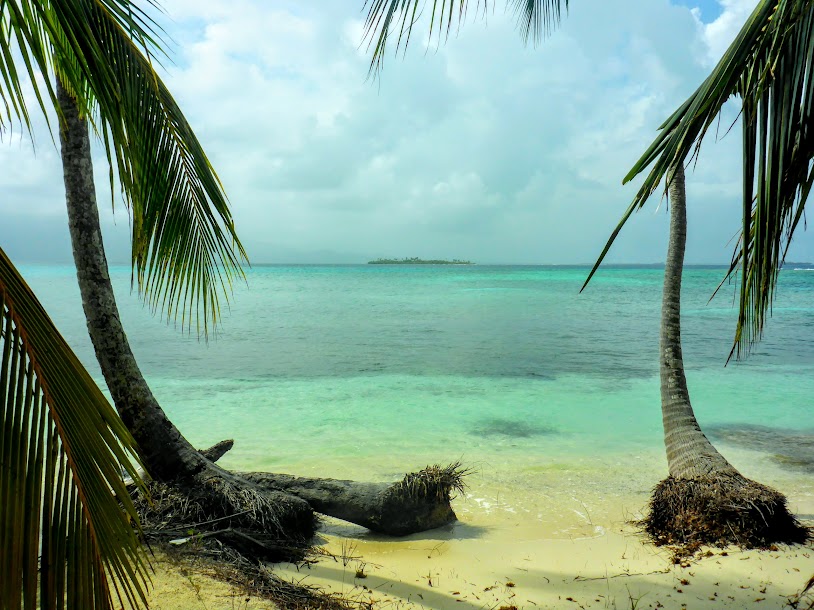
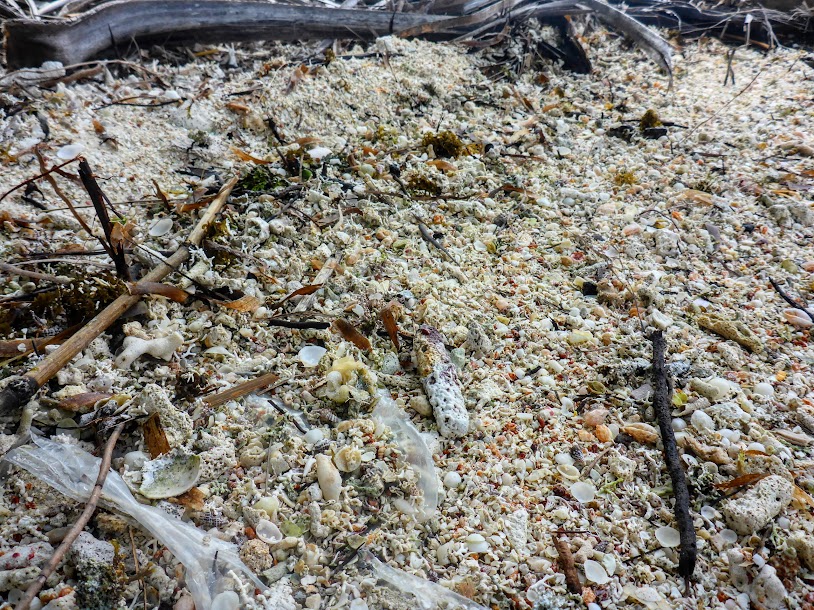
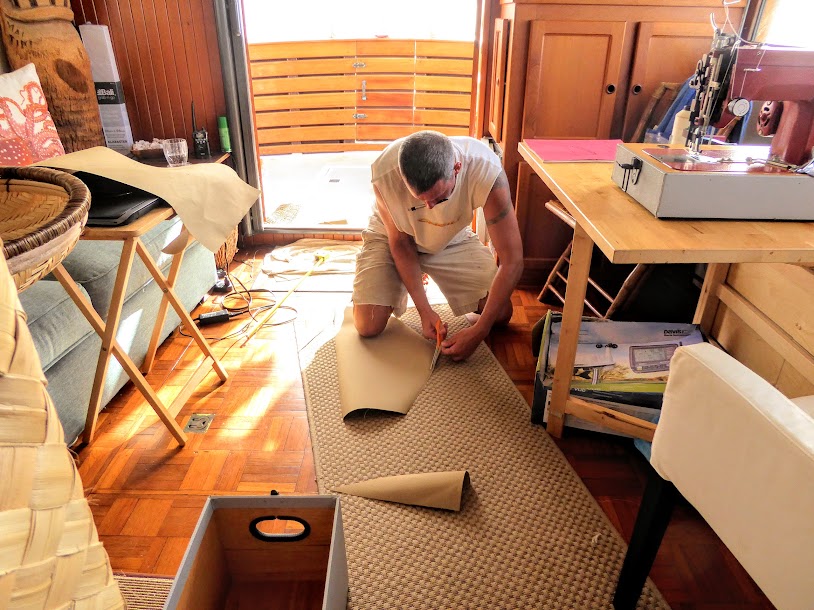
Scott burned our trash, and we took the time to sew up some canvass covers for our grill and the inflatable dingy motor; he cuts, I sew (Howard’s latest sleeping/fighting box is under the table).
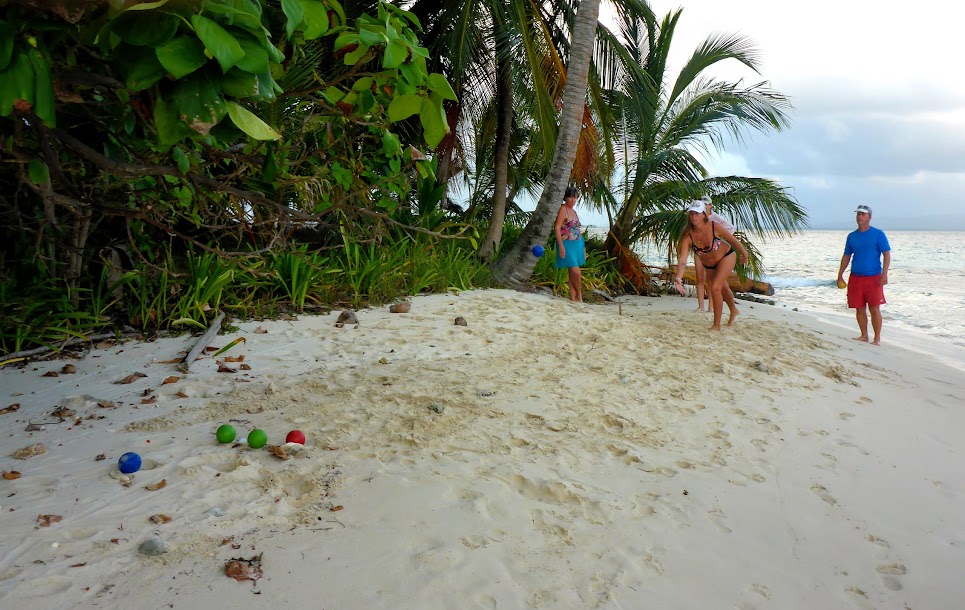
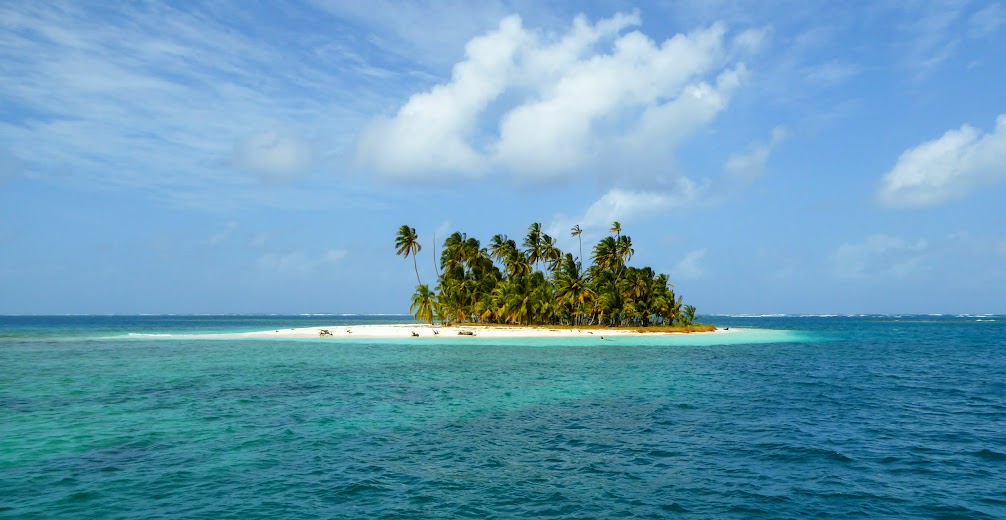
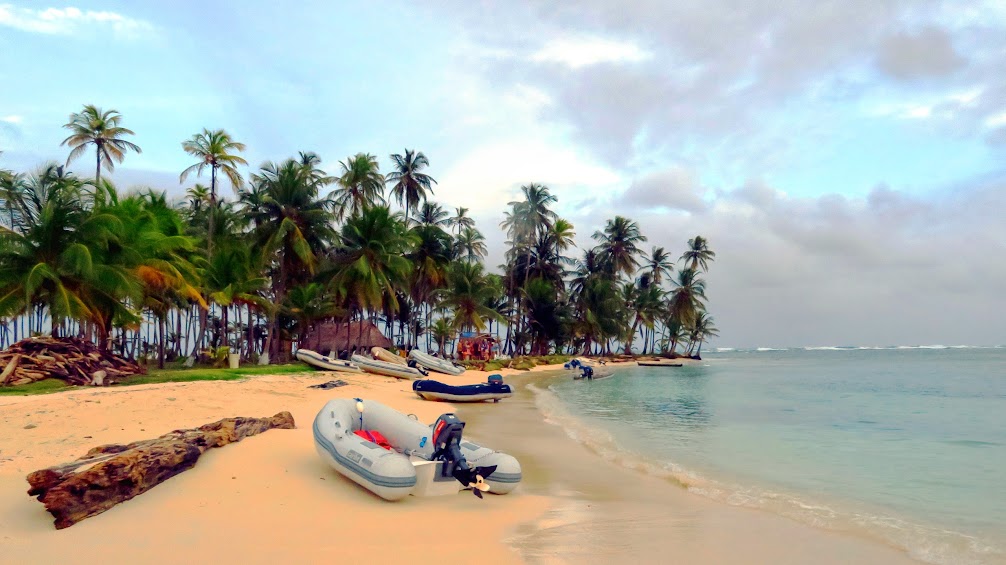
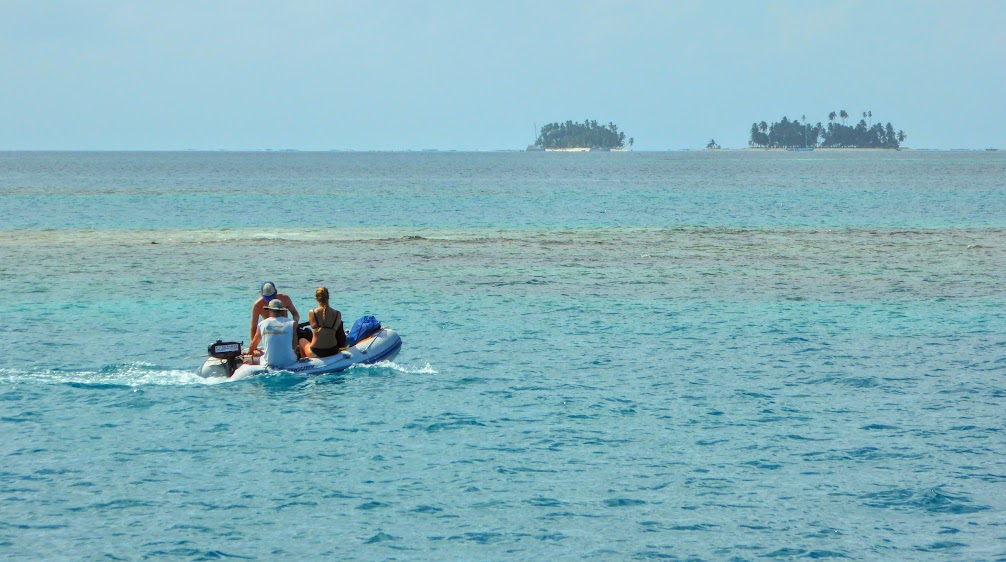
 After the winds subsided a bit, we headed back to our spot in the pool at Esnasdup. I talked up a gathering on nearby Gorgidup, a tiny little island with a gorgeous beach. Most everyone in the anchorage planned to go, this time sans food. Our friends Jack and Monique, on s/v Aloha, offered to take several of us on a short sail over to the island. It was a terrific way to arrive!
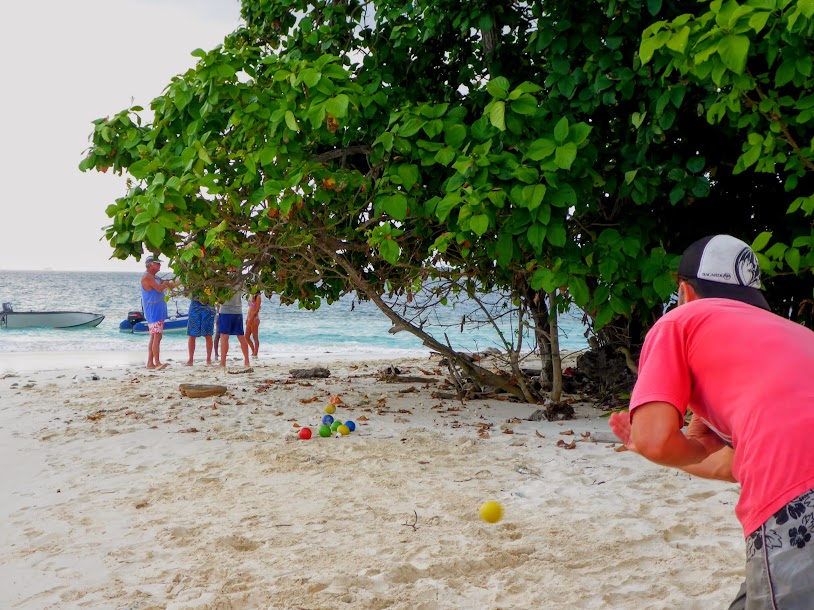
We enjoyed the afternoon on this beautiful island, and also had a pretty serious sand bocci tournament!
As the sun set, Aloha was waiting, to sail us back to our boats. It was a great day with our San Blas friends.
The coming forecast was for winds to nearly die off for at least four days, so we set our sights on the Coco Bandero Cays. The anchorage is pretty bumpy in most any wind, so with calm conditions coming, it seemed the perfect time to visit the islands. We approached the Cocos, and were immediately excited about them…what a beautiful sight!
There are five islands that make up the Coco Bandero Cays, and we anchored close to one with a “resort” on it. Overnight visitors were dropped off and picked up several times during our stay, which initially worried us. Thankfully, we hardly noticed or heard them.
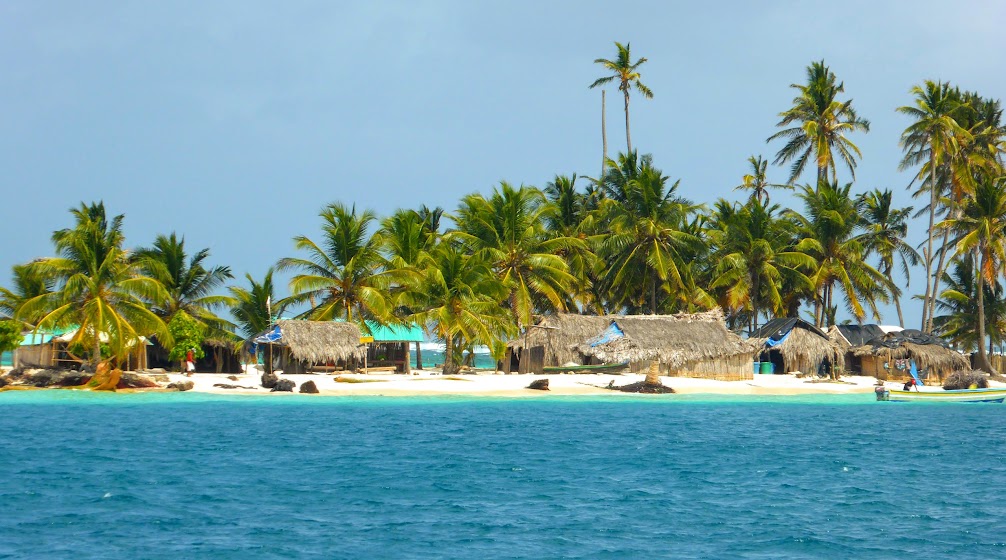
The rest of the beautiful islands were uninhabited, except for a modest fishing shack used by local fisherman traveling through the area.
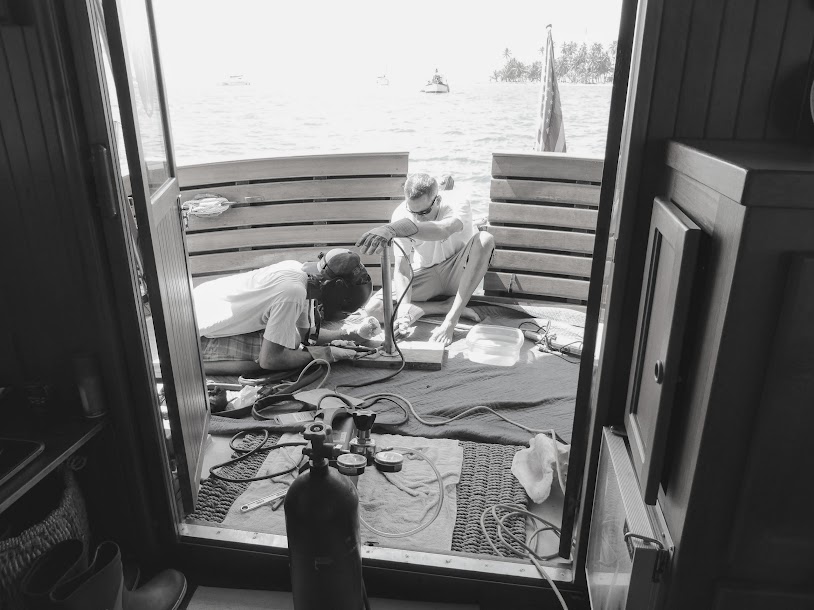
Our friends Jon and Shannon (s/v Prism) were anchored behind us, and Jon “shared” our generator power, to do a welding project for his wind generator. It’s definitely not the first time our cockpit has been used as a workshop!

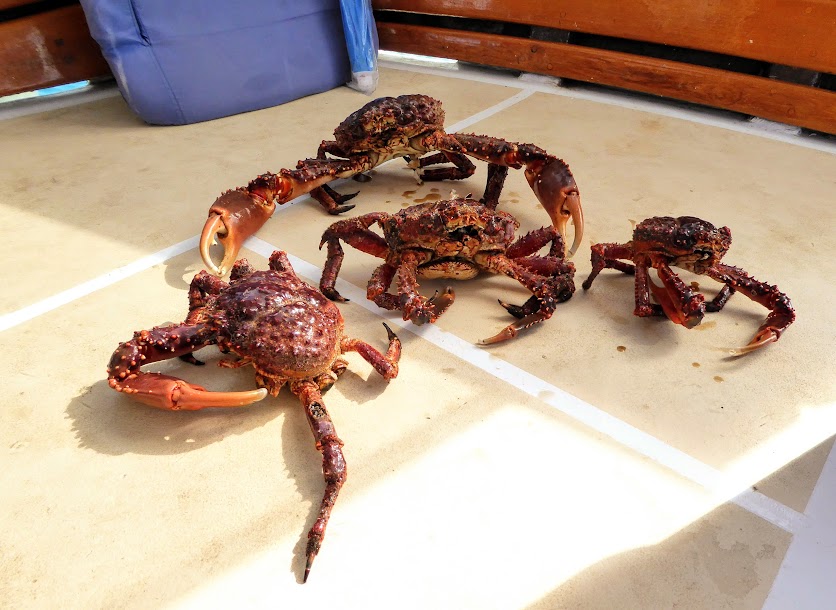
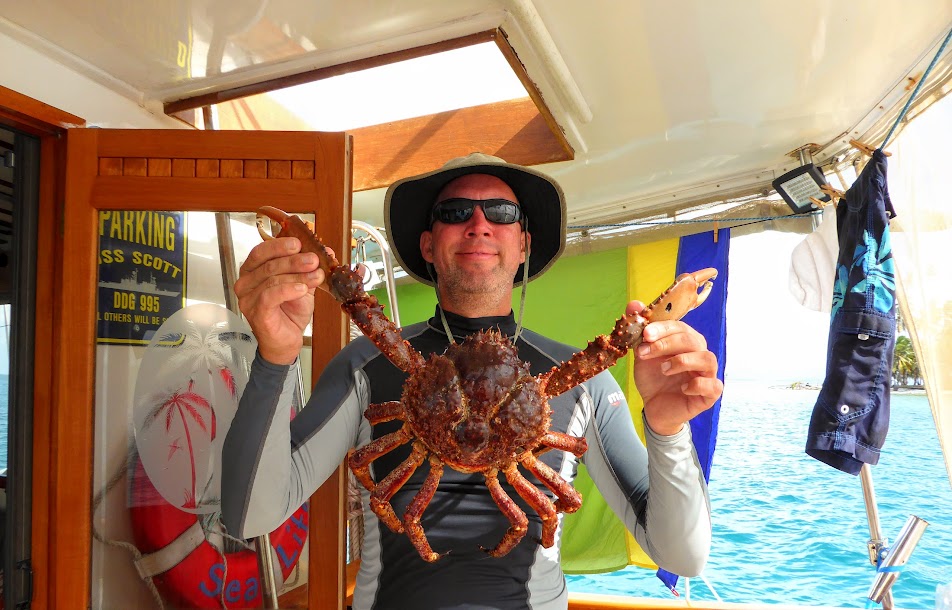
As usual here, after a few hours of work is done, it’s time for play, so Scott, Jon and Shannon headed out to the reef on a fishing mission. Shannon came back with a crab and a huge lobster, and Scott speared  more crab than we could eat!
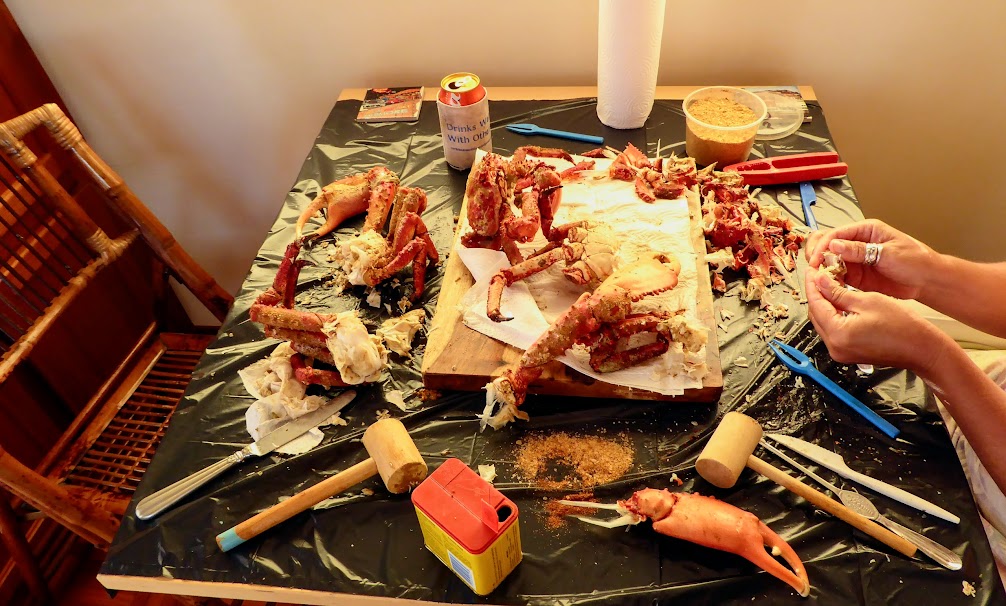
These big guys taste just like the blue crab that we get from the Chesapeake Bay back home, so of course, we ate them Baltimore-style! (fyi, the wooden mallets were not enough, so we had to break out the hammer from Scott’s tool box)
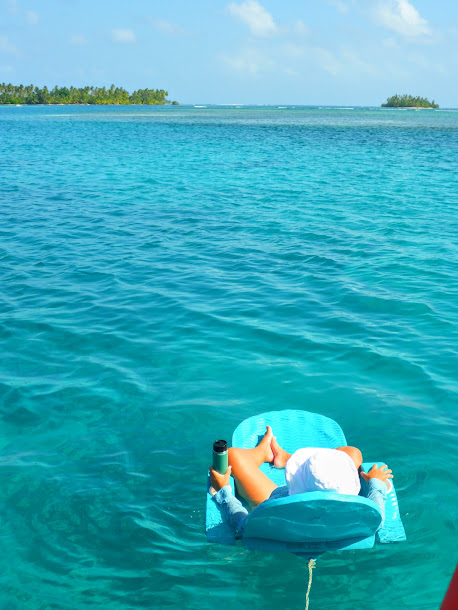
I spent two days on the beach of my favorite cay, while Scott explored the reef. The calm winds made it brutally hot, but the views were worth it; and, cooling off in that gorgeous, clear water was heaven.
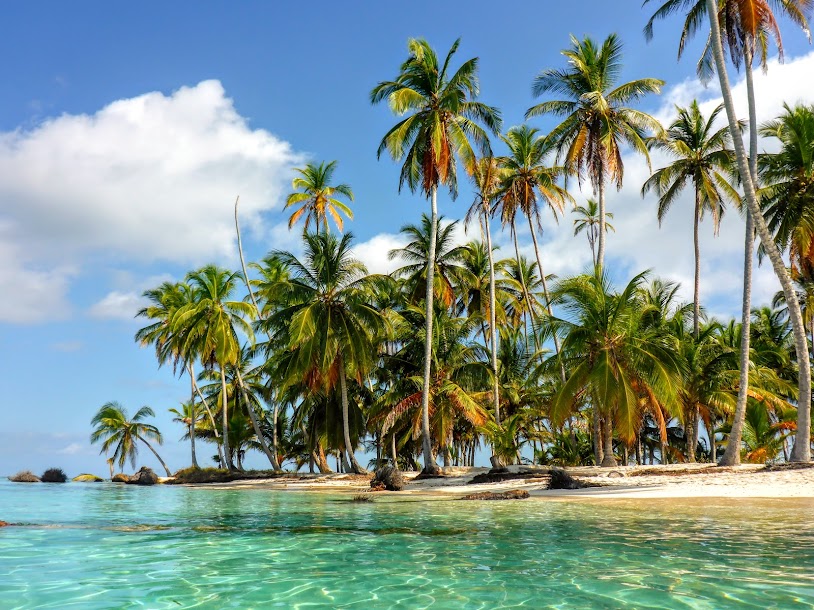
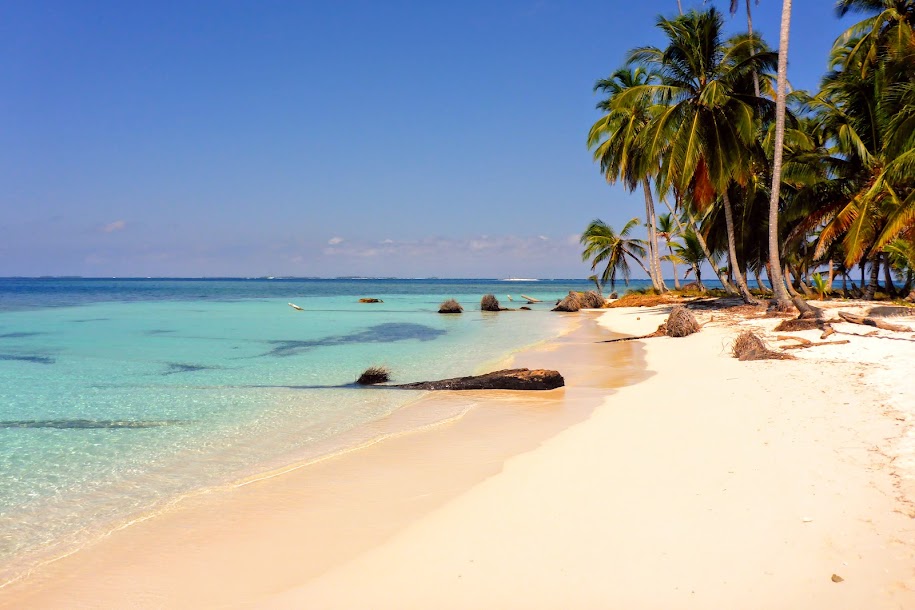
I’m the first to say that our trip is much more of an adventure, than “living the dream,” but on days like this, with a beach all to myself, and the only sounds from nearby birds and gentle waves lapping at the shore, I definitely feel “dream” vibe.
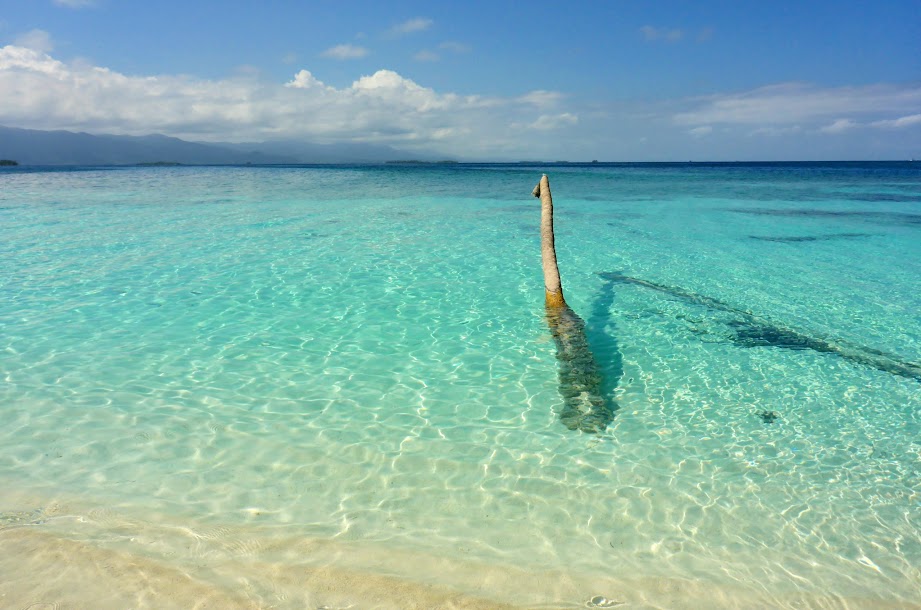
We had another trash burn gathering on the beach with our friends, and then moved toward the back of the anchorage, allowing us to leave early the next morning, without having to worry about traveling through coral in the low light as we left the area.

Our overnight spot was just as scenic, and Scott enjoyed a snorkel on some nearby patch coral.
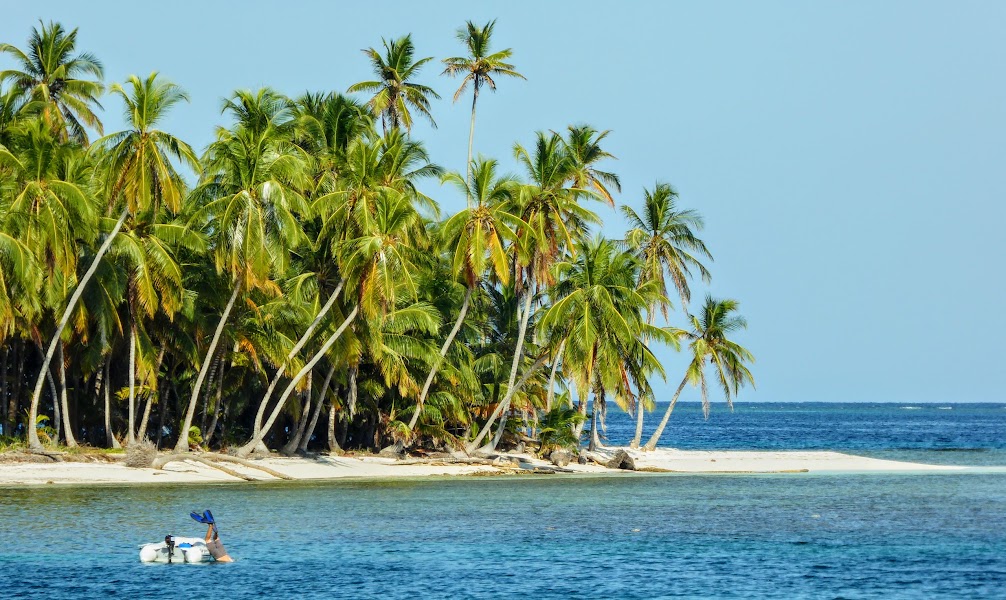
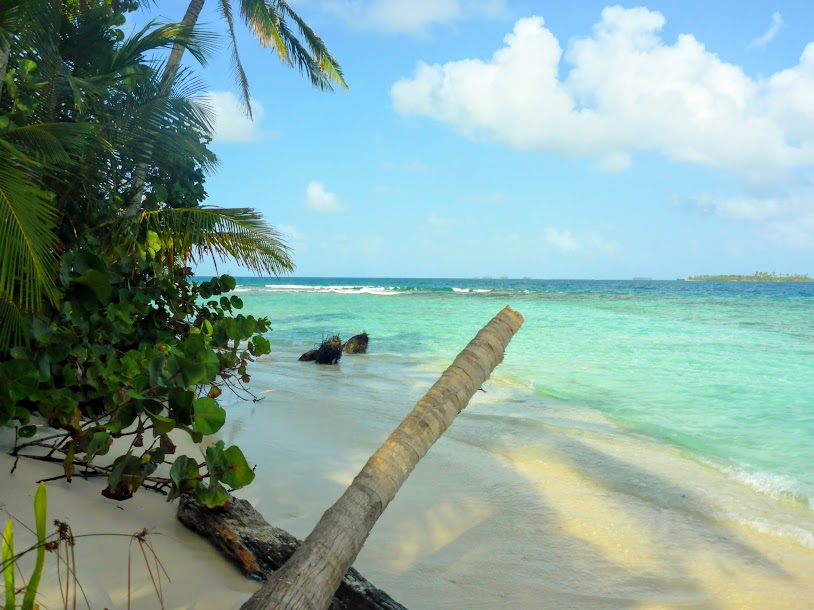
We loved our time in the Cocos, and are so grateful for the stretch of near flat wind while we were there, something very, very rare this time of year in the San Blas. Here are more photos.
“Shells Sink, Dreams Float. Life’s Good On Our Boat!”

Christmas And New Year’s Eve. In The San Blas Islands

We’re alive and kickin’, here in the San Blas islands! Internet service is more available than expected, but usually requires precise placement of a cell phone (used as an internet hot spot) at the highest outside point possible. It’s a familiar sight here, to see phones encased in plastic bags, hanging from, or being hoisted up a mast. At best, the service comes and goes, making uploading challenging, with the strongest hours coming in the middle of the night…oy! Some people have boosters installed on board, to up the strength of the signal. Others travel to anchorages that may have better service.

We do not have a booster, and are trying not to spend our time chasing the internet, so getting a signal worth doing anything, for any amount of time, is basically a crap shoot.

I’ve finally caved, and have spent several all-nighters (with nap breaks during weak service periods) while we’re in a location with decent service, to catch up a bit, and share what we’ve been up to for the past two months. Yes, I guess I could have written a post without photos attached, but that would just be mean.

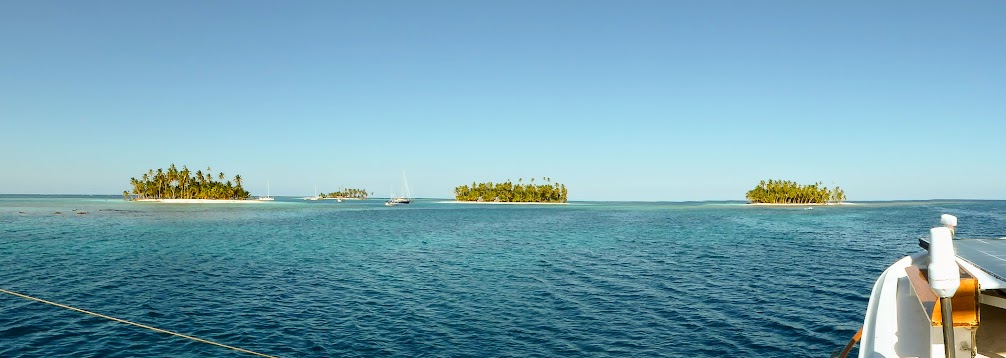
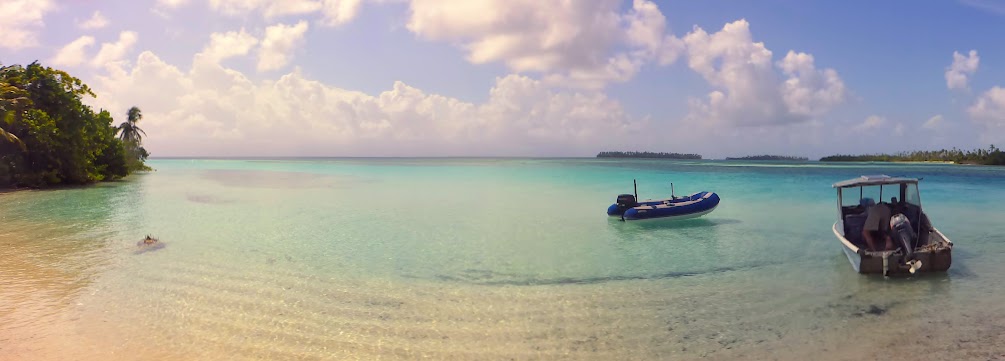
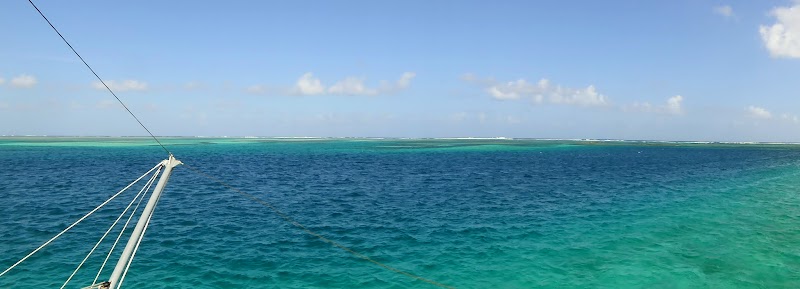
We made our way from Linton Bay, on Panama’s mainland, to the eastern Holandes Cays in the San Blas islands, where we anchored in the Swimming Pool. Named for it’s shallow, clear blue water, the pool lives up to it’s name. The anchorage provides an nearly 180 degree view of the surrounding reef, and the breaking waves are easily heard day and night.

The views behind us were just as beautiful, with the colors of patch coral in the distance.

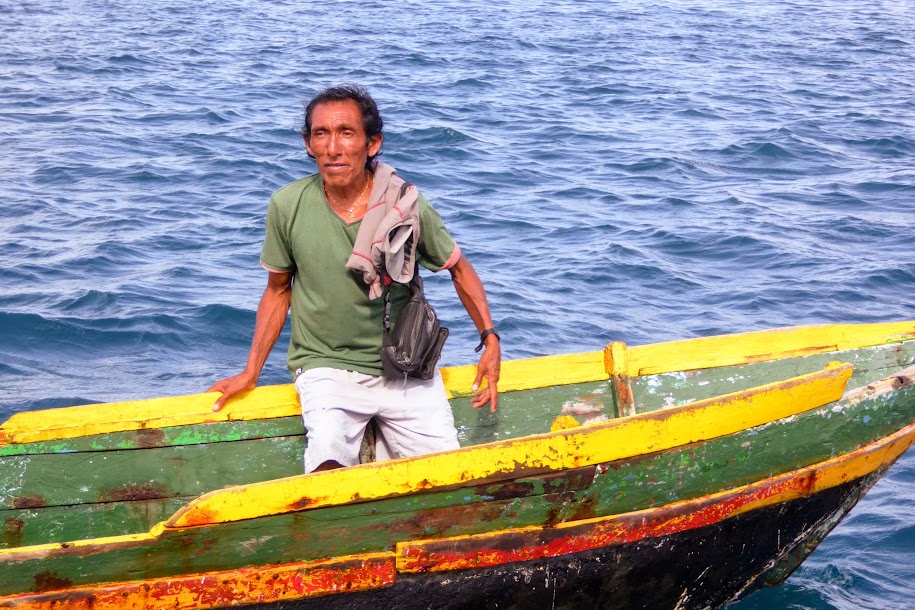
On our first morning at anchor in “the pool,”  we had a visit from Venancio, one of just a few master mola makers in the San Blas. We’d been told to keep an eye out for him, and were surprised to see him so far east.  Venancio told us that he makes the eight hour round trip to the eastern Holandes from the island where he lives, just once a week, so we were lucky to catch him.

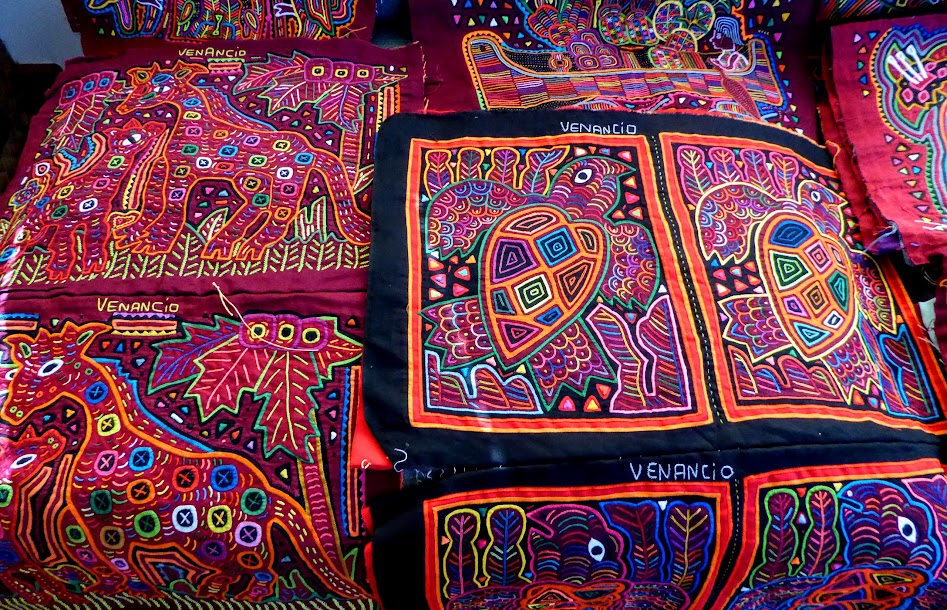
Venancio came aboard with a trash can full of molas, and some beaded bracelets. He took each mola out, and explained it’s design as he laid them out for us to see. They were beautiful; full of color, and all hand stitched.

We chose several of our favorites, and then Venancio packed up his trash can, loaded it aboard the ulu (wooden canoe) and covered it well, protecting the molas from the salt air and spray.  Mola purchase in San Blas..check.

The week before Christmas, we heard a general announcement on the vhf that there was going to be a cruiser gathering on Barbecue Island, located at the front of the anchorage, just behind the reef. We were excited to meet the other cruisers in the anchorage, and arrived with an appetizer to share with the group. The weather was perfect, and we met many new friends. (photo courtesy of s/v Sundowner)

Once the sun set, locals on the island, who run a small “resort” (I use that term very loosely) lit a bonfire for us. Their fire starting was far from skilled, as we watched them spray the huge pile of wood and palm fronds with gasoline! (photo courtesy of s/v Sundowner)

As expected, Scott spent many hours in the Aluminum Princess, exploring the anchorage and the area around the expansive reef.

He always has his pole spear handy, as his snorkeling outing often turn into hunting expeditions…many times successful ones!

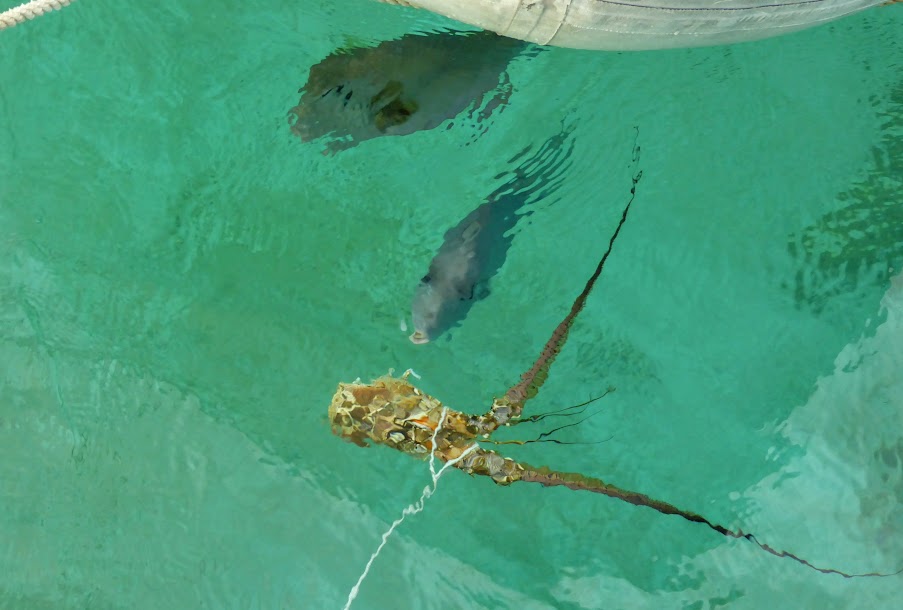
Scott dropped a lobster head into the water behind the boat, to see what might bite. It seems that Triggerfish find them pretty tasty. Regulars here in the San Blas refer to Triggerfish as “Bob.” Maybe because there are many in the waters here…not sure. Bob likes lobster.

On windy days, current would run through the anchorage at close to four knots, making swimming very challenging. Scott’s solution was to take the Princess to one end of the anchorage, tie himself to it with a 30 foot line, and drift along behind it, as the boat made it’s way back through the anchorage in the current.

He  caught quite a few very large conch like this, having just enough time to get to the bottom and grab them before being pulled along. Neither of us were up for the job of cleaning conch (eewww), so we shared them with some of our new friends in the anchorage…and joined them for some fresh ceviche as a thank you!

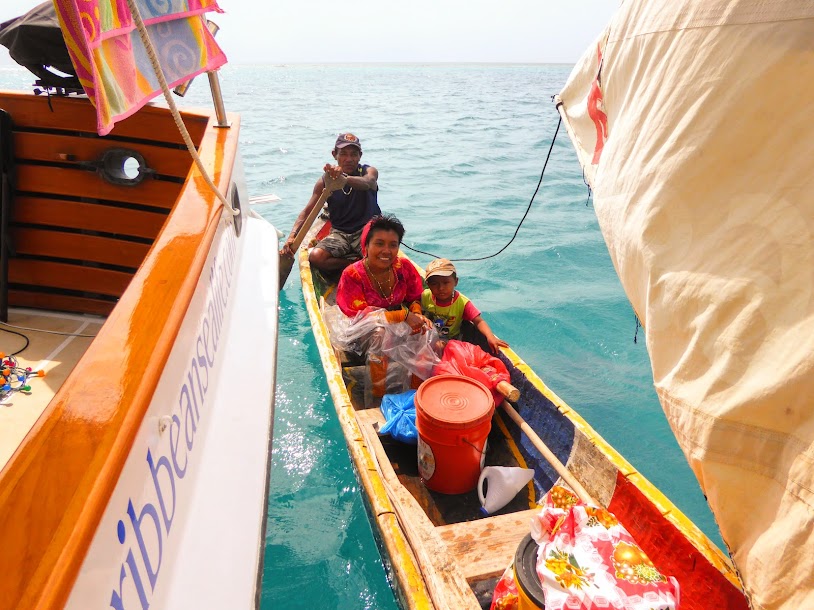
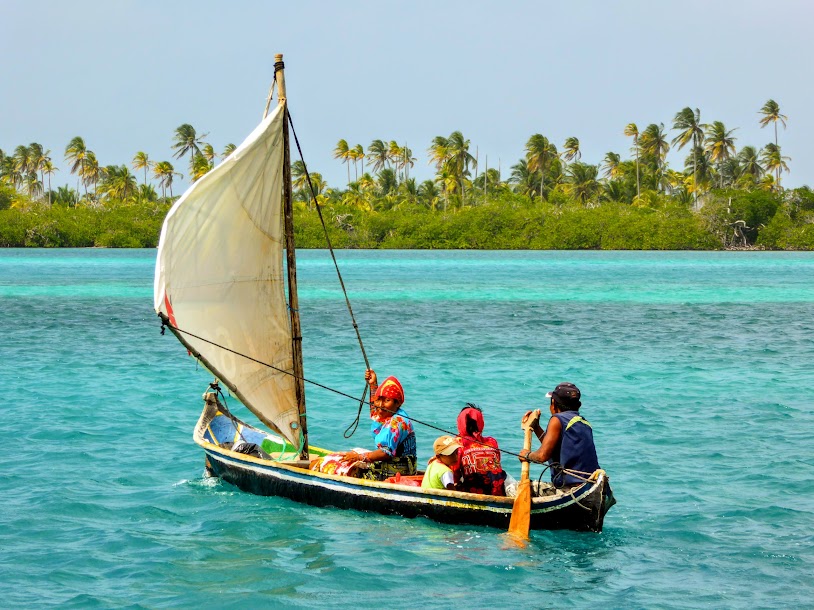
We would get regular visits from the Gunas, in their ulas (dugout canoes). They usually had molas and jewelry for sale. We already had more molas than needed, but were happy to fill their water jugs with fresh water, and occasionally a juice for small children. They also took our aluminum cans, to sell to the Colombian trader boats who recycle them.They both row and sail the ulas, and the women’s traditional dress is beautiful.

There is no trash removal service here in the San Blas. Bottles are broken into pieces (the theory is that the pieces will eventually turn into sea glass) and dropped overboard when in deep water (at least 150 feet), along with steel cans (anything that will rust away). This isn’t just practice reserved for the San Blas islands, the U.S Coast Guard has similar requirements for trash removal offshore.

All other trash here is burned. Being new to the San Blas, we weren’t sure which beaches were acceptable for this, as all of the islands here are owned by Guna families, whether they are inhabited or not. Until we learned the rules of trash burning etiquette, Scott improvised.

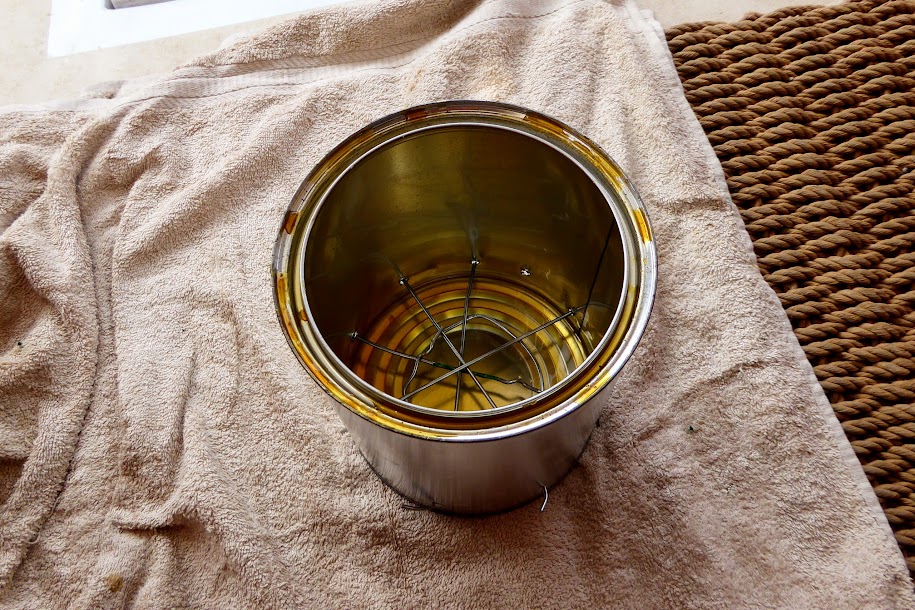
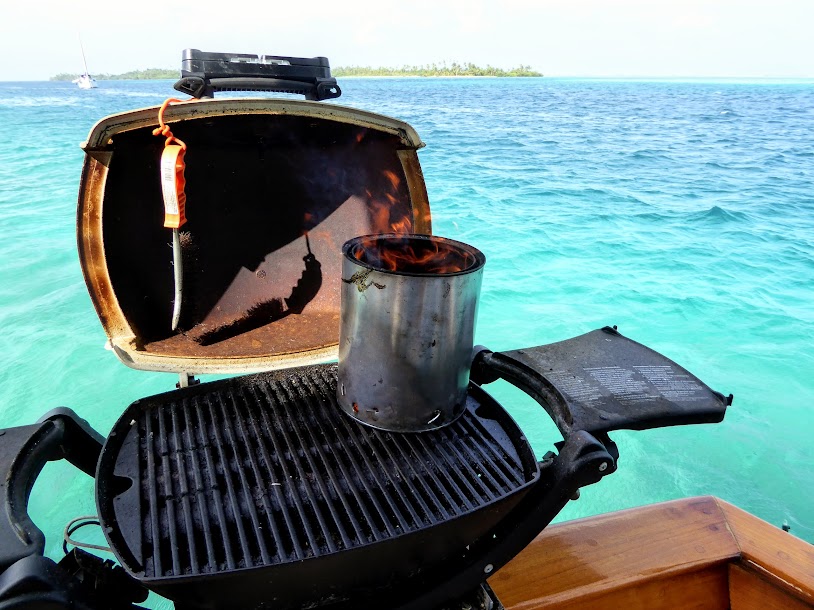
Channeling his inner “MacGyver,” Scott fashioned a rack from a wire coat hanger (I’m shocked that we had one on board, although he probably had it squirreled away for just such an occasion),and placed it in the bottom of an old varnish can. He punched holes in the bottom for air, and voila!, a burn can for the grill was born.

This would have been the perfect solution if we burned every day, or made less trash, but we do neither of these things. Instead, Scott would spent two hours or more burning everything from paper to an old pair of shorts.

Positive…our trash burned down to a tiny pile of  ash. Negatives..it took hours, and we had to close up the saloon, to avoid being choked out from the smoke.

Luckily, or new-found cruiser friends invited us to join them for a trash burn run. We followed them about 20 minutes from the pool, to a beautiful spot, where they meet to burn trash. Fires are made near the waterline, so that high tide will wash away the leftover ash.

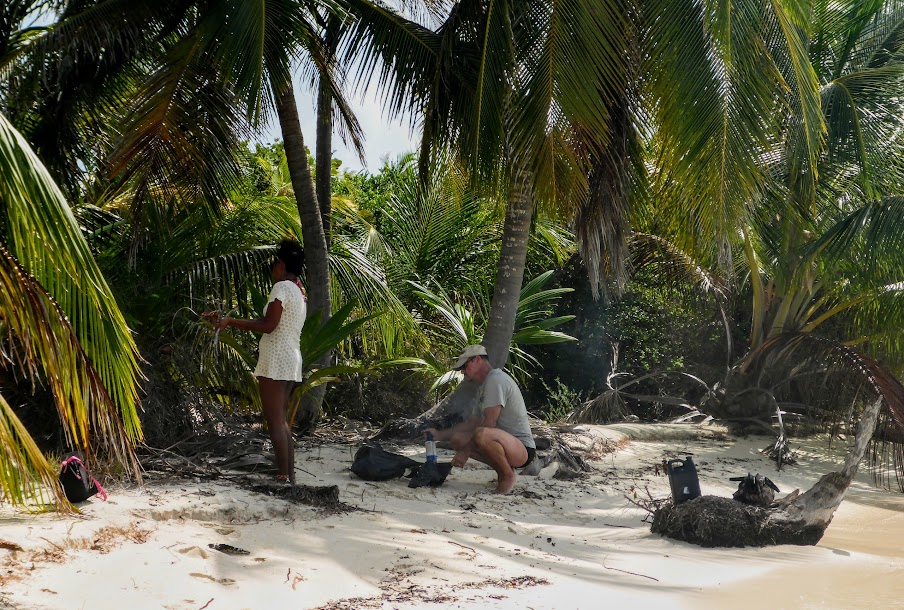
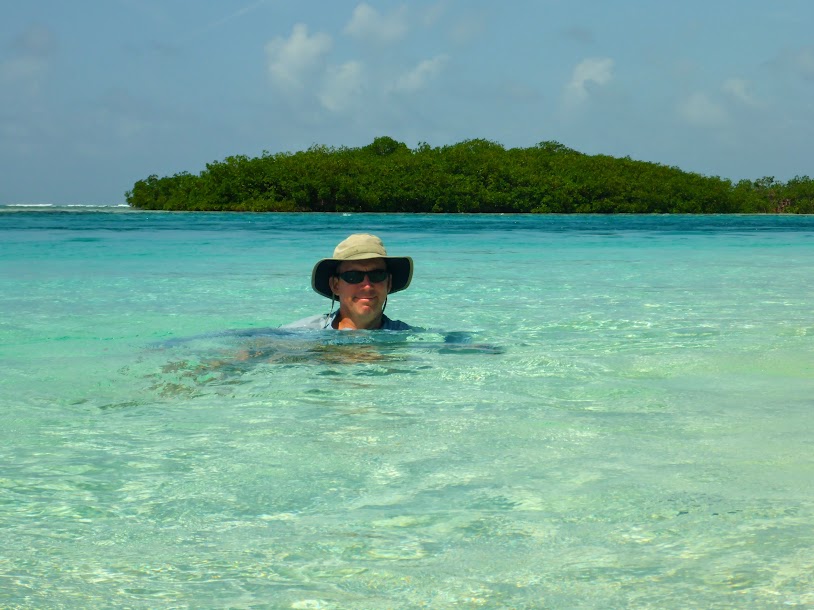
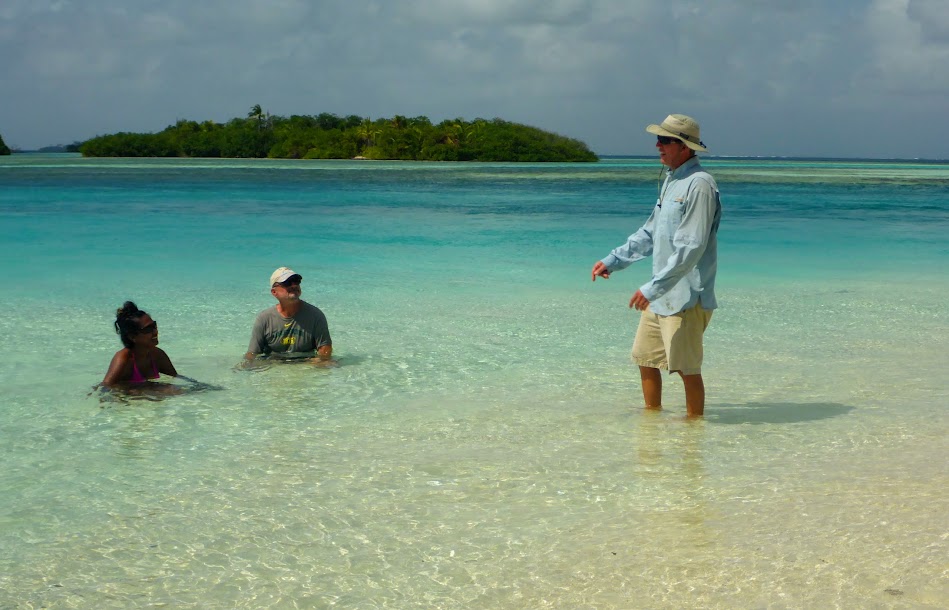
We soon realized that trash burning here is a social event. Once the trash has burned, and while we wait for the ashes to smolder and cool, it’s time for bobbing with drinks in the clear blue water; now that’s my idea of a day’s work!

By the way, wearing some kind of shirt is a must in the water here  (unless you’re our friend, Sharda, who is blessed with skin from Trinidad!). I learned this the hard way, frying my shoulders and back from the reflection of the hot sun off of the water.

When we first arrived, there were few boats in the anchorage  here, but during  the weeks of Christmas and New Year’s Eve. the numbers grew.

We enjoyed Christmas Day in two shifts. First, with dinner aboard s/v Sirena, and then dessert with friends on s/v Gris Gris. And of course, Christmas would not be complete without lights! We lugged along our holiday lights, and Sea Life was quite a festive sight in the anchorage (photo courtesy of s/v Sundowner).

Knowing no boat offered enough room for a group to gather for New Year’s Eve., I put out the word for all cruisers interested to gather on a nearby beach, to ring in 2017. As luck would have it, the location was in perfect view of a fireworks display, set off by a nearby superyacht for their charter guests.

After enduring a stretch of windy weather in the pool, with the accompanying currents and insane salt spray, we decided to change locations for the next go-round. After the new year, we headed around the corner to the Hot Tub (yes, from the pool, to the hot tub..tough times).

With more protection from the winds, the water in “the tub” is much calmer, and the current much less strong. In addition to more beautiful views, the water is supposed to be warmer than in the pool, hence the name. However, we found it to be much cooler…ahhhh, refreshing.

Scott found a great honey hole around the corner, for catching lobster and Lionfish. They are invasive, so he tries to kill them whenever he can. Lionfish are also good eating, but challenging to clean, due to their poisonous dorsal fins.

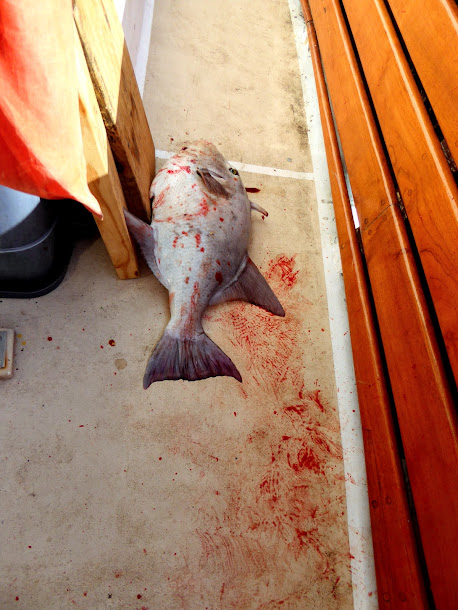
Once again, Scott used lobster tails for bait, and attracted a huge Bob! He grabbed his pole spear, and shot it right from the cockpit, without even getting wet. Unfortunately, Big Bob did not go down without a fight, flopping and bleeding all over the cockpit when Scott removed the spear tip.

Scott delivered this massive fish to our friends, Jon and Shannon, on s/v Prism. They were waiting for a new dinghy motor, requiring them to row everywhere.

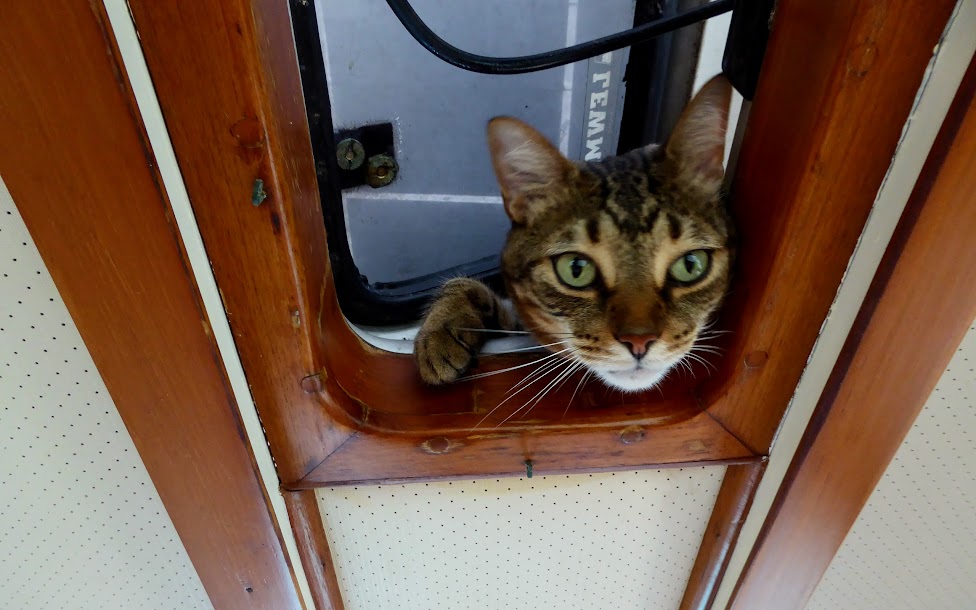
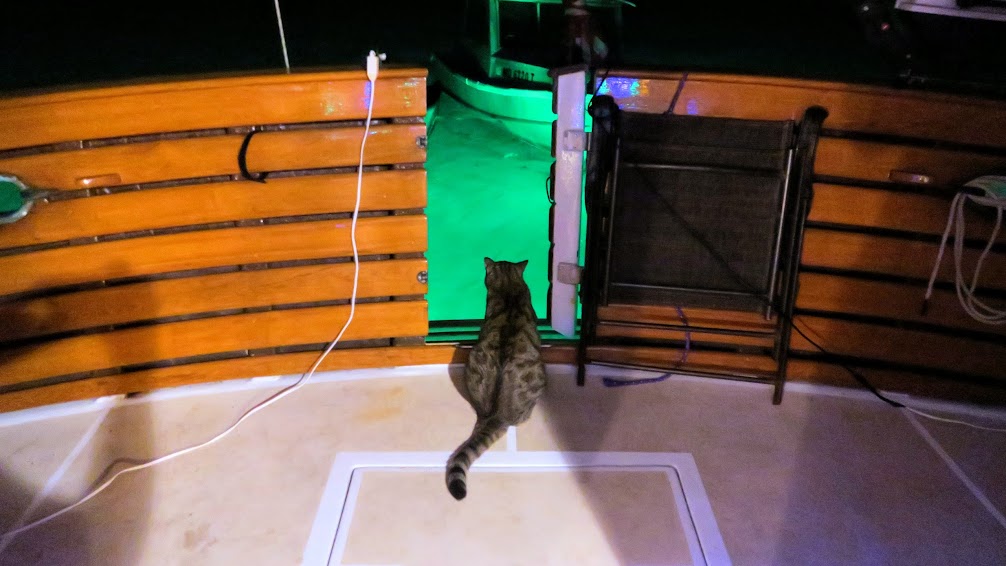
In case you’re wondering, Howard is enjoying life in the San Blas. He keeps an eye on us from one of his favorite perches, up under the solar panels, and loves when the fish light goes in the water each night.

So our first few weeks in the San Blas were off to a great start. We made many new friends, and enjoyed the beautiful views. More to come, as we explore new anchorages. Here are more photos.

“Shells Sink, Dreams Float. Life’s Good On Our Boat!”


Coming Into The San Blas Islands

We’ve picked up a decent cell signal, coming into the outskirts of the San Blas Islands, so I’m sending out a quick hello.

Trip has gone well, big swells, but spread far apart enough that we’re not getting tossed around badly. Scott fought queasiness until we tucked behind the first islands. Howard has traveled like a champ, choosing to just sleep through it and I’ve watched several movies.

The first islands we’re coming up on are popular for charters and such, and as you may expect, there are many boats here. Our plan is to keep going, and anchor farther out, in what’s called the Hollandaise area, where we’ll be at anchor until after the new year.

Just a few quick photos!

“Shells Sink, Dreams Float. Life’s Good On Our Boat!”
The San Blas Islands, Our Winter Home

This morning, we’ll make our way toward the San Blas Islands, where we plan to stay until early April. As usual, we expected to be settled there already, but Mother Nature again intervened.

After Otto passed by, the Christmas winds that regularly build in the Eastern Caribbean began to blow. While we don’t get the wind speed down here, it does drive large swells our way. As a result, our 8-10 hour ride should be interesting.

We expect swells of eight feet or so, which won’t be so bad if they are timed well and winds stay light and variable, as forecasted; the big word here is IF. Either way, the seas won’t get any better this time of  year, so it’s off we go.

As I mentioned previously, the San Blas Islands are a remote area is located on the northwest coast of Panama, in the Caribbean Sea.

Image result for map of the san blas islands

There are conflicting numbers, but between 365 and 400 islands make up the archipelago, only 49 or so of which are inhabited (not the best detailed map, but the best I could find online).

Image result for map of the san blas islands

The 100 square mile area is home to an indigenous group known as the Gunas, and the islands are also referred to as the Guna Yala region. Internet will be sparse for us this winter, so I thought I’d share what I’ve learned so far, about the Guna people..

The approximate 50,000 Gunas in the San Blas have their own language, but also speak Spanish, and more recently, English.

They have a matriarchal society, in which inheritance passes down to the women. A young man, after marriage, must move in with his in-laws, and work for several years under the apprenticeship of his father-in-law. Daughters of the Guna are prized, because they will eventually bring additional manpower to the family.

Divorce is rare, although all that is required is for the husband, should it happen, is to gather his clothes and move out of the house (too bad it doesn’t usually work out this nicely elsewhere).

There is a division of labor within families. The husband gathers coconuts, cultivates food, provides firewood, repairs the house, makes his and his son’s clothes, weaves baskets and carves wooden utensils. The wife prepares the food, collects fresh water from the mainland rivers, unloads the boats, sews female garments, washes clothes and cleans the house.

Before the arrival of Europeans, the Guna wore few clothes, and decorated their bodies with colorful designs. When encouraged to wear clothes by the missionaries, they copied these designs in molas, which were then worn as clothing.

The Gunas are now famous for their molas, which are handmade using a reverse applique technique. Several layers (usually two to seven) of different color cloth (usually cotton) are sewn together; the design is then formed by cutting away parts of each layer.

The edges of the layers are then turned under and sewn down. Often, the stitches are nearly invisible. The finest molas have extremely fine stitching, made using tiny needles. (I borrowed this description from Wikipedia, where there is much more interesting mola information).

Image result for kuna yala

Mola means “clothing” in the Guna language, and the panels are used to make blouses, worn daily by most Guna women (men wear western dress). We’re told that looks like this are the norm on the islands of the Guna Yala region, and it seems the women also enjoy pipe smoking.

Image result for kuna yala

Image result for kuna yala

The economy of the Guna Yala is based on agriculture and fishing. Plantains, coconuts and fish is their core diet, supplemented by simple imported foods, a few domestic animals and wild game. Coconuts and lobsters are widely exported products, and migrant labor and the sale of molas provide other sources of income.

Image result for fish in the kuna yala region

Image result for coconuts in the san blas

In 1925, there was a revolution between the Guna Indians and the ruling Panamanian authorities, who attempted to force the Guna to adopt Hispanic culture by military action. During this revolution, the Guna Yala territory seceded, and operated as the short-lived Republic of Tule.

Following mediation with the United States, the Guna re-united with Panama. With the support of the Panamanian government, the Gunas created a self-governing territory, named the Guna Yala district, where they would rule themselves.

Relations are still strained between mainland Panama and the Guna Yala region. Most recently, both customs and immigration have moved out of the area, and cruisers now have to clear in and out of the country on the mainland. Going to one town for customs, and another for immigration; frustrating!

We’re looking forward to visiting this area for the winter months, and will look for a window of weather in late March, to travel to Cartagena, Colombia, before continuing on to the Eastern Caribbean.

As usual, you can track us on the Where Are We Now page, where you can also send an email through our Delorme satellite tracker.  We look forward to a winter of views like this!

Image result for photos of the san blas islands panama

“Shells Sink, Dreams Float. Life’s Good On Our Boat!”


Provisioning For The San Blas Islands

We plan to spend the winter months in the San Blas Islands, located on the northwest coast of Panama, in the Caribbean Sea (more to come).

Image result for map of the san blas islands

The islands are remote and primitive, so Scott and I have gone into “food panic,” buying as much as we can stuff onto this poor boat. The consensus is that there are veg boats (with iffy produce and uncertain selection), and locals selling bread, fish and lobster; aside from that, you’re on your own.

While we were in Bocas, and familiar with stores and stock, Scott and I took the Aluminum Princess on a provisioning run from Red Frog Marina to Bocas Town. We tied to the small pier outside The Pub restaurant, having been told that the expat owner was friendly to cruisers.

Once in town, we hit the ground running. Our first stop was to one of the larger hardware stores, where we emerged with miscellaneous items for Scott, and a huge trash bag full of paper towels and toilet paper. From there, we went to Super Gourmet, who stock hard-to-find and specialty items from the U.S. After that, our two regular grocery stores, ending at Isla Colon, owned by our new friend, Felix.

As we checked out, with two carts full of items, in addition to the pile of stuff we’d lugged in with us and the stack of beer and sodas that Felix had brought out from the back, the girl behind the counter offered to have our pile of stuff driven to wherever we needed to go. Our plan was to take a taxi back to The Pub, but a free ride was even better!

In no time flat, a pick up truck pulled up in front of the store, and three men loaded our endless packages into the back, bucket brigade-style, tossing our heavy items in the air to each other; Scott tried to help, but was politely squeezed out. We’d asked the counter girl about tipping, and were told, “Nothing. This is a service that we provide, free of charge. No tip is necessary.”

Once all of our things were loaded into the bed of the truck, Scott and I hopped inside, into the frosty-cold, air conditioned truck (it was only a three minute ride, but any a/c is good a/c); all of the “loaders” got in as well! As an added treat, the driver serenaded us in Spanish for the short ride, much to the chagrin and groans of his co-workers.

Once at The Pub, all three men got out with us to unload. Scott and I were barely able to grab a bag, as the caravan of Isla Colon employees made it’s way through the restaurant and out onto the pier where we prepared to load the Aluminum Princess ( for a moment, the restaurant owner thought he was getting a forgotten order delivered). The three made two quick trips with our things, and then smiled and waved us goodbye. Wow.

Now that the heavy lifting was done…literally, Scott and I quickly loaded up the Princess, and then took time to have lunch. We were hungry, and wanted to give a show of appreciation to the owner of The Pub, for allowing us to use his pier and haul our things through his restaurant.

After recharging with food and drink, we made our way back to the marina and unloaded everything onto Sea Life.

We then got to work finding space for everything, beginning with loading up the area under the couch. The sleeper sofa in our saloon has been “gutted,” allowing for a huge amount of storage space. I resisted at first, but am now so grateful for all of that room!

I also resisted keeping a log of our food and toiletry stores, but have since come around to the idea. It’s much easier to zero in on where something is, and keep track of what we have, if it’s all written down.

By the way, when you panic about stocking up on food, this is what happens. I’d forgotten to buy spreadable butter, and Scott offered to go back and get it, saying that he’d seen some in Isla Colon. When I unpacked everything, here is what he’d bought.

Notice the amount…..five pounds! Seriously, it’s huge; I measured the stupid thing, to make sure it would fit in the fridge! (it just fits)

Once the couch was stuffed full, we crammed the tower of sodas and beer into the guest stateroom, along with bottles of wine and bags of flour, sugar and rice.

Various things were placed in plastic bags or tupperware containers, and stored in the lazarette, up on the flybridge and in bilge areas. After that, any remaining items were jammed into any cabinet or closet that had an available nook or cranny. Sea Life just kept “swallowing it up,” as Scott likes to say. She’s full to the brim, and we’re sitting low in the water.

In addition to an inordinate amount of canned goods, paper towels, toilet paper and various liquids, we’re stocked up on dry goods (pasta, instant potatoes, Bisquick, crackers, spices, etc.), jarred sauces, candy, snacks, cheese, BUTTER, all types of frozen meat and various other refrigerated and frozen items.

We’ve also filled up on as much ice as room will allow. Scott’s anxiety for running out of this precious item is off the charts. He loooves his ice, and we won’t be able to buy it in the San Blas. We have an ice maker onboard, but running it on our batteries for a day yields enough to make two drinks…he’s panicked.

So we’re as ready as we’re going to be, for three or so months of off-grid, no-grocery-store living. If we starve, it’s our own fault. Who knows, maybe we’ll open our own San Blas grocery store!

“Shells Sink, Dreams Float. Life’s Good On Our Boat!”